Author: Shankar Ramachandran

Johan Cruyff: Total Player of The Beautiful Game

Johan Cruyff, guru of total football, died on March 24, 2016 at the age of 68. He scored 33 goals in 48 appearances for his country, Netherlands. He won the European Cup multiple times as a player and then as a coach. He thrice won the Ballon D’Or, an award given to the best footballer of his generation. A select set of players has won it thrice: Zinedine Zidane, Lionel Messi, Cristiano Ronaldo and Michel Platini among them.


pic cruyff 1 barcelona cover pic


Samuel Taylor Coleridge is credited with coining the simplest definition of poetry: “I wish our clever young poets would remember my homely definitions of prose and poetry; that is, prose —words in their best order; poetry — the best words in their best order.”


Coleridge defines poetry both in terms of form and content. The best words indicate meaning and brevity, while the best order suggest form and structure.


Johan Cruyff had a similar poetic vision of football. He often said: “Quality without results is pointless. Results without quality is boring.”


He thought it dull and prosaic if players and teams merely focused on the ends, that is just winning at all costs, which often meant the hard defending of a meager score of one goal, slowing down the game and engaging in all kinds of foul play. Cruyff believed that football could offer beautiful movement, rehearsed artistry and deft footwork without sacrificing on results – the scoring of goals.


Cryuff’s exploits as a genius on the turf are legendary. He almost singlehandedly led Netherlands to the World Cup final in 1974, and earned his place among the footballing greats. But no other legend — not Pele, not Maradona, not Beckenbauer —contributed as much as Cryuff to change the way football is played.

pic cruyff 2 ajax


First as a player and later as a coach, he denounced the traditional kick and run football, which is still the staple at many English clubs. He often moaned that football players ran too much. Instead, along with Rinus Michels — coach of Ajax, Barcelona and the national Dutch team in the 1960s and 70s — Cruyff introduced a more delicate and artful brand of football based on passing, possession and intelligence.


It came to be known as total football.


Total football was about attacking defenders, midfielders who played deep and everyone playing in every position. The goal keeper was the first attacker and the central attacker was the first defender. Total football changed the nature of the game and how it was played.


Cruyff often said: “Playing football is very simple, but playing simple football is the hardest.”


Cruyff believed that football was not about physical prowess or skill alone; he saw football as a game of brains. And his entire life was spent in proving this hypothesis. The crowning achievement of this school of thought has been the sweeping success of Football Club Barcelona in the first two decades of this century.


Cruyff gave the process of playing football much thought. At Ajax itself, the combination of Cruyff playing on the field and Michels doing the thinking and organizing off it as a coach, helped their team win the European championship three times in a row in the early 70s. Later at Barcelona, Cruyff put total football into practice and is largely credited to have converted that club into one of the best teams in the world today.


Cruyff often said: “”There is only one ball, so you need to have it.”


The style of “tiki-taka” or short, quick passes followed by Barcelona and later the Spanish national team is much Cruyff’s contribution. Its success has forced other teams, including current world champions Germany, to try to infuse some of these elements into their performance.


Andrés Iniesta, Barcelona captain and a leading practitioner of the Cryuff philosophy, describes Cryuff’s philosophy in action.


1)     Keep possession and frustrate the opponent: Every pass is important. A bad pass loses possession and puts the team under pressure. Short passes build momentum and if you have the ball then the opponents can’t do anything.


2)     Think on your feet: If you think before your opponent where the ball is going to go then you have an advantage. If you stay with the ball at your feet and think about what to do, you are going to lose the ball. The best players are the quickest thinkers.


3)     Defend when you are not attacking: When your opponent has the ball, close him down quickly. Put him under pressure before he’s even had time to think about an attack.


4)     Space = time:  Always be aware of who is around you: if you feel them closing down, take a touch to move the ball away from them. Try and put yourself in space to get the pass: the more space you have, the more time you have to think.


5)     Brain over brawn: If I play against a big player, I play the ball quickly on the ground. Playing a quick one-two is also very effective as bigger players are slower to react and turn. I only weigh 63 kilos so I don’t have weight to throw around. If you can get the ball past them a few times using a one-two they will be more reluctant to rush in and tackle, so you have more space to play.


To achieve the kind of success that Barcelona has, Cruyff emphasized the complete development of every player. Total football is not just a style of playing football where every player in the outfield can play in any position whatsoever; it is also about the development of the player himself into one who is physically fit, has the skills and also thinks about the game.


To create such players, Cryuff proposed that Barcelona should set up a youth club similar to the Ajax Academy. His proposal was accepted in 1979 and the move created La Masia, Barcelona’s fabled youth academy. The success of Spain and Barcelona is heavily credited to the academy graduates, nine of whom form the core of both the Catalan and the National side. Lionel Messi, La Masia’s brightest star, often draws comparison to Cryuff for his grace, performance and development. In fact, Messi dedicated his fifth Ballon D’Or to the academy and wanted it to share it with the young inmates.


http://www.fcbarcelona.com/football/first-team/detail/article/messi-shares-ballon-d-or-with-fc-barcelona-youth-teams-exclusive-interview


Ironically, Messi is built unlike your typical heavy-set footballer. He is short-built and was physically frail when he joined the academy.


Cryuff says, ‘I find it terrible when talents are rejected based on computer stats. Based on the criteria at Ajax now I would have been rejected. When I was 15, I couldn’t kick a ball 15 metres with my left and 20 with my right. My qualities, technique and vision aren’t detectable by computer.’


Although Cruyff is also identified with the famous “Cruyff turn”— where the attacker fools the defender into thinking he is hitting the ball ahead with the free foot, while flicking the ball behind the standing foot, turning the hips quickly in the other direction and running free of the defender, he never confused tricks with actual technique and the team nature, rather than individual brilliance, of the game of football.


In an interview, Cruyff called his famous “Cruyff turn” (see the video above) a trick. He says in the interview that he never believed in tricks. Cruyff said: ‘Technique is not being able to juggle a ball 1,000 times. Anyone can do that by practising. Then you can work in a circus.’


Cruyff’s contribution is all about life and living. Football after all, for Cruyff, was all about time and space, and isn’t that what life is all about too?


Cruyff’s focus was always on process, and about enjoying that process. About total football, Cruyff says that we just played football which the world loved. The question we asked everyone including the spectators and supporters of the opposite team was: did you enjoy?


In an interview when asked about his career he keeps saying: Do you enjoy the game? And then goes to say, “You have to be proud of what you do. But from that stage of being proud – do not think of it too much because you might get a big head. It’s just that I had a fantastic career where I enjoyed myself very much.”


Cruyff was also about winning. He always thought of how one could use every thing in his life to create a win. He once famously said, “Every disadvantage has its advantage.”


Not a very big-built guy himself, Cruyff did not worry that he did not have what was required to become a success in the game. The ultimate martial artist, he quickly converted his weaknesses into strengths. He took what he had, built on it and achieved greatness.


But in order to achieve that greatness one has to think against the grain, think counter-intuitively – do what the others do not want to do. Find merit in the things that no one wants to do. This was reflected in the way he looked at different aspects of the playing process:


‘I always took throw-ins because then if I got the ball back, I was the only player unmarked.’


And then he went on to remark that for most people the game was about having the ball and what they did when they got the ball. His counter-intuitive thinking was at work here too. It is what you do when you do not have the ball that defines you as a player according to Cruyff.


‘When you play a match, it is statistically proven that players actually have the ball three minutes on average, so the most important thing is: what do you do during those 87 minutes when you do not have the ball? ‘That determines whether you’re a good player.’


Thus, if one examines the way Cruyff played the game, one could, learn a lot about living one’s life. Be counter-intuitive; see advantage even in disadvantage; define greatness by a different metric. And be very cognizant of timing – everything in football and life is about timing. As Cruyff said: “There’s only one moment in which you can arrive in time. If you’re not there, you’re either too early or too late.”


And he also mentions how to get that slight head start in life and use it to your advantage: “If I start running slightly earlier than someone else, I seem faster.”


His focus on hard work, practice, and rehearsal was legendary. One did not win games on the field, one actually won them even before the game started: “Before I make a mistake, I make sure I don’t make that mistake.”


The Johan Cruyff Foundation has helped raise money and resources to create Cruyff courts, which are small-size football fields suitable for seven-a-side game – and are an alternative to the disappearing public playgrounds because of urbanization and over-development of land into buildings. There are now more than 200 Cruyff courts in more than 20 countries; and are especially beneficial to children living in deprived neighborhoods, where street football was popularly played at one time but has now stopped for various reasons associated with our cities today.


Cruyff was known to be vocal about his opinions. It is said that it was opposition to what General Franco represented that made him join the Catalan club of Barcelona in the summer of 1973 because “he could never join a club associated with Franco.” And Cruyff was never intimidated by the resources or money that backed the opposite team. He was quoted as saying:

“Why couldn’t you beat a richer club? I’ve never seen a bag of money score a goal.”


Yet it is a rich legacy that Cruyff leaves behind. It is not just the legacy of having scored goals or won championships. He has developed and implemented a philosophy of football, implemented it and seen it bring glories to his club and to his adopted country of Spain, nurtured young talent, and created playing spaces for poor children throughout the world through the Cruyff courts. He is not just a total footballer – Cruyff is a toal and complete human being.


As Pep Guardiola said, “Cruyff built the cathedral, our job is to maintain and renovate it.”


gracies_cruyff

*****


Youtube video – Football’s Greatest – Johan Cruyff (25 mins)


© Shankar Ramachandran, 2016


Technology: Smart tablet or just a new drug? (Lessons for use of technology with children)

The growing use of technology at home and at school is no longer a convenience; it is a threat. Parents and schools are pushing technology, believing that technology is the future, and kids need a head start. However, these studies show that technology is not making kids smarter, it is turning them into addicts.


AT HOME

Technology addiction, in the form of internet or electronic gadgets, looms as a pressing problem inside homes. Worldwide incidence of technology addiction is seen at a staggering 6%. In comparison, globally in 2013, it was estimated that almost 382 million people suffer from diabetes for a prevalence of 8.3%.


Toddlers are becoming so addicted to I-Pads that they require therapy. Children as young as four are becoming so addicted to smartphones that they require psychological treatment. (The Telegraph, 2013).


Increasing number of teens, college students and middle-age parents are “mobile addicts,” defined as a user that launches apps more than 60 times a day, six times more than the average user. As of March 2014, there were 176 million addicts, up from 79 million in the same period last year. Females accounted for 52 percent of addicts, according to mobile analytics firm Flurry, which looks at data from 500,000 apps across 1.3 billion mobile devices (CNBC, 2014).


13 year old S____ locks himself up at night and spends hours chatting with friends on his smart phone. The first thing he does after getting up is go online and check messages. He becomes restless if the wi-fi or 3G network goes off (TOI, 2014).


Nearly 80% of 5 to 12 year old children in Indian cities possess electronic gadgets. More than half of the 8 to 18 year olds in 10 Indian cities spend an average of five hours on the internet everyday. (ToI, 2014)


One parent I spoke to said: “My son goes to great extents to get access to some gadget or the other. Either he wants to download You-tube videos and watch them or he wants to download some games and play them… it’s getting a bit out of hand, it’s getting to an extent where he doesn’t want to interact with other children and even if he wants to interact with other children, it is more to do with which video game you are playing, how many points you scored, what level did you reach?”


Digital technology has become to children what a refrigerator is to parents. Just like parents think that a refrigerator is an essential part of living, that’s the way children view gadgets and the internet.


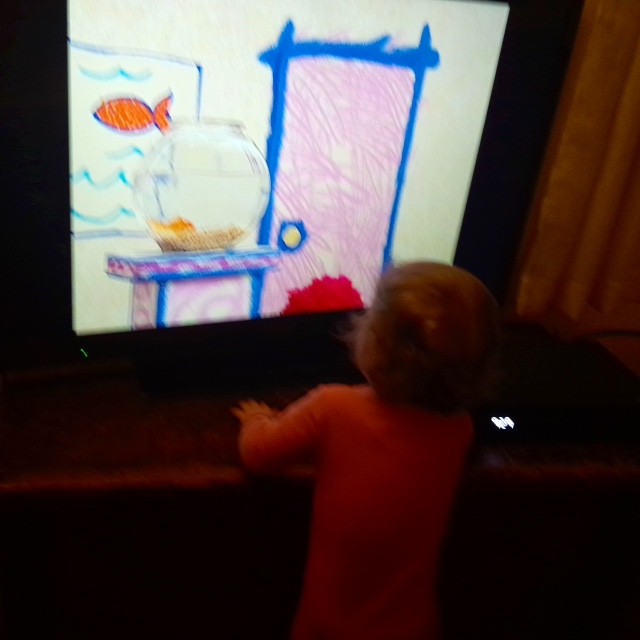
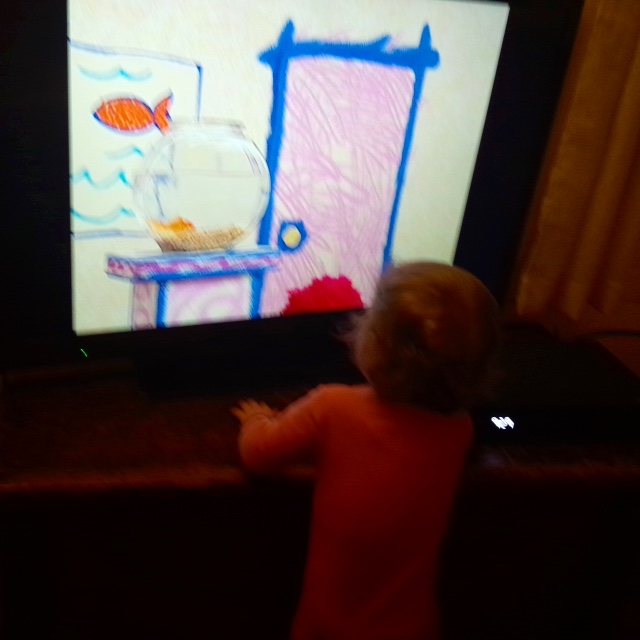
child tv  d e clark 2014


Another parent said, “The word gadgets itself causes an explosion in the minds of parents. We, as parents, are responsible to give our children everything they want, but it’s a day-in and day-out thing for them.”


We live in the information age and gadgets and internet are required to access that information. This has become a double-edged sword for adults and parents – they understand the need for gadgets and internet and happily give them to children as a sign of being a good provider and then get stressed about children over-using or abusing the technology.


The internet has opened many doors for us. It has made lives easier. It’s fun and easy, it’s great, but like everything, it has a dark side. Spending long hours on gadgets is what can be termed as gadget addiction. Any attempt to stop it or limit this creates anxiety and distress in the child. Similarly, Internet Addiction Disorder is a condition where a child compulsively and, almost always, unproductively uses the internet; he is distressed at any attempt to limit its use.


Cyberpsychology, Behavior, and Social Networking, a forum for understanding the social and psychological impact of today’s social networking practices, published a scientific paper where researchers analyzed 80 studies, including 89,281 participants from 31 nations across seven world regions. All empirical reports from 1996 to 2012 that adopted the Young Diagnostic Questionnaire or Internet Addiction (IA) Test for assessing generalized IA were studied. They found that internet addiction has emerged as a universal issue. A global prevalence estimate of 6% was found, which means roughly 400 million people are addicted. Internet Addiction Disorder (IAD) has been reported to cause neurological complications, psychological disturbances, and social problems.


Internet addiction was found to be higher in nations with greater traffic time consumption, pollution, and dissatisfaction with life in general. Other studies in the same journal have shown that in a sample of Chinese students, inflexible coping style was the psychological mechanism that explained the link between Internet addiction and psychosocial maladjustment.


The American Society of Addiction Medicine (ASAM) has officially proposed for the first time that addiction is not limited to substance use. They have defined addiction as a chronic brain disorder. Addictions, whether chemical or behavioral, are found to share characteristics such as compulsive use (loss of control), mood modification and the alleviation of distress, tolerance and withdrawal, and continuation despite negative consequences (Cash et al, 2012).


Dr. Kimberly Young, one of the foremost researchers in this area, was the first to suggest that problematic computer use meets criteria for an addiction, and that it be included in the next iteration of the Diagnostic and Statistical Manual of Mental Disorders (DSM).


The child, who is addicted to internet or gadgets, spends hours on non-work technology-related computer or Internet or video game activities. There are associated mood changes, preoccupation with the Internet and digital media, the inability to control the amount of time spent interfacing with digital technology, the need for more time or a new game to achieve a desired mood, withdrawal symptoms when not engaged, and a continuation of the behavior despite family conflict. The child is anxious, irritable and nervous when not online. Sleep pattern is disturbed– eyes strained – leading to lower concentration levels. The child ends up neglecting family and friends, stops doing activities he used to enjoy and starts lying about time spent on the internet. Child reduces time spent playing with other children and may perform poorly in academics.


A parent complained: “In fact, I have parties and get-togethers and night-outs with his classmates and each of them comes with their I-pad or their tablet and each of them is discussing how to get to the next level on that particular game or how to download the next best game. The original intention with which I invite the child over for a sleepover is actually lost because I want them to interact.”


Debates are still ranging about how best to classify the behavior of internet or technology addiction. Some mental health practitioners argue that excessive internet use is a symptom of another disorder such as anxiety or depression rather than a separate entity (Cash et al, 2012).


Both China and South Korea have identified Internet addiction as a significant public health threat and provide remedial measures such as education and treatment. In the United States the government has not formally responded to this problem. However, while the debate goes on about whether or not the DSM-V should designate Internet addiction as a mental disorder, people currently suffering from Internet addiction are seeking help; and treatment for the disorder available in out-patient and in-patient settings (Cash et al., 2012).


The consequences of internet and gadget addiction affect parents the most. Most common are arguments between parents and children. The child wants to use to the gadget or wants the password to the computer or wi-fi, parents say NO because they want to control. Child argues back, fights with parents. This can be very stressful for parents.


There are consequences on learning and behavior. Internet and social networking sites make a child scan the information rather than read it thoroughly. Thus children who use internet have problems in paying deep attention, concentrating and thinking. Excessive use of social networking sites can lead to cyber-bullying, cyber stalking, age-inappropriate content, and identity theft. Children begin to equate happiness with likes or comments on Facebook. This has a negative impact of the child’s self-esteem.


The causes of this over use of internet or gadgets and devices are many. Virtual games or social media websites fulfill the desire of the child to get more freedom. Children can do whatever they like – children can become whoever they want. It is an empowering experience. Therefore to it is important for parents to understand how their child is using the internet, whether they are using aliases or pretending to be older than they are.


It has become a social norm to own gadgets and to be on social networking sites; if you do not do this then you are out of the group. Gadgets have also become a talking point among very young children.


The start of the problem can often be traced back to the parents’ behavior. Parents are often proud of their children, as young four-year olds, when they use smart phones and download You-tube videos. However allowing unrestricted use at such a young age is the beginning of addiction. Most of the times iPhones and other such gadgets used by children have been lent to them by a family member. Parents are often stuck between denying and giving children access to technology and this behavior is called the ‘pass-back effect’. Many parents also take the gadget away from children or force them to quit, believing that is the only solution to the problem. In severe cases, parents spend large amounts of money for “digital detox” programs for their children.


There are solutions and underlying all of them is teaching effective ways to a child to become technologically responsible – that is – balancing the use of gadgets for both learning and entertainment.


This requires work on the part of parents.


First, parents need to acknowledge that their child is suffering from internet or gadget addiction. Second, they need to work on time management with their child. Dr. Kimberly Young has offered solutions on how parents can regulate their child’s use of technology. One of her major recommendations is to use different strategies for different age groups. In younger ages such as pre-school or primary school, children could be encouraged to use technology applications that enhance learning or skills development. Children should be allowed a maximum of one hour of screen time under parental supervision. Young children cannot cope with addiction and react by throwing tantrums when denied gadgets or internet use. The problem only gets worse as they grow older.


As children grow older they crave for gadgets when they do not have anything to do or play with. Parents may give gadgets to pacify the child. Avoid this at all costs, says the expert. Balance gadgets with adequate physical activity and social interactions: Go to the local park. Take walks together. Plan weekend nature trips with your children.


It is the parent’s job to make the child “technologically responsible” – set guidelines; prepare an internet time log with the children; and give them a chance to become accountable. Parents have to teach the child not to follow the herd online if they are uncomfortable doing something. Experts say that parents can start with small steps such as stopping the use of gadgets during meal-time; and this rule should apply for all the members including parents, as they are role models. If parents are constantly using devices and gadgets, children will think that it is normal behavior.


Parents have to start communicating with children. Engage with children about their experiences on the internet without making it seem like one is snooping on them. To address excessive use, parents could also show children newspaper articles or other material on how excessive internet use has harmed other children.  Most experts agree that parents have to create time and space for children to communicate with them. This not only prevents and cures online and gadget addiction, it also builds a healthy and loving relationship in the family.


However, while parents very easily pass on gadgets to children, they do not want to be bothered by the constant demands or questions of the child, it seems that the solutions to internet and gadgets addiction demands the parent do the very thing they are unable to in the first place. Internet addiction requires hard work and good parenting at home. It requires time and in this age and time of efficiency it is perhaps easier to use a technology or machine as a baby- pacifier.


AT SCHOOL


The Asia Foundation recently announced an Education Strengthening Project in Afghanistan (TAF-EDU-MAY 2015), to rebuild the country’s ‘devasted educational systems and institutions’. The project hopes to use technology and computer-aided instruction to overcome the twin challenges of absence of pre-schools and low levels of literacy among parents in Afghanistan. The project says that countries ‘facing similar challenges in Asia and Africa (Pakistan, Bangladesh, Malawi, and South Africa) have turned to technology as a tool that supplements results.’


On the other hand, a September 2015 OECD report has found that students who use computers very frequently at school do much worse, even after accounting for social background and student demographics; although, overall, students who use computers moderately at school tend to have somewhat better learning outcomes than students who use computers rarely. And education systems (countries) which have invested heavily in information and communication technology (ICT) in classrooms have seen “no noticeable improvement” in results for reading, mathematics or science. Furthermore, technology does not seem to narrow the gap between socio-economic classes, it often amplifies them.


This report should make single-minded technology-pushers think hard: Is technology the only way to make a dramatic difference in the lives of children and make the future better?


Many successful persons and companies, who influence how others think, continue to propound that technology can change the world dramatically and unarguably for better. Is it because they truly believe technology can make children smarter and have the evidence for it? Or is it because annual global spending on educational technology in schools has been valued, by technology analysts Gartner, at £17.5bn, according to a BBC report? Is it not worth asking whether these influential agencies and companies are financially connected to technology and e-commerce? Isn’t this question relevant after the lessons learned about experts and their prediction of markets before the great crash and global recession less than a decade ago?


Whatever the underlying reasons, the dominant belief of our era screams: technology is the panacea for all ills. The same holds for the education sector — a sector entrusted with the task of ensuring that our future generations are trained adequately to address and cope with problems they face and make the world a brighter and better place. Therefore, technology is pushed hard in classrooms; if technology is the future, then future generations have to be educated accordingly. Organizations such as the National Association of Advisors for Computer in Education shout out loud: “Information-Communication Technology (ICT) is not the future of our children’s education, it is the present and we need to make investment in ICT now!”


The OECD report gives us a cause for pause.


“Students, Computers and Learning: Making The Connection” – the report of the Organization for Economic Co-operation and Development (OECD) cited above examines and analyzes data from the Program for International Student Assessment (PISA), an exam taken by 15-year-olds in over 170 countries from Chile to China, Colombia to Canada, Israel to Ireland, and United States to United Arab Emirates.


More than 70% of the students in the countries studied had used computers in schools, but classroom technology had not made much of a difference in outcomes. However, there is a difference. Compared to countries such as Sweden, Greece or Australia where students were exposed to computers between 30 to 60 minutes on average in schools, the better performing areas such as South Korea or Hong Kong used it for nine to eleven minutes respectively. The top performers in the PISA tests were Singapore, Korea, Hong Kong-China, Japan, Canada and Shanghai-China. This reflects closely their performances in the 2012 print-reading test, suggesting that many of the skills essential for online navigation can also be taught and learned using standard, analogue reading techniques. Therefore, what is more important than pushing devices and software in classrooms is to ensure that every child reaches a baseline level of proficiency in reading and mathematics.


The OECD believes that teaching children the basics, even in the old fashioned analogue manner, may do more to create equal opportunities in a digital world than solely expanding or subsidizing access to high-tech devices and services. Giving devices away will not make the world better, it is a good teacher who changes us. Afghanistan, which is relying heavily on the OLPC (One Laptop per child) programme subdised by USAID, should take cognizance of this.


Andreas Schleicher, OECD Director for Education and Skills, says: “Technology is the only way to dramatically expand access to knowledge. To deliver on the promises technology holds, countries need to invest more effectively and ensure that teachers are at the forefront of designing and implementing this change.” The report concludes that successful integration of technology in education is not so much a matter of choosing the right device, the right amount of time to spend with it, the best software or the right digital textbook.The key elements for success are the teachers, school leaders and other decision makers who have the vision, and the ability, to make the connection between students, computers and learning. The report suggests that schools should invest more in training teachers for better classroom learning with or without technology.


Ironically, we live in a digital world of e-commerce where teachers, to use Manuel Castell’s phrase, have become disposable labor. The OECD report says we need good teachers. Does it seem too late to turn back the clock?


In a neoliberal world, where almost all industries that serve humans and humane interests have had their budgets slashed, teaching is a part time earning opportunity, a second income and is attracting people who have the least interest in thinking. Teachers have been treated badly with wage cuts and larger classroom loads. They are doing the minimum work for minimum wage and even when wages are increased their habits of complaining and performing at their lowest stays with them. Teachers have forgotten what it means to learn.


There is no doubt that technology can help teachers. Teachers can source latest educational developments, creative lesson plans and visual information with the help of her gadget. However, scouring through millions of megabytes of information on the internet can be tiresome and time-consuming, and few teachers have the ability or the inclination to harness these geeky gifts. Readymade software and prepackaged programs, however ill-designed, are easier to offer to the students. Thus, teachers take the easiest way out and students start mimicking that behavior. In learning and classroom it is not often the low hanging fruit that should be picked, unlike a profit making business. Thus, teaching and schools cannot fit into the efficiency and profit-driven model of private business. This is where technology use in classrooms hits a stumbling block and fails the test of creating better learning outcomes. Technology and its tools need a good teacher too.


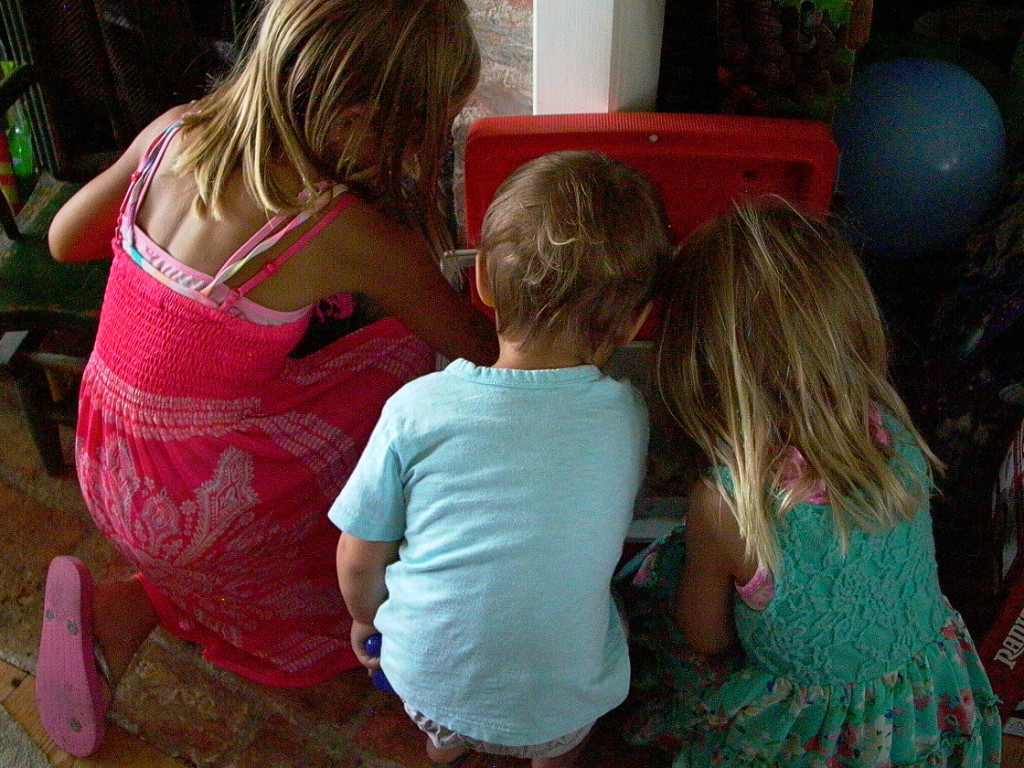
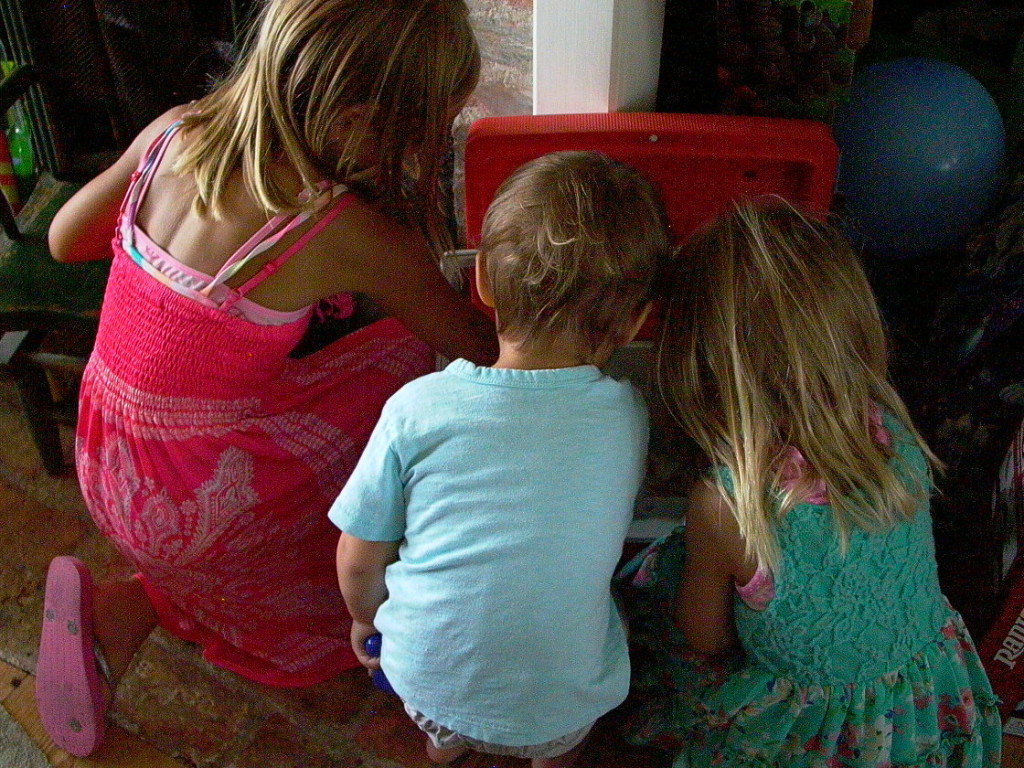
L1010109 children d e clark 2014


AT HOME and AT SCHOOL


It is obvious we need both better parents and better teachers. Who has the responsibility for creating that? Do we have the technology to create better teachers and parents? Or will the technology soaked children of today grow up to naturally become better parents and teachers?


Ask any patient and she will tell you that it is not the medicine or surgery or treatment she receives, it is how they are treated by the doctor or the hospital. They do not care is the more common complaint. If we care so much about whether others care about us, then isn’t it time for us to care for our children? Not by writing a check or handing them a device. By being human towards them and teaching our children to become human. Shouldn’t being human come naturally to us?


References

Cover image and other images in article by Debra Clark.


Diabetes prevalence

http://healthintelligence.drupalgardens.com/content/prevalence-diabetes-world-2013

Data source is the Sixth edition of the International Diabetes Federation Atlas of Diabetes


http://www.cbsnews.com/news/371-million-people-have-diabetes-globally-about-half-undiagnosed/


http://www.diabetes.co.uk/diabetes-prevalence.html


Applying the rules of the market to education: Does it pass the test?

 “Education, like the Earth, is an onion whose core is suffocating.” ~  Shankar Ramachandran


75 million children and 774 million adults still do not have access to quality education. Nearly 10% of the global spending on primary education is lost due to poor quality that fails to ensure that children learn. Thus one in four young people in poor countries are unable to read a single sentence. In India, while the richest young women have already achieved universal literacy, the poorest are projected to do so only by 2080. Thus, inequality in educational opportunity is the biggest stumbling block to universal education. The rich continue to gain while the poor continue to lag. Education is no longer the great leveler that is thought to be.


This “global learning crisis” is costing governments $129 billion a year. Inequality of opportunities is a major obstacle to development. Ten countries account for 557 million, or 72 per cent, of the global population of illiterate adults. India is among 21 countries facing an “extensive” learning crisis because less than half of the children are learning the basics. The other countries include 17 countries from sub-Saharan Africa, Mauritania, Morocco and Pakistan.


These are the findings of the 2013/4 Education for All (EFA) Global Monitoring Report. Education is pivotal for development in a rapidly changing world. The EFA report explains how investing wisely in teachers, and other reforms aimed at strengthening equitable learning, transform the long-term prospects of people and societies. The report states that equity and quality education will be pivotal in the post 2015 agenda.


The Education for All (EFA) movement is a global commitment to provide quality basic education for all children, youth and adults. At the World Education Forum held in Dakar in the year 2000, 164 governments pledged to achieve EFA and identified six goals to be met by 2015. Governments, development agencies, civil society and the private sector are working together to reach the EFA goals. The Dakar Framework for Action mandated UNESCO to coordinate these partners, in cooperation with the four other conveners of the Dakar Forum (UNDP, UNFPA, UNICEF and the World Bank). Every year since 2002, the Education for All Global Monitoring Report assesses progress and shares good practices. It also makes concrete recommendations to achieve the goals set in Dakar.


Although the report, ‘Education for all – global monitoring report 2013-14′, places India in the top bracket of countries likely to achieve a primary enrolment target of at least 95 per cent by 2015, but questions the quality of education, placing India among the 21 countries facing an ‘extensive’ learning crisis. To illustrate the “learning crisis” faced by India, the report compares Vietnam and India and quantifies the difference between the two countries in education. In Vietnam, students perform well, on an average, on tests administered at different levels with varying contents. In India, however, children’s learning progress declines in higher grades. In Vietnam, 86% of eight-year-old children answered grade-specific test items correctly. Similarly, 90% of children aged eight in India did so. However, when 14 to 15-year olds were asked a two-stage word problem involving multiplication and addition, 71% of children in Vietnam answered correctly, while in India the percentage dropped to 33%.


An “ambitious” curriculum, which outpaces the child’s learning ability, including that of disadvantaged learners, is found to be the most significant factor behind the poor learning outcomes of Indian schools. Contrast this to Vietnam — where the curriculum focuses on foundation skills and is closely matched to what children are able to learn, especially disadvantaged learners. The report points out that India’s curriculum “outpaces what pupils can realistically learn and achieve in the context and time given.”


India’s poorest continue to remain illiterate despite enrolment in school. Even after completing four years of school, 90% of children from poorer households remain illiterate. And this also holds true for around 30% of kids from poorer homes despite five to six years of schooling. Besides, only 44% of rural students in the Grade 5 age group in the state of Maharashtra and 53% in the state of Tamil Nadu could perform two-digit subtraction. And it will take another 66 years for poor young women of the country to achieve universal literacy.


******


The Essayist spoke about the problems confronting education in 21st century, especially in the context of India, with Shankar Ramachandran, an educationist, who early in his life moved from a corporate career as a chartered accountant to his calling of educating children in villages. He has completed a Master’s degrees in Education and a Master’s degree in International Peace Studies at University of Notre Dame along with short fellowships in United Kingdom. He has been teaching in India since 1992 and has created a unique reading program for children called Spells, which takes a holistic approach to reading and learning. It involves parents, and addresses the emotional as well the cognitive element of learning to read.
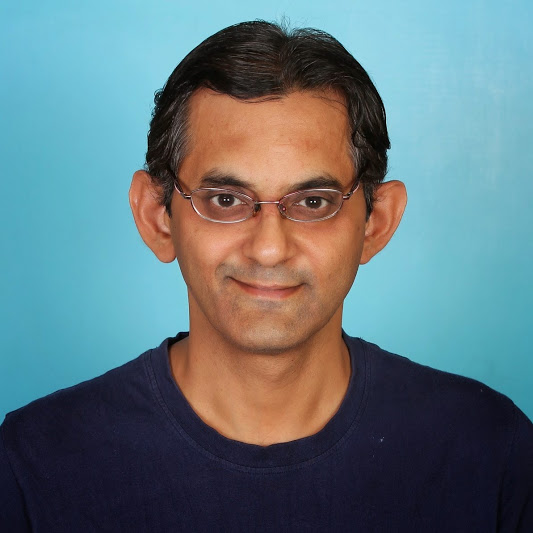
 

shankar ramachandran


Most parents want their children to read because they firmly believe that if children read then they will learn. In fact children often complain of parents harassing them to read their school textbooks. What most families do not discuss openly is that most children never learn to read properly at early ages; they often develop a fear of reading. Shankar’s method involves parents and encourages children to learn to read at early ages so that they can then go on to read to learn at higher grade levels. Along with Imagic Foundation he is now using this method to encourage reading and language learning in primary schools that serve children and families from low-income urban slums in Mumbai.


SR = Shankar Ramachandran

TE = The Essayist


******

TE: You have been involved in the education system for the past two decades in various capacities – both inside and outside the formal education system. What are the critical problems you find in the education system today?


SR: Let me cite a couple of problems, which, in my opinion, are as insoluble as ink stains on new linen.


The first is the existence of not one, but multiple education systems. We talk of the education system as if there is one education system. This is a basic mistake we make when we talk of improving the education system. There are multiple systems of education in the same city and at the same time. They are organized layer after layer – a different layer for the rich and then for the upper middle and then for the lower middle (that is very aspirational) and then the slightly poor and then the very poor and so on. This is the problem of stratification of education into class groups.


Of course, as is true everywhere else within a market system, where you pay more you get more: better quantity of services and quality of services.


This follows the layering of markets in general, for health care and residential spaces and for all consumer products and almost everything on the planet. There are televisions for the rich and televisions for the poor, hospitals for the wealthy and hospitals for the needy, homes for middle income groups and homes for the poor.


One can argue that these divisions are as timeless as the common cold, and so they may be. We can also take it for granted that products for the rich differ from products for the poor in quality, health benefits and longevity. Multigrain breads and organic eggs are unaffordable to the poor; wealthier hospitals may offer better health care. First class section in planes offer better services than economy class on the same flight.


And so in education, private schools may outperform public schools that are stretched for resources and staff quality. Can we live with such quality variations in health or education? I go back to the example of the airplane mentioned earlier. It is accepted that the first class gets better service than economy. But can we offer, say, emergency parachutes and life-saving equipment only to the first class passengers?


And, more importantly, when the plane crashes, does it matter if you were in first class or economy?


TE: We understand that you are arguing that educational quality differs substantially for the rich versus the poor and this shows in the data presented in the UNESCO report mentioned earlier in this article? However, using your airplane metaphor, are you arguing that the education system is crashing?


SR: Yes, I use this airplane argument for the education system. There is the first class which gets better service and then there is the inhuman economy class. However you will find this argument even in the work of British sociologist of education – Basil Bernstein.


Education was supposed to be the great equalizer – the great leveler. Education was the opportunity that was talked about when democracy emerged and constitutions were written for modern nations. Nowadays when I talk of stratification in education I am blamed for being philosophical and not practical. The detractors tell me that it is a philosophical argument that we must reserve for another day.
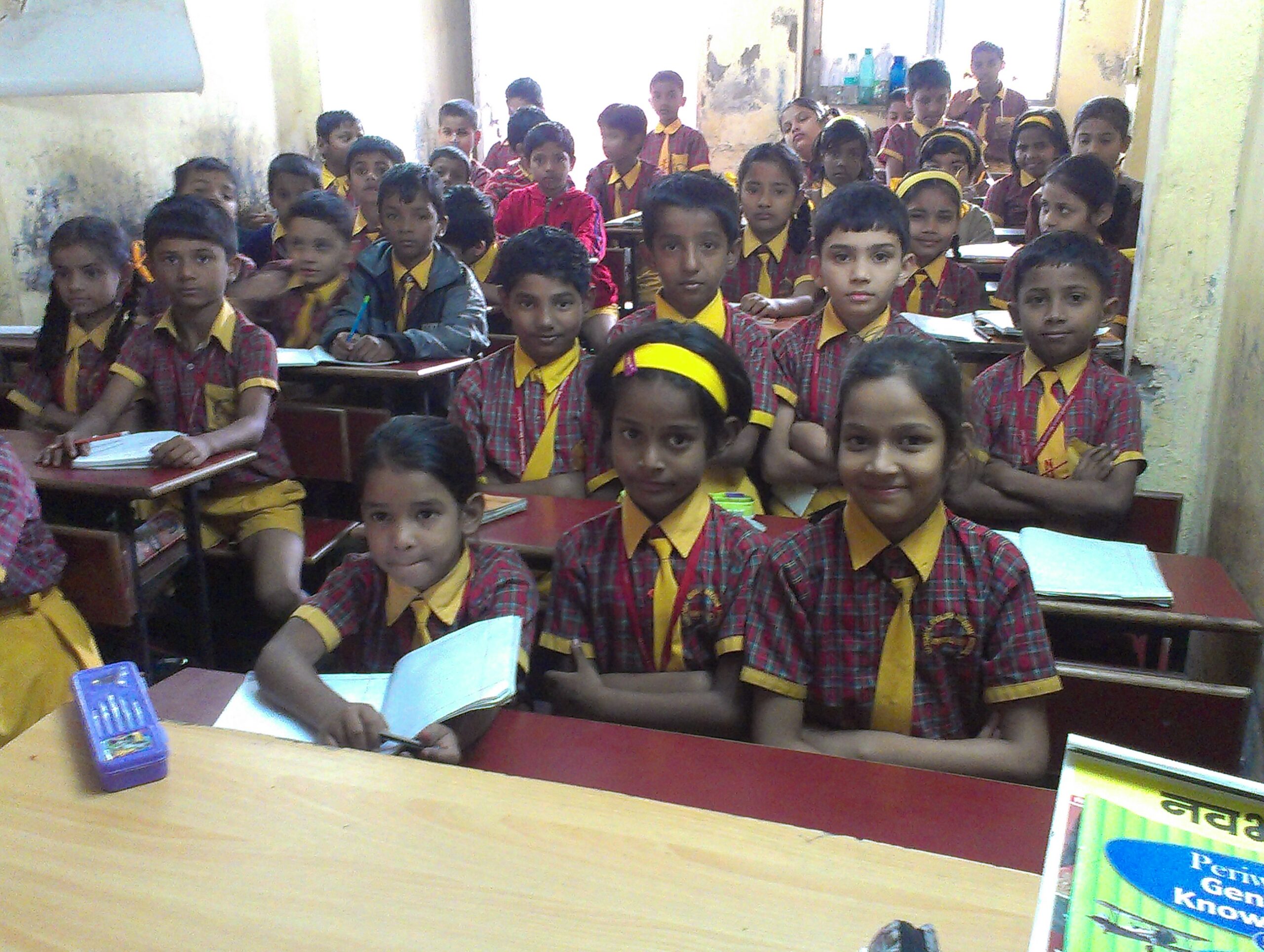
 

class iii


However, if talking about the stratification of education is philosophical; and if we must deliberately ignore that education was sold as the legs on which a solid democracy would walk and run; we should also agree that democracy is philosophical. The same detractors would scream and abuse me if I said that democracy was philosophical and they should stop voting. How can we take a concept like democracy and then cut off its legs (which happens to be education) and say now use this legless wonder called the newer, shinier, and easy-to-use version? Democracy is not a consumer product of the market place. Democracy is a sacred notion and we have to respect all its components and all its attributes including education as the ladder and platform of opportunity for all.


TE: So, one of the problems in education you mention is the stratification or inequalities in education. This leads to multiple systems of education – some for the rich and some for the poor. And of course those who pay more get more.  However, it seems to me that you are now talking of a different problem: the problem of applying market principles and rules to education?


SR: We have made democracy marketable and now we are making its foundation – education – marketable.


This leads me to the second problem I see in education, and of course it is linked to the first. While education mimics the market, it has been unable to draw, at least in India, the talent that the market draws. In Finland, the teacher is paid on par with a doctor or a lawyer. In India, a few higher education institutions and some private schools may have highly paid teaching staff. However, in most primary and secondary schools, teachers lack training, professionalism and self-belief. Moreover, they lack wages. When they have their own hungry bellies to fill, are they likely to whet the appetite of forty or sixty hungry minds?


In several low income private schools in Mumbai, an average teacher earns between Rs 4000 (65 dollars) to Rs 7000 (115 dollars) a month. The wages are insufficient unless the teacher bolsters it with after-school tuitions. Outside of Mumbai, the situation is far grimmer. This article in the link mentioned below throws light on this issue.

http://www.theguardian.com/world/2014/mar/11/india-education-state-private-school


Needless to say, staff motivation is low, staff turnover is high. Can we continue to put on a fight against such mind-numbing odds? That is an enigma for Economists and Planners, but they sing, ‘Don’t you ask me what to do, I’ll tell you TINA TINA TINA’ (Sung to the tune of Quando Quando Quando). TINA. There is no alternative.


Is that what we should teach in our schools to our children? TINA – That there is no alternative. Perhaps that is what our children have been learning and therefore there are no innovations and inventions happening in a country of 1.2 billion people.


TE: So what is the alternative? What can be done?


SR: I intentionally veer towards a problem which has several elegant solutions. If I were to run a school, this is the area I would first upheave. And continue to upheave. CURRICULUM. This is also something that has been identified as a problem by the UN report you mentioned earlier.


Let me offer three arguments why curriculum is a problem in India.


First, Indian communities have always had an affinity to pomp, celebration and occasion, and the education equivalent of pomp is examination. We can, perhaps, trace the malaise to the royal spectacle of swayamvars, where princes underwent examination before a bride chose them with a garland of flowers. King Vikramidtya had to use his wit and wisdom to get rid of the Vetaals of ignorance. Ife he failed, he lost his head. The love for testing has pushed curriculum and instruction into being bridesmaids to the wedding of the child, to examination.
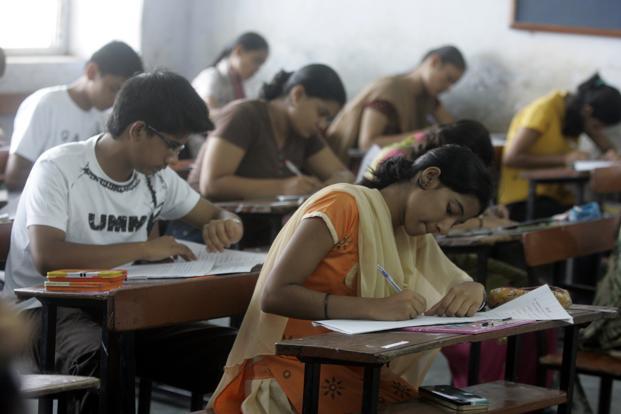
 

Exam (1)--621x414


Examination is the Oracle that predicts social mobility and privileges. A student who does well in the examination goes to the best institute, say IIT (Indian Institute of technology), which then becomes a ticket to go abroad, and thus the student scurries up the social ladder. Preparation for the Examination then becomes the whole purpose of education. Parents with monetary resources prepare intensely in this challenge. They enroll their child in multiple coaching classes and tuition classes (over and above the regular school). Those without resources drop out. This unforgiving approach has widened the abyss that divides the rich and the poor: the rich are over-educated and the poor, under-prepared. The average rich student in Mumbai clocks at least 12 hours of additional tuition every week in addition to the time spent in school. Parents of many poor students try to emulate this by stretching their financial resources, but it is usually not enough. Outside of Mumbai, in the hinterland, the situation is testier. The UNESCO report states that India’s poorest continue to remain illiterate despite four years of learning (http://timesofindia.indiatimes.com/india/In-India-poor-kids-are-illiterate-despite-4-years-of-education-Unesco-report/articleshow/29524124.cms).


We must also remember that the rich student gets support at home from educated parents. The poor kid has no chance of competing in this race of the fittest. This is, of course, inherently, unjust.


How can a catapult compete against a cannon?


Third, Examination needs standardization, if only to give the smug impression that everyone stands a fair objective chance. There are standardized curriculum for each age group. Every student must run the same course, leap over the same obstacles and heave the same tomes in her back-bending bag. We have already seen the differences in resources and preparation. The poorer kid learns very early that the race is too challenging for her. She is trailing behind her better-trained peers, her results are a nightmare for her, and her confidence in her own abilities are shattered very early. How long can she hold up the pretense of being equal?


TE: Are the differences in education only between the social groups? Isn’t there a difference within social groups too? In my own school, when I was a student, I found great variations in learning abilities among my peers?


SR: True, this is not just a problem between the rich and the poor. The inequalities crop up within each strata too, for various other reasons such as intelligence, motivation and determination. Every child who trails his peers in the classroom hears the same sibilant whisper as he opens his standardized textbook: Sleep. Shut. Quit. While he sleeps, his parents and teachers get into a triangular blame game: the teachers blame the boy and the parents, the parents blame the teachers and the boy, and the boy wants parents and teachers to go to sleep too.


The school and classroom have to pay attention to each kid, play to his strengths and rectify his weaknesses. Thus, children need attention – individualized attention. They can get this at home if the parents are willing to give their time and also willing to learn. Many parents from the upper classes can afford to do that. One of the spouses can be a stay at home parent. However, in the poor family, the income from both parents is barely sufficient. So most poor parents outsource the education of the child to the school system. However, the school system is in a trap. It can only hire poorly paid teachers who are minimally qualified and maximally unmotivated.


This has put the Indian education system in a peculiar situation. Every stakeholder in the system is on their own hamster wheel. They are pedaling furiously but going nowhere.  The parent works extra hours to make enough money to pay for extra coaching classes, the student is running from classroom to tuition classes, the teachers are busy grading exams, and no one is learning. The coaching classes pocket the money. It is an India Rupees 2000 crore (US$320 million) unregulated industry in India. Why would venture capitalists and private equity firms fund coaching classes in India? I do not think they are interested in improving quality of education or reaching education for all. They are private companies interested in making money or taking money from those willing to give it up? Parents in India in their blind quest to give their child a leg up the education ladder are giving it up by the fistful

(Read http://forbesindia.com/printcontent/36587).


The UN report does not go into these issues at all – the marketization of education in India. That is one of the primary reason that the curriculum is not being changed aggressively. There is money to be made by keeping children dumb. This is the new, shinier democracy that I talked of earlier – it has amputated the educational legs of democracy and is now only getting high on money. Does this new kind of democracy want a dumber citizenry?  Writing reports may be necessary but is simply not sufficient. The United Nations has to confront the issue head-on.


TE: How do we get out of this? How do we move towards a better system? What would be the starting point? And what would be one underlying principle of that education system?


SR: The first step is to free the children, the teachers and parents from the stranglehold of examinations.


assembly 1


A child in an average school has 30-40 days dedicated to formal testing every year. Over 10-12 years of schooling that works out to nearly 360 days of testing. Compare this to a child in Finland, who has almost no formal testing during that entire period.


It takes less than a day to really assess a child, so why spend 360? What rituals are we completing?


We must not forget that these rituals are accompanied by pressures, endless preparations and tuitions, mindless memorization. All in all, a colossal waste of time.


There is a fundamental pedagogical reason for doing away with examination, too. We want children to be curious, to ask questions and to seek information. However, the classroom education experience expects them to merely answer questions all the time, never ask. It expects them to take knowledge as a given, only to be reproduced, never to be challenged or questioned. Examinations ask, students answer. Nothing else matters. Paulo Freire’s banking analogy comes to mind. Examination turns students into passive receptors.


Thirdly, testing serves no purpose if it is not accompanied by remediation. Let us say that a test result tells us that Student A is struggling, and Student B is brilliantly endowed. What does the teacher do with this rich information, which takes less than an hour to gather? Does she use this insight to make some change inside the classroom? Does the teacher help Student A to overcome his difficulties?


Rarely. The teacher calls the parent and asks them to arrange for remediation or tuition classes, usually after school. What does Student A then do in class? Start preparing for the next test, which he already knows he is going to underperform. There is very little remediation done inside class. This undermines the chief purpose of testing.


Fortunately, the Central Board of Secondary Education in India has taken a few corrective steps. They have made the Grade or Standard 10 board exam voluntary. Several progressive schools around the country do not have testing in the primary and middle schools. These healthy initiatives need to become the norm, not the exception.


The Right to Education (RTE) says that students cannot be detained in any class up to grade nine. That, in my opinion, is another nail from the government upon the coffin of testing. It is up to schools now to bury the monster.


TE: What can schools do, if they do not test?


SR: The moment you do away with examinations, you make a great switch inside the school: the switch from curriculum-centric education to child-centric education. The examination makes the curriculum the be-all and end-all of education; the child and her needs do not figure in this equation at all. The child slowly drops out of the process which is meant to help the child. The child dragged, pushed and finally drops out. Which is what the troubled slow learner does in the end.


A 2014 Human Rights Watch report mentions that over 40 per cent of Indian students drop out before Standard 8, and most of these students are from the ‘lower rungs of Indian society’. These children feel discriminated in classrooms and are made to sit at the back of the class. They leave the school because they ‘do not learn’ anything.

http://www.hrw.org/news/2014/04/22/qa-talking-discrimination-and-school-dropout-rates-india


Strange, is it not? Teachers are teaching but students are not learning. That is a familiar tale even in the most elite classrooms.


A UNICEF report in 2013 says that children are dropping out not because of poverty or work, but because they are not learning anything in school. They term this a National Emergency.


http://www.thehindu.com/news/national/out-of-school-children-and-dropout-a-national-emergency-unicef/article4611287.ece


TE: How can we get around this? Get rid of examinations?


SR: If we remove examinations, the focus on the curriculum dims and the child comes towards the foreground. The teacher then becomes the adept cameraman who can wield the lens cleverly to perform this trick.


We can then start paying attention to the development of foundational skills in the children. Foundational skills are those that help the child become a better learner – and this helps her throughout her life.


Let me take the example of English language learning. A child typically reads around eight to ten short stories or extracts and five to six short poems in a year. Because of examination, the child learns these handful of lessons repeatedly through the year. In India, in addition to schools, the student also enrolls in coaching classes or tuition classes in the evening and the mother also forces the child to read at home. Thus, the mother, the coaching class or tuition teacher and the school teacher revise these 8 to 10 extracts and 5 to 6 poems repeatedly. The child is forced to commit them to memory without understanding them. Usually, there is very little analysis or depth: the revision is merely a repetition of knowledge-based low-order question and answer.


This is very little work done in a year.


No wonder, then, that literacy, reading and comprehension rates in India are low. A World Bank study, reported by Time magazine this year corroborates this.

http://time.com/2956888/india-education-decline-world-bank-report/


My belief is that the child of eight should read at least 200 pages of age-specific literature every week. At an after school language learning center that I run, over 90 per cent of the students easily achieve this for at least 25 weeks a year. That means around 5000 pages of informal untested reading a year. Around 120 books a year. 120 fun-filled story books of kings and princesses, talking birds and sleeping dragons, children and grown-ups.


reading program


Let me quantify this in time.


The average reading rate is 4 pages a minute for age-specific books. We are then talking about 1250 minutes of reading in a year. This means 50 classroom periods of 25 minutes each. Even if half is done at school and half at home, in 25 periods a year at school and 25 minutes of reading per week at home, a student can achieve this target.


Instead, a student currently reads one measly text book of less than a 100 pages in a whole year. And schools still say they have no time to read inside the classroom (Hindustan Times, Mumbai, November 26, 2014). They say they have barely time to finish the syllabus. A syllabus of one little text book of under a 100 pages a whole year.


Schools have no time to read because they are conducting examinations. That is a simple trade off.


TE: Well you are asking a very important questions: Which is more important – Examinations or Reading? I guess we know the answer is reading, but could you explain to us – How?


SR: Almost every education expert in the world, every language expert would say that reading is extremely beneficial for children. Reading is one of those foundation skills. Reading increases imagination, comprehension and predicated better grades. Yet our teachers have no time for it.


Can we say the same about examinations? Leading education systems in the world such as Finland have dropped examinations. Why would they do so if they were indispensable for children?


The trick is simple. Replace examinations with a meatier curriculum. Replace one textbook with 120 story books. Instead of testing students on one text book, let the student experience and summarize the 120 books she has read. This will teach the children great skills: summarizing, narrating, sequencing; predicting, imagining and word-building. The child’s speed of reading also increases. And speed of reading is a great predictor of performance in middle and high school. Educationist Anne Cunningham has done some wonderful research in this area.


http://www.csun.edu/~krowlands/Content/Academic_Resources/Reading/Useful%20Articles/Cunningham-What%20Reading%20Does%20for%20the%20Mind.pdf


Another advantage of replacing a text book with 120 books is de-standardization. Students of different capacities can read books of varying difficulty. Not all students may need to read the same set of books. This will allow the gap between the weakest and the strongest child to narrow. In the class, the teacher can work with the weakest child while the strongest child reads independently. This allows remediation.


What I have outlined above is a case study for curriculum change in English language acquisition. Similar changes need to be envisaged in Mathematics learning, Science learning. All changes should lead children from being passive receptors to becoming active participants.


TE: You have mentioned parents as an important cog in the wheel. How do you envision the role of parents in the process of a child’s education?


SR: Parents have to first accept and believe that there is more to education than merely sending the child to a school. Parents have to be more involved in the child’s education, especially in the early years of education. Parents have to see education as fun rather than serious business. Parents have to see education as helping their children learn to live rather than just earn a livelihood. Education is seen as a means to an end – the end of earning money by finding a job in a corporate firm or government rather than learning how to live the good life.


Right now, in the present system in India where almost no recreational reading is done inside the classroom, it is left to the parents to introduce students to the pleasures of reading. There is enough evidence that wherever parents read to the child, children are brighter, more curious and perform better at school.


http://www.teachreadingearly.com/benefits-of-early-reading.php

http://www.reachoutandread.org/filerepository/readingaloudtochildren_adc_july2008.pdf


It is important then, that the parents begin reading with the child as early as possible, even when the child cannot speak or read.  That, in itself, can make the child very likely to enjoy school and stay in school.


While this may be easier for middle class and upper class parents, this is a huge problem for parents with lower incomes. In most cases, parents are not literate and cannot read. Second, they may not have the resources to expose their children to books. Their children have no exposure to reading at school, no exposure to reading at home. They suffer a double blow and continuously underperform their peers. NGO and CSR initiatives of corporate companies that care must step up and take action in this critical area. The most important thing is that we have to demonstrate to our children that we care about their learning. Caring is the first step towards building a great education system.


******

© Shankar Ramachandran and The Essayist, 2015


References:

Education for All: http://www.unesco.org/new/en/education/themes/leading-the-international-agenda/education-for-all/

Report: http://www.unesco.org/new/en/education/themes/leading-the-international-agenda/efareport/reports/2013/

http://timesofindia.indiatimes.com/india/In-India-poor-kids-are-illiterate-despite-4-years-of-education-Unesco-report/articleshow/29524124.cms

http://www.dnaindia.com/india/report-india-among-21-countries-facing-extensive-learning-crisis-2057112


Cover Image: learned, d e clark, 2015 


Song: Quando Quando Quando

http://en.wikipedia.org/wiki/Quando,_Quando,_Quando


© 2026 THE ESSAYIST

Theme by Anders Noren — Up ↑