The page stares back at me blank; cruel and unforgiving. The clock shows 9:11 p.m., the essay was due yesterday and I’ve got nothing. Somehow the idea of disappointing my editor is worse than my boss rolling his eyes a few weeks ago when I told him I forgot a document. Sure my boss can fire me if I screw up, my editor on the other hand kindly reminds me that my essays are important, that he likes them; that people laugh when they read them or are moved, that what I write is a good read. I always downplay it and think that if I don’t have time and skip one or two publications there is little lost, but is there? My editor thinks there’s a loss in my failure to write a piece, and he is so gentle when relaying the message that I feel I have to sit down and type, even if it is to say that this time around: “I’ve got nothing.”
So here’s the thing, I have not had any good inspiration lately. Somehow life has gotten into a rhythm and rhythms can be boring to narrate. I have been at my “new” job for over a year now, with a few ups and downs, nothing like a roller-coaster. My girls are a bit older now and have a more normal routine that even allows me an hour or two (when lucky) for myself. And my husband and I are friends as ever. Even the Momyers have been doing great, don’t get me wrong I am thrilled that they are all doing good, but as a very wise cousin once told me: “No drama. No glory.”
So there have not been any crazy situations, sudden needs for diaper changes in the middle of a conference call, a leap of faith to another city or job, a move to another house, or a tiny baby keeping me up at night. No, that’s over, my days are predictable now and I question myself as I sip my cup of tea in a quiet house: “How on earth am I supposed to write something interesting about that?”
Perhaps it is writer’s block, perhaps I’ve ran out of things to write or, perhaps, for the first time in many, many years I have finally achieved what I thought impossible: balance. There is steadiness. Sure a few curve balls are thrown at me from time to time, but in general things have gotten a nice pace. And here’s the thing, here’s my confession: “I like it.”
The craziness of days past made for fun anecdotes to write about, but left me weary. This recent routine I have achieved in my life has actually energized me personally, but left me with little or no inspiration. Has this balance and routine in my life made me a boring writer? And, should I feel bad about it? Or should I purposely throw myself into some insane situation to produce a better column this time around? Don’t many artists do that? I ask myself: Would it appear as if I was a pathetic writer if I generate and get into stressful situations for the sake of “the art?”
Is this what is called a mid-life crisis? When you know things are running smoothly and miss the excitement of the days when you felt like you were on a constant roller coaster of situations and emotions; and do you throw yourself into a situation that tampers with that balance? Is that what men do when they buy that shiny, new, red Porsche? Maybe, but I do not feel the urge to do something radical that borders in the ridiculous. On the contrary, I feel a guilty pleasure in enjoying this stability and steadiness that I have achieved. Not having some insane anecdote to write, for once, feels all right. I am enjoying the change of the season and being unapologetic about finally having gotten a hold of various aspects in my life. I hear myself talking in my empty room: “I am enjoying this peace and quiet.”
The problem is that balance makes for a boring read. I know readers like the column for a good laugh or a situation that draws on their empathy, a feel good story or at the very least to feel compassion for the woman who wrote about the forgotten contract while bringing her toddler’s books to a meeting. But what can you do when things are steady? Well, I asked myself and replied: “Write sincerely about the fact that nothing happened. Yet I feel all right. There is nothing wrong with you when nothing happens.”
How long this will last? Well, with my luck, hopefully a few more months. Perhaps for the next column I will have returned to my usual shenanigans and have some unbelievable story to tell that will crack up the readers, but for now I will go ahead and enjoy, without any guilt, the balance achieved and I do sincerely hope that someone somewhere will relate to this boring life and say what I told myself: “My life is boring and I forgive myself.”
Bhalotra, S., and Cochrane, T. (2011). ‘Where have all the Young Girls Gone? Identifying Sex Selection in India’, CMPO Working Paper No. 10/254. [online]. Accessed from: http://www.bris.ac.uk/cmpo/publications/papers/2010/wp254.pdf Accessed on October 15 2015.
Hvistendahl, M. (2011). Unnatural Selection: Choosing Boys Over Girls and the Consequences of a World Full of Men. New York: Public Affairs.
Internet and Mobile Association of India (Iamai) and IMRB International (2014). ‘Internet in India 2014’. Accessed from: http://www.imrbint.com/old/media/45..pdf Accessed on: Oct 2 2015.
International Institute for Population Sciences (IIPS) and Macro International. (2008). National
Family Health Survey (NFHS 3), 2005-06: India. Mumbai: IIPS.
International Institute for Population Sciences (IIPS) and Macro International. (2001). National Family Health Survey (NFHS 2), 1998-99: India. Mumbai: IIPS.
International Institute for Population Sciences (IIPS) and Macro International. (1995). National Family Health Survey (NFHS 2), 1992-93: India. Mumbai: IIPS.
Jha, P., Kesler, M., Kumar, R., et al. (2011). Trends in selective abortions of girls in India: analysis of nationally representative birth histories from 1990 to 2005 and census data from 1991 to 2011. The Lancet; DOI:10.1016/S0140-6736(11)60649-1.
Ministry of Health and Family Welfare. (2011). Family Welfare Statistics in India, 2011. New Delhi: Government of India.
Mulay, S., and Nagarajan, R. (2004) A Study of Ultrasound Sonography Centres in Maharashtra. Population Research Centre. Accessed from: http://prcs-mohfw.nic.in/showprcdetail.asp?id=242 Accessed on Oct 2 2015.
Medical Materials Clearinghouse at the Johns Hopkins University Bloomberg School of Public Health/Center for Communication Programs (1992). Big Family: Problems all the way, Small family: Happiness all the way, 1992, from the India Ministry of Health and Family Welfare. Retrieved from http://www.pbs.org/wgbh/nova/earth/population-campaign.html on 19th October, 2015.
Office of the Registrar General & Census Commissioner of India (2011). Census of India. [online]. Accessed from: http://censusindia.gov.in/ Accessed on Oct 2 2015.
Express News Service (2014) PM Modi takes leaf from Batra book: Mahabharat genetics, Lord Ganesha surgery, The Indian Express, retrieved on 9th November, 2015 from http://indianexpress.com/article/india/india-others/pm-takes-leaf-from-batra-book-mahabharat-genetics-lord-ganesha-surgery/
Planning Commission (2014). Report of the expert group on review of the methodology used for th measurement of poverty. New Delhi: Government of India.
Puri, S. (2005). ‘What were our parents thinking?’ South Asian students ponder the mysteries and inequities of sex selection. UC Berkeley News Center. [online]. Accessed from: http://www.berkeley.edu/news/students/2005/gender/gender5.shtmlAccessed on Oct 2 2015.
Reddy, S (2015). India’s Aspirations for Universal Health Coverage. N Engl J Med; 373:1-5.
Nearly 90% of 173 countries have one or more laws that discriminate against women states a World Bank report released in September 2015. USA is one of the 4 countries with no specific national laws requiring paid parental leaves for new mothers; Iran and Qatar are among 18 countries where married women have to take permission of their husbands to go to work. And in 32 countries, a married woman is prohibited from applying for a passport without her husband’s permission.
2058 – Remember this year. This is when women will reach pay parity with men in the US predicts the Institute for Women’s Policy Research. In Japan, an advanced industrial nation known for its commitment to a high quality work ethic, it is a very common conflict for working women to choose between a career and starting a family; 70% of working women stop working when they have their first child, and they stop for a decade or more. Women have had to apologize in front of co-workers for becoming pregnant. And one of every five young mothers experienced some kind of office harassment, according to Rengo, one of Japan’s largest trade union confederation.
Even after decades of working towards making women equal partners with men, the gap between them remains large. Women are half the world’s working-age population but generate only 37% of GDP. Female representation on corporate boards and executive committees around the world remains significantly small; with around 15% in America and less than 10% in India, China and Japan.
As much as $28 trillion or 26% can be added to the global GDP, if women play an identical role to that of men in labour market. The McKinsey Global Institute report (2015) calls this a “full-potential” scenario. Alternatively, in a “best in region” scenario, if every country matched the progress toward gender parity of its fastest improving neighbour, global GDP could increase by up to $12 trillion or 11% ( as seen in the figure below). Research studies have also shown a strong correlation between high-performing companies and those with strong female representation at the top. The evidence that investing in girls breaks the transmission of poverty from one generation to another has been documented by various researchers [Jones et al. (2010) and Levine et al (2009)].
Not just economic, gender inequality has been social, political, and domestic for a long time.
This inequality and discrimination against women is obviously wrong on moral, philosophical and human rights grounds; but now (in this age of neoliberalism) empirical evidence tells us that it is also taking an economic toll on nations. Discrimination against women affects the growth and development of nations and this has many political influencers and economists worried. Gender inequality has now become an obstacle to the current model of economic development and therefore grabs the headlines.
Gender inequality has been persistent and pervasive in society. Women in all regions of the world suffer subordination to men in the domestic, social and political spheres for generations. The fight for universal suffrage, just the right to vote, was a huge battle for women.
According to the most recent Social Institution and Gender (SIGI) Index from 2014, social inequality towards women is still widely prevalent. The SIGI index that measures variables including discriminatory family codes, restricted physical integrity including violence, son preference, restricted resources and assets and restricted civil liberties in 160 countries, showed that most of the countries, where data was available, had either a very high or high levels of social discrimination against women.
In terms of political representation, women are far behind. As of August 2015, only 22% of all national parliamentarians were female, a slow increase from 11.3% in 1995. Globally, there are 37 States in which women account for less than 10% parliamentarians, including 6 chambers with no women at all. The highest female to male ratio of political representation was found in Sweden (0.86) and Finland (0.82), while several countries had ratios as low as 0.05 (Yemen), India (0.11), Russia (0.11) and China (0.19).
Gender inequality in film and television (even in our fiction)
“The one area where we could reach parity overnight is on screen (TV and film), absolutely overnight…,” says Geena Davis, actor. Even Hollywood, blamed as the bastion of liberal ideas by conservatives globally, has fallen into the sexist trap. Gender imbalance is so pervasive that it exists even in our fiction.
The Institute on Gender in Media, a research-based organization out of the University of Southern California-Annenberg School of Communication, founded by Davis, promotes gender parity in media and entertainment industries. Research conducted by this institute found that between 2007 and 2014, women made up only 30% of all speaking or named characters in the 100 top-grossing films distributed in the US; and of all these female characters, only 20% were 40 to 64 years old. Merely 1.9% of those films were directed by women. The proportion of female directors on top-grossing films has actually fallen over the past 17 years, and only 5% of cinematographers are women.
In a report in the Guardian, Davis says that after the birth of her child in 2002, when she started watching more television and animation shows, she sponsored a study on gender depiction in family-rated films and children’s television over a 20-year period. The study found that for every female speaking character there were three males, while female characters made up just 17% of crowd scenes. Davis points out that this ratio seems to be pervasive: US congress? 17% women. Fortune 500 boards – 17%. Law partners, tenured Professors, Military – 17% female. Cardiac surgeons – 17%. Women in the Animation Guild – 17%. Journalists, print journalists are 19% women. Why does this percentage of women in leadership positions stall at about the same range in these different professions?
The question remains: Does society have only 20% women? If not, then why is sexism in fictional films so pervasive? Has it got something to with the fact that just like the larger society, decision-makers are overwhelmingly men and how can one get out of this imbalance? The Institute launches a Global Symposium on Gender in Media during the London film festival later this year to discuss and address these very issues.
*****
Life chances and life conduct
If gender equality is good for the economy, and good for growth and development, then why are countries and societies not making it a priority? Essentially women do not get the same chances in life that men get.
German sociologist Max Weber introduced the concept of ‘life chances’ (Lebenschancen in German), describing it as opportunities each individual has to improve his or her quality of life. A life chance is a probabilistic concept, describing how likely it is, given certain factors, that an individual’s life will turn out a certain way.
Weberian life chances can be seen as an expansion on some of Karl Marx’s ideas. Both Weber and Marx agreed that economic factors were important in determining one’s future, but Weber’s concepts of life chances are more complex; inspired by, but different from Marx’s views on social stratification and social class. Where for Marx the class status were the most important factor, and he correlated life chances with material wealth, Weber introduced such additional factors as social mobility and social equality. Other factors include those related to one socioeconomic status, such as gender, race, and ethnicity.
Sociologist, C. Wright Mills noted that everything from the chance to stay alive during the first year after birth to the chance to view fine art; the chance to remain healthy and if sick to get well again quickly; the chance to avoid becoming a juvenile delinquent; and very crucially, the chance to complete an intermediary or higher educational grade–these are among the chances that are crucially influenced by one’s position in the class structure of a modern society (1967).
A suffragist rally held in Hyde Park, London in the early 1900’s.
The issue of safety may help us understand the notion of availability or restriction of opportunities or life chances. For instance, in many countries, if a job requires returning home late at night families may not allow the woman to take that opportunity citing fear for the woman’s safety. In some cities women taxi drivers may find it hard to ply their taxis at night because of lax policing. This is an issue of law and order which is a state or system or structural responsibility. However, the fear of criminality and the general social stigma of crimes against women restricts the individual woman to jobs in the daytime; and even then there are other obstacles such as family responsibilities or care-giving for family members. This is a simplified illustration of the restriction of opportunities or life chances. There are many such instances in almost all spheres of life where one can clearly document the limited chances that women get. The question of gender equality at one level is the question of differential life-chances and standards for women and men.
Weber also noted that life chances are to certain extent subjective: what an individual thinks of one’s life chances will affect their actions, therefore if one feels that one can become or is a respected and valued member of society, then it is likely to become a reality and results in one being more successful and respected as compared to somebody without this conviction. In terms of agency and structure, life chances represent the structure, the factors that one has no control over. On the other hand the notion of “life conduct” – one’s values and beliefs, attitude to risk taking, social skills, or more generally, free willed choices about one’s behavior – represent the factors one has control over. According to Weber, together life conduct and life chances are responsible for one’s lifestyle. Until now the classic examples where women have achieved some goal despite the system has been one of strong will, a desperate desire to reach a dream, and mostly individual courage coupled with some fortuitous circumstances. We cite some examples of struggles below where individual women have risen above their circumstances. It has rarely been that the system or structure has laid out a path of equal opportunity for women. The studies by the World Bank or the McKinsey Global Institute clearly demonstrate that both at legal and the private sector or corporate level there is much to be done. However, we look at some examples below where individual women with courage have been able to organize a collective of other women to make a difference. It is life-conduct coupled with collective action that comes to mind when discussing cases where women have fought against the negative social, political, cultural or economic forces.
*****
Life-conduct and bottom up changes often through collective action
History is witness to the times when women have engineered their life’s outcomes by employing a strong-willed life conduct and maximizing the remote chances given to them or even by creating these chances for themselves as well as other women around them by rallying the collective.
In 2000, a second civil war broke out and brought systematic rape and brutality to an already war-weary Liberia. Leymah Gbowee, a 27 year old, newly graduated social worker and struggling single mother of four, had herself lived in a refugee camp for a time, and had been forced to send her young children away to Ghana for their safety. Anguished and angry, Gbowee responded to this conflict by mobilizing an inter-religious coalition of Christian and Muslim women and organized the Women of Liberia Mass Action for Peace movement. Gbowee and her allies, visited churches and mosques and distributed flyers that read: “We are tired! We are tired of our children being killed! We are tired of being raped! Women, wake up – you have a voice in the peace process!” They also handed out simple drawings explaining their purpose to the many women who couldn’t read. Ignited by these calls, thousands of women dressed in white, gathered in a fish market in Monrovia, praying and singing for peace; they gathered in the field along Monrovia’s central road and refused to leave. The women picketed in downtown Monrovia, they held events and news conferences, but mostly they sat, day after day, month after month, in searing heat and pouring rain, demanding that attention be paid. With outreach, the protests soon spread to rural counties, and across Liberia. The women only had a one demand: They wanted peace in Liberia.
In the face of the women’s actions, the talks grew more serious. The then president Charles Taylor left Liberia, peace finally came, and in 2005, after more strategic organizing by women, Liberia elected Ellen Sirleaf Johnson to be Africa’s first modern-day female head of state. Today, even as the country struggles economically, peace endures.
ooOoo
In 2011, Manal al-Sharif, a 32 year old Saudi woman, was arrested after a video of her driving her car surfaced on YouTube and Facebook. Saudi Arabia is the only country in the world to ban women – both Saudi and foreign – from driving. Manal al-Sharif, a computer scientist and mother of one, found this law to be highly discriminatory and disabling for women, especially for those who work. In early 2011, al-Sharif and a group of strong-willed Saudi women started a Facebook campaign named “Teach me how to drive so I can protect myself” or “Women2Drive” that pushed for women’s right to drive be able to move around without being dependent on anyone. Al-Sharif drove her car twice with prominent Saudi journalist, Wajeda Al-Huwaider, filming her. This video, posted on Youtube and Facebook got 6,00,000 views while the campaign’s facebook page got 12,000 supporters. Al-Sharif was arrested and her licence withdrawn. In reaction to al-Sharif’s arrest, several more Saudi women published videos of themselves driving during the following days. Saudi newspapers have been filled with articles in recent days detailing a rash of women taking to the roads — publishing confessions of women who drove their children to school, a father to the airport or themselves on errands.
ooOoo
In 1974, when the men of Reni, a village in the North Indian state of Uttarakhand were away at work, lumbermen with axes and guns showed up with government permits to cut 2500 trees. A little girl saw them and raced to get Gaura Devi, the head of a women’s group, who quickly alerted 27 other women in the village. Dodging threats and obscenities, the women resorted to hugging the trees, and dared the lumbermen to cut the trees over their dead bodies. As the news spread, women and men from other villages joined this non-violent protest, and eventually, after a four-day stand-off, the contractors left. The struggle labelled as the Chipko Movement (Chipko is the Hindi word for embrace) soon spread across many parts of the region, and such spontaneous stand-offs between the local community and timber merchants occurred at several locations, with hill women demonstrating their new-found power as non-violent activists (as seen in the adjacent image).
As the backbone of the agrarian economy, women were affected by the large scale felling of trees and the consequent environment degradation. By breaking out of their conservative moulds, these women activists, not only fought for their own livelihoods, they also endured to protect their environment. This movement achieved victory when the then Prime Minister issued a ban on felling of trees of 15 years until the green cover was fully restored.
ooOoo
In September, 2015, India witnessed its first ever women-led tea-leaf pickers strike in Munnar, the tea district of the south Indian state of Kerala. Without the support of dominant, patriarchal trade unions or their leaders, 4000 female tea-leaf pickers, filled the streets of Munnar for more than a week, demanding an increase in bonus and daily wages, which they felt were not just. The women were their own leaders. The unrest caught the trade union leaders, who consider the plantations their fief, unawares. The smarter ones sensed the anger and kept their distance. The odd leader who tried to appropriate the struggle faced the full fury of the women. When state leaders from the other regions tried an outreach, they were sternly told to stay away. Left and right, communist and Congress, no party was spared. Politicians, conscious of the impending local body elections, swallowed their pride and declared solidarity. A few women, leaders never before, represented the workforce at the talks. The union leaders signed the deal the women had negotiated. A higher bonus was agreed upon, and further negotiations promised higher wages and better work conditions. Since the success of the women-only Munnar strike, several other women-led tea-leaf plucker groups in the state have gone on an indefinite strike demanding equal wages.
This one-of-a-kind strike brought two points to the fore. First, the gender aspect of the mobilization – Pembila Orumai (Unity of Women) is how the women called themselves. This was an all-women led movement for women, for their rights of parity in wages. Second, the protesters were part of the organized sector and members of trade unions. Both aspects indicate a departure from the dominant political narrative of Kerala. The women were discovering agency and identifying trade unions as a male preserve, a trend increasingly visible in women dominated work sectors.
Women leaders reaching an agreement with the state Chief Minister, Oomen Chandy and the labour minister, Shibu Baby John
ooOoo
Since May 2015, married women in the villages of Haryana, a north Indian state, infamous for its patriarchal norms and skewed sex ratio and where almost 7 out of 10 pregnant women have anemia (lack of hemoglobin in red blood cells resulting from dietary iron deficiency which reduces oxygen carrying capacity of the blood), have been stepping out of their homes, gathering other married women and adolescent girls from their locality and talking about simple and cost-effective behaviors to reduce anemia and improve their health. These women are volunteers, also known as ‘health coaches’, who were selected and trained as part of ‘Leadership Haryana’, a community mobilization program. Health coaches were trained to conduct daily conversations, weekly group discussions, and local events to ensure that families, especially women, discussed anemia and improved their nutritional intake of iron. The high prevalence of anemia in the state is mainly due to deficiency of iron in the diet. This affects women more sometimes because of the norms of eating last and eating what is leftover and the family not putting a high priority on the woman’s health.
Despite facing resistance from her husband and in-laws, 25 year old Renuka, a housewife and mother of one, signed up to become a health coach of her village. Renuka aced her higher secondary school examinations but was married off as per her parents will soon after her results were declared. Renuka wanted to study further, become financially independent and take care of her parents, but the patriarchal society in Haryana dictate norms that a married woman must stay indoors and take care of her family as her primary goal. Before joining the Leadership Haryana program, Renuka’s daily routine consisted of waking up early in every morning at 5 am, washing, cleaning and milking the cows, single-handedly preparing meals 3 times a day for a joint family of 6 members, working in the field as well as tending to every single chore at home. Renuka was not allowed to step out of the house without wearing the purdah (covering the head and face with a dupatta or a veil) and had to be accompanied by her husband or father-in-law. Renuka felt bonded and suppressed in her own house, where she could not express herself to her husband or talk freely with her in-laws. She was dependent on others for her every need.
After becoming a health coach, Renuka was able to step out of her home on her own and visit other women in the village, for the first time after her marriage. Within a month, Renuka transformed herself from a shy housewife to a confident community health worker. Renuka was able to convince once reluctant pregnant women to use government antenatal care services; she encouraged and followed-up with adolescent girls to get routine blood tests done and take iron folic acid tablets regularly.
A health coach in discussion with women in a village in Haryana
Today young married women and girls in the village look up to Renuka and go to her for advice on health and domestic issues. Her husband and in-laws have started respecting her. With her growing confidence and the budding network that the community mobilization program has created for her, Renuka has been planning to take a small loan and set up a female-led cooperative for making local handicrafts.
Renuka seized this opportunity or chance that came her way of becoming a health coach and by adding her life conduct of hard work and dedication to this life-chance utilized both to resolve the conflict between what society expects of her (docile and submissive housewife) and her personal goals (earning a livelihood and becoming financially independent). She is now on her way to creating more opportunities for women in her village. Renuka wants to strive to bring her village to a point where every girl is educated and earns her own living.
ooOoo
On December 1, 1955, Rosa Parks, a 42-year-old African American woman who worked as a seamstress, boarded a Montgomery City bus to go home from work. She sat near the middle of the bus, just behind the 10 seats reserved for whites. Soon all of the seats in the bus were filled. When a white man entered the bus, the driver (following the standard practice of segregation) insisted that all four blacks sitting just behind the white section give up their seats so that the man could sit there. Mrs. Parks, who was an active member of the local National Association for the Advancement of Colored People, quietly refused to give up her seat. She was arrested and convicted of violating the laws of segregation. Parks appealed her conviction and thus formally challenged the legality of segregation. Local civil rights activists conducted non-violent protests, led by their new leader – Martin Luther King Jr. A year after the boycott of the Montgomery bus system and protests by activists, the US Supreme Court ruled that the segregation law was unconstitutional and the Montgomery buses were integrated. The Montgomery Bus Boycott was the beginning of a revolutionary era of non-violent mass protests in support of civil rights in the United States.
Rosa Parks display tremendous grit and conduct and stood her ground on that day. She initiated a new era in the American quest for freedom and equality. However, it was the collective action that was triggered by Rosa Parks’ stand that became significant in the fight against discriminatory policies and practices. Often strong will and life conduct exhibited by one person requires collective action on the part of those around her to see the end goals come to fruition as systemic changes.
******
Life Chances and top down change in the structure
These life stories demonstrate the power of strong-willed women who defied prevalent social norms that worked against them, and created chances for themselves. These women made a choice to alter and improve their life’s outcomes through determined life-conduct; and through that conduct and mobilization of a collective, they also created opportunities for other women around them.
At the risk of losing their lives, Leymah Gbowee and the Women of Liberia Mass Action for Peace movement strived relentlessly for restoring peace in the country. Manal al-sharif dared to fight for women’s rights in the patriarchal kingdom of Saudi Arabia. Gaura Devi and many of the hill women faced the wrath of forest contractors and businesses for embracing the trees in their forests and protecting the environment. The all-women protesters in Kerala brought the city to a standstill for nine long days and dared to demand parity in wages for female tea-leaf pickers. Health coaches, like Renuka, from Haryana, continue to challenge obstinate gender norms, by stepping out of their homes and enabling other women in the village to fight anemia by changing the norms in the kitchen and how food is served in homes. Rosa Parks’ determination sparked off the revolutionary era of non-violent mass protests in support of civil rights in the United States.
These stories of bravery are popular among people and the press because they feed into the notion of heroism, hard-working individuals who fight against odds and adversity to triumph and achieve their desires. This is the assumption and belief underlying popular non-fiction books such as the secret – you will get what you desire as long as you desire it strongly and with single minded purpose. Life-conduct is always attractive to cameras, to film-makers and novel writers as well as individuals. The discussion of creating life-chances is difficult because the system is abstract and is always seen as harder to change.
Such courageous individuals are few and far between. Surely, women in Scandinavian countries are strong and determined, but it is not just the will and determination of individual woman such as the ones cited above that has brought greater gender equality to Scandinavian countries. There is something beyond the individual that can change and affect human lives and that is the structure or the social system. There is a strong link between a general sense of equality in society, attitudes and beliefs about the role of women, the legal and political framework and gender equality in workplaces and communities. Equality at work goes hand in hand with equality and home and community, as the former cannot be achieved without a sense of equality in society.
Scandinavian governments have made it possible for both men and women to combine work and family, resulting in more women in the workplace, more shared participation in childcare, more equitable distribution of labour at home, better work-life balance for both women and men and, in some cases, a boost to waning fertility rates. Policies in these countries include mandatory paternal leave in combination with maternity leave (480 days per child which can be taken any time until the child is 8 years old), generous, state-mandated parental leave benefits provided by a combination of social insurance funds, tax incentives and post-maternity re-entry programmes.
Norway introduced a 40% quota for female directors of listed companies in 2006, to come into force in 2008, it was a first. Non-complying firms could theoretically be forcibly dissolved, though none has in fact suffered such a fate. Since then gender quotas for boards have been imposed in Belgium, Iceland, Italy, the Netherlands and Spain (though with less severe sanctions). eBay was touted as one of the most gender diverse tech companies, with 42% of female representation in total staff; with as many as 28% of those females held leadership roles.
In Scandinavia, women not just hold a strong representation in the top echelons of management, but are also given chances quite early in their career path through mentoring and sponsorship, as part of gender diversity initiatives. Sponsorship (getting noticed, groomed and mentored for senior level positions) is and always has been a critical part of an executive’s path to the top. McKinsey reports show that companies have done much better when the CEO and the gender diversity leader personally took charge of the sponsorship program, selected a group of high-potential women, and invited them to spend significant time with the top team. Women in the program really got to know the CEO and senior-team members, and vice versa, and most have since moved up the management ladder.
Equality starts with equal and adequate life-chances for both men and women.
Development economist, Esther Duflo, stresses that continuous policy commitment to equality for its own sake may be needed to bring about equality between men and women. Duflo calls for the need to expand opportunities given to girls and women; she raises the need to educate girls, to allow women with the freedom take up employment opportunities, own property, take decisions, and to lead people. Duflo also writes that in order to bring about equality between men and women it will be necessary to take policy action that favor women at the expense of men, and it will be necessary to do that for a long time.
Nobel laureate, Amartya Sen has long argued the need to increase women’s voice—through mechanisms that increase their independence and empowerment. What does this mean in practice? It means focusing on equal education, ownership rights, and employment opportunities outside the home. This means increasing the life chances available to women. Sen also says that any development program has to give greater power to women as they have been persistently neglected, underutilized, underpaid, under-appreciated—and over-exploited.
Some governments and private sector companies have shown the way in pushing gender responsive policies that create equal opportunities for men and women and encourage gender diverse environments.
Going back to the McKinsey and World Bank reports on gender discrimination in corporations, perhaps, many companies (and governments) are happy to announce, launch and implement cosmetic changes, training and sensitivity programs and not create any real change in the organizational structure and culture.
Gender diversity programs may not last, but gender equality values certainly do.
Governments and private sector must find incentives to push for gender equality or be inspired to pursue initiatives for the sake of equity. Change has to happen within the structure, the system, and from the top. However, is there something that each of us can do to create an opportunity, a chance for both men and women to achieve their potential, to improve their quality of life?
Though, most people are impatient. Changing the system requires concerted, collective action, maybe even participating at rallies and protests. People are often unwilling to participate. They ask: What is it that can we do at our own level to create opportunities for people? Can we create opportunities and chances for others? Can we support the strong life conduct of women?
The answer to that question is a series of questions: Do you allow people to come together and express their voice in your organization or do you stifle dissenting voices? Do you meet another human halfway? Does your mere presence itself give people the confidence that an opportunity will be created soon?
Gender equality is easy to talk about but difficult to do because many gender inequality values are embedded inside us – both men and women. A gender-equal society will require changes in the way we see and act in the world. And while the system or structure can create the life chances and opportunities or legal framework which will enable us to move in the positive direction; in the meantime, all of us, men and women, have to show strong life-conduct. We cannot hope for messiahs and leaders. We have to become the leaders of the gender equality movement in our workplace, community or home
What is it that we can do every day to make small changes that may not be noticeable at first but slowly add up to create a big change over time. It is like the wind working away every day and every minute to erode huge mountains. Small actions in our families, neighborhoods, companies that proclaim and reinforce our belief in equality. Can we make some shifts in the way we raise our families such that we shake the fundamental pillar on which gender inequality stands. Can we increase sensitivity and empathy among our sons just as much as try to make our daughters strong?
As Gloria Steinem said: “We’ve begun to raise daughters more like sons… but few have the courage to raise our sons more like our daughters.”
An ancient Greek term which, in its philosophical usage, describes the theoretical moment where all judgments about the existence of the external world, and consequently all action in the world, are suspended. (Wikipedia)
“Mexican immigrants in the US are drug dealers and rapists” – The talk shows screamed while they claimed they were merely quoting Donald Trump, a candidate for the presidential election of the United States, a possible future leader of the free world.
I was curious about this “Mexican immigrant expert” and his assertions about an entire group of people being labeled as people who commit the worst crimes: rape and drug-dealing. Google and Wikipedia informed me that Trump was a billionaire real estate tycoon, who considered amassing money as adequate credentials for becoming the President of the US. I kept digging for his expertise on Mexican immigrants, and all that I could find was that he had been to Mexico. I have been to Mexico too and no one has given me drugs or raped me….
In recent times, it is astonishing to hear strong opinions and ongoing arguments among people with little or no expertise on the subject matter. No facts, just opinions, little evidence but strong convictions. It is pervasive everywhere you turn, newspapers, talk shows, on television, Twitter….you name it. It appears that our 24 hour media (social and anti-social) encourages strong opinions for purely entertainment value. All they want is your eyeballs because they are all selling something – 24/7 sales for 24/7 consumers. Sensationalism sells. Hence, the immense sensationalism created by the media to grab our attention. What could be more sensational than calling an entire group of people as rapists and drug-dealers?
The need for audience has devolved such that channels that are supposed to give us news become entertainment programs. The news reporters vying for audience argue, fight, clown, fall over each other, and do what it takes to keep our eyeballs on their shows and channels. Boring and insipid facts are ignored and sometimes crucified in favor of sensational prejudiced, polarizing opinions. As the society is constantly connected to these media outlets, the temporal distinction between facts and an opinion- rendering- entertainer is lost. This is translating and transforming us into a society where people now have a need to have an opinion as a marker of their awareness. In recent times, every time I hear a strongly worded judgment, I cringe. Is this a well thought out opinion based on deep domain expertise or is this a snap judgment generated by the presence of microphone and the media?
I recall the ancient Greek term “Epokhé” which is a moment when all judgments about the presence of the world, as well as actions within the world, are suspended. The skeptics thought of themselves as zetetekoi or searchers of truth. They had concluded that the truth or correct way is unknowable. So, true happiness lies in neither confirming nor denying what we cannot know. Why did they not come out and say, we cannot know anything? Well, that would be too strong an assertion and would be contradictory in its own way. So, they opted for a gentler strategy of suspending judgment and invoking Epokhé. Socrates summed up this philosophy: “The only thing I know is that I know nothing.”
After several centuries, Montaigne, the French philosopher and master of humility, summed up this viewpoint of the “searchers” in his unique style. Montaigne added a new dimension to Socrates’ thought by proclaiming: “The only thing I know is that I know nothing and even of that I am not too sure”. Thus the notion of Epoché: suspending judgment.
Strong opposition to Montaigne came years later, in the form of Descartes, who famously declared, “I think, therefore I am”. Two and half centuries later, we have translated this into, “I judge, therefore I am”. Gone are the days of nuanced discussion and argument, the subtlety of positives and negatives, the gray zone between the right and the wrong. We have entered an era of black and white, right and wrong, my way or the highway. In an era of an attention deficit hyperactive population, where 140 characters of Twitter tests the limit of our attention span and a news article is our surefooted pathway to domain expertise, judgment is omnipresent. Everyone, who is anyone on the media circuit, is judging, opining, and criticizing without a moment of reflection on their real understanding of the subject matter.
Every time I hear of someone giving a strong opinion, I am reminded of the time when I had judged someone strongly. I was staying in a small town in Trinidad. I had gotten used to the roads to venture on and the ones to avoid. One day when I was on my way to the clinic, I saw a man using a cricket bat to break open the car windows. This was first time I was observing an obvious act of violence. With a mix of anger and fear, I was thinking of the right course of action. I remembered my host family’s advice “Vandalism is rampant, you better stay away” and hence decided to stay away. I rushed away so as escape any spill overs from this horrendous act. I walked away thinking about the hooliganism in this beautiful country, the impact of poverty on human behavior. I thought about the lack of education in the society, the lack of opportunities and its impact on crime rate. I wondered if incarceration was a better option and on and on. The next morning over breakfast, my host family of two nurses was excitedly talking about a baby with heat stroke admitted to their hospital unit the day prior. “The baby was very sick but I think it he will survive. I don’t know what would have happened if that young man had not rescued the baby”, said Leona. Martin responded, “Yes, did you see his picture in the paper this morning?!?, A true hero! ” and he handed me the local newspaper. I was shocked to see that it was the picture of the same “hooligan” from the day before. I read the article and was shocked to read that he had come upon a baby in a locked car and had broken the windows to fetch the baby and ran with the baby to the emergency room. The doctors reported that the young man had saved the time by his quick thinking. I was too ashamed to admit to Martin and Leona how I had observed the man in the act and had walked away judging him harshly. Instead of helping in this Good Samaritan act, I had chosen “not to get involved” and walked away. I wondered how that “hooligan” may have judged me when he saw me walk away.
Judging a person does not define who they are, it defines who you are.
Tempering ones’ opinion and judgment seems like the wisdom of the ages and of aging. When I was a young intern, rounding with a senior consultant, we evaluated a patient with fever and cough. The consultant asked the medical student about the possible diagnosis. The medical student promptly replied, “Pneumonia”. The consultant was impressed, “Absolutely! It is likely to be pneumonia and it should be the first consideration. What are the other possibilities?” The student was flummoxed, “It IS pneumonia!” The consultant waited for a moment and then chuckled and said, “Oh! I remember the times when I knew so little and was so sure of everything. Having practiced for years, I have learned never to be so sure”. As time has gone by, I have continued to appreciate the wisdom of these words, in my professional and my personal life.
However, I cannot turn on the television, read the newspaper, or peruse a magazine without reading strong opinions and harsh judgments. Clearly, we have reached an era of know-nothing ignoramuses having the microphone to themselves rushing to judge everyone and everything in sight sucking up all the oxygen in public discourse and leaving the civil discourse of multi-faceted truth seekers, the zetetekois, with the carbon dioxide in their wake.
It appears that judging others and giving strong worded opinions is the only way to get attention. Their absolute certainty makes me wonder if God has been communicating with them and hand down the truth. Judging others and then judging people who judge others has become the staple of the public discourse. This has percolated into society at large where everyone feels that they have to have an opinion. The paradigm of read, learn, know, inquire and opine, has evolved into a circus of microphone, audience, judge, and opine. Least wonder we are creating know-nothing, attention- seeking, opinionated leaders who have become the media darlings. The harsher they judge, the more sensational and controversial the situation seems, the more discussion revolves around their opinion. Now follows the swarm of opinionators who give an opinion about this opinion. And the saga continues…………
I yearn for the era when closed minds came with closed mouths. However, I suffer through era of closed minds and wide open mouths.
And where are the moderates, the nuanced, the polymaths? The moment someone describes the various aspects of the truth, she/he is condemned as an “academic” which has become synonymous with too much knowledge without the ability to execute. Gentle reminder about the ones who executed too much: Mao Tse Tung, Adolf Hitler, Pinochet….. and the “academics”: Mahatma Gandhi, Martin Luther King Jr, Noam Chomsky ……Noam Chomsky is rarely mentioned in the current media , and I doubt in this age the others on my list would have made it into the media’s circle. Wisdom of the ages is embodied in soft spoken, reflective, contemplative individuals such as Dalai Lama. However, the media loves the, “He may be right or he may be wrong but he always has an opinion” personas. There are many a Faust in our midst with little understanding but happy to give an opinion on any subject matter in order to continue in the limelight.
“A major advantage of age is learning to accept people without passing judgment.” Liz Carpenter
To say “I don’t know” takes a lot of courage. It also takes a lot of knowledge. People who know a lot also know where the lacunas in their knowledge lay. It is the polymaths who are adept at knowing the limits of their knowledge.
I remember reading the following ruminations of a university student: “When I graduated from college with my bachelor’s degree, I thought I knew everything about my major. I might as well get my Masters, it definitely will not be too much work. I already know all there is to know, after all, I graduated with honors in my classes. I spent the next two years getting my Master’s degree and at the end of it, I panicked, “Oh, God, I know nothing about this major. Let me go ahead and get my PhD so that I learn what I need to know about this subject”. I spent the next five years getting my doctorate and at the end of it, I was relieved. “So what if I don’t know much about my subject, nobody seems to know this subject very well anyway”. It is the increased knowledge that made the student recognize the deficiencies in his understanding of the subject matter and highlighted the gray zones. Unfortunately, it seems that for now we are cursed with the cacophony of the opinionators with knowledge base and the expertise of a bachelor’s student. “I don’t know” and “I am not sure” is rarely heard, and usually reserved for the court deposition.
In this age of increasing fear and alarm about everything that concerns the “other”, fear of foreigners, fear of immigrants, fear of refugees, fear of people who do not look like us, fear of people who walk or ride a bicycle instead of drive a car, fear of people who hold a thought other than what we believe – the world needs to return to the skeptics notion of Epoché. While trying to understand the right way of living, the right action, the ancients had responded with the gentle “Epoché”. They believed that one has to live to the local customs, laws and tradition and so when does not know or understand other customs and traditions, the correct attitude is “Epoché”. What do you think of the Mexicans? “Epoché”. What do you think of Donald Trump? “Epoché”…….
Don’t judge someone because they sin differently than you.
Bhalotra, S., and Cochrane, T. (2011). ‘Where have all the Young Girls Gone? Identifying Sex Selection in India’, CMPO Working Paper No. 10/254. [online]. Accessed from: http://www.bris.ac.uk/cmpo/publications/papers/2010/wp254.pdf Accessed on October 15 2015.
Hvistendahl, M. (2011). Unnatural Selection: Choosing Boys Over Girls and the Consequences of a World Full of Men. New York: Public Affairs.
Internet and Mobile Association of India (Iamai) and IMRB International (2014). ‘Internet in India 2014’. Accessed from: http://www.imrbint.com/old/media/45..pdf Accessed on: Oct 2 2015.
International Institute for Population Sciences (IIPS) and Macro International. (2008). National
Family Health Survey (NFHS 3), 2005-06: India. Mumbai: IIPS.
International Institute for Population Sciences (IIPS) and Macro International. (2001). National Family Health Survey (NFHS 2), 1998-99: India. Mumbai: IIPS.
International Institute for Population Sciences (IIPS) and Macro International. (1995). National Family Health Survey (NFHS 2), 1992-93: India. Mumbai: IIPS.
Jha, P., Kesler, M., Kumar, R., et al. (2011). Trends in selective abortions of girls in India: analysis of nationally representative birth histories from 1990 to 2005 and census data from 1991 to 2011. The Lancet; DOI:10.1016/S0140-6736(11)60649-1.
Ministry of Health and Family Welfare. (2011). Family Welfare Statistics in India, 2011. New Delhi: Government of India.
Mulay, S., and Nagarajan, R. (2004) A Study of Ultrasound Sonography Centres in Maharashtra. Population Research Centre. Accessed from: http://prcs-mohfw.nic.in/showprcdetail.asp?id=242 Accessed on Oct 2 2015.
Medical Materials Clearinghouse at the Johns Hopkins University Bloomberg School of Public Health/Center for Communication Programs (1992). Big Family: Problems all the way, Small family: Happiness all the way, 1992, from the India Ministry of Health and Family Welfare. Retrieved from http://www.pbs.org/wgbh/nova/earth/population-campaign.html on 19th October, 2015.
Office of the Registrar General & Census Commissioner of India (2011). Census of India. [online]. Accessed from: http://censusindia.gov.in/ Accessed on Oct 2 2015.
Express News Service (2014) PM Modi takes leaf from Batra book: Mahabharat genetics, Lord Ganesha surgery, The Indian Express, retrieved on 9th November, 2015 from http://indianexpress.com/article/india/india-others/pm-takes-leaf-from-batra-book-mahabharat-genetics-lord-ganesha-surgery/
Planning Commission (2014). Report of the expert group on review of the methodology used for th measurement of poverty. New Delhi: Government of India.
Puri, S. (2005). ‘What were our parents thinking?’ South Asian students ponder the mysteries and inequities of sex selection. UC Berkeley News Center. [online]. Accessed from: http://www.berkeley.edu/news/students/2005/gender/gender5.shtmlAccessed on Oct 2 2015.
Reddy, S (2015). India’s Aspirations for Universal Health Coverage. N Engl J Med; 373:1-5.
Halloween, on October 31, is now a Hallmark celebration. A global event celebrated by people around the world as a fun-day with candy and costume. Hallowed Evening, or the evening before All Saints Day – All Souls day, a celebration of the dead and departed, has now become a global party, a globalized commodity with some offering Halloween sales.
However, some still traditionally go to cemeteries and pray for the souls of the departed. And sometimes the party is taken to the cemetery. Day of the Dead, or Dia de Muertos, celebrated in the first two days of November is a national holiday in Mexico. People go to the graves of the deceased, leave their possessions, offer their favorite foods and beverages and flowers, and build ofrendas or private altars at home to honor the dead and departed.
Brazil has the public holiday of Finados on November 2. In India, there is the Hindu tradition of pitru paksha, which usually falls in the month of August-September, as families conductdeath rites of Shraddha or Tarpan, and offer prayers for the souls of departed ancestors. Then, there is the Bon festival in Japan celebrated in August and similar festivals in Africa.
All these festivals across the world are special ways of bringing the past into the present, even if for one day, and celebrate the existence of our ancestors. We make the dead alive when we remember.
However, reading about the days of the dead made me wonder. While we spend one specific day remembering those who have died, trying to know them again; what if we knew (and remembered) that one specific day when we would die.
What if we all had death-dates instead of birth-dates?
What if parents, families, doctors, midwives, entire communities somehow lost all memory of the day and date when a child was born and all that they knew, for certain, was the exact date he or she would die.
How would life turn out if we had death-dates instead of birth-dates?
For instance, if someone’s death date was 6th of July, would we wish them and sing happy death-date to you? We would perhaps get a cake with candles to celebrate his death-date, and for once, blowing out candles at death-day celebrations would assume real meaning.
With the current attention of birthdates we focus a lot on life, and the mystery of life. However, with a world of death dates we may just start focusing our attention on living.
A birth-date gives us a start date for life while we are happy that someone is born and tell them to celebrate this wonderful thing called life; we often ponder about an uncertain future and end up making this life miserable. A death-date, on the other hand, gives us a very specific end-date; and maybe that might just push us to enjoy things a little more. Would we become hedonists, or follow the teachings of Epicurus, or just turn stoic?
Would some of us invest money and buy doctors and geneticists in order to delay our death dates? But then death-dates are fixed like birth-dates, even if we sometimes lie about them, and cannot be moved. What would we do then? Try to swap our death-date with someone else? Try to cheat ourselves just like we do with time when we change the clock to save daylight.
Would we lie about our death-dates? After all, many people lie about their birth-dates? Lying about birth-dates makes us younger in other people’s eyes? What would lying about death-dates achieve? Would we claim that our death-date was earlier than scheduled or later? What date would our driver’s license have – or our passports?
And what about horoscopes – that entire astrology industry would perhaps suffer because the most important event of our future, our death, has already been predicted and determined.
How would the inherent determinism of having something like a fixed death-date influence the life of free-will? What are the choices we would make if we had death-dates instead of birth-dates?
“It has been said that it’s the space between the bars that holds the tiger. And it’s the silence between the notes that makes the music. It is out of the silence, or “the gap,” or that space between our thoughts, that everything is created—including our own bliss.” Dr. Wayne Dyer 1
The gaps in life…those interminable periods of silence, with no interaction, alone with one’s thoughts. Those gaps is where we can find our self, our truth, and even as Dr. Dyer said, our bliss.
How, you ask? By allowing the gaps to occur. Simply allowing. Instead of avoiding a gap in life, to actually settle into it. Be with the gap. Learn from the gap. Unfortunately, most human beings are uncomfortable with this suggestion. Most will wander from one relationship to the next with little or no break in between; go from job to job; Jump from a facebook interaction to twitter to phone to TV to computer …all in an effort to not be alone.
For we are communal beings. Social media is at an all time high in usage, and we believe we are socializing by using it. But are we really?
Are we really connecting with others on a personal level?
Are we really touching others deeply?
I’m not sure.
Perhaps we are mostly gliding through our days, filling each moment with doingness. We don’t want to be alone, and with the current state of relationship between technology and humans, that trend doesn’t look like it is gong to shift anytime soon. For many people, we are more connected to our phones than we are to another carbon based life form.
Perhaps we are creating a false sense of intimacy.
And we certainly are not allowing for downtime, breathers, or what I will call gap consciousness. Actually creating gaps in our life when we can stand back and gaze upon it with objectivity. To be able to see from a different point of view, a different perspective, and perhaps discover a deeper truth.
From a discussion between two world renown women, Buddhist teacher, author, and nun Pema Choron and singer/activist k.d. Lang, “…both (Pema Chodron and k.d. Lang) spoke to the importance of finding and making gaps in our lives – space in which we can find distance between ourselves and what’s occurring, or the storylines we tell ourselves about what’s occurring. Cultivating “gap-aciousness,” as they affectionately termed it, helps us to deescalate; to notice when we’ve been triggered by someone or something; to see when we’re falling into old and unhelpful patterns; to respond rather than react.”2
Another well known Buddhist teacher and author, Jack Kornfield, speaks of labeling physical sensations to create distance from them.Tara Bach, teacher of Buddhist meditation and spiritual awakening, talks of the “sacred pause.” These spiritual teachers are preaching the same theme: embrace the gaps.
It is in the emptiness that somehow we face the reality of ourselves. We fear this, though. Are we scared of what we might discover? Or of what we may feel? And what that may trigger in us?
We are dying spiritually as human beings. Between the doingness and busyness of our lives, most of us allow little time to support our spirits, or beingness.
Are we dying to know the truth (which could create an obsessive attachment), or is there a belief that the truth will kill us, thus we avoid seeking it (an aversion).
I feel it is the latter.The more we avoid the silence, the gaps, the breaks, eschewing aloneness, the more we avoid facing our reality and discovering our truth.
What does aloneness teach us? Perhaps before the next interaction on social media or the next foray into a relationship, if we choose to use this time for meditation, we can still our minds, calm our breath, and tap into the Divine energy source, centering ourselves in peace. Instead of reaching for our phone, opening our lap top, or going out, we actually have the opportunity to sit within the silence of the gaps. It may be incredibly uncomfortable at first. What I have found is that after spending sometime in the gap, what my mind created as a mountain of projection, actually dwindled to a molehill of reality.
Dr. Wayne Dyer in his book “Getting in the Gap”, is highly supportive of establishing a meditation practice in order to create healthy gaps in our lives. “The practice of meditation takes us on a healing and empowering journey into the gap between our thoughts, where all the advantages of a more peaceful, stress-free, healthy, and fatigue-free life are available. Wonderful as those benefits are, they are merely side-effects. The paramount reason for daily meditation is to put ourselves into the gap between thoughts where we can make conscious contact with the Divine, the creative energy of life itself. Through meditation, we can tap in to the abundance of creative energy that resides within us, and also a more meaningful experience of life, which enriches us permanently.” 3
When we rest in the gaps rather than run away, we are rewarded with a new perspective on our selves, our lives, and our interactions. This gives us a new found freedom. We are no longer bound by our once limiting thought forms and paradigms. We see, from this new perspective, that we have choice. Resting in the gaps or gap consciousness, gives us choice.
Mr. Kornfield, supports Dr. Dyer’s view, “The space between thoughts, gaps where we let go and are not identified with our thoughts, feelings, and reactions, arise all the time. “These gaps,” says the meditation master Chogyam Trungpa Rinpoche, “are extremely good news. They remind us that we can always rest in awareness, that freedom is always possible.” 4
I personally have found myself at this stage of my life wedged between different gaps: between relationships, between work projects, between living spaces. I am being my best not to fill the gaps with busyness or people. To not default to social media when loneliness overtakes me. Or to scour the internet for job possibilities. I am being with the gaps, breathing into them, allowing them to shape me, develop me, and guide me to my next steps.
I am resting within the gaps. Sometimes, though, the gap becomes overwhelming and I need some human connection. I will call a friend to chat or meet. We need these connections as a species. We also need as spiritual beings, silence…of the gaps.
I will leave you with a a recent poem I have written about the gaps in life. Perhaps you will take the gaps to heart, and embrace them.
Silence of the Gaps
It’s in the gaps where we discover truth,
our truth, only for us.
Stumbling, falling, we trip over
those voids in life between jobs, between partners, between visits,
the long, dark, stillness of a solitary night,
the unbearable aloneness of a cold, empty bed at dawn.
The fissures in our psyche where the fears, the doubts, and the worries get twisted and tangled,
a distorted melange of jagged, raw emotions.
We want to run, to hide, from the pain of it all.
Our souls know better,
they know to look for the gaps.
It’s there that truth will be found,
our truth, only for us.
It could bring us to our knees…hearts pounding, breath shortened,
shirt drenched in sweat, clinging to our shivering skin.
Be thankful.
The gaps don’t lie.
They may, though, devastate us with an intense shot of reality,
a harsh slap across our fragile, quaking egos.
Breathe through the gaps, relax into the gaps, even crave the gaps.
Invite them in.
This is where life begins,
and where life as we know it, will end…in the silence of the gaps. 5
“Touch the ground of New Mexico and you’ll never be the same.”
D.H. Lawrence
Hot Roasted Chilies
Santa Fe, New Mexico sits at 7199 feet above sea level on the foothills of the Sangre Mountains. It intersects the end of the Rocky Mountains and Northern Rio Grande Valley, which places it as the highest capital city in the United States. The De Vargas Street House and the San Miguel Mission house and church are among the oldest in America. Santa Fe is also the oldest city capital founded in 1610 and the oldest city in New Mexico and the United States. It enjoys a semi-arid climate with an average of 32” of snowfall annually. According to the last U.S. Census, Santa Fe is mostly Hispanic (51.1%), Caucasian (43.5%), and Native American (4%). Santa Fe is renowned for its arts and culture that reflect its Spanish traditions and that of the Native Pueblos. In recent years Santa Fe has become an offshoot of the contemporary art world. Santa Fe is one of three American cities listed with the United Nations Educational, Scientific and Cultural Organization (UNESCO). Also, according to a 140-page report by the National Endowment of the Arts (NEA) titled Artist in The Workforce: 1990-2005, “no other city has such a high percentage of writers, artists and architects”.
Although this sounds very appealing in tourist magazines, this isn’t the Santa Fe that I have come to know. In my part of this tourist town of Santa Fe, what are more familiar are drug dealers, pimps, prostitutes, Johns, addicts, the homeless and the broken; in other words the marginalized. In this part of town the waiters won’t be asking what kind of chili you would like on your cured ham sandwich because the food pantry doesn’t have fresh chilies. There is only expired food from Trader Joe’s, Albertson’s and Whole Foods Market that is so spoiled it would make a Billy-goat gag.
“It is not necessary that you leave the house. Remain at your table and listen. Do not listen, only wait. Do not even wait, be wholly still and alone. The world will present itself to you for its unmasking, it can do no other, in ecstasy it will writhe at your feet.”
Franz Kafka
Anywhere in America
There was a knock on my door, I answered. As it creaked open, in front of me stood a neighbor in his boxer shorts with a pair of blue jeans in his hand. “Hi do you want to buy a pair of jeans?” inquiring in a voice as if he were asking to borrow a cup of sugar. I told him that I didn’t but that he may want to ask the people down the hall. Feeling like a prankster I thought others would see the humor in this. Shutting the door I realized how advantaged I was to enjoy the daily spectacle of living with my relegated neighbors. There is a silver lining in everything and although I still mourn aspects of my previously privileged status, I wouldn’t have access to this fringed American if I hadn’t fallen so far. I think if I could, I would package this daily spectacle with the likeness of the theater of the absurd. For the poor bastards living in homogenized gated communities, private cul de sacs and vulgar mansions in the sky, fringed authenticity is unconceivable. Life on the fringes is a rare luxury for the mainstream privileged.
Minutes later I heard another knock. Expecting to see the half dressed man again, I was delighted to see Gazpacho and Jurgen. Both Gazpacho and Jurgen are typically reclusive and were paying me an unusual social visit. They were interested in what I was doing and if I had no plans would I like to grab a bite at Denny’s Diner?
Gazpacho earned his name due to his Black Irish ancestry which gifted him with dark features and a high cheekbones that gives him the swagger of the archetypal Latin lover and because he speaks Spanish better than most native New Mexicans. Although much older, Gazpacho wears the youthful aesthetic of a “post-punk” or “Emocore”. He is of slight built and wears handed down clothes from a teenage fetish boutique. Tonight he showed up wearing black skinny jeans, stage shoes and purple velvet jacket over a T-shirt that read, “Who is John Gault?” the individualist character in Ayn Rand’s Atlas Shrugged. It seemed to me that the t-shirt displayednotable irony because Gazpacho shows quite a bit of empathy towards others. Gazpacho is agoraphobic, but as I’ve gotten to know him he has begun to come out of his shell. What is more problematic for Gazpacho is a condition that causes him to have ongoing hallucinations.
A native of New Mexico, Gazpacho comes from a less than modest means, claiming he grew up receiving public assistance. His jet-black hair swerved down his face and he stood with slumped posture, as he motioned to Jurgen who was saying; “we were wondering if you want to hang out at Denny’s for a while? Don’t worry if you’re not moneyed-up we got you covered.” Denny’s is the only twenty-four hour diner in my side of Santa Fe. Contrary to the local gastronomic reputation of Santa Fe, the food at Denny’s is absolutely horrid. Yet one doesn’t go to this national chain for food but for amusing late night entertainment and to be with friends.
Jurgen, on the other hand, could be described as a tall, white forty something male from the Florida Panhandle who wears the pejorative, “wife beater” t-shirt and heavily worn leather pants. Most of the time he is equipped with multiple tools and accessories on his waist that give the appearance that he’s on his way to Burning Man or preparing for the Great Apocalypse. In spite of Jurgen sometimes being out of sorts, he’s quite charming and well liked among his cohort. He previously wrote computer code for a large security and surveillance firm; now he uses his talents to work on computers for free or at little cost for the indigent in the community.
He sat on the sofa and appeared to be more anxious than usual. One side of his face was drooping as he explained that gang stalkers were attacking him. He said for the pass few nights he had been microwaved and convinced that a person or persons were stalking him near by. He asked if I would join them because he would be fleeing town within the next two days and tonight he would like to have witnesses if anything happened to him. His behavior was very bizarre and paranoid. He unplugged all of my electronic devices and placed a piece of duck tape over the camera on my laptop.
Jurgen is a victim of gang-stalking. As a result, he suffers from episodic paranoia and severe PTSD. Until meeting Jurgen, I didn’t know anything about gang-stalking and I refuse to know much about it now because the whole idea of it hurts my head. When I first met Jurgen I dismissed him as someone who suffers from delusions. However, I began to read up on gang-stalking and he appeared to be suffering from the classic symptoms of someone that is a targeted individual. Mostly what I read suggested that gang stalking involves electronic harassment, mind control and psychological deception and is disguised to make the victim seem like they have gone mad. Jurgen stated that he has been a targeted individual for over two years and recently the harassment has become unbearable. He isn’t clear as to who is doing the gang-stalking, but he hypothesizes that it is a network of underground hackers that worked as U.S. intelligence contractors that he had become loosely involved with when he was doing high-end security work.
To most, Jurgen’s story must seem sensational but I have met people that have made similar claims. It was about ten years ago, In Washington D.C. I was at an anti-war demonstration with members of Veterans for Peace, when George Bush’s motorcade drove by. While secret service agents hung out dark SUVs pointing automatic weapons, I noticed a disheveled man wearing dessert camouflage with a Special Forces tab on his left sleeve saluting the President with his middle finger. His sign read, “End Human Mind Control Experiments”. Interesting I thought but admittedly I didn’t think the guy was completely there. Yet I wanted to hear what he had to say. He seemed anxious for anyone to listen to him.
He claimed the U.S. Government was experimenting with energy weapons to control people’s minds and these experiments were taking place in VA hospitals. He also said he had a computer chip that was invasively installed in his brain. This obviously sounded suspect, but his story continued. He explained that he went into the VA for a routine procedure and when he woke up he had a severe headache and a bandage around his head. They told him that he had fallen while he was sedated. This sounded absurd until I looked at the x-ray he showed me. What I saw definitely looked like a microchip was planted in his brain. I had no way of authenticating the image, but it reinforced my belief that in the dark shadows of the federal government anything is possible.
Back at my apartment on the other side of Santa Fe, I put my shoes on; and the three of us exited down the less traveled stairwell. It was midnight when we were greeted with a smoky mist in the air. We walked across a dark budget hotel parking lot before reaching Cerrillos Road or what we aptly named the Walk of Shame.
As a few motorists pass by one can often feel invisible, but when there is a glance of recognition of a human figure, it is usually accompanied by an expression of contempt as they drive off to their middle-class neighborhoods. They won’t be stopping to shop here because the only thing open at this hour is the commodity of vice, a market of the cultural underground, a market for the marginalized. At this time of night only the lower reaches of the underground food chain are walking the street, “chasing a hit”; which isn’t uncommon in any American city. Most often what one sees are people in a state of suffering. When strolling Cerrillos at night, one can feel a spike of adrenaline; the vice is so dense it weighs heavily on your skin.
Here one gets the overwhelming sense of desperation of Santa Fe’s most vulnerable, as is demonstrated by the foolhardy attempts to earn a dime. People with hopelessness in their eyes desiring momentary escape from their reality.
*****
Practices and Power of Panhandlers, Prostitutes, Pimps and Police
Shortly after reaching the boulevard, I was aroused by the scent of intoxicating perfume. Approaching us was a traditionally attractive young woman with blonde hair and blue eyes. She was wearing day-glow hot pants and a low cut blouse that revealed her cleavage. In a soft Southern voice she said, “Please can you help me? My fiancé got mad and left me stranded here and I’m trying to get back home to Texas”. I asked why the boyfriend left. She explained that he got angry with her because she was talking with another guy that invited her to “get high” in a hotel room. When her fiancé heard of this he had called her a whore and disappeared with their camper van. “I’ve been here for three days with nowhere to go; could you help me with some spare change”. Her face was angelic yet her eyes sad and hopeless. You couldn’t avoid but wanting to help her, but tonight I kept my wallet in my pocket.
She didn’t recognize me, but I had met her a couple of weeks ago panhandling in a supermarket parking lot when I gave her a few dollars. Her demand was the same – a few dollars – except she said that she had to see her mother in an Albuquerque hospital. Although I don’t have a problem giving people money for some instant relief from a cruel world, on this night my pockets were slim. I only had a two-dollar bill that I had been holding on to and I wasn’t willing to give it up. Finally she begged Jurgen: “Please, I’ll blow you for ten dollars.” He reached down to his pocket and gave her a five-dollar bill. She thanked him and quickly ran off.
We continued to walk and came to an intersection. A panhandler sitting in the median strip apparently didn’t know what time it was as he appeared to be going into a junkie nod. His sign read, “Don’t worry I’m not going to wash your windows”.
As we reached a dark car lot, I began to feel adrenaline rush through my body and my hair was standing up on my neck. The wind kicked up and we could smell the raw odor of urine. Out of the darkness emerged a large moving figure that had been urinating behind a pick-up truck. He saw us and quickly jumped into the truck. I don’t think that we are an intimidating crew but given the circumstances and the hour one can understand why he was attempting to maintain some distance.
In the adjacent parking lot and in front of a traditional New Mexico restaurant, we observed a peculiar couple walking arm and arm toward a large passenger van. The man looked undistinguished, short and appeared to be in his mid-fifties. He was partially bald, had a stout figure and his stomach hung over his belt. He was helping a woman who appeared out of place in this part of town, step into the van. A buxom blonde over a foot taller than the man, she was wearing a pair of designer high heals and a white tailored dress and a shawl wrapped around her shoulder. She reminded me of the iconic Marilyn Monroe photo, “Marilyn in White” by Hollywood glam photographer Bruno Bernard. The man looked at us very nervously as he jumped into his van; he then quickly accelerated from the parking lot screeching his tires along the way.
In the distance we could see a police car with its flashers on. When we walked up on the police car, in front was a late model Japanese sedan with four college kids sitting on the curb. While they were sitting, two police officers were searching in the car with latex gloves and flashlights. None of the students appeared to be drunk or high, but they all had fear in their eyes. I asked Gazpacho if he thought I should video record the scene. He said “absolutely not” as he increased his pace. Jurgen and I almost had to run to keep up with him, I asked why recording would be a bad idea? He said, “Don’t you know that cops kill people for recording their actions?”
After walking about a half mile we came to a parking lot where there was a buzz of activity. After seeing several junkies, drug deals and “working girls” it was apparent that this was an open-air market that challenges public decency and criminal laws. The energy in the adjoining Allsups parking lot was much alive; it was as if we were watching a well-rehearsed dance. I counted twenty people trying to make their “connect”
Then three police cars pulled into the parking lot on the Allsups side. By the time police got out of the cars, the area had cleared except for a large statured panhandler who was unkempt, and had no shoes. The police had their weapons pulled and asked the panhandler for his name. The panhandler murmured something and then a thick police officer with a bulging neck, quickly grabbed the panhandler, slammed him up against the side of the building and placed him in handcuffs. Yet oddly a few minutes later they took the man out of the cuffs. On the other side of the car the police seemed to be having a conference among each other and not really paying attention to the panhandler, so covertly I asked the panhandler why they were detaining him. He only said, “some bullshit I didn’t do”.
Before I could be noticed, I covertly backed off from the scene. Gazpacho, then shaking his head, said to me, “You’re really trying to go to jail tonight.” And no sooner did those words come out of his mouth; the panhandler ran by with two undercover police officers chasing him on foot off in the distance.
Jurgen and Gazpacho were already in front of the diner assimilating with homeless people with overstuffed daypacks dressed in multiple layers as if they planned a long evening outside but had no place to go. I saw Gazpacho give one of them a cigarette, while Jurgen was having a conversation with another. Jurgen introduced me to a friend that he just met. His friend was named Arthur and he was smoking a joint. He asked me if I wanted a hit. I said, “No I’m allergic to weed”. He replied, “This isn’t weed. This is medical marijuana; it will take away the pain of boredom.” I thanked him but said, ” No thanks, tonight I think that it may cause me to break out in handcuffs.”
As we entered through the door of the diner, a young man with a sunburned face carrying a large satchel headed for the restrooms. He had a pungent aroma that followed him, with the markings that he was one of the 1500 homeless people on any given night in Santa Fe, New Mexico.
One would think from all the cars in the parking lot, the diner would be full, yet as we entered into the harsh florescent light it was freakishly empty. The one waitress, told us to grab any seat, so we parked in a circular booth in the corner. This was perfect because none of us wanted to have our backs exposed to the front door. It was a good perspective and range to see in the kitchen and hear conversations at the front counter. It was also a good vantage point to watch the shared parking lot at the Allsup’s next store.
A thirty-something Native American waitress came to our booth with menus and water. She took our drink order when I couldn’t help but to noticed she was wearing arm warmers under her Danny’s uniform. Curiously I asked, “What’s the purpose of your extended sleeves? It looks like that you would be uncomfortably warm wearing that inside”. She confessed that she was a little uncomfortable, but she was instructed that it is corporate policy that all front floor staff must hide their tattoos. The waitress said that she was “in the weeds” – a term used in the restaurant business to let colleagues know they are feeling overwhelmed. She took our menus and headed toward the kitchen. Shortly, after we placed our orders, the man with the sunburned face came out of the restroom – clean shaven, wet hair, wearing fresher clothes and a trail of cologne followed him out the front door.
At the counter was an old cowboy who was oblivious to his surroundings and an androgynous looking woman with her arm wrapped around a waitress who I heard say that she was finishing her shift. Sitting on the edge of the counter was another woman with high-healed boots, mini-skirt and open mid-drift top. Her hair was dark and she was more than six feet tall. She also had unusually large hands, strong facial features and what appeared to be an Adam’s apple. She was sitting next to a young Latino wearing a thick gold chain, tank top, basketball shorts and white Michael Jordan’s. He was also covered with gang tattoos. It seemed obvious that he was paying for her meal because the tall women had her hand on his leg under the counter. They were in intimate space, so I figured either he was her pimp or date.
The cowboy next to them didn’t seem to notice what was going on, only eating his chicken fried steak and drinking Denny’s wretched coffee. With his tall cowboy hat and a rodeo buckle he was staring off in a place a thousand years away. Attempting to draw him in on a conversation I said, “Sir, would you recommend the chicken fried steak?” Seeming pleased that I was addressing him he responded, ”Very good I get it almost every night; so yes I would.”
We had a cordial conversation, before I asked a more difficult question. I said, “Every time that I come here I see you here, why is that”? He opened up easily, saying that about a year ago the banks foreclosed on his property and he lost everything he had built over the past twenty years. He said it was really difficult for him because a year before losing his property, his wife had died suddenly from a heart attack. He added that although things are difficult, his faith gets him through each day. “So the real reason I come here is so I can spread the Lord’s word. There are a lot of people out here tonight that are lost and do not know God’s promise so I share it with people that I meet. By the way have you accepted Jesus Christ as your personal savior?” I told him that I would talk to him about that some other time and moved back to the booth where Jurgen and Gazpacho were still waiting for their food, which was nearly an hour after placing our order.
In the booth next to us was a nondescript white male wearing a baseball cap, a Denver Bronco’s t-shirt and cropped mustache. He wasn’t paying much attention to our table, but he did seemed to be very interested in the people in the parking lot and those in front of the Allsup’s. As I began to observe him watching the parking lot dance, I had the strong feeling he was an undercover cop. Since the police drove off, the parking lot was full again. This was a cat and mouse game that we watched several times before the night’s end.
The mustached man pulled out his phone and made a call from the booth. Simultaneously several unmarked cars raced into the parking lot and grabbed another young man that had the appearance of a “Cholo” (Latino gang member). A small woman was in one of the cars and seemed to be identifying the man from inside the car.
We also were assigned a new waiter, which made Jurgen more paranoid than he was. Something was odd about this waiter. He was wearing an illuminate T-shirt and an undistinguishable badge around his neck. Mustache Man nodded to the new waiter as he walked out the door without paying for his bill. I could see sweat rolling down the waiter’s baldhead as if something were making him nervous. This also aroused Jurgen’s anxiety because the waiter appeared out of nowhere. Two orders came out, Gazpacho’s, and mine but Jurgen was so freaked out that someone was trying to poison him that I gave him my plate and took his, which came out a minute later.
At this moment there was no enjoyment in our meals. Jurgen was convinced that there was some coordinated plan to poison him. He was really triggered and ready to flee. We threw our money on the table and briskly walked back to the apartment building without hesitation. The parking lot was covered with police, so the dance moved to the Super-9 Hotel across the street. A successful evening for an addict would be to panhandle enough on the street to score a good hit, find a cigarette and maybe squat in a room at this cheap hotel.
Lagging behind my two comrades and enjoying a night of voyeurism, I jumped when someone crept up behind me said, “Yo, you have a dollar?” Quickly pivoting to face him, I assured him that I didn’t, but he didn’t seem to be convinced. He continued to insist and follow me with desperation in his voice. I could feel him sizing me up, wondering if I was someone he wanted to take a chance with. My heart began to race as I was preparing for him to come my way when I shouted, “Back the fuck off!” Startled by my alarming cry he quickly retreated across Cerrillos Rd.
Gazpacho and Jurgen turned in for the night almost immediately. I saw Gazpacho the next morning. He said that Jurgen had severe abdominal pains and had to go to the emergency room last night. After several examinations and tests they determined that Jurgen had food poisoning but also an interesting anomaly. According to the tending physician, the lining of Jurgen’s stomach had been removed and was a symptomatic condition of a cancer patient who had been through intensive radiation treatment.
*****
In a world that seems remote, rejecting and futile, those that find themselves on Cerrillios Road at the bewitching hour are searching for an escape from their restrained lives. The commodities on Cerrillos Road are vice and the residual byproducts of American culture; although there is an illusion that value resides in vice, rather than social relationships. Some of the common themes of this marginalized population of the night are a descent of prevailing middle-class values, yearning for life from the ruptured spirit, and the ever-present battles against modernity and popular conformity. However these hopes have faded for most because for them they are caught in the grip of alienation and addiction.
From what I observed on the Walk of Shame, there is an immense awareness of life’s inherent anxiety. There’s a firm American belief that their salvation is in their own hands. However, with this vast penetrating alienation the actors believe that they are living in a world that they don’t fully belong.
As Jurgen put it, “we have grown up on pancreas and lies. Even our minds and hearts are strangers. For most of us we are lucky if we find out who we are.”
This is an ethnographic sketch or what anthropologists refer to as “field notes”, on one night in a northern New Mexico town. This inquiry gazed at the marginalized, the relationship between cultural practices, power and broader social processes, the role of addicts, panhandlers, dealers, prostitutes, solicitors, cowboys and the interplay in between; embedded in a theories of commodity fetish and alienation.
In the broadest sense, ethnography involves an analytic description of behaviors that characterize cultures and particular social-cultural groups. Although ethnography is a method of descriptive analysis of beliefs that generate behaviors of various groups, the nexus of this is to know who the actors are, what are the reasons of their beliefs and how do they feel about their relationship in the larger reality.
To be a participant observer is to understand this life by participating in it, but in the case of one night in the field, the best one can do is to gain an empathetic understanding through passive participation. In a scientific study one would hope to spend months, maybe years in the field and obtaining multiple interviews, recording events and finding reliable informants, but as a one-night observer, thick description is slightly out of reach.
Images Courtesy:
All photographs provided by Dennis Dodson, except 3 images of Santa Fe including the Sangre Mountains, San Miguel Chapel and montage of Santa Fe’s Downtown Area from https://en.wikipedia.org/wiki/Santa_Fe,_New_Mexico
The growing use of technology at home and at school is no longer a convenience; it is a threat. Parents and schools are pushing technology, believing that technology is the future, and kids need a head start. However, these studies show that technology is not making kids smarter, it is turning them into addicts.
AT HOME
Technology addiction, in the form of internet or electronic gadgets, looms as a pressing problem inside homes. Worldwide incidence of technology addiction is seen at a staggering 6%. In comparison, globally in 2013, it was estimated that almost 382 million people suffer from diabetes for a prevalence of 8.3%.
Toddlers are becoming so addicted to I-Pads that they require therapy. Children as young as four are becoming so addicted to smartphones that they require psychological treatment. (The Telegraph, 2013).
Increasing number of teens, college students and middle-age parents are “mobile addicts,” defined as a user that launches apps more than 60 times a day, six times more than the average user. As of March 2014, there were 176 million addicts, up from 79 million in the same period last year. Females accounted for 52 percent of addicts, according to mobile analytics firm Flurry, which looks at data from 500,000 apps across 1.3 billion mobile devices (CNBC, 2014).
13 year old S____ locks himself up at night and spends hours chatting with friends on his smart phone. The first thing he does after getting up is go online and check messages. He becomes restless if the wi-fi or 3G network goes off (TOI, 2014).
Nearly 80% of 5 to 12 year old children in Indian cities possess electronic gadgets. More than half of the 8 to 18 year olds in 10 Indian cities spend an average of five hours on the internet everyday. (ToI, 2014)
One parent I spoke to said: “My son goes to great extents to get access to some gadget or the other. Either he wants to download You-tube videos and watch them or he wants to download some games and play them… it’s getting a bit out of hand, it’s getting to an extent where he doesn’t want to interact with other children and even if he wants to interact with other children, it is more to do with which video game you are playing, how many points you scored, what level did you reach?”
Digital technology has become to children what a refrigerator is to parents. Just like parents think that a refrigerator is an essential part of living, that’s the way children view gadgets and the internet.
Another parent said, “The word gadgets itself causes an explosion in the minds of parents. We, as parents, are responsible to give our children everything they want, but it’s a day-in and day-out thing for them.”
We live in the information age and gadgets and internet are required to access that information. This has become a double-edged sword for adults and parents – they understand the need for gadgets and internet and happily give them to children as a sign of being a good provider and then get stressed about children over-using or abusing the technology.
The internet has opened many doors for us. It has made lives easier. It’s fun and easy, it’s great, but like everything, it has a dark side. Spending long hours on gadgets is what can be termed as gadget addiction. Any attempt to stop it or limit this creates anxiety and distress in the child. Similarly, Internet Addiction Disorder is a condition where a child compulsively and, almost always, unproductively uses the internet; he is distressed at any attempt to limit its use.
Cyberpsychology, Behavior, and Social Networking, a forum for understanding the social and psychological impact of today’s social networking practices, published a scientific paper where researchers analyzed 80 studies, including 89,281 participants from 31 nations across seven world regions. All empirical reports from 1996 to 2012 that adopted the Young Diagnostic Questionnaire or Internet Addiction (IA) Test for assessing generalized IA were studied. They found that internet addiction has emerged as a universal issue. A global prevalence estimate of 6% was found, which means roughly 400 million people are addicted. Internet Addiction Disorder (IAD) has been reported to cause neurological complications, psychological disturbances, and social problems.
Internet addiction was found to be higher in nations with greater traffic time consumption, pollution, and dissatisfaction with life in general. Other studies in the same journal have shown that in a sample of Chinese students, inflexible coping style was the psychological mechanism that explained the link between Internet addiction and psychosocial maladjustment.
The American Society of Addiction Medicine (ASAM) has officially proposed for the first time that addiction is not limited to substance use. They have defined addiction as a chronic brain disorder. Addictions, whether chemical or behavioral, are found to share characteristics such as compulsive use (loss of control), mood modification and the alleviation of distress, tolerance and withdrawal, and continuation despite negative consequences (Cash et al, 2012).
Dr. Kimberly Young, one of the foremost researchers in this area, was the first to suggest that problematic computer use meets criteria for an addiction, and that it be included in the next iteration of the Diagnostic and Statistical Manual of Mental Disorders (DSM).
The child, who is addicted to internet or gadgets, spends hours on non-work technology-related computer or Internet or video game activities. There are associated mood changes, preoccupation with the Internet and digital media, the inability to control the amount of time spent interfacing with digital technology, the need for more time or a new game to achieve a desired mood, withdrawal symptoms when not engaged, and a continuation of the behavior despite family conflict. The child is anxious, irritable and nervous when not online. Sleep pattern is disturbed– eyes strained – leading to lower concentration levels. The child ends up neglecting family and friends, stops doing activities he used to enjoy and starts lying about time spent on the internet. Child reduces time spent playing with other children and may perform poorly in academics.
A parent complained: “In fact, I have parties and get-togethers and night-outs with his classmates and each of them comes with their I-pad or their tablet and each of them is discussing how to get to the next level on that particular game or how to download the next best game. The original intention with which I invite the child over for a sleepover is actually lost because I want them to interact.”
Debates are still ranging about how best to classify the behavior of internet or technology addiction. Some mental health practitioners argue that excessive internet use is a symptom of another disorder such as anxiety or depression rather than a separate entity (Cash et al, 2012).
Both China and South Korea have identified Internet addiction as a significant public health threat and provide remedial measures such as education and treatment. In the United States the government has not formally responded to this problem. However, while the debate goes on about whether or not the DSM-V should designate Internet addiction as a mental disorder, people currently suffering from Internet addiction are seeking help; and treatment for the disorder available in out-patient and in-patient settings (Cash et al., 2012).
The consequences of internet and gadget addiction affect parents the most. Most common are arguments between parents and children. The child wants to use to the gadget or wants the password to the computer or wi-fi, parents say NO because they want to control. Child argues back, fights with parents. This can be very stressful for parents.
There are consequences on learning and behavior. Internet and social networking sites make a child scan the information rather than read it thoroughly. Thus children who use internet have problems in paying deep attention, concentrating and thinking. Excessive use of social networking sites can lead to cyber-bullying, cyber stalking, age-inappropriate content, and identity theft. Children begin to equate happiness with likes or comments on Facebook. This has a negative impact of the child’s self-esteem.
The causes of this over use of internet or gadgets and devices are many. Virtual games or social media websites fulfill the desire of the child to get more freedom. Children can do whatever they like – children can become whoever they want. It is an empowering experience. Therefore to it is important for parents to understand how their child is using the internet, whether they are using aliases or pretending to be older than they are.
It has become a social norm to own gadgets and to be on social networking sites; if you do not do this then you are out of the group. Gadgets have also become a talking point among very young children.
The start of the problem can often be traced back to the parents’ behavior. Parents are often proud of their children, as young four-year olds, when they use smart phones and download You-tube videos. However allowing unrestricted use at such a young age is the beginning of addiction. Most of the times iPhones and other such gadgets used by children have been lent to them by a family member. Parents are often stuck between denying and giving children access to technology and this behavior is called the ‘pass-back effect’. Many parents also take the gadget away from children or force them to quit, believing that is the only solution to the problem. In severe cases, parents spend large amounts of money for “digital detox” programs for their children.
There are solutions and underlying all of them is teaching effective ways to a child to become technologically responsible – that is – balancing the use of gadgets for both learning and entertainment.
This requires work on the part of parents.
First, parents need to acknowledge that their child is suffering from internet or gadget addiction. Second, they need to work on time management with their child. Dr. Kimberly Young has offered solutions on how parents can regulate their child’s use of technology. One of her major recommendations is to use different strategies for different age groups. In younger ages such as pre-school or primary school, children could be encouraged to use technology applications that enhance learning or skills development. Children should be allowed a maximum of one hour of screen time under parental supervision. Young children cannot cope with addiction and react by throwing tantrums when denied gadgets or internet use. The problem only gets worse as they grow older.
As children grow older they crave for gadgets when they do not have anything to do or play with. Parents may give gadgets to pacify the child. Avoid this at all costs, says the expert. Balance gadgets with adequate physical activity and social interactions: Go to the local park. Take walks together. Plan weekend nature trips with your children.
It is the parent’s job to make the child “technologically responsible” – set guidelines; prepare an internet time log with the children; and give them a chance to become accountable. Parents have to teach the child not to follow the herd online if they are uncomfortable doing something. Experts say that parents can start with small steps such as stopping the use of gadgets during meal-time; and this rule should apply for all the members including parents, as they are role models. If parents are constantly using devices and gadgets, children will think that it is normal behavior.
Parents have to start communicating with children. Engage with children about their experiences on the internet without making it seem like one is snooping on them. To address excessive use, parents could also show children newspaper articles or other material on how excessive internet use has harmed other children. Most experts agree that parents have to create time and space for children to communicate with them. This not only prevents and cures online and gadget addiction, it also builds a healthy and loving relationship in the family.
However, while parents very easily pass on gadgets to children, they do not want to be bothered by the constant demands or questions of the child, it seems that the solutions to internet and gadgets addiction demands the parent do the very thing they are unable to in the first place. Internet addiction requires hard work and good parenting at home. It requires time and in this age and time of efficiency it is perhaps easier to use a technology or machine as a baby- pacifier.
AT SCHOOL
The Asia Foundation recently announced an Education Strengthening Project in Afghanistan (TAF-EDU-MAY 2015), to rebuild the country’s ‘devasted educational systems and institutions’. The project hopes to use technology and computer-aided instruction to overcome the twin challenges of absence of pre-schools and low levels of literacy among parents in Afghanistan. The project says that countries ‘facing similar challenges in Asia and Africa (Pakistan, Bangladesh, Malawi, and South Africa) have turned to technology as a tool that supplements results.’
On the other hand, a September 2015 OECD report has found that students who use computers very frequently at school do much worse, even after accounting for social background and student demographics; although, overall, students who use computers moderately at school tend to have somewhat better learning outcomes than students who use computers rarely. And education systems (countries) which have invested heavily in information and communication technology (ICT) in classrooms have seen “no noticeable improvement” in results for reading, mathematics or science. Furthermore, technology does not seem to narrow the gap between socio-economic classes, it often amplifies them.
This report should make single-minded technology-pushers think hard: Is technology the only way to make a dramatic difference in the lives of children and make the future better?
Many successful persons and companies, who influence how others think, continue to propound that technology can change the world dramatically and unarguably for better. Is it because they truly believe technology can make children smarter and have the evidence for it? Or is it because annual global spending on educational technology in schools has been valued, by technology analysts Gartner, at £17.5bn, according to a BBC report? Is it not worth asking whether these influential agencies and companies are financially connected to technology and e-commerce? Isn’t this question relevant after the lessons learned about experts and their prediction of markets before the great crash and global recession less than a decade ago?
Whatever the underlying reasons, the dominant belief of our era screams: technology is the panacea for all ills. The same holds for the education sector — a sector entrusted with the task of ensuring that our future generations are trained adequately to address and cope with problems they face and make the world a brighter and better place. Therefore, technology is pushed hard in classrooms; if technology is the future, then future generations have to be educated accordingly. Organizations such as the National Association of Advisors for Computer in Education shout out loud: “Information-Communication Technology (ICT) is not the future of our children’s education, it is the present and we need to make investment in ICT now!”
The OECD report gives us a cause for pause.
“Students, Computers and Learning: Making The Connection” – the report of the Organization for Economic Co-operation and Development (OECD) cited above examines and analyzes data from the Program for International Student Assessment (PISA), an exam taken by 15-year-olds in over 170 countries from Chile to China, Colombia to Canada, Israel to Ireland, and United States to United Arab Emirates.
More than 70% of the students in the countries studied had used computers in schools, but classroom technology had not made much of a difference in outcomes. However, there is a difference. Compared to countries such as Sweden, Greece or Australia where students were exposed to computers between 30 to 60 minutes on average in schools, the better performing areas such as South Korea or Hong Kong used it for nine to eleven minutes respectively. The top performers in the PISA tests were Singapore, Korea, Hong Kong-China, Japan, Canada and Shanghai-China. This reflects closely their performances in the 2012 print-reading test, suggesting that many of the skills essential for online navigation can also be taught and learned using standard, analogue reading techniques. Therefore, what is more important than pushing devices and software in classrooms is to ensure that every child reaches a baseline level of proficiency in reading and mathematics.
The OECD believes that teaching children the basics, even in the old fashioned analogue manner, may do more to create equal opportunities in a digital world than solely expanding or subsidizing access to high-tech devices and services. Giving devices away will not make the world better, it is a good teacher who changes us. Afghanistan, which is relying heavily on the OLPC (One Laptop per child) programme subdised by USAID, should take cognizance of this.
Andreas Schleicher, OECD Director for Education and Skills, says: “Technology is the only way to dramatically expand access to knowledge. To deliver on the promises technology holds, countries need to invest more effectively and ensure that teachers are at the forefront of designing and implementing this change.” The report concludes that successful integration of technology in education is not so much a matter of choosing the right device, the right amount of time to spend with it, the best software or the right digital textbook.The key elements for success are the teachers, school leaders and other decision makers who have the vision, and the ability, to make the connection between students, computers and learning. The report suggests that schools should invest more in training teachers for better classroom learning with or without technology.
Ironically, we live in a digital world of e-commerce where teachers, to use Manuel Castell’s phrase, have become disposable labor. The OECD report says we need good teachers. Does it seem too late to turn back the clock?
In a neoliberal world, where almost all industries that serve humans and humane interests have had their budgets slashed, teaching is a part time earning opportunity, a second income and is attracting people who have the least interest in thinking. Teachers have been treated badly with wage cuts and larger classroom loads. They are doing the minimum work for minimum wage and even when wages are increased their habits of complaining and performing at their lowest stays with them. Teachers have forgotten what it means to learn.
There is no doubt that technology can help teachers. Teachers can source latest educational developments, creative lesson plans and visual information with the help of her gadget. However, scouring through millions of megabytes of information on the internet can be tiresome and time-consuming, and few teachers have the ability or the inclination to harness these geeky gifts. Readymade software and prepackaged programs, however ill-designed, are easier to offer to the students. Thus, teachers take the easiest way out and students start mimicking that behavior. In learning and classroom it is not often the low hanging fruit that should be picked, unlike a profit making business. Thus, teaching and schools cannot fit into the efficiency and profit-driven model of private business. This is where technology use in classrooms hits a stumbling block and fails the test of creating better learning outcomes. Technology and its tools need a good teacher too.
AT HOME and AT SCHOOL
It is obvious we need both better parents and better teachers. Who has the responsibility for creating that? Do we have the technology to create better teachers and parents? Or will the technology soaked children of today grow up to naturally become better parents and teachers?
Ask any patient and she will tell you that it is not the medicine or surgery or treatment she receives, it is how they are treated by the doctor or the hospital. They do not care is the more common complaint. If we care so much about whether others care about us, then isn’t it time for us to care for our children? Not by writing a check or handing them a device. By being human towards them and teaching our children to become human. Shouldn’t being human come naturally to us?
References
Cover image and other images in article by Debra Clark.
OECD report related – Technology in classrooms. More information on the assessment and findings of the OECD report is also available at: http://www.oecd.org/education/students-computers-and-learning-9789264239555-en.htm. * OECD participating countries and economies are: Australia, Austria, Belgium, Brazil, Canada, Chile, Chinese-Taipei, Colombia, Denmark, Estonia, France, Hong Kong-China, Hungary, Ireland, Israel, Italy, Japan, Korea, Macao-China, Norway, Poland, Portugal, the Russian Federation, Shanghai-China, Singapore, the Slovak Republic, Slovenia, Spain, Sweden, United Arab Emirates and the United States.
Hilarie Cash, Cosette D Rae, Ann H Steel, and Alexander Winkler. Internet Addiction: A Brief Summary of Research and Practice. Curr Psychiatry Rev. 2012 Nov; 8(4): 292–298. http://www.ncbi.nlm.nih.gov/pmc/articles/PMC3480687/
Cheng C1, Li AY.Internet addiction prevalence and quality of (real) life: a meta-analysis of 31 nations across seven world regions.CyberpsycholBehavSocNetw. 2014 Dec;17(12):755-60. doi: 10.1089/cyber.2014.0317.http://www.ncbi.nlm.nih.gov/pubmed/25489876
Nearly 1.4 million girls were missing at birth in 2008. In India, half a million girls go missing at birth each year – more than the number of girls born annually in the UK . Missing girls at birth is a result of sex-selective abortions (SSA), which is the voluntary termination of pregnancy based on the anticipated or predicted sex of the child.
Sex-selective abortions: The global situation
Missing girls at birth is a result of sex-selective abortions (SSA), i.e. the voluntary termination of pregnancy based on the anticipated or predicted sex of the child. This measure of missing girls is estimated by comparing the sex ratio at birth with the sex ratio in comparable populations with no gender discrimination—typically, high-income countries (World Bank, 2012). The overall sex ratio at birth, conventionally measured as number of males per 100 female births in a population, is also used as a proxy measure to understand the magnitude of missing girls or sex-selective abortions in a country (Eberstadt, 2011).
According to a World Bank report (2012), approximately 1.4 million girls were missing at birth in 2008, a third of the total number of missing women in the world. In India alone, half a million girls go missing at birth each year – more than the number of girls born annually in the UK (Jha et al, 2011; Bhalotra and Cochrane, 2011).
However, globally, most countries (highlighted in blue in figure 1) have a low male to female sex ratio at birth, ranging 1.02 in Zimbabwe and Zambia, 1.03 in South Africa, Tanzania and Kenya, 1.04 in Finland and Argentina, and 1.05 in the USA, Canada and the UK. China and India (highlighted in orange) have the highest male to female sex ratios at birth at 1.17 and 1.11 (McKinsey Global Institute, 2015). Other Asian countries such as Vietnam, Singapore, and Taiwan also have skewed sex ratios with more males than females at birth.
Mara Hvistendahl in her book: Unnatural Selection: Choosing Boys Over Girls and the Consequences of a World Full of Men (2011) reports that there are over 160 million females “missing” from Asia’s population which is more than the entire female population of the United States. However, gender imbalance—which is mainly the result of sex selective abortion—is no longer strictly an Asian problem. It is found in Armenia, Azerbaijan, Macedonia, Eastern Europe and even some pockets in the United States (Hvistendahl, 2011).
Missing girls at birth in India
In India, the sex ratio is shown as the number of females per 1000 males at a specific point in time. Since the 1990’s, the country has recorded a skewed sex ratio, dropping to a low of 927 females per 1000 males (which is 107 males per 100 females) in 1991 (see figure 2). A recent study published in the Lancet (Jha et al, 2011) estimated that 4-12 million girls were aborted in India in the last 3 decades. The study also showed that selective abortion of girls had increased in last 20 years and is now common all over the country.
While the overall sex ratio has shown an improvement in the last 2 decades, it has however masked the inter-state variations especially between the north and south Indian states (see figure 3). According to the latest estimates (Census, 2011), the number of females per 1000 males in north Indian states such as Haryana and Punjab stand at 879 (114 males per 100 females) and 895 (112 males per 100 females), while south Indian states such Kerala and Tamil Nadu have recorded a sex ratio of 1084 and 996 (almost 100 males per 1oo females) respectively.
Geographically, the problem of sex selective abortion is more prevalent in the north and west Indian states (highlighted in red in figure 3 with a sex ratio of 900 and below), which are economically developed but also patriarchal and hence put enormous weight on having a son.
In 2011, 7 of the 29 Indian states (highlighted in red) showed a sex ratio of 900 and below, as compared to 4 states in 2001 and 2 states in 1991. The number of states highlighted in dark green (sex ratio of 976 and above) and light green (sex ratio of 951-975) has reduced over the last 3 decades.
The Lancet publication mentioned above (Jha et al, 2011) also reported that the risk of selective abortion of girls was highest in the second birth, especially in families where the first child was a daughter, and this practice was found to be more common among wealthy and educated households. While the female to male sex ratio in India has worsened over the years, other critical indicators such as maternal and child mortality rates have improved (Office of the Registrar General & Census Commissioner of India, 2011, 2012, 2014; MoHFW, 2011). The maternal mortality ratio (number of maternal deaths in 100,000 live births) has dropped from 2000 in the 1950’s to 167 in 2014. Infant (under 1 year) and child (under 5 years) mortality rates have also dropped over the years (see figures 5 and 6). A closer look at the sex-wise infant and child mortality rates does indeed show higher deaths of female children than male. While the overall infant mortality rate (IMR) is 40, the male IMR is 39 and the female IMR is 42. Child mortality rates (CMR) show a similar gap as the male CMR stands at 49 while the female CMR is 56. However despite the gender differences, it is important to note the trend that the mortality of the female child is also decreasing over time, although slower than the male child.
Amartya Sen (2003) rightly pointed out that in the past decade; there have been two opposite movements: female disadvantage in mortality has typically been reduced substantially (see figures 2-6), but this has been counterbalanced by a new female disadvantage—that in natality—through sex specific abortions aimed against the female fetus.
Government actions to address gender discrimination at birth
In 2015, the current government of India and the Prime Minister, Narendra Modi himself, launched the program, ‘Beti Bachao-Beti Padhao’ (BBBP – which translates to Save the Daughter – Educate the Daughter). This program was launched symbolically in the state of Haryana which has very highly skewed sex ratio in favor of males; and was done with much fanfare and press coverage before the arrival of US President, Barack Obama for the Indian Republic Day celebrations in the month of January, 2015. Seen in the image (Figure 7) below, is Prime Minister, Narendra Modi along with Smriti Irani, Minister of Human Resources Development (right) and Madhuri Dixit, a popular Bollywood actress, during the launch of the BBBP scheme in Haryana.
The BBBP aims to improve sex ratio at birth by preventing sex-selective abortions, ensuring survival and protection of the girl child, and safeguarding education and participation of the girl child. The scheme is being implemented through a national campaign in 100 selected districts low in sex ratio. While BBBP states ambitious but much required goals and broad plans; since its launch, no concrete operational steps have been visible under this scheme. The only emphasis has been observed in the implementation of the already existing PCPNDT (Pre-Conception and Pre-Natal Diagnostic Techniques) Act launched in 1994, which regulates and monitors the use of ultrasound technology to prevent misuse for sex determination and selective abortion.
The BBBP scheme is being implemented by the Ministry for Women and Child Development (WCD) because the population group of child or girl child falls under this ministry. However, the very component of saving the daughter from SSA falls under Health (and requires involvement of Ministry of Health & Family Welfare) and the component of “Educate the girl child” requires the involvement of the departments of Education or Ministry of Human Resources. The nature of this scheme requires convergence and collaboration across departments and ministries, and multi-sectoral, multi-stakeholder engagement and involvement. The government is not very effective at this kind of work that requires collaboration within its own ministries. Also, the success of the program will require certain actions from public citizens, the lack of which may impede the goals of saving the girl child. However, to engage and move the public will require a greater degree of trust between government and public, which is currently at its lowest in India given all the corruption scams involving ministers and government departments.
Furthermore, addressing sex-selective abortion will require going against the grain of traditions and current cultural and social mores. This means it is not just about launching a program on the media but about implementing it seriously and honestly. And there is not much history or evidence to support the prediction that the BBBP program will be successfully executed.
Moreover, there is the larger issue of cultural transformation towards the equality of rights of every individual, whichever gender, class or caste groups they belong to. This cultural transformation has been extremely difficult in India, especially with respect to gender and status of women.
In a recent development, however, the Ministry of Health and Family Welfare has initiated the process of developing a mini media campaign (with at least with a set of TVCs or television commercials and radio spots) to publicize and influence the realization of the BBBP objectives in the country. The Ministry may also steer towards a more comprehensive 360 degree communication campaign that includes elements of Interpersonal Communication (IPC) for frontline workers and some mid-media components. Though, the Ministry’s budget has been cut in recent months and it is not too confident that incentivized frontline workers, who are mostly women from the villages they serve, will be able to address deep rooted cultural norms that determine the practice of SSA.
However, before we go into the details of sex selective abortion, we would like to step back and examine the larger context and frame of India’s development over the past few decades, especially after India became independent of the colonial rule of the British in 1947.
Larger context of India’s development and rapid change
India is changing rapidly with respect to the classical (economic) development indicators such as the increase in female literacy and urbanization, decrease in family size and poverty, and the rising adoption of media and technology (see figures 8-11).
Female literacy has increased from a mere 0.6% in 1901 to 65% in 2011. One in three Indians, lives in urban areas and the proportion of poor households has reportedly declined by half in the last 2 decades. Availability of media in India households has increased in the last 10 years, with almost 80% of urban households reporting access to televisions and telephones. Nearly 81% of Indians use mobiles phones, of which 10% use smartphones. As of June 2015, a total of 213 million mobile internet users have been recorded in the country (IMRB 2015).
These data highlight that while some of the classic indicators of development are in place – including greater access to and the use of technology, media and education of women – it is actually creating a paradoxical effect of increasing sex-selective abortions.
Education (especially of women), higher income for families, and easy availability of technology are the holy trinity of all traditional (economic) development initiatives. With greater numbers of educated or literate females, who have increased access to media and digital technology, it is assumed that attitudes toward women would change in a more modern direction and that there would be greater acceptance of the girl child compared to a few decades ago.
However, technology and education seems to have had a reverse effect – whereby greater the development and education or wealth of the family, the higher is the likelihood of sex-selective abortions, as corroborated by Jha et al, 2011.
If educated and wealthier couples are engaging in the practice of sex selective abortions of girls using the technology of ultrasound, then it indicates a failure of the current economic development model in bringing about a transformative human development and ensuring rights for all humans. SSA clearly indicates a low status for the girl child in Indian society and is ultimately an issue of justice and rights in the field of public health.
Factors that determine sex-selective abortions in India
High prevalence of SSA has been found to be associated with three (3) factors (UNFPA, 2012). These 3 factors, conditions for a perfect storm of sex selective abortion of girls, are:
1. Availability of (ultrasound or other) technology (and privatization of medical care)
2. Sub-replacement fertility
3. Male (child) preference
All three factors will be discussed in detail below. A note to the reader about ‘sub-replacement fertility’ – it is a total fertility rate (TFR) or children per woman that (if sustained) leads to each new generation being less populous than the previous one in a given area.
While the first two factors of access to technology and fertility cannot be controlled as access to technology will only increase and may also become affordable as in the case of mobile phones), and the desire to have fewer children is also growing and perhaps cannot be reversed. Controlling or eliminating the practice of SSA in India, will require work on the third, cultural factor of “male child preference” (see figure 12 below).
The Indian government has been addressing the first factor of “technology” and its misuse for SSA through the PCPNDT Act and associated mass media campaigns and other communication methods to inform people that there is a legal act, there are punishments and legal proceedings for misuse of ultrasound technology, and that the act is being implemented stringently across the country.
India also has a long running government program for family planning (since 1952), one of the oldest in the developing world, thereby addressing the second factor of sub-replacement fertility.
Thus, a third component, an appropriate and effective communication program for addressing the social norms, cultural preferences for male child and the attendant attitudes, beliefs and behaviors has to be created. In short, India has to be modernized in terms of its values towards the girl child and the girl child has to be treated equally as any other rightful citizen of the country. In the following segments, the essay will examine and discuss the below given framework outlining the factors and process of SSA in India.
FACTOR 1: AVAILABILITY OF TECHNOLOGY (AND PRIVATIZATION OF MEDICAL CARE)
This segment explores the growth in business of ultrasound scanners and its link to sex-selective abortions in India.
The adjacent images (Puri, 2005) are newspaper advertisements for ultrasound test and sex determination of the child. Advertisements for clinics practicing sex-selection in Mumbai used to read, “Better pay Rs 500 now than Rs 50,000 later” (Desai, 1994). Rs. 50,000 refers to the dowry that the parents would need to pay when a girl is married.
Liberalization of economic policies had varying impacts on demands for various commodities. By the late 1980s many doctors in urban India had started advising routine ultrasonographic check-up of the developing fetus at least 2-3 times during the pregnancy, and those who could afford to pay for the private medical services began to opt for this ultrasonographic scanning. A demand was created for ultrasound scanners, and with the easing of import duties and increase in indigenous manufacturing capacity, the market for these scanners soared as compared to other equipment (see figure 13).
Simultaneously, domestic production of ultrasound scanners saw a dramatic increase. The graph below (Fig. 14) shows that over a period of 15 years the manufacture of ultrasound scanners has gone up 33 times whereas for the other three types of medical electronic equipment the increase has only been modest (Department of Electronics, Government of India, 2003).
In 2001, General Electric (GE) submitted to the Indian Supreme Court the list of 6000 clinics to whom they sold ultrasound machines in the previous 5 years. The analysis of this data revealed that wherever GE had sold the most machines, those areas had the least girls born (Wonacott, 2007). The adjacent figure (sales of ultrasound machines in India) below shows the increase in sales of ultrasound machines in India, an almost 20% rise in a span of 4 years (Frost and Sullivan, 2006).
Surveys by Population Research Centres in the Indian states of Maharashtra, Punjab, Haryana, Karnataka, Uttar Pradesh, Gujarat, New Delhi and Andhra Pradesh, found a direct correlation between sex ratio and the number of registered ultrasound clinics (Chandran, 2006). A case in point is Maharashtra, an Indian state in the western region with 4,345 registered ultrasound clinics, and a decline of 29 points in sex ratio from 946 in 1991 to 917 in 2001 (Mulay and Nagarajan, 2004). Districts with more than 100 sonography centers in this state had a distinctly lower child sex ratio than those with less than 100 sonography centers. The richer the area, higher the number of sonography centres. Gadchiroli, a poor district with the smallest number of sonography centres (five) had the highest female sex ratio (974) in the state. When the first ultrasound clinic opened in Punjab (a north Indian state with one of the lowest sex ratios) in 1979, there were 925 girls for every 1,000 boys younger than age 7. By 1991, it was 875, and by 2001, it had plummeted again, to 793 (Katz, 2006).
Some have argued that the privatization of medical care in India has played an equally important role in the increasing use of technology for sex determination and abortion. India initially adopted a public-sector–led model for health care provision, in which most services were to be provided free to all people. Then, the private sector’s presence was limited to individual practitioners and a few charity-run hospitals. When India became independent of British rule in 1947 the private health sector provided only 5-10% of total patient care. At first, small private clinics proliferated, but after India’s economy opened up in the early 1990s, large corporate hospital chains took hold. Today the private sector accounts for 82% of outpatient visits, 58% of inpatient expenditure, and 40% of births in institutions (Reddy 2013). Figure 15 illustrates the increasing share of private hospitals and beds in the country between 1974 and 1996. India also has one of the highest (86%) out of pocket expenses for healthcare (WHO, 2013).
The cost of sex determination and selective abortion has become affordable owing to increasing access to USG technology. It has been posited that greater privatization coupled with greater availability of technology has led to greater SSA (people are paying out of pocket to detect the sex of the fetus and then get it aborted).
Indian authorities have tried to regulate the sales of USG equipments and also monitor the use of this technology. In 1994, the government brought into effect the Pre-Natal Diagnostic Techniques (Regulation and Prevention of Misuse) Act (PNDT) that banned prenatal sex determination before or after conception to prevent the misuse of technology for sex selective abortion. This act outlawed sex selection and empowered Indian authorities to search clinics and seize anything that aided this practice.
The PNDT Act (1994), was amended in 2003 to the Pre-Conception and Pre-Natal Diagnostic Techniques (Prohibition of Sex Selection) (PCPNDT) Act to improve the regulation of the technology used in sex selection. The amendment of the act brought the technique of pre-conception sex selection within the ambit of the act, included ultrasound within its ambit, empowered appropriate authorities for search, seizure and sealing equipments and passing decisions, provided for more stringent punishments, and regulated the sale of the ultrasound machines only to registered bodies. Any clinic that has an ultrasound machine must register with the local government and provide an affidavit that it will not conduct sex selection. To date, more than 30,000 ultrasound clinics have been registered in the country (Wonacott, 2007).
Violation of the PCPNDT Act can lead to severe fines, cancelation of medical license and imprisonment (Ministry of Health and Family Welfare, 2015). According to the Maharashtra state health department, 523 court cases have been filed against doctors for violating the PCPNDT Act, 168 cases have been decided in court and 75 doctors have been convicted. A total of 142 names had been sent to Maharashtra Medical Council (MMC), a quasi-judicial authority for taking action against the medicos. The image below is a clipping of a national daily, covering a story on violation of this act, resulting in 4 years of imprisonment for a doctor couple (Mascarenhas, 2015).
However, effective implementation of the PCPNDT Act varies from state to state. In recent years, a bench of the Supreme Court of India questioned the Ministry of Health and Family Welfare and called for evidence on the implementation of the PCPNDT Act in the last decade. In response, the Ministry furthered their communication efforts, developed a TVC or a PSA (public service advertisement) and aired it on national television – on multiple channels (see image below). This was an intensive attempt to inform and caution people about the misuse of USG technology and the punishments and legal proceedings that have been given out.
X
FACTOR 2: SUB-REPLACEMENT FERTILITY LEVEL
The total fertility rate (TFR), sometimes also called the fertility rate, of a population is the average number of children that would be born to a woman over her lifetime. Fertility rates, or the average number of children borne by women, have been falling in India, from 5.77 in 1901-10 to about 2.4 in 2011 (see figure 16). Although the mean total fertility rate (TFR) is still above the sub-replacement level of 2.1; few Indian states have recorded fertility rates of 1.6 (which is considered sub-replacement).
The age at marriage for both men and women has increased in the last few decades; the average household size and landholdings are decreasing as families become more nuclearized (Census, 2011). Indian couples (and families), in general, are reducing the number of children they have. Some authors have argued and presented the data that fertility is declining in India primarily because of its decline among illiterate women, and they are doing so because of the diffusion of a new reproductive idea of having only a few children but investing more on their future (Bhat, 2002).
Unlike the past where children or pregnancies were considered a gift of God; today, the situation has changed. Couples are planning families. There is a quantity-quality trade-off. Couples want fewer children but have greater aspirations for the child. There is a sense of intergenerational rise of the family – the succeeding generation has to do well or be better off than the previous generations. Thus, the onus or responsibility falls on the couple or the parents to ensure that their child has a better future and therefore couples are opting for fewer children and investing in the child. One of the investments is putting the child in an English medium school (with the hope that studying in an English medium school will give the child greater opportunities in the future).
FACTOR 3: MALE CHILD PREFERENCE
Data from the National Family Health Surveys (NFHS) in the last 2 decades shows a strong preference for at least one male child, among both men and women (see figure 17). In 2005-06, a third of all women wanted to have more sons than daughters. Over the years, a mere 2-3% of women have wanted to have more daughters than son.
Similarly, NFHS data for men also shows stronger preference for at least one male child, and more daughters than sons.
Qualitative insights on sex selective abortions (SSA) in India
In addition to a desk review of secondary data including national datasets, we also share findings from qualitative focus groups and interviews conducted with men and women in Uttar Pradesh and Haryana (2 north-Indian states with low female to male sex ratios) to examine the Indian couple and understand the key factors and decision-making processes that determine sex-selective abortions in the country.
While the Census and large datasets or macro pictures show certain trends, qualitative interviews and group discussions conducted with men and women helped to explore the micro-level dynamics, discussions, negotiations at the family and couple level and understand the practice of SSA. These qualitative discussions centered on factors that underlie this behavior. Themes that emerged from this qualitative investigation can be placed into the following 3 categories when discussing SSA: (i) Costs of the girl child; (ii) Benefits of a male child; (iii) the prosperity and continuation of the Family (or Cost-benefit calculation for the firm or organization called the family). The qualitative data shows how cost-benefit equations are used in justifying girl child SSA and the preference for male child. However, what we discovered was the underlying dominance of the notion or unit of “family” and the quest for prosperity of this unit. Although, the family unit has become increasingly nuclear in India; yet, young, educated males and females spend a lot of money on traditional weddings. Furthermore, most couples want a limited number of children (restricting family size) and are focusing on quality over quantity of children. The notion of continuation of family name (lineage) and the future success and prosperity of family (embodied by the child) is paramount in decision-making processes in the minds of couples.
1. Cost of the girl child
The immediate response as to why couple or families resort to SSA could be categorized as “fear” of having a girl child. The fear revolved around expenses incurred for dowry (an amount of property or money brought by a bride to her husband on their marriage). Any investment in the daughter was a non-return to the family because the daughter was “paraya dhan” (another’s wealth). Given the patriarchal society structure, the daughter would marry and move to the husband’s house and any investment in her education was seen as a gain for the in-laws family. Furthermore, despite getting the daughter an educational degree, families said they still had to spend on dowry or on the wedding.
Some respondents shared that violence against women in India was another factor for SSA. Daughters get harassed when travelling outside the house. They could get raped and this affected the family’s “izzat” or honor. Families were also worried that many educated girls tend to marry husbands of their own choice – and the husband could be someone from another caste or religion (inter-caste marriage is still viewed as a taboo is most Hindu communities) and once again this was a problem to the family “izzat.”
2. Benefit of the male child
Respondents spoke about benefits of having a male child in the family. Since the son lives with his parents even after marriage, they are guaranteed of their old age security in a country with no national welfare schemes for its senior citizens; they are supposed to be taken care of by the son and his wife.
According to Hindu religious traditions, the son is entitled to conducting the last funeral rites of his parents, ensuring them a passage to the afterlife.
Property is most often passed on the male heir of the family. A son also ensures that the family name/lineage continues.
These cost-benefit calculations with respect to having a son versus a daughter are often the first responses to be elicited when interviewing people on this topic. However, on further probing a third aspect was revealed.
3. The prosperity and continuation of the Family (or Cost-benefit calculation for the firm or organization called the family)
Couples are calculating cost-benefits, but for what? The ultimate allegiance of Indian couples, both men and women, is for the organization called the family. The family is seen as a more dominant (and sometimes oppressive) theme running through the discussion of their own lives, having children, family, family planning and sex-selective abortion.
Deeper probing during the qualitative explorations revealed that there is an almost fatalistic belief about forming a family in the Indian context– that one is helpless – an essential belief that we have to start a family that it has to be done – “Nibhana hai” – a duty that has to be done. Young men and women shared that they were groomed from an early age to marriage as the socially acceptable path to forming a family. They were told that it was their duty to start a family; that men were providers and women were the caregivers.
Marriage as a norm was pushed on both men and women to create a family and perpetuate the family name. This was the organization – the family – that was being upheld, continued and preserved or perpetuated through the decisions about what children to have. Couples are expected to prove their fertility almost immediately after marriage. People do not like couples to walk together, hand in hand or go and watch movies together. In fact there is very little life as a couple or very little overt romance between married couples in public places in India. The child becomes the “jod” in Jodi (Jodi means a couple and Jod means bond). A child is the bond that makes a couple socially legitimate in the eyes of the community. A couple that is childless is not seen as culturally legitimate.
And young Indians are taking this marriage and family thing seriously and celebrating it. There is a trend towards more lavish weddings. There are many stories of farmers taking debt to get their daughters wedded and then committing suicide because they could not repay the loans.
Using the metaphor of an organization to understand couple-hood in India (mainly north India)
Let us assume for a moment that the new bride entering the house of her in-laws after the wedding is akin to a new recruit in a large multinational firm. They are both trying to get a grasp of the organizational structure and culture. The structure of the traditional family is made clear to the bride as she grows up within her own family and in the entire wedding process. What is more important to her is to understand the organizational culture – both the overt and the tacit or hidden.
How does the newlywed understand the dynamics of the in-laws family and what schema or framework does she have in mind?
After the wedding the newlywed couple receives blessings from all elders of the family. These blessings, the words uttered, are a way for the young bride to understand the culture of her new organization (just like a new recruit or hire would do in a corporation). The new recruit in a corporation or bureaucracy would understand the culture by listening to the bosses and their formal and informal speech. The newly-wed bride understands her place in the organizational structure, and knows that she has to jump through some specific hoops in order to advance through it.
In the beginning, there is the probation phase akin to the recruit in the corporation. The young bride has no freedom of movement. She is always accompanied by someone, wherever she goes. The fertility (or the first birth) bestows freedom on the woman. She can now move out unaccompanied to a few places with the child in tow. Thus, in corporate terms, the new recruit has passed the probation phase and has received confirmation of position in organization.
However, the woman is looking for permanent status, and this can only be given through the birth of a male child. With the birth of a male child the position of the newly wed woman becomes entrenched and she gains more power within the organization.
As illustrated by NFHS data in the figure 19, most of the family planning burden in India is borne by the female. This is because men view anything with the reproductive arena as the sphere of females. Thus, all family planning burdens are passed on to women, including the responsibility of the birth of a girl or boy child. This too becomes the responsibility and burden of the woman. Female sterilization is the most commonly used form of contraception, and the mean age for women at sterilization has declined over the years. Women as young as 25 years are opting for permanent sterilization.
Over the years, while the total contraceptive use has slightly increased from 41% in 1992-93 to 56% in 2005-06, female sterilization has been the most commonly used contraceptive method over time.
What does this indicate? If the woman, age 25 years, is willing to undergo permanent sterilization, then has this woman thought about divorce or having a child from a subsequent marriage? The answers are NO.
This essentially means that the young woman is looking to stay in this family where she has gotten married and solidify her position. She wants to become more powerful within the family using the cultural norms and means available at her disposal. This means having a male child if required. These family/organizational dynamics perpetuate the practice of sex selective abortions.
Did Family Planning Communication in India (since 1952) also contribute to this problem of male child preference?
In this segment we examine development communication on family planning in India over time to understand its role in perhaps shaping the preference for a small family and subsequently the preference for male child in this smaller family. Mara Hvistendahl in her book: Unnatural Selection: Choosing Boys over Girls and the Consequences of a World Full of Men (2011) explains that part of the drop in birth rates in Asia can be attributed to “a history of population control, and a dark history at that.”
India’s family planning program is one of the oldest in the developed world. Starting in 1952, India’s family planning program widely advertised small-sized families and connected it to the family’s economic prosperity. The focus was on the target of family size. Reduce family size at all costs was the mantra – because small family means prosperity. The slogan was “Chhota parivar – Sukhi parivar” or small family = prosperous family). The large family was always associated with poverty and misery in the family planning communication.
Some clear and discernible trends in family planning communication in India since the 1950s:
Focus on income and expenditure – family planning is required because it helps decrease expenses. Family planning was pushed as a pathway to material prosperity. Advertisements emphasized how much one could gain from adopting family planning. Perhaps it was the easy way to communicate about family planning.
Focus was on family size and not on family composition. As family planning was about material resources, gain or a cost-benefit calculus and reduction of population in connection with resource availability for the nation and the world; the focus was on the number of children. Each of the above images emphasizes two children in it because the desired family size in India (even now for some states) is 3 and it has come down to 2 for the more urban areas.
A closer look at the posters or postage stamps until the late 1990s shows a tacit suggestion of family composition that includes one (usually elder) daughter and one younger male son. Jha et al (2011) found that families with one daughter were more likely to practice SSA for the second birth to ensure that they had a male child. Couples are customizing their family composition to the images disseminated through the family planning program (which was based on the desired family composition in India – and paid no attention to the various possibilities that emerge when nature is left to her devices).
While there has been some shift from 1999 onwards – where posters show two children and both daughters and also include messaging on more freedom for the woman, household prosperity messages are still built into the communication. The woman is now shown as free to be both mother to her newborn and wife to her husband. Despite the message of “freedom,” the role of the woman is limited to a “mother” and “wife.”
Both the above posters emphasize economic gains from the adoption of family planning.
The image of a poster below with the red triangle, which became the iconic symbol of family planning in India, indicates that this triangle is the brand for any family planning center. The poster also depicts the “ideal” Indian family: father, mother, and two children. On the right is an image of a man painting a family planning mural in Uttar Pradesh, the most populous state in the country, and the brand of family planning was disseminated all over the country from wall paintings, hoardings, postage stamps, to the back of trucks that traveled across the country.
Given below are postal stamps issued by the Government of India in the 1960s, emphasizing the ideal family size with 2 children.
Family planning communication in the 1990s continues to focus on the economic gain of limiting family size. Note that in the image below, in the ideal scenario on the right, the older child is a girl while the younger child is a son, bringing to mind one of the key findings from Jha et al (2011), that families with a first born girl were more likely to have a SSA to ensure that they had a male child.
Family planning communication posters from the year 2000 onwards saw a shift; emphasizing the use of temporary contraceptive methods such as intra-uterine contraceptive device to ensure that a woman could fulfill both the roles of a wife and mother. Interestingly those were the only roles for the woman – wife and mother.
The next set of posters contains messages on birth spacing of 3 years (left image) and female sterilization (right image). Note that in the left poster, both the children are girls, a shift from the previous communication.
This assessment of widely disseminated family planning communication in India highlights an overarching emphasis on economic gain and prosperity by adopting an ideal family size, without addressing the underlying cultural factors such as male preference, status of women, dowry, and violence against women, that is now used to explain sex-selection. Policy-makers prioritized livelihoods over quality of living, substituted financial in place of social transformation, and families took the cue. With increasing and affordable access to USG technology and privatized medical care, families customized their family size to ensure that they had at least one male child, often at the cost of SSA of the girl child. This one-dimensional view of development as economic created a culture which measures all human activity against financial returns and costs.
Factors in India’s current cultural climate that will make saving the girl child challenging and difficult
Kitna deti hai (How much does it give?)
A series of television commercials (TVC) for a popular Indian car brand have the tagline: For a country obsessed with mileage…
This represents the mind-set of a country that has made materialism its slogan and calculates all effort and activity on the basis of what it will give me, the costs and benefits.
In the end of one of the TVCs in the series titled – Juno, a bunch of Indian tourists are visiting NASA in the US. The scientist demonstrates an ambitious NASA project called “Juno,” which is a spaceship built to discover the secrets of planet Jupiter. When the scientist asks if there are any questions at the end of the demonstration, an Indian male tourist asks very typically, “Kitna deti hain”, which literally translates to – how much (mileage) does it give?
 
x
Similar advertisements in the same series show a man going to buy a super-luxury yacht; a man travelling in the latest jetliner; or a representative from the army purchasing a military tank, asking the same question: how much (mileage) does it give?
x
x
x
These series of TVCs illustrate very well the current climate of the consumerist, materially-oriented, cost-benefits type of thought process that is widely prevalent in India today. Everything is measured in terms of how much will this give me? The same perhaps holds true for having a child, or determining the sex of the child a couple plans to have.
Sex-selection has become a cultural norm in India in the most economically developed geographical states in the best economic times for the country. Indian families, analogous to a corporation, apply market principles to family-decisions as shareholders (relatives and community) pressurize for return on investment. The low-hanging fruit of cost-cutting and making economic gains has led to sacrifice of the girl-child to create a positive balance sheet. Indian families have created the first couples of the neoliberal era; measuring everything, including worth of a child’s life, in monetary terms. Ironically the country’s economic growth further justified the economic rationale for sex selection by highlighting the girl-child’s liabilities as every family wanted to join the prosperity party.
Cultural transformation seen through lens of money or economics alone
Part of this obsession with money and prosperity arises from the “poverty” mindset that exists in India even among the educated and wealthy. Bureaucrats, technocrats, public health programmers and communicators cannot seem to think beyond financial triggers or incentives for change. Bureaucrats see poverty as a singular cause of all Indian ills and seem to have become more impoverished intellectually about the processes of cultural transformation than the poorest person who is at least using its will to survive. The Janani Suraksha Yojana, a scheme that rewards mothers with a sum of Rs. 1500 (US$23) for delivery in a government health institution, is a case in point. All attempts at cultural transformation pass through the lens of economics or money. However, as money becomes the criteria for prosperity, the idea for any change translates into putting more money into people’s hands. And there is not that much money in the Exchequer’s office or the Treasury. Therefore, in recent years, Indian bureaucrats and economists have been found to be quibbling over varying poverty line estimates provided by different committees (Siddhanta, 2009).
The problems of juxtaposing tradition with technology without passing through the lens of values of modernity, especially equality and rights for all
The adjacent image of a sadhu with a mobile phone is often used in the popular and global press to represent contemporary India where the old
or traditional and the new or technological come together. Often, these types of images, said to showcase the hybrid culture that contemporary India possesses, also attracts a certain kind of tourism. It is often seen as something different from the sterile, clinical culture of many modernized and developed countries. Writers contrast the ancient temples of Benares with the modern glass towers of information technology (IT) towers in the cyber city of Bengaluru. The same writers forget to write that both Benaras and Bengaluru have congested, crowded streets, poor air quality, and probably no sewage systems.
People forget to ask: how does a combination of the old, traditional India and new, technological India contribute to the practice of sex selective abortions or even other health related problems? The unchecked use of technology, often outdated, has led an environmental health crisis in India with its extremely poor air and water quality (interestingly, the sadhu in the image is also holding a cigarette in his left hand). How does the “hybrid” mix of traditional cultural norms, the new practices of economic development (at all costs) and adoption of any and every technology impact on the status of the girl child? Does it help the girl child or hinder the equality of gender?
To some extent, the image also represents the “problematic” of the cultural change that is required for elimination of sex-selective abortion (SSA) in India. As India tries to realize its ambition of being in the group of the big players – the economy or the UN Security Council – it has to realize that some changes in its culture are necessary. It has to demonstrate that it values all life and is a country committed to the human development of all humans where each person, boy or girl, can realize their potential.
However, India has been resistant to cultural change especially with respect to gender; and has been hiding behind economic development. The sub-test operates at two levels: one is that economic development and money will solve all the problems and a second more dangerous line of thought, more apparent in the last two decades of the neoliberal economy, is that for the sake of money, no one, either from India or a foreign investor, will talk about cultural change at all. The making of India as a favored destination for investment, rather for high return on investment, will stop all talk of cultural transformation or even rights for all. Thus, India struggles to try and fit the traditional and the modern together. The Supreme Court often asks uncomfortable questions about protection of the girl child, the departments run helter-skelter trying to find cases, and the political side makes excuses or even end up tacitly or openly supporting groups that hold values tending to favor SSA. Cultural norms are not challenged by democratically elected leaders who fear losing vote-banks in the Indian political context. Today, in India many educated wealthy people look back to the ancient past of India as a treasure trove of not only wisdom but scientific knowledge and there are large scale attempts to explain all scientific discoveries or thought as having existed in India before. Everything that is significant in the world today has already happened or was already invented in ancient India.
Political push for traditions as scientific
A case in point are articles from the Indian Express and the Guardian as well as various other Indian newspapers, that describes how the economically progressive, Indian Prime Minister credited the existence of plastic surgery in ancient India for explaining how the revered elephant god, Lord Ganesha, got the elephant head and also discussed the happenings and events in the epic Mahabharata crediting them to the existence of genetic sciences in ancient India.
x
We the people… Aren’t our leaders just giving us what we want?
However politicians today are not leaders of men and women, they are often followers, who mimic and reflect popular values and aspirations. As has been said, people often deserve the leaders they elect in a democracy. The problems of democratic politics globally, be it interest groups, lobby groups, vote-banks, coalitions are also seen in the Indian context. Leaders, who emerge as popular figures, are able to accurately capture the popular mood. And one of those popular moods is reflected in the trend of “mahurat C sections.”
What are these mahurat C-sections?
Mahurat, according to the Oxford Advanced Learner’s Dictionary is an auspicious time for an enterprise to begin or for a ceremony to take place. The sentence given as an example for use of this word is: the pandit (priest) selects the best mahurat for the wedding. Cesarean delivery — also known as a C-section — is a surgical procedure used to deliver a baby through incisions in the mother’s abdomen and uterus.
Most educated, wealthy couples in India want a limited number of children. We have already seen the reduction in fertility rates in India. Couples are restricting family size and focusing on quality over quantity of children. The notion of continuation of family name (lineage) and the future success and prosperity of family (embodied by the child) is paramount in decision-making processes in the minds of couples. And in order to ensure greater success for this future child and carrier of the family name, couples, mostly well-to-do, are having ‘Mahurat C-sections’, where astrologers are paid to determine the astrologically best or most fortunate (lucky) time of birth for this child, and couples request their doctors to plan the surgery in such a way that the child will be born at this chosen opportune time as determined by horoscopes. If the same couple has engaged in SSA, then this mahurat C-section is for the male baby, which is the only taken to the full term of pregnancy.
x
The hybridity of culture or strange mix of old and new is not just demonstrated through the architecture but the everyday practices of people in India. And despite the charms that hybrid cultures represent to many outsider eyes or the pride in one’s ancient culture that it represent to insider minds; often the values of the traditional and the modern do not go together very well for individual humans, especially demonstrated by the case of sex-selective abortion of females where old habits and norms of entrenched gender inequality and male preference clash with modern notions of equal rights and justice for all human beings. This makes the entire exercise and effort of changing the cultural preference for a male child extremely challenging.
Development communication, rather than changing minds, contributed to the crisis by messaging economic development as social change while disregarding cultural transformation. Factors such as male preference, status of women, dowry, violence against women, now used to explain sex-selection, were not addressed from the start. Even India’s family planning program, starting in 1951, widely advertised small-sized families (two children) connecting it to the family’s economic prosperity. Policy-makers prioritized livelihoods over quality of living, substituted financial in place of social transformation, and families took the cue. This one-dimensional view of development as economic created a culture which measures all human activity against financial returns and costs.
Indian families, analogous to a corporation, apply market principles to family-decisions and as shareholders (relatives and community) pressurize for return on investment the low-hanging cost-cutting sacrifice is the girl-child. Ironically the country’s economic growth further justified the economic rationale for sex selection by highlighting the girl-child’s liabilities as every family wanted to join the prosperity party. Sex-selection has become the cultural norm in the best economic times for India.
How do we change this situation? Traditionally, social change has always been placed on one side of the spectrum or the other – either change has been seen as a function of changes in the larger structure or individualism which attempts to explain all social phenomena in terms of individual actions. Sherry Ortner, anthropologist, builds on French theorist, Pierre Bourdieu’s work on “practice theory” – which places social change within the dialog or dialectic that occurs between the larger social structure and individual human agency working back and forth in a dynamic relationship. Sherry Ortner’s work on rules and resistance posits that rearranging roles, social institutions or even reordering the whole economic structure will not address female subordination.
Ortner states: Social transformation must also be cultural transformation or it will be nothing.
So, how do we bring about cultural transformation in India that will help reverse the skewed sex ratio?
Using ‘Betigiri’ to save the girl child in India: a communication concept and introducing a new term in the popular vocabulary
Keeping in mind the cultural difficulties and insights gained from the research, the concept and term “Betigiri” was coined by us as a communication method for large scale campaigns that reach out to the population and influence the realization of the goals of the Beti Bachao – Beti Padhao scheme (save the girl child) in India.
We suggest this new term or word (Betigiri), coined from existing words in the commonly spoken Hindi language, to influence everyday actions that then push for changes in structure. Thus, we attempt to connect everyday language with everyday actions. The language creates a language of positive action or actions to protect the girl child. It provides a language of opposition against being quiet or remaining silent on various issues and in various situations that affect the girl or daughter negatively. It is designed to enter popular lexicon and anyone – male or female – can use it. The television campaigns (TVCs) model and encourage appropriate behaviours for community members in different situations where a daughter may be in danger (of any age group).
Betigiri (actions towards honoring, protecting, respecting the girl child)
Although we understand that this is a complex, layered, multi-dimensional issue that is difficult to address, we introduce and discuss the communication concept of “Betigiri,” which means acting and behaving in ways that protect, honor and respect the girl child and implies empathy towards the girl child. Betigiri, as a communication concept, provides an operational and do-able construct for the “Beti Bachao” (Save the girl child) program, and a handle for specific everyday practices and behaviors with respect to girls and gender.
We seek to introduce ‘Betigiri’ into the everyday lexicon, and popularize the practice of doing something on an everyday basis to help daughters in this country, thereby creating a better environment of respect, honor, pride in the girl child, which we hope will ultimately contribute to addressing obstinate gender-related cultural norms and gender inequalities that follow.
‘Betigiri’, refers to everyday actions that can help to save the girl. Beti stands for daughter in Hindi. Betigiri can be understood in relation to a similar term called ‘Gandhigiri’, which refers to the practice of the teachings of Mahatma Gandhi (including non-violence, and speaking the truth); or ‘neta-giri,’ which connotes behaving like a neta or leader. The suffix – giri – has an implied component of actions or acting towards something.
While the BBBP government scheme urges citizens to save the girl child – ‘Beti Bachao’, the use of the term “Betigiri” operationalizes this goal and shows people actions that can be used on an everyday basis to care for our girls. In tests with lay audiences, the concept and practice of “betigiri” was very well understood by them. They used the word “betigiri” not only to refer to actions that prevent SSA, but also in everyday life such as keeping a girl in school, preventing and stopping early marriages, standing up for any girl being harassed, or even acting against domestic violence. Test audiences were moved by the concept emotionally and felt that they could have thought of this simple notion earlier and done simple things in everyday life to protect daughters. The word “beti” was not interpreted as a small girl or fetus; every woman (young or old) could be seen as a beti (daughter) according to both male and female test audiences. They reported that “Betigiri” can be used in different contexts, situations and provide simple, do-able steps that everyone can take to protect our girls.
Betigiri offers a chance to every Indian to contribute and make the country a better place for girls. Practicing Betigiri will also ensure applause and support from others around.
From a communication standpoint, long-term interventions are needed that range from the mass media, to community dialog and interpersonal and social media communication. Although the concept of “Betigiri” may spark some scattered action among a small minority and that too may fade away soon, we hope to start and sustain “conversations of conscience” among people.
These very conversations (of conscience) helped reduce sex selective discrimination in South Korea – the only country that has been able to stem and reverse SSA trends. However as Eberstadt (2011) writes:
“Available evidence suggests that South Korea’s reversal was influenced less by government policy than by civil society: more specifically, by the spontaneous and largely uncoordinated congealing of a mass movement for honoring, protecting, and prizing daughters. In effect, this movement — drawing largely but by no means exclusively on the faith-based community — sparked a national conversation of conscience about the practice of female feticide. This conversation was instrumental in stigmatizing the practice, not altogether unlike the way in which nationwide conversations of conscience helped to stigmatize international slave-trading in other countries in earlier times. The best hope today in the global war against baby girls may be to carry this conversation of conscience to other lands.”
There may be hope yet for the girl child in India. It starts from everyday conversations, and everyday practices. And it is the very leaders of tradition and guardians of temples who may have to become the guardians of the girl child. They can do so by incorporating “betigiri” in their everyday vocabulary and everyday practice. Betigiri is not just about having conversations of conscience; it allows individual Indians to practice actions of conscience. And there is nothing more traditional and nothing more modern than that. It is just human.
Note: A shorter version of this paper was presented at the Global Fusion Conference 2015 at Texas A&M University on Development Communication. The purpose of the Global Fusion Conference series, which began in 2000, is to promote academic excellence in global media and international communication studies. The conference is sponsored by a consortium of Universities: The University of Texas at Austin, Texas A&M University, Ohio University, Southern Illinois University, Temple University and the University of Virginia
Bhalotra, S., and Cochrane, T. (2011). ‘Where have all the Young Girls Gone? Identifying Sex Selection in India’, CMPO Working Paper No. 10/254. [online]. Accessed from: http://www.bris.ac.uk/cmpo/publications/papers/2010/wp254.pdf Accessed on October 15 2015.
Hvistendahl, M. (2011). Unnatural Selection: Choosing Boys Over Girls and the Consequences of a World Full of Men. New York: Public Affairs.
Internet and Mobile Association of India (Iamai) and IMRB International (2014). ‘Internet in India 2014’. Accessed from: http://www.imrbint.com/old/media/45..pdf Accessed on: Oct 2 2015.
International Institute for Population Sciences (IIPS) and Macro International. (2008). National
Family Health Survey (NFHS 3), 2005-06: India. Mumbai: IIPS.
International Institute for Population Sciences (IIPS) and Macro International. (2001). National Family Health Survey (NFHS 2), 1998-99: India. Mumbai: IIPS.
International Institute for Population Sciences (IIPS) and Macro International. (1995). National Family Health Survey (NFHS 2), 1992-93: India. Mumbai: IIPS.
Jha, P., Kesler, M., Kumar, R., et al. (2011). Trends in selective abortions of girls in India: analysis of nationally representative birth histories from 1990 to 2005 and census data from 1991 to 2011. The Lancet; DOI:10.1016/S0140-6736(11)60649-1.
Ministry of Health and Family Welfare. (2011). Family Welfare Statistics in India, 2011. New Delhi: Government of India.
Mulay, S., and Nagarajan, R. (2004) A Study of Ultrasound Sonography Centres in Maharashtra. Population Research Centre. Accessed from: http://prcs-mohfw.nic.in/showprcdetail.asp?id=242 Accessed on Oct 2 2015.
Medical Materials Clearinghouse at the Johns Hopkins University Bloomberg School of Public Health/Center for Communication Programs (1992). Big Family: Problems all the way, Small family: Happiness all the way, 1992, from the India Ministry of Health and Family Welfare. Retrieved from http://www.pbs.org/wgbh/nova/earth/population-campaign.html on 19th October, 2015.
Office of the Registrar General & Census Commissioner of India (2011). Census of India. [online]. Accessed from: http://censusindia.gov.in/ Accessed on Oct 2 2015.
Express News Service (2014) PM Modi takes leaf from Batra book: Mahabharat genetics, Lord Ganesha surgery, The Indian Express, retrieved on 9th November, 2015 from http://indianexpress.com/article/india/india-others/pm-takes-leaf-from-batra-book-mahabharat-genetics-lord-ganesha-surgery/
Planning Commission (2014). Report of the expert group on review of the methodology used for th measurement of poverty. New Delhi: Government of India.
Puri, S. (2005). ‘What were our parents thinking?’ South Asian students ponder the mysteries and inequities of sex selection. UC Berkeley News Center. [online]. Accessed from: http://www.berkeley.edu/news/students/2005/gender/gender5.shtml Accessed on Oct 2 2015.
Reddy, S (2015). India’s Aspirations for Universal Health Coverage. N Engl J Med; 373:1-5.
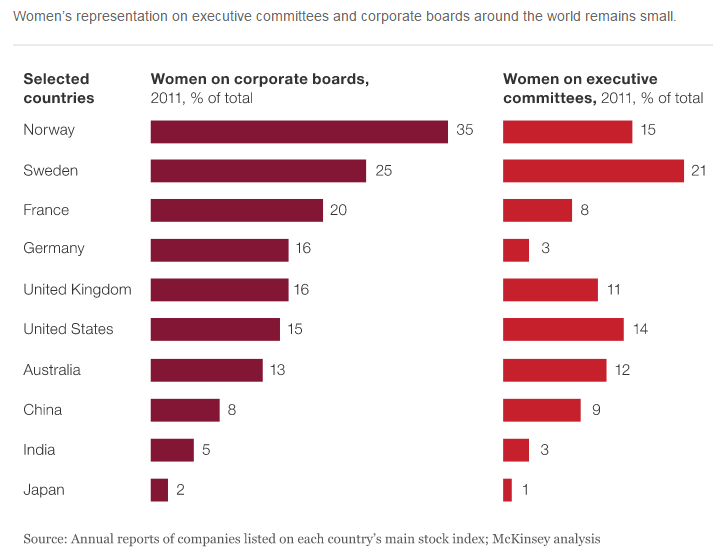
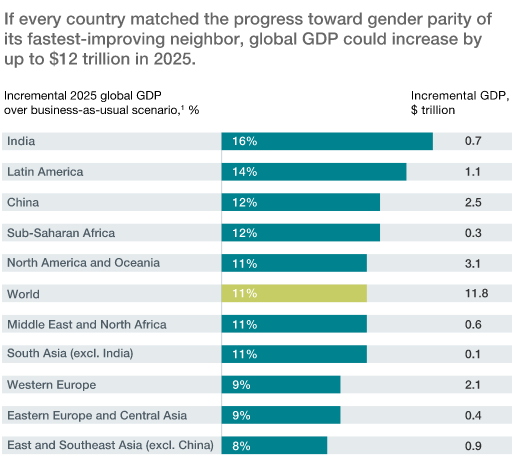
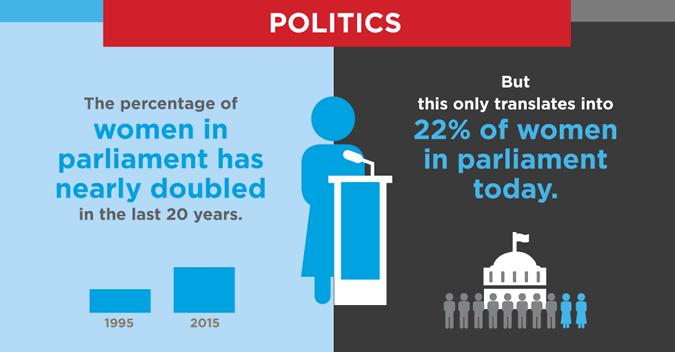
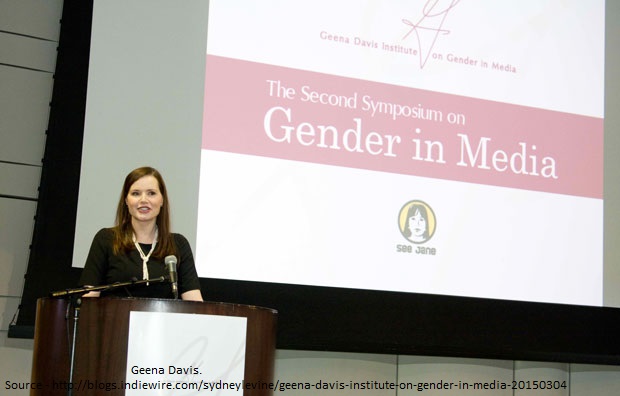
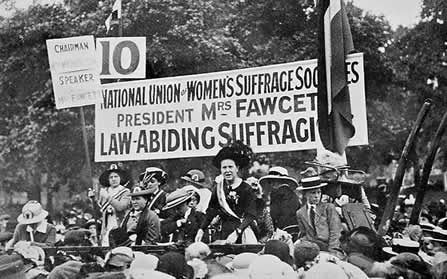
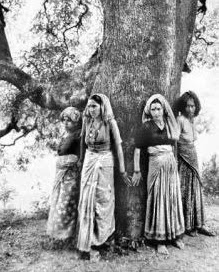
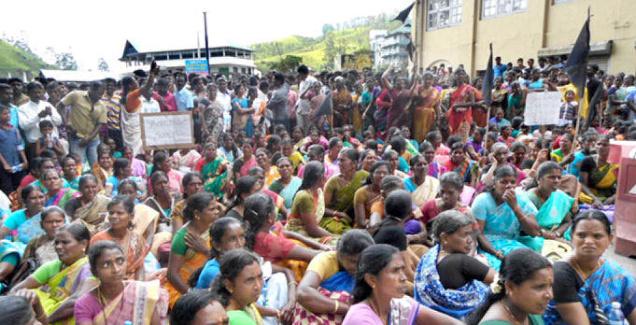
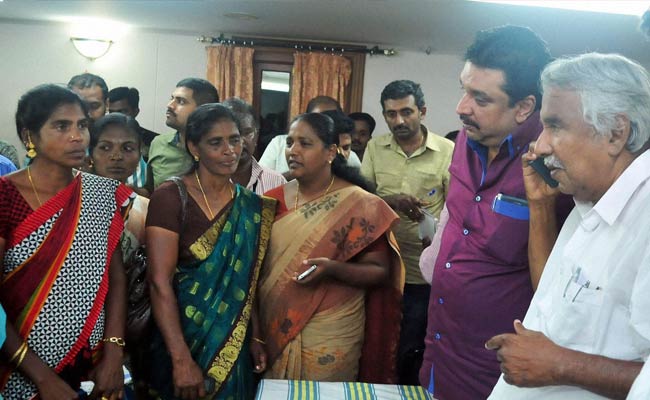
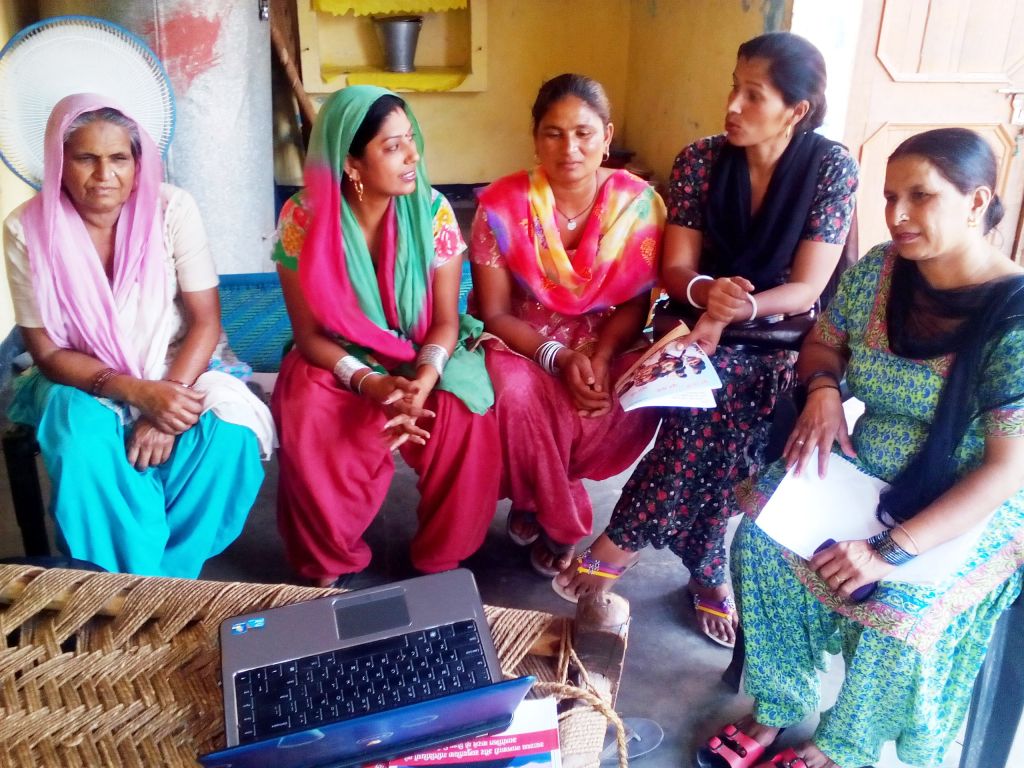 Women leaders reaching an agreement with the state Chief Minister, Oomen Chandy and the labour minister, Shibu Baby John
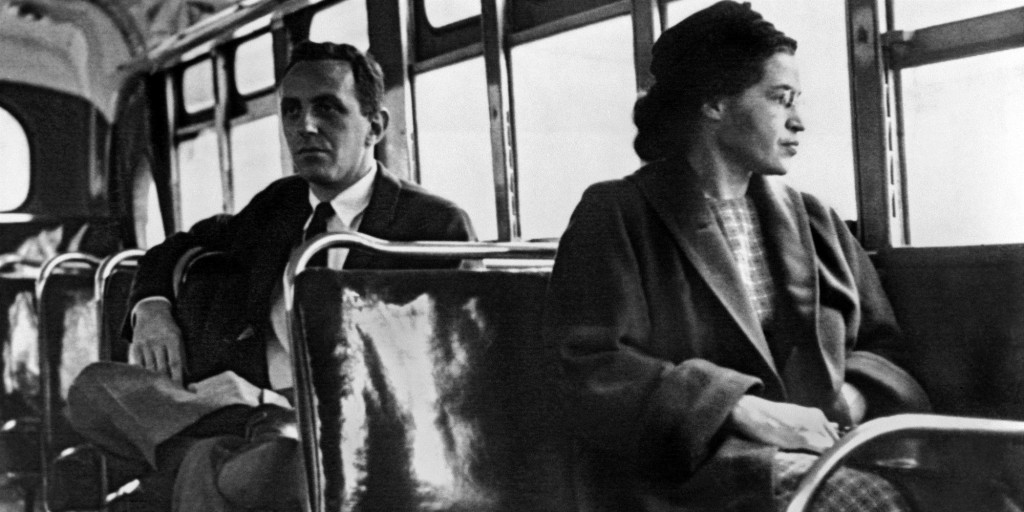 A health coach in discussion with women in a village in Haryana





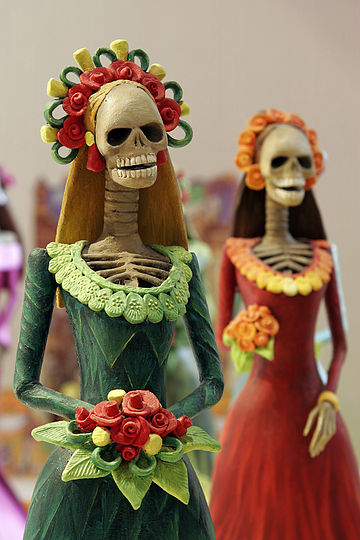
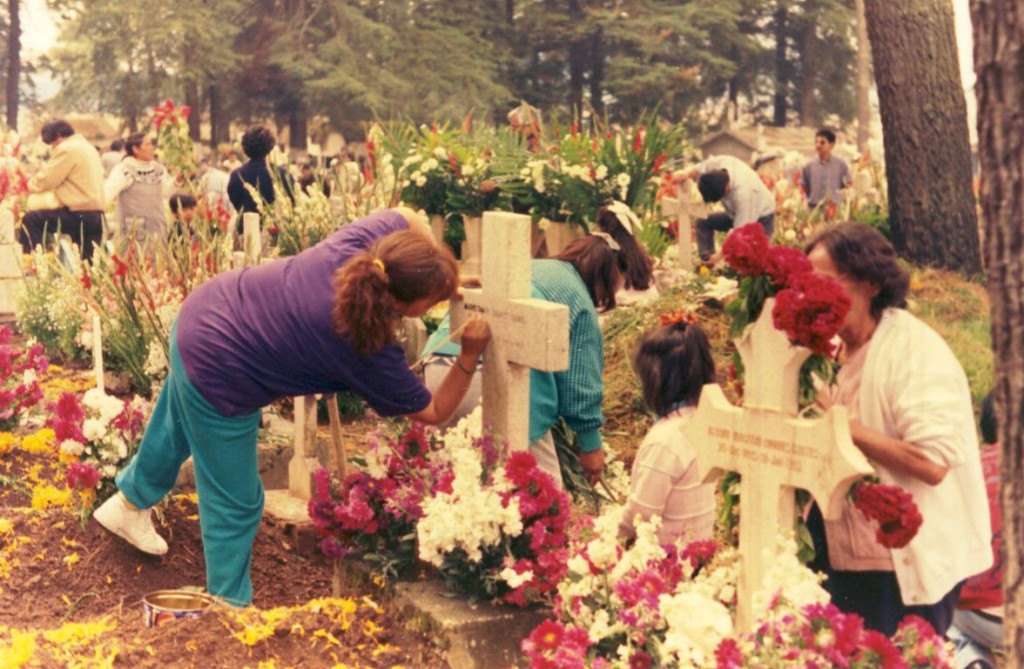





 Northern Rio Grande Valley, which places it as the highest capital city in the United States. The De Vargas Street House and the San Miguel Mission house and church are among the oldest in America. Santa Fe is also the oldest city capital founded in 1610 and the oldest city in New Mexico and the United States. It enjoys a semi-arid climate with an average of 32” of snowfall annually. According to the last U.S. Census, Santa Fe is mostly Hispanic (51.1%), Caucasian (43.5%), and Native American (4%). Santa Fe is renowned for its arts and culture that reflect its Spanish traditions and that of the Native Pueblos. In recent years Santa Fe has become an offshoot of the contemporary art world. Santa Fe is one of three American cities listed with the United Nations Educational, Scientific and Cultural Organization (UNESCO). Also, according to a 140-page report by the National Endowment of the Arts (NEA) titled Artist in The Workforce: 1990-2005, “no other city has such a high percentage of writers, artists and architects”.


 of the archetypal Latin lover and because he speaks Spanish better than most native New Mexicans. Although much older, Gazpacho wears the youthful aesthetic of a “post-punk” or “Emocore”. He is of slight built and wears handed down clothes from a teenage fetish boutique. Tonight he showed up wearing black skinny jeans, stage shoes and purple velvet jacket over a T-shirt that read, “Who is John Gault?” the individualist character in Ayn Rand’s Atlas Shrugged. It seemed to me that the t-shirt displayed notable irony because Gazpacho shows quite a bit of empathy towards others. Gazpacho is agoraphobic, but as I’ve gotten to know him he has begun to come out of his shell. What is more problematic for Gazpacho is a condition that causes him to have ongoing hallucinations.

 In the distance we could see a police car with its flashers on. When we walked up on the police car, in front was a late model Japanese sedan with four college kids sitting on the curb. While they were sitting, two police officers were searching in the car with latex gloves and flashlights. None of the students appeared to be drunk or high, but they all had fear in their eyes. I asked Gazpacho if he thought I should video record the scene. He said “absolutely not” as he increased his pace. Jurgen and I almost had to run to keep up with him, I asked why recording would be a bad idea? He said, “Don’t you know that cops kill people for recording their actions?”
 escape from their restrained lives. The commodities on Cerrillos Road are vice and the residual byproducts of American culture; although there is an illusion that value resides in vice, rather than social relationships. Some of the common themes of this marginalized population of the night are a descent of prevailing middle-class values, yearning for life from the ruptured spirit, and the ever-present battles against modernity and popular conformity. However these hopes have faded for most because for them they are caught in the grip of alienation and addiction.

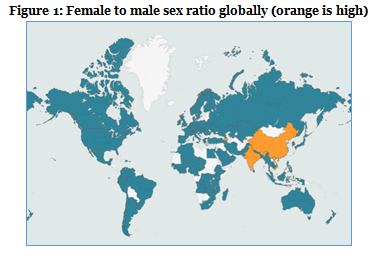
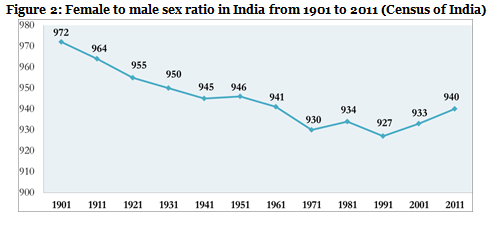
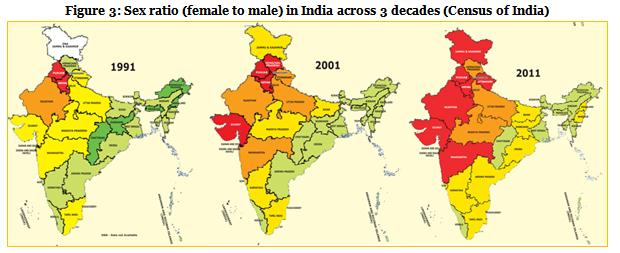
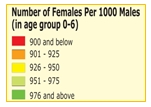
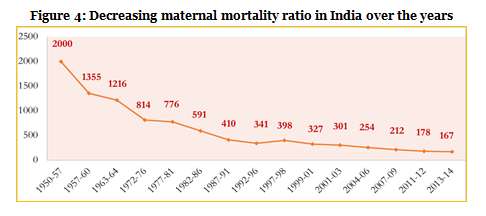
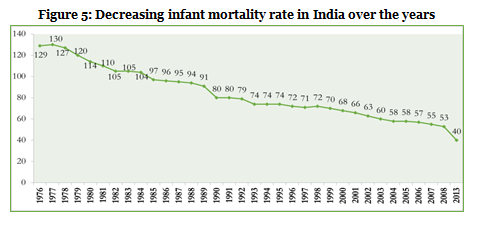
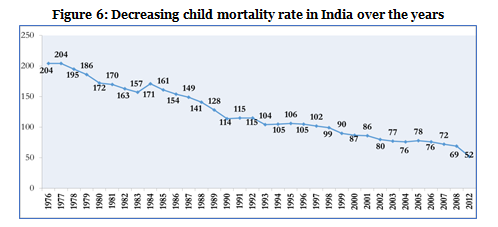
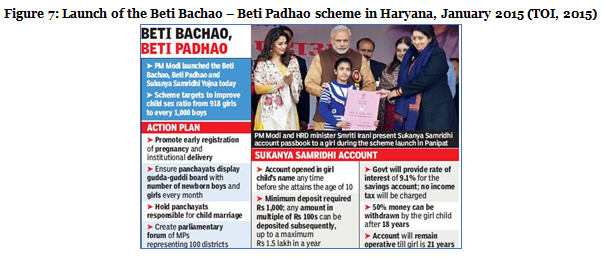
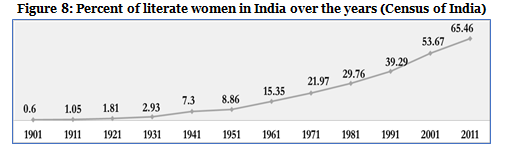
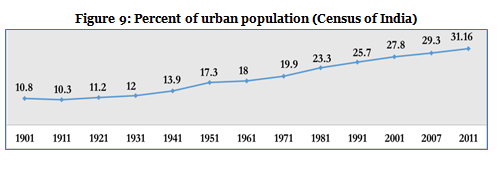
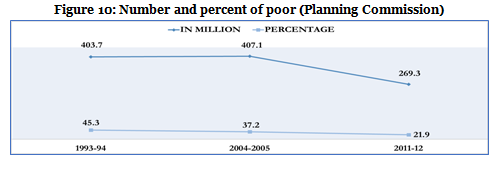
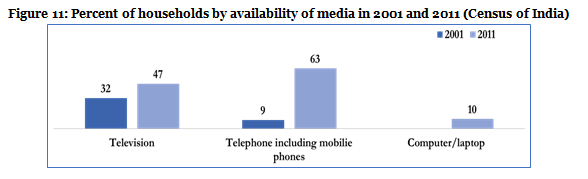
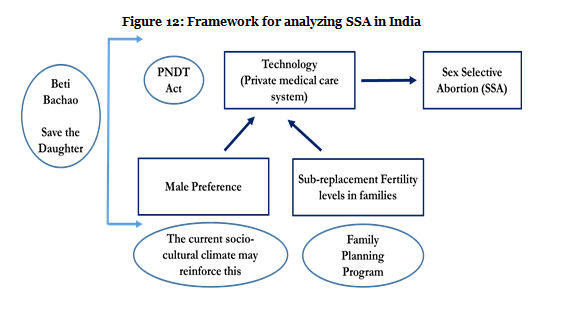

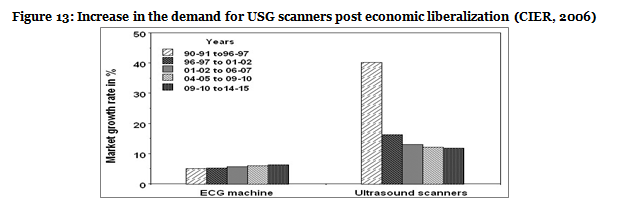
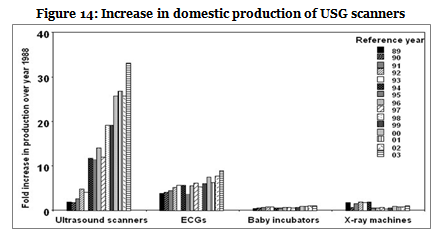
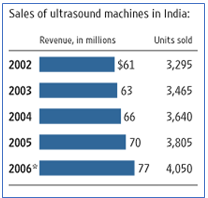 and Andhra Pradesh, found a direct correlation between sex ratio and the number of registered ultrasound clinics (Chandran, 2006). A case in point is Maharashtra, an Indian state in the western region with 4,345 registered ultrasound clinics, and a decline of 29 points in sex ratio from 946 in 1991 to 917 in 2001 (Mulay and Nagarajan, 2004). Districts with more than 100 sonography centers in this state had a distinctly lower child sex ratio than those with less than 100 sonography centers. The richer the area, higher the number of sonography centres. Gadchiroli, a poor district with the smallest number of sonography centres (five) had the highest female sex ratio (974) in the state. When the first ultrasound clinic opened in Punjab (a north Indian state with one of the lowest sex ratios) in 1979, there were 925 girls for every 1,000 boys younger than age 7. By 1991, it was 875, and by 2001, it had plummeted again, to 793 (Katz, 2006).
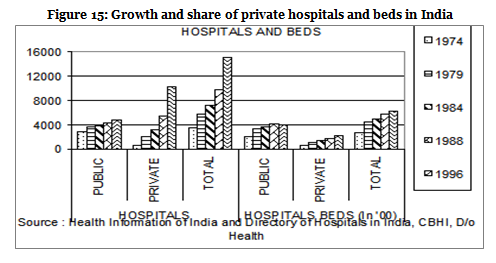
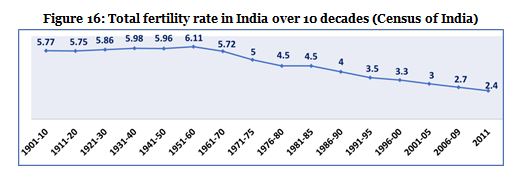
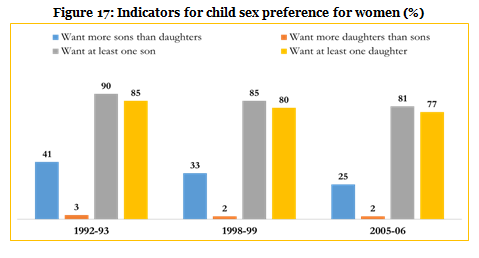
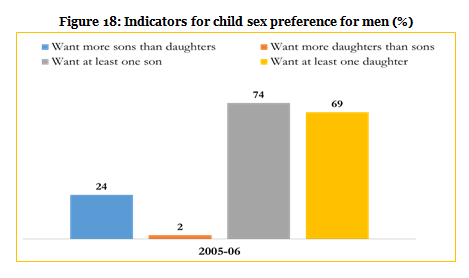
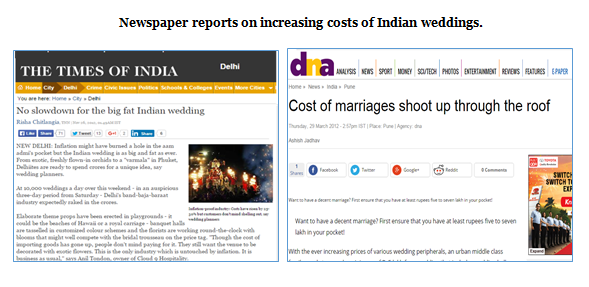
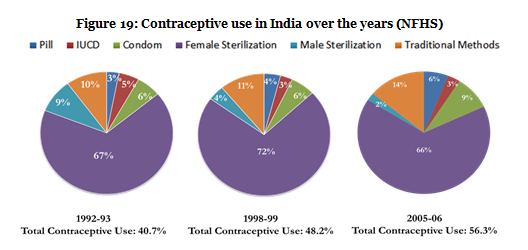
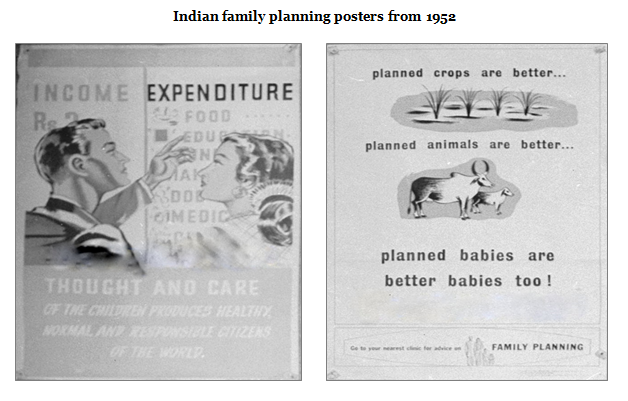

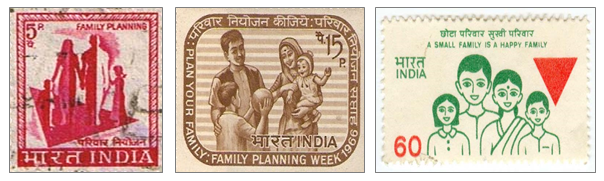
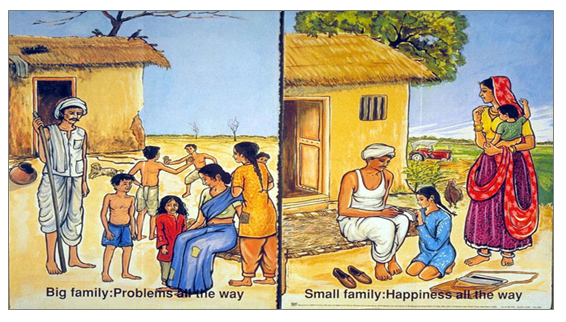
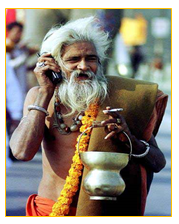 or traditional and the new or technological come together. Often, these types of images, said to showcase the hybrid culture that contemporary India possesses, also attracts a certain kind of tourism. It is often seen as something different from the sterile, clinical culture of many modernized and developed countries. Writers contrast the ancient temples of Benares with the modern glass towers of information technology (IT) towers in the cyber city of Bengaluru. The same writers forget to write that both Benaras and Bengaluru have congested, crowded streets, poor air quality, and probably no sewage systems.