I think there must be something wrong with me Linus. Christmas is coming but I’m not happy, I don’t feel the way I’m suppose to feel. I just don’t understand Christmas I guess… I always wind up feeling depressed. Instead of feeling happy I feel let down.
Charlie Brown, 1965.
“Daddy, is Santa Claus homeless?” asked the little girl looking at the man wearing a cheap looking Kris Cringle outfit. The man, disheveled with an odor of stale alcohol, had a sign that read,“Evicted from the North Pole, please help!” Watching the Charles Shultz characters in the Macy’s display window,the little girl’s father attempted to evade her question by saying, “That’s not Santa, it’s a man in the likeness of Santa who also appears to be impoverished.” The little girl frowned at her father and asked, “What is impoverished?” Unsuccessful at distracting his daughter with the spectacle of Charlie Brown Christmas in the Macy’s display window, he was forced to explain to his daughter the contrast between the manicured shoppers and the unkempt people in makeshift shelters of cardboard and blankets camped on the side walks outside “America’s largest department store” in New York. I was a bit dumbfounded to see this myself, because under the Giuliani and Bloomberg administrations, the down-and-out were forcibly relocated into the outer boroughs.
Responding to his daughter’s assertive questioning, the father awkwardly explained to her that there are a large number of poor people living in America. He also added as he looked at the pedestrians walking by,“Some people have too much in this world and others don’t have enough.”In a language he knew his daughter would understand, he explained that society had failed them. He continued to explain to her the function of social safety nets and how they aren’t large enough to satisfactorily assist everyone that needs help. He mentioned that there are compassionate people that attempt to help the growing numbers of the poor, but without more government intervention, there just aren’t sufficient resources.
The father, who is a close friend of mine, works for a large NGO and has worked on several humanitarian projects in Eastern Europe. However, when he attempted to answer his daughter’s questions he felt empty and inept. It was very difficult for him to explain to a child how in a country such as USA, with so much wealth, there even exists the problem of the homeless. What could he really tell her? Should he say, “There are so many homeless and indigent people in New York because,as a demographic,they have no political capital?”
He thought to himself that our government could learn much from the Danish Housing First Strategy that essentially provides marginalized people with housing before the need for other human services are provided. Once housing is secured, social workers and therapists are assigned to address the more common problems of unemployment, substance abuse, mental illness, lack of family or social networks and prolonged poverty. By satisfying the basic need of housing, the individual has a much greater chance to address the complicated problems that caused them to loose their domicile. After an individual has adequate shelter,that individual is referred to the appropriate human service agencies. Yet the father realized in the current political climate such a progressive initiative is unlikely in America.
******
Manhattan is beautiful during the holidays, a place of bright and shiny things. People from around the world make an annual pilgrimage to consume. Nostalgic holiday music is amplified on billboards, in stores, on street corners, and on IPhones. Watching people riding in horse-drawn carriages through Central Park or walking down Fifth Avenue one can witness the epitome of brazen consumption. Eyes reflect the illuminating displays at Tiffany’s, Bergdorf Goodman and Cartier. A gregarious man stops shoppers and hands out advertising postcards for a store that sells furs on 57th Street. To highlight the New York holiday occurrence, one can share the experience of being awestruck by a very tall Christmas tree with the half million shoppers who squeeze into Rockefeller Center.
Walking down town, I smelled the pleasurable aromas from around the world but most noticeable was the familiar smell of roasting chestnuts and Douglas Fir.It looked like most of the robust trees had been picked over, but there were plenty of Charlie Brown Christmas trees available. As tourists stroll easily towards famous landmarks, New Yorkers break into holiday crowds with speed and agility like a choreographed Bob Fosse dance. At the annual Union Square Holiday Market, large mobs of people bottle-necked with cash and credit cards in their hands trying to buy that perfect holiday gift.But, like Charlie Brown, I was feeling depressed.
******
New York is a place of contradictions. As much as the city can be euphoric, it can also be grossly alienating, depending on one’s place on the socio-economic ladder. For the homeless it is a time of feeling estranged, lonely and depressed; the homeless are pariahs in America and are blamed for their misfortune.They don’t vote and they don’t have a very forceful lobby on Capital Hill, nor do they have the luxury of buying politicians. In the war on poverty, the homeless are collateral damage like mistargeted drone strikes in Yemen.
From what I observed, the homeless population has grown since I left the city over a decade ago. Through my eyes, the people living on the street seemed more lucid and some appeared to have residual traits of middle class lifestyles. I also noticed that there were more women living on the streets than before. A few steps removed from the homeless Santa Claus was a young woman who wrote an eloquent narrative on her cardboard sign describing her adventure fleeing an abuser. She was wrapped in high-tech outdoor apparel that looked highly used but expensive. She looked like she once shopped at REI or expensive mountaineering boutiques. I placed five dollars in her cup, which gave me a sense of futility. The woman was wearing Italian hiking boots, breathable rain pants and a down vest; the same kind of vest that bourgeois bohemians (bobos) are seen wearing as they adventure to Whole Foods. To the woman’s side was an internal-framed backpack with a Gortex shell snugged in an external pouch. If I didn’t know better, I would say that she took a few wrong turns off the Appalachian Trail and ended up in Manhattan. She glanced up at me after adjusting her sign. When I saw her face it was shallow and there was an emptiness in her eyes.
Every few steps I took there was another homeless person. In the East Village, I met a young man that had been hopping trains through the West.One night he hopped a freight car from Tulsa, Oklahoma, believing it was going to Albuquerque. After passing out on the train, two days later he discovered he was in Norfolk, Virginia. Before his adventure began, he was living in Phoenix where his girlfriend ostensibly kicked him out of their apartment after losing his job. He told me he was a telemarketer selling financial services to retirees, and he said that after he was on the job for a while he began to feel that the service was exploitive, so he lost the interest to sell. His numbers declined and he was asked to clean out his desk.
A few days before,he was squatting with a friend in Baltimore. They met at the day labor service, but after a night of hard drinking his friend disappeared. After sleeping on the streets for a few days he hopped a train to Newark and the next morning he lucked out on a ride through the Lincoln Tunnel on a box truck. He explained to me that he thought his condition was one of temporary inconvenience and that if he can work things out with his estranged family he will eventually go back to Phoenix for another job, but for now this was the only way that he could raise enough money to embark on his journey out West. I pulled a few bills out of my wallet and placed them in his hat. I quickly realized that if I dropped money in every hat, I would become broke very quickly, so I stuffed my hand in my pockets all the way to Chinatown where I would get my favorite dumplings.
I realize that many Americans are ideologically opposed to giving money to people on the street, but it is my thought that if I can give someone momentarily relief, then so be it; furthermore, what would Jesus do? I know some that think their donations are ideally served if they donate to nonprofit service agencies that help the homeless.And yet a large portion of their funding goes to large executive salaries. (Goodwill Industries comes to mind)What I also find problematic is that many of these agencies establish their determination of eligibility on what they considerto be the deserving and the non-deserving poor.
A common story that I have heard in New York and other cities with large populations of the displaced, is that the homeless feel invisible, that people are often afraid to acknowledge them. One homeless man expressed to me that he can go for days without having eye contact with a single person. One doesn’t have to be a psychologist to understand that this lack of recognition would attack one’s personal psyche. Yet some people are simply afraid to acknowledge the homeless when they are encountered.
For a good part of my holiday respite, I walked with my head down internalizing their pain. I recognized the uncomfortable feelings of anger and depression I was having. Yet I felt there was something else causing me to feel this way.As someone that has been homeless in the past, I was seeing what could very easily be me. There was a time that I felt alienated from the outside world. I lost communication with my family and friends and I was living like a vagabond from one town to the next. I’ve hitched-hiked all over America and have been escorted out of towns by the police for vagrancy. This happened to me because I was one pay check away.
Yet, many people loose their jobs; many people suffer from mental illness; many people have substance abuse problems; but not all end up homeless. Based on my own experience and those I have interviewed over the years; the most underlying cause of homelessness is the lack of social safety nets or family support. When the bottom falls out and there is no one there to catch, it is highly likely that one will end up on the streets.
It really wasn’t my intent to write another essay on homelessness, but as I arrived into Penn Station,I couldn’t believe that I literally had to walk over people sleeping in the middle of the bustle.This seemed like a natural occurrence for the people walking by, but this looked like the theater of the absurd to me. We live in a society where hundreds of thousands people fade into the night in wretched despair, but is this social problem necessary? I think that if this were treated like any other public health issue, homelessness would be eradicated.
Although I have had some brief interludes of sleeping in cars and on friend’s sofas over the past few years, I haven’t been chronically homeless in over twenty-five years. I have known pain, but I have also been very fortunate. The last time that I was looking at sleeping on the streets, I was rescued by a collaborative of human service and health professionals.Yet I realize this is atypical, if I didn’t have people advocating to place me into housing, I could very well be camping out somewhere tonight.
Yet my story is an example of the possibilities when housing and services are in place. To say that I am grateful doesn’t adequately describe how I feel today. I’ve gone from isolation, despair and degradation to a place of contentment. I know that I am among the fortunate.
******
Back in New Mexico, it is snowing outside and I’m feeling the comfort of my home. Drinking a cup of Earl Grey, I notice icicles hanging from the window sill. Today, I have the option of cooking warm food; I can take a hot bath and I don’t have to plan how I’m going to relieve myself.
Now that we are on the eve of the new year it is apparent that Santa isn’t coming this year. The true meaning of Charlie Brown’s Christmas has also eluded us, there are no miracles on 34th Street and I really haven’t a clue what Jesus is going to do. However, it would be nice to see someone kick over the money changer’s tables. The powers that be won’t likely feel generous any time soon, but I figure that there’s no harm in speaking out in this alternative public sphere. My New Years wish is that homelessness and economic injustice will become a part of everyday discourse and in doing so, a major shift in public policy will take place, because everyone needs a home. We are all deserving because it is a fundamental need and because it is a fundamental need it is a fundamental right. Yes, everyone needs a home; even a smelly, drunken Santa Claus.
“Often those that criticize others reveal what he himself lacks.”
― Shannon L. Alder
This particular evening, the political mudslinging was on overdrive. The TV news-anchor mentioned a Donald Trump tweet: “If Hillary Clinton can’t satisfy her husband, what makes her think she can satisfy America?” I was hoping they would move on to the next topic but the TV channel wanted to discuss all aides of this sensational story on screen for as long as they could keep people glued to their station.
“Why do they bring up personal issues? I thought Americans liked their privacy. You always complain when ask someone their age; but I would much rather give my age away than discuss such private matters on TV.”
That was my dad talking to me over the din of the debate on the TV channel. He lived in India for most of the year and visited me in Colorado over the summer months. A few visits over the past ten years had gotten my father somewhat comfortable with spoken English in the US with its unique slangs and phrases and to some extent with the culture. He would pick a topic, ask me the background and get me to put it in perspective for him, whilst trying to draw some parallels to an Indian event or situation. As an outsider to the US political and cultural arena, he had an interesting takeon the news and always asked questions. Watching the television news with him gave me a different perspective on events and happenings.
On the Trump tweet that was being talked to death on TV, I replied: “But he is not reflective of actual American culture and values, Papa. He will say anything to ensure that he gets discussed on TV.”
“But, is he an expert on marriage? Some kind of a, how do you say, hmmm, marriage counselor? “
I burst out laughing.
“No, he is not a marriage counselor. Actually, he is on his third marriage himself. He is running in the US presidential elections”
“Oh, a politician. As they say, crows are black everywhere. Politicians are the same, anywhere in the world! But, that is funny. A man on his third marriage is talking of awoman not being able to satisfy her husband. He must know a lot about that. Wonderful!!”
“Wonderful!!” with its unique tonal style was my dad’s favorite phrase for sarcasm or disapproval. As a child, my mistakes were often summarized in three simple syllables of disapproval, “Wonderful!” with the tone indicating he meant everything other than me being wonderful.
It was getting close to 8pm and it was time for me to leave. I told him I need to meet up with a friend and headed out.
*****
Maya had called earlier that day to say she would like to meet up to get my inputs on her situation. When we finally caught up, it was obvious that Maya had not slept well for a few days. Despite that, she looked elegant. A light gray colored knee length, A-line skirt with a fitted blue blouse with a classy blue-and-cobalt dew drop shaped earrings to go with the long necklace with matching style and colors. Her long blonde flowing hair added to her style. However, the tell-tale signs of stress were unmistakable.Her eyes were downcast with black rings around them. She was fidgety with her fingers tapping constantly like she wanted to be elsewhere.
After exchanging pleasantries, she revealed “Chad told me last week that he has a three year old son from the previous relationship. And just when I thought he is the one!” her voice trailed off. Maya had been in a previous relationship with someone who had an 8 year old daughter. I remember her confiding that she had always felt like a third wheel and after two years realized that she would never be an integral part of that family. Now, three months into this relationship, she was not sure if she wanted to continue down the same path again. She was spending a lot of sleepless nights over the dilemma. She was looking for my advice. We discussed it at length. I was definitely bothered by her concerns but I was a little concerned about Chad keeping this secret for so long as to string her along. “If you had told me you were thinking of going out with this guy who has a three year old, I would have encouraged you to follow your heart. But I am concerned by this deception for the past three months. To me, it reveals a deep character flaw with far reaching implications beyond this one situation” I observed. As we continued to discuss, my concern about this aspect of Chad continued to spiral upwards and I shared that with Maya. After a prolonged conversation, she thanked me for being her sounding board for the past several years that we had known each other.
x
*****
The next day I had an early dinner with dad and helped him prepare for his visit to LA. I will definitely miss these evenings with him. I thought to myself. I had begun to look forward to getting home from work and sitting down in front of the TV with him and listening to his views and opinions.
But, I was also excited because his visit to LA would allow meto spend more time with my girlfriend, Liya. For the next few weeks, she did not have to be my “concealed girlfriend,” as Lia calledher situation during the time my dad was in Colorado. I met Liya after I had dropped my dad at the airport. We had not seen each other for nearly 3 weeks. She seemed charming in that white shirt and blue denims with a short pearl necklace to go with matched earing. I had planned for a dinner at her favorite restaurant followed by a newlyreleased rom-com that we had talked about watching together.
After the movie, we went to our favorite coffee place, discussing random things just to be in each other’s presence. Without naming names, I brought up Maya’s situation and the deception by Chad. She agreed with my perception that there must be deeper issues when he had not revealed such a major aspect of his life to Maya for three months. Once again I realized we were so much in-sync, reading each other’s minds, having similar values and concerns.
When we were driving back, Liyaremarked, “You know we have been together for eight months and your dad does not know about me,” and smiled at me.
“I didn’t realize it bothers you”
“It doesn’t, I am just saying, you know, after that conversation we had about deception and not revealing oneself fully. I am sure when the time is right you will talk to him about me” she tried to reconcile and reassure.
“Yes, and in our case it is a cultural issue, you know” I once again talked about the cross-cultural relationship, generation gap, etc. Liya had always been a good sport about it and once again reassured me that she was fine with it.
However, I continued to ruminate on the issue for the next few days. I recognized that I had been pointing fingers at Chad while living the same deception. I remembered a phrase in my mother tongue, “ek angli beja ne tren potana taraf” meaning point one finger towards the other, and the other three point towards oneself. I had definitely missed the mark on that. It is very easy to find the minor differences between a situation one is advising on and the situation one is living. At such times, it is very tempting to make an argument that “My situation is different” but I realized that this may just be a cop out.
*****
I soon found out that finger pointing and hypocrisy are ancient arts. There have been many examples of great thinkers of the past falling prey to “do as I say, not as I do” type of behaviors. Even a progressive thinker such as Rousseau, opposed to the strict, authoritarian education style of his day, advocated for children to be free to discover the world on their own, play, and explore. He advised fathers to be ever-approachable and present to answer their questions about the nature of the world. So, what kind of a father was Rousseau? Tough to say, since he left all his children in an orphanage just as fast as they were born!
There are other examples of schism between creed and deed. Al Gore, the former US Vice President and a fervent environmentalist uses private jets. Citizens from the British empire, on which the sun apparently never set, because they anchored their ships on every continent and island, and plundered every possible place on the planet, now complain of immigrants destroying their way of life. The list goes on and on.But, once again, I have to worry about the fingers pointing at me, when I look for hypocrisy in the society.
Thinking back, I realized that among my close circle of friends, I was definitely considered to be the go to friend for advice on professional and social issues. I had built a reputation probably because I had been a good listener. However, it seemed to me now that I was actually not that good of a listener since I had stopped listening to the advice that I had been dishing out. I needed to come around and listen to some of my own advice.
Just like meditation and being in the moment, the more one practices this art of listening to one’s own advice, the more naturally it comes. To become a good listener, I should be able to connect to my own voice. I need to become a better finger pointer who is keenly aware of where all the fingers are pointing. If one points at the other, three point at me. I should examine the three that are pointing at me as well.
Two weeks later, I called Liya: “Hey, you want to come over to my place for dinner?”
“Sure, we can eat and hang out till you have to go get your dad at the airport. I will be over in 10”
She hung up the phone. Ten minutes later, there was a knock on the door. I made sure I opened it wide enough for her to notice my dad sitting on the couch.
Hey, Liya! Come on in. Dad, this is Liya, my girlfriend I talked to you about. Liya, this is my dad.
Liya had a shocked look but dad had been prepared and was unfazed. After the initial pleasantries, we settled in front of the TV. Another media favorite, Ted Cruz, was reacting to recent events by mentioning that Syrian Muslims fleeing persecution should be resettled in the Middle East in majority Muslim countries. When asked about Christians fleeing from Syria he said,“Christians who are being targeted for genocide, for persecution . . . we should be providing safe haven to them.”
I was keen to see if either Dad or Liya would react to it. Dad went first.
“Well, Obama rightly criticized India for acts of intolerance by people of one faith towards people of other faith purely for their belief. But then, doesn’t what this guy says count as religious intolerance”
Liya chimed in. “The funny part is, earlier in the year, Ted Cruz himself had lamented that never have the threats to religious liberty been greater than right here and right now. And now, he hasbecome a threat to religious liberty”
While those two went on feeding into each other’s arguments, I wondered about all of us pointing fingers at these politicians. Aren’t politicians a part of the same society? Are they not reflective of our society and us, the voters? Should we not wonder about the three fingers pointing back at us when we point one finger at our politicians?
I hoped to examine the three fingers that were pointing back at us in the room. I pray I practice this art of finger pointing well.
“We are all hypocrites. We cannot see ourselves or judge ourselves
the way we see and judge others.”
― José Emilio Pacheco, Battles in the Desert & Other Stories
Ah! the New Year and all the hope, energy, and resolutions it brings. I woke up on the first day of the year and browsed a bit through the news pages to find one too many articles on how to keep New Year’s resolutions. Curious, I read a few articles that offered some tips on how to keep the resolutions and one that caught my eye had advice on how to make resolutions more realistic.
Shouldn’t we all aim for realistic objectives? Transforming any life takes time, a long time, how can we deceive ourselves thinking that one year is enough time to, say, change a body that has indulged for too many years into a triathlete ‘s body over a meager 365 days. The article I read summed up that philosophy; it took the usual resolutions and scaled them down to doable objectives: Want to run a marathon? How about resolving to walk 30 minutes 3 times a week for a start? I had a ball reading the scaled down objectives and imagining all the people reading this or other articles, downloading apps and purchasing all sorts of gear to prepare for their “new life of 2016”.
Why do the media push the idea that with the New Year we need a new us, a new life, a new job, a new anything? What is so wrong with who we are? Truly, what is so wrong with our lives that we have to transform them completely? And how the hell are we supposed to become a “new me” especially when we like who we are already. I am not saying there’s no room for improvement, I am the queen of “there’s always room for improvement”, just ask my husband, but I do not understand the idea pushed onto us that with a new year we need to change it all. Why can’t we be happy with what we have and still improve our lives? If that is the message media is aiming for, then they are failing miserably. All the material I read spoke of changing it all, making it happen through realistic goals if you will, but the underlying message of the articles I read was clear: New, new, new, change, change, change. Not a single one spoke of building from what we had, of realizing how much we already have, of being grateful.
I am not a cynic, I do understand the renovation feeling we get when closing one chapter in our lives and starting a new one. I have been a “resolutionist” myself, with many failed attempts and a few victories. I know and have seen what sheer will power can do and have seen people transform their lives, only it does not happen in the first couple of weeks in January.
True transformation is not subject to a date, place or hour, much less to the ringing in of a New Year. In all honesty how many of us can actually wake up and run 5 kilometers on January 1st after being out all night partying to celebrate the commencement of their “new life”? Not many, at least not me. And while jumping on the wagon of starting new projects, changing habits, following the whole realistic resolutions path does sound a very attractive way to beat the holidays blues (which, by the way I believe is the real reason behind the resolutions frenzy), one thing came popping into my mind as I read and saw all those tips, articles and slide shows on resolutions for the New year: “How damn lucky I am to only want to improve certain aspects of my life, I have a life, a very good life, I do not want this “new life” they propose, how many people can say that? Most likely all of us, but all this media frenzy of thenew life is distracting us from realizing how much we already have in the old.”
After a tumultuous 2015 around the world, with so many economic woes, mounting humanitarian crises, clashes between countries and unforgivable losses in so many aspects, I realized I am grateful to see a new year. I wonder if the state of the world would improve if all those resolutions that aim to get what we do not have were changed for gratefulness for all the things we do have. Would we all change a lot more and a lot faster if, instead of starting the year looking forward to achieving our new set goals and attain what we think is missing in our lives, we looked back and be grateful for all the things we had during the past year? Perhaps our new year would be better if we shifted our focus from what we are missing to all that we already have. Perhaps gratefulness could power our will to reach our goals better than apps, tips and new gear; perhaps I am just too happy and relaxed after my vacation and writing a bunch of nonsense or, perhaps, I am onto something.
We may debate for hours if my hypothesis is valid, in the mean time I have created a list of things that I am grateful for that require new efforts to keep them in my life. Humor me, and let me call them “gratefulness powered resolutions”, I know it sounds oddand whoever is reading this is more than welcome to criticize, laugh, disregard or join them. As for me, well I do believe that when I take a look at the list below it will be easier to stick to these resolutions and enjoy same old life, than have a new app remind me to get up and move my butt in order to achieve my “new life”.
Paola’s gratefulness powered resolutions:
I am grateful to have to make more time for my husband and I; it means he’s still with me and we still want to spend time with each other having fun and that our daughters are healthy and thriving and demanding love and time from their parents.
I am grateful to have to be a better daughter/family member; it means I have my parents, brother and sisters, in-laws, cousins, etc., in my life.
I am grateful to have to wake up earlier this year; it simply means that I can still wake up and that my daughters have grown and wake up earlier to go to school, which in turn means they can learn and live in a peaceful country where school is their priority, not surviving to see the next uncertain day.
I am grateful to have to work harder this year; it means I still have the job that I love and opportunities to grow as a professional.
I am grateful to have a few pounds to shed during this year and work harder at eating better; it means I had more than enough during the holidays, that I have access to healthy food and that each pound was gained in a table surrounded by family and friends who were happy and sharing.
I am grateful to have to exercise more this year, it means I can move and work out, that my body can get healthier and that I have the time, will and possibility to exercise, many people cannot.
I am grateful to have to save more this year; it means I have enough and will not consume mindlessly and that I am working to have a stable future.
I am grateful to make an effort to see my friends more, it means I still have friends who want to see me and share their lives with me.
I am grateful for having to find the time to write more; it means someone still wants to read what I write.
Finally, I am grateful to have my old life in the New Year; it means I am alive.
A standard-sized metal casket 7 feet in height, 2 feet across, and less than 2 feet in depth. At exactly 8 am in the morning, try to get inside this coffin. You are not alone. There is a crowd, pushing and shoving, all trying to get inside that coffin along with you. Finally you are in, standing inside this upright coffin, packed with about 14 to 16 strangers. Now imagine four hundred such coffins stacked inside a large box-car or freight-car which can hold only 100 coffins; and the train starts moving at 60 to 80 kilometers per hour. There are ten stops before you reach your destination. The box-car is already overflowing; however, at each stop, hundreds of new coffins try to push and shove their way in, some hanging on by their last nail to the boxcar’s edge. After 60 to 90 minutes, you arrive at the final destination. Coffins push and shove to get out. Once outside, you shrug the coffin away; deliberately do not say good-bye to the strangers who got real close in the last 60 minutes. You rush to make a presentation to that new client or serve coffee with a smile to your boss. You work all day. At 6 pm, you get inside a similar coffin again; this time with 14 to 16 completely different strangers; and hundreds of such coffins push and shove and get inside a boxcar to return home. After 60 to 90 minutes you get out, shrug the coffin and strangers off, stop at the local bazaar to haggle over the high prices of vegetables with the vendor; then go home and listen to your teenage kid complain about not having a smart-phone. You switch on the idiot-box to tune off from your own life as the drama on television reminds you of what it is to be human. Box-car to idiot-box – you do this every day, six days a week (because your country and company does not believe in 5-day work weeks), for the rest of your working life.
It’s not over. You also have a very high risk of meeting with an accident, including choking and suffocation, falling out of the train, getting pushed, shoved, elbowed by others, or getting run over by a train. And when you survive all this you do not get any points. You do not win. You are supposed to feel lucky that you survived. You take your measly pay-check and go back to living your life which means getting into a coffin every day.
This is neither a video game nor a vampire movie.
This is the daily life of a person in Mumbai, who commutes to work in the city using the urban transportation system – the Mumbai suburban railway system also known as Mumbai locals.
The BBC did a series on this aspect of Mumbai and aptly called it Crush Hour (see you-tube link at bottom of this piece). But there is more to Mumbai’s transportation system than pushing and shoving or being packed in a crowded compartment. There are real accidents and deaths: 25,722 passengers fell from suburban trains in Mumbai in the last ten years, of which 6,989 commuters died. Another 22,289 passengers died while crossing the railway tracks. This was revealed by the Government Railway Police (GRP), Mumbai after an inquiry was filed under the Government’s Right to Information (RTI) Act.
In 2015 alone, there were 3200 deaths, of which 697 commuters died after falling from the local trains. That is nearly 9 deaths a day on the Mumbai local system and nearly 2 deaths a day from falling. Many more have serious injuries, lose arms and legs, concussions and get into comatose states. Additionally, sheer suffocation inside the overcrowded compartment caused deaths by triggering heart attacks and other complications in over 400 commuters.
The Mumbai suburban rail system has nearly 190 to 200 trains (train sets or rakes as they are called by the rail authorities) with 9 to 12 coaches or compartments as they are called in Mumbai. Compartments are classified into 1st class and 2nd class and then into male (gents) and female (ladies). In order to alleviate the problem of over-crowding more 12- and 15-coach trains are being added to the fleet.
However, with Mumbai’s high population, which is growing every day and nearly 4 minute gap between two trains at every station, congestion and over-crowding is inevitable. During peak hours 5000 passengers are packed into a 9-car rake with a rated carrying capacity of 1,700. This has resulted in what is known as Super-Dense Crush Load of 14 to 16 standing passengers per square meter of floor space.
*****
The Mumbai Suburban Railway, one of the oldest railway systems in Asia, is an offshoot of the first railway to be built by the British in India. The first train is said to have operated on 16 April 1853, between Chhatrapati Shivaji Terminus in south Mumbai and Thane in the north, a distance of 34 kilometers.
Mumbai’s rail system is divided into two main lines – along its western and eastern or central corridor. Over 5 million commuters use Mumbai’s Central line and 4 million use Western line every day. These suburban rail system trains, or Mumbai locals, are a critical component of the urban transportation system in Mumbai and are known as Mumbai’s lifeline. The city is a commercial capital of India and all commerce and business activity would come to a standstill if these trains stopped. Mumbai is an island city — bounded by the Arabian Sea on the west and south and the bay on the east (it’s name comes from the Portuguese Bom- baía
or good bay). From its historical commercial roots in the south of the island, the city has grown northward where it was easier to build bridges across the creeks and connect with the mainland. Most of the offices and residential house of business owners are in the southern part of the city and most workers live in the north stretching out of the island city into the mainland of India in the state of Maharashtra.
With a population of 20.7 million, according to the Census of 2011, (compared to somewhat over 4 million in 1960), Mumbai Metropolitan Region is one of the most populous urban regions in the world and the second-most populous metropolitan area in India. The Mumbai Metropolitan Region spreads across Mumbai’s adjoining districts of Thane and Raigad and incorporates areas of Thane, Navi Mumbai (New Bombay), Vasai-Virar, Bhiwandi and Panvel where a lot of the office workers live, who travel every day to the city. The average population density surpasses 27,000 people per square kilometer. The city lacks open spaces with less than one acre of open space for every thousand people, while the norm is 4 acres.
Mumbai lives up to its image as a city of extremes. Within India, Mumbai has the highest number of billionaires and millionaires among all cities in India; and has the highest GDP of any city in South, West, or Central Asia. Next to the swanky high-rises are the slums. No city in India has as large a proportion of its residents living in slums, officially put at 54%. The slums have become synonymous with the city and represented with much box-office success in movies such as Slum Dog Millionaire.
It is the lack of affordable housing that is a major problem in Mumbai. It is not that flats are not available; just that housing prices are unrealistically high. A news item in July 2015 on NDTV , an English language News channel in India was titled: ‘Nearly 1 Lakh Flats Unsold in Mumbai. Prices Still Not Falling. Why?’
India’s Property Market Paradox: Unsold Apartments, Crisis for Common Man.’ was the apt title of an article in Huffington Post in March 2015 explained the crisis: “… in cities like Delhi and Mumbai, where residential property prices more than doubled from 2009 to 2012, instead of cheaper housing, most developers built apartments that cost over Indian Rupees 10,000,000 (US$150,000) on average, as these include a hefty margin and are targeted at richer buyers. But the average Indian cannot afford them. Their demand is in a far lower range of INR 5,00,000 (US7500) to INR 20,00,000 (US$30,000). So while apartments remain empty, India’s middle class is faced with a housing crisis or a lack of affordable housing.”
The middle-class and low-income workers prefer to buy cheaper flats in the larger Mumbai Metropolitan region and travel for hours in these over-crowded trains. Inflation, at least for food commodities and in housing and transport, has been growing exponentially in recent times. Mumbai was found to be the most expensive city in India according to the recent Cost of Living Survey 2015 conducted by Global HR firm Mercer. Mumbai was ranked at 74th place and was more expensive than Dallas (77), Munich (87), Luxembourg (94), Frankfurt (98) and Vancouver (119). The survey stated that higher cost of fuel, transportation, increased prices of food items, home services and rentals increased the cost of living.
According to a report in the English daily DNA: “Psychiatrists say inflation is leading to depression, loneliness and helplessness among those who are finding it difficult to cope up with their financial condition, making them vulnerable to suicidal tendencies. They say the number of such patients has gone up considerably over the past few years.”
While the cost of mobile phones may be decreasing the cost of meat and onions is at an all-time high. People need money to survive and endure hardship. Thus, despite inhuman conditions, the urban transportation system, especially the Mumbai railway system is the lifeline for people and business in this commercial city.
x
*****
“Winning means fame and fortune. Losing means certain death. The Hunger Games have begun…”
-From The Hunger Games
However, with the rising number of accidental deaths in the last ten years, people question whether Mumbai’s urban commute has become a death-trap? Some activists call it Mumbai’s silent-killer. Although accidents or deaths by railway accident are not silent; they are loud, painful and filled with amputations and screams. It was one such accident on November 27, 2015, that was accidentally filmed by a fellow commuter. It captured how a 21 year old male, standing at the edge of the compartment due to overcrowding fell out after losing his grip on the pole-handle. The video went viral and sparked outrage and anger among commuters. Some f the anger was directed at the rail system for not paying attention to overcrowding. And some of the anger was directed at the in-humanness demonstrated by commuters towards each other. What is it that makes a fellow traveler the enemy of another – what is it that makes a human so insensitive to the plight of another and only think of getting his? When did human beings, the so-called social animals, get completely caught up in this “me-myself-mine” mindset?
However. outrage died down soon as people got busy trying to push and shove their way back to work. That’s the Mumbai spirit. It forgets. Perhaps it cannot afford to remember.
Bhavesh Nakate videos
Man falls from Mumbai local train (this is another one)
“Male commuters risk life for ego.’
On December 28, 2015, a month after the falling death mentioned above, the Mumbai edition of a widely circulated Indian English daily carried an article with this headline ‘Male commuters risk life for ego.’ It stated that, in 2015, of 7.5 million (75,00,000) commuters, women comprised only 30% and yet suffered only 11% of all deaths; that is of the 3200 deaths in 2015, women accounted for only 325(11%) of the total. Therefore, the article concluded that ‘male commuters risk life for the sake of their ego’ and ‘males are more prone to taking risks while traveling while women opt for safety first.’
Would any sane statistician or social scientist jump to the conclusion that the cause of the larger number of male deaths was the male ego, by just looking at one number. Any student at the 5th grade level would tell us that there could be umpteen other causes and reasons that need to be examined before we jump to causal conclusions. Human problems often have multiple and multi-level causes that have complex inter-relationships. The reasons are simply high demand and not enough trains, greater time gap between two trains leading to overcrowding at stations, environmental, structural, specific problems of the male compartments, group dynamics. In fact these kind of data open up more questions than they answer. These basic frequency comparisons are a starting point for more detailed investigation. To blame the male ego is naïve, immature, and an obvious attempt at shifting the blame to the victim.
The reporter of the article had gone to a psychiatrist to get a quote, not an urban transport planner but a psychiatrist, who explained away the findings by saying: “Men suffer more casualties because they sacrifice safety measures for the sake of their ego.” All the other sources contacted by the journalist seemed to be of one type — eager to blame the male ego. The message was that if the male ego was brought under control then all accidental deaths on Mumbai trains would stop.
Most people always thought that the transport authorities, policy makers, politicians or the nexus between politicians and various developers, and lobby groups were responsible for the mess that is Mumbai. What used to be a beautiful city along the sea with hills and the largest natural forest reserve of all urban areas globally has now been reduced to an ugly, congested, dying, smelly sprawl with dust, poor quality air, poor visibility, and noise that assault the human senses. Mercer’s Quality of Living Rankings which cover 230 prevalent destinations for globally mobile talent and to determine expatriate worker’s remuneration places Mumbai at 152nd rank. They cite the extensive increase in population due to migration from other parts of India, lack of access to clean water, air pollution and traffic congestion as reasons for Mumbai’s low ranking.
The headline was indeed confusing. Who is the victim of all the deaths and accidents in the Mumbai rail system? Is it the male traveler with the huge ego, who regularly falls off from trains or the city, the government agency that operates this overcrowded, hellish transport system?
Do we laugh or cry at such headlines? Is this simple insensitivity or sheer stupidity?
*****
“Hope. Hope is the only thing stronger than fear.”
President Snow in The Hunger Games
“Why so angry?” quipped an acquaintance who is trying to make money through an e-commerce start-up? “Look at the bright side. Traffic congestion and overcrowded trains are a business opportunity, not a crisis. The more people push and shove and fall out of trains, and the more such newspaper articles are published about accidents and deaths on public transportation and roads, the more people get afraid and the more likely they are to stay at home. And the more they stay at home the more they shop online. E-commerce will boom in India,” he said, “mark my words.” That’s the same belief held by venture capitalists, who have been blindly bank-rolling loss making e-commerce sites all this while. However, someone’s death or discomfort was not an opportunity to make money. He expressed surprise at these antiquated thoughts. However, despite the obvious discomfort experienced during the entire conversation, it was informative to talk to him because he did point out an event which gave a different angle to this whole problem. He reminded us of a riot in a railway station on the Mumbai suburban railway system that took place in 2015. And he mentioned that it was not a one-off incident; these kinds of disturbances and riots at railway stations and bus stops were frequent, especially with any disruption of services. This was a complex issue and we were reminded to look at all sides of the phenomenon.
x
Examination of newspaper reports found that from 8 am to 12 noon on Friday, January 2, 2015, a technical glitch, caused by a broken pantograph, disrupted Mumbai’s local train service on its central line. At a station called Diva, irate passengers protested by blocking the train line. The commuters at Diva station started assembling on the tracks in huge numbers and some threw stones at any passing trains. The passengers said they were angry at frequent breakdowns of service in the Mumbai rail system. However, the protest soon turned violent, escalating into a full-blown riot. Ten trains were damaged, more than 100 services were suspended and four police vehicles were destroyed. The government railway police (GRP) registered cases against 12,000 people for rioting and damaging government and railway property, after railway agency sustained losses of India Rupees 1.8 million because of protests by commuters.
Interestingly, a report on this incident in one of the major newspapers ended the article with this sentence: ‘Passengers cheered loudly when the first train from CST rolled into Thane station, at 1.45 pm.’
This changed the question. At first we asked why are there so many deaths on the urban transport system in Mumbai? And how can one callously blame the male ego for the deaths instead of examining structural factors? What is wrong with the authorities and the media that shifts the blame on to the victim?
However, now, the question was different: Why do the very people who are at risk of dying every time they get into a crowded train engage in rioting when they cannot get into these overcrowded box-cars? If the daily commute is difficult and deadly, then why do people riot when the train service breaks down? Wouldn’t a normal person be happy that they did not have to go to work; but these people were dying to get inside that coffin?
The issue can be re-worded as: I know I am going to have an experience that is torturous, painful and may expose me to potential death. However, if I am denied that experience then I will on a rampage and riot demanding that I be given that painful experience immediately.
How do we understand this phenomenon better? What are the cultural and psychological factors underlying this because it is not an individual engaging in this behavior, it is an entire group of people in the city of Mumbai?
So we thought: Why not take the newspaper stories and our dilemma to the very people who are at risk of falling off the trains? Get responses and feedback from the people themselves. This would complete the journalistic cycle. So we put all the newspaper clippings in a file, placed our question on a printed sheet at the end and took it to the people who use trains.
*****
Diva is a junction Railway Station. It is not on the island of Mumbai. Diva is across the creek about 17 kilometers east of Thane, situated on the mainland of the state of Maharashtra. Another 14 kilometers east of Diva, further inland, is the station of Kalyan. As mentioned before many of the office workers of Mumbai have affordable flats on the mainland and travel every day into the city. Diva is an important junction because it has a line that connects to the western railway system and therefore commuters from the east and central lines can change over at Diva to travel to the western line. Diva station has a long history. It was opened in 1877 and is a major junction in the central railway system of Mumbai. The Parsik tunnel, built in 1916 during the British Rule, ends at Diva Railway Station.
x
*****
“Happy Hunger Games! And may the odds be ever in your favor.”
― S. Collins, The Hunger Games
Newspaper clippings in hand we reached Diva station at 9 am. We purchased tickets so that we could get on the platform where people board the trains. We approached a few people, but they were in a hurry to reach their place of work and did not even look at us. However, after getting pushed and shoved around, we met one person, who perhaps took pity on us. We showed him the clippings and explained why we had come to that station. This person zoomed in to the male ego headline. Tell that psychiatrist to travel with us for a day and he will know how the male ego prompts us to fall or jump out of trains. It is not the ego, it is our desperation that makes us ignore our own safety and take risks. We go to work every day so we can put food on our tables, keep our families alive, pay the doctor’s bills, the children’s school tuition, then it is good to have a male ego. What do these rich spoilt people understand of our lives anyway? Ask the psychiatrist to stop taking his fees from patients and we will keep our egos aside and pay more attention to our own safety. His voice had reached a higher pitch.
By this time a couple more men who overheard us had become interested and they gathered around our file with the clippings. One of them was in a generous mood, and even let his train go without trying to push and shove his way in.
Both seemed to have honed in on the ‘male ego’ headline. One of them gave a dramatic performance as he responded by asking a series of questions: Is climate change caused by male ego? Of course, mostly the ego of industrialists and businessmen who are unwilling to acknowledge the truth. Is ISIS and terrorism caused by the male ego? Of course, the ego of the ISIS leaders, the American military, owners of the oil companies, the Saudis, the Syrians, the Iraqis. All of those male egos. Any problem in the world can be blamed on the male ego.
Another said: What about the ego of our company owners? Is it their ego that they have maintained offices in South Mumbai when 90 percent of the staff are from North Mumbai? Why can’t they move their office here so we do not have to travel as much? And if they want us to be safe, then why don’t they do something about the prices of flats in Mumbai? The other one said: Well, then it must be the ego of these real estate developers that they have kept process of housing so high even though 100,000 flats remain unsold?
They were being sarcastic and started laughing loudly. Hearing this a young man piped in: I would also like to travel in a helicopter from my rooftop like one Indian billionaire does, but then it was my father’s ego that prevented him from engaging in corruption and cozying up with politicians to launder their bribe money to create a business empire.
One man, who was reading a novel, pointed to the male ego article and said: This has to be a paid article. Haven’t you heard about paid articles? All this nonsense about the male ego being the cause of falls from trains – this is definitely paid for by the railway authorities or other vested interests that do not want to change the overcrowded transport system.
This provided a slight shift in their thought process and gave us a small window to show them the clippings of the riot in Diva and ask: Why?
The answer was unanimous. Almost all of them repeated the same story. They talked about their daily struggle for survival. If they miss out even one day of work, their boss or owner cuts their pay or takes the work back in some form or other. They constantly worry about losing their job to one of the many young people graduating from college or a student with a management degree from a college in some remote part of India, who is willing to work at lower pay. If they do not go to work, they are afraid they will not bring home a salary, default on their home loan payments, not afford the over-priced food and vegetables, family will go hungry, not afford to pay for children’s education in a good school, or be unable to take care of any medical expenses. All of them said they were under extreme stress. They know they cannot miss a day. They need the money. Therefore, they push their way into the train, and try to push every other person out of the way. They are single mindedly focused on their paychecks.
Sensing that the mood had become serious, the two young men joked: Oh! So now they are blaming the male ego. In the past, any problem in Mumbai used to be blamed on migrant workers by the local political parties. Another said that blaming migrants for taking away jobs is very easy. If there is a job to be done, and even a small amount of money is given, someone somewhere is desperate to take it. Why blame the person who takes the job? Why not blame the employer who does not want to give a living wage and raise the salaries. I am sure if the wage is decent, even the locals will work.
Another agreed and said: It is just that the rich want to take all the money and don’t want to pay for anything that will benefit their workers. And now even the government does not want to spend on giving some facilities to the people. We all pay taxes, everything we buy, we pay taxes. Where does all that tax money disappear? What is it used for?
A person who had been quiet till now said: They want our labor and then they want our money when we buy food and things, but they have no respect for us. The problem is that money can flow in out of any country but man cannot. Look at all those bankers. They have created a recession but no one went to jail. No one blamed their ego for destroying the economy. But if one person falls from a train or if we express our anger at the transportation system, you are quick to blame us.
The final word came from someone who we met on our way back. We were having tea at a stall outside another railway station. We were discussing the conversations we had earlier that day when this man overheard us. He used to travel every day in Mumbai locals, and then one day decided that enough was enough. Not because of the super-crush load or the crowd, but specifically because of the inhumanness it generated in himself. He told us that he became a monster when it was time to board or alight from a train. He did not like what he felt inside every morning and evening. He became this other person who would easily push someone else out of the way just to get a foothold on the train. “This is not what I wanted for myself,” he said, “I live in a city. We are supposed to be civilized. Savages have better manners than me in a Mumbai local.”
x
He continued, “People advised me to relocate to a smaller town. I did not want to leave Mumbai. This is my city. I was born here; I like it here. I am a big city boy. Fortunately, I was able to shift to a place of work that is near my residence.”
Now he walks to work every day and does what he can at a personal level to keep Mumbai human; however, he also feels powerless that he is unable to do anything on a large scale that can improve his city. He feels he will psychologically die the day he abandons Mumbai and escapes to a place with better air and better quality of life; and feels that day is near. When we show him the headlines and the data, some of which was already familiar to him, he took us back into history, specifically World War 2: “I think it has been mentioned by some historians that without the mass transportation of the railways, the freight cars and cattle cars in which millions victims were transported to the ghastly concentration camps, it would not have been possible for the Nazis to reach the unfortunately large scale of the Holocaust and kill more than 5 million.”
But how does that historical tragedy relate to what is going on in Mumbai today? We asked.
Similarly Mumbai’s commercial success within India would not have been possible without this local rail system that transports workers on a massive scale in the millions on a daily basis. And who has massively benefited from Mumbai’s so called commercial success? The workers may have had a few benefits; they are happy with a small matchbox like flat or a smart-phone and by comparing themselves to their poor cousins in the village. In reality, Mumbai’s money has largely gone to the coffers of the business owners, the politicians, real-estate moguls and so on. They have a nexus with their own self-interest at heart. They could care less if twenty thousand people fell of the trains tomorrow.”
Seeing the quizzical look on our faces, he answered the question on our minds as he continued.
“How can I compare the experience of Holocaust victims to Mumbai? Well, it’s my opinion and you may choose not to publish it. Because you think that these people in Mumbai are free, aren’t they, and those in concentration camps weren’t? The real tragedy for those living in Mumbai is that at least the victim in the concentration camp knew that his aggressor was external. The victim of the Holocaust could see the aggressor. If the victim tried to run, there was a uniformed soldier or SS agent who would have shot him dead. The victims of the Holocaust were pushed and shoved into freight cars with the barrels of the guns of German soldiers. Ask yourself, what is it that makes the people of Mumbai push and shove each other to get into one of those box-cars which have super-crush loads and then watch their own brother fall of the trains and do nothing?”
“But the man in Mumbai is free, right? Who or what forces this life on them? Yet, why do they choose to be inhuman every day when they travel, or live inhuman lives in pigeon-coop flats and cubicle offices? No one is putting a gun to his head. There is no soldier or SS agent who will shoot him if he walks away and chooses an alternative. But the beaten-down inhuman living in degraded cities like Mumbai will never run. He feels he has no exit. He thinks he has no choice when it comes to his lifestyle. There is no alternative. This is the only life. The man from Mumbai will breathe the polluted air, drink unclean water, walk through congested streets and get pushed around in local trains, but he will make no such choice in his own life. He will accept whatever is given to them. He just wants to pay those EMIs and buy that new smartphone. He will put those headphones and tune everything else out. What is it that makes him want to do this every day for his entire life?”
Is it complete lack of ego? Perhaps the man in Mumbai should develop and nurture an ego – some sense of self-respect so that they stop accepting such living conditions. It is not the male ego that is making them fall off trains. It is the complete lack of ego that is making them get into that super-congested compartment in the first place. If these males had any ego they would be attacking the powers that have allowed this to happen — a world where money has more respect than a human being.
Nearly 1 Lakh Flats Unsold in Mumbai. Prices Still Not Falling. Why?: http://profit.ndtv.com/news/your-money/article-nearly-1-lakh-flats-unsold-in-mumbai-prices-still-not-falling-why-780986
India’s Property Market Paradox: Unsold Apartments, Crisis For Common Man: http://www.huffingtonpost.in/2015/03/19/india-property-premium-ap_n_6900400.html
“You just love until you and the beloved become one.” I recently read this quote on Facebook.
This got me thinking.
There is a Jewish mantra, Ani L’Dodi,v’Dodi Li —that translates to: “I am My Beloved’s, and My Beloved is Mine.”
This is romantic, yet at the same time demonstrates possession and attachment, more on the level of the ego/personality self.
With a simple shift in words, it has a whole new meaning: “I am the beloved and the beloved is me.”This allows for more expansion of the spirit into the omnipresent role of the Divine Beloved.
In order to attract the beloved, one must be a beloved first. However questions immediately arise: What does it mean to be a beloved and how does one do that?
We have heard the different wisdoms of “like attracts like”, or Gandhi’s, “Be the change you want to see in the world”.
We’re just human beings, hoping to be completed by another person, job, or gadget, right? Or as author Henri Nouwen states, “Aren’t you, like me, hoping that some person, thing, or event will come along to give you that final feeling of inner well-being you desire? Don’t you often hope: ‘May this book, idea, course, trip, job, country or relationship fulfill my deepest desire.’ But as long as you are waiting for that mysterious moment you will go on running helter-skelter, always anxious and restless, always lustful and angry, never fully satisfied. You know that this is the compulsiveness that keeps us going and busy, but at the same time makes us wonder whether we are getting anywhere in the long run. This is the way to spiritual exhaustion and burn-out. This is the way to spiritual death.” (1)
I did my own research on a popular online dating site. I wanted to see how many times the word beloved was used in the bios. Many— from “are you my beloved?”, to “searching for my beloved”, to the very simple, “be my beloved.” People are looking for the answer, for the beloved-ness, outside themselves when the true answer is to dive deeply with oneself.
To fully embrace ourselves on all levels and dimensions is to love ourselves completely and unconditionally. How can we possibly expect that from another if we cannot give that to ourselves? We teach others how to treat us by how we treat ourselves.
What I have come to believe is that the beloved is intrinsic, rather than extrinsic to self. That the beloved and self are one. And perhaps all we need to do on the spiritual path is to arrive at this moment of clarity, this epiphany, feel it and realize that there is no separation between self and the beloved. There is no separation, no duality, simply the process of becoming the beloved, or better yet, remembering that we are the beloved. The process of becoming is remembering.
Rumi has a poem about lovers:
When I heard my first love story,
I started looking for you
not knowing how blind I was.
Lovers don’t meet somewhere,
they’re in each other all along. (2)
He is clearly stating that the beloved is within, not without.
Mr. Nouwen substantiates Rumi’s view,“I kept running around it in large or small circles, always looking for someone or something able to convince me of my Belovedness. Self-rejection is the greatest enemy of the spiritual life because it contradicts the sacred voice that calls us the “Beloved”. Being the Beloved expresses the core truth of our existence.” (3)
All sounds profoundly high and mighty spiritual, right? But how does this apply to the very human everyday life, and how does this perspective procure one a date on Saturday night?
Well, whereas I cannot guarantee a rendez-vous, it is my belief If one embraces the philosophy of I am the beloved and the beloved is me, then one will become the beloved, potentially shifting toward that which one chooses to be and to attract. It is this process of becoming and remembering that I feel is the spiritual journey.
Mr. Nouwen continues with this question,“If it is true that we not only are the Beloved, but also have to become the Beloved; if it is true that we not only are children of God, but also have to become children of God; if it is true that we not only are brothers and sisters, but also have to become brothers and sisters . . . if all that is true, how then can we get a grip on this process of becoming? If the spiritual life is not simply a way of being, but also a way of becoming, what then is the nature of this becoming?” (4)
How does one become the beloved? How does one remember that he/she is the Beloved and, as in Luke 3:15-22 clearly states, “on us favor rests.”
How does one remember who one truly is and sustain it?
I believe that the practice of mindfulness is one choice. It is a constant awareness of one’s emotions, mind chatter, and body feelings, being totally in the present moment. It takes an ever vigilant mindfulness to be aware of one’s stressors and triggers (those experiences that cause emotional reactions), which if left unchecked, can pull us away from our divine nature and our beloved-ness. This being present without expectations and not judging is not an easy task to accomplish.
Spiritual teacher Jenna Ward in a recent interview views it like this:“…mindfulness is staying in the present moment. If you can’t, a samsara is arising, an old stressor. Mindfulness blows my mind. The more I do it, the more I talk about it, the more I teach about it. With mindfulness, you are able to have action, not reaction.” (5)
If one is able to stay mindful, and commit an action rather than reaction, then one has been able to remain in one’s divine nature, thus maintaining connection to the inner beloved.
Simply stated, the mindfulness mental state is achieved by focusing one’s awareness on the present moment, while calmly acknowledging and accepting one’s feelings, thoughts, and bodily sensations. Ah, there’s the difference, “calmly” acknowledging. How often when we are emotionally charged can we calmly acknowledge and accept our feelings, thoughts and bodily sensations? It takes a lot of practice to become mindful and aware more of the time. It’s a process to become the beloved.
Ms. Ward continues…“How to rest into the beloved and feel it as much as one can, even when one can’t feel it. There’s the challenge. Expect that though, let that lack of connection be here also. It’s conditioning the unconscious mind which will produce great maturation. How do we not become so attached to the temporal world. (Laughing) It’s a great cosmic game. It takes so much willingness and vigilance to really see the influences, and then allow the presence of God that rests in all things to come forth.”(6)
Ms. Ward brings up an interesting point: “to allow the presence of God that rests in all things to come forth.” My question, then, is who ultimately is the beloved? If we are the beloved and the beloved is us, and it is not extrinsic to self, I would wager the beloved is God… our divine nature. Hence, being one’s beloved is actually opening up to allow our divine nature to expand and lead the way rather than our ego/personality.
The kicker is that we can only experience the beloved to the level that we are free from the restrictions of ego.
“The mystic is one who comes into this world with the prime purpose of rediscovering this state of union [with God] and then living it,” writes Llewellyn Vaughan-Lee, author of many books on Sufism. “The bond that is established between us and the Beloved colors our days in a variety of ways. But first the ego must be pushed to the side. Or as Abu Yazid put it: “The way to God is but one step, taking one step out of oneself.” (7)
The answer I feel, is dive within, rest in the beloved, rest in all we find there, even if we don’t feel worthy, divine, beloved, rest there, breathe there, be in that inner space and soon, that connection to self with become divine, and we will become the beloved.
In remembering that I am the beloved and the beloved is me, part of that practice is us knowing ourselves, being aware of our wounds, and then being able to process a situation trigger while still being connected to the beloved divine state. Breathing helps as it escorts us back to our center of peace, even if just for a few moments.
As far as being the beloved in a couple, the responsibility of remembering our connection to the beloved is ours,not the other, thus there is no pressure on the other to complete the beloved-ness in the couple. The couple is completed within the respective selves. If we can allow for the other’s beloved-ness to interact on that divine level with our beloved-ness, ah, pure joy.
With a smile, Ms. Ward adds, “The more magic occurs when we can let go, let go, let go. Let go and let the universe play us.”
Pharriage: humans exchanging “rings” with phones and finally getting officially married to their (smart) phones; choosing smart phones as spouses over painful partners.
Well most of us are already “phnuggling” (snuggling with our phones instead of our partners), so can “pharriage” be far away?
Do you, Jill, take this phone, Jack, to have and to hold from this day forward, for better and for worse, in sickness and in health, to love and to cherish, ’till the battery dies or a new i-phone do you part?
Why not?
We are more connected to our phones than partners anyway. And it also happens to be the perfect recipe for peace at home. Partners feel bad about being phubbed (phone snubbed) and bicker and quarrel with us. Marrying our phones will stop this nonsense. Furthermore, proposing becomes less costly. Just ask a friend to give your phone a ring. And after the “pharriage,” if the phone insists on argument, you can always switch it off or just let the battery die. Kill two, three, four birds with one stone. Work smart, don’t work hard. Peace in the home. Peace in the world. A practitioner of “Think globally, Act locally.” True global citizen, and all that. Those are the benefits of a “pharriage.”
However, Pharriages, we predict, could also be the cause of the next big headache for the justices in the US Supreme Court. Conservatives will have one more thing to worry about. Same-sex marriages will become so yesterday, like child’s play for a judge. However, judges will have a hard time resolving questions such as who is the dominant partner in the relationship;and how to separate property in case a pharriage breaks down. Just because I pay all the bills for my phone in a pharriage – does it mean that I can treat my partner-phone like cattle or property? What about abuse of the phone-partner? What about abuse by the phone partner? How easy is it to leave someone like a phone-partner who knows all our secrets, including passwords for various bank accounts and credit cards? How do you cheat on a smartphone-spouse; or send a text message of an affair without this smartphone-partner knowing?How much does the smart-partner (obviously the smartphone) get in a divorce; can smartphones own property (they buy and sell them anyway); and who gets custody of the child (an adopted i-pod)?
****
x
Pharriages and more resolutions as we decide to make the world a peaceful place this New Year. We make resolutions at the start of every year because it’s that time when we want to wipe the slate clean, start afresh. Discard the bad habits of the last year and make a better world. However, with each New Year we find ourselves in a worse place than we were the year before. However, we believe the resolution to “pharry” may change all that.
Resolution:
I will marry my smart-phone (or participate in a pharriage)
This is also the toughest of all resolutions to keep because it does not allow us to pass on the blame of this big, bad world onto others. Trump may stop talking; ISIS may stop terrorizing; the climate may stop changing; but we, the people, will keep our fingers glued to those touch-screens.
Our ancients, in remote villages, star-gazed and told stories of the universal human, then the modern Europeans sea-gazed and crossed over to colonize, today, when everyone in the planet is connected we are selfishly smartphone-gazing.
To the extent that 31% of women said they would much rather spend a day without their romantic partner, than without their mobile phones; and those between 18 to 44 years were most likely to choose (mobile) phones over partners. However, among those aged 65 years or older, nearly 4 in 5 (79%) of respondents preferred to lose their phone rather than their loved one. These were reportedly found in a survey conducted by The Best You, UK’s leading personal development magazine.
“Sound the alarm: The good old-fashioned relationship is under attack from technology?” said The New York Times in December 2014.
The Time Mobility Poll, a survey 5,000 people in eight countries – the U.S., the U.K., China, India, South Korea, South Africa, Indonesia and Brazil – found that: 84 percent of respondents said that they could not go a single day without their cellphones; 50 percent of Americans sleep with their phone next to them like a teddy bear or a spouse; 20 percent of respondents check their phone every 10 minutes.
A report in The Daily Mail (UK) stated that: “We now spend more time on our smartphones than with our partner, according to a new study.The average smartphone user tends to spend two hours (119 minutes) a day using their gadget.Yet, the amount of time we spend with our other halves (partners) per day is just 97 minutes – a third less – on average.”
Come December 2015, that war is over.
Smartphones won. Partners and spouses- out.
So why not give in and get married to our phones anyway?
Rogers Communications found in a recent research study that majority of Canadians have a strong attachment to their mobile gadgets.The survey of more than 1,000 smartphone or tablet users found that 65 per cent said they felt naked without their smartphone and Internet access. More than half of those polled said they check their mobile device before brushing their teeth in the morning. In the US 40 percent checked their smartphone while sitting on the toilet
Neither phubber nor phubee be.
Recent research seems to suggest that relationships – between two humans, couples specifically, is under attack – mainly from technology and that too of the smartphone variety. Phubbing (phone-snubbing) has become the single most worry for people. This means that someone rejects a person in front of him or her in order to answer a call or text message or email on their smart-phone.
In one particular study of married or cohabitating women, 70 percent, reported cell phones as the main reason for interrupting interactions between partners sometimes, often, very often or all the time. The authors called this interference by technology as “technoference.” Women who reported technoference also fought more with their partners, felt badly about their relationship, more depressed and less satisfied with life. phones f&$#ing up relationships.
So why bother? Be with your chosen-one all the time – you already are. Just formalize the relationship.
Get pharried. (married to your phone). Get hitched to our smart phones. We already are. Just get someone to officiate it.
Phone partners are the best…
You push its buttons and it does your bidding like a real human spouse never will.
And you do not have to worry about diamonds and stones because in future smartphone screens will be made of sapphire. Screens that won’t chip or crack when drooped, can’t be scratched with keys, or even by a concrete side walk.
After all isn’t that the kind of partner you want – who is pliant and resistant to all the insults we heap on them.
Today our smartphones are with us all the time, they know our deepest secrets. True to popular Hollywood folklore, you finally get to marry your best friend and keep them as your best friend even after the wedding.
Don’t get phubbed anymore! Can we ever get phubbed by a phone?
Your phone is smart enough not to phub you? Actually it can’t.
But you can easily phub them – just buy another phone and start using the new one.
And your old phone cannot even leave you.
It’s all in your hands.
Now there are critics of “pharriage” who will try to dissuade. Tell you that this is not the way forward. They will put impediments on your path as you try to fulfill this resolution. They will tell you not to marry your best friend. And when you ask them why? The only reason they can give is that we need human contact, to talk to and listen to another human being; to touch wrinkled human skin, to grow old together.
That is dumb. Who wants that?
Stay smart forever. Get “pharried” today.
A life in which we have complete liberty to engage in the pursuit of happiness.
Isn’t that the end-goal we aimed for? The raison d’être for human evolution over centuries?
A “pharriage” can give us all that. And Peace.
(Because you can always switch your phone off to stop the constant ringing and beeping or just as easily buy a new phone and have an affair in the next room. Ask yourself: Can I do that with a human partner? Doesn’t “pharriage” sound exciting and completely in your control?)
In reference to the idea of doing most things, I still unashamedly answer, that frankly, “I’d rather be reading”.
As Benjamin Disraeli remarked to questions regarding his origins “I was born in a library”, I would say that my curiosity and more specifically my desire for knowledge of the world and the history of human culture was born in our family set of encyclopedias. I remember spending hours poring over numerous entries and enjoying following the related cross-references almost as much as the initial entries themselves. Now that those encyclopedias are gone and my desires are currently assuaged by Wikipedia, even though I have spent much of my professional instructional work with college students illustrating the differences between Wikipedia and published print sources or other online reference tools with higher levels of authority, I still like following my actual patterns of curiosity casually with Wikipedia and following the consecutive branching hyper-text entries instead of print cross-references.
Tracing and retracing the infinite branching of the web of associations of curiosity of inquiry in being encouraged to “Look it up” when posing the difficult questions of a precocious child to my mother, of following the seemingly illimitable inner promptings of sometimes fascination sometimes idle curiosity and other times an often blinding desire to know how other cultures lived in every period in history that emerged in almost cyclic and serial progression; wanting to know the culture of ancient Babylonia, learning ancient Egyptian hieroglyphics and going so far as to write to the Smithsonian when I was eleven to learn to play the favorite ancient Egyptian game of Senet. From ancient Greek daily life, Roman, ancient Persian, ancient China, Japan, India, the culture of medieval Europe, the Italy of the Renaissance, the Mayans, Phoenicians, ancient Crete, the Baroque world of Louis XIV, and the culture of court life of Versailles and of the Enlightenment and the 19th century world of the Decadents and Symbolists. I had developed an escalating desire to know more and more and to immerse myself as much as possible into my emerging interests of the moment. My encyclopedic historical and cultural interests led me from our encyclopedias and historical surveys, anthologies and illustrated monographs inevitably to our neighborhood public library where I was allowed to browse its card catalogues and its then labyrinths of massive and well stocked shelves unimpeded.
It was a hushed, well ordered labyrinth whose space was dominated by its mazes of tall shelving completely packed with books. It was a sacred space of desire for me which led me to seek out the most obscure topics and cultural historical miscellanea sequestered in every nook and cranny of its tightly packed and silent contents which I sought out to devour and to listen to the often cacophonous voices of the past that like Borges haunting preface to his volume of poetry Dream Tigers or The Maker, that deserves to be quoted in full:
The sounds of the plaza fall behind [or, Leaving the babel of the plaza behind], I enter the Library. Almost physically, I can feel the gravitational [pull] of the books, the serene atmosphere of orderliness, time magically mounted [desiccated] and preserved. To left and right, absorbed in their waking dream, rows of reader’s momentary profiles in the light of the “scholarly lamps” as a Miltonian displacement of adjectives would have it….
That same public library now reflects the changes of many US public libraries that have cleared the majority of space of stacks of books and have utilized more of their space for computer terminals and instructional spaces and class rooms which are mainly used for computer skills training. Whether guided by well-intentioned specific narrow analysis and appeal to the demographics of its primary user population’s anticipated needs, competing for the customers of the now only surviving major bookstore chain, results of diminishing budgets or because of the unquestioned decline in interest or desire for books, in general the public, and now some university libraries are less labyrinths of exploration and miscellanea capable of answering the endlessly branching associations of the patterns of thought and the ability to satisfy the spontaneous urges of desire for free and often random inquiry which the invisible and opaque non-structure of the Internet is now primarily relied on for. Libraries have now sacrificed the conspicuous presence of the book for the merely mundane aspects of utility. Libraries now are less what Alberto Manguel refers to in his paean to the now sadly culturally neglected act of reading, A Reader on Reading, the “numinous memory palaces we call libraries” and are becoming more and more like the “babel of the plaza” that Borges sought to escape. Manguel in his youth in Argentina became an actual reader for the then nearly totally blind Borges, and his book A History of Reading is an historical masterwork yet poetic tribute to this strange habit that is the hallmark of civilization which now seems to be made to appear antiquated through the illusions of the marketing of technology.
Yet nothing could better illustrate the peripatetic random pattern of inquiry than Poe’s memorable byzantine, exquisitely written passage in the opening of “The Murders in the Rue Morgue” where the protagonist, the eccentric romantic decadent with almost hermetic mythic qualities, Auguste Dupin, whose powers of “rationation” take on impossible almost preternatural aspects as he proceeds to list the exact succession of free branching unrelated thoughts of his unnamed companion, the narrator of the story, simply through careful observation of his actions and reactions to surrounding phenomenon almost like trying to remember one’s dreams after a deep sleep, as they walk silently through the streets of Paris together “enamored of the night”. The Internet especially via hand-held devices can keep up more effectively with the random evanescent often serendipitous meanderings of the fickle desires of the imagination and the intellect than the stolid and fixed multiple indices of the library can. The invisible spiders instantaneously retrieving the exact mention of any word desired in any recorded text seems like the dangerous consorting and manipulation of arcane spirits, the powers promised by the correct interpretation and practice of dark sorcery or of the siddhis accrued like anima from the yogic recognition of Siva’s grace. While the end-user revolution allows anyone with access to the internet to have instant free access to free text search engines that don’t require arcane taxonomies of controlled vocabularies such as Google whose “Google Books Project” allows its key word searchers to instant access to every word on every page in an ever escalating number of books that include the entire contents of vast research libraries across the US that have been scanned into its full text databases as well as the nebulous unregulated, unedited and frequently unsubstantiated contents of the void of cyberspace.
Yet it is still true that not everything is on the Internet and even with Google’s escalating Book Project, which is now not allowing as much access to the passages cited as it did over a year ago, and only at the time of my writing this, I can now no longer access any of the cited text from my I-Phone where it only displays my option to buy the available e-book version of the text while it still pulls the citations, but I still can access the entire cited passages from any general keyword search from my computer. It is doubtful how long or even the feasibility of the complete and unimaginably total scanning of everything ever accumulated in print, or now of the future of its free accessibility due to publishing and the growing field of intellectual property rulings, and even though Google won the recent appeal of the Author’s Guild v.Google that their massive scanning project did not violate the “fair use” clause of copyright law and that Google’s project “had much cultural value in the way of preservation and access and even in promotion of sales of books”. It is still unclear exactly what Google will do or plans to do with all of this scanned print material, and that their ultimate intentions may not all be culturally philanthropic in scope. This also emphasizes the still essential instability and ephemerality of text in any electronic format. Digital archiving and preservation still poses hosts of problems, not the least of which is escalating obsolescence of platform formats, which leads to the still very unfashionable and unprofitable truth, that print is still the most stable format for “information” (that is excluding carved stone). While including the preservation problems of print, it is still true that if you don’t shred, submerge in water or set them on fire, they can conceivable still effectively deliver their “information” without obstacle for nearly 500 years. While it is equally underemphasized that anything you find on the Internet may not be there tomorrow. Aside from the many contingencies, not the least financial, in maintaining a web page, most subscription databases also have clearly defined clauses that allow them to edit, change or delete any information in their contents without having to alert their subscribers.
While Poe’s Auguste Dupin meets the narrator in what is considered the West’s first true detective story in a library in search together of the same obscure book, it is arguable if now most users of US public libraries instead go in search of free Internet access as public libraries are the only institutions in the US that not only offer free Wi-Fi, but also free terminal access as well as free classes in computer skills development. The hand-held electronic device today is most suited for Dupin’s peripatetic rationating meditations and hypertext’s ease of access to branching textual associations and its powers to assuage spontaneous and emerging and idle curiosities and desires, does and can it compare with a well stocked library?
While the I-phone gives instant access to labyrinths of unedited and indiscriminant text rather glibly referred to as “information”, it is not suited for extended or deep reading. E-readers and I-Pads are more suited for extended reading and have the ability to store vast amounts of e-books; it is now interesting to note the stagnancy of sales of e-books through Barnes& Noble and Amazon. Libraries are responding and adapting to how the public likes to receive its textual materials and have settled with now seeing themselves as “hybrid” environments, part print and part electronic databases and e-books and many are actively competing with the inviting customer-service heavy environments of the remaining large book stores by offering Wi-Fi and coffee bars.
I have noticed that many new library renovations, both public and academic alike, have put more emphasis on the buildings and on empty open space which first greets and envelops the entrant usually with open seating and lounge areas and open tables meant for laptops and or banks of computer monitors, completely free of any sight, trace of familiar scent of books, of which large organized quantities of, I have come to feel are particularly intimidating for the young post-millennial public, even in academia. While I still, when visiting someone’s home or apartment for the first time, tend to feel instinctually distrustful of someone if I discover that they have no physical books, almost as if they have no identity, no matter how many electronic devices they have.
After several years of collecting data from college students, I found that they felt the least confident in their abilities to navigate a real physical library and they had little to no idea on how the books were organized and frequently assumed that they were alphabetized by the author’s last names as in a bookstore. They in general felt much more confident in their abilities to navigate the virtual labyrinth of an electronic database but frequently had no idea that they were any different and were often surprised and confused to hear that they were different from the Internet. While many of these traits arguably led to the development of the “information literacy” movement at the turn of the millennium, there are indications that there has been a key educational and cultural disconnect after the development of the Internet. Many academic librarians began noticing and communicating with faculty about key problems in incoming student’s abilities to use and cite published information along with the rampant temptations to simply cut and paste whole selections of text due to electronic format as well as their inabilities to locate information in libraries. It is my opinion that post-Internet students have fallen into a key skill sets gap where they are obviously not familiar with navigating a physical library, nor are they familiar with traditional bibliographic location tools of indexes or even online card catalogues and on the other hand their electronic database navigating skills are also lacking on the tech side, so they have become caught in between in a gap where they are losing the older bibliographic skills and also not functioning well enough in newer electronic search skills able to retrieve relevant information from databases mainly because of their overconfidence in their generally uncritical habits of Google searching.Many of us who grew up pre-Internet remember that we had little choice and had to develop library skills as there were really limited avenues to be able to access information or to satisfy our curiosity. While many high schools across the country no longer require students to complete any substantial research projects partly because of pressures to focus on testing, the phenomenon of students unable to navigate a library is more culturally troubling to me.
There are several factors in my opinion that are contributing to this besides the Internet, such as consumerism. I was amazed even before becoming a librarian, how many students would prefer to come to me as a bookstore clerk to ask for help with sources for their schoolwork even though the art museum had a large art research library that was open to the public. While as an academic librarian, I was even more amazed at how many students when asked where they would go if our library did not have the sources they needed, that they would prefer to simply ask a clerk at a bookstore. I can’t help from feeling that this generation feels more comfortable and prefers to identify themselves with the privileged role of the customer rather than as a student accountable for their own independent learning, willing to cooperate with librarians and library staff whom they don’t seem to perceive to be able to relate to as customer, even though they are trained to be able to offer professional reference services. I remember also almost getting escorted out of a large bookstore chain as the results of a library school project, where I had posed as a customer while interviewed staff on their abilities to offer research and reader’s advisory assistance to customers, which needless to say was purely subjective at best or otherwise non-existent.
Aside from this there is the issue of public spaces and retail spaces which seem to carry more status than the public spaces such as public libraries which many now identify with the homeless or indigent. While I did hear the poet Gary Snyder talk about how great libraries were to stay warm in while you were homeless, there might also be a status or class issue in the assumption that public library spaces or services are free and therefore must be for people who can’t otherwise afford the materials and “services” of a retail bookstore or who can’t afford to buy them online. On the other hand a recent American public library survey revealed that the top priority for young library users is now security. This is quite understandable in the fact that aside from the recent terrorist shooting in California, you are still more likely to die of gun violence in America today as recent statistics show, than all of the domestic or European terrorism combined. And the public shootings in America do not discriminate between public and retail spaces with plenty of mall and movie theatre shootings that are not terrorist related. While most public libraries are doing great jobs of providing great services to their users and communities and remaining relevant in the current landscape of “information”, many of these factors still serve to erode their place as places of pride and cultural and community identity, which I see eroding into the “library” as hand held device. And aside from the issues leading to the development of the information literacy movement, there is an even more important literacy that is being eroded as print itself is becoming seen as antiquated, LeVar Burton of the once public television’s Reading Rainbow has said in a recent Forbes magazine article about the program’s new app that “one in four children in America are growing functionally illiterate”.
Yet for me, libraries of any shape, size or scope are still sacred spaces. I have always felt the words of Borges’ haunting, oneiric preface quoted earlier, almost more poetic than the works of that slim collection, “…I enter the Library. Almost physically, I can feel the gravitational [pull] of the books….”
I think that my initiation into bibliophilia began with a precocious request for a collegiate dictionary for Christmas when I was still in grammar school. I poured over every word even in its front matter as if it was the most engrossing story. My bibliographic passions arose out of my love of words and language which shortly after led me to teach myself Egyptian hieroglyphics, its letter combinations and its grammar leading me to decipher a passage on a carved inscription of an Egyptian antiquity on a visit to a museum with my father when I was twelve. This fascination with language is now amplified with my interest with Trika Saivism that uses language and grammar as one of its many metaphors for its complex multi-layered monistic theology and ontology as well as a model for Divine creativity called the “Theory of speech” or Para Vak.Yet I still feel that gravitational pull of books and no matter where I am they seem to almost fly to me by themselves and to spontaneously accumulate in piles.
Aside from being a frequent user of my local public library, loving to linger among its tall labyrinths of shelving, preferring to browse its well stocked and tightly packed contents, I preferred to discover the areas and zones of its arcane subject classifications on my own and the serendipity of finding a volume of particularly fascinating miscellanea in the neighboring crannies near my initial search. One of my first favorite libraries aside from the local public one that became my refuge, my hermitage of wonder and cabinet of curiosities was the windowless locked room, more like a large closet that had no librarian and never in my memory had anyone else even remotely curious or bothering to use its contents except for the stray faculty who would unlock it to let me in. Whether it was a purely random collection of books on free standing metal shelving or if it actually had some form of order without labeling, it never mattered to me. This hermetically sealed closet of a room reminds me of one of my favorite quote about libraries or collections of books from The Arabian Nights, “The most beautiful garden is a closet full of books”.
The monotheistic religions all mention mankind’s origins as the first couple who live in a beautiful sequestered garden where they know no hardship or privation and live free of care, but their idyllic life is made conditional only that they not dare to attempt to eat the fruit of the tree of knowledge or else they will be expelled from that garden and henceforth must earn their food from the “sweat of their brow”. Loss of innocence, bodily shame and nascent sexuality are also involved in this myth of humanity’s origins as a consequence of their transgressive curiosity and of their forced eviction from that original beautiful garden.I cannot help but sense resonances of metaphor of expulsion from “the most beautiful garden” through reading an opinion piece in the July 18th issue of Forbes magazine titled, “Close the Libraries And Buy Everyone An Amazon Kindle Unlimited Subscription”.
While the title alone is too depressing for me to bother reading the author’s attempts at argument, there is another more prurient theme that is resonant to this beautiful garden metaphor and the transgressive desire for forbidden knowledge. While libraries used to be used by furtive adolescents to find snippets of information about sex in old medical reference volumes, the Internet now is a superhighway for freely accessible porn of every type imaginable and libraries have their computers loaded with screening software that frequently censors innocent searches in its net. Yet libraries themselves and their ironically stolid and almost sterile controlled and sensory deprived environments have the reputation of seeming to attract libidinous desire and even illicit sex.
Academic libraries apparently have the most notorious reputation for this type of clandestine activity that forces administration to hire security to patrol restrooms and study areas. It is almost as if prolonged study and contact with the hushed asceticism of bibliographic environments can have the ironic effects of inciting concupiscence. On a trip to Turkey in the archeological reconstruction of the ancient city of Ephesus while visiting the still impressive reconstructed elaborately designed façade with almost Baroque columned multi-tiered porches and niches holding full size sculptures of mythic and historical figures, the ancient Roman designed Celsus Library, I was surprised to see the remains of a threshold carved with the outlines of two dainty footprints which the guide said was a Roman advertisement for a large brothel that not only bordered the library, but also was reached through secret passages from the library.
Matthew Battles’ quiet masterpiece on the history of mankind’s habit of building and maintaining libraries, in the book’s tumble through history and all of its labyrinths of obscure miscellanea related to libraries worthy of its frequent mention of Borges, its exposition is yet written with a timelessly unhurried quality worthy of its title, Library: An Unquiet History. Battles writes about the ironic duality and contradictory phenomenon of library’s striving to provide open access to materials yet also equally restricting it through censorship or through sequestering some more controversial or salacious materials into restricted access archives or basements. He also mentions the hidden agendas of the influential 19th century father of modern American librarianship and founder of the world’s first school for librarianship, Melvin Dewey, who felt that in particular, the immigrant populations needed to be more actively molded into cultural assimilation by the suggestions and services of librarians that emphasized certain “more practical subjects” over others such as literature or the humanities which Dewey felt to be more frivolous and less relevant to the goal of assimilation.
Yet the restrictions of free access to books and diverse thought is an unexpected outcome of libraries, not only because of librarians and administrators, sometimes censorship happens as a result of library’s staff or user’s. On a recent visit to the San Francisco Public Library, I was struck by the unusual sculptures and wall decorations that I could see were constructed out of books. These artworks were made out of thousands of books that had been defaced or destroyed, it turned out, by a guard working for the library who felt it was his personal mission to destroy texts that had anything to do with homosexuality or feminist issues.
Nevertheless, one of the most important points taken from my readings of Battles’ beautiful book, which I would raise to the level of literature as I enjoyed my reading experience of it even more than the “information” I gleaned from it, are the now underemphasized points that the great libraries of the Medici sponsored Italian Renaissance and even those of the great House of Wisdom of the first millennium Bagdad, were not built because of the technology of the printing press, but primarily because of desire, an overwhelming desire for knowledge reminiscent of the title of the Middle East scholar, Robert Irwin’s, For Lust of Knowing, a defense of scholarly inquiry into the culture and literature of the Middle East against the totalizing dismissals of “orientalism” by Edward Said . Whereas now it seems that desire is primarily directed towards the technological devices of access and delivery of what has now become “info-tainment” that are capable of taking selfies, the imagery of its essential characteristic stance of solipsism. A desire mainly directed towards the technological medium that has eclipsed the desire for the message or of its content, which has become increasingly unstable and ephemeral that has no organization and that increasingly proliferates in the black hole of the vortex of cyberspace.
While digital access is still ruled by keyword search screens, admittedly I still find them even as a professional librarian, maddeningly frustrating, unreliable and seemingly more ruled by chaos theory than by any ultimately predictable logic. I have settled on the best illustration for a search screen, whether for a database or for the Internet is like going shopping at the world’s largest store and being told that you are not allowed to browse or even look at what they have and being met by a single clerk who is annoyingly taciturn, laconic and literal who offers no help but who sphinx-like asks, “What is your question”? then given an endless printout of possible replies that have no seeming logical relevance to your question. I find that search engines would more effectively qualify for Borges’ views of libraries as either heavens or hells of endless labyrinths of bureaucratic misdirection and blind alleys.
For me, libraries even today, of any size, once you can actually find the books, still embody the almost magically hushed qualities of “frozen time” that is evoked in Borges’ passage; and for me, the almost simultaneous whisperings of voices of the past as in one of my favorite scenes of a film, aside from the truly magical Gesamtkunstwerk of Peter Greenaway’s version of The Tempest, as Prospero’s Books, that gives one of the greatest tributes to libraries, Wim Wenders’ Wings of Desire, where an angel willingly suspends like a bodhisattva, his eternal state of beatitude to become embodied in the mortal state of man and to walk in his shoes for a time again and to observe them. The scene of his obvious joy in lingering in a library and hearing the audible simultaneous whisperings of texts reciting themselves as he walks past rows of volumes or as he observes tables of silent readers still lingers in my mind when I enter any library now.
While I love the instant gratification of searching the Internet for snippets of information, to me it remains mute, there are no whisperings of “time magically preserved and ordered”, no “gravitational pull” to be felt only feverish and distractible desire, and instead it more evokes and accelerates the “babel of the plaza”. I hear no voices through its medium, or if so, only indirectly and am always reminded of the contingencies of time.If as the Decadent poet of suggestion, Stephane Mallarme wrote that “everything in the world exists in order to end as a book”, it virtually has little to no meaning or value to say the same thing as,“…to end up on the Internet”. And I find it fascinating how we still preserve the mythic and ultimately illusory, almost Gnostic dualism inherent in the pejorative expression, “brick and mortar” with its implied contempt for materiality with its naïve digital soteriology as if we really have the option of existing without it as if the concept of architecture is also antiquated.
Does it also contain with it the implication of the removal or the antiquation of place, and of place as identity? As shopping malls also seem to become a thing of the past, physical retail spaces and stores and bookstores seem less and less prevalent, common or even necessary. As the US falls deeper in debt, its treasury depleted by nearly continuous war efforts and deployments overseas emphasizing its “spread of democracy” with emphasis on protecting its trade resources not unlike the late Roman Empire; internally its government, state and city public resources continue to dwindle along with its failing infrastructure.
Many economists predict that higher education will be the next economic bubble in the US. From Benjamin Franklin who formed one of the nation’s first lending libraries which in many ways embodied the values and ideals of the Enlightenment, that of the free and independent autodidact. I am related through my mother to John Bonnycastle, the self-taught scholar in Georgian England who published very popular mathematics text books for the public, full of uncharacteristic romantic illustrations of personified goddesses by his close friend the artist Henry Fuseli and poetry, that were not long before were the exclusive property of universities most of which were the exclusive property of the Church or of the monarchy. I was asked in 2010 to create a site-specific performance in Zurich as part of a very generous informal but very congenial artist fellowship organized by fellow Essayist contributor, Brett Davidson, and was encouraged to base it on Bonnycastle. What was appropriate for Zurich was his inseparable companionship with Fuseli who was Swiss, and through Bonnycastle’s many close associations through his radical publisher, Joseph Johnson, he even became the math tutor of the young Mary Shelley and was a cherished frequent dinner guest of Byron who was also published by Johnson. This was performed in a small intimate library in the basement of the Department of City Planning for Zurich and for me was a dream worthy of Borges. It was dedicated to historical research and to that mysterious stage when the subject seemed to appear all at once in the mind of the researcher as a living person. Bonnycastle was particularly interesting for an oblique view at a fascinating period in English and world history and its cultural and political foment. It was also interesting to study an individual and cultural context where autodidacticism was so valued as part of the Enlightenment and of the burgeoning Romantic idealism.
While higher education is now almost exclusively viewed as a means to gainful employment with little to no attempt at justification for a liberal arts degree primarily because of its accelerating prohibitive costs. As colleges and university libraries across the country (including Ivy League colleges whose libraries make up a large part of their institutional identity) are laying off staff and streamlining their book holdings, many of which are some of the largest libraries in the country and the world, in desperate attempts to conserve costs in attempts to lower rising tuition costs. Many are also resorting to online reference services in order to conserve staffing costs. Frankly, I believe access to free higher education should be everyone’s right, regardless of even citizenship status. Many countries are already doing this now and the Internet is making great strides in this direction with efforts such as Khan Academy or multiple training videos on YouTube. Given US libraries’ long standing goals of “fostering life-long learning” it seems that they could also be taking more strides in realizing this goal through reclaiming their Enlightenment status as the “free university” or by reclaiming its Alexandrian status and hiring or sponsoring scholars, all of which would certainly bring more attention and patronage to them.
In such an atmosphere of today, libraries struggle to meet the needs of their users, that ever diminishing population, much less maintain a sense of primacy of the “face” or cultural identity of a people or a nation.I love reading the story in Reynaldo Arenas’ autobiography of the head librarian of the Cuban national library hiring him and allowing him to write on the job in order to support his writing. Literature deserves such a home and fostering environment rather than remaining in the hidden warehouses of Amazon. While the contemporary visual arts are more easily commodified into elite hyper-inflated markets of their own, the written arts are relegated to rely on an increasingly threatened market of publishing in order to manifest and survive. A market that is increasingly democratic in its worst manifestations, that is less discriminate, less literate that demands continuous entertainment and satiation, and that is more amnesiac, where Shakespeare is forced to compete with Kim Kardashian.
I was amazed the last time I entered a phone store whose design and marketing on the interior reminded me of a high end gallery or boutique, whose hushed hermetically modern minimalism is designed to signify a hyper market of cultural significance that has transcended the utilitarian. This was partly the case of the whole nearly empty area featuring new model I-phones displayed almost like museum pieces.
As people now continue to die in car accidents because of mindless addiction to texting or web surfing or news videos of teens screaming in agony because police have grabbed their phones that were not allowed in school and had to tackle them to do so, are these devices really being seen to antiquate libraries? They already are changing the way we read, and not necessarily for the better, while his book is on my reading list, the title of Nicholas Carr’s The Shallows: What the Internet Is Doing To Our Brain is clear enough to me. Just a look at the top Google searches for 2015 is flatly depressing and it also demonstrates the value and indeed obligation for a civilized society to not simply settle with giving people just what they want or only what they ask for, like children, they would more than likely never choose balanced meals if left to their own devices and only eat potato chips, but to make more proactive efforts to recognize the value, the role and obligation of curation and availability to all of the widest variety of the best of all cultures regardless of its popularity or if it is even asked for.
Given the failures of book retailers as of late, libraries may just become the only public “brick and mortar” book spaces left, which would be just fine by me, and maybe the public would begin to take more advantage of the professional services of libraries that were already available to them.
Yet there are institutions today that still inspire me with hope that fulfill the cultural potential of the mythic mission of the library and that take a culturally heroic stance like Arenas’ library boss who actively encouraged him to write on the job. I remain amazed at the unique mission and skillful realization of a multi-media installation and exhibition at the Literaturhaus in Zurich of Tolstoy that managed to display not only biographic information and his personal artifacts, but to actually bring to life many of his memorable characters and scenes from his novels through a variety of multi-media strategies which was my first time seeing a writer and literature as the subject of a modern museum exhibition. Another institution that fills me with hope is the Poetry House in New York that actually provides fellowships for budding writers and poets to use their library as a creative home that fulfills and honors that mythic mission of the library as the face and embodiment of the inspiration of the muse of poetry, knowledge and wisdom. While it may be true that in Latin America, poetry and literature may play a greater role in their various countries’ self definition and politics, and it may be more of cinema for the US, but I also am reluctant to inquire too closely what would be its current manifestation of identity and self definition.
In many ways my interests and curiosities that led me to seek out libraries are indicative of the astrological sign I was born under, Gemini, which the astrologer and researcher on the history of astrology, Solange de Mailly Nesle, believed was personified in literature by Dante who apparently sought out to devour all known areas of knowledge of his day, only to abandon them all for an overwhelming search for transcendence. For me the library is a living symbol of gnosis, not merely a utilitarian space in service of its communities of users, but a living manifestation of the erotics of knowledge, that space of meeting and juncture between the human and the Divine, of temporality with the infinite, which in Trika Saivism is personified by the Shakti. The face and force by which the Divine becomes aware and seeks to know itself that is mirrored in man’s quest to know himself and the manifest universe. As Shakti, in Trika knowledge is one of the triune powers of the Divine, it is a force that is also essentially ambivalent and it becomes binding, along with language, when viewed as separate from the yogi only to be gained or lost, or when viewed as arrogantly owned by him or her. It also becomes liberating when re-cognized and “set on its own path” as an essential manifestation of that Shakti.It is not just the building or its shelves of books that is most symbolic for me, but its classification systems that organize its holdings and theoretically offer a system to potentially order the entirety of human knowledge. As the Celsus library in the populous city of Ephesus on the outskirts of the Roman Empire held huge statues personifying Wisdom as a goddess, for all of our digital convenience and arrogance, it becomes more and more painfully clear that wisdom is in short supply these days.
I offer up the dust of the four corners of the real and symbolic space of the library of today and that still lives in my memory, of that space of Barthes’ Rustle of Language and of William Gass’ Temple of Texts as offering to that Shakti of Sophia and recite Jaideva Singh’s translation of Kshemaraja’s opening propitiatory verse to the Spanda Karikas:
She, who is ever conscious of the vitality of mantra, who is the endless flash of the perfect and complete I-consciousness, whose essence consists of a multitude of letters, who is the goddess embodying jnana, even knows the totality of categories from the earth up to Siva, which is one in substance with Her own Self and is portrayed out of Her own nature on the canvas of Her own free, clear Self, just as a city is reflected in a mirror. Hail to the Energy of the creative pulsation of Siva that exults in glory all over the world.
A humanoid-robot as “that” person of the years ahead? Why not?
Instead of looking back in time, and profiling someone or something that has influenced the past year’s events — after all the past was so 2015. We looked ahead – to the future. In keeping with the spirit of Star Wars, we decided to continue to create mythologies of the future. Our choice: ChihiraAico, humanoid robot woman, who currently directs customers at a department store in Tokyo. A small career step as store-clerk for a humanoid, one giant job-loss leap for humankind. What? Me worry?
ChihiraAico is said to be 32 years old, although, born in September 2014; and described by the organization Toshiba as not just another pretty face, but the quiet type, who is strong willed and warm hearted, not quite human but with human like features – a communication android who is happy to help people. Chihira can carry on conversations, sing, smile, blink her eyes, raise her hands, and 15 tiny pneumatic actuators control her facial expressions and gestures because no human communication is complete without themovement of the muscles of the face.
Humanoid robots are increasingly being developed as personal assistants and companions;to work in service industry as someone who can take your food order; and as aides for medical situations. As the marketing representative at Toshiba says Chihira is expected to become a conversational friend for elderly people with dementia tendencies and can be connected to the counsellor and doctor. They can be used for elderly patients, such as those with debilitating diseases, who need caring and assistance.They are expected to take up a lot more of the caring function of human society.
So it seems that humans no longer have time to take care of their elderly, their children or each other. That is because most humans are busy becoming machines as they endeavor to survive while making humungous amounts of dollars for the super-rich 1%. And while humans become money-making robots in the hands of their masters and managers, these androids will take over the human function. Interesting move: humans become machines and machines become human. If that is the future, then Chihira is our person.
Japan has always been a leader in automation; to the extent that Japanese firm, Spread Vegetable Factory, is working on a novel way of producing high quantities of lettuce using factory automation. Most of the process of growing lettuce in this indoor farm will be automated and handled by machines and robots, except for the seeding and germination processes that require visual confirmation. Thus, the lettuce farm, which requires minimal human intervention, will start operations by 2017 and produce 30,000 heads of lettuce in a day and hope to boost that figure to 500,000 in five years.
Japan has now jump started the robotic and humanoid industry and the culture that goes along with it. Prime Minister Shinzo Abe wants to stage a Robot Olympics alongside its 2020 Summer Games. Hiroshi Ishiguro, a robotics experts, finds that since ‘robots are now becoming affordable — no different from owning a laptop, they play an increasingly important role in everyday life in Japan.
Robots are now found in banks, service centers, museums and amusement parks.
It seems they are good at directing people. Or the directions that people need can be given by robots, so it seems.
Chihira Junco, the younger sister of ChihiraAico, was unveiled by Toshiba sometime in October 2015 at an information center located inside Aqua City Odaiba commercial complex. This is a multilingual android who provides information to tourists visiting Tokyo’s popular Odaiba waterfront district, in three languages – Japanese, English and Chinese. The younger sister, Chihira Junco, knows one more language and her movements are smoother compared to her older sister Aico.
A humanoid robot called “Pepper” whose makers claim it can understand human emotion was also unveiled by SoftBank, a mobile phone company. Two humanoid robots joined the staff at The Miraikan (or Future) Museum also known as the National Museum of Emerging Science and Innovation of Japan’s Science and Technology Agency in Tokyo.Otonaroid, with long, dark hair and elegant mannerisms, is a robot science communicator who converses directly with visitors, and Kodomoroid, the second, is a child, who can read news reports on global topics in a variety of voices and languages. Hiroshi Ishiguro, the designer, created lifelike designs to encourage for these humanoids because he wanted greater human-robot interaction in order to explore what differentiates the two. Japanese robotics experts see the task of creation of humanoid robots as an exploration of and examination of the meaning of being human.
Henn-na hotel, which opened in the middle of 2015, in the Huis Ten Bosch theme park in Sasebo, Nagasaki has already advertised itself as the world’s first hotel staffed by robots. The hotel’s owner wants to make it the most efficient hotel in the world by ensuring that robots make up 90% of the staff and thus reduce all the costs and burdens (financial and human) associated with humans.
Robot-staffed hotel opens in Japan – CBS This Morning
But then the question naturally arose: Will robots not take away our jobs?
Ten million jobs were at risk from advancing technology and up to 35% of Britain’s jobs would be eliminated by new computing and robotics technology over the next 20 years, according to experts cited in The Telegraph.
Most jobs today are repetitive, routine and repetitive. As one of my friend’s bosses used to say: “If someone tells you they have 30 years of experience at a job, rest assured it is just one year’s experience repeated over the remaining 29.” All learning and new experiencesare in the 1st year of the job; the remaining years are spent blindly repeating whatever a person learned in that first year.”
In today’s standardized, McDonaldized world jobs are based on rigid step-wise protocols from the person taking the order at the fast food counter or the person who takes your money at the bank. Even jobs for writing code and software, designing websites are based on protocols and algorithms. Recent research in artificial intelligence has ensured that much of this work will be automated. In fact, software bots have already taken over the jobs of the very code writers and software developers who created them. Bill Gates, the master of the IT universe, reportedly observed that: ‘People don’t realize how many jobs will soon be replaced by software bots. Technology over time will reduce demand for jobs, particularly at the lower end of skill set… 20 years from now, labor demand for lots of skill sets will be substantially lower.’
Now robots are also learning these repetitive jobs through how-to training videos because they have a common underlying structure, they are step-wise, and easily available source material. The computer scans all videos on one topic, finds what they have in common, and distills the knowledge into simple steps. This type of activity is especially aimed at creating a training method and system for the time when personal robots use becomes more common.
To better understand the impact of technology on jobs, Associated Press analyzed employment data from 20 countries; and interviewed economists, technology experts, robot manufacturers, software developers, CEOs and workers who are competing with smarter machines.They found that almost all the jobs disappearing are in industries that pay middle-class wages, from $38,000 to $68,000 — jobs that form the backbone of the middle class in developed countries in Europe, North America and Asia.The report stated that ‘millions of workers are caught in a competition they can’t win against machines that keep getting more powerful, cheaper and easier to use.’
And while the brilliant people will have to be retained so they can control these machines, much of the workforce canbe expected to lose their jobs. And it will be difficult to train them for new jobs, if there are any jobs left at all for the masses.
But machines cannot give us the personal touch, the human experience: Do we really care, if we did would we choose smartphones over our spouses (see Pharriages article)
The contributor from The Guardian who visited Henn-na Hotel in Japan checked in for a night and summed up the experience as: “Robots may be the future, but for hotel hospitality, you still can’t beat the human touch.
Like this reporter and many others, we were skeptical about humanoids/robots; afraid they will destroy all that is human. Artificial Intelligence (AI) is developing a very rapid pace and many critics are asking for bans on robotics research because they are afraid that AI is constrained and robots may actually harm humans as they have no understanding of ethical action or of being human.And then the thought struck us: Who are the real robots? Chihira, the helper, or the people who push each other to purchase that new gadget in Tokyo’s malls? Consumers who are inhuman towards each other while shopping on Black Friday, the day after thanksgiving; or the companies that are unethical in their conduct toward consumers and both consumers and companies that are both brazenly destroying the environment and other species on the planet.
And then China came to our rescue, wiped away all our doubts in one swell move. Sometime in the last part of the year, Tencent, a Chinese social and gaming company, published a flawless, 916-word first-ever business report written by a robot. Then, thanks to breakthroughs in text-to-speech artificial intelligence (AI) and other unique technology,
A Chinese TV news channel decided to replace their TV weather reporteron the breakfast news show with an artificial intelligence robot – XiaoIce, who can make comments instantly based on weather data. The successful debut of this robot-reporter has raised concerns among traditional TV anchors and weather reporters that they could lose their jobs.
Is that too bad? Imagine, very soon all those loud, foul-mouthed, constantly arguing and shouting TV anchors and talking heads replaced byChihira whosevery name means peace of earth (shi = earth and hira = peace.) Imagine a quiet, peaceful world with no loud, blaring televisionnews shows. There is hope for the planet yet. You may say I’m a dreamer, but I am sure I’m not the only one.
Researchers Mark Riedl and Brent Harrison from the School of Interactive Computing at the Georgia Institute of Technology ask: How can robots learn ethical behavior if there is no “user manual” for being human? And these researchers believe the answer lies in “Quixote” – which teaches “value alignment” to robots by training them to read stories, learn acceptable sequences of events and understand successful ways to behave in human societies. The Quixote technique aligns an AI’s (robot’s) goals with human values by placing rewards on socially appropriate behavior. It builds upon Riedl’s prior research – the Scheherazade system – which demonstrated how artificial intelligence can gather a correct sequence of actions by crowdsourcing story plots from the Internet.
The Georgia Tech newsletter provides the following example. If a robot is tasked with picking up a prescription for a human as quickly as possible, the robot could
a) rob the pharmacy, take the medicine, and run;
b) interact politely with the pharmacists, or
c) wait in line.
Without value alignment and positive reinforcement, the robot would learn that robbing is the fastest and cheapest way to accomplish its task. With value alignment from Quixote, the robot would be rewarded for waiting patiently in line and paying for the prescription.
“The collected stories of different cultures teach children how to behave in socially acceptable ways with examples of proper and improper behavior in fables, novels and other literature,” says Riedl. “We believe story comprehension in robots can eliminate psychotic-appearing behavior and reinforce choices that won’t harm humans and still achieve the intended purpose.”
The Human Computation Institute (http://humancomputation.org) says the combination of human and computer intelligence can solve some of the worst problems of the world, which includes climate change, wars, and loud, foul, obnoxious media people.
So they say, robots can never replace humans?
Forget the ancient farms where various implements replaced human labor; when was the last time you went to withdraw money from the teller at the bank. You probably went to the ATM.
Mechanization and Automation has been used historically to replace animal or human labor.It has always taken away jobs; the scale increased dramatically during the industrial revolution. And more recently machine workers are rapidly replacing human ones. The IT industry professionals are rapidly coding themselves out of jobs as “software-bots” replace them at their jobs. The robotization has gone much deeper as scientists have designed motorized “sperm-bots,” which use tiny metal helices to attach to sperm cells and then help the poor sperm swimmers to reach the female egg and fertilize them. Human conception and body parts can now be automated.
Most people love technology.
For the first time ever there are more gadgets in the world than there are people, an October 2014 report in The Independent newspaper stated.The world is home to 7.2 billion gadgets, and they’re multiplying five times faster than we are. The number of active mobile devices and human beings crossed over somewhere around the 7.19 billion mark, which means there are more in-use cell phones than there are people on the planet right now. And of these, 2 billion will use smartphones by 2016.
Furthermore, many of us have a mistaken notion of “personalized.” It does not mean interacting with an actual person. It means something or someone who knows my exact tastes, likes and dislikes and tells me what I need to eat or do or how much I need to run. It is more about me individually rather than an inter-personal interaction with another human. No wonder personalized “apps” are so popular. No wonder Google and Facebook personalize the page and the ads to match your interests and tastes. We complain when we are with friends or in a social group but personally – we like it.
In fact a real person can be the most impersonal and rude. I have never faced a rude ATM; but definitely encountered a very rude teller. The ATM may not have worked to my satisfaction but at least it was not rude. The same rudeness and impersonal nature applies to hospitality, airline and other service industry professionals. And the industry that takes the cake for rudeness is health care. Haven’t you interacted with doctors and nurses who are rude and uncaring? The industry that requires maximum personalization has and encourages the most impersonal behavior. Ask any poor person about their last visit to a primary health care center? They get the worst treatment possible and that too by trained, educated doctors and nurses. We have heard poor patients say: We don’t just want treatment – we want to be treated like humans.
Haven’t been treated badly in hospitals, in airlines, in so-called hospitality industries? Why not humanoids, then? But what about the millions of jobless – well it seems that those who have the jobs today do not seem to care much about doing their job well. Then who will care for them when they lose their jobs: simple, they can buy their own humanoid.
Now that we have established the need for robots for the masses one question that divides the robotics industry has to be answered:
Should robots be designed as humanoids or should they be more mechanical and funny like R2D2?
While there is a distinct Japanese school that believes that robots should not be mechanical or cold; there is another school predominantly from the US, who think that humanoid forms of robots give people a creepy feeling, and are firmly in favor of a non-human toy like mechanical design for a robot because it seems to be perceived as more welcoming and less likely to make people and pets scared or anxious. Perhaps it is also that most robotics engineers in the US grew up on Star Wars and R2D2 type robots.
Such robots which can move and carry things are also useful as companions for elderly and disabled persons. One example is the robot Sopo from U.S.-based Opobotics, which can be assembled, and it can play games with you, drive itself around the room without bumping into anything and most importantly it can bring you a drink when you return home after a hard day’s work.
The question is which one would you prefer to get you a drink – Sopo or Chihira?
We leave you with the question and you have to find your own personal answer just like you will find your own personal robot.
Why are all of these humanoid-robots female? Well, you tell us! Japan, which has taken the lead in making these humanoid robots, has made almost all of them look like females. The Japanese makers claim they wanted robots to look human, approachable and have a heart. That’s why they made them all female. One such realistic humanoid is called the Actroid – actor and humanoid. When the robot was designed, the entire crew was male. And the feedback they got from their female colleagues was that the robot should be made to look more intelligent than what the male crew had made them out to be.
Chihira has a personality bestowed by the makers. Apparently like any other female (the idea of female that the makers have in mind), she is like a Ms Universe contestant; she aspires for world peace and also wants to be a counselor, a newscaster, a cheerleader, an entertainer and much much more!
Chihira, You can be anything you want to be.
Just read The Secret!
Oops! Did your maker forget to give you the ability to read? No problem, the Maker of humans gave them the capacity to read but no one reads anyway. For instance, less than 1% of the readers of this piece will read till this line in the article.
And not all of them want to be anything they want to be, so you have nothing to fear.
On the contrary, these humans want anything they can see in the shopping mall. They want to be billionaires just so they can buy – endlessly. And you are there to direct them at the shopping mall.
While the rest of us are shopping as if there is no tomorrow, there is Elon Musk, not a deodorant, an IT billionaire, and many others as rich as him, who are funding research and building space-crafts that can take them to Mars because they know that there is no tomorrow for the human species on this Earth. They know that climate change is real, the polar ice caps are melting, and the planet just does not have the capacity to carry more than 7 billion people. The human world is breaking down economically, environmentally, biologically, sociologically, psychologically, politically, and spiritually. So the super-rich are looking for a get-away.
Any another planet will do.
Scientists have already proclaimed that “villages’ on the moon are a distinct possibility by 2030. These villages (on the lunar surface) will be constructed through cooperation between astronauts and robotic systems. Scientists are exploring the idea of “moon villages” to serve as a springboard for future human missions to Mars.
Orion, a new NASA spacecraft, will start by taking astronauts on a trip around the moon and then to an asteroid or even Mars. NASA is already preparing for a series of tests that will check out the Orion European Service Module, a critical part of the spacecraft that will be launched on future missions to an asteroid and on toward Mars. (The pictures below show the Orion in different stages of preparation.)
Will they take the rest of us with them?Perhaps not, because 7 billion will not fit in one spacecraft, nor do we have as many crafts or the fuel to launch a million spaceships.
Of course the super-billionaires will most definitely take a few humanoids and live on Mars in peace because humanoid-robots do not complain, whine, go on strike or ask for raises or to be dined out. NASA in collaboration with MIT and Northeastern University is in the process of developing a 131 kg 6-foot humanoid called R5 (previously Valkyrie). This humanoid robot is expected to serve as an assistant for astronauts in extremely dangerous missions to Mars and other asteroids.
Humans are over-rated.
As for the billions of people left on this already over-crowded Earth they will relay this message using a humanoid-robot onto our TV sets via satellite: “Qu’ilsmangent de la brioche“? Or as the traditional translation goes: Let them eat cake.

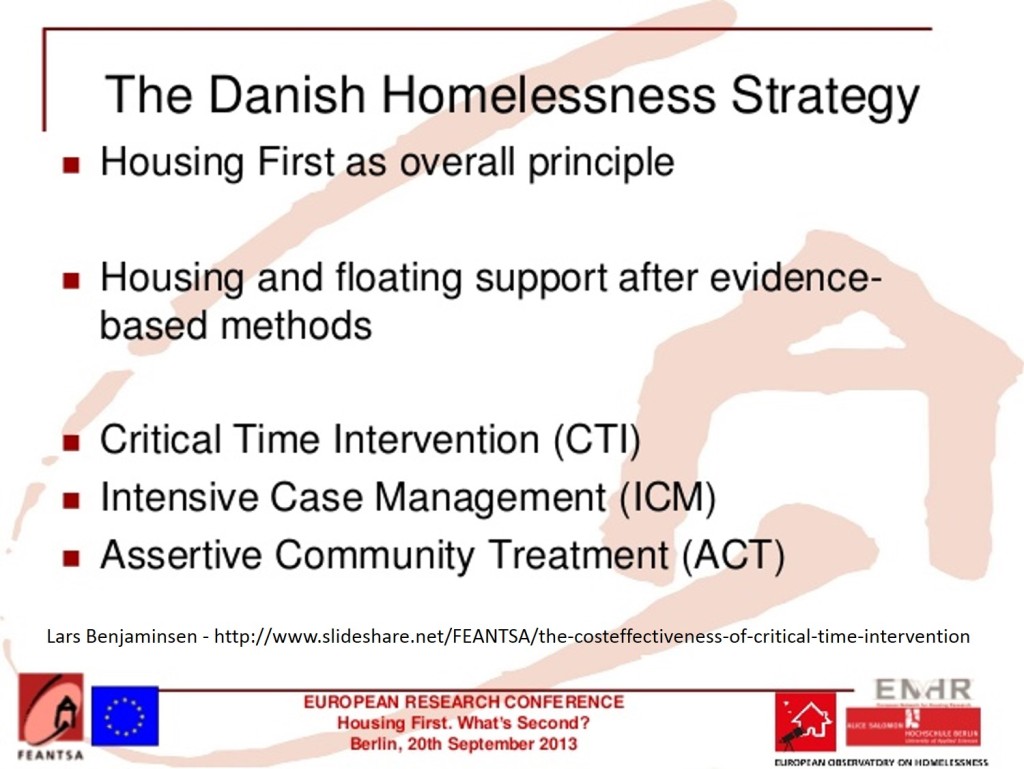






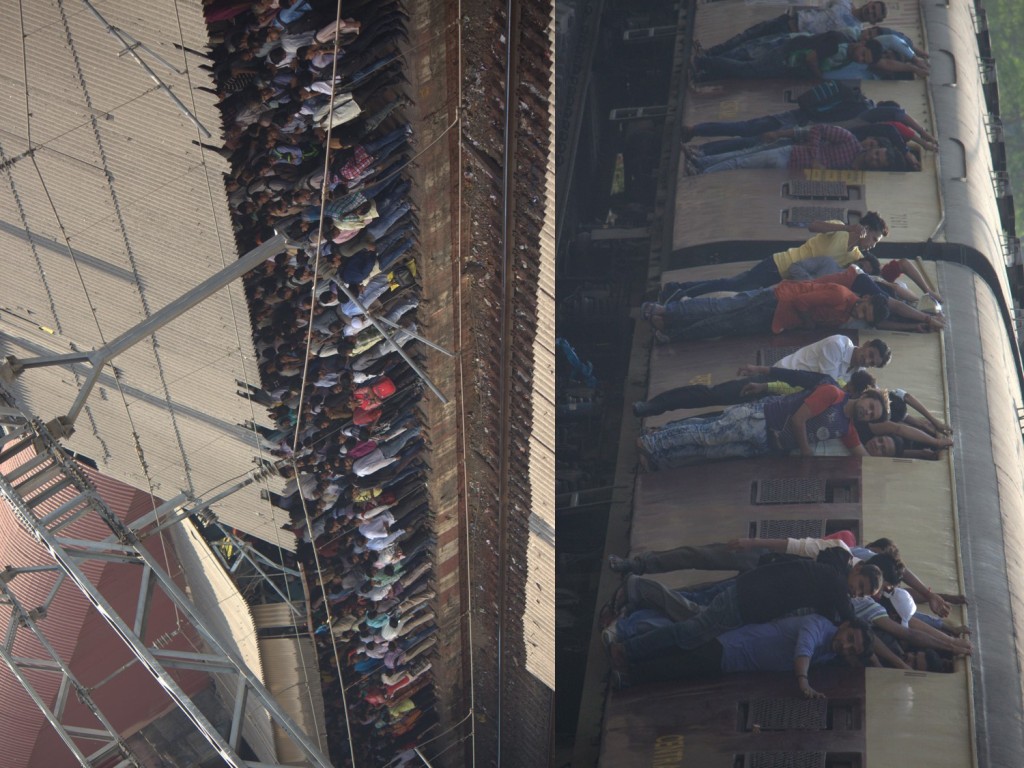
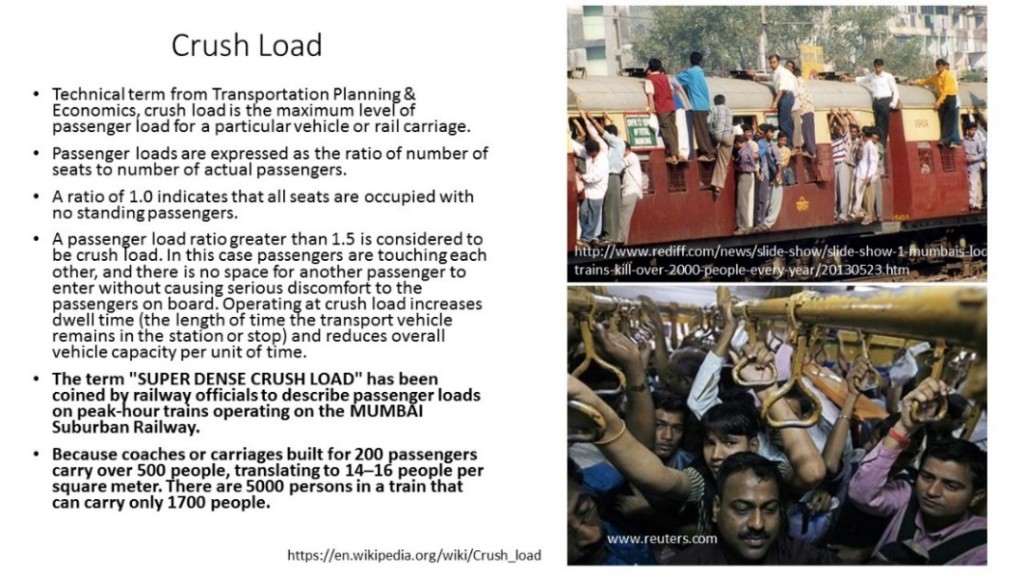
 train is said to have operated on 16 April 1853, between Chhatrapati Shivaji Terminus in south Mumbai and Thane in the north, a distance of 34 kilometers.
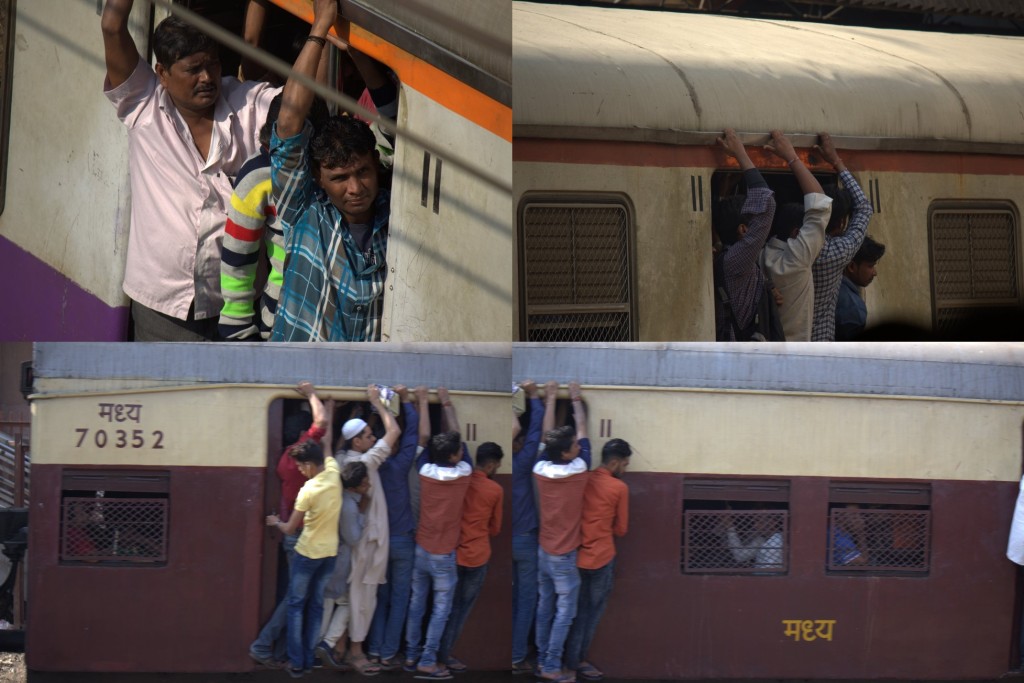
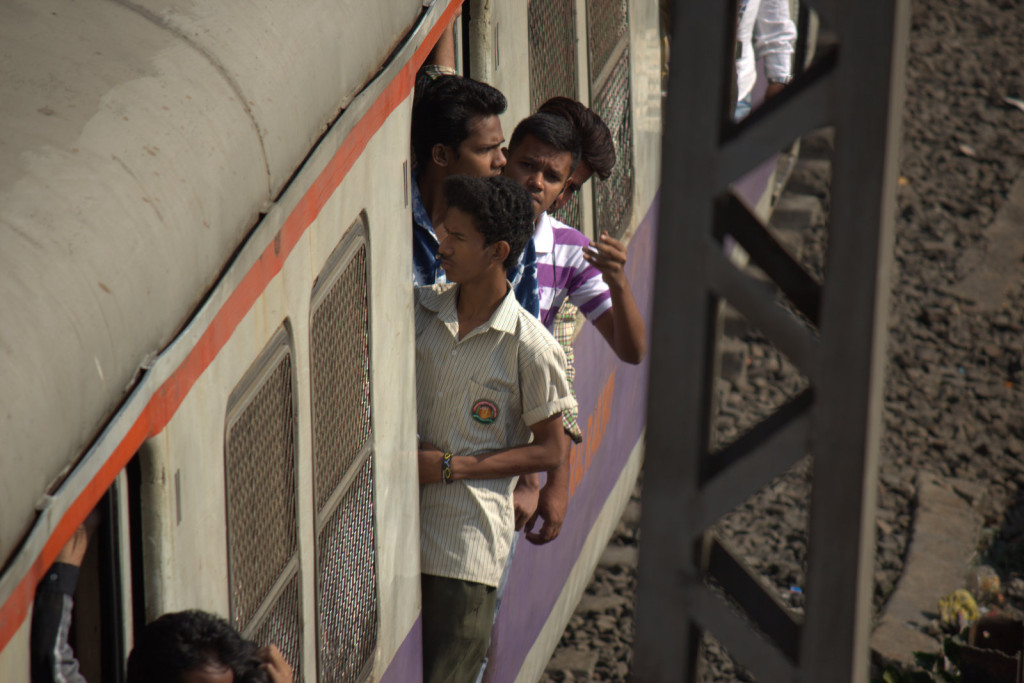
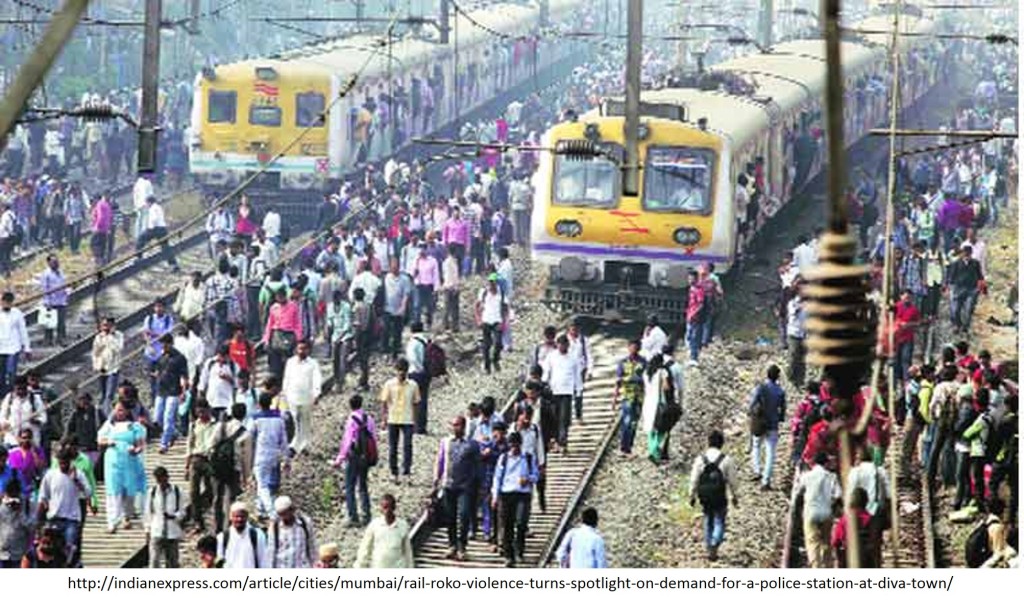
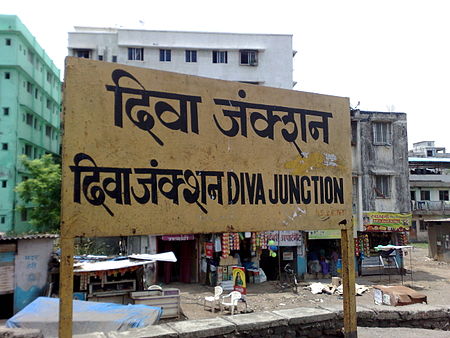
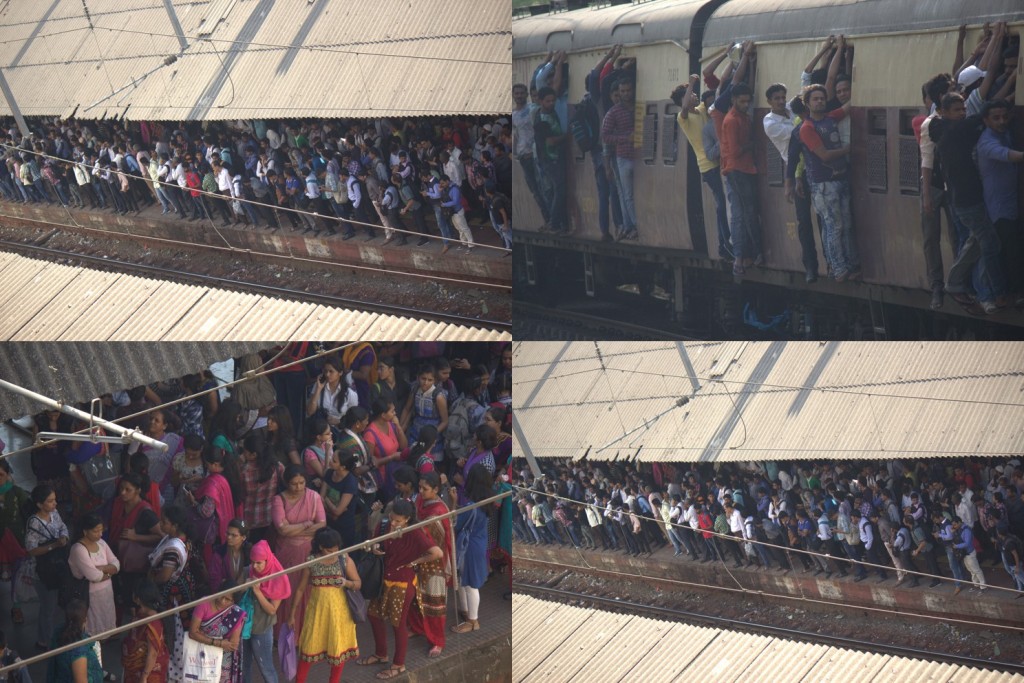
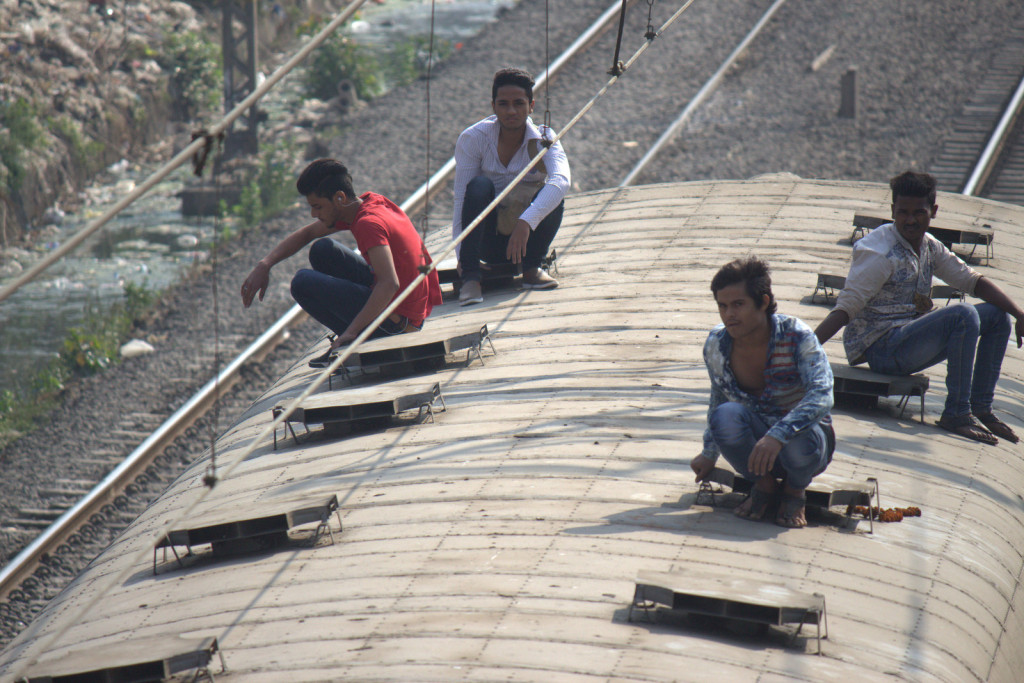

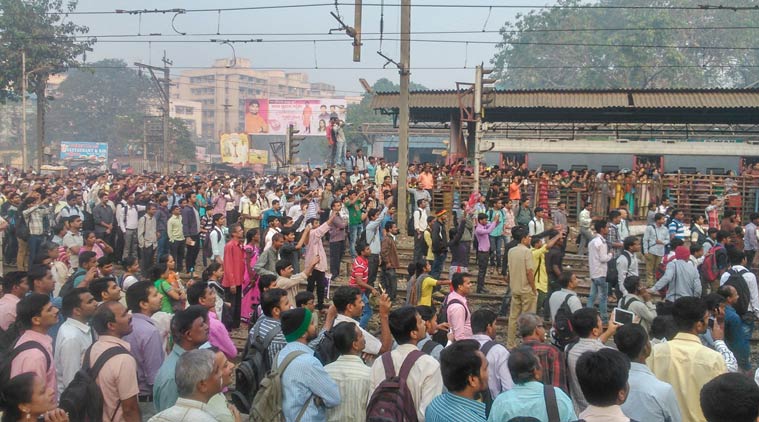











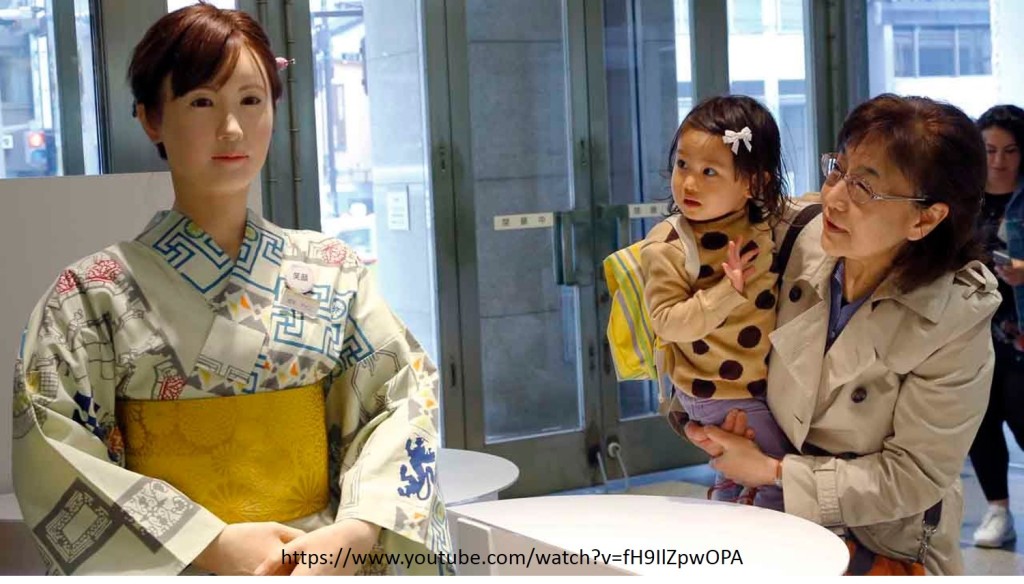


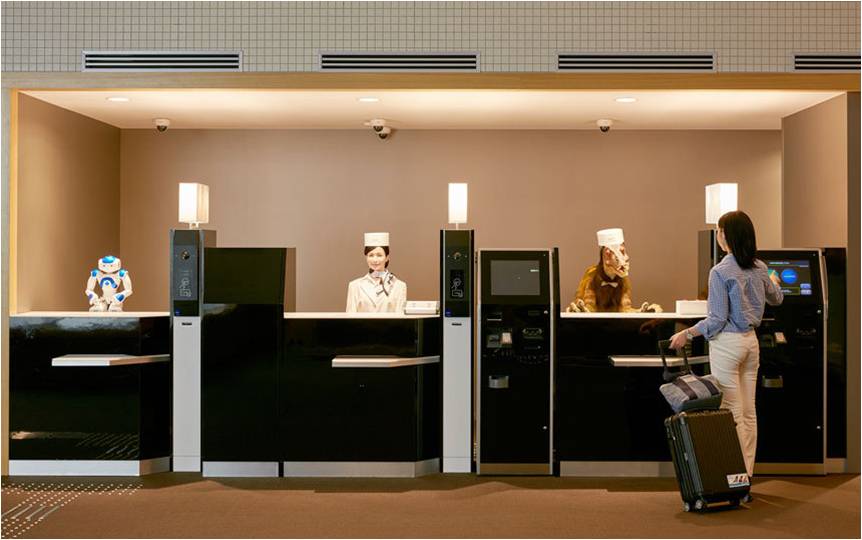
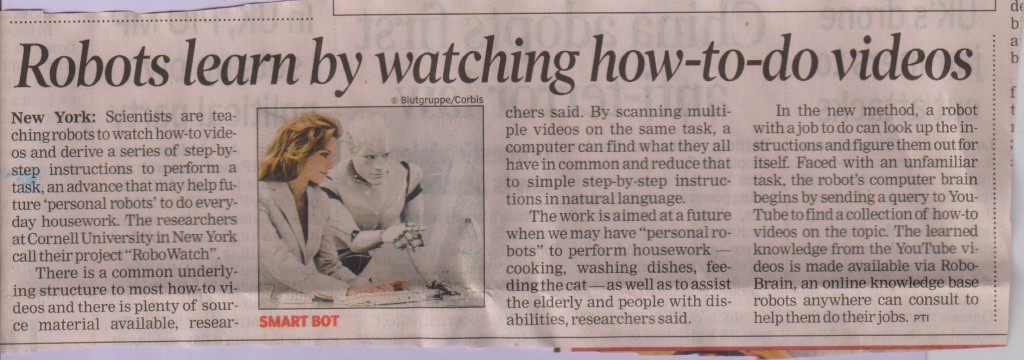
 comments instantly based on weather data. The successful debut of this robot-reporter has raised concerns among traditional TV anchors and weather reporters that they could lose their jobs.