Month: April 2015 (Page 1 of 2)

Applying the rules of the market to education: Does it pass the test?

 “Education, like the Earth, is an onion whose core is suffocating.” ~  Shankar Ramachandran


75 million children and 774 million adults still do not have access to quality education. Nearly 10% of the global spending on primary education is lost due to poor quality that fails to ensure that children learn. Thus one in four young people in poor countries are unable to read a single sentence. In India, while the richest young women have already achieved universal literacy, the poorest are projected to do so only by 2080. Thus, inequality in educational opportunity is the biggest stumbling block to universal education. The rich continue to gain while the poor continue to lag. Education is no longer the great leveler that is thought to be.


This “global learning crisis” is costing governments $129 billion a year. Inequality of opportunities is a major obstacle to development. Ten countries account for 557 million, or 72 per cent, of the global population of illiterate adults. India is among 21 countries facing an “extensive” learning crisis because less than half of the children are learning the basics. The other countries include 17 countries from sub-Saharan Africa, Mauritania, Morocco and Pakistan.


These are the findings of the 2013/4 Education for All (EFA) Global Monitoring Report. Education is pivotal for development in a rapidly changing world. The EFA report explains how investing wisely in teachers, and other reforms aimed at strengthening equitable learning, transform the long-term prospects of people and societies. The report states that equity and quality education will be pivotal in the post 2015 agenda.


The Education for All (EFA) movement is a global commitment to provide quality basic education for all children, youth and adults. At the World Education Forum held in Dakar in the year 2000, 164 governments pledged to achieve EFA and identified six goals to be met by 2015. Governments, development agencies, civil society and the private sector are working together to reach the EFA goals. The Dakar Framework for Action mandated UNESCO to coordinate these partners, in cooperation with the four other conveners of the Dakar Forum (UNDP, UNFPA, UNICEF and the World Bank). Every year since 2002, the Education for All Global Monitoring Report assesses progress and shares good practices. It also makes concrete recommendations to achieve the goals set in Dakar.


Although the report, ‘Education for all – global monitoring report 2013-14′, places India in the top bracket of countries likely to achieve a primary enrolment target of at least 95 per cent by 2015, but questions the quality of education, placing India among the 21 countries facing an ‘extensive’ learning crisis. To illustrate the “learning crisis” faced by India, the report compares Vietnam and India and quantifies the difference between the two countries in education. In Vietnam, students perform well, on an average, on tests administered at different levels with varying contents. In India, however, children’s learning progress declines in higher grades. In Vietnam, 86% of eight-year-old children answered grade-specific test items correctly. Similarly, 90% of children aged eight in India did so. However, when 14 to 15-year olds were asked a two-stage word problem involving multiplication and addition, 71% of children in Vietnam answered correctly, while in India the percentage dropped to 33%.


An “ambitious” curriculum, which outpaces the child’s learning ability, including that of disadvantaged learners, is found to be the most significant factor behind the poor learning outcomes of Indian schools. Contrast this to Vietnam — where the curriculum focuses on foundation skills and is closely matched to what children are able to learn, especially disadvantaged learners. The report points out that India’s curriculum “outpaces what pupils can realistically learn and achieve in the context and time given.”


India’s poorest continue to remain illiterate despite enrolment in school. Even after completing four years of school, 90% of children from poorer households remain illiterate. And this also holds true for around 30% of kids from poorer homes despite five to six years of schooling. Besides, only 44% of rural students in the Grade 5 age group in the state of Maharashtra and 53% in the state of Tamil Nadu could perform two-digit subtraction. And it will take another 66 years for poor young women of the country to achieve universal literacy.


******


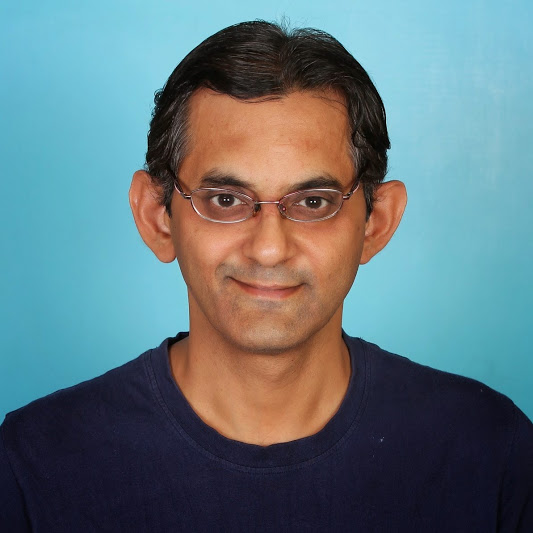
The Essayist spoke about the problems confronting education in 21st century, especially in the context of India, with Shankar Ramachandran, an educationist, who early in his life moved from a corporate career as a chartered accountant to his calling of educating children in villages. He has completed a Master’s degrees in Education and a Master’s degree in International Peace Studies at University of Notre Dame along with short fellowships in United Kingdom. He has been teaching in India since 1992 and has created a unique reading program for children called Spells, which takes a holistic approach to reading and learning. It involves parents, and addresses the emotional as well the cognitive element of learning to read.


shankar ramachandran


Most parents want their children to read because they firmly believe that if children read then they will learn. In fact children often complain of parents harassing them to read their school textbooks. What most families do not discuss openly is that most children never learn to read properly at early ages; they often develop a fear of reading. Shankar’s method involves parents and encourages children to learn to read at early ages so that they can then go on to read to learn at higher grade levels. Along with Imagic Foundation he is now using this method to encourage reading and language learning in primary schools that serve children and families from low-income urban slums in Mumbai.


SR = Shankar Ramachandran

TE = The Essayist


******

TE: You have been involved in the education system for the past two decades in various capacities – both inside and outside the formal education system. What are the critical problems you find in the education system today?


SR: Let me cite a couple of problems, which, in my opinion, are as insoluble as ink stains on new linen.


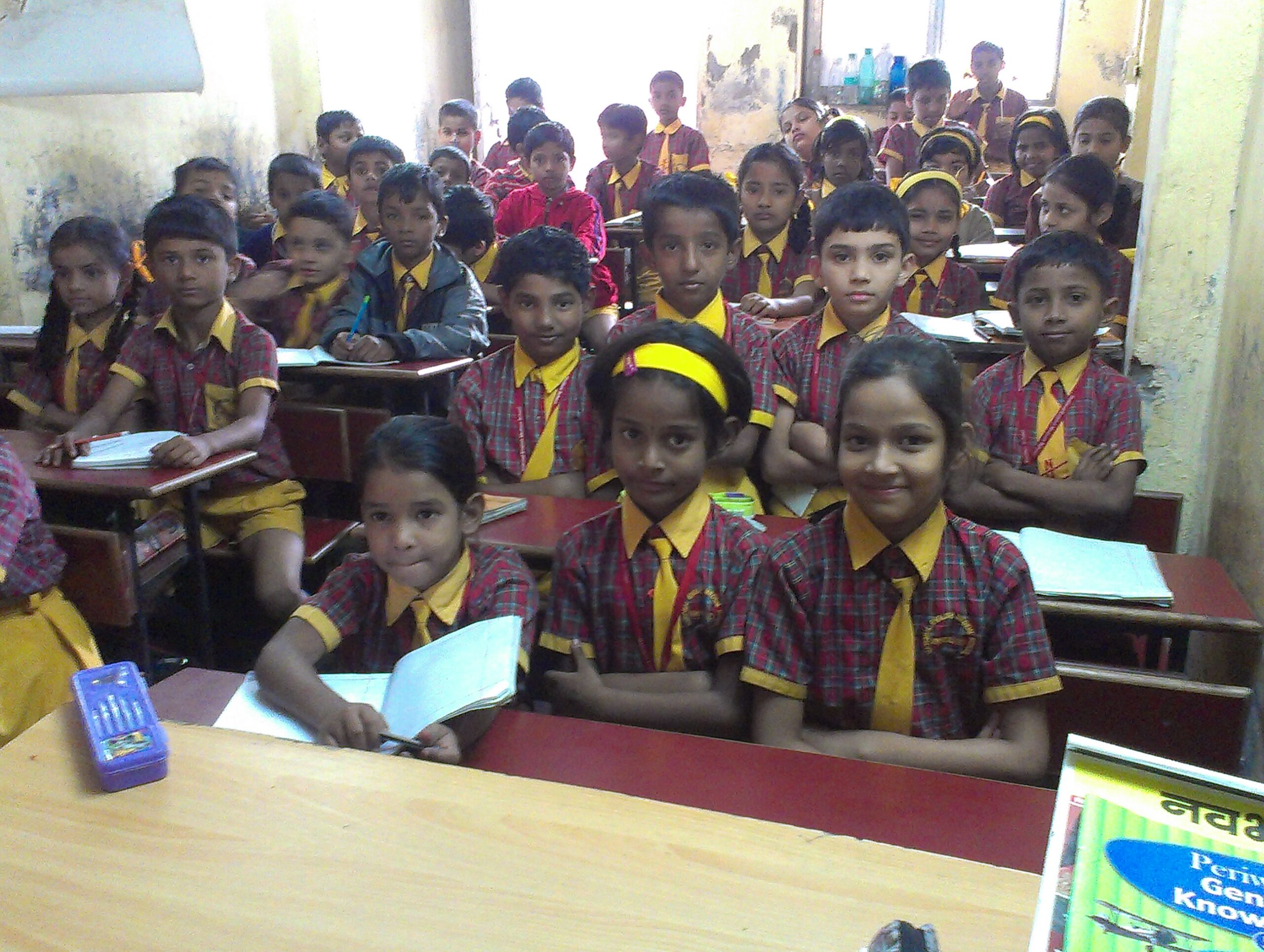
The first is the existence of not one, but multiple education systems. We talk of the education system as if there is one education system. This is a basic mistake we make when we talk of improving the education system. There are multiple systems of education in the same city and at the same time. They are organized layer after layer – a different layer for the rich and then for the upper middle and then for the lower middle (that is very aspirational) and then the slightly poor and then the very poor and so on. This is the problem of stratification of education into class groups.


Of course, as is true everywhere else within a market system, where you pay more you get more: better quantity of services and quality of services.


This follows the layering of markets in general, for health care and residential spaces and for all consumer products and almost everything on the planet. There are televisions for the rich and televisions for the poor, hospitals for the wealthy and hospitals for the needy, homes for middle income groups and homes for the poor.


One can argue that these divisions are as timeless as the common cold, and so they may be. We can also take it for granted that products for the rich differ from products for the poor in quality, health benefits and longevity. Multigrain breads and organic eggs are unaffordable to the poor; wealthier hospitals may offer better health care. First class section in planes offer better services than economy class on the same flight.


And so in education, private schools may outperform public schools that are stretched for resources and staff quality. Can we live with such quality variations in health or education? I go back to the example of the airplane mentioned earlier. It is accepted that the first class gets better service than economy. But can we offer, say, emergency parachutes and life-saving equipment only to the first class passengers?


And, more importantly, when the plane crashes, does it matter if you were in first class or economy?


TE: We understand that you are arguing that educational quality differs substantially for the rich versus the poor and this shows in the data presented in the UNESCO report mentioned earlier in this article? However, using your airplane metaphor, are you arguing that the education system is crashing?


SR: Yes, I use this airplane argument for the education system. There is the first class which gets better service and then there is the inhuman economy class. However you will find this argument even in the work of British sociologist of education – Basil Bernstein.


Education was supposed to be the great equalizer – the great leveler. Education was the opportunity that was talked about when democracy emerged and constitutions were written for modern nations. Nowadays when I talk of stratification in education I am blamed for being philosophical and not practical. The detractors tell me that it is a philosophical argument that we must reserve for another day.


class iii


However, if talking about the stratification of education is philosophical; and if we must deliberately ignore that education was sold as the legs on which a solid democracy would walk and run; we should also agree that democracy is philosophical. The same detractors would scream and abuse me if I said that democracy was philosophical and they should stop voting. How can we take a concept like democracy and then cut off its legs (which happens to be education) and say now use this legless wonder called the newer, shinier, and easy-to-use version? Democracy is not a consumer product of the market place. Democracy is a sacred notion and we have to respect all its components and all its attributes including education as the ladder and platform of opportunity for all.


TE: So, one of the problems in education you mention is the stratification or inequalities in education. This leads to multiple systems of education – some for the rich and some for the poor. And of course those who pay more get more.  However, it seems to me that you are now talking of a different problem: the problem of applying market principles and rules to education?


SR: We have made democracy marketable and now we are making its foundation – education – marketable.


This leads me to the second problem I see in education, and of course it is linked to the first. While education mimics the market, it has been unable to draw, at least in India, the talent that the market draws. In Finland, the teacher is paid on par with a doctor or a lawyer. In India, a few higher education institutions and some private schools may have highly paid teaching staff. However, in most primary and secondary schools, teachers lack training, professionalism and self-belief. Moreover, they lack wages. When they have their own hungry bellies to fill, are they likely to whet the appetite of forty or sixty hungry minds?


In several low income private schools in Mumbai, an average teacher earns between Rs 4000 (65 dollars) to Rs 7000 (115 dollars) a month. The wages are insufficient unless the teacher bolsters it with after-school tuitions. Outside of Mumbai, the situation is far grimmer. This article in the link mentioned below throws light on this issue.

http://www.theguardian.com/world/2014/mar/11/india-education-state-private-school


Needless to say, staff motivation is low, staff turnover is high. Can we continue to put on a fight against such mind-numbing odds? That is an enigma for Economists and Planners, but they sing, ‘Don’t you ask me what to do, I’ll tell you TINA TINA TINA’ (Sung to the tune of Quando Quando Quando). TINA. There is no alternative.


Is that what we should teach in our schools to our children? TINA – That there is no alternative. Perhaps that is what our children have been learning and therefore there are no innovations and inventions happening in a country of 1.2 billion people.


TE: So what is the alternative? What can be done?


SR: I intentionally veer towards a problem which has several elegant solutions. If I were to run a school, this is the area I would first upheave. And continue to upheave. CURRICULUM. This is also something that has been identified as a problem by the UN report you mentioned earlier.


Let me offer three arguments why curriculum is a problem in India.


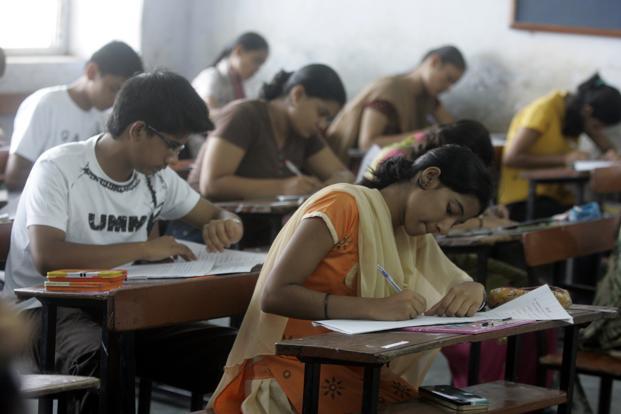
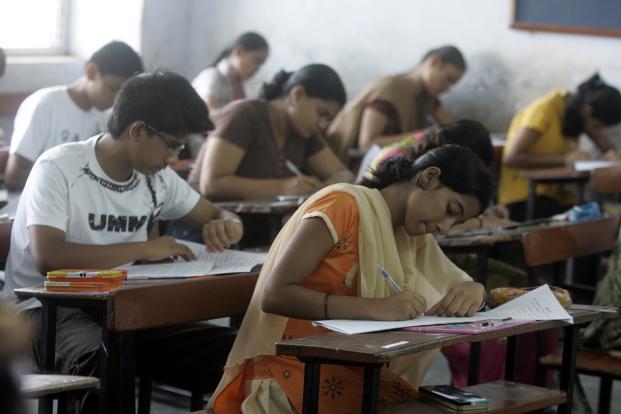
First, Indian communities have always had an affinity to pomp, celebration and occasion, and the education equivalent of pomp is examination. We can, perhaps, trace the malaise to the royal spectacle of swayamvars, where princes underwent examination before a bride chose them with a garland of flowers. King Vikramidtya had to use his wit and wisdom to get rid of the Vetaals of ignorance. Ife he failed, he lost his head. The love for testing has pushed curriculum and instruction into being bridesmaids to the wedding of the child, to examination.


Exam (1)--621x414


Examination is the Oracle that predicts social mobility and privileges. A student who does well in the examination goes to the best institute, say IIT (Indian Institute of technology), which then becomes a ticket to go abroad, and thus the student scurries up the social ladder. Preparation for the Examination then becomes the whole purpose of education. Parents with monetary resources prepare intensely in this challenge. They enroll their child in multiple coaching classes and tuition classes (over and above the regular school). Those without resources drop out. This unforgiving approach has widened the abyss that divides the rich and the poor: the rich are over-educated and the poor, under-prepared. The average rich student in Mumbai clocks at least 12 hours of additional tuition every week in addition to the time spent in school. Parents of many poor students try to emulate this by stretching their financial resources, but it is usually not enough. Outside of Mumbai, in the hinterland, the situation is testier. The UNESCO report states that India’s poorest continue to remain illiterate despite four years of learning (http://timesofindia.indiatimes.com/india/In-India-poor-kids-are-illiterate-despite-4-years-of-education-Unesco-report/articleshow/29524124.cms).


We must also remember that the rich student gets support at home from educated parents. The poor kid has no chance of competing in this race of the fittest. This is, of course, inherently, unjust.


How can a catapult compete against a cannon?


Third, Examination needs standardization, if only to give the smug impression that everyone stands a fair objective chance. There are standardized curriculum for each age group. Every student must run the same course, leap over the same obstacles and heave the same tomes in her back-bending bag. We have already seen the differences in resources and preparation. The poorer kid learns very early that the race is too challenging for her. She is trailing behind her better-trained peers, her results are a nightmare for her, and her confidence in her own abilities are shattered very early. How long can she hold up the pretense of being equal?


TE: Are the differences in education only between the social groups? Isn’t there a difference within social groups too? In my own school, when I was a student, I found great variations in learning abilities among my peers?


SR: True, this is not just a problem between the rich and the poor. The inequalities crop up within each strata too, for various other reasons such as intelligence, motivation and determination. Every child who trails his peers in the classroom hears the same sibilant whisper as he opens his standardized textbook: Sleep. Shut. Quit. While he sleeps, his parents and teachers get into a triangular blame game: the teachers blame the boy and the parents, the parents blame the teachers and the boy, and the boy wants parents and teachers to go to sleep too.


The school and classroom have to pay attention to each kid, play to his strengths and rectify his weaknesses. Thus, children need attention – individualized attention. They can get this at home if the parents are willing to give their time and also willing to learn. Many parents from the upper classes can afford to do that. One of the spouses can be a stay at home parent. However, in the poor family, the income from both parents is barely sufficient. So most poor parents outsource the education of the child to the school system. However, the school system is in a trap. It can only hire poorly paid teachers who are minimally qualified and maximally unmotivated.


This has put the Indian education system in a peculiar situation. Every stakeholder in the system is on their own hamster wheel. They are pedaling furiously but going nowhere.  The parent works extra hours to make enough money to pay for extra coaching classes, the student is running from classroom to tuition classes, the teachers are busy grading exams, and no one is learning. The coaching classes pocket the money. It is an India Rupees 2000 crore (US$320 million) unregulated industry in India. Why would venture capitalists and private equity firms fund coaching classes in India? I do not think they are interested in improving quality of education or reaching education for all. They are private companies interested in making money or taking money from those willing to give it up? Parents in India in their blind quest to give their child a leg up the education ladder are giving it up by the fistful

(Read http://forbesindia.com/printcontent/36587).


The UN report does not go into these issues at all – the marketization of education in India. That is one of the primary reason that the curriculum is not being changed aggressively. There is money to be made by keeping children dumb. This is the new, shinier democracy that I talked of earlier – it has amputated the educational legs of democracy and is now only getting high on money. Does this new kind of democracy want a dumber citizenry?  Writing reports may be necessary but is simply not sufficient. The United Nations has to confront the issue head-on.


TE: How do we get out of this? How do we move towards a better system? What would be the starting point? And what would be one underlying principle of that education system?


SR: The first step is to free the children, the teachers and parents from the stranglehold of examinations.


assembly 1


A child in an average school has 30-40 days dedicated to formal testing every year. Over 10-12 years of schooling that works out to nearly 360 days of testing. Compare this to a child in Finland, who has almost no formal testing during that entire period.


It takes less than a day to really assess a child, so why spend 360? What rituals are we completing?


We must not forget that these rituals are accompanied by pressures, endless preparations and tuitions, mindless memorization. All in all, a colossal waste of time.


There is a fundamental pedagogical reason for doing away with examination, too. We want children to be curious, to ask questions and to seek information. However, the classroom education experience expects them to merely answer questions all the time, never ask. It expects them to take knowledge as a given, only to be reproduced, never to be challenged or questioned. Examinations ask, students answer. Nothing else matters. Paulo Freire’s banking analogy comes to mind. Examination turns students into passive receptors.


Thirdly, testing serves no purpose if it is not accompanied by remediation. Let us say that a test result tells us that Student A is struggling, and Student B is brilliantly endowed. What does the teacher do with this rich information, which takes less than an hour to gather? Does she use this insight to make some change inside the classroom? Does the teacher help Student A to overcome his difficulties?


Rarely. The teacher calls the parent and asks them to arrange for remediation or tuition classes, usually after school. What does Student A then do in class? Start preparing for the next test, which he already knows he is going to underperform. There is very little remediation done inside class. This undermines the chief purpose of testing.


Fortunately, the Central Board of Secondary Education in India has taken a few corrective steps. They have made the Grade or Standard 10 board exam voluntary. Several progressive schools around the country do not have testing in the primary and middle schools. These healthy initiatives need to become the norm, not the exception.


The Right to Education (RTE) says that students cannot be detained in any class up to grade nine. That, in my opinion, is another nail from the government upon the coffin of testing. It is up to schools now to bury the monster.


TE: What can schools do, if they do not test?


SR: The moment you do away with examinations, you make a great switch inside the school: the switch from curriculum-centric education to child-centric education. The examination makes the curriculum the be-all and end-all of education; the child and her needs do not figure in this equation at all. The child slowly drops out of the process which is meant to help the child. The child dragged, pushed and finally drops out. Which is what the troubled slow learner does in the end.


A 2014 Human Rights Watch report mentions that over 40 per cent of Indian students drop out before Standard 8, and most of these students are from the ‘lower rungs of Indian society’. These children feel discriminated in classrooms and are made to sit at the back of the class. They leave the school because they ‘do not learn’ anything.

http://www.hrw.org/news/2014/04/22/qa-talking-discrimination-and-school-dropout-rates-india


Strange, is it not? Teachers are teaching but students are not learning. That is a familiar tale even in the most elite classrooms.


A UNICEF report in 2013 says that children are dropping out not because of poverty or work, but because they are not learning anything in school. They term this a National Emergency.


http://www.thehindu.com/news/national/out-of-school-children-and-dropout-a-national-emergency-unicef/article4611287.ece


TE: How can we get around this? Get rid of examinations?


SR: If we remove examinations, the focus on the curriculum dims and the child comes towards the foreground. The teacher then becomes the adept cameraman who can wield the lens cleverly to perform this trick.


We can then start paying attention to the development of foundational skills in the children. Foundational skills are those that help the child become a better learner – and this helps her throughout her life.


Let me take the example of English language learning. A child typically reads around eight to ten short stories or extracts and five to six short poems in a year. Because of examination, the child learns these handful of lessons repeatedly through the year. In India, in addition to schools, the student also enrolls in coaching classes or tuition classes in the evening and the mother also forces the child to read at home. Thus, the mother, the coaching class or tuition teacher and the school teacher revise these 8 to 10 extracts and 5 to 6 poems repeatedly. The child is forced to commit them to memory without understanding them. Usually, there is very little analysis or depth: the revision is merely a repetition of knowledge-based low-order question and answer.


This is very little work done in a year.


No wonder, then, that literacy, reading and comprehension rates in India are low. A World Bank study, reported by Time magazine this year corroborates this.

http://time.com/2956888/india-education-decline-world-bank-report/


My belief is that the child of eight should read at least 200 pages of age-specific literature every week. At an after school language learning center that I run, over 90 per cent of the students easily achieve this for at least 25 weeks a year. That means around 5000 pages of informal untested reading a year. Around 120 books a year. 120 fun-filled story books of kings and princesses, talking birds and sleeping dragons, children and grown-ups.


reading program


Let me quantify this in time.


The average reading rate is 4 pages a minute for age-specific books. We are then talking about 1250 minutes of reading in a year. This means 50 classroom periods of 25 minutes each. Even if half is done at school and half at home, in 25 periods a year at school and 25 minutes of reading per week at home, a student can achieve this target.


Instead, a student currently reads one measly text book of less than a 100 pages in a whole year. And schools still say they have no time to read inside the classroom (Hindustan Times, Mumbai, November 26, 2014). They say they have barely time to finish the syllabus. A syllabus of one little text book of under a 100 pages a whole year.


Schools have no time to read because they are conducting examinations. That is a simple trade off.


TE: Well you are asking a very important questions: Which is more important – Examinations or Reading? I guess we know the answer is reading, but could you explain to us – How?


SR: Almost every education expert in the world, every language expert would say that reading is extremely beneficial for children. Reading is one of those foundation skills. Reading increases imagination, comprehension and predicated better grades. Yet our teachers have no time for it.


Can we say the same about examinations? Leading education systems in the world such as Finland have dropped examinations. Why would they do so if they were indispensable for children?


The trick is simple. Replace examinations with a meatier curriculum. Replace one textbook with 120 story books. Instead of testing students on one text book, let the student experience and summarize the 120 books she has read. This will teach the children great skills: summarizing, narrating, sequencing; predicting, imagining and word-building. The child’s speed of reading also increases. And speed of reading is a great predictor of performance in middle and high school. Educationist Anne Cunningham has done some wonderful research in this area.


http://www.csun.edu/~krowlands/Content/Academic_Resources/Reading/Useful%20Articles/Cunningham-What%20Reading%20Does%20for%20the%20Mind.pdf


Another advantage of replacing a text book with 120 books is de-standardization. Students of different capacities can read books of varying difficulty. Not all students may need to read the same set of books. This will allow the gap between the weakest and the strongest child to narrow. In the class, the teacher can work with the weakest child while the strongest child reads independently. This allows remediation.


What I have outlined above is a case study for curriculum change in English language acquisition. Similar changes need to be envisaged in Mathematics learning, Science learning. All changes should lead children from being passive receptors to becoming active participants.


TE: You have mentioned parents as an important cog in the wheel. How do you envision the role of parents in the process of a child’s education?


SR: Parents have to first accept and believe that there is more to education than merely sending the child to a school. Parents have to be more involved in the child’s education, especially in the early years of education. Parents have to see education as fun rather than serious business. Parents have to see education as helping their children learn to live rather than just earn a livelihood. Education is seen as a means to an end – the end of earning money by finding a job in a corporate firm or government rather than learning how to live the good life.


Right now, in the present system in India where almost no recreational reading is done inside the classroom, it is left to the parents to introduce students to the pleasures of reading. There is enough evidence that wherever parents read to the child, children are brighter, more curious and perform better at school.


http://www.teachreadingearly.com/benefits-of-early-reading.php

http://www.reachoutandread.org/filerepository/readingaloudtochildren_adc_july2008.pdf


It is important then, that the parents begin reading with the child as early as possible, even when the child cannot speak or read.  That, in itself, can make the child very likely to enjoy school and stay in school.


While this may be easier for middle class and upper class parents, this is a huge problem for parents with lower incomes. In most cases, parents are not literate and cannot read. Second, they may not have the resources to expose their children to books. Their children have no exposure to reading at school, no exposure to reading at home. They suffer a double blow and continuously underperform their peers. NGO and CSR initiatives of corporate companies that care must step up and take action in this critical area. The most important thing is that we have to demonstrate to our children that we care about their learning. Caring is the first step towards building a great education system.


******

© Shankar Ramachandran and The Essayist, 2015


References:

Education for All: http://www.unesco.org/new/en/education/themes/leading-the-international-agenda/education-for-all/

Report: http://www.unesco.org/new/en/education/themes/leading-the-international-agenda/efareport/reports/2013/

http://timesofindia.indiatimes.com/india/In-India-poor-kids-are-illiterate-despite-4-years-of-education-Unesco-report/articleshow/29524124.cms

http://www.dnaindia.com/india/report-india-among-21-countries-facing-extensive-learning-crisis-2057112


Cover Image: learned, d e clark, 2015 


Song: Quando Quando Quando

http://en.wikipedia.org/wiki/Quando,_Quando,_Quando


LENNON Lied

John Lennon lied.


1 love is all you need


So did Paul, George and Ringo.


Love is NOT all you need.


I should know. I’ve been there, experienced the great highs and lows of love’s giddy roller coaster and I’m here to say that love is not all you need.


You DEFINITELY need more.


Love is a great place to start. Don’t get me wrong. To have it as part of the foundation on which the relationship is built is necessary. But it’s not glue. It won’t hold on its own when the going gets tough.


Love, often, fails and falls apart.


Because love needs the additional building materials of respect, humility, friendship, deep listening, consideration, compassion and joy, and I’m sure there are other qualities I haven’t listed.


“When we believe that “all we need is love,” then like Lennon, we’re more likely to ignore the fundamental values  such as respect, humility and commitment towards the people we care about. After all, if love solves everything, then why bother with all the other stuff — all of the hard stuff?” (1)


The hard stuff, h-mmm. Hindsight is 20/20, although I’m not sure where I went wrong, where my relationship went wrong. Perhaps it didn’t go wrong, perhaps there wasn’t enough right to sustain it.


alaska Picture2


I loved. I laughed. I lived. And now I’m alone.


Maybe we didn’t have enough in common. I know one thing, though. We weren’t best friends, or even good friends, really. We were lovers, great lovers, but that doesn’t make people friends. “Okay, that felt incredible, now what?”


We didn’t share our hopes and dreams with one another. We weren’t intimate on a deep soul level and that’s needed for longevity. If we didn’t share our dreams, how could we possibly help one another to reach them? How could we respect each other’s journey if we were only vaguely aware of it?


“Love without respect is dangerous; it can crush the other person, sometimes literally.  To respect is to understand that the other person is not you, not an extension of you, not a reflection of you, not your toy, not your pet, not your product. In a relationship of respect, your task is to understand the other person as a unique individual and learn how to mesh your needs with his or hers and help that person achieve what he or she wants to achieve.  Your task is not to control the other person or try to change him or her in a direction that you desire but he or she does not.” (2)


I think we had that understanding, or at least the willingness to be open to understanding and learning about one another in the beginning of the relationship. Then over time, understanding, which according to Vietnamese Zen Master Thich Nhat Hanh “…is the very foundation of love”, slowly gave way to rote answers, presumptions and projections. We each crystallized in our own little worlds of assumed realities, when in fact, it turned out to be much different. We needed to commit to actually wanting to understand each other – to understand “why” one did what one did, and said what one said. We disintegrated into an alternate universe, called the idealistic, rather than dealing and living with right here right now, the realistic. And then reality did bite.


Mark Manson in his article entitled “Love is Not Enough” notices that “in our culture, many of us idealize love. We see it as some lofty cure-all for all of life’s problems. Our movies and our stories and our history all celebrate it as life’s ultimate goal, the final solution for all of our pain and struggle. And because we idealize love, we overestimate it. As a result, our relationships pay a price.” (3)


Mine paid a price, a big one…divorce. The tapestry he and I wove together, of our life, is unraveling as I write this. It’s sad. How could I have prevented this from happening? Could I have prevented this from happening? Maybe I did idealize love, although I didn’t see it as a solution to my pain and struggle, but perhaps as a lovely distraction which added another level of joy and happiness to my life. Was that my fault, though? Wasn’t I simply following what Western society professes—falling in love is the ultimate intention of life? Connecting with one’s soul mate, twin flame, true love?


Ahh yes, all you need is love?

hawai Picture1


Do love and marriage go together like a horse and carriage?


Pepper Swartz, in her article entitled, “What Makes Relationships Work?”  writes, “We are a love culture. Unlike some societies that think of passionate love as a nuisance that can undermine sound reasoning about whom and when to marry, we think passion is our truest guide.” (4)


I remember listening to an older woman; she is a friend of mine who is originally from India. Her marriage, many years ago, was arranged by the respective parents. She met her husband a few times before marrying, always with an escort. My first question to her was: “Did you love him?”


She smiled and replied, “I learned to love him over time.” This was incredulous to me, I mean, how could someone marry without passion, the spark, what we in the West perceive as love?


Pepper goes on to say, “We shouldn’t be misled by fleeting moments of bliss. Love is not all you need, and you will not know—across a crowded room or even on a first date—that this person absolutely is the One. While some hunches work out (and, of course, those are the Cinderella stories), most do not. There is a real danger when you think that fate has delivered the One: You may stop looking for disconfirming evidence…” (5)


As I’ve gotten older, I am beginning to understand what my friend meant. Perhaps we, who believe in love as a cure- all, are seeking the high of passion complete with the requisite heart flutters, when perhaps, we should open our hearts to the possibility of a profound life shared with another in respect, honor, and consideration. And yes, love, but a love based on acceptance of self and other as opposed to momentary hormonal excitement.


Relationship is hard at times, and our intention is lofty. To quote Claire and Charlie Bloom, “… to deeply love another adult human being with our whole being, seeing their every aspect as being divine and perfect, with complete vulnerability, open-heartedness and absolute and mutual adoration… it’s a great theory but have you noticed that it’s not all that eeeeasy.” (6)


Is love all you need?


Sorry, John, I’m not sure where your head was when you wrote this song, but love is not easy.


The poet, Rainer Maria Rilke agrees, “For one human being to love another, that is perhaps the most difficult of all our tasks; the ultimate, the last test and proof, the work for which all other work is but preparation.” (7)


Love is energy, it flows through everything and everyone. It is divine. It can be said that it is the energy of God, so indeed, a very strong and intoxicating spiritual energy.


Gray Miller cautions us about the energy of love “…love will be a powerful force, and like all powerful forces requires a great deal of practice to keep it from destroying the things in your life you hold dear. There are times when the best thing to do about love is to resist it, to weather the storms of emotion and hold fast to your principles. It’s a hard lesson to learn, and for some of us it’s a matter of unlearning the things we’ve been told all our lives. You need love, yes, in some form in your life.” (8)


We do need love…


I find his last line Interesting: that you need love in some form in your life. Perhaps we are too myopic in our perception of love? With our search for Mr. and / or Mrs. Right , maybe we have overlooked other areas where we could have love in our lives without destroying all that we hold dear. I feel love should be about balance, about giving and receiving. I know that the words compromise and sacrifice are often used in describing relationship, however, I think that if all is in balance, then there would not be a compromise or a sacrifice, there would be a flow of the love energy between the people involved and at some point, a still-point of balance would occur.


Hawai Picture3


Mr Miller continues to admonish us, “… before you go sacrificing everything for some tsunami of emotion, whether it’s a person, place or thing, try and remember: love is NOT all you need. “


I’ll keep that in mind next time…

… and hope my heart will follow…

*****

© Brooke Becker, 2015


References

1. Mark Manson, author, Love is Not Enough, July, 2014, markmanson.net

2.  Peter Gray, Ph.D., Freedom to Learn, Aug 19, 2012

3.  Mark Manson, author, Love is not enough, July 2014, markmanson.net

4. Pepper Schwartz, Psychology Today, May 1, 2003, reviewed on March 3, 2014

5. Pepper Schwartz, Psychology Today, May 1, 2003, reviewed on March 3, 2014

6. Linda Bloom LCSW and Charlie Bloom MSW,relationship therapists, psychcentral.com

7.Ranier Maria Rilke, German poet, 1875-1926

8. Gray Miller, personal development coach, “Love is Not All You Need”,April 26, 2013, lovelivepractice.com


Applying the rules of the market to education: Does it pass the test?

 “Education, like the Earth, is an onion whose core is suffocating.” ~  Shankar Ramachandran


75 million children and 774 million adults still do not have access to quality education. Nearly 10% of the global spending on primary education is lost due to poor quality that fails to ensure that children learn. Thus one in four young people in poor countries are unable to read a single sentence. In India, while the richest young women have already achieved universal literacy, the poorest are projected to do so only by 2080. Thus, inequality in educational opportunity is the biggest stumbling block to universal education. The rich continue to gain while the poor continue to lag. Education is no longer the great leveler that is thought to be.


This “global learning crisis” is costing governments $129 billion a year. Inequality of opportunities is a major obstacle to development. Ten countries account for 557 million, or 72 per cent, of the global population of illiterate adults. India is among 21 countries facing an “extensive” learning crisis because less than half of the children are learning the basics. The other countries include 17 countries from sub-Saharan Africa, Mauritania, Morocco and Pakistan.


These are the findings of the 2013/4 Education for All (EFA) Global Monitoring Report. Education is pivotal for development in a rapidly changing world. The EFA report explains how investing wisely in teachers, and other reforms aimed at strengthening equitable learning, transform the long-term prospects of people and societies. The report states that equity and quality education will be pivotal in the post 2015 agenda.


The Education for All (EFA) movement is a global commitment to provide quality basic education for all children, youth and adults. At the World Education Forum held in Dakar in the year 2000, 164 governments pledged to achieve EFA and identified six goals to be met by 2015. Governments, development agencies, civil society and the private sector are working together to reach the EFA goals. The Dakar Framework for Action mandated UNESCO to coordinate these partners, in cooperation with the four other conveners of the Dakar Forum (UNDP, UNFPA, UNICEF and the World Bank). Every year since 2002, the Education for All Global Monitoring Report assesses progress and shares good practices. It also makes concrete recommendations to achieve the goals set in Dakar.


Although the report, ‘Education for all – global monitoring report 2013-14′, places India in the top bracket of countries likely to achieve a primary enrolment target of at least 95 per cent by 2015, but questions the quality of education, placing India among the 21 countries facing an ‘extensive’ learning crisis. To illustrate the “learning crisis” faced by India, the report compares Vietnam and India and quantifies the difference between the two countries in education. In Vietnam, students perform well, on an average, on tests administered at different levels with varying contents. In India, however, children’s learning progress declines in higher grades. In Vietnam, 86% of eight-year-old children answered grade-specific test items correctly. Similarly, 90% of children aged eight in India did so. However, when 14 to 15-year olds were asked a two-stage word problem involving multiplication and addition, 71% of children in Vietnam answered correctly, while in India the percentage dropped to 33%.


An “ambitious” curriculum, which outpaces the child’s learning ability, including that of disadvantaged learners, is found to be the most significant factor behind the poor learning outcomes of Indian schools. Contrast this to Vietnam — where the curriculum focuses on foundation skills and is closely matched to what children are able to learn, especially disadvantaged learners. The report points out that India’s curriculum “outpaces what pupils can realistically learn and achieve in the context and time given.”


India’s poorest continue to remain illiterate despite enrolment in school. Even after completing four years of school, 90% of children from poorer households remain illiterate. And this also holds true for around 30% of kids from poorer homes despite five to six years of schooling. Besides, only 44% of rural students in the Grade 5 age group in the state of Maharashtra and 53% in the state of Tamil Nadu could perform two-digit subtraction. And it will take another 66 years for poor young women of the country to achieve universal literacy.


******


The Essayist spoke about the problems confronting education in 21st century, especially in the context of India, with Shankar Ramachandran, an educationist, who early in his life moved from a corporate career as a chartered accountant to his calling of educating children in villages. He has completed a Master’s degrees in Education and a Master’s degree in International Peace Studies at University of Notre Dame along with short fellowships in United Kingdom. He has been teaching in India since 1992 and has created a unique reading program for children called Spells, which takes a holistic approach to reading and learning. It involves parents, and addresses the emotional as well the cognitive element of learning to read.


shankar ramachandran


Most parents want their children to read because they firmly believe that if children read then they will learn. In fact children often complain of parents harassing them to read their school textbooks. What most families do not discuss openly is that most children never learn to read properly at early ages; they often develop a fear of reading. Shankar’s method involves parents and encourages children to learn to read at early ages so that they can then go on to read to learn at higher grade levels. Along with Imagic Foundation he is now using this method to encourage reading and language learning in primary schools that serve children and families from low-income urban slums in Mumbai.


SR = Shankar Ramachandran

TE = The Essayist


******

TE: You have been involved in the education system for the past two decades in various capacities – both inside and outside the formal education system. What are the critical problems you find in the education system today?


SR: Let me cite a couple of problems, which, in my opinion, are as insoluble as ink stains on new linen.


The first is the existence of not one, but multiple education systems. We talk of the education system as if there is one education system. This is a basic mistake we make when we talk of improving the education system. There are multiple systems of education in the same city and at the same time. They are organized layer after layer – a different layer for the rich and then for the upper middle and then for the lower middle (that is very aspirational) and then the slightly poor and then the very poor and so on. This is the problem of stratification of education into class groups.


Of course, as is true everywhere else within a market system, where you pay more you get more: better quantity of services and quality of services.


This follows the layering of markets in general, for health care and residential spaces and for all consumer products and almost everything on the planet. There are televisions for the rich and televisions for the poor, hospitals for the wealthy and hospitals for the needy, homes for middle income groups and homes for the poor.


One can argue that these divisions are as timeless as the common cold, and so they may be. We can also take it for granted that products for the rich differ from products for the poor in quality, health benefits and longevity. Multigrain breads and organic eggs are unaffordable to the poor; wealthier hospitals may offer better health care. First class section in planes offer better services than economy class on the same flight.


And so in education, private schools may outperform public schools that are stretched for resources and staff quality. Can we live with such quality variations in health or education? I go back to the example of the airplane mentioned earlier. It is accepted that the first class gets better service than economy. But can we offer, say, emergency parachutes and life-saving equipment only to the first class passengers?


And, more importantly, when the plane crashes, does it matter if you were in first class or economy?


TE: We understand that you are arguing that educational quality differs substantially for the rich versus the poor and this shows in the data presented in the UNESCO report mentioned earlier in this article? However, using your airplane metaphor, are you arguing that the education system is crashing?


SR: Yes, I use this airplane argument for the education system. There is the first class which gets better service and then there is the inhuman economy class. However you will find this argument even in the work of British sociologist of education – Basil Bernstein.


Education was supposed to be the great equalizer – the great leveler. Education was the opportunity that was talked about when democracy emerged and constitutions were written for modern nations. Nowadays when I talk of stratification in education I am blamed for being philosophical and not practical. The detractors tell me that it is a philosophical argument that we must reserve for another day.


class iii


However, if talking about the stratification of education is philosophical; and if we must deliberately ignore that education was sold as the legs on which a solid democracy would walk and run; we should also agree that democracy is philosophical. The same detractors would scream and abuse me if I said that democracy was philosophical and they should stop voting. How can we take a concept like democracy and then cut off its legs (which happens to be education) and say now use this legless wonder called the newer, shinier, and easy-to-use version? Democracy is not a consumer product of the market place. Democracy is a sacred notion and we have to respect all its components and all its attributes including education as the ladder and platform of opportunity for all.


TE: So, one of the problems in education you mention is the stratification or inequalities in education. This leads to multiple systems of education – some for the rich and some for the poor. And of course those who pay more get more.  However, it seems to me that you are now talking of a different problem: the problem of applying market principles and rules to education?


SR: We have made democracy marketable and now we are making its foundation – education – marketable.


This leads me to the second problem I see in education, and of course it is linked to the first. While education mimics the market, it has been unable to draw, at least in India, the talent that the market draws. In Finland, the teacher is paid on par with a doctor or a lawyer. In India, a few higher education institutions and some private schools may have highly paid teaching staff. However, in most primary and secondary schools, teachers lack training, professionalism and self-belief. Moreover, they lack wages. When they have their own hungry bellies to fill, are they likely to whet the appetite of forty or sixty hungry minds?


In several low income private schools in Mumbai, an average teacher earns between Rs 4000 (65 dollars) to Rs 7000 (115 dollars) a month. The wages are insufficient unless the teacher bolsters it with after-school tuitions. Outside of Mumbai, the situation is far grimmer. This article in the link mentioned below throws light on this issue.

http://www.theguardian.com/world/2014/mar/11/india-education-state-private-school


Needless to say, staff motivation is low, staff turnover is high. Can we continue to put on a fight against such mind-numbing odds? That is an enigma for Economists and Planners, but they sing, ‘Don’t you ask me what to do, I’ll tell you TINA TINA TINA’ (Sung to the tune of Quando Quando Quando). TINA. There is no alternative.


Is that what we should teach in our schools to our children? TINA – That there is no alternative. Perhaps that is what our children have been learning and therefore there are no innovations and inventions happening in a country of 1.2 billion people.


TE: So what is the alternative? What can be done?


SR: I intentionally veer towards a problem which has several elegant solutions. If I were to run a school, this is the area I would first upheave. And continue to upheave. CURRICULUM. This is also something that has been identified as a problem by the UN report you mentioned earlier.


Let me offer three arguments why curriculum is a problem in India.


First, Indian communities have always had an affinity to pomp, celebration and occasion, and the education equivalent of pomp is examination. We can, perhaps, trace the malaise to the royal spectacle of swayamvars, where princes underwent examination before a bride chose them with a garland of flowers. King Vikramidtya had to use his wit and wisdom to get rid of the Vetaals of ignorance. Ife he failed, he lost his head. The love for testing has pushed curriculum and instruction into being bridesmaids to the wedding of the child, to examination.


Exam (1)--621x414


Examination is the Oracle that predicts social mobility and privileges. A student who does well in the examination goes to the best institute, say IIT (Indian Institute of technology), which then becomes a ticket to go abroad, and thus the student scurries up the social ladder. Preparation for the Examination then becomes the whole purpose of education. Parents with monetary resources prepare intensely in this challenge. They enroll their child in multiple coaching classes and tuition classes (over and above the regular school). Those without resources drop out. This unforgiving approach has widened the abyss that divides the rich and the poor: the rich are over-educated and the poor, under-prepared. The average rich student in Mumbai clocks at least 12 hours of additional tuition every week in addition to the time spent in school. Parents of many poor students try to emulate this by stretching their financial resources, but it is usually not enough. Outside of Mumbai, in the hinterland, the situation is testier. The UNESCO report states that India’s poorest continue to remain illiterate despite four years of learning (http://timesofindia.indiatimes.com/india/In-India-poor-kids-are-illiterate-despite-4-years-of-education-Unesco-report/articleshow/29524124.cms).


We must also remember that the rich student gets support at home from educated parents. The poor kid has no chance of competing in this race of the fittest. This is, of course, inherently, unjust.


How can a catapult compete against a cannon?


Third, Examination needs standardization, if only to give the smug impression that everyone stands a fair objective chance. There are standardized curriculum for each age group. Every student must run the same course, leap over the same obstacles and heave the same tomes in her back-bending bag. We have already seen the differences in resources and preparation. The poorer kid learns very early that the race is too challenging for her. She is trailing behind her better-trained peers, her results are a nightmare for her, and her confidence in her own abilities are shattered very early. How long can she hold up the pretense of being equal?


TE: Are the differences in education only between the social groups? Isn’t there a difference within social groups too? In my own school, when I was a student, I found great variations in learning abilities among my peers?


SR: True, this is not just a problem between the rich and the poor. The inequalities crop up within each strata too, for various other reasons such as intelligence, motivation and determination. Every child who trails his peers in the classroom hears the same sibilant whisper as he opens his standardized textbook: Sleep. Shut. Quit. While he sleeps, his parents and teachers get into a triangular blame game: the teachers blame the boy and the parents, the parents blame the teachers and the boy, and the boy wants parents and teachers to go to sleep too.


The school and classroom have to pay attention to each kid, play to his strengths and rectify his weaknesses. Thus, children need attention – individualized attention. They can get this at home if the parents are willing to give their time and also willing to learn. Many parents from the upper classes can afford to do that. One of the spouses can be a stay at home parent. However, in the poor family, the income from both parents is barely sufficient. So most poor parents outsource the education of the child to the school system. However, the school system is in a trap. It can only hire poorly paid teachers who are minimally qualified and maximally unmotivated.


This has put the Indian education system in a peculiar situation. Every stakeholder in the system is on their own hamster wheel. They are pedaling furiously but going nowhere.  The parent works extra hours to make enough money to pay for extra coaching classes, the student is running from classroom to tuition classes, the teachers are busy grading exams, and no one is learning. The coaching classes pocket the money. It is an India Rupees 2000 crore (US$320 million) unregulated industry in India. Why would venture capitalists and private equity firms fund coaching classes in India? I do not think they are interested in improving quality of education or reaching education for all. They are private companies interested in making money or taking money from those willing to give it up? Parents in India in their blind quest to give their child a leg up the education ladder are giving it up by the fistful

(Read http://forbesindia.com/printcontent/36587).


The UN report does not go into these issues at all – the marketization of education in India. That is one of the primary reason that the curriculum is not being changed aggressively. There is money to be made by keeping children dumb. This is the new, shinier democracy that I talked of earlier – it has amputated the educational legs of democracy and is now only getting high on money. Does this new kind of democracy want a dumber citizenry?  Writing reports may be necessary but is simply not sufficient. The United Nations has to confront the issue head-on.


TE: How do we get out of this? How do we move towards a better system? What would be the starting point? And what would be one underlying principle of that education system?


SR: The first step is to free the children, the teachers and parents from the stranglehold of examinations.


assembly 1


A child in an average school has 30-40 days dedicated to formal testing every year. Over 10-12 years of schooling that works out to nearly 360 days of testing. Compare this to a child in Finland, who has almost no formal testing during that entire period.


It takes less than a day to really assess a child, so why spend 360? What rituals are we completing?


We must not forget that these rituals are accompanied by pressures, endless preparations and tuitions, mindless memorization. All in all, a colossal waste of time.


There is a fundamental pedagogical reason for doing away with examination, too. We want children to be curious, to ask questions and to seek information. However, the classroom education experience expects them to merely answer questions all the time, never ask. It expects them to take knowledge as a given, only to be reproduced, never to be challenged or questioned. Examinations ask, students answer. Nothing else matters. Paulo Freire’s banking analogy comes to mind. Examination turns students into passive receptors.


Thirdly, testing serves no purpose if it is not accompanied by remediation. Let us say that a test result tells us that Student A is struggling, and Student B is brilliantly endowed. What does the teacher do with this rich information, which takes less than an hour to gather? Does she use this insight to make some change inside the classroom? Does the teacher help Student A to overcome his difficulties?


Rarely. The teacher calls the parent and asks them to arrange for remediation or tuition classes, usually after school. What does Student A then do in class? Start preparing for the next test, which he already knows he is going to underperform. There is very little remediation done inside class. This undermines the chief purpose of testing.


Fortunately, the Central Board of Secondary Education in India has taken a few corrective steps. They have made the Grade or Standard 10 board exam voluntary. Several progressive schools around the country do not have testing in the primary and middle schools. These healthy initiatives need to become the norm, not the exception.


The Right to Education (RTE) says that students cannot be detained in any class up to grade nine. That, in my opinion, is another nail from the government upon the coffin of testing. It is up to schools now to bury the monster.


TE: What can schools do, if they do not test?


SR: The moment you do away with examinations, you make a great switch inside the school: the switch from curriculum-centric education to child-centric education. The examination makes the curriculum the be-all and end-all of education; the child and her needs do not figure in this equation at all. The child slowly drops out of the process which is meant to help the child. The child dragged, pushed and finally drops out. Which is what the troubled slow learner does in the end.


A 2014 Human Rights Watch report mentions that over 40 per cent of Indian students drop out before Standard 8, and most of these students are from the ‘lower rungs of Indian society’. These children feel discriminated in classrooms and are made to sit at the back of the class. They leave the school because they ‘do not learn’ anything.

http://www.hrw.org/news/2014/04/22/qa-talking-discrimination-and-school-dropout-rates-india


Strange, is it not? Teachers are teaching but students are not learning. That is a familiar tale even in the most elite classrooms.


A UNICEF report in 2013 says that children are dropping out not because of poverty or work, but because they are not learning anything in school. They term this a National Emergency.


http://www.thehindu.com/news/national/out-of-school-children-and-dropout-a-national-emergency-unicef/article4611287.ece


TE: How can we get around this? Get rid of examinations?


SR: If we remove examinations, the focus on the curriculum dims and the child comes towards the foreground. The teacher then becomes the adept cameraman who can wield the lens cleverly to perform this trick.


We can then start paying attention to the development of foundational skills in the children. Foundational skills are those that help the child become a better learner – and this helps her throughout her life.


Let me take the example of English language learning. A child typically reads around eight to ten short stories or extracts and five to six short poems in a year. Because of examination, the child learns these handful of lessons repeatedly through the year. In India, in addition to schools, the student also enrolls in coaching classes or tuition classes in the evening and the mother also forces the child to read at home. Thus, the mother, the coaching class or tuition teacher and the school teacher revise these 8 to 10 extracts and 5 to 6 poems repeatedly. The child is forced to commit them to memory without understanding them. Usually, there is very little analysis or depth: the revision is merely a repetition of knowledge-based low-order question and answer.


This is very little work done in a year.


No wonder, then, that literacy, reading and comprehension rates in India are low. A World Bank study, reported by Time magazine this year corroborates this.

http://time.com/2956888/india-education-decline-world-bank-report/


My belief is that the child of eight should read at least 200 pages of age-specific literature every week. At an after school language learning center that I run, over 90 per cent of the students easily achieve this for at least 25 weeks a year. That means around 5000 pages of informal untested reading a year. Around 120 books a year. 120 fun-filled story books of kings and princesses, talking birds and sleeping dragons, children and grown-ups.


reading program


Let me quantify this in time.


The average reading rate is 4 pages a minute for age-specific books. We are then talking about 1250 minutes of reading in a year. This means 50 classroom periods of 25 minutes each. Even if half is done at school and half at home, in 25 periods a year at school and 25 minutes of reading per week at home, a student can achieve this target.


Instead, a student currently reads one measly text book of less than a 100 pages in a whole year. And schools still say they have no time to read inside the classroom (Hindustan Times, Mumbai, November 26, 2014). They say they have barely time to finish the syllabus. A syllabus of one little text book of under a 100 pages a whole year.


Schools have no time to read because they are conducting examinations. That is a simple trade off.


TE: Well you are asking a very important questions: Which is more important – Examinations or Reading? I guess we know the answer is reading, but could you explain to us – How?


SR: Almost every education expert in the world, every language expert would say that reading is extremely beneficial for children. Reading is one of those foundation skills. Reading increases imagination, comprehension and predicated better grades. Yet our teachers have no time for it.


Can we say the same about examinations? Leading education systems in the world such as Finland have dropped examinations. Why would they do so if they were indispensable for children?


The trick is simple. Replace examinations with a meatier curriculum. Replace one textbook with 120 story books. Instead of testing students on one text book, let the student experience and summarize the 120 books she has read. This will teach the children great skills: summarizing, narrating, sequencing; predicting, imagining and word-building. The child’s speed of reading also increases. And speed of reading is a great predictor of performance in middle and high school. Educationist Anne Cunningham has done some wonderful research in this area.


http://www.csun.edu/~krowlands/Content/Academic_Resources/Reading/Useful%20Articles/Cunningham-What%20Reading%20Does%20for%20the%20Mind.pdf


Another advantage of replacing a text book with 120 books is de-standardization. Students of different capacities can read books of varying difficulty. Not all students may need to read the same set of books. This will allow the gap between the weakest and the strongest child to narrow. In the class, the teacher can work with the weakest child while the strongest child reads independently. This allows remediation.


What I have outlined above is a case study for curriculum change in English language acquisition. Similar changes need to be envisaged in Mathematics learning, Science learning. All changes should lead children from being passive receptors to becoming active participants.


TE: You have mentioned parents as an important cog in the wheel. How do you envision the role of parents in the process of a child’s education?


SR: Parents have to first accept and believe that there is more to education than merely sending the child to a school. Parents have to be more involved in the child’s education, especially in the early years of education. Parents have to see education as fun rather than serious business. Parents have to see education as helping their children learn to live rather than just earn a livelihood. Education is seen as a means to an end – the end of earning money by finding a job in a corporate firm or government rather than learning how to live the good life.


Right now, in the present system in India where almost no recreational reading is done inside the classroom, it is left to the parents to introduce students to the pleasures of reading. There is enough evidence that wherever parents read to the child, children are brighter, more curious and perform better at school.


http://www.teachreadingearly.com/benefits-of-early-reading.php

http://www.reachoutandread.org/filerepository/readingaloudtochildren_adc_july2008.pdf


It is important then, that the parents begin reading with the child as early as possible, even when the child cannot speak or read.  That, in itself, can make the child very likely to enjoy school and stay in school.


While this may be easier for middle class and upper class parents, this is a huge problem for parents with lower incomes. In most cases, parents are not literate and cannot read. Second, they may not have the resources to expose their children to books. Their children have no exposure to reading at school, no exposure to reading at home. They suffer a double blow and continuously underperform their peers. NGO and CSR initiatives of corporate companies that care must step up and take action in this critical area. The most important thing is that we have to demonstrate to our children that we care about their learning. Caring is the first step towards building a great education system.


******

© Shankar Ramachandran and The Essayist, 2015


References:

Education for All: http://www.unesco.org/new/en/education/themes/leading-the-international-agenda/education-for-all/

Report: http://www.unesco.org/new/en/education/themes/leading-the-international-agenda/efareport/reports/2013/

http://timesofindia.indiatimes.com/india/In-India-poor-kids-are-illiterate-despite-4-years-of-education-Unesco-report/articleshow/29524124.cms

http://www.dnaindia.com/india/report-india-among-21-countries-facing-extensive-learning-crisis-2057112


Cover Image: learned, d e clark, 2015 


Song: Quando Quando Quando

http://en.wikipedia.org/wiki/Quando,_Quando,_Quando


Physical Roads and Virtual Nodes as bio-political apparatuses of state control

“By this I mean a number of phenomena that seem to me to be quite significant, namely, the set of mechanisms through which the basic biological features of the human species became the object of a political strategy, of a general strategy of power, or, in other words, how, starting from the eighteenth century, modern western societies took on board the fundamental biological fact that human beings are a species. This is roughly what I have called biopower.”

Michel Foucault, Security, Territory, Population. 1977-78.

(Graham Burchell, Translator)


*****


Bio-Political Apparatuses of Control

Security and control today are maintained, almost entirely, by keeping a check on all of the networks, materials and services essential for life as we know it .We are dependent on several systems to guarantee this life; dependent on systems of water supply, electricity, internet, transport, money, systems of education that accredit us with degrees that allow us specific kinds of jobs, permits and licenses that allow us to inhabit specific kinds of environments and on international relations. As our governments are tasked with organising these systems for us, they are also, essentially, handed over the control to regulate, and possibly manipulate these systems. Thus, politics gets applied onto the systems that are essential for our bios (life); thereby rendering them, not simply life systems but life-political apparatuses of control, or bio-political apparatuses of control.


The intention of this essay is to explicitly unpack the notion of the ‘biopolitical apparatus,’ the ‘milieu’ and to trace the historical development of state apparatuses from physical to spatial to biopolitical.


As Michel Foucault writes in Security, Territory, Population (pg. 977-78): “Sovereignty is exercised within the borders of a territory, discipline is exercised on the bodies of individuals, and security is exercised over a whole population.”


Michel Foucault calls this biopower: the technology of power for managing people as a large group. Biopower is literally having power over bodies; it is “an explosion of numerous and diverse techniques for achieving the subjugations of bodies and the control of populations.” The distinctive quality of this bio-political technology is that it allows for the control of entire populations. It is an integral feature of and essential to the workings of—and makes possible—the emergence of the modern nation state and capitalist society.


The concept of biopolitics informs much of the work of Giorgio Agamben’s, an Italian philosopher known for deeper examination of the notion of “state of exception” – based on the sovereign’s ability to transcend the rule of law in the name of the public good – in his piece ‘What is an apparatus’ says:


“Apparatus, then, is first of all a machine that produces subjectifications, and only as such is it also a machine of governance.”


Subjectified by these apparatuses, citizens need not be deterred by inhumane punishment; stepping outside of the way of life maintained by these systems is almost not possible, practically very difficult and also sociologically and culturally discouraged.


Apparatuses that are put into place to control populations today are primarily not physical walls or sovereign authority, but circulating biopolitical networks. An important quality of apparatuses, is that through their network, they are able to set a milieu — an important concept that enables us to understand the biopolitical apparatus. Michel Foucault in Security, Territory, Population (pg 35-36/lecture one,1978) asks and answers: “What is the milieu? It is what is needed to account for action at a distance of one body on another. It is therefore the medium of an action and the element in which it circulates….”


The seemingly innocuous road that we use every day fits into this set of biopolitical apparatuses.


It is commonly discussed in urban theory that there is a relationship between politics, power and urban space; one that is at times strong and vicious and at other times, tenuous. But hardly ever is it apparent to the users of that space, this power is always hidden, implicit. Essentially, control is instituted through systems that circulate, and networks of roads have been, for centuries, the premier in this regard.

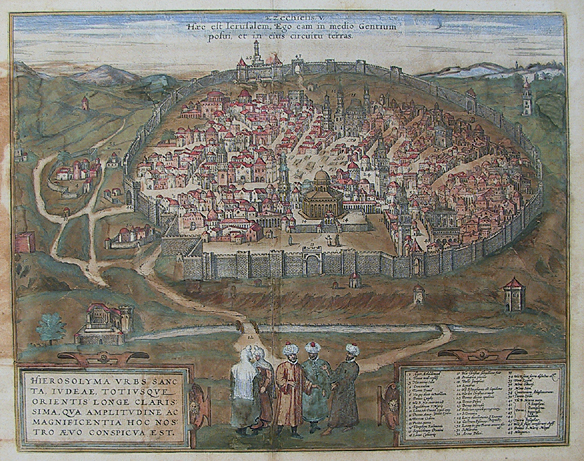
 A walled city( jerusalem)


It is easier to explain how the seemingly innocuous urban invention of the road fits into the vast web of government apparatuses of control/security if one begins with the work of Deleuze in ‘Postscript on the societies of Control’. These government/state methods of control of the population are sorted into three ages:

the age of sovereignty,

the age of discipline and

the age of control.


These ages are not insular and overlap in time and space, they are basic characterisations that Deleuze employs to explain the origins of the apparatuses of control and the points at which they morph. In the present time, it is possible to see apparatuses that originated in all three ages co existing in several instances.


The first, the age of sovereignty, is considered to span from the very start of organized civil society, up until the 18th century, when the first republics came into being in Europe.


The next age, that of the ‘disciplinary societies’,i.e. the age of discipline is located in the 18th and 19th centuries, reaching its height at the outset of the 20th, (Foucault 1986,cited in Deleuze 1992,p.3)


The third age began in the 20th century. Marked by the immense socio-political reorganization brought about by World War 2 and is the one that we currently live in. This is the age of control (William S Burroughs ,cited in Deleuze 1992,pg4).


In the age of sovereignty, control and apparatuses of state security were more explicit; the city was ruled by an emperor with the aid of an army, and needed to be protected by a binding fort wall .Citizens within that wall were kept under control by prefects that upheld strict laws regarding their liberties .These laws threatened spectacular public punishment if flouted, as a deterrent to any further potential criminals. With the demise of the mercantilist model of economy, the industrial revolution and perhaps a raising of the expectation of human rights, in tandem with the rise of republics, new systems had to be invented to regulate the population. The ideal goal of these new systems was “to compose a productive force within space-time whose effect will be greater than the sum of its component forces” (Deleuze 1992,pg3).

 the age of sovereignty


This new society, the society of discipline instituted laws that ruled, not on death, but rather, by administering life, by promising a better life to those that abided by them. For example, in this age, the socio-economic class that one was born into was no longer the class that one was assigned to forever; being born into a farmer family, did not necessitate that one find work only as a farmer, it was now possible to obtain a doctor’s education and earn a doctor’s wages, or join a factory and earn a factory worker’s wages, moving to a different socio-economic class in the process. With this change, education and employment acquire new meaning beyond just ways to learn and find sustenance, they become class-changers, and in that sense, social compulsions. There is no dictum that necessitates that every individual must undergo university education or be employed, but without those, it becomes impossible to break out of the social-economic class that one is born into. Thereby individuals are not bound any longer by their socio-economic birth class, but by the rules and regulations of the education and employment that they must undergo.


In a semi-metaphorical sense, society could now break out of the fort wall, but could only advance as far as it could find employment (in factories) and education (in schools). Effectively moving, thereby, from one enclosed space to a series of spaces of enclosure, each with its own set of laws, that conformed to the higher legislation, or constitution, of the republic.


Foucault explains that, in the 18th century, regimes ascertained the raison d’état (1) of their states. The 18th century republics grew bound to each other based essentially on such a ‘raison’ that the previous monarchy had established. As the state or ‘teat’ is no longer just physical, and in fact, needs to exist in circulation with other “etat’s,” the regulatory apparatus can no longer be just physical either. A vast plethora of interconnected infrastructural, political and socio-cultural codes is then inscribed into the milieu  (2) that makes up that ‘etat’, allowing it to be then regulated, administered and essentially controlled by the governments of those republics. These networked codes, modulations and institutions make up the set of ‘biopolitical apparatuses’ that allow the state to continue being a state, allow it to continue being a single territory without a physical definition like a fort wall. Thereby it is also a set that allows the same mode of governance of the state to be perpetually maintained (even if the actual control of government changes hands)


In the age of discipline, the concept of state security broadens to better establish meanings that were only subtly inherent before; it begins to mean not only the protection of the state from enemies/threats against its residents, but also, and more importantly so, the security that ‘the way of state’ will be maintained as is, for the foreseeable future.

 pierre pat section__age of discipline

Pierre Pat – The Age of Discipline


With World War 2, and with the introduction of the computer into the quotidian, biopolitical systems of control multiplied, and pervaded deeper. This essentially allows the citizen to break free from the mould of the disciplinary spaces of enclosure, but force her to conform, in an almost imperceptible way, to the perpetual cycles of enclosure that the society of control puts into play.


The use of roads to create milieus throughout history


The cursus publicus as laid out in the Roman Tabula Peutingeriana (the earliest known Roman itinerarium) originates at the centre of Rome and expands straight, long and level roads to the farthest extents of the conquered empire. “As were the Persians before them, the Romans were very conscious of the military, economic and administrative advantages of a good road system. Each expansion of the empire was consolidated by an associated expansion of its road network. The process allowed the Romans to establish and maintain the most durable empire in European history” (Lay,1992,pg 52).


Via imperiale_cut from colosseum_victor em monument to sea


The implicit intention of this road network was to allow the Roman army, stationed at various garrisons and watch-points along the roads to advance with rapid speed to thwart an uprising that may spring up at any end of the empire. But as pathways of physical circulation always accrete human habitation, the network of roads gave rise eventually to towns. In a fashion that is true for all biopolitical devices, roads too, became an absolute necessity for daily human life (especially with the disuse of non-motorised transport) and soon became the very arteries of the settlement. In short, the Cursus Publicus set, not only the transport network for the ancient Roman Empire but set the whole stage upon which it was built.


It set the milieu that created the sense of the empire.


Although roads led out from the centre, Rome, to all parts of the Roman empire, the city itself was not defined by them. With the rise of the Holy Roman Empire in roughly the 10th century AD, the old Roman roads acquired new meaning, they were not solely roads of power leading from the centre out, but routes of pilgrimage gravitating the devout inwards. For this purpose, the city needed to be redefined as the house of the Catholic church, and no longer as a remnant of the pagan decadence of the Caesars. For this project, in 1585, Pope Sixtus the 5th designed boulevards for Rome that cut through and bound unoccupied parts of the city as well, and had a somewhat iconoclastic attitude towards semi-ruined ancient monuments.


“Sixtus’ axes are not streets ;they are not flanked by buildings ,and they do not provide a serenely static frame for the bustle of life .They are ritual paths that reread the relationship between pre-existing intensity points and bind them together in the dynamic sequence of the pilgrimage route” (Aureli et al,2010,pg 29). The main intention of these axes was to link all of the basilicas in the city, physically, and also visually, through the placement of obelisks, thereby re-centering Rome in a network of holy Catholic pilgrimage routes; a new Holy Roman milieu, to be precise.


In the 18th century, with the spaces of enclosure instituted by the age of discipline, came the ‘urbe’ (Cerda,1867). The urbe was not a fortified city, but was a space of human inhabitation transcribed by an urban plan. The idea of planning came about from the idea of increasing the circulation of air and water in congested, pestilential cities to fight against the deathly scourge of cholera epidemics (suggested by the miasma theories). But many scholars have underlined the inherent ambitions of control of the urban plan. Perhaps the most famous of such was commissioned by Napoleon the 3rd, who Deleuze rightly credits for having effected the large scale conversion from the society of sovereignty to the society of discipline. (Deleuze 1992,pg 3)


“At the centre of Napoleon’s and Haussman’s plans for Paris lay the military security of the state.” “.. the new plan that divided Paris into radial arrondissements was designed to undo the very fabric that allowed this insurrecting  public to exist….”  “…As Haussman saw it, his new roads would ensure multiple, direct rail and road links between each district of the city and the military units responsible for order there. Thus, for example, new boulevards in north-eastern Paris allowed troops to rush from Courbevoie barracks to the Bastille and then to subdue the turbulent Faubourg Saint-Antoine…” (Scott,1998,pg 251 as published in ‘The anthropology of the state, a reader’) The last lines, by urban scholar James C Scott makes the military purpose of the roads in Napoleon’s urban plan explicit, and shows their acute similarity to the Roman Cursus Publicus, established centuries ago.


In the sovereign and disciplinary ages, the road was a means of making state power explicit  through edifice and through military access to public insurrection, but in the age of control, the road becomes all the more established as a biopolitical apparatus, as it becomes the base for other centrally controlled networks like tramways, telephone and electrical network cables. This gradual layering of infrastructural networks onto the important roads of cities is discussed in the segment below.


Expanding control through roads: Biopolitical and Physical violence


Let us consider three sovereign cities that began without any pre-defined urban plan, which originated in proximity to the sea but with very different relationships to it. Athens was founded in the 1st millennium BC (3), Rome in 800 BC (4) and Istanbul, which began as Byzantium, in 700 BC (5).


After the takeover of Byzantium by Constantine, an essential event in the foundation of the city was the building of the state church (later to become the Hagia Sophia as we know it today) (6), which was erected on the coastline, at a strategic point guarding the entrance of the Bosporus strait. Its position can be seen as symbolic of a stronghold over the sea and possibly over all traffic that passed between the Mediterranean Sea and the Black sea. In that sense, the Hagia Sophia, is an apparatus of state security.

 hagia sophia_enmeshed in newer apparatuses of control__pic by Richa


After the Ottoman takeover, Istanbul’s political stronghold became established over the region; the physical city expanded landwards .All of the important buildings of the old Istanbul; the Sultan Ahmet Mosque, the Grand Bazaar and several other small important mosques developed at short distances from the Hagia Sophia; effectively creating the first set of roads, what are now, the FevziPasa and the Millet Cadessi (7). Today the road leading from the Hagia Sophia into the city, is no longer open to cars, but houses the tramway; the most important form of public transport in the city. This gradual overlaying of apparatuses of power onto the same area exemplifies the transition from the age of sovereignty to the age of control (8).


A similar sort of coastline-power-infrastructure network can be gleaned from the important roads of Athens. The acropolis was built in a naturally defensible location high on the hill. (Schneider&Hocker,pg 62-63) From a distance in the ocean, it would have been symbolic of the Hellenic claim of the land. In this sense, the Acropolis was an apparatus of state security. Many centuries later, the Syntagma was built below the Acropolis hill, at a considerable physical distance from it, but it with an immediate visual connection (9), which is likely to be both deliberate and symbolic: It was necessary to establish a relationship with symbols of the previous regimes over the land.

 1785_Bocage_Map_of_Athens_and_Environs,original walls of athens showing Pireos and Siggrou


The old walled road linking Athens to Piraeus is now occupied by the ‘Pireos’; one of the arms of the triangle plan for the republic of Athens designed by Kleanthes and Schaubert in 1832 (10). The Pireos and the Siggrou are the most important physical links of the city of Athens and also of the Syntagma, to its coastline (Piraeus) and read, today, almost like highways. The median of the triangle is constituted by the Athinas street that runs from Ommonia square to Monastiraki, veritably the base of the Acropolis. The Athinas, Pireos and the Siggrou, having grown as the earliest roads in the city also contain the most important tourist attractions, banks of the city, and several important hotels, making them important circulators of capital. The transition of power from the sovereign monument of the Acropolis to the political stronghold of the Syntagma to the circulation of wealth in the roads that grew from the Syntagma becomes apparent.


Thereby a tenuous similarity can be seen between the arteries of Athens and those of old Istanbul, insofar that they link to the coastline, are important transport roads and also, are containers of several other circulating systems of biopolitical control, thereby transforming into compounded, multiscalar biopolitical apparatuses.


In the case of Rome, despite being close to the coast, the city was not conceived of as a coastal establishment, in order to ensure adequate safety from coastal invasions. Rome’s first tryst with her coastline began at Ostia (at the mouth of the river Tiber), whose historical origins are unclear (11). Although there were several cycles of building and ruin at the coast, Ostia did not become an integral part of Rome until the 19th century, when marshes were drained to establish the new Lido di Ostia (a few kilometres seaward of the old Ostia Antica).

 Rome_distance from sea


It is only with the rise of Mussolini in the 20th century, during the Fascist period that there was a move to link the political centre of Italy directly to the sea. During this reign, the Via Ostiensis was renovated and re-established as the via del mare and a new road, the Cristoforo Colombo (also known as the Via Imperiale) was laid out that connected not only the current symbol of power, the Victor Emmanuel monument (built during the Resorgimenta of Italy in 1871) with the sea through a straight road, but also sought to relink this to the powerful history of the ancient Roman empire, by making a cut from the monument to the Colisseum (12). It can be seen as a symbolic statement of reconnecting centuries of imperial domination with the Fascist regime, the Mediterranean sea and the ambition of spreading the power of Fascist Italy through the sea to the north of Africa, which Mussolini hoped to colonise (13).


Thus the city-sea road acquired special political meaning, in the case of Rome, not when the city originated, but during its growth. In Rome, the road did not grow out of the sea, stemming from a millennia old sovereign impulse to establish domination on the sea, but grew towards it, yet with the same sovereign intention. The road provided not only the physical connection between the sea and the cities, but the base on which new apparatuses are constructed, and the sense of the city as a whole, in which way it can be read as a potent biopolitical apparatus.


As is seen from several successive generations of road networks in Rome and also the 19th century urban plans drawn up for cities like Barcelona, Paris and Athens, it is obvious that road networks have the power to set defined milieus, which are the backbone on which the notion of ‘state’ is built. The biopolitical apparatus of the road network has stemmed, almost organically, from preceding sovereign apparatuses in many old cities. Even in cities like Istanbul, Athens and Rome, which did not originate from a pre-decided urban plan at all, road networks play a crucial role in setting and maintaining the state milieu today. The first roads in these cities (and now the most important land routes in the city) stemmed from important sovereign palaces and religious monuments. Thereby since it then went on to transcribe the entire territory, the road connected distant parts of the city to these monuments, and consequentially to the same imperial, governmental milieu that these monuments maintained; it is no surprise that the new democratically elected governments of these cities also maintain their headquarters close to these imperial historical monuments, as they want to fit into and reinstate the same framework of ‘state’ that has been so carefully maintained by these monuments.


Roads, Economics and Control Today


Even today, the laying down of the road can do so much worse than just setting politically biased milieus; they are still, much more violent. The road is not simply an asphalted route marked into the ground, but is a deliberately designed spatialised network, that connects and separates parts of the territory with definite intentions. The violence of the state decreed road is made apparent by considering the land that must forcibly be acquired for its building. Furthermore, today the state and political power in many countries is intricately connected to capital and money related institutions and powers.


Let us take the case of one such monumental road in a modern day democracy such as India, caught up in the pull and push of being democratic in its processes and speeding up economic development. India was touted as a rising economy in the first decade of the new millennium has seen stagnation in economic growth in the past few years and has not lived up to its economic promise. A new government came into power and pledged to make the country more business friendly in order to attract more foreign capital for economic development and employment. It took up the unfinished project of the Delhi-Mumbai Industrial Corridor (DMIC).


richa

 http://dholerasir.com/visionfordmic.aspx/visionfordmic.aspx


The Delhi-Mumbai Industrial Corridor Project is a US$100 billion State-sponsored industrial development Project of the Government of India (partially funded by Japan) aimed at developing industrial zones spanning across six states in north and western India. Touted as one of the largest, monumental, infrastructure projects India has ever attempted in its history, DMIC is expected to create major expansion of infrastructure and industry – including smart cities, industrial clusters along with rail, road, port, air connectivity – in the states along the route of the corridor. Many smart cities would be developed alongside, such as the Dholera SIR in Gujarat, which is envisaged to be 6 times the size of Shanghai and 2 times the size of Delhi. The backbone of DMIC is a Dedicated Freight Corridor that is expected to make logistical costs of manufactured goods the lowest in the world. India needs to employ over 100 million people within the next decade and so the manufacturing centres along DMIC is expected to employ millions.


The DMIC is also the new government’s attempt to showcase India as an investment destination with high levels of ease of doing business. A total of 24 special investment nodes are envisaged to be created by the government that would support manufacturing or any type of industry. The main role of these hubs are to facilitate businesses, provide resources, cheap, fast and efficient transportation to ports, and set up factories quickly without any obstacles in land acquisition. The government’s role is that of facilitator to encourage businesses to invest more by providing a stable environment.


The current government at the centre is in a desperate on-going attempt for parliamentary bills to be passed which make the land acquisition process easier in order to facilitate growth of industries and the economy. This bill is still being discussed in central parliament because many politicians believe that the land acquisition process for industry may be unfair on the farmers who currently own the land.


Although the Delhi-Mumbai Industrial Corridor project is being touted by the current government and all its supporters, as an ambitious development plan that will allow  business and employment in the region to grow to great new heights; it has been lambasted by planners and urban design professionals amongst other thinkers, for being too ‘broad brush’ a plan. This DMIC plan has been designed from a very neoliberal standpoint, accommodating several Special Economic Zones, which are a whole different geopolitical power-play game by themselves. The land acquisition aspect of the new SEZ policy is fraught with problems. One evident issue, for example, is the new regulation which requires that the private company setting up the SEZ take full responsibility for rehabilitation of people displaced. The government will take no responsibility for this (SEZ Policy, 2014). This leaves a lot of space for private companies to provide substandard rehabilitation in less than legal ways. The set-up of the DMIC corridor may lead to a higher GDP for India, but in the process, will lead to the destruction of local economies along the corridor, and their subjectification to higher economic and capitalist powers in the country and via the route of foreign capital to higher economic powers anywhere in the world. Economic development has become a method or technique of using state apparatuses to control the bios and lives of people who live on that road or will work along that road. Subjugate everything to the demand for economic growth at all costs. There are no monuments. The road or corridor becomes a monument to the economic development process.


Comparing the Road to the Internet Node: Physical and Virtual Highways


The network of roads are surprisingly similar to the network of the internet, another increasingly used biopolitical apparatus. Although there are some important differences between roads and the Internet, both are circulating networks that connect nodes. In the former (roads), both the network and the nodes are physical and spatialised. In the case of the internet, only the nodes, i.e., computers/satellites are physical, whereas the network itself does not exist in a permanent physical form, it is constantly formed, broken and reformed by millions of signal carrying electrons. Yet they both conform to three properties that are likely to be necessary qualities of all biopolitical apparatuses:

–          they are absolute,

–          they are pervasive and

–          they have the ability to set milieus.


Although more research is required to ascertain this, the paper attempts to flesh out the absolutism and pervasiveness of the road and the internet to make clearer to the reader, why these are subjectifying properties, and to open up a line of questioning as to whether all biopolitical apparatuses have these properties.


The network of roads is almost absolute; roads transcribe almost every corner of a territory, thereby they connect almost all corners of the territory. Similarly, the internet connects millions of different nodes, but the territory it connects is not limited to physical nation states; its territory is global. This absolutism implies that almost all citizens in the territory(ies) must use roads  for land transport and internet for electronic communication; that there is almost no alternative for such transport/communication; thereby necessitating that these citizens comply to the rules that the regulators of these systems set down.


There are several monarchies and single party states that have understood the power in this absolutism very well. The Sultanate of Oman has a monopoly on telephony and internet service provision in the country .As people are aware that all of their electronic communication will be sent off and received on Omantel (70% of which is owned by the government) and associated networks, it is common to be careful to refrain from anti-state comments in the correspondence. Citizens warn other citizens against the act; even if they may speak of their dissatisfaction to each other in person, most would be careful to not speak of it over the phone/in emails. Formally, thereby, there appears to be a milieu of total acquiescence with the government.


The People’s Republic of China blocks several popular international websites, including Google, Gmail, Facebook, Youtube, Blogspot and Wikileaks. Skype is now illegal in both Oman and China. Many are of the opinion though, that the blocking of these sites is not a direct indication that the government is micro-controlling its population, and preventing it from being exposed to ‘rebellion inciting’ foreign material, but is just protecting its economic interests, by letting its domestic versions of the same websites (such as Youku in place of Youtube, and Renren in place of Facebook) prosper.


This lobby that says blocking internet sites is for economic gain also likes to say that the very idea propagated by some people that China is micro-controlling its population is in itself Western anti-China, anti-communist propaganda. But given that the West is doing all in its power to strengthen links with China currently, this is doubtful. It is more likely that the micro-control is a definite government strategy. In a December 16,2014 editorial in the Chinese government run ‘Global Times’ , there was a clear mention that Google and Facebook will return to China eventually, when China will have become stronger and the scope of sensitive information will have been narrowed. (Culpan, 2014) A clear admittance of the strategy employed. The editorial has since then, been removed from the Global Times website and other websites that had reposted it. (Culpan, 2014)


Another important quality of circulating networks that allow them to become apparatuses is the fact that they are pervasive, i.e., in the name of convenience, they pervade the territory so as to encroach into the private realm of the citizen. The state instituted network of roads is denser in the city centre and rarer in the hinterland, leading the city centre to also become an area of greater vigilance, by state and fellow citizen alike, as it allows for greater traffic along that denser road network, i.e., it is more pervasive in the city centre and less pervasive, away from it.


The apparatus of the internet goes many steps further in its pervasiveness; the network does not stop outside of the citizen’s home, but in the name of convenience, pervades into the home, into the home computer; is linked to the laptop which goes everywhere with the citizen; is linked to the mobile phone which goes everywhere as well and tracked through satellites and global positioning systems. Through cookies, web vendors can track every virtual move the citizen makes on any device at all.


Finding alternatives to biopolitical control


We discussed earlier the concept of the milieu- how an important quality of apparatuses for control is that through their network, they are able to set a milieu. One method if fighting or resisting the control exerted by apparatuses is to somehow escape their milieu and thus escape the control.


The 19th century Mormon societies trying to recreate a Zion in the USA situated their own colonies a great distance away from the main highways. They, thus, maintained their alternative way of life simply by situating themselves out of the space of circulation, of trade and of ideas with the rest of the world. They got out of the milieu created by the highway and road network and created their own milieu instead.


The road is decidedly permanent, as it is physical and marks permanent connections between places and permanent separations between others, which gives it the ability to create an environment or a milieu, characterised by the places that have been connected. Sixtus the Vth’s basilica system for Rome is a very good example of this. However, when it comes to the internet, where there is no set way to navigate through and no permanent ways or paths, such escape from milieu as shown by Mormons becomes difficult.


Therefore, many scholars have thought though, that the way out of certain binding milieus is not to avoid/restrict them but to assign new meanings to them; to reclaim them. The situationist international’s concept of detournement is an extremely important movement that exemplifies the deterritorialization and reterritorialization that Deleuze and Guattari discussed in A 1000 plateaus.


Guy DeBord’s psychogeographic map of Paris, is an anti-apparatus in the sense that it poses/makes explicit a new system of circulation; one that is not defined and one that allows every citizen to redefine a path for his/herself spontaneously as they move, and one that can be different every time.


Another important concept that discusses the depoliticisation and re-politicisation (or deterritorialisation and reterritorialisation) of space is that of ‘heterotopia’ – a concept in human geography that Foucault expounded in his 1967 essay (Of other spaces: Utopias and Heterotopias) that has spawned several books, articles and much thought. “A heterotropia is a real place that stands outside of known space” and is articulated via five principles that play with the properties of isolation, connection, opening, closing, reflection and representation to elaborate its meaning. Foucault used heterotopia to describe places and spaces that function in non-hegemonic conditions. These are spaces of otherness, which are neither here nor there, that are simultaneously physical and mental, such as the space of a phone call or the moment when you see yourself in the mirror.


Foucault’s elaborations on heterotopias were published in an article entitled Des espaces autres (Of Other Spaces). The philosopher calls for a society with many heterotopias, not only as a space with several places of/for the affirmation of difference, but also as a means of escape from authoritarianism and repression, stating metaphorically that if we take the ship as the utmost heterotopia, a society without ships is inherently a repressive one making a clear reference to Stalinism.


Francois Roche’s ‘I’ve heard about’ is an experimental, theoretical urban idea that attempts a solution to the same issue, of urban plans being essentially deliberate designs; which renders them apparatuses. “…it’s architecture is based on the principles of random growth and permanent incompletion. It develops by successive scenarios, without planning and without the authority of a pre-established plan. Its physical composition renders the community’s political structure visible.” “Growth is based on negotiations between neighbours and other residents, and at the same time subjected to collective constraints.” (Roche,I’ve heard about a fat,flat,growing experiement)


*****

This essay was an attempt to “read the ROAD” (and the virtual node) and establish the conceptual framework through which the road is read by examining Foucault’s ‘Security, Territory, Population’ and works by other important thinkers.


In conclusion, we see that apparatuses of state control and security have existed in the urban-scape ever since the beginning of civilized society. It is only when the state needed to be situated in a space of circulation that the circulating networks themselves began to be thought of as having the potential to regulate the population. This essay developed a general idea of the road as biopolitical apparatus, and used examples of political events that illustrate this from many regions and time frames across Europe, with occasional reference to non-European examples. Historical examples explained how the road is, and has been the foremost of such biopolitical devices.


The role of the road in this politico-urban relationship is then this: it has been used as a regulating apparatus across time, space and political scenarios and has the ability to become such, even in cities that grow organically, without pre-determined plans, as it can connect other symbols of state security.


There was no specific intention of developing a ‘European’ or other specific regional understanding of the road as apparatus. There was also no specific intention of studying the road as an apparatus in any particular time frame; examples are illustrated from across time periods, from Ancient Rome to 21st century Istanbul.


An abstraction of the properties of the road was extrapolated to another biopolitical apparatus – the internet, to open up questions about what properties allow circulating systems to become subjectifying apparatuses in general, and about whether the paradox of the circulating system is an issue that can be tackled.


A final discussion was made of movements and institutions that deemed biopolitical power a problem and the attempts that they made to resist it. The research done on overcoming apparatuses, all focuses on breaking and re-establishing milieus, as it is only through the establishment of milieus that all biopolitical apparatuses, including roads, become potent.


The challenge for democracy and a younger interconnected world is to re-establish and redefine milieus and establish these heterotopias within their real and virtual worlds. The question the younger citizens of a democratic, interconnected world have to ask is: Do our roads and virtual nodes lead to freedom or to greater control? How can we ensure that our physical and virtual highways liberate us rather than subjugate? Every time I use my Facebook, Google, email or shop on the Internet am I undergoing greater surveillance or exerting more choice? Is what is being sold and positioned as autonomy and freedom really a prison for ourselves that we are helping to build with each click?


*****


© Richa Narvekar, 2015


Photographs by Richa Narvekar


Note: Facts on Istanbul, Athens, and Rome, including historical information have been collated/researched by the author on personal visits to these cities herself as well as through intensive study of multiple sources for a Master’s thesis in Urban Design at The Bartlett School of Architecture London (2013-14)


SELECT BIBLIOGRAPHY

  •  Security,Territory,Population , Foucault, Michel
  •  Michel Foucault The History of Sexuality Vol. 1: The Will to Knowledge. London: Penguin. p. 140 (1998)
  •  What is an apparatus?, Agamben, Giorgio
  •  Homo Sacer, Agamben, Giorgio
  •  PostScript on the Societies of Control, Deleuze, Giles
  •  Rome the Centres Elsewhere, Aureli et al,(Berlage Institute), Skira Institute, Milan, 2010
  •  Ways of the World: :A History of the world’s roads and the vehicles that used them,
  • Lay,Maxwell,G., New Brunswick, New Jersey, Rutgers University Press,1992.
  • The Social construction of the Ocean, Steinberg, Philip E, New York: Cambridge University Press 2000
  • The Society of the Spectacle, Debord, Guy
  •  Heterotropia and the city, Cauter, Lieven de,Taylor and Francis e-library,2008
  •  Of other spaces: Utopias and Heterotropias, Foucault, Michel
  •  Cities, People, Language, Scott, James C., Chapter 10, as included in :The Anthropology of the State: A Reader, edited by Aradhna Sharma, Akhil Gupta, Blackwell Publishing, MA, USA 2006
  • I’ve heard about a fat,flat,growing experiement , Roche Francois,as published on website http://www.new-territories.com/
  • The Athenian Agora XII:The Neolithic and Bronze Age, Immerwahr,Sara,American School of Classical Studies at Athens,1971
  • The Oxford Dictionary of Byzantium,Oxford University Press,Web Edition,2005
  • Die Akropolis von Athen, Schneider&Hocker,Darmstadt 2001
  •  Political Propaganda and Archaeology: The Mausoleum of Augustus in the Fascist Era,
  • Brangers,Susan,L.Fugate, International Journal of Humanities and Social Science,Web Edition,August 2013
  • SEZ Policy (Speical Economic Zone). (2014). Retrieved March 29, 2015, from DelhiMumbaiIndustrialCorridor.com: http://delhimumbaiindustrialcorridor.com/sez-policy.html
  • Culpan, T. (2014, December 29). China blocks access to google’s gmail as ban escalates. Retrieved March 30, 2015, from Bloomberg.com news: http://www.bloomberg.com/news/articles/2014-12-29/china-blocks-access-to-google-s-gmail-as-ban-escalates
  • Mahajan, U. (2013, April 18). napm-extends-solidarity-to-protestors-of-delhi-mumbai-industrial-corridor. Retrieved March 30, 2015, from icrindia.wordpress.com: https://icrindia.wordpress.com/2013/04/18/napm-extends-solidarity-to-protestors-of-delhi-mumbai-industrial-corridor/


Endnotes


(1) “The state is a firm domination over peoples” – you see that there is no territorial definition of the state, it is not a territory, it is not a province or a realm, it is only peoples and a firm domination – “The state is a firm domination over peoples.” Raison d’État – and he does not give it the narrow definition that we now give it – “is the knowledge of the appropriate means for founding, preserving, and expanding such a domination.”Foucault, pg 314 in Security, Territory, Population

(2) Milieu – used in the canonical Foucauldian context, as cited in Security, Territory, Population , pg 35-36/lecture one,1978) “What is the milieu? It is what is needed to account for action at a distance of one body on another. It is therefore the medium of an action and the element in which it circulates. It is therefore the problem of circulation and casuality that is at stake in this notion of milieu”

(3) Immerwahr, S in “The Athenian Agora XII:The Neolithic and Bronze Age.Princeton.1971

(4) Plutarch, Life of Romulus,12,1.,as quoted in ‘Rome the Centres Elsewhere’,Aureli et al,Berlage Institute,2010,pg15

(5) “Constantinople” in The Oxford Dictionary of Byzantium, Oxford University Press,Oxford,1991,pg 508

(6) Hagia Sophia: Facts,history and architecture. http://bit.ly/1isb3xc

(7) See map of Istanbul, included in archive.

(8) See section by Pierre Patte and reiterations to explain successive ages of apparatuses

(9) See pictures c1 and c2_athens

(10) See Bocage map of Athens and Kleanthes Schaubert map of Athens

(11) See Ostia: Introduction, http://www.ostia-antica.org/intro.htm. Also see Ostia antica map

(12) Aureli et al in ‘Rome the centres elsewhere. Also See via Cristoforo Colombo images in archive.

(13) Brangers, Susan in Political Propaganda and Archaeology: The Mausoleum of Augustus in the Fascist Era


Enlightened self-interest(s) OR Interests of the future self

 As the airplane touched down in Addis Ababa Bole International airport, I felt a surge of excitement, enthusiasm and energy. Though this was my first visit to Ethiopia, I was strongly drawn to this country. I had started fantasizing that this will be the third country and culture that I will adopt as my own, after being born and raised in India and spending my early career life in the US. Even in the US, I had been cooking or eating Ethiopian food regularly, listening to Ethiopian music and reading translated literary works.

 ethiopia airplane pic1


I had realized after my stay in the US that to become a part of any country and its culture, there is no alternative, but to submerge myself in work and life there.  Thanks to the internet, I researched Ethiopia from Boulder, Colorado, and found that this country of 90 million people had no cardiac care to speak of.  Well, that could be something I can work on, I told myself; after all I was a trained cardiologist.  I could do something in my field – help people there and help myself become a part of it. I contacted Universities, built a network, and offered training to Ethiopian physicians.  However, doing it from the US seemed like trying to steer a boat in the middle of the lake while sitting on the shore.  Finally, I had decided to take a plunge and go there.


As my flight taxied on the runway, I wondered: Why has specialty health care training not evolved here (in Ethiopia)? Of course, any investigation regarding lack of anything in Africa always leads to the one usual suspect called ‘poverty.’ In this case it was not.


Addis Ababa, the capital, was like a smaller version of Mumbai, streets congested and socially cut-off, with its wealthy living comfortably oblivious to the poverty all around them.  I spent a couple of days at the Cardiac Care center in Addis Ababa. The center had good equipment and staff, and a couple of partially trained and somewhat functional cardiologists.  Across the street, at the Black Lion Hospital, there were 3 trained CT surgeons, and 3 trained cardiologists who had no access to any of the equipment available at the Cardiac Care center.


The two clinics or hospitals did not talk to one another.  One, Black Lion, had the patients, surgeons, cardiologists but no equipment and the other, Cardia Care center, had equipment but not much else. The two centers could actually collaborate and together become one unique center of excellence around which specialty care in Ethiopia can be built.  But each one wanted to take over completely and be “the only one”.  It had been so for a while, and nobody seemed to have any interest in resolving the situation and creating a win-win solution that would actually provide good cardiac care to Ethiopians. Overall, in this 1 mile radius, Ethiopia had all its resources to provide good cardiac care, but still there was no cardiac care available since the different players did not want to collaborate.


My next destination was Jimma University, 355 km southwest of Addis.  Here I met the higher-ups within the system, and soon realized that the administrators were willing to spend the money to bring cardiac care to the community.  A surgeon had just returned from a 1-year training stint in India.  Now, she is capable of performing cardiac surgery but there was no cardiac anesthesiologist, and no operating room to support her.  The physicians did not invite her for any meetings.  The physicians wanted to build a cardiac program without a surgeon, which was like saying: We would like to build a three-storied building without the second floor.  Interestingly, the trained cardiac surgeon also wanted to be left alone by the physicians without considering where the patients would come from.  It seemed like they all wanted to excel in their field without recognizing that their success is intricately intermingled with the success of the others.  They all wanted to be the big fish in a pond – a pond too small for any big fish to survive – and no one wanted to help the pond grow.  Each big fish was smothering because they had not worked to make the pond bigger.


ethiopia emergency room 1


********

As I sat in my hotel room in Addis Ababa, I wondered about this situation. Each of the players I had met over the course of my stay was working from their self interest. And we believe, all of us who live and survive in this contemporary world of ours, that it is self-interest that makes enterprise and societies grow. We consider self-interest to be the engine that drives and propels our so-called successful system. The Randian world view has us convinced that self interest is good, selfishness is a virtue.  The society has acquiesced that such selfishness guided by the invisible hand of the markets will lead to individual prosperity which in turn will beget human progress.


But here I was staring at the failure of self-interest in allowing cardiac care to grow as an enterprise in Ethiopia?  Should they not have succeeded immensely over the years?  Was it something about the weather in Addis Ababa or the culture in Ethiopia that did not allow the seed of self-interest to blossom? Or do we need to tweak our understanding of how self interest works?


*****


While thinking about self-interest and the detrimental effects of narrow, narcissistic self-interest, the first image that came to mind was that of a very happily married friend of mine.  Chuck was not only married, he was THE great defender of the institution of marriage. And because of that I would take plenty of below-the-belt potshots at the institution.  Eventually, I asked directly about the virtues of marriage in this post-feminist era.  As if he had been waiting for this opportunity to bestow some wisdom upon me, he said, “..the advantage is that we are there for each other when we need.  Over the 20 years of marriage, there have been times when I was providing more support than receiving and I thought that this was becoming a relationship of me giving and her receiving and I thought of leaving.  If it was easy to leave, I would have.  But am I glad it wasn’t and I did not.  It was only a matter of year or two, where the roles were reversed and I was happy she was there to support me when I needed it to survive. A chill runs down my spine every time I think of what would have happened if I had acted selfishly just a year or two back.  Mind you, the roles reversed once again in sometime, and then it was my broader self interest that kept me in the relationship.  I can’t think of any better reason for marriage than that of self interest”. For the first time, I could not come up with argument against a potential benefit of marriage.  The rules applied to marriage by Chuck can also be applied to friendships and relationships.  We understand this intuitively and are there for our loved ones knowing that they will be there when we need them.  We do not even consider the selfish act of abandoning our loved ones in their times of need.   Even the most fervent Rand disciple will not argue against this social norm of enlightened self interest.


****

The same principle was subtly evoked by Pastor Martin Niemoller.  In his provocative poem against those who remained quiet and did not act socially against the victimization and purging of various social groups during the Nazi rise to power in pre-World War II Germany:

First they came for the Socialists, and I did not speak out—
Because I was not a Socialist.

Then they came for the Trade Unionists, and I did not speak out—
Because I was not a Trade Unionist.

Then they came for the Jews, and I did not speak out—
Because I was not a Jew.

Then they came for me—and there was no one left to speak for me.


Isn’t this a great example of self-interest as applied to groups?  If you help me survive, I will be there for you when you are fighting for your own survival.


There is an interesting example of how this works between humans and their pets. Bill Thomas, physician and medical director of Chase Memorial Nursing home, realized that the plagues of the human spirit were: Loneliness, Boredom and Helplessness.  He transformed this nursing home from a “total institution” to a Garden of Eden by introducing children, plants, animals and birds as integral part of this environment.  This newer environment led to increased longevity, decreased medication use, decreased infection and other statistical benefits.  At the individual level, there were examples of severely depressed patients, after having failed to respond to latest medications and cutting-edge therapy, who were now taking care of parakeets, walking the dogs and eventually improving their own mental state to start independent lives outside of the nursing home.  Letting go of narrow self-interest and becoming part of an ecosystem saved lives.  Knowing what we know from these data, can we not consider that becoming part of something larger than who we are and caring for others, whether human, animal or plant, is an act of enlightened self interest?


Carrying this notion further, American philosopher Josiah Royce argued that a person is defined by his or her pursuits but for these pursuits to have stability, they must go beyond individual desire. Stability of standards and a stable sense of personal worth come when a person loyally pursues some cohesive group activity.  Thus, according to Royce, a person is defined by things he pursues for his group and in bearing loyalty to his group.  Thus narrow self-interest was clearly vetoed by Royce in favor of team work as defining of an individual. Even the narrow definition of individualism is abandoned and others are included in it.


But it appears that we are simple beings buying into fallacious theory because they seem so simple.  A classic example in this regard seems to be Maslow’s hierarchy of needs, wherein he explains the various needs: physiological, safety, love, Esteem and Self actualization.  He specifically claimed that one cannot get to the next step before mastering the previous.  It is a theory that is understood easily and is widely accepted and taught but has not withstood the test of studies.  Studies have shown that the priority of needs changes according to age, cultural norms, and circumstances.  For example, self-actualization, where we are willing to do something beyond us and larger than us or our physiological needs, may be very important for an artist, or actors looking for jobs in Hollywood and anyone who is passionate about her work or craft. For most young adults, self-actualization may be the most important need even when their need for safety and love has not been met or mastered.  However, society imposes upon us this questionable hierarchy of needs, deems this hierarchical arrangement of needs to be the truth, and convinces us to pursue our narrow self-interest prior to self-actualization.  Unfortunately, we buy into society’s idea of the truth, despite what our hearts tell us, and pursue our narrow individualist self-interest. In a few years we find our lives vacant and unfulfilled. We have the house and the car but we feel something is lacking – and ask ourselves: what was it that I really wanted to become? Isn’t this pursuit of narrow self-interest then to our own detriment and to the detriment of our group? After all if every member of society is feeling unfulfilled, then how can they even contribute to making that society better?


*****

The bell rings. I open the door of the hotel room in Addis Ababa. My dinner has arrived. The waiter who has brought the food explains how to use the “injera” as a spoon to eat the rest of the food. The injera is a large sourdough flatbread. I indulge the waiter, and do not tell him of my Ethiopian food habits in the US, because he is genuinely interested in teaching me the intricacies of Ethiopian food. After he leaves the room, I dip my injera spoon into the bowl of “atkilt wat,” sometimes used to refer to all vegetable dishes, and enjoy a delicious Ethiopian meal cooked in Ethiopia. Food always touches my heart and my mind returns to the question of cardiac care in the country.


I wonder if a better way to understand the situation I faced with respect to an Ethiopian cardiac care program is to appeal to the enlightened self-interest of the individuals.  If the individuals can work in the self-interest of their future, more accomplished selves, they will do what may be right for themselves, for the group and for their patients.  How can a physician become a better cardiologist? By thinking of what the future chief of cardiology would want? He would want a stronger division with smart colleagues, knowledgeable ancillary staff to help them handle complex cases and accomplished cardiac surgeon who can save patients with severe complications.  So, why not start training these various groups now, so that when you are ready to become chief of cardiology, the ground work would have been laid.


What is the alternative? The alternative is what already exists: the cardiologist trains in some foreign country, comes back home with no trained support staff, no buy-in from other physicians, and no cardiac surgeon to help with complicated cases.  By helping the surroundings to evolve and grow systematically, to pursue goals for the group will define the cardiologist and in turn help the group.  The enlightened cardiologist will have a better chance of being a bigger fish in a bigger pond rather than a smothering fish in a small pond.


 ethipia health care 3


My mind raced back to an embarrassing time in my life, when I was given a lesson in enlightened self-interest. A few years ago I was working (as a physician) in a town where the healthcare was quite poor. The philosophy among physicians used to be: do the procedure first, ask about the symptoms later.  Soon, my raucous distaste for the organization became well known and I was asked, “Well, where would you go if you were really sick in this town?” My answer to this question was, “The airport.”  The answer got a lot of laughs. Even I liked my answer so much that I repeated this answer every opportunity I got. Once at a party, I mentioned this to a group of senior retirees. After I had made my standard airport comment, one of the seniors took me aside and said, “Son, I used to think similarly about the city I grew up in.  I was always bothered by the lack of civic sense, organization, public services….but at some point in time, I decided that I am going to spend the rest of my life here since everyone I knew and loved was in that town. And I asked myself, what would the 65-year old me want the 35-year old me to do?  I realized, he would ask my energetic 35-year old to strive to improve the city for the 65-year old me.  It wasn’t easy, it took years, lots of trips to the government offices, lots of public speeches, emails to other concerned citizens……………I gathered a group of enlightened citizens, we improved as many aspects of the city as we could. Slowly but surely, and together, we created a city we were proud of. I was happy to be a citizen of the city and eventually retired there.  Today, my 65-year old self is proud of what my younger 35-year old self did. I hear you are a very good doctor.  Son, it may be in your self-interest to go beyond your own skills, improve the hospitals in this town so that when you fall sick, it will be there for you.  Do it for your future self.”


I guess all of us can do something for our future self.  If I want to be a leader of a robust team, I need to evolve and grow the team.  By helping others grow, I care for my future self. It is self-interest but not narrowly confined to today – to instant gratification, immediate success or money-making. It is self-interest but enlightened enough to include others and most importantly include the future in it. What if we no longer think of self-interest as the engine that drives our society, but rather create a today that is based on the interests of the future self?


“The choice to be a leader is a lifestyle decision; it means you are willing to take care of others. The true cost of the leadership privilege comes at the expense of self-interest. Leadership is not about the next election, it’s about the next generation.”

-Simon Sinek

Author, Leaders Eat Last


© Jignesh Shah, 2015


We’ll leave the kids with Jack

Just the other day I was watching Mary Poppins with my 4 year old daughter. While it was the magic, and the songs, and the penguins that enthralled the young girl, I, on the other hand, was left wondering about the Sister Suffragette scene – particularly the lyrics of the song: “Our daughter’s daughters will adore us, and they’ll sing in grateful chorus, well done sister suffragettes”.


Is that true?

Will our daughters and grand-daughters adore us? Will they be grateful for what we do for them now?  Will we get any recognition from them? I guess only time will tell, but no mother who cares about the future of her children can ever ignore the voice inside of her that constantly asks: Am I teaching my children the right thing to do?


I was still pacing up and down in wonderland with all the questions in my head when my cell phone pinged. It was the Momyers’ chat-line, we were generally chatting and commenting on one thing and the other when Ale suggested that we should all go to Vegas to celebrate her little boy’s full recovery. Anticipating that one critical question in all our heads about going on a trip, she immediately typed: “We’ll leave the kids with Jack” which prompted LOL’s and emoticons of uncontrollable laughter.


Why, you may wonder?


Because the phrase – We’ll leave the kids with Jack  – has become an inside joke for the Momyers, especially about who we are and what we do. This Jack – imaginary or real – has become a part of the Momyer lore and identity.


*****

It all started a few months ago when Gaby traveled with her friends in a much needed vacation, she left her girls with her husband and had a weekend of relaxation. I guess her oldest girl was quite fascinated with the fact that her mom could travel without her and only with her friends, and the trip made an impression on her that was much bigger than Gaby anticipated.


Some time passed and Gaby’s daughter made a friend at kindergarten, she made a friend in that age where, of course, if he is a male friend he becomes your husband when you play pretend. The friend is called Jack, and Gaby started hearing about Jack very much and very often. One day Gaby’s daughter told her mom that one day she would marry Jack and have children, Gaby humored her daughters’ conversation and asked her what would she do once she was married to Jack and had children, to which the little girl replied: “I will travel to Paris only with my friends” Gaby asked “And what about your kids?”


After a bit of thinking, Gaby’s daughter, without any hesitation, answered: “We’ll leave the kids with Jack”.


It was so en pointe that Gaby had to try hard to keep a straight face and suppress her laughter.


There it was, boldly said, her daughter wanted to be just like her Mother.


*****

Gaby could hardly contain her excitement, though. She immediately went online and posted it to the Momyer’s chat-room; and in a minute the rest of us, wherever we stood, were all falling down laughing. The underlying message of the blunt answer was so simple and refreshing: It was ok to be like mom. It was perfectly all right to travel with friends, and of course it was obvious the kids will be left with their father. There, just like that, Gaby was validated by her daughter, by another girl, a woman from a different generation and that made all the Momyers feel good.


While the phrase – We’ll leave the kids with Jack  – has served us quite often whenever we plan a trip only for the five of us, or at least say that we will eventually do the trip and leave our husbands with our kids, it always brings me back to the entire Sister Suffragette debacle.


Kids learn with our example not with our words.


What are we teaching our kids by being the kind of mothers and women we are today? Are we teaching our daughters and sons the right thing to do by being independent women? Will my daughters grow to become professionals and mothers and run around a hundred miles per hour like I do? Or will they simply realize that the craziness of being a working mother is not worth it and choose to be full time mothers?


*****

We all usually wonder because it seems like the next generation of younger women always call into question any decision we’ve made as women of the preceding generation. I am sure they don’t realize it and they usually declare their judgment (because that is exactly what they are doing, judging) by saying: “If I were you, I would never…”


I’ve had a few associates tell me that they would never work as hard as I do, that they would stay at home with their kids, that they would do anything but be in a competitive firm, that they would choose a simpler or less demanding job, I could go on for hours and write pages after pages.


Some of my Momyer group have been told the opposite by the exact same women who question my crazy life, that they would never stop working full time, that they would never follow their husbands away due to a promotion of his work, that they would never take part-time or half pay, that they would never marry a man who doesn’t help around the house, and so on. I see now that what they do not realize is the choices they have, the possibilities and the flexibility. Like the Sister Suffragettes, if some of us aren’t “crazy enough” to defy the stereotype, to break the rules, to demand a chance to prove we can do it, other women would not be able to judge our choices, simply because they would not have them. Like the many women before us who paved the way for us, we are perhaps paving the way for other women after us and trying to teach our daughters and sons that allowing women to have choices and support them in their choices is the right thing to do.


I have arrived at the conclusion that what my daughters choose is not important, it doesn’t matter really, and I will not fall in the cliché of saying that as long as they are happy the choice is the right one; that goes without saying. But here is what I do hope the effort of running around, the hard choice of leaving behind a career to be a full time mother, the choice of not being a wife or a mother and fully develop a professional career or the tremendous effort of a woman who attempts to do it all, brings for my daughters and their daughters: the choice. It is about the choice.


And I guess that is exactly why the Sister Suffragette song resonated in my mind that day, because what we teach our daughters with our actions fully impacts the person they become, but our actions also can pave the road for many other women who may not exactly adore us or comprehend our choices. If anything, we are working hard and taking on challenges so that we can set examples – examples that will help everyone have that choice. And, who knows, sometime in her life, if my daughter decides to escape to Paris with her girlfriends, and worries about her children, then she can, without hesitation, say: We’ll leave the kids with Jack.


*****

© Paola Sanchez


How Much Longer? Dead MEN Walking

How much longer until we reach the day when our one-time window of opportunity to salvage the environment shuts forever?


Science calls this the tipping point. The very real day when natural feedback processes will have triggered and it will take man-made climate change out of our command, once and for all.


Once that day has passed, it won’t matter anymore what we do or don’t – our planet will plunge ever faster towards all-out global ecosystems collapse.


Recovery from it will take a good part of the remaining time this giant organism has left, if recovery is possible at all. Notable scientists such as Stephen Hawking think it conceivable that very powerful and reinforcing runaway processes could be triggered by, and feed right back into global warming, a spiraling, ever faster descent which will only come to a stop once physical thresholds are reached – meaning this planet’s climate will eventually shift into a state that exists on Venus today.


Global mean surface temperatures around 250°Celsius and sulphuric acid as rain. That aside, the shift from the current stable climatic state to another will likely be a, geologically speaking, extremely sudden, forceful and violent time of unseen mayhem, expected to last for several millennia.


And far beyond the tolerance of any species alive today.


Wipeout.


Dante’s Inferno Reincarnate


Now, let us assume for a moment that the various religious communities believing in reincarnation are right: that we keep returning into this same physical world with linear time progressing as we know it. Should positive feedbacks really lead into such a runaway scenario, we are literally creating our own hell –– we will find ourselves in the slow yet unstoppable process of our very real inception of Dante’s Inferno. Each time you re-spawn into an ever more hostile world that is slowly but inexorably drowning ever deeper in deprivation, starvation, disease, pain, abominable suffering.

And death, naturally.


Only death is never the end, instead it all just starts again.

Your average life expectancy will decrease until it eventually hits the point where you instantly get burnt to a crisp as soon as you get thrown into the next cycle of life – or hell on Earth.
The pains of nativity immediately followed by instant, violent demise.

Purging, over and over.

Perdition, as catholic as it gets.


Ignorance & denial


But regardless of who is right in the big afterlife question, the gruesome fact remains. Staring at us silently that this is the one and only window of opportunity to address climate change that concerns each one of us alive today and countless generations after with maximum gravity, yet most people are either unaware of it, or in plain denial.


The latter frame of mind is perfectly normal, I fear – we essentially deal with this the same way most do when it comes to another, equally incomprehensible and thus overwhelming fact each one of us has to face everyday day of our lives: our own inevitable physical death ̶ we simply try not to think of it.


On the other hand, the startling fact that the majority of people in the developed nations still doubt that anthropogenic climate change is a real, immediate and now pivotal threat cannot be explained so easily, especially considering the fact that there is historically wide consensus among all fields of independent science.


However, this huge gap between scientific and popular view becomes more comprehensible when we look at past events with the same forces involved. Let me pick just one example out of a long chain of events in the past couple of decades that massively damaged the reputation and credibility of both science and politics: the Mad Cow Disease crisis, an absurdly ill-advised attempt to maximize profits by feeding cows to cows. This experiment went bad big time, including massive collateral damage, unsurprisingly so – it is very old news that cannibalism eventually has a very damaging effect on any species’ genetic make-up.


On a side note here: Not long ago, there was some hard to believe piece of news regarding this: eager to rake in the promised profits, Switzerland back then was quickest to adopt the English cow-feeds-cow policy – consequently, the nation had the second highest rate of Jacob Kreutzfeld disease (nvCJD) in the scandal’s aftermath.


In 2014, a mere two decades after this new and man-made, inheritable and untreatable human variant peaked with hundreds of deaths in half a dozen countries, the big chamber of the chronically right-wing dominated Swiss parliament, the representatives of the people, elected by the people, paid by the people, waved through a motion to again legalize the use of carcass meal, a.k.a meat and bone meal ̶ to resume forcing carnivorism (e.g. fish eats pig) and cannibalism (e.g. pig eats pig) upon other species.


Unsurprisingly, no media appearances of those puppet parliamentarians were to be found, the main stream media reported this scandal with little ten-line articles somewhere on page umpteen, out of context and without comment.


No big deal, apparently.


Sure, the papers are already full of attempted mass murder stories. I can only guess that their decision was based on the hope that the incubation time of Jacob Kreutzfeld disease (nvCJD) outlasts their political career, the electorate’s memory, and the constitutional state under the rule of law. In the end, only the parliament’s small chamber averted this attempted return to madness with its veto. And no, this is not a bad dream, this is the tragic reality today in one of humanity’s most prosperous, least malfunctioning democracies.


And what sticks most is essentially as simple as: we were repeatedly lied to on matters of utmost gravity by the powers on whose integrity and accountability every civilization critically depends on. To add insult to injury, neither the designers nor the profiteers of this plot were ever held accountable. Nor were the bereaved compensated adequately, not least since junk food consumers were hit disproportionately, the burger-munching consumer group that is largely low-income, low-education and, above all, politically passive.


So why bother. Right? And why not make that profit again.


But such fundamental loss of trust and accountability takes years to rebuild, maybe generations. And where science loses its place in society, a dark hole opens that wants, needs to be filled. Such times have occurred before in history and are highly dangerous as this leads to a power vacuum that is easily filled by powers that have much, much bigger issues with corruption, conflicts of interests, accountability and, above all, rationality, dragging society as a whole down an old and very dark path.


Viewed from the high tower of social science, there are three more major players besides science that drive our civilization: economy, politics and society.


Sadly, in most democratic nation states today, economy and politics are tightly entwined to the extent that politicians are predominantly accountable to not the electorate but to big business. In my book, we’re talking high treason.

 train wreck quebec

Profit maximising privatisation gone bad: disaster touring politicians making their best faces of concern after the inevitable happened, unfortunately in their term: Train wreck in Quebec, Canada, July 2013, of Rail World, Inc, a privately owned transport holding company, also specializing in railway investment, privatizations and restructurings.


On top of this, one of the most important guardians of political accountability, and thus democracy itself, the media, has utterly failed to warn or even adequately report of this growing power imbalance. A breach that has the potential to undo all social progress paid for by our ancestors with their sweat and their blood and their tears.


Yet that failure came not as a surprise.


What major news outlet wasn’t bought and muffled by vested interests in the past two, three decades has submitted to the laws of the free market and the flaws of the human psyche: Nobody pays to read the same old bad news. The price these newsrooms paid was the loss of both independence and integrity. Complete and utter failure. Total fiasco. There is no higher price journalism can be made to pay. Even more so considering the gravity of the consequences this deceitful, shrouded sell-out.


pjl1

phil

Fox News Science and its puppet master, Robert Murdoch

Today, only few small, independent media with a strong environmental focus continue to give real and coherent status updates, often through the internet only. And, while mostly freely available to anybody with uncensored access to the internet, their reach is minute in comparison to the dominating mass media now all controlled by big business. They simply drown in the endless sea of white noise created by Fox News Berlusconi style infotainment disinformation trash media.


And so even most elementary but all overarching and irrefutable hard facts have degraded to stale, boring and seemingly contested bits of old news that have quickly fallen way down in the stack of fears and worries among people, if they had ever made it there in the first place.


Runaway Greenhouse


The result is that neither society nor politics even remotely fathom the sweeping changes under way. Yet it is so simple. Just to name the two main anthropogenic greenhouse gases, carbon dioxide (CO2) and methane (CH4), while remarkably stable for a very long time, their atmospheric concentration levels have literally exploded in the past 150 years. In this geologically extremely short time-span, our exponentially growing use of external energy sources has, together with land change, caused a hike by 35 percent in CO2, and by over 150 percent in CH4.


And we know today that only around half of all the carbon that we unearthed and burned lingers in the planet’s paper thin atmosphere (if you reduced the entire planet to the size of an orange, that is) – the vast remainder had been absorbed by the oceans that cover 70 percent of this planet quite misleadingly called Earth. These titanic water bodies are home to over 90 percent of all life on Earth.


The surge in acidification resulting from this CO2 uptake has been equally sudden and alarming as the changes in the atmosphere: around 30 percent up since the beginning of the Industrial Revolution. And we also know today that the CO2 we have blown into the atmosphere will take a few hundred thousand years to be removed again by natural processes, provided they remain operational. The oceans are expected to work 100 to 1000 times slower; regarding uptake as well as removal.


This massive time delay regarding cause and effect means that what changes we have experienced so far are only the very beginning, they’re merely the consequences of our ancestors’ misconduct ̶ generations ago.


Yet, oceanic bioactivity already suffers greatly in these increasingly corrosive waters; for instance, shell- and skeleton-building rates of primary producers such as phyto- and zoo-plankton at the very bottom of the food chain have slowed down to the extent that substantial changes in the very basis of the global food chain are bound to happen.


This global bio production slowdown, eventually climaxing in complete cessation, will resound through the entire biosphere with the force of a super tsunami. Happening at the bottom, the fundament of the food chain, the breakdown of primary production is much the same as the collapse of a skyscraper’s ground floor.


The entire system comes tumbling down.

Ecocide all the way up.


Biology calls this the extinction vortex. It simply translates to malnutrition, starvation and disease blazing like hellfire around the globe and through every species alive today.


But there’s more.

So much more bad news no one wants to read.

And yet I should write forever.


The oceans, they are not just origin to all and home to most life, they also serve as the planet’s central heat and nutrients distribution system. A giant, underwater conveyor belt carrying water, energy and nutrients is circling the entire planet across all oceans.

 phil pando

The meridional thermohaline circulation, also called the ocean conveyor belt.


This mother of all water and air currents carries the sun’s energy from the equatorial regions towards the poles, thus balancing the global climate. It also works vertically, bringing up vital nutrients from the sea floors, dead biomass that had sunk, returning them into the cycle of life.


Now, for various reasons most likely all anthropogenic, and for the past few decades at least, this gigantic current is slowing down, both in force and in volume, and geometrically so in time. This critical energy balancing failure is a further step down into our dark age of extremes ̶ warm regions are thus getting warmer, cold ones colder. The moderate climate zones today in the mid-latitudes, stuck between ever sharper climatic contrasts  ̶ well, they might just become the most turbulent, hostile ones; as the temperature differences increase, so will the extreme weather events with it.


Picking up in force and fury with exponentially increasing speed.

Droughts, floods, heatwaves and winter storms.
Ever more intense, ever more frequent.


And while these very few facts by themselves are already very dire and there is so much more, it is the time scale of this truly gothic tale that dwarves all else. It is no less than a global explosion of unseen force, velocity and magnitude – experienced by us short-lived humans alive today right at ground zero and as if in super slow motion.


It is the sixth and most likely biggest as well as final great extinction wave this planet suffers.


Now, substantial changes in atmospheric greenhouse gas levels similar to the ones described above did occur before on this planet. The so called ‘climate skeptics’ keep throwing this fact into every public discussion as loud and often they can afford.


However, the both routinely and deliberately omitted fact that changes everything is the time factor.

Example? The oceans’ CO2 uptake today is already taking place a hundred times faster than any change in acidity experienced by marine organisms for at least twenty million years.

Besides, if you follow the trail of money that allows these skeptics yelling their same half-truths and lies over and over and way louder and more often than anybody else, you end up nine out of ten times wading knee-deep in oil.


Bad karma, boys.


By and large, most so far detected anthropogenic ecosystems changes are happening three or more orders of magnitude faster than during all major events that have occurred in the past million, in most cases even billion years. And by major events I refer to the five mass extinction waves that took place since the planet began to support life. In each of those waves, some 95 percent of all species were wiped out.


Extinct. Lost. Never to return.


That’s dead and gone for good.


The sixth wave (of extinction), just rolling in now and undoubtedly triggered by us as recently as 200,000 years ago, has already reached a far higher extinction rate in a much, much shorter time than all previous ones. And it hasn’t really hit shallow water yet.


Put simply, we’re riding on a wave that is growing way, way faster than any other wave before.

This is big. Bigger not just than anything Homo Sapiens ever had to face, it is bigger than anything any species ever had to weather. It is bigger than the sum of all cataclysms that ever happened on this planet since it supports live. It is unparalleled.


Now, if the working class would for some unlikely reason pause and take a good look at the world outside its personal treadmill and its rat-race and fully understand the present situation and what the future thus holds – which couldn’t possibly be in starker contrast to people’s desires, hopes and ambitions – civilization would likely crumble into chaos in the blink of an eye.


And when the people learn that this development has been foreseen by science since many decades now and governments failed to heed its ever more urgent and desperate warnings, fear will fuel violence and despair will fuel rage like never before in human history.

In the end though, science will be blamed.


Failure to sound the alarm bells loud enough.

And maybe deservedly so. What is the use of research if gained knowledge is not adequately passed on in ways comprehensible to all, to society, the electorate? Whose responsibility is it to break the bad news so that it gets not just heard but understood?


There is no one else left now and that is no secret, politics and media are dysfunctional since long enough now.


Major religions have never been much help, they seem plain too slow and stuck in time to keep up with the speed of change in the past centuries alone, not to mention the past fifty years. On top of that, most members routinely ignore their own laws anyway. Christianity’s performance here is about as impressive as when making a stand against fascism and dehumanizing entire ethnic groups in the past centuries: poor at best, collaborating at worst.


There was no one left but science to carry that light.


The lone keeper of the North Pole archive in the movie ‘The Age of Stupid’ beautifully wrapped it up: ‘We are in all probability the first species on this planet intellectually capable of understanding and even foreseeing the intricate web of change and damage it itself causes in its life-sustaining habitat, and completely and utterly failing to act on this knowledge.’


You may throw in the growing environmental movement here, but trust me, our response so far is nothing but a bad, sad joke, and the generations to come will nothing but curse us for it.


phil2

The Age of Stupid, 2009, written and directed by F. Armstrong


Far too little, far too late.

Life on the fast lane for a brief moment will have to be paid for by life in hell for a very long time.

Countless generations, billions of people are going to have to suffer the disastrous consequences of biologically impoverished life.


We broke our pact.


The pact that was in force for millions of years and that ensured our species’ continued survival.
It is the pact of responsibility, of solidarity and compassion ̶ among our own kind, for family, friends, all sisters and brothers.


For the unborn, for the weak, for the needy, for the less-fortunate.

For all life.

It is the ancient pact of the old taking care of the land in order to be able to inherit to the young a world worth living in. The young in turn look after the old when the time comes.

Now, that deal is off.


Voided. Unilateral breach of contract.


Because the world we will leave behind is plain trash, it’s broken and soiled, robbed and defaced, poisoned and infected, mutated and mutilated.


By us.

Blind with greed.
Truly debilitating greed.
Yet knowingly so.
Deep down?
We know. We all know.
We all knew. Always did.

We broke our pact.
Where we go now is another place.


We have become sensational in measuring this physical world of ours. For instance, our global satellite network in orbit currently counts over a thousand operational space probes. Of these, less than five percent are looking outwards in outer space science missions. And we can process the enormous amount of data we gather thereby with the help of supercomputers. The resulting models give us great insights into the state of our ecosystems and the changes occurring. And thus we are able to extrapolate rough but increasingly reliable scenarios about likely future developments.


And while we will never fully understand the infinitely complex interdependencies among the systems we impact, our influence on them is now more than sufficiently documented to justify all out intervention. Put simply, we ought to reroute all, all resources at our hands into changing our ways, there cannot be a more pressing and existential problem. And not just that, we ought to prepare for what’s to come; cause no matter what we do now, there’s a giant storm ahead. A blazing fire, our fire, it is merely a question of will we stop feeding it before it gets too big.

 pl


All this has repeatedly been communicated to at least all Western governments as well as its electorates for decades now. To anyone who would listen. And yet we still completely fail to acknowledge the wretched quagmire we’re in.


So then, what is it that makes us look in the eye of our own undoing and essentially do nothing about it?


How can the obvious so be ignored? What makes us stand by and watch that foreboding, fierce wind of change picking up, already turned gale in many regions, soon to develop into a full-blown, perfect storm raging across the entire planet? Where does this deeply irrational and self-destructive behavior so unworthy of our outstanding cognitive abilities have its roots? How come we haven’t rerouted all resources, all energy into saving our very base of existence, instead wasting them in a myriad of completely idiotic ways, both absurd and obscene?


The Life of Living Dangerously


We are young, very young, in infancy still.

Homo sapiens sapiens, the wise wise men, as we modestly like to call ourselves.
The Naked Apes, as behavioral scientist Desmond Morris quite aptly called us, roam and rape this planet on their hind legs since merely 200,000 years, displaying little wisdom, I might add.


Now, the average lifespan of a species on this planet has been around ten to twenty times longer.
So far, anyway. But we’re working on that.

So we’ve only just started.

We haven’t even hit puberty yet.


Yet, like no other species before, we have successfully conquered every corner and subdued every cohabitant in this world in a blink of time.  And conquer we did.
Slash and burn.
Loot and pillage.
Taking no prisoners.
Hardcore blitzkrieg conquistadores.
Operating with the cold and brutal inconsiderateness of deprived and depraved children:
We want it all, we want it now, and we don’t care how.
And if you’ve got something we want, you’re dead.
And if you’re in our way, you’re dead.
Not just in mindless hostility, but also in striking indifference.
Most species that we ran over and pushed into extinction we don’t even know.
Roadkill. Bugs smashed to pulp in the radiator grille.
Step aside or pay the price.
Too bad there is no space left to move aside to.
We are the fire species as good as it gets, it is our core, our root ̶ almost nothing anthropogenic would exist if we had not conquered fire.
Look around you.
But our fire burns so hot and bright that it scorches everything around us.
And it also scorches us.


Some half a million years ago, our ancestors slowly started shifting from nomadic to sedentary lifestyles. Like all mammals, they set off as hunters and gatherers that would move about, following herds of other animals and seeking new, fertile lands ̶̶ thus effectively avoiding resource overuse and depletion. But that was simply not good enough.


Never was, never will be.
But can we be blamed? After all, we were merely trying to alleviate our suffering and ease our angst in this merciless world of ‘big fish eat little fish’.
But in stark contrast to all other species, our driving force is not opportunism, with us, a new force was born: greed.
And so we added another lame game to the existing: ‘dog eat dog’.
Cruel and shameful, somehow the very antipode.

We are blessed and cursed to be never content with our situation, there is always room for improvement.

A little more safety, comfort, luxury.
Something.
Anything.
More.
Bigger, better, faster, higher, safer, lighter, newer, more productive, more profitable.
Never good enough.
Never satisfied.
Always striving for new, more. Just more.


This is the force that drove us off the trees into the treacherous but promising plains of Africa, out of the caves we were hiding in, out of the safety of known lands and ways, towards the unknown. It is the essence of human progress, the driver of our biological and, more importantly, our much more drastic and momentous cultural evolution.


And so we learned how to tame fire and make tools and weapons. We developed agriculture, irrigation and livestock farming, allowing and necessitating permanent settlement.

And that’s when our game changed fundamentally, when our clock started counting.
Our population numbers exploded. While on a very, very slowly rising curve for millions of years, the advent of basic technology allowed human evolution to pull the nose up to assume a near-vertical trajectory almost instantly.


For a very long time and until around 70,000 BCE the global human population counted no more than some 15,000 individuals.
By 10,000 BCE we had reached one million.
Two hundred million by the time Jesus Christ allegedly promised that God’s reign was imminent and our suffering would end once and for all.

Instead, the global proliferation of agriculture and permanent settlement allowed for greed and thus injustice, man-made suffering, to go through the roof.

Before, as nomads continually roaming the lands, each one of us would possess no more than one could carry. Mostly the bare necessities. Thus, if you had surplus of any kind, food, drink, tools, weapons, anything more than you could lug around, you’d simply give it away to those less fortunate, or just leave it behind. It just did not make sense to not do so, to not share ̶ food would spoil and everything else was excess weight being a potentially dangerous burden when on the move, or run.

Paleolithic societies thus must have been inherently egalitarian, without much social ranking and any coercive institutions (or, indeed, any institutions) of the kind needed in stratified societies to store, tax, and redistribute goods.


But once we started settling, that natural balancing influence was lost.

We started building storage houses, granaries, soon fortified warehouses, next castles, then palaces. It was the advent of aristocracy and oligarchy, the leisure classes ̶ the social parasites who grow fat on essentially seizing food from others and senselessly hoarding riches.


Kleptocracy.
Balance undone.
Innocence gone.
Lucidity lost.


Injustice, manipulation, disrespect, debasement, suppression, war and a lot more was the cost to keep this unnatural imbalance alive. And the few profiting from it, well, they never hesitated to make the rest pay that price.


What provides us with safety and comfort is also our nemesis.


Because it was not just our game that changed crucially. Once we settled down, fertile lands, flora and fauna would not get a break from us again. Not long and we were everywhere and not going anywhere anymore. Already around the time of the last Ice Age, some 12,000 years ago, we had caused the extinction of numerous large-bodied animals due to overhunting. We simply ate them all up. No more megafauna.


As hunters and gatherers, we had then hit our environment’s carrying capacity the first time. Put simply, we had become too successful. We had become too many. We had fought our way up the food chain past everyone else with unseen force, determination and speed.


So we hit the ceiling, the global carrying capacity.


This has happened to a number of overly successful species before, and the outcome was always a massive downward correction in their population numbers until balance was reestablished.
But thanks to our ingenuity and technology, we had ways of breaking the laws of nature and go far beyond – instead of slowing down, we accelerated.


The price of success, population pressure, essentially forced us to change from food-collecting to food-producing. From hunting and gathering to livestock farming and horticulture – the latter could support but also required many, many more people for endless, mindless field work.

And by this, we traded quality with quantity in every aspect.


Breaking the laws of nature was never a good idea, it’s always been a ‘short term gain – long term pain’ deal. That’s a truth that hits everyone doing so sooner or later. Our recorded history is littered with it ̶ many great empires fell as a consequence of ignoring this primary set of laws.

Paleopathology shows clearly how the miseries of poor diet, malnutrition and epidemic disease then arose and multiplied. Chicken pox, cholera, and the bubonic plague, just to name a few, were animal diseases which had the chance to break the species barrier due to the newfound proximity of humans and animals which comes with domestication. Others, such as malaria, were spread by agricultural practices (malaria only became so virulent when slash-and-burn agriculture pushed mosquitoes to human population centers). And as most stable wheats were ripe for harvest around the same time of the year, a crop failure did have very grave consequences to food security: malnutrition, famine, disease, migration and, of course, war. Only very large and safe storage capacities would be able to weaken such blows, especially when occurring repeatedly.


And thus our body size sharply dropped, by over ten percent, hitting bottom sometime around the late middle ages. Today, modern humans have still not regained the average height of their distant, pre-agricultural ancestors.


Our use of external energy started growing exponentially. First we conquered fire and made others work for us, then, then we shifted from wood to fossil fuels, and finally came the petrochemical fertilizers and pesticides – the sum of which was as big a boost as a fighter jet gets when firing its afterburner.

And about as costly.


But by God, we did take off. Like no one ever before.

Think of squeezing our species’ lifetime of so far 200,000 years into one hour. By the time of Jesus, we were around 200 million. The industrial revolution comes in at around 1750 CE, global human population then is estimated to be around 500 million. Now, within that hour, we’re now at 59 minutes and 55 seconds. One second or some 75 years later, we had already exceeded one billion, we had doubled. Another three seconds later, by 2009, we had multiplied almost sevenfold.


And – hypothetically, if not all exponential population growth would inevitably have to meet its sudden end in what biosciences rather misleadingly call ‘positive check’ – another second later, around 2050, we’d hit maybe ten billion.

But our odds of getting there are next to zero. Below if we have to fix this mess alone.


We are the dead men walking.


Ignorant and arrogant Icarus, flying ever higher, ever closer to the sun, about to get singed, to crash and burn.


But feel free to fill in any number if we are not alone. If the God that is omnipresent, omnipotent and omniscient, with infinite capacity to love, forgive and heal, if that God that lives and seems to just sit and watch will one day show mercy and deliver us from our fate, our dying world, then the madness and destruction will stop and we will not die.

Instead we maybe get more time, to learn.
Only not alone this time.


Divine intervention.


But should religion be nothing but dirty lies, disgusting, manipulative politics of fear designed to keep the suffering and superstitious, the scared, gullible and guidance-seeking peasants in their place, to stop the poor from despairing and rising against the ruling, exploiting classes, to strip the enslaved of their very last freedom by making self-determined death a mortal sin and capital crime, and God either never lived or gave a flying fuck about any of this, us… well, then, there is really nothing left to say but sorry and nothing left to do but take our hats, bow in all directions, and bid farewell.


Middle finger in the air.


What a lame game.
We really just tried what every species ever tries – ensure survival and ease our suffering and our mortal fear ourselves.
Only way harder and far more unrestrained and overpowering than everyone else.
End our suffering ourselves.
The sooner, the better, as it just gets harder and uglier now.


Oh What A Scandal, Or Not?


Hell, what an infinitely unfortunate, plain mad mal-development, what a deplorable dysplasia, what a sick, sad, stupendous train wreck.

What a tragic waste.


Or is it.


Looking back and reflecting, trying to understand, I start to wonder.

The miraculous complexity and perfection of everything Nature around us, the infinitely intricate web of interdependencies all playing together in this masterpiece composition called life. Inconceivably old and evolved, stunningly complex, yet tuned to a perfect and ravishing balance ̶ at least until very recently.

It seems to all fall together, all, including our own story. At the right time, at the right place. Like everything, every event, every change, every development just had to lead to the next, an unpreventable, perfectly logical domino effect unfolding, a flawlessly programmed, all-encompassing chain reaction, meticulously planned and executed without fault.


And thus it may seem pointless, plain out of context and unfair to try and judge here, even more so considering the very limited ground zero perspective in which all this is happening to us.


But what is it that the near future has in store for us, what will happen once the food chain skyscraper starts giving in to our overwhelming pressure?


Well maybe, for a little while longer, the rich will continue to eat behind walls while the masses outside will starve and die by the millions. Malnutrition, disease and violence will take a heavy toll. What will remain of society will, in its desperate attempts at reestablishing food security, maybe devolve into some sort of all-out recycling hi-tech nightmare as shown in the movie ‘Soylent Green’. Bad idea, again. Resorting to cannibalism will be the finishing blow to our species as it exists today – the resulting DNA damage will make us more prone to disease, or at least fundamentally transform us beyond recognition, and in all likelihood our chosen name ‘wise wise man’ will become even more absurd and presumptuous than today.


Since a preventive check approach seems by now quite impossible ̶ we really made the point often enough by now that we are not willing to slow down, besides, really, the time is about up ̶  the best-case scenario is that we hit the ceiling at full throttle.

Positive check: Sustained human population overshoots and resource overuse globally climaxes in the buckling of all vital, long overloaded ecosystems, one by one at first, in ever more rapid sequence, triggering a giant chain reaction spreading in all directions. Expanding, exploding, gaining force and speed with every system breaking apart, much like a nuclear fission bomb.


Kaboom.


Naturally, our towering house of cards called modern civilization rests on top of these systems.
Together with our natural as well as man-made infrastructure, our population numbers collapse, to eventually level out at the planet’s natural carrying capacity of an estimated 250 million, globally.
Cut back right down again to hunting and gathering.
Positive check.

This unfortunately is rather unlikely to happen.


The planet’s carrying and healing capacity is likely to be greatly and possibly permanently diminished due to our species’ positive check phase ̶ which will be highly turbulent and destructive in all likelihood. Looking back at our history and seeing how individuals and societies alike in almost all times of critical resource shortage chose to react makes it highly probable that we will engage in all-out war before going down.


A war, that thanks to our ingenuity, our technologies such as genetic modification, robotics and artificial intelligence, will be beyond imagination and comprehension.

Essential resource shortage of any nature eventually brings hunger, malnutrition and consequently, disease. Humans, just like all beings with teeth in this world, become rather urgent, hasty and nasty neighbors when getting really hungry and desperate. Our body, our brain, and our psyche is critically dependent on energy acquired by food.

We require energy to control fear, evolution’s oldest, most hard wired and ready emotion.


Fear is the mother violence.


We thus require energy to suppress anger and aggression.
Irritatingly, all these emotions are strongly arising in the slow, cruel, powerless, frustrating and debilitating process of prolonged malnutrition and starvation.
We require energy to exert self-control, restraint.
We require energy to think on top of our primal instincts.
If that energy is insufficiently available, civilization gets underpowered and quickly and abruptly starves to death. Civilization is essentially at best a few days, maybe weeks strong once it gets deprived of adequate food and drink, warmth and protection – creature comforts.
After that, it’s back down to primal instincts.
As raw as it gets in this world.
The law of the most ruthless, wily, violent.


Today though, such brutal deprivation and hardship still hasn’t even come close to the walled shores of the fearful western world. Yet, intolerance, xenophobia, nationalism, racism, fanaticism and fascism are on the rise like never before.

Highly contagious vices spreading fast and far.
That really is remarkable as it is merely one lifetime ago that these same forces killed and maimed hundreds of millions human beings, caused immeasurable suffering and destruction across the entire globe.


And thus, and in consideration of recent technical developments in the global arms race, it seems unavoidable that we’re just going to disappear, foaming at the mouth, dragging down so much with us.

So, let us all drink before the War.


It’ll be the final one.


So when will we reach that tipping point? God knows. The day of no return may have passed already. Unless trumpets are announcing the release of the four horsemen, we will never know that fateful day. Our science is plain not good enough yet to forecast the apocalypse that accurately, besides, it’s only its beginning.


The unfolding.
Forecasting disaster is mostly like the ‘Big One’ in California; it could be tomorrow, it could be in decades…maybe.
Considering the great methane release from the warming permafrost and sea floor grounds seems to have already begun, we must be very close around that day, though.

So yet again: what a sad, bitter fiasco. An epic, heart-wrenching tragedy.


Or is it?


What is the nature of this world we are ruining?

What is this tirelessly spinning cycle of life that we are ravaging with such breathtaking contempt and arrogance, such determined ignorance?

Viewed from outside, this planet is a hermetically sealed system in the endless, black void of outer space that is perfectly hostile to all known life. Within this tiny, mostly self-sustaining complex, all higher lifeforms must feed on life, have no choice but to consume other life to live a little longer.


Kill to live.
Destroy to exist.


Now, perceiving, interpreting one’s environment and reacting and adapting to it is crucial to the survival of any species in the unforgiving rate race competition called evolution.

It is physical pain that triggers some evasive reaction to a life threatening situation, to danger.

It is fear, the recollection of pain and danger that helps avoid pain in a similar situation next time.


Thus it seems safe to assume that basic sensations such as physical pain are deeply entwined with the universal survival instinct, the urge to live a.k.a. mortal fear.

So, assuming that even simplest life form on this planet has the capacity for at least basic sensations and emotions such as pain and fear, and quite likely – when all creature comforts are met – joy, this world’s construction plan seems cut savagely cruel and inconsolably bleak. A game with uncountable losers and one winner that barely stands, half naked, bruised and bleeding, wrapped in skins and on its hind legs, screaming and swinging a blood dripping poleaxe, throning on a pile of massacred cohabitants for a little while before it too collapses and silence returns.

Just ugly. Nothing else.


A bottomless, unspeakably gruesome war over limited and diminishing resources, a free-for-all rat race of soul crushing cruelty where not just everybody loses in the end anyway, but where everyone becomes perpetrator before winding up as victim.


The world as a coliseum providing for an infernal play.

Would I create such a world? Would I put myself or even my child there?

Would I put my signature under such a game plan?
Do I want any part of this? At all?
Would I want such a world to prevail?

To my complete dismay, my response comes instantly and at the top of my voice gone silent:


No. Never. Never ever.


And so I ask one last time, is our undoing the world as we know it a tragedy? Or could it perhaps be our painful fate, our dark duty to wreck everything, everyone, and ourselves, to burn everything down with this raging fire of ours, to make place for change, for something new, something better?

What the hell do do I know apart from that it hurts and scares and alienates to the extent that I just want to get out of here, but apparently in this physical world, everything changes, and nothing lasts.


Our planet’s rotational speed decreases.

Our moon on its journey around Earth drifts away further and further to eventually fall away.
Our sun will explode and sterilize the entire planetary system.
Our solar system will break apart.
Our galaxy will heavily collide with its far larger neighbor and will get torn up and absorbed.
Everything changes, nothing lasts, and everything changes.

Embrace it.

And let go.
It’s all there is.


© phil.pando

phils_t55@gmx.net-

This is an excerpt from the book ‘dEvolution of depression’ by phil pando.


 Image References:

The meridional thermohaline circulation, also called the ocean conveyor belt from: http://www.grida.no/publications/rr/in-dead-water/page/1249.aspx


Military Spending and the Mentally Ill: Why does our society harbor an anti-social attitude towards poverty and mental illness? (The Essay)

The world is growing ever more dangerous and our defense spending is wholly inadequate to confront the danger.

                                                                                                                                                                                                               Tom Cotton (R), US Senator, Arkansas


As the sun burns off the morning haze, I browse through the daily news and blogs to see what is happening around the globe. I discovered that yesterday protestors shut down the European Central Bank over austerity measures; Republican Senators overstepped Executive power and attempted to block anti-nuclear negotiations with Iran; a day before the Israeli election, Benjamin Netanyahu said there will be no two state solution for Palestine and the new conservative budget planned to cut more money from the poor because an expansion of $485 billion military budget is not enough.


The most shocking thing I read online was from Tom Cotton, Republican freshman senator from Arkansas. This quote below was circulating among several accounts on Facebook and Twitter. Alledgedly in a floor speech on March 16, 2015 he said, “We should triple the amount we spend on defense and quadruple what we spend on prisons. Why do we pay for food stamps? Welfare? Medicare? They don’t keep us safe. If anything they nurture the most dangerous elements of society.”


About 57% of the U.S. budget is already being spent on the military (not including Veteran’s Affairs) and yet less than 1% is spent on food. However, when one considers that Mr. Cotton and his ilk perhaps receive large sums of money from war profiteers and over one million from the Israeli lobbying group, Emergency Committee for Israel, his words may not be exactly what is in the social media quote but his motives are abundantly clear. Cotton made the headlines recently with an open letter to the Iranian regime warning that Congress would not approve any nuclear deal they negotiate with President Obama.

 painting dennis apr 2015  IMG_2281 (1)


I was recently awakened to the reality that the world is also unfolding here in my small transitional housing space in Northern New Mexico for the homeless and mentally ill. For the second time this week, an ambulance raced into the parking lot with lights and sirens. Several paramedics jumped out of the vehicle with mechanized precision. They pulled out their equipment along with a stretcher, while suddenly two police cars came to a screeching halt.


I try not to look too obviously, but I am curious. I look a few minutes later to see they are bringing the stretcher without a person. I hear a noise in the hallway. I peek out and see several police officers talking to the paramedics. I see Navajo George, coming out of his apartment. He walks toward me and says, “Peter is dead”. I must have had an unresponsive look, because he said again, “yes we found him dead sitting in his chair”. Two women from the third floor appeared and one of the women began to cry when she heard the news.


Peter was a relatively reclusive man of only thirty-seven years old. He was an Iraqi War Veteran and it was rumored he suffered from posttraumatic stress disorder (PTSD). Peter had very sad eyes and according to some he never recovered from his mother’s sudden passing and it was said that he only had a few close friends. I didn’t know him very well. According to Navajo George he was trying to get sober by going to Alcoholics Anonymous meetings.


Although Peter had all the markers for someone at high-risk; sudden deaths are always unexpected. Of course the first thing we want to know is if his death was preventable? Yet as the chill and stench fill the air we all gaze at our own mortality. The medical examiner remained mum, so the cause of death is undetermined until the autopsy reports are made public.  Caseworkers assured everyone that there was no foul play. And although no one has said it out loud, I have to believe that behind everyone’s mind is the question of whether his death was suicide.


Residents of this building (including myself) are all enormously vulnerable. Navajo George went back to the reservations for a few days, because in his culture he must be purified after an unnatural death. He said that all of Peter’s things would have to be burned and then the smell of death would leave in four days. I don’t think Peter’s clothes were burned, but I do understand the desire to be purified.


According to the World Health Organization, the majority of people with mental and psychosocial disabilities are living in poverty. They are often in poor physical health and are subject to more human rights violations. “People with mental and psychosocial disabilities are a vulnerable group and as a result of the way they are treated in society… they are subjected to stigma and discrimination on a daily basis. They experience very high rates of physical and sexual victimization.” (WHO Website)


pic 3 dennis apr 2015  IMG_1451


There is an obvious link between mental illness and poverty as seen in the members of the transitional house where I reside. They struggle in the staunchest way. The general health of this population is poor, brought on by years of stigma and neglect. I’m not saying anything new here but as many epidemiological studies have concluded, poverty is a form of indirect violence. In this building of thirty-four residents, I watch the continue struggle for subsistence which immensely contributes negatively to their mental well-being.


The residences in this building look to each other for support, because the system doesn’t support them adequately. All it takes is one bureaucratic error and one can be without food or general assistances. I met one such person that had his food stamps cut off for four months due to lost paperwork. I asked him what he did in this case; he said he’d go to the food pantry every two weeks as allotted. He said that most of the food is expired or spoiled, but at least it is “something until times get better”.


It was only a few months ago that I was in the darkness and wasn’t sure that I would survive another day. I think most people in this building have experienced this darkness in some way. Our stories are ones of infinite resiliencies. Yet we have no delusions. We have higher rates of mortality then most but as with poverty it is something we learn to accept, because we can’t buy a U.S. Senator to speak for us.


*****


Speak Up… for those who cannot speak for themselves, for the rights of all that are destitute. 

Proverbs: 31:8


Attacking the poor and disabled is nothing new. Although there is no evidence to support such claims, right-wing media and politicians have created the myth that social programs that help the poor, elderly and disabled are plagued with fraud. As Senator Rand Paul (R-KY) argues, people are “gaming the system”. Fox News contributor and neocon Charles Payne suggests that disability recipients are collecting checks under false pretenses. He referred to the program offensively as “the crazy check”, suggesting that people only pretend to have mental disabilities to receive a check. He doesn’t mention that guidelines for eligibility are very strict and according to the nonpartisan Government Accountability Office, less than .4% of beneficiaries are likely receiving bogus payments.  I wonder then, how does this compare to the fraud found in military contracts?


In an action of class war, in their first days in power the 2015 House came up with a rule that would prevent routine reallocation to the Social Security Trust Fund. Scheme for this is to slash the Disability Fund. Under this new rule the Disability Fund will dry up in 2016 unless it cuts the benefits of 11 million Americans by 20%. This is an affront to working people who have paid into the trust.  This long-term strategy to privatize Social Security and offer more tax breaks to millionaires and corporations is another step toward breaking the poor and middle-class.


Meanwhile as a “dangerous element of society” my therapist and psychiatrist advised me to apply for Social Security Disability and insisting that my mental health become my full-time job. If anyone knows how this process works, they know that it can take several years before receiving any benefits and during the application process, one isn’t allowed to work even part-time or they are quickly denied. This forces many people into a more extreme circumstance of poverty. In my own situation I wouldn’t have considered stepping into this “bureaucratic iron cage” and imposed poverty if it wasn’t for my most recent psychotic break.


After six months of waiting, I just received a date for a psychological evaluation from someone outsourced by Social Security. This begins the initial course for determination. I commonly hear that I should expect to be declined initially because almost everyone is. One of my cohorts down the hall in the transitional house, called this “a system of discouragement” and that most people don’t endure the long appeals process. Some applicants hire specialized attorneys, but I have received mixed reviews whether it is helpful or not. Essentially, they file all the paper work and take a portion of the settlement.  However a resident who lives on the floor above me, hired an attorney and was recently approved for SSDI after five years of appeals.


While in the process of waiting for Social Security, I am living off $195 in monthly food stamps and $245/month in general assistance. The general assistance goes to pay for HUD supportive housing and what is left over I pay for provisions like toiletries, bike maintenance and laundry soap. Sometimes I feel decadent and buy a taco off a roadside food truck. As I immerse myself in the so-called culture of poverty, I wait intently to find people who are “gaming the system”. Personally I don’t know where the incentive lies and at least in this small sample population, I don’t see anyone willing to play that kind of game. What I do see is the trauma caused to vulnerable people by a cruel system.


Contrary to the popular notion that conservative legislators like to use signifying reckless spending of the poor, I am being schooled on how to live frugally by several of my cohort. I was told not to buy the budget brand dish detergent, because they are usually watered down, but I should mostly consider buying generic brand food and I should definitely forget about my expensive taste in coffee. They also clued me in that all the discounted damaged food comes out on the food isles around 10PM at the late night food market.

 pic 2 dennis apr 2015  IMG_1954


I was bemused by the compassion and generosity that impoverished people show toward one another. When I shared that I was almost out of food stamps and it was only the middle of the month, I was probed to whether I needed anything and then offered a half-dozen of eggs. I also noticed in the community space residents are quick to share meals with one another. I am learning as I go along to ask questions about things I don’t know.


For instance I asked, “What is an Obama Phone”? A women amused by my ignorance, explained that it is a disposable cell phone with limited user minutes, which can be had through  a discount voucher through the Department of Human Services. I found out that most of the residents use these phones to stay in contact with the small network of people they still have in their lives and to make appointments with their doctor’s and caseworkers.


When I hear and see the utter contempt that many educated and well-to-do people have for the poor, I wish I could fill my whole shopping cart with steaks and lobster tails, because that is what many educated people seem to think the poor do with their welfare money. I have to chuckle when I hear some people go off on an accusatory tone of how they’ve “seen” the poor people abuse the system. I just wonder how the poor people do that. Do these accusers actually have a way of knowing the personal finances and health of the condemned people by the way they present themselves in public? It may also occur to them that most poor people haven’t always been poor.

 pic 1 dennis apr 2015 IMG_0416


However, part of my self-awareness is to know that I am fairly defiant. I often think how absurd people’s prejudices are. One of my ideas is to walk down the highway in my bathrobe and obnoxious bedroom slippers while walking a chicken, because I feel that this is the kind of bizarre behavior that is expected of me. Also, whenever I am flush with a little extra cash, I would like to walk into bourgeoisie supermarket and indignantly purchase gourmet products just to watch the contemptuous stares as I pay for these items with an EBT card (Electronic Benefit Transfer card).


I am hyper-aware that we live in a culture that makes the distinction between the deserving and non-deserving. For those with physical disabilities, their daily struggles seem obvious to onlooker; however a psychological disability isn’t always clearly apparent, casting doubt. Unless a person is seen talking to his or her voices or screaming naked in the town square, “I am Napoleon”, the mentally ill look as normal as anyone else.  However, that doesn’t negate that the madness doesn’t exist in that person. Even I have some good days.


I must disclose that I do have some reservations writing about this because it does makes me feel naked. Since writing this series of essays, I have been ostracized by family and friends out of fear and obliviousness. This has resulted in more stigma and feelings of estrangement.  I’m not certain what troubles people most, the fact that I live in abject poverty or because I have uncovered myself as someone that suffers from a severe mental illness? Either way I hope there is something in here that will give the reader more empathetic understanding of people who are caught up in this quandary.


“That millions of people share the same forms of mental pathology does not make these people sane.”

― Erich Fromm, The Sane Society


© Dennis Dodson, 2015


Is Every-man an Eichmann? Relating Hannah Arendt’s notion of “banality of evil” to bureaucratic human consumerism and the consequent destruction of the Ecology

“If all the insects were to disappear from the earth, within 50 years all life on earth would end. If all human beings disappeared from the earth, within 50 years all forms of life would flourish.”

― Jonas Salk (1914 – 1995)

Developed the inactivated polio vaccine in 1955


“Mercy, Mercy Me (The Ecology)“

Mercy mercy me

Things ain’t what they used to be, no no

Where did all the blue skies go?

Poison is the wind that blows from the north and south and east

Mercy, mercy me, mercy father

Things ain’t what they used to be, no no

Oil wasted on the ocean and upon our seas, fish full of mercury

Oh mercy, mercy me

Things ain’t what they used to be, no no

Radiation underground and in the sky

Animals and birds who live nearby are dying

Oh mercy, mercy me

Ah things ain’t what they used to be

What about this overcrowded land

How much more abuse from man can she stand?

My sweet Lord… No


~ Marvin Gaye

From the album: What’s Going On (1971)


This essay is written in six segments:

(1) The evidence for destruction of environment and extermination of species due to human activity;

(2) the Holocaust and the trials for justice such as Nuremberg and Eichmann trials;

(3) Hannah Arendt’s report on the Eichmann Trial and the notion of banality of evil;

(4) Bureaucratic consumerism of today and its impact on the environment; and

(5) Relating Arendt’s concept of “banality of evil” to human activities that are destroying the environment – Can the animals, plants, oceans set up their tribunal and conduct a trial to bring these Everyman Eichmanns of today to justice?

(6) Can thoughtfulness help?
Segment 1: Mercy Mercy Me – Destruction of the environment everywhere from the air to land to the sea: the evidence


Ecosystems and species that have evolved over millions of years are disappearing faster than at any time in human history. And they can never be brought back.


Humans and their activities are driving animals and plants to extinction faster than new species can evolve, warns Simon Stuart, one of the world’s experts on biodiversity and chair of the Species Survival Commission for the International Union for the Conservation of Nature (IUCN) in an article in The Guardian.


The IUCN Red List of Threatened Species, widely recognized as the most comprehensive, objective global approach for identifying those living organisms threatened with extinction and evaluating  the conservation status of plant and animal species, recently reported 42,537 extinction threats in different geographical regions, which included 28,807 animal species and 13,766 plant species. With approximately 1.75 million known species, and many millions yet to be discovered, the IUCN Red List is said to merely scratch the surface in extinction risk assessments.


The Living Planet Index Report of the World Wildlife Fund (WWF, 2014), a comprehensive study of animal populations to date, found that roughly half of the world’s non-human vertebrate animal population have been killed since 1970; that is, Planet Earth has lost half of its large wildlife in the past 40 years. From forest elephants in central Africa, where poaching rates now exceed birth rates, to the Hoolock gibbon in Bangladesh or dolphins in China, destruction of habitat has seen populations of various animal species decline drastically. Until recently many had been hoped that the rate of evolution of new species could perhaps match the rate of loss of diversity of life. But it seems that is not the case anymore. Humans are killing off species thousands of times faster than nature creates them.


According to a study published in Conservation Biology journal the current extinction rates across species are 100 to 1000 times more than the background rate or natural rate, which is determined by fossils; and which existed before human activity started to tamper with the ecosystem. Conservation experts, including previous research published in the journal Science, find the world heading towards a period of mass extinction —the “sixth great extinction.” The previous mass extinction, which wiped out the dinosaurs, happened about 65 million years ago, most likely due to a catastrophic asteroid that collided with Earth. In contrast, the looming sixth mass extinction is completely attributable to the activities of one species: humans.


Our “way of life” is a “pathway of death” for other species


Humans are the single largest contributor to the extinction of all other species on the planet. This irreparable damage to the variety of species of flora and fauna is a consequence of the way humans choose to live. From destruction of natural habitats, deforestation to climate change, hunting and fishing, pollution to wildlife consumption, humans are driving massive changes to the world’s biodiversity and ecosystem.


Simply put, our “way of life” has become a “pathway of death” for other plants and animals on this planet. Human beings just cannot co-exist or live in balance with the ecosystem – whether it is our everyday life with use of plastics that is damaging the oceanic environment, or need for more energy that is leading to mining or destruction of forests such as the Amazon, or hunting and fishing for food that is destroying the tuna, or the creation of dams, riverine waterways, industrial and residential waste or agricultural pesticide run-off that is destroying freshwater life such as river dolphins, or the creation of concrete jungles and use of wireless devices that is killing off sparrows.


Take the case of plastic use by humans and pollution of the oceans. Plastic is an integral part of the everyday lives of everyman – from wrappers to bags, to packing materials, to cups and glasses, to syringes and helmets. The question is: How do we dispose of this plastic once we unwrap our precious gift? The ocean becomes our communal trash can – as 80 percent of marine litter originates on land, and most of that is plastic.


The same plastics, an integral part of the way of life of today’s humans as they go about making Everyman’s daily life convenient, become poison when they reach the ocean waters, a threat to the animals that depend on the oceans for food. As one report says: “To a sea turtle, a floating plastic bag looks like a jellyfish. And plastic pellets–the small hard pieces of plastic from which plastic products are made–look like fish eggs to seabirds. Drifting nets entangle birds, fish and mammals, making it difficult, if not impossible to move or eat. As our consumption of plastic mounts, so too does the danger to marine life.” At least 267 different species, including seabirds, sea turtles, seals, whales, sea lions, and fish have suffered from entanglement or ingestion of marine plastic pollution and dying from choking, intestinal blockage and starvation.. Scientists are investigating the long-term impacts of toxic pollutants absorbed, transported, and consumed by fish and other marine life, including the potential effects on the food chain and on human health. Plastics often have toxins like PCBs and other pollutants on them, which fish and other marine organisms consume when they nibble on small size plastics; the fish absorb these toxins and pass them along to other predators when they eat these fish. “Plastics are like a cocktail of contaminants floating around in the aquatic habitat,” said Chelsea Rochman, a marine ecologist at the University of California, Davis. “These contaminants may be magnifying up the food chain.”


A study published in the journal PLOS One in 2014 estimated that 5.25 trillion pieces of plastic, large and small, weighing 269,000 ton, are dispersed throughout the world’s oceans. The reputed journal Science published (in 2015) the findings of a study of the coastlines of 192 countries: each year an average of eight million tons of plastic is moved from land to ocean. This is equivalent to five grocery bags filled with plastic in every foot of coastline in these countries; and the amount could rise 10-fold in the next decade. The researchers found that waste that slips past mis-managed waste management systems — including poor management practices, open dumping, and litter — is the biggest source of plastic debris in the oceans. The study found coastal countries generated close to 275 million tons of plastic waste in 2010, and that 4.8 to 12.7 million tons of that plastic made its way to the oceans; and the top 20 countries accounted for 83% of the plastic waste that could enter the ocean.
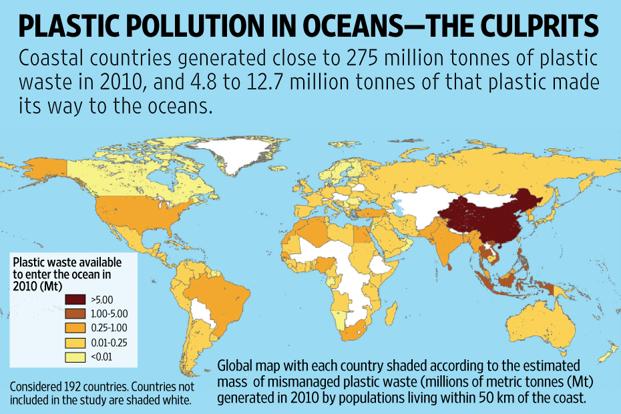
 

globe eichman


Endangered freshwater and marine animals

The fastest decline among the animal populations is found in freshwater ecosystems, where numbers have plummeted by 75% since 1970. “Rivers are the bottom of the system,” according to Dave Tickner, WWF’s chief freshwater adviser, “whatever happens on the land, it all ends up in the rivers.”


The overuse use of freshwater rivers for fishing, dams and navigation projects along with pollution and habitat destruction has led to the decline of populations of many aquatic species, most apparent in species such as river dolphins and large-bodied fish. There are now five species of freshwater dolphins left in the world, four of them living in major freshwater systems in Asia. All are critically endangered.


Marine animal populations have also fallen by 40% overall, with turtles suffering in particular. Hunting, destruction of nesting grounds and entangling in fishing nets have seen turtle numbers fall by nearly 80%.


A study in 2013 revealed that the Bluefin tuna, endangered for several years due to its misfortune as a sushi delight, suffered a catastrophic decline in stocks of more than 96% in the Northern Pacific Ocean. More than nine out of 10 of the species recently caught were too young to have reproduced, meaning they may have been the last generation of the Bluefin tuna. Driven by high demand and prices, fishermen use various techniques to catch tuna and increase the supply. This demand and supply cycle is leading to a faster disappearance and extinction of the fish. Although tuna are a source of food and livelihoods for humans, they are more than just that. In the marine food chain, the tuna are a top predator maintaining a balance in the ocean environment.


Unsustainable fishing is a major threat to marine life today. Bottom trawling, an industrial fishing method puts species at risk and also alters marine habitats. However, in addition to fishing and hunting, other human activities also put marine life at risk – hazards that include noise pollution, sea floor mining, and oil exploration and gas extraction. The development of coastal cities and a practice known as “sea-steading,” or building artificial lands in the ocean — with one such example being the United Arab Emirates famous construction of artificial islands off the coast of Dubai — also present problems to marine habitats.


The Amazon rainforest

The Amazon is a vast region. It spans eight countries: Brazil, Bolivia, Colombia, Ecuador, French Guiana, Guyana, Peru, Suriname and Venezuela. There is a clear link between the health of the Amazon and the health of the planet, as these rain forests, which contain 90-140 billion metric tons of carbon, help stabilize local and global climate.


The Brazilian Amazon, home to 40% of the world’s tropical forest, is one of the most bio-diverse regions on the planet. Around 62 square miles (160 square kilometers) of forest are cleared each year. The systematic clearance of trees from the Amazon forces wildlife into ever-smaller patches of ground. At least 15 mammal, 30 bird and 10 amphibian species are expected to die out by 2050 from around half of the Amazon. Though few species are killed off directly in forest clearances, many face a slower death sentence as their breeding rates fall and competition for food becomes more intense.


The pressure of economic development and various financial crises has led to the Brazilian government’s proposed rapid development program in the Amazon to fuel the economy and get Brazilian’s the desired contemporary “way of life.” This plan foresees the construction of more than 20 hydroelectric power plants in the Amazon basin and an extensive push deeper into the rainforest which will further accelerate the loss of species.


Dolphins in China and Sparrows in India

China and India, two countries in Asia, are home to nearly 36 percent of the global population. These countries are also two of the fastest growing economies that have completely bought into the current economic and industrial system; their middle classes are consuming more than the combined populations of various countries. Both countries are also culprits in the plastic pollution of oceans. Two instances of extinction or threat to animal species from two of these densely populated countries are provided below.


The ‘Baiji Dolphin,’ a small, nearly blind white dolphin known as the Chinese river water dolphin, dated back to 20 million years. Nicknamed “goddess of the Yangtze river” and considered a national treasure, this dolphin was declared extinct in the year 2006. China’s economic development put immense pressure on this river dolphin. With over 400 million people living in the Yangtze catchment area and river-banks lined with large, industrialized cities, waste from residences and industries flowed ceaselessly into the river making human activity the single-largest threat to the aquatic mammal.
 

baiji


Additionally, greater use of the river for fishing, transportation, hydroelectricity and waterways development led to dredged riverbeds and concrete reinforcements further affecting the dolphin’s habitat. Building of the Three Gorges Dam in the early 2000s interrupted the dolphin’s movements upstream, and eliminated access to tributaries and lakes. Parts of the Yangtze River became much shallower because of siltation from deforestation and agricultural development.


The Yangtze is also one of the world’s busiest waterways; and increased ship traffic on the river confounded the sonar that the nearly-blind dolphin used to find food. The attendant noise pollution caused these animals to collide with propellers, causing injury and deaths. Boats grew in size, and fishermen employed wider and more lethal nets. In the 1970s and 1980s, an estimated half of Baiji deaths were attributed to entanglement in fishing gear. Only a few hundred were left by 1970. Then the number dropped down to 400 by the 1980s and then to 13 in 1997, becoming extinct after an expedition late in 2006 failed to record a single individual after an extensive search of the animal’s entire range. The Baiji Dolphin was the first large aquatic mammal to have gone extinct since hunting and overfishing killed the Caribbean monk seal in the 1950s.


The loss of the dolphin is likely to cascade through the food chain and affect the ecosystem, plants and animals living in the river. This will affect humans in the long run; but how we choose to deal with it depends upon whether we see ourselves as part of the ecosystem.


Sparrow


The ‘House Sparrow’ and its subspecies are worldwide in their distribution, except in the polar region. However, in 2002, sparrows were included in the IUCN Red List of Threatened Species in the U.K. and since 2010, March 20 has been adopted as World Sparrow Day. According to one report, the sparrow population in parts of India, especially in coastal areas declined by 70 to 80 per cent. Sparrows are very sensitive and their sudden disappearance serves as sentinel warnings or as ecological indicators about impending environmental hazards.


Various causes have been cited for the decline: the general loss of greenery, grasses and vegetation in concrete urban areas leads to non-availability of tiny insects which serve as food for the hatchlings; excessive use of mosquito repellents indoors and insecticides outdoors; concrete buildings with no nesting sites for sparrows; use of air-conditioning that leaves no entry or exit points for feeding sparrow nestlings. Furthermore, the chemicals released due to use of anti-knocking agents in petrol in vehicles is said to cause damage to the sparrows. Some say that although adult sparrows eat grains, the use of chemically treated seeds and grains is harmful to them. Recent increase in electromagnetic radiations from cell phone towers outdoors and the large-scale use of wireless devices indoors is also said to have hastened the decline of this bird population. It could be the synergistic effect of all these environmental factors and pollutants that is leading to decline in the bird population.


This story of species extinction threats is not restricted to highly populated countries or rapidly developing economies alone. Destruction of environment is a global phenomenon. IUCN has listed the eleven countries with more than 900 threatened species and they range from poor to rich countries. Ecuador, in South America, tops the list with 2299 threatened species, followed by USA with 1287, Malaysia with 1236, Indonesia with 1225, Mexico with 1091, China with 995, India with 988, Tanzania with 979, Brazil with 965, Madagascar with 929 and Australia with 906 threatened species


It is clear that destruction of the environment is driven by human extraction from the planet, insatiable human consumption and the manner in which the waste products of human production and consumption are disposed.


At first it seems that we cannot co-exist with other plant and animal species. However, as the next segments shows, our history proves that we cannot co-exist with our own (other humans) as well.


We not only kill other species, we specialize in killing our own.


*****


Segment 2: Genocides, War crimes, Ethnic cleansing, Crimes against humanity and serial warfare: The Jewish Holocaust (Shoah) and the Trials for Justice


Despicable as we are in the treatment of other species, history reminds us that we have been no less barbaric toward other humans. The pages of our history books are repetitive stories of one group of people going out and killing another groups for reasons ranging from land, resources, trade, food, religion, or sheer power and domination. Senseless killing of animals, plants or other people seems to be the favorite pastime of human beings on this planet.


However there is one aspect of our history that goes beyond even the senselessness of wars – the willful extermination of one group of people: Genocide — the systematic destruction of all or a significant part of a racial, ethnic, religious or national group.  In recent times we have seen such events in Rwanda, Sudan (Darfur), or Bosnia. Historically, the Armenian massacres under Ottoman rule and the near extinction of indigenous tribes in the Americas by colonizers are also known. However, the most horrific of them all has been the holocaust perpetrated against Jews in Nazi Germany during World War II.


The Holocaust or Shoah


The Holocaust refers to one of the most horrific genocides, one of the largest in history, where the nine million people of Jewish origin living in Europe before World War 2 were systematically targeted in Germany and German-occupied territory. Approximately two-thirds or six million Jews, including approximately one million children, were deliberately and intentionally killed by the Nazi regime and its collaborators from 1941 to 1945. Some historians include the additional five million non-Jewish victims of broader Nazi crimes such as Gypsies, Poles, communists, homosexuals, Soviet prisoners of war (POWs), and the mentally and physically disabled. In total, approximately eleven million people were killed. But the primary and largest deliberate target of the Nazis remained the Jews with the intention to exterminate all of them for no other reason than that they were Jews.
 

holocaust 2


The biblical word “shoah,” meaning calamity or catastrophe, is the Hebrew term for the Holocaust. The Nazis used a euphemistic phrase- “Final Solution to the Jewish Question” (die Endlösung der Judenfrage) as a term for this genocide. The Final Solution became Nazi Germany’s plan during World War II to systematically exterminate the Jewish population in Nazi-occupied Europe through genocide.


The genocide progressed systematically in stages. After coming to power in January 1933 until the outbreak of World War 2 in September 1939, the focus of the Nazi persecution of the Jews was on intimidation, taking their money and property, encouraging them to emigrate. Laws were passed to exclude Jews from civil society and forced into ghettos. The invasion of Poland in 1939 after the start of the 2nd World War brought the Nazis in close contact with three million Polish Jews. It marked the start of a far more savage persecution, including mass killings. Paramilitary units called Einsatzgruppen, mobile killing units of the SS and the police were dispatched to German-occupied territories to murder around two million Jews and “partisans” in German occupied territories. Around 1941, after the invasion of Soviet Russia, the Nazi government began to conceive of a plan to exterminate the Jews of Europe.
 

holocaust 1


The decision to systematically kill the Jews of Europe irrespective of geographic borders had been made by the time of the Wannsee Conference, which took place at the Wannsee Villa in Berlin, on January 20, 1942. The conference was attended by senior officials of the Nazi Party and senior representatives of ministries with responsibilities for the “Jewish question”—the Interior Ministry, the Foreign Ministry, the Justice Ministry, and Ministers for the Eastern Territories. With the decision to annihilate the entire Jewish population, extermination camps with gas chambers such as Auschwitz and Treblinka were constructed to kill large numbers of Jews in a short period of time. In this second operation, the Jewish population of central, western, south-eastern Europe were transported were transported by freight train to specially built extermination camps where they were put in gas chambers. About 42,500 facilities in Germany and German-occupied territories were used to concentrate, confine, and kill Jews and other victims.
 

holocaust 4 trains


Every arm of the Nazi German bureaucracy was said to be involved in the logistics of the genocide, turning the Third Reich into a genocidal state. It is said that anywhere between 100,000 and 500,000 people were direct participants in the planning and execution of the Holocaust. The phrase Lebensunwertes Leben (Life unworthy of life) was used to refer to the victims by the Nazis in order to justify the killings.


This systematic, planned genocide continued until the end of World War II in Europe in April -May 1945.


holocaust 3 mass grave


Post World War II – War crimes and the Nuremberg trials

After World War 2, some of those responsible for the Holocaust and war crimes were to be brought to trial. An International Military Tribunal (IMT) composed of judges from the United States, Great Britain, France and the Soviet Union was constituted. Justice Robert Jackson, US prosecutor, believed that the war crimes trials should be held in Germany.  Few German cities in 1945, however, had a standing courthouse in which a major trial could be held.  One of the few cities that did was Nuremberg, ironically the very place where Nazi leaders proclaimed the infamous Nuremberg Laws, stripping Jews of their property and basic rights. Jackson thought this was almost a karmic connection and chance for poetic justice. The Nuremberg Trials, as they came to be known, took place between 20 November 1945 and 1 October 1946.


The IMT presided over the hearings of twenty-two major Nazi criminals, prominent members of the political, military, and economic leadership of Nazi Germany, who were placed on trial for crimes against peace – participation in the planning and waging of a war of aggression in violation of numerous international treaties; war crimes – violations of the internationally agreed upon rules for waging war; and crimes against humanity – namely, murder, extermination, enslavement, deportation, and other inhumane acts committed against any civilian population, before or during the war; or persecution on political, racial, or religious grounds in execution of or in connection with any crime within the jurisdiction of the Tribunal, whether or not in violation of domestic law of the country where perpetrated.


nuremberg trials


Twelve prominent Nazis were sentenced to death. Those individuals directly involved in the killing received the most severe sentences. Other people who played key roles in the Holocaust, including high-level government officials, and business executives who used concentration camp inmates as forced laborers, received short prison sentences or no penalty at all. Most of the defendants admitted to the crimes of which they were accused, although most claimed that they were simply following the orders of a higher authority.


Adolf Hitler, highest authority of the Nazis, and the person most to blame for the Holocaust, was never tried because he had committed suicide in the final days of the war, and so had many of the senior and closest aides such as Joseph Goebbels (dead) and Martin Bormann (missing). Many more criminals were never tried. Some fled Germany to live abroad, including hundreds who came to the United States and South America. Trials of Nazis continued to take place both in Germany and many other countries. People like Simon Wiesenthal and Israeli intelligence agencies with the support of various individuals and agencies continued to track fugitive Nazi war criminals across the world.


Who was Eichmann?


Adolf Eichmann (1906 – 1962) was a German Nazi SS – Obersturmbannführer (Lieutenant Colonel). During World War 2, after the Wannsee conference (of 1942) Eichmann had coordinated and managed the logistics of mass deportation of Jews to ghettos and extermination camps in German-occupied Eastern Europe. After World War II, Adolf Eichmann fled from Austria. He settled in Argentina under the name Ricardo Klement. Israeli Security Service agents seized Eichmann in Argentina in May 1960. He was taken to Jerusalem for trial in an Israeli court. The Eichmann trial aroused international interest, bringing Nazi atrocities to the forefront of world news. Many Holocaust survivors felt able to share their experiences as the country confronted this traumatic chapter. Then Israeli attorney general, Gideon Hausner, signed a bill of indictment against Eichmann on 15 counts, including crimes against the Jewish people and crimes against humanity. Eichmann was found guilty and sentenced to death. The execution by hanging of Adolf Eichmann on June 1, 1962, perhaps is the only time that Israel has enacted a death sentence.
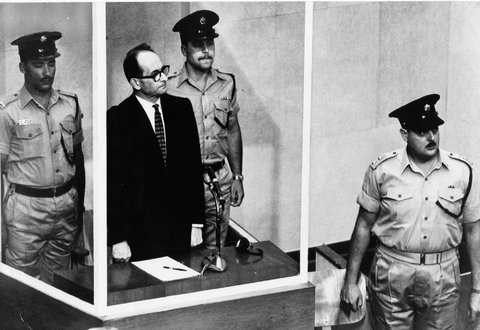
 

eichmann on trial in jerusalem (1) 


*****


Segment 3: Hannah Arendt and Eichmann in Jerusalem: A Report on the Banality of Evil

Hannah Arendt (1906 –1975) was a German-born political theorist. An assimilated Jew, she fled Germany after Hitler’s rise to power in 1933, was subsequently imprisoned in a concentration camp in France, and then ultimately escaped Europe in 1941 during the Holocaust and became an American citizen. She was a professor at a number of American universities, including the New School for Social Research and University of Chicago and is known for her books The Origins of Totalitarianism, The Human Condition and Eichmann in Jerusalem. Although many describe her as a philosopher, Arendt did not agree with that label to her work because according to her philosophy was concerned with “man in the singular” and instead her work centered on the fact that “men, not Man, live on the earth and inhabit the world.” Arendt’s subjects deal with the nature of power, direct democracy, authority, and totalitarianism. Therefore, Arendt described herself as a political theorist instead.

 

Hannah Arendt pic1 (1)


In 1961, Arendt was commissioned by New Yorker magazine to cover the Eichmann trials. She went to Jerusalem and wrote a series of articles for the magazine, later converted into a book: “Eichmann in Jerusalem: A Report on the Banality of Evil (1963).”


In her report on the trial of Adolf Eichmann, Arendt wrote of “the banality of evil.”  Eichmann claimed he never aspired to be a villain.  Rather, he claimed to have over-identified with the ideological cause and suffered from a lack of imagination or empathy. He was a career bureaucrat who simply wanted to belong and show his bosses that he was doing his job better than others. And couldn’t fully appreciate the human consequences of these career-motivated decisions.


Doug Linder writing about the Nuremberg trials had similar observations: “No trial provides a better basis for understanding the nature and causes of evil than do the Nuremberg trials from 1945 to 1949.  Those who come to the trials expecting to find sadistic monsters are generally disappointed.  What is shocking about Nuremberg is the ordinariness of the defendants: men who may be good fathers, kind to animals, even unassuming–yet who committed unspeakable crimes.”


Arendt coined the phrase “the banality of evil” to describe the phenomenon of people such as Eichmann. What had struck Arendt about Eichmann during his trial in Jerusalem was his banality: “his inability ever to look at anything from the other fellow’s point of view, his penchant for official sounding jargon, for stock phrases, for shallow elation, for being genuinely incapable of uttering a single sentence that was not a cliché, his empty talk. The longer one listened to him, the more obvious it became that his inability to speak was closely connected with an inability to think, namely to think from the standpoint of somebody else. No communication was possible with him, not because Eichmann lied, but because he was surrounded by the most reliable of all safeguards against the world and against the presence of others and against reality as such: an inability to think.


She raised the question of whether evil is radical or simply a function of thoughtlessness, a tendency of ordinary people to obey orders and conform to mass opinion without a critical evaluation of the consequences of their actions and inaction.

 

Eichmann_in_Jerusalem_book_cover (1)


What Hannah Arendt meant and what she was perhaps trying to highlight was the philosophical issue behind the banal nature of evil – and the barbarism and bureaucracy of the 20th century. In a letter (dated September 20, 1963) to Mary McCarthy, American author, critic and political activist, Arendt wrote: “… the very phrase “Banality of Evil” stands in contrast to the phrase I used in the totalitarianism book, “radical evil.”


In her exploration and examination of totalitarianism, Arendt had used the word radical evil to describe what went on in the terror camps of Nazi Germany. However, radical evil or “hell” becomes a theological explanation for these actions. The idea of the sinner, a depraved, corrupted individual comes to the fore. The Holocaust could not have been conducted by one such evil force. Camps had to be run with the complicity of other people. Were they all carriers of such “radical evil?” This question was perhaps on Arendt’s mind as she sat through the trials in Jerusalem. By coining the phrase “the banality of evil” and by declining to ascribe Eichmann’s deeds to the demonic or monstrous nature of the doer, Arendt knew that she was going against a tradition of Western thought that sees evil in terms of ultimate sinfulness, depravity and corruption.


Arendt wrote elsewhere: “The sad truth is that most evil is done by people who never make up their minds to be good or evil.” Using Eichmann as an example of perhaps the thousands of others who had made the Holocaust even possible through their everyday actions of running concentration camps or driving the freight trains that carried the victim, she argues that Eichmann and his ilk were perhaps not the type of evildoer found in literature, where evil is most often shown as a brilliant devil. Eichmann, according to Arendt, was completely second-rate, almost a clown. Of Germans at the time who saw figures like Eichmann as ingenious monsters, Arendt’s comment was: “They possibly understood this as a way of creating a certain alibi for themselves. If you succumb to the power of a beast from the depths, you’re naturally much less guilty than if you succumb to a completely average man.”


Arendt had, thus, challenged a tradition of philosophical thinking in the West: the sinfulness of one particularly bad evil doer versus the bottomless amoral mediocrity latent in millions.


There was an obvious emotional benefit in seeing those who perpetrate evil as monsters. It gives us hope that if there are few evil men, they can be identified, targeted and destroyed and the world can go back to its sanity. However, if we start believing that evil is banal – absolutely common and commonplace and lies in the mediocrity and thoughtlessness of many amongst us, who choose to follow orders like an everyday bureaucrat – stamping documents without thinking of their consequences, then it shatters that myth of the “evil devil” and makes life inherently uncomfortable. We have to look over our shoulder and look at our own hearts to see if we are that bureaucrat like Eichmann, whether we are doing things that perpetrate evil while we go about our lives unthinkingly.


What had become banal – and astonishingly so – was the failure to think. Indeed, at one point the failure to think is precisely the crime that Eichmann commits. Obviously, this is a scandalous way to describe his horrendous deeds that contributed to the shameful and horrific Holocaust, but for Arendt the consequence of non-thinking is genocidal, or certainly can be. That was the key lesson Arendt wanted to give when reporting on the Eichmann trial in Jerusalem.


The Controversy

“Banality of evil” became a huge controversy after it was released. The phrase itself was catchy, attention-grabbing, and forceful, but also very indicative. It made people think they knew what Arendt wanted to argue. Even those who had not read the book thought they knew what it meant. The phrase that Arendt used very intelligently actually by nature of its very directness went against her intelligent arguments. Many of the objections to her work are based on arguments that were probably never made by her.


Arendt did not argue that the evil perpetrated in the Holocaust was banal, nor did she fall prey to Eichmann’s manipulative presentation of himself as a man who was honorably obedient and just following orders nor did she say that Eichmann’s evil was the only kind of evil. Perhaps it was Arendt’s argument that she found Eichmann, the non-thinking man, who put forth his thoughtlessness as a virtue, very laughable – a buffoon almost. Perhaps it was the juxtaposition of laugh-ability with the intense and horrific atrocity of the Holocaust that made the critics angry. Furthermore, Arendt also indicated that she expected a higher moral behavior from Jews. Arendt also ended up criticizing the manner in which the trial was conducted in Israel, pointed to the political intentions of some Israeli leaders. Arendt had also been critical of the way that some Jewish leaders acted during the Holocaust. She was almost holding up Jews to a higher level of conduct and action than others. In some ways perhaps Arendt was salvaging a sense of pride. But it made some others feel that Arendt, by downplaying the evil anti-Semiticism of Eichmann and people like him,  had ended up “blaming the victims” instead.


This caused a considerable controversy and even animosity toward Arendt in the Jewish community. Many of her friends from within the Jewish community cut their relations with her. Arendt was criticized by many Jewish public figures, who charged her with coldness and lack of sympathy for the victims of the Holocaust. Because of this lingering criticism, her book has only recently been translated into Hebrew.


As Peter Baehr writes in The Portable Hannah Arendt (pg. xxvi): “Soon after Hannah Arendt’s report on the “word-and-thought defying banality of evil” was released published in February and March 1963, it became the subject of a venomous campaign. Both the phrase “banality of evil” and Arendt’s comments on the complicity of the Jewish Councils (Judenrate) in the deportation of their own people drew angry recrimination. Initially, the bitterness was greatest in the United States; former colleagues assailed her analysis; the Anti-Defamation League issued condemnatory memorandums; newspaper columns expanded in denunciation of this “self-hating Jewess…”


Almost 15 years later, in November 1977, a series of essays titled: “Thinking” written by Arendt were published in The New Yorker. Arendt was still ruminating about the Eichmann report and trial: “Behind that phrase (banality of evil) I held no thesis or doctrine, although I was dimly aware that it went counter to our tradition of thought – literary, theological, or philosophical – about the phenomenon of evil. Evil, we have learned, is something demonic. It’s incarnation is Satan….Evil men, we are told, act out of envy; this may be resentment at not having turned out well through no fault of their own…”


“However what I was confronted with (at the Eichmann trial) was utterly different and still undeniably factual: I was struck by a manifest shallowness in the doer which made it impossible to trace the incontestable evil of his deeds to any deeper level of roots or motives. The deeds were monstrous but the doer – at least, the very effective one now on trial –  was quite ordinary, commonplace, and neither monstrous nor demonic. There was no sign in him of firm ideological motives, and the only notable characteristic one could detect either in his past behavior or in his behavior during the trial and throughout the pre-trial police examination was something entirely negative: it was not stupidity but thoughtlessness.”


This thoughtlessness is at the root of the banality of evil.

*******

Segment 4: Bureaucratic consumerism and Environmental Extermination: If this isn’t a holocaust, what is?


Keeping the controversy of the book aside – let us ask if the notion of “banality of evil” applies to the human condition today?


The wanton destruction and extinction of species and ecosystems wrought by human actions on the planet – does that not constitute a holocaust? After all, the term holocaust comes from the Greek word holókauston, referring to an animal sacrifice offered to a god in which the whole (olos) animal is completely burnt (kaustos). How that definition applies to the manner in which human activity is killing off species after species today? Only, in this case, the God that we are sacrificing all other species and the planet is our way of life – of consumerism at all costs. What is this “way of life” that Everyman desires and wants everyone on the planet to have?


Consumerism is the social and economic order of the day. It is an ideology that encourages the acquisition of goods and services in ever-greater amounts. The second half of the twentieth century sees the rapid and large expansion of consumerism as a way of life and it has redefined politics, economics, society and culture. Consumerism has come to define the good life and thus indirectly our “way of life” which is a promise to bring the good life to all on the planet through the expansion of the market. In the almost complete absence of alternatives (There is No Alternative – TINA), or any other political and social narratives, consumerism has become one of the dominant global social forces. Consumerism cuts across differences of religion, social class, gender, nationality. Even sworn enemies who fight over fundamentalism or terrorism seem to be in agreement about consumerism. When it comes to consumerism even serious issue such as climate change or environmental destruction are brushed aside, and people celebrate token days such as Earth Days on one assigned day of the year where everyone stops using electrical power for about one hour.


Consumerism is also linked to the global diffusion of technology and the increased ability to mass produce items. The supply side no longer remains a problem; goods and things can be produced at the rate of hundreds per minute. What has to be created is an increased demand. Marketing rose as a discipline within the schools of management. From the early management theorists who wanted to understand and improve worker efficiency, the attention shifted to methods by which companies could persuade and manipulate people to buy more. Mass media proliferated and so did the practice of advertising, public relations and all forms of marketing and selling. Thus, the second half of the 20th century also marks a definitive shift towards materialism. For instance, in the 1990s, the top-most reason for attending college was simply to make a lot of money; this was a radical departure from the reasons of the past such as: wanting to become an authority in a field or helping others in difficulty.


Consumerism has become bureaucratic – a ritual – common everyday occurrence. A bureaucracy is a way of administratively organizing large numbers of people together and applies to any organization, not just governments- schools, hospitals, and even corporations are bureaucratic. German sociologist Max Weber in his writings argued that bureaucracy constitutes the most efficient and rational way in which one can organize human activity, and that systematic processes and organized hierarchies were necessary to maintain order, maximize efficiency and eliminate favoritism. He saw bureaucratization as the rationalizing aspect of modern western society. Rationalization was the sociological term used to signify the substitution of logically consistent rules for traditional (or illogical) rules. Thus a rational, bureaucratic (modern) society saw a move away from the kinship, favoritism and unregulated aspects of pre-modern, feudal society towards a more ordered, predictable society based on rules.


The term bureaucracy literally means “rule by desks or offices,” a definition that highlights the often impersonal character of bureaucracies. The job of a bureaucrat is to implement organizational policy, to take the laws and decisions made by the top officials and put them into practice. Thus, the laws and policies of consumerism are written elsewhere and we the bureaucrats are the practitioners – practicing it every day in our daily lives.


Robert Merton pointed out the negative aspects of bureaucracies: inefficient and inflexible, almost oligarchical – concentrating power in the hands of a small number of people and this power was unregulated. For instance, in this age of consumerism, what we should consume is often dictated by a few celebrities and fashion houses and the high priests of luxury lifestyles on their fancy TV shows and pages of newspapers dedicated to them. The corporate companies that produce the goods often use media, advertising, film industry to control and dictate trends in consumerism. Weber had also stated that those who control these bureaucracies and organizations control the quality of our lives as well.


Weber also saw unfettered bureaucracy as a threat to individual freedom, in which an increase in the bureaucratization of human life can trap individuals in an “iron cage” of rule-based control. The iron cage, a set of rules and laws that everyone is subjected to and must adhere to, then limits individual human freedom and potential instead of creating a “technological utopia” that should set us free. It’s the way of the bureaucracy or institution and the individual human does not have a choice anymore; and whether we agree or disagree, if we want to survive today we need money and we have to consume. We have become the bureaucratized consumer. We are simply following the rules; and even though it is often said that consumerism appeals to our base emotions, to the lower brain, the entire project of consumerism is organized along rational lines. The mass and the products on the shelves are systematically maintained, the décor and layout of stores are planned, the advertising campaigns are designed to manipulate, marketing research is done systematically, and credit cards are handed out and installment schemes are devised to push consumerism. It is a completely planned and regulated system that caters to our base desires.


The interesting part is the manner in which this “way of life” has been sold globally. Everyone (Everyman) wants to be a consumer today – whether in the rich countries who is habituated and often addicted to consuming, or someone in the poor countries who is aspirational and wants to mimic the consumerism he or she sees on television, films or hoardings.


And in our desire to spread consumerism to more than 7 billion on this planet as the only way towards economic growth, it becomes a primary cause of this wanton destruction of Nature and extermination of millions of species. We have inadvertently and irreversibly applied the Final Solution to nature without any discussion


It forces us to ask: Aren’t we all (Everyman) complicit in this extermination of Nature just like Eichmann was in the perpetration of the Jewish Holocaust? What would you do with an Eichmann if you were a victim of the Holocaust- obviously put him on trial?


*****


Segment 5: Relating Hannah Arendt’s banality of evil to consumerism and environmental destruction: What if the animals and plants and the oceans use our laws to put us on trial?


Genocide was first described as a crime by the UN General Assembly when it adopted the Convention on the Prevention and Punishment of the Crime of Genocide (CPPCG) in 1948. Article II of the Convention (CPPCG) defines genocide as: any of the following acts committed with intent to destroy, in whole or in part, a national, ethnical, racial or religious group, as such: (a) killing members of the group; (b) causing serious bodily or mental harm to members of the group; (c) deliberately inflicting on the group conditions of life calculated to bring about its physical destruction in whole or in part; (d) imposing measures intended to prevent births within the group; (e) forcibly transferring children of the group to another group. The Convention (CPPCG) was adopted for humanitarian and civilizing purposes. Its objectives are to safeguard the very existence of certain (human) groups and to affirm and emphasize the most elementary principles of humanity and morality. Genocide is a crime under international law regardless of whether committed in time of peace or in time of war; it is a punishable international crime.


What if we were to apply the rules of the Convention to humans and their treatment of other species on the planet?


Peter Singer, Australian moral philosopher, would perhaps agree with the right of animals to conduct a Nuremberg or Eichmann type trial over humans to seek justice against the human being’s violent and exterminatory practices against them. Singer, whose ethical ideas fall under the umbrella of biocentrism, popularized the term “speciesism” in the book, Animal Liberation: A New Ethics for Our Treatment of Animals, to describe the practice of privileging humans over other animals and the subsequent exploitative treatment of animals. He believes that there is no reason not to apply this measure of good or ethical behavior – “the greatest good of the greatest number” – to other animals. He argues that the interests of animals should be considered because of their ability to feel suffering and that the idea of rights was not necessary in order to consider them. Singer has said: “All the arguments to prove man’s superiority cannot shatter this hard fact: in suffering the animals are our equals.”


What if animals, plants and oceans were to conduct trials, such as the one at Nuremberg, to identify the war criminals in the genocide being waged against animals, plants, flora and fauna, the air, water and the earth? Who would be put on trial for human actions that are destroying other species of animals and plants as listed by IUCN?


Would it be Everyman?

What would be asked in the trial?

What would be Everyman’s defense?

I was just following the orders to consume. I was being obedient and compliant. I am simply a bureaucrat in this global game of consumerism.


Imagine you were Arendt and sitting in on the trials of Everyman, as prosecutors questioned him for perpetrating the holocaust on all other species and Earth that has already killed millions and caused extinction (the Final Solution). My question to you would be the same as Arendt asked after the Eichmann trials: Are we are all possessors of this trait called “radical evil” – are we being demons and Satan – all of us – when our actions or the human activities we engage in actually cause the extinction of other groups?


Do we appear like Satan to our children when we buy them things that are actually destroying their future habitat and making the world unlivable? Our child kisses us – and does not curse us. Being a good consumer becomes an act of love – when it is buying a gift for our spouses or children – a refrigerator for our wife and an air-conditioner for our child so that they are comfortable. Consumerism also connotes acts of success – a new car that reflects my victory in the rat races of careers and jobs.


These acts of love and acts of success are commonplace for all of us – an integral part of our very way of life – after all what is a life without love and success? Thus these acts of love and success which are defined and fructified through the practice of consumerism have become commonplace or banal and this banality has now become the enemy of millions of other species of the planet. Take the case of plastic, the toy I bought for my child, the refrigerator for my wife, the car for myself – all wrapped in plastic or consisting of plastic parts – which were carelessly, and almost without thought, disposed and dumped in the oceans – have now become the poison and means of certain death for sea turtles, whales, seals and fishes.


Don’t we all think of ourselves as normal – not evil, not barbaric, when we go about our daily lives in the 21st century- consuming and disposing and consuming and disposing in an unending cycle – without any regard for the planet or the oceans, forests, lands, rivers and the various other species of flora and fauna in it. Without realizing the ultimate destruction and death we are causing to the millions of other species on the planet and to the planet itself? If this is not a holocaust, then what is? And if we are not Eichmann – banal and nearly stupid – then who is? Most importantly what does Everyman – each one of us – need to do – in order to ensure that we are not Eichmann?


Is Everyman an Eichmann today?


Everyman in his everyday life in the 21st century, assumes that consumption and our ways of production are necessary and cannot be done without. He does not think when he goes out to buy the latest version of the phone or car. Everyman’s way of life takes for granted even without discussion or debate that various species and planetary resources have to be destroyed or sacrificed in order for human beings to continue with their current standards of living. Thus, the manner in which we go about our way of life is commonplace or banal and that is what makes it all the more dangerous. We continue to destroy all life on the planet as well as the future of our children without realizing what we are doing and without a moment of reflection. We are simply trying to be good consumers – good citizens of the consumer economy – good bureaucrats of the consumer economy – following the orders given to us by our economy and the culture it has created: our media, our advertisers, our schools, our political system, and all the neighbors that try to outdo each other by consuming more.


Our acts of love and acts of success become acts of violence for others. Acts of extermination. We perpetrate the Holocaust on all other species. As Arendt wrote: “The trouble with Eichmann was precisely that so many were like him, and that the many were neither perverted nor sadistic, that they were, and still are, terribly and terrifyingly normal. From the viewpoint of our legal institutions and of our moral standards of judgment, this normality was much more terrifying than all the atrocities put together.”


In the 1989 book Justice, Not Vengeance, Simon Wiesenthal, Jewish Austrian Holocaust survivor who became famous after World War II for his work in tracking down and gathering information on fugitive Nazi war criminals so they could be brought to justice, said of the Eichmann trial: “The world now understands the concept of a ‘desk murderer’. We know that one doesn’t need to be fanatical, sadistic, or mentally ill to murder millions; that it is enough to be a loyal follower eager to do one’s duty.”


Each one of us, thus, is an Eichmann trapped in the iron-cage of thoughtless consumerism – a way of life that necessarily harms nature through the use of products that from the time they are made to even after their disposal continue to be destructive of others.  Everyman is an Eichmann destroying other species on the planet every time he participates in his “way of life.”


Doesn’t Everyman think of himself normal – not evil, not barbaric, and definitely not the perpetrator of a Holocaust – when he goes about his daily life in the 21st century? Every time he does something that is part of his way of life: opens a plastic wrapper, freezes a fish, rides a waterway, uses electrical power generated through a dam, throws a syringe, mines for minerals, answers a wireless phone call, builds  a concrete house, switches on an air-conditioner, becomes a consumer or disposes his trash in an unending cycle – does he ever pause to think about the consequences of the actions subsumed in his “way of life” for the other animals, insects, plants, marine organisms, the air, forests, the land, the oceans or the planet. Everyman, and seven billion or more of him, goes about this “way of life” without realizing the ultimate destruction and death they are causing to the millions of other species on the planet and to the planet itself? The destruction and extinction itself constitute a holocaust?


But what does all this make Everyman? Isn’t Everyman today simply an Eichmann during the Holocaust – in the words of Hannah Arendt – Thoughtless?

 

hannah arendt for essayist main page (1)


Arendt ended the book Eichmann in Jerusalem by writing:

“Just as you [Eichmann] supported and carried out a policy of not wanting to share the earth with the Jewish people and the people of a number of other nations—as though you and your superiors had any right to determine who should and who should not inhabit the world—we find that no one, that is, no member of the human race, can be expected to want to share the earth with you. This is the reason, and the only reason, you must hang.”


Does this hold true for Everyman (all of us) today as we seem to refuse to share the planet with other species? Must we hang? Most importantly what does Everyman – each one of us – need to do – in order to ensure that we are not Eichmann?


In the essay titled “Thinking,” Arendt dug deeper into the “thoughtlessness” of Eichmann and wrote: “Clichés, stock phrases, adherence to conventional, standardized codes of expression and conduct have the socially recognized function of protecting us against reality; that is, against the claim on our thinking attention which all events and facts make by virtue of their existence. If we were responsive to this claim all the time, we would soon be exhausted; (however) Eichmann differed from the rest of us only in that clearly he knew of no such claim at all.”


According to Arendt, it was not stupidity but vacuousness, an emptiness of ideas and intelligence (or lack in content) that had enabled Eichmann to do what he did with only infrequent pangs of conscience or pity. It was this strange interdependence of thoughtlessness and evil or remoteness from reality that had shown itself capable of wreaking more havoc that all the evil instincts taken together. Does this sound similar to Everyman’s condition and state of mind and actions today?


Are we all Eichmanns in that we do not know of any such claim on our thinking made by the facts and reality of the extinction of species and destruction of our environment? Obviously not, we do have the knowledge, because we celebrate Earth Day and various Species Days and send emails with environmental factoids and photos of dead animals and oil-slicks floating on oceans to each other. But do we really think about such issues? What is thinking about something then? Does our thinking about these facts force us to redefine our acts of love and success? Doesn’t love and success imply handing over a healthy environment to our children rather than some plastic toys and phones?


If not, then we continue to be the bureaucrat Eichmann, convincing ourselves that we are simply obeying orders and complying with the diktat of some unknown higher-up. Who is that higher up who is ordering us to consume? Is that a political leader, a corporation, an advertiser or simply our neighbor – the Joneses – and we are keeping up with them? Who is this evil person amongst us who is willingly and intentionally conducting this holocaust on Nature? Are we the evil ones or are we the banal, bureaucratic, thoughtless Eichmann ticking every box in the checklist of our consumeristic way of life?


Segment 6: Will thoughtfulness help? Can we shift from our way of life to pathways of lives (and co-existence)


Can we resist all those forces that make us lead this destructive way of life that we lead today? Will being thoughtful and non-violent resistance through the act of thinking and thoughtfulness bring those extinct species to life? Perhaps not – and even if we were to recreate Jurassic parks – we can never bring the ecosystem and the balance in which they lived to life? We cannot go back in time. If our knowledge or awareness about the suffering of other species does not make us act responsibly than are we really thinking? Who or what will move us away from this thoughtlessness?


After the Holocaust, the world united behind two simple words: Never Again. These words represent a promise to past and future generations that we will do everything we can to ensure the horrors of the Holocaust are not repeated. Imagine you were a low-down bureaucrat in the Nazi Third Reich – What would you have done to ensure that the Holocaust did not take place? Would you have been able to do something about that genocide – How? Now come back to the present day – you are a bureaucrat in the holocaust against nature- what are you doing today?


One can say I am merely following orders – being the good bureaucrat – looking for my promotion within this system of consumerism. Or I can say I am powerless. After all what can I, a puny individual, do against the powerful machineries of capitalism, consumerism, corporatism, and finance and other aspects of this “way of life” which has me in its vise-like grip?


Arendt found that moral choice remains even under totalitarianism, and that this choice has political consequences even when the chooser is politically powerless:


“Under conditions of terror most people will comply but some people will not, just as the lesson of the countries to which the Final Solution was proposed is that “it could happen” in most places but it did not happen everywhere. Humanly speaking, no more is required, and no more can reasonably be asked, for this planet to remain a place fit for human habitation.


Arendt mentions, Denmark, as a case in point:


“It was not just that the people of Denmark refused to assist in implementing the Final Solution, as the peoples of so many other conquered nations had been persuaded to do (or had been eager to do) — but also, that when the Reich cracked down and decided to do the job itself it found that its own personnel in Denmark had been infected by this and were unable to overcome their human aversion with the appropriate ruthlessness, as their peers in more cooperative areas had.”


“One is tempted to recommend the story as required reading in political science for all students who wish to learn something about the enormous power potential inherent in non-violent action and in resistance to an opponent possessing vastly superior means of violence.”


Thinking and thoughtfulness can open our eyes to the consequences of our actions; and it will definitely, as Arendt argues, open our eyes to any genocide that our acts contribute to. It can also, perhaps, lead us to find avenues for alternative actions. Once the thinking starts, perhaps we will be able to think beyond the narrow, bureaucratic confines of the iron-cage consumerism of our contemporary human “way of life” and find a pathway of lives for all beings on this planet. Or maybe that is expecting too much from thought and thinking.


If at all, thoughtfulness may simply open us up to the suffering of other species. And once we are attuned to the suffering of others, we recognize that they are living, just like us. No one is superior or inferior – we are all just living. We will perhaps, then, live and let live.


And this would signal that we have matured as human beings. That we have come a long way from the days of the Jewish Holocaust. And we have truly honored those victims because we respect all life on this planet. We have learned our lesson: Never again.


© Nilesh Chatterjee, 2015


References:

International Union for the Conservation of Nature  – IUCN

http://www.iucnredlist.org/about/introduction

Humans driving extinction faster than species can evolve, say experts: http://www.theguardian.com/environment/2010/mar/07/extinction-species-evolve


Living Planet Report

WWF (2014) Living Planet Report 2014: Species and spaces, people and places. Available at: http://assets.worldwildlife.org/publications/723/files/original/WWF-LPR2014-low_res.pdf?1413912230

6th Mass Extinction? Humans Kill Species Faster Than They’re Created

http://www.livescience.com/47733-humans-destroy-earth-biodiversity.html

We’ve killed off half the world’s animals since 1970

http://www.washingtonpost.com/blogs/wonkblog/wp/2014/09/30/weve-killed-off-half-the-worlds-animals-since-1970/

Image: http://www.livemint.com/r/LiveMint/Period1/2015/02/13/Photos/g_plastic-waste_web-kRqG–621×414@LiveMint.jpg


Dolphins

EDGE of Existence. Online resource. Available at: http://www.edgeofexistence.org/mammals/species_info.php?id=1

Lovegren, S. (2006) China’s Rare River Dolphin Now Extinct, Experts Announce. National Geographic News. [online]. Available at: http://news.nationalgeographic.com/news/2006/12/061214-dolphin-extinct.html


Reeves, R.R., Smith, B.D., Wang, D. & Zhou, K. 2005. Lipotes vexillifer. In: IUCN 2006. 2006 IUCN Red List of Threatened Species.

Liu, R., Wang, D. and Zhou, K. 2000. Effects of water development on river cetaceans in China. In: R.R. Reeves, B.D. Smith, and T. Kasuya (eds)Biology and Conservation of Freshwater Cetaceans in Asia, pp. 40–42. IUCN SSC Occasional Paper No. 23. IUCN, Gland, Switzerland and Cambridge, UK.

Chen, P., Liu, R., Wang, D. and Zhang, X. 1997. Biology, Rearing and Conservation of Baiji. Science Press, Beijing. 252 pp.

Zhou, K. and Zhang, X. 1991. Baiji, the Yangtze River Dolphin and Other Endangered Animals of China. Yilin Press, Nanjing, China.


Sparrow

Raj, S. (2014). Where have the sparrows gone? The Hindu. Available at:  http://www.thehindu.com/opinion/open-page/where-have-the-sparrows-gone/article6408162.ece

Image from: http://en.wikipedia.org/wiki/House_sparrow


Amazon Rainforest

Sample, I. (2012) Amazon’s doomed species set to pay deforestation’s ‘extinction debt’. Available at: http://www.theguardian.com/environment/2012/jul/12/amazon-deforestation-species-extinction-debt

WWF (2014). Amazon. Online resource. Available at: https://www.worldwildlife.org/places/amazon


Plastic in the Oceans

Plastic Debris in the World’s Oceans

http://www.unep.org/regionalseas/marinelitter/publications/docs/plastic_ocean_report.pdf

Plastics in our Oceans

http://www.whoi.edu/science/B/people/kamaral/plasticsarticle.html

Natural resources Defense Council

http://www.nrdc.org/oceans/plastic-ocean/

Plastic choking oceans can rise 10-fold in next decade: report (Livemint)

http://www.livemint.com/Politics/1zRWdpBM89zHouPWVkeOCO/Plastic-choking-oceans-can-rise-10fold-in-next-decade-repo.html

http://www.livemint.com/Politics/VDZmnrWFTREbX2qIqZZICL/Full-scale-of-plastic-in-worlds-oceans-revealed-for-first-t.html

http://www.hindustantimes.com/india-news/india-one-of-top-countries-that-sends-plastic-waste-into-sea-study/article1-1316457.aspx


Endangered Marine Animals

Harvey, F. (2013) Overfishing causes Pacific Bluefin tuna numbers to drop 96%. The Guardian. Available at: http://www.theguardian.com/environment/2013/jan/09/overfishing-pacific-bluefin-tuna

Victor, P. (2015). Study: Ocean life faces mass extinction. Aljazeera News. Available at: http://america.aljazeera.com/articles/2015/1/16/oceans-marine-animals.html

Zimmer, C. (2015) Ocean Life Faces Mass Extinction, Broad Study Says. The New York Times. Available at: http://www.nytimes.com/2015/01/16/science/earth/study-raises-alarm-for-health-of-ocean-life.html?_r=0

United States Holocaust Memorial Museum: http://www.ushmm.org/outreach/en/article.php?ModuleId=10007722

http://neveragain.ushmm.org/page/s/never-again

 Eichmann trials

http://www.ushmm.org/wlc/en/article.php?ModuleId=10005179

Nuremberg Trials

http://law2.umkc.edu/faculty/projects/ftrials/nuremberg/nurembergACCOUNT.html

Levy, Alan (2006) [1993]. Nazi Hunter: The Wiesenthal File (Revised 2002 ed.). London: Constable & Robinson.


Hannah Arendt Books and Arendt and Eichmann Trials

Arendt, Hannah. The Origins of Totalitarianism. Books LLC. May 14, 2009. Paperback, 544 pages, Language English, ISBN: 1443239968.

Arendt, Hannah. The Human Condition. University of Chicago Press. January 1, 1958. Hardcover, 333 pages, Language English, ISBN: B0000CK2TY.

Arendt, Hannah. Eichmann in Jerusalem: A Report on the Banality of Evil. Viking Press. 1963. Hardcover, 273 pages, Language English, ISBN: B000LEXNFO.

Arendt, Hannah. On Violence. Mariner Books. March 11, 1970. Paperback, 120 pages, Language English, ISBN: 0156695006.

Hannah Arendt, Peter R. Baehr. The Portable Hannah Arendt. Penguin Books, 2003 – Philosophy – 575 pages

Seyla Benhabib. Who’s on trial? http://opinionator.blogs.nytimes.com/2014/09/21/whos-on-trial-eichmann-or-anrendt/?_r=0

Mark Lilla. Arendt & Eichmann: The New Truth. Nov 21, 2013.The New York Review of Books

http://www.nybooks.com/articles/archives/2013/nov/21/arendt-eichmann-new-truth/

Richard Wolin. Thoughtlessness Revisited: A Response to Seyla Benhabib

September 30, 2014. Jewish review of Books http://jewishreviewofbooks.com/articles/1287/in-still-not-banal-a-response-to-seyla-benhabib/

Sunday Book Review. Fifty Years Later, Why Does ‘Eichmann in Jerusalem’ Remain Contentious? The New York Times, Nov 26, 2013.

http://www.nytimes.com/2013/12/01/books/review/fifty-years-later-why-does-eichmann-in-jerusalem-remain-contentious.html
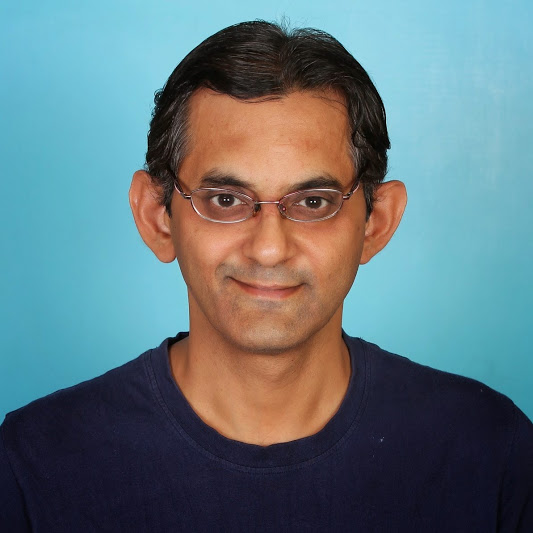
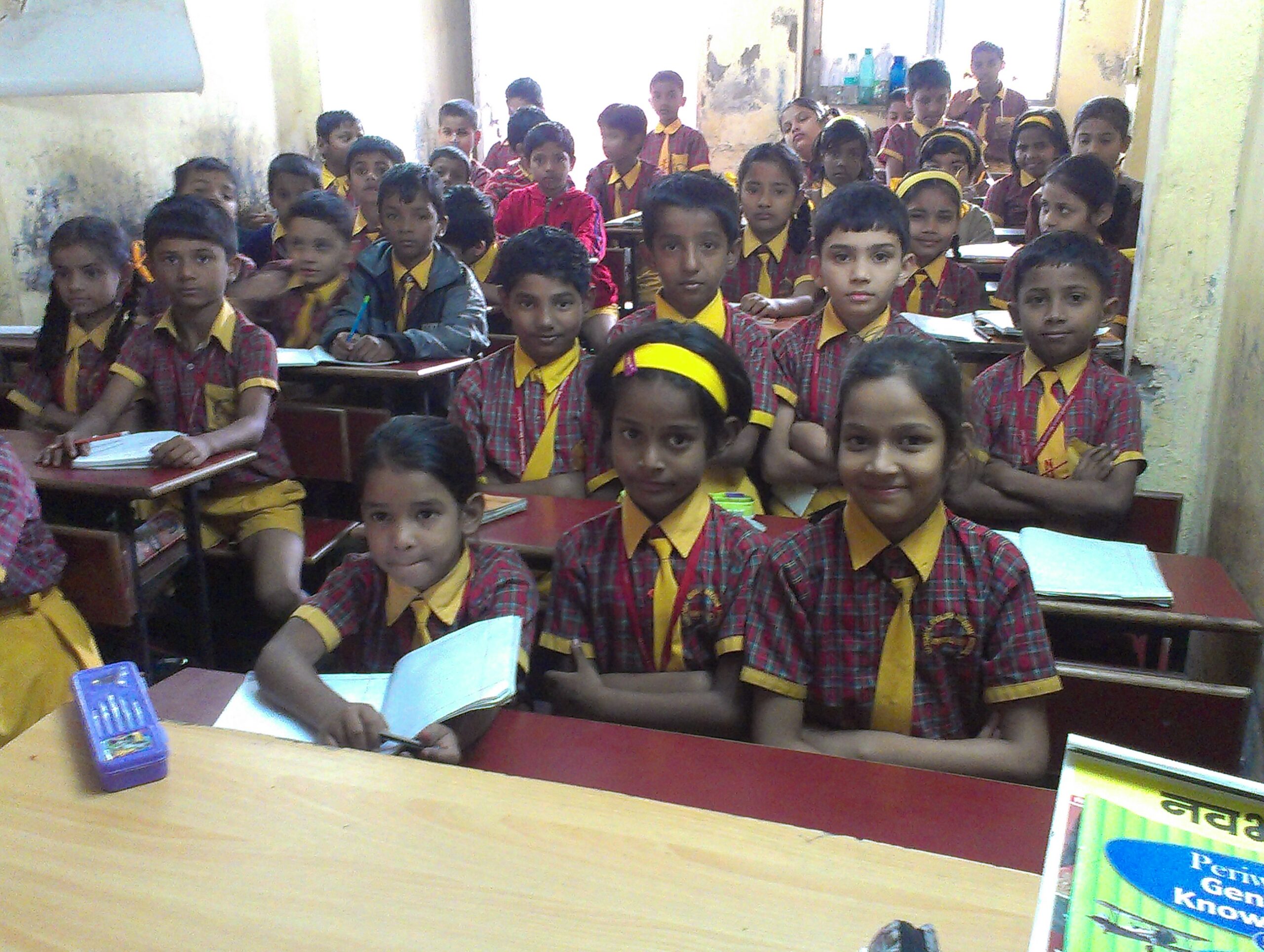


We’ll leave the kids with Jack

Just the other day I was watching Mary Poppins with my 4 year old daughter. While it was the magic, and the songs, and the penguins that enthralled the young girl, I, on the other hand, was left wondering about the Sister Suffragette scene – particularly the lyrics of the song: “Our daughter’s daughters will adore us, and they’ll sing in grateful chorus, well done sister suffragettes”.


Is that true?

Will our daughters and grand-daughters adore us? Will they be grateful for what we do for them now?  Will we get any recognition from them? I guess only time will tell, but no mother who cares about the future of her children can ever ignore the voice inside of her that constantly asks: Am I teaching my children the right thing to do?


I was still pacing up and down in wonderland with all the questions in my head when my cell phone pinged. It was the Momyers’ chat-line, we were generally chatting and commenting on one thing and the other when Ale suggested that we should all go to Vegas to celebrate her little boy’s full recovery. Anticipating that one critical question in all our heads about going on a trip, she immediately typed: “We’ll leave the kids with Jack” which prompted LOL’s and emoticons of uncontrollable laughter.


Why, you may wonder?


Because the phrase – We’ll leave the kids with Jack  – has become an inside joke for the Momyers, especially about who we are and what we do. This Jack – imaginary or real – has become a part of the Momyer lore and identity.


*****

It all started a few months ago when Gaby traveled with her friends in a much needed vacation, she left her girls with her husband and had a weekend of relaxation. I guess her oldest girl was quite fascinated with the fact that her mom could travel without her and only with her friends, and the trip made an impression on her that was much bigger than Gaby anticipated.


Some time passed and Gaby’s daughter made a friend at kindergarten, she made a friend in that age where, of course, if he is a male friend he becomes your husband when you play pretend. The friend is called Jack, and Gaby started hearing about Jack very much and very often. One day Gaby’s daughter told her mom that one day she would marry Jack and have children, Gaby humored her daughters’ conversation and asked her what would she do once she was married to Jack and had children, to which the little girl replied: “I will travel to Paris only with my friends” Gaby asked “And what about your kids?”


After a bit of thinking, Gaby’s daughter, without any hesitation, answered: “We’ll leave the kids with Jack”.


It was so en pointe that Gaby had to try hard to keep a straight face and suppress her laughter.


There it was, boldly said, her daughter wanted to be just like her Mother.


*****

Gaby could hardly contain her excitement, though. She immediately went online and posted it to the Momyer’s chat-room; and in a minute the rest of us, wherever we stood, were all falling down laughing. The underlying message of the blunt answer was so simple and refreshing: It was ok to be like mom. It was perfectly all right to travel with friends, and of course it was obvious the kids will be left with their father. There, just like that, Gaby was validated by her daughter, by another girl, a woman from a different generation and that made all the Momyers feel good.


While the phrase – We’ll leave the kids with Jack  – has served us quite often whenever we plan a trip only for the five of us, or at least say that we will eventually do the trip and leave our husbands with our kids, it always brings me back to the entire Sister Suffragette debacle.


Kids learn with our example not with our words.


What are we teaching our kids by being the kind of mothers and women we are today? Are we teaching our daughters and sons the right thing to do by being independent women? Will my daughters grow to become professionals and mothers and run around a hundred miles per hour like I do? Or will they simply realize that the craziness of being a working mother is not worth it and choose to be full time mothers?


*****

We all usually wonder because it seems like the next generation of younger women always call into question any decision we’ve made as women of the preceding generation. I am sure they don’t realize it and they usually declare their judgment (because that is exactly what they are doing, judging) by saying: “If I were you, I would never…”


I’ve had a few associates tell me that they would never work as hard as I do, that they would stay at home with their kids, that they would do anything but be in a competitive firm, that they would choose a simpler or less demanding job, I could go on for hours and write pages after pages.


Some of my Momyer group have been told the opposite by the exact same women who question my crazy life, that they would never stop working full time, that they would never follow their husbands away due to a promotion of his work, that they would never take part-time or half pay, that they would never marry a man who doesn’t help around the house, and so on. I see now that what they do not realize is the choices they have, the possibilities and the flexibility. Like the Sister Suffragettes, if some of us aren’t “crazy enough” to defy the stereotype, to break the rules, to demand a chance to prove we can do it, other women would not be able to judge our choices, simply because they would not have them. Like the many women before us who paved the way for us, we are perhaps paving the way for other women after us and trying to teach our daughters and sons that allowing women to have choices and support them in their choices is the right thing to do.


I have arrived at the conclusion that what my daughters choose is not important, it doesn’t matter really, and I will not fall in the cliché of saying that as long as they are happy the choice is the right one; that goes without saying. But here is what I do hope the effort of running around, the hard choice of leaving behind a career to be a full time mother, the choice of not being a wife or a mother and fully develop a professional career or the tremendous effort of a woman who attempts to do it all, brings for my daughters and their daughters: the choice. It is about the choice.


And I guess that is exactly why the Sister Suffragette song resonated in my mind that day, because what we teach our daughters with our actions fully impacts the person they become, but our actions also can pave the road for many other women who may not exactly adore us or comprehend our choices. If anything, we are working hard and taking on challenges so that we can set examples – examples that will help everyone have that choice. And, who knows, sometime in her life, if my daughter decides to escape to Paris with her girlfriends, and worries about her children, then she can, without hesitation, say: We’ll leave the kids with Jack.


*****

© Paola Sanchez


« Older posts

© 2026 THE ESSAYIST

Theme by Anders Noren — Up ↑