The growing use of technology at home and at school is no longer a convenience; it is a threat. Parents and schools are pushing technology, believing that technology is the future, and kids need a head start. However, these studies show that technology is not making kids smarter, it is turning them into addicts.
AT HOME
Technology addiction, in the form of internet or electronic gadgets, looms as a pressing problem inside homes. Worldwide incidence of technology addiction is seen at a staggering 6%. In comparison, globally in 2013, it was estimated that almost 382 million people suffer from diabetes for a prevalence of 8.3%.
Toddlers are becoming so addicted to I-Pads that they require therapy. Children as young as four are becoming so addicted to smartphones that they require psychological treatment. (The Telegraph, 2013).
Increasing number of teens, college students and middle-age parents are “mobile addicts,” defined as a user that launches apps more than 60 times a day, six times more than the average user. As of March 2014, there were 176 million addicts, up from 79 million in the same period last year. Females accounted for 52 percent of addicts, according to mobile analytics firm Flurry, which looks at data from 500,000 apps across 1.3 billion mobile devices (CNBC, 2014).
13 year old S____ locks himself up at night and spends hours chatting with friends on his smart phone. The first thing he does after getting up is go online and check messages. He becomes restless if the wi-fi or 3G network goes off (TOI, 2014).
Nearly 80% of 5 to 12 year old children in Indian cities possess electronic gadgets. More than half of the 8 to 18 year olds in 10 Indian cities spend an average of five hours on the internet everyday. (ToI, 2014)
One parent I spoke to said: “My son goes to great extents to get access to some gadget or the other. Either he wants to download You-tube videos and watch them or he wants to download some games and play them… it’s getting a bit out of hand, it’s getting to an extent where he doesn’t want to interact with other children and even if he wants to interact with other children, it is more to do with which video game you are playing, how many points you scored, what level did you reach?”
Digital technology has become to children what a refrigerator is to parents. Just like parents think that a refrigerator is an essential part of living, that’s the way children view gadgets and the internet.
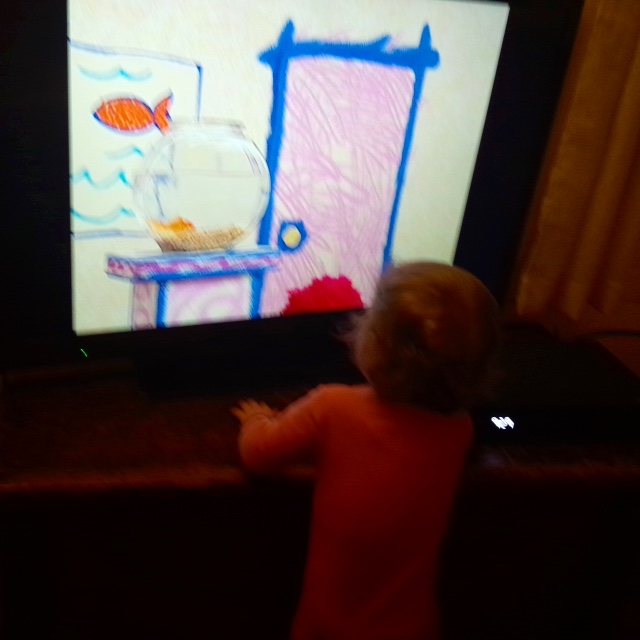
Another parent said, “The word gadgets itself causes an explosion in the minds of parents. We, as parents, are responsible to give our children everything they want, but it’s a day-in and day-out thing for them.”
We live in the information age and gadgets and internet are required to access that information. This has become a double-edged sword for adults and parents – they understand the need for gadgets and internet and happily give them to children as a sign of being a good provider and then get stressed about children over-using or abusing the technology.
The internet has opened many doors for us. It has made lives easier. It’s fun and easy, it’s great, but like everything, it has a dark side. Spending long hours on gadgets is what can be termed as gadget addiction. Any attempt to stop it or limit this creates anxiety and distress in the child. Similarly, Internet Addiction Disorder is a condition where a child compulsively and, almost always, unproductively uses the internet; he is distressed at any attempt to limit its use.
Cyberpsychology, Behavior, and Social Networking, a forum for understanding the social and psychological impact of today’s social networking practices, published a scientific paper where researchers analyzed 80 studies, including 89,281 participants from 31 nations across seven world regions. All empirical reports from 1996 to 2012 that adopted the Young Diagnostic Questionnaire or Internet Addiction (IA) Test for assessing generalized IA were studied. They found that internet addiction has emerged as a universal issue. A global prevalence estimate of 6% was found, which means roughly 400 million people are addicted. Internet Addiction Disorder (IAD) has been reported to cause neurological complications, psychological disturbances, and social problems.
Internet addiction was found to be higher in nations with greater traffic time consumption, pollution, and dissatisfaction with life in general. Other studies in the same journal have shown that in a sample of Chinese students, inflexible coping style was the psychological mechanism that explained the link between Internet addiction and psychosocial maladjustment.
The American Society of Addiction Medicine (ASAM) has officially proposed for the first time that addiction is not limited to substance use. They have defined addiction as a chronic brain disorder. Addictions, whether chemical or behavioral, are found to share characteristics such as compulsive use (loss of control), mood modification and the alleviation of distress, tolerance and withdrawal, and continuation despite negative consequences (Cash et al, 2012).
Dr. Kimberly Young, one of the foremost researchers in this area, was the first to suggest that problematic computer use meets criteria for an addiction, and that it be included in the next iteration of the Diagnostic and Statistical Manual of Mental Disorders (DSM).
The child, who is addicted to internet or gadgets, spends hours on non-work technology-related computer or Internet or video game activities. There are associated mood changes, preoccupation with the Internet and digital media, the inability to control the amount of time spent interfacing with digital technology, the need for more time or a new game to achieve a desired mood, withdrawal symptoms when not engaged, and a continuation of the behavior despite family conflict. The child is anxious, irritable and nervous when not online. Sleep pattern is disturbed– eyes strained – leading to lower concentration levels. The child ends up neglecting family and friends, stops doing activities he used to enjoy and starts lying about time spent on the internet. Child reduces time spent playing with other children and may perform poorly in academics.
A parent complained: “In fact, I have parties and get-togethers and night-outs with his classmates and each of them comes with their I-pad or their tablet and each of them is discussing how to get to the next level on that particular game or how to download the next best game. The original intention with which I invite the child over for a sleepover is actually lost because I want them to interact.”
Debates are still ranging about how best to classify the behavior of internet or technology addiction. Some mental health practitioners argue that excessive internet use is a symptom of another disorder such as anxiety or depression rather than a separate entity (Cash et al, 2012).
Both China and South Korea have identified Internet addiction as a significant public health threat and provide remedial measures such as education and treatment. In the United States the government has not formally responded to this problem. However, while the debate goes on about whether or not the DSM-V should designate Internet addiction as a mental disorder, people currently suffering from Internet addiction are seeking help; and treatment for the disorder available in out-patient and in-patient settings (Cash et al., 2012).
The consequences of internet and gadget addiction affect parents the most. Most common are arguments between parents and children. The child wants to use to the gadget or wants the password to the computer or wi-fi, parents say NO because they want to control. Child argues back, fights with parents. This can be very stressful for parents.
There are consequences on learning and behavior. Internet and social networking sites make a child scan the information rather than read it thoroughly. Thus children who use internet have problems in paying deep attention, concentrating and thinking. Excessive use of social networking sites can lead to cyber-bullying, cyber stalking, age-inappropriate content, and identity theft. Children begin to equate happiness with likes or comments on Facebook. This has a negative impact of the child’s self-esteem.
The causes of this over use of internet or gadgets and devices are many. Virtual games or social media websites fulfill the desire of the child to get more freedom. Children can do whatever they like – children can become whoever they want. It is an empowering experience. Therefore to it is important for parents to understand how their child is using the internet, whether they are using aliases or pretending to be older than they are.
It has become a social norm to own gadgets and to be on social networking sites; if you do not do this then you are out of the group. Gadgets have also become a talking point among very young children.
The start of the problem can often be traced back to the parents’ behavior. Parents are often proud of their children, as young four-year olds, when they use smart phones and download You-tube videos. However allowing unrestricted use at such a young age is the beginning of addiction. Most of the times iPhones and other such gadgets used by children have been lent to them by a family member. Parents are often stuck between denying and giving children access to technology and this behavior is called the ‘pass-back effect’. Many parents also take the gadget away from children or force them to quit, believing that is the only solution to the problem. In severe cases, parents spend large amounts of money for “digital detox” programs for their children.
There are solutions and underlying all of them is teaching effective ways to a child to become technologically responsible – that is – balancing the use of gadgets for both learning and entertainment.
This requires work on the part of parents.
First, parents need to acknowledge that their child is suffering from internet or gadget addiction. Second, they need to work on time management with their child. Dr. Kimberly Young has offered solutions on how parents can regulate their child’s use of technology. One of her major recommendations is to use different strategies for different age groups. In younger ages such as pre-school or primary school, children could be encouraged to use technology applications that enhance learning or skills development. Children should be allowed a maximum of one hour of screen time under parental supervision. Young children cannot cope with addiction and react by throwing tantrums when denied gadgets or internet use. The problem only gets worse as they grow older.
As children grow older they crave for gadgets when they do not have anything to do or play with. Parents may give gadgets to pacify the child. Avoid this at all costs, says the expert. Balance gadgets with adequate physical activity and social interactions: Go to the local park. Take walks together. Plan weekend nature trips with your children.
It is the parent’s job to make the child “technologically responsible” – set guidelines; prepare an internet time log with the children; and give them a chance to become accountable. Parents have to teach the child not to follow the herd online if they are uncomfortable doing something. Experts say that parents can start with small steps such as stopping the use of gadgets during meal-time; and this rule should apply for all the members including parents, as they are role models. If parents are constantly using devices and gadgets, children will think that it is normal behavior.
Parents have to start communicating with children. Engage with children about their experiences on the internet without making it seem like one is snooping on them. To address excessive use, parents could also show children newspaper articles or other material on how excessive internet use has harmed other children. Most experts agree that parents have to create time and space for children to communicate with them. This not only prevents and cures online and gadget addiction, it also builds a healthy and loving relationship in the family.
However, while parents very easily pass on gadgets to children, they do not want to be bothered by the constant demands or questions of the child, it seems that the solutions to internet and gadgets addiction demands the parent do the very thing they are unable to in the first place. Internet addiction requires hard work and good parenting at home. It requires time and in this age and time of efficiency it is perhaps easier to use a technology or machine as a baby- pacifier.
AT SCHOOL
The Asia Foundation recently announced an Education Strengthening Project in Afghanistan (TAF-EDU-MAY 2015), to rebuild the country’s ‘devasted educational systems and institutions’. The project hopes to use technology and computer-aided instruction to overcome the twin challenges of absence of pre-schools and low levels of literacy among parents in Afghanistan. The project says that countries ‘facing similar challenges in Asia and Africa (Pakistan, Bangladesh, Malawi, and South Africa) have turned to technology as a tool that supplements results.’
On the other hand, a September 2015 OECD report has found that students who use computers very frequently at school do much worse, even after accounting for social background and student demographics; although, overall, students who use computers moderately at school tend to have somewhat better learning outcomes than students who use computers rarely. And education systems (countries) which have invested heavily in information and communication technology (ICT) in classrooms have seen “no noticeable improvement” in results for reading, mathematics or science. Furthermore, technology does not seem to narrow the gap between socio-economic classes, it often amplifies them.
This report should make single-minded technology-pushers think hard: Is technology the only way to make a dramatic difference in the lives of children and make the future better?
Many successful persons and companies, who influence how others think, continue to propound that technology can change the world dramatically and unarguably for better. Is it because they truly believe technology can make children smarter and have the evidence for it? Or is it because annual global spending on educational technology in schools has been valued, by technology analysts Gartner, at £17.5bn, according to a BBC report? Is it not worth asking whether these influential agencies and companies are financially connected to technology and e-commerce? Isn’t this question relevant after the lessons learned about experts and their prediction of markets before the great crash and global recession less than a decade ago?
Whatever the underlying reasons, the dominant belief of our era screams: technology is the panacea for all ills. The same holds for the education sector — a sector entrusted with the task of ensuring that our future generations are trained adequately to address and cope with problems they face and make the world a brighter and better place. Therefore, technology is pushed hard in classrooms; if technology is the future, then future generations have to be educated accordingly. Organizations such as the National Association of Advisors for Computer in Education shout out loud: “Information-Communication Technology (ICT) is not the future of our children’s education, it is the present and we need to make investment in ICT now!”
The OECD report gives us a cause for pause.
“Students, Computers and Learning: Making The Connection” – the report of the Organization for Economic Co-operation and Development (OECD) cited above examines and analyzes data from the Program for International Student Assessment (PISA), an exam taken by 15-year-olds in over 170 countries from Chile to China, Colombia to Canada, Israel to Ireland, and United States to United Arab Emirates.
More than 70% of the students in the countries studied had used computers in schools, but classroom technology had not made much of a difference in outcomes. However, there is a difference. Compared to countries such as Sweden, Greece or Australia where students were exposed to computers between 30 to 60 minutes on average in schools, the better performing areas such as South Korea or Hong Kong used it for nine to eleven minutes respectively. The top performers in the PISA tests were Singapore, Korea, Hong Kong-China, Japan, Canada and Shanghai-China. This reflects closely their performances in the 2012 print-reading test, suggesting that many of the skills essential for online navigation can also be taught and learned using standard, analogue reading techniques. Therefore, what is more important than pushing devices and software in classrooms is to ensure that every child reaches a baseline level of proficiency in reading and mathematics.
The OECD believes that teaching children the basics, even in the old fashioned analogue manner, may do more to create equal opportunities in a digital world than solely expanding or subsidizing access to high-tech devices and services. Giving devices away will not make the world better, it is a good teacher who changes us. Afghanistan, which is relying heavily on the OLPC (One Laptop per child) programme subdised by USAID, should take cognizance of this.
Andreas Schleicher, OECD Director for Education and Skills, says: “Technology is the only way to dramatically expand access to knowledge. To deliver on the promises technology holds, countries need to invest more effectively and ensure that teachers are at the forefront of designing and implementing this change.” The report concludes that successful integration of technology in education is not so much a matter of choosing the right device, the right amount of time to spend with it, the best software or the right digital textbook.The key elements for success are the teachers, school leaders and other decision makers who have the vision, and the ability, to make the connection between students, computers and learning. The report suggests that schools should invest more in training teachers for better classroom learning with or without technology.
Ironically, we live in a digital world of e-commerce where teachers, to use Manuel Castell’s phrase, have become disposable labor. The OECD report says we need good teachers. Does it seem too late to turn back the clock?
In a neoliberal world, where almost all industries that serve humans and humane interests have had their budgets slashed, teaching is a part time earning opportunity, a second income and is attracting people who have the least interest in thinking. Teachers have been treated badly with wage cuts and larger classroom loads. They are doing the minimum work for minimum wage and even when wages are increased their habits of complaining and performing at their lowest stays with them. Teachers have forgotten what it means to learn.
There is no doubt that technology can help teachers. Teachers can source latest educational developments, creative lesson plans and visual information with the help of her gadget. However, scouring through millions of megabytes of information on the internet can be tiresome and time-consuming, and few teachers have the ability or the inclination to harness these geeky gifts. Readymade software and prepackaged programs, however ill-designed, are easier to offer to the students. Thus, teachers take the easiest way out and students start mimicking that behavior. In learning and classroom it is not often the low hanging fruit that should be picked, unlike a profit making business. Thus, teaching and schools cannot fit into the efficiency and profit-driven model of private business. This is where technology use in classrooms hits a stumbling block and fails the test of creating better learning outcomes. Technology and its tools need a good teacher too.

AT HOME and AT SCHOOL
It is obvious we need both better parents and better teachers. Who has the responsibility for creating that? Do we have the technology to create better teachers and parents? Or will the technology soaked children of today grow up to naturally become better parents and teachers?
Ask any patient and she will tell you that it is not the medicine or surgery or treatment she receives, it is how they are treated by the doctor or the hospital. They do not care is the more common complaint. If we care so much about whether others care about us, then isn’t it time for us to care for our children? Not by writing a check or handing them a device. By being human towards them and teaching our children to become human. Shouldn’t being human come naturally to us?
References
Cover image and other images in article by Debra Clark.
- OECD report related – Technology in classrooms. More information on the assessment and findings of the OECD report is also available at: http://www.oecd.org/education/students-computers-and-learning-9789264239555-en.htm. * OECD participating countries and economies are: Australia, Austria, Belgium, Brazil, Canada, Chile, Chinese-Taipei, Colombia, Denmark, Estonia, France, Hong Kong-China, Hungary, Ireland, Israel, Italy, Japan, Korea, Macao-China, Norway, Poland, Portugal, the Russian Federation, Shanghai-China, Singapore, the Slovak Republic, Slovenia, Spain, Sweden, United Arab Emirates and the United States.
- http://www.bbc.com/news/business-34174796
- http://www.theregister.co.uk/2015/09/15/dont_bother_buying_computers_for_schools_says_oecd_report/
- http://www.huffingtonpost.com/entry/technology-in-schools-oecd-report_55f32091e4b042295e362f19?section=india&adsSiteOverride=in
- http://www.usnews.com/news/college-of-tomorrow/articles/2014/12/12/professors-grow-weary-of-idea-that-technology-can-salvage-higher-education
- http://www.naace.co.uk/
- https://nces.ed.gov/fastfacts/display.asp?id=46
- Internet and gadget addiction: http://www.internetlivestats.com/internet-users/
- Hilarie Cash, Cosette D Rae, Ann H Steel, and Alexander Winkler. Internet Addiction: A Brief Summary of Research and Practice. Curr Psychiatry Rev. 2012 Nov; 8(4): 292–298. http://www.ncbi.nlm.nih.gov/pmc/articles/PMC3480687/
- http://www.cnbc.com/2014/04/24/mobile-addiction-growing-at-an-alarming-rate.html
- http://www.telegraph.co.uk/technology/10008707/Toddlers-becoming-so-addicted-to-iPads-they-require-therapy.html
- Cheng C1, Li AY.Internet addiction prevalence and quality of (real) life: a meta-analysis of 31 nations across seven world regions.CyberpsycholBehavSocNetw. 2014 Dec;17(12):755-60. doi: 10.1089/cyber.2014.0317.http://www.ncbi.nlm.nih.gov/pubmed/25489876
- Cyberpsychology, Behavior, and Social Networking: http://www.liebertpub.com/overview/cyberpsychology-behavior-brand-social-networking/10/
- http://www.internetworldstats.com/stats.htm
- Cheng C, Sun P, Mak KK.Internet Addiction and Psychosocial Maladjustment: Avoidant Coping and Coping Inflexibility as Psychological Mechanisms.CyberpsycholBehavSocNetw. 2015 Sep;18(9):539-46. doi: 10.1089/cyber.2015.0121.http://www.ncbi.nlm.nih.gov/pubmed/26348815
Diabetes prevalence
http://healthintelligence.drupalgardens.com/content/prevalence-diabetes-world-2013
Data source is the Sixth edition of the International Diabetes Federation Atlas of Diabetes
http://www.cbsnews.com/news/371-million-people-have-diabetes-globally-about-half-undiagnosed/
http://www.diabetes.co.uk/diabetes-prevalence.html