© Dennis Dodson, 2016
© Dennis Dodson, 2016
No one can hear me. Over the noise and dust of all the hard electioneering for the post of Presidential nominee. The Presidential campaign is exactly like that for any consumer item. Pick one Presidential nominee from among many. You choose.
Choose me – screams a presidential hopeful to a young, gun-carrying, evangelist Christian. I promise to give you what you want, says the presidential nominee from the podium.
What does the a follower of Christ, who carries a gun, want?
Choose me – screams a lip gloss to a young woman confused about her own sexuality. I promise to give you what you want, says the lip gloss from over the counter at a fancy department store.
What does a young woman, who is unsure of herself, want?
So everyone screams. Anyone or anything with an agenda screams. Anyone or anything without an agenda screams too.
The television, the media-experts news-anchors, products at Walmart, Wal-mart itself. Lovers scream, children do it as a birth-right, priests and politicians scream from their pulpits, motorists scream from inside their cars, even wives and husbands scream at each other, everywhere. Everyone screams. Even people’s clothes scream their brands, Everything screams.
Why? To get themselves seen, get their voices heard over the noise, over the clutter. There is too much noise, too much clutter, they say.
Everyone wants you to choose them or choose what they they are selling?
What if I chose silence?
Is that choice even on the menu?
No. You cannot have silence, says the presidential nominee. You cannot have silence, says the lip gloss.
Where can I find silence?
Canada?
Help me, I scream.
Can you hear me?
© Dennis Dodson, 2016
I think there must be something wrong with me Linus. Christmas is coming but I’m not happy, I don’t feel the way I’m suppose to feel. I just don’t understand Christmas I guess… I always wind up feeling depressed. Instead of feeling happy I feel let down.
Charlie Brown, 1965.
“Daddy, is Santa Claus homeless?” asked the little girl looking at the man wearing a cheap looking Kris Cringle outfit. The man, disheveled with an odor of stale alcohol, had a sign that read,“Evicted from the North Pole, please help!” Watching the Charles Shultz characters in the Macy’s display window,the little girl’s father attempted to evade her question by saying, “That’s not Santa, it’s a man in the likeness of Santa who also appears to be impoverished.” The little girl frowned at her father and asked, “What is impoverished?” Unsuccessful at distracting his daughter with the spectacle of Charlie Brown Christmas in the Macy’s display window, he was forced to explain to his daughter the contrast between the manicured shoppers and the unkempt people in makeshift shelters of cardboard and blankets camped on the side walks outside “America’s largest department store” in New York. I was a bit dumbfounded to see this myself, because under the Giuliani and Bloomberg administrations, the down-and-out were forcibly relocated into the outer boroughs.
Responding to his daughter’s assertive questioning, the father awkwardly explained to her that there are a large number of poor people living in America. He also added as he looked at the pedestrians walking by,“Some people have too much in this world and others don’t have enough.”In a language he knew his daughter would understand, he explained that society had failed them. He continued to explain to her the function of social safety nets and how they aren’t large enough to satisfactorily assist everyone that needs help. He mentioned that there are compassionate people that attempt to help the growing numbers of the poor, but without more government intervention, there just aren’t sufficient resources.
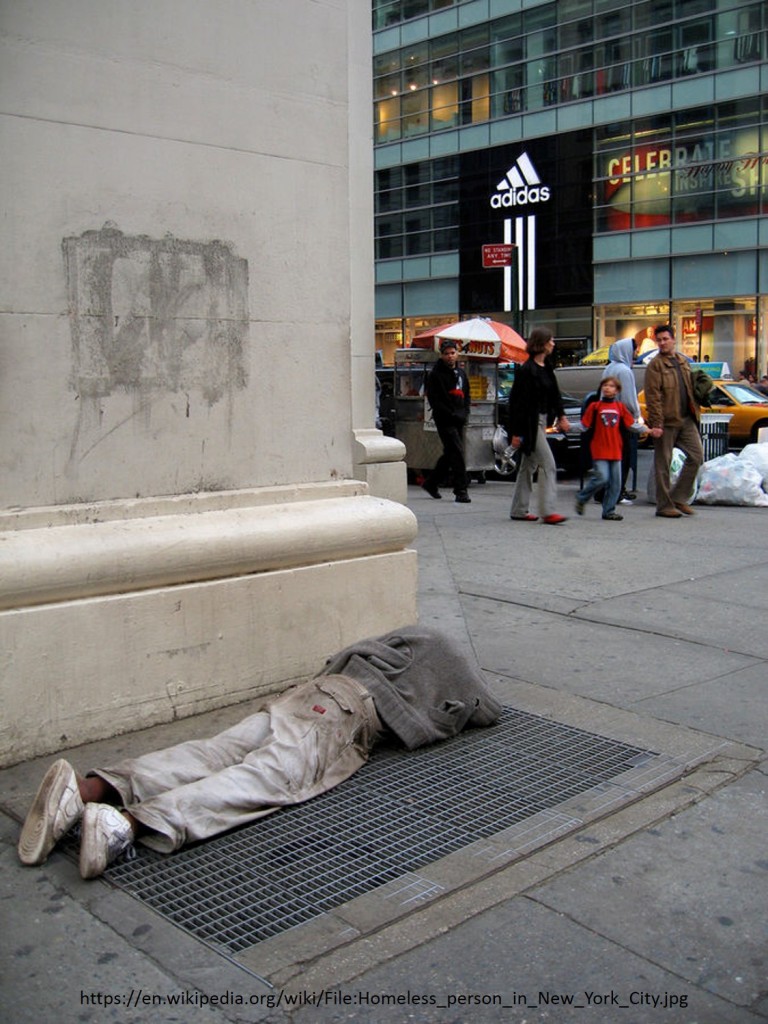
The father, who is a close friend of mine, works for a large NGO and has worked on several humanitarian projects in Eastern Europe. However, when he attempted to answer his daughter’s questions he felt empty and inept. It was very difficult for him to explain to a child how in a country such as USA, with so much wealth, there even exists the problem of the homeless. What could he really tell her? Should he say, “There are so many homeless and indigent people in New York because,as a demographic,they have no political capital?”
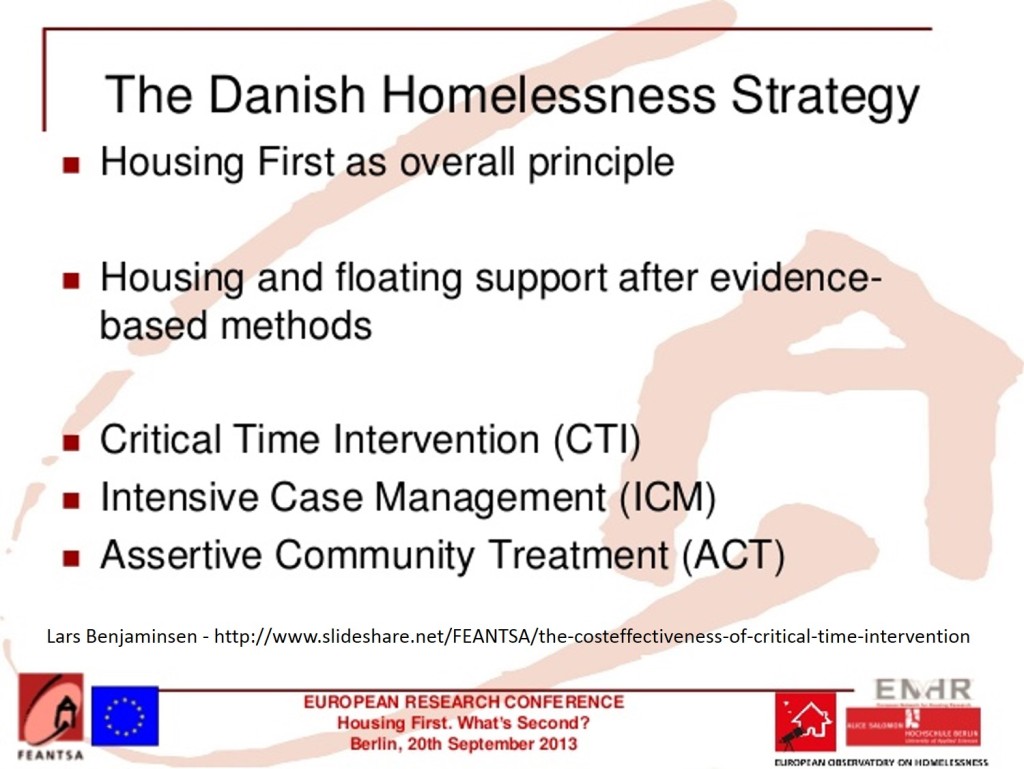
He thought to himself that our government could learn much from the Danish Housing First Strategy that essentially provides marginalized people with housing before the need for other human services are provided. Once housing is secured, social workers and therapists are assigned to address the more common problems of unemployment, substance abuse, mental illness, lack of family or social networks and prolonged poverty. By satisfying the basic need of housing, the individual has a much greater chance to address the complicated problems that caused them to loose their domicile. After an individual has adequate shelter,that individual is referred to the appropriate human service agencies. Yet the father realized in the current political climate such a progressive initiative is unlikely in America.
******

Manhattan is beautiful during the holidays, a place of bright and shiny things. People from around the world make an annual pilgrimage to consume. Nostalgic holiday music is amplified on billboards, in stores, on street corners, and on IPhones. Watching people riding in horse-drawn carriages through Central Park or walking down Fifth Avenue one can witness the epitome of brazen consumption. Eyes reflect the illuminating displays at Tiffany’s, Bergdorf Goodman and Cartier. A gregarious man stops shoppers and hands out advertising postcards for a store that sells furs on 57th Street. To highlight the New York holiday occurrence, one can share the experience of being awestruck by a very tall Christmas tree with the half million shoppers who squeeze into Rockefeller Center.
Walking down town, I smelled the pleasurable aromas from around the world but most noticeable was the familiar smell of roasting chestnuts and Douglas Fir.It looked like most of the robust trees had been picked over, but there were plenty of Charlie Brown Christmas trees available. As tourists stroll easily towards famous landmarks, New Yorkers break into holiday crowds with speed and agility like a choreographed Bob Fosse dance. At the annual Union Square Holiday Market, large mobs of people bottle-necked with cash and credit cards in their hands trying to buy that perfect holiday gift.But, like Charlie Brown, I was feeling depressed.
******
New York is a place of contradictions. As much as the city can be euphoric, it can also be grossly alienating, depending on one’s place on the socio-economic ladder. For the homeless it is a time of feeling estranged, lonely and depressed; the homeless are pariahs in America and are blamed for their misfortune.They don’t vote and they don’t have a very forceful lobby on Capital Hill, nor do they have the luxury of buying politicians. In the war on poverty, the homeless are collateral damage like mistargeted drone strikes in Yemen.
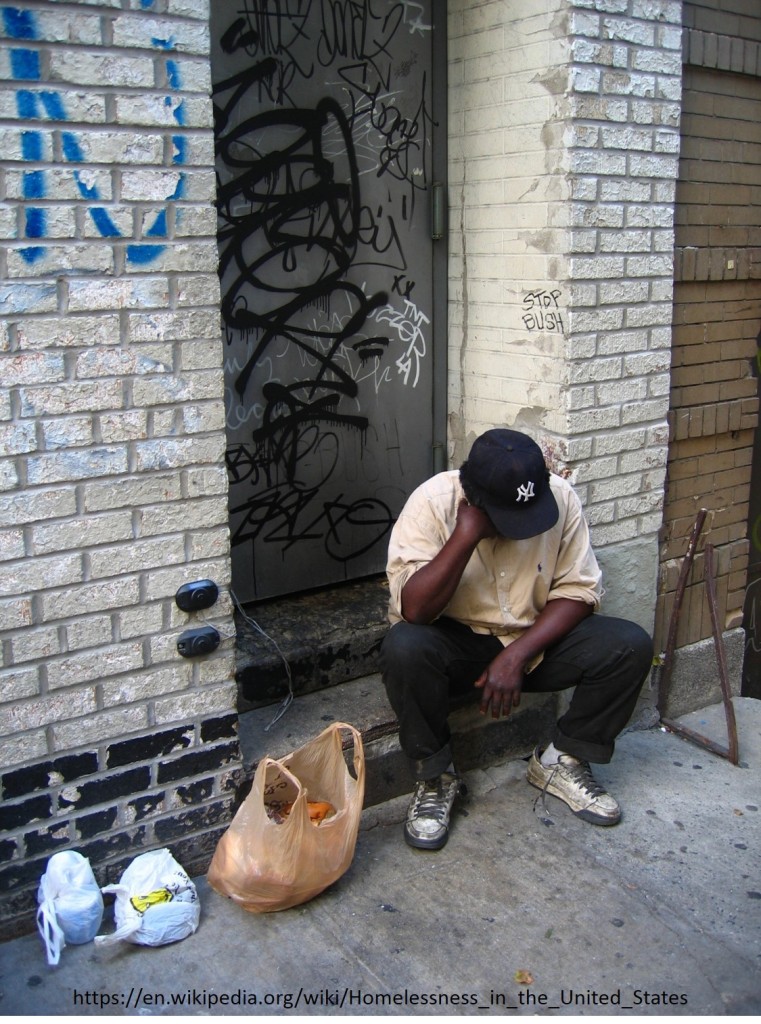
From what I observed, the homeless population has grown since I left the city over a decade ago. Through my eyes, the people living on the street seemed more lucid and some appeared to have residual traits of middle class lifestyles. I also noticed that there were more women living on the streets than before. A few steps removed from the homeless Santa Claus was a young woman who wrote an eloquent narrative on her cardboard sign describing her adventure fleeing an abuser. She was wrapped in high-tech outdoor apparel that looked highly used but expensive. She looked like she once shopped at REI or expensive mountaineering boutiques. I placed five dollars in her cup, which gave me a sense of futility. The woman was wearing Italian hiking boots, breathable rain pants and a down vest; the same kind of vest that bourgeois bohemians (bobos) are seen wearing as they adventure to Whole Foods. To the woman’s side was an internal-framed backpack with a Gortex shell snugged in an external pouch. If I didn’t know better, I would say that she took a few wrong turns off the Appalachian Trail and ended up in Manhattan. She glanced up at me after adjusting her sign. When I saw her face it was shallow and there was an emptiness in her eyes.
Every few steps I took there was another homeless person. In the East Village, I met a young man that had been hopping trains through the West.One night he hopped a freight car from Tulsa, Oklahoma, believing it was going to Albuquerque. After passing out on the train, two days later he discovered he was in Norfolk, Virginia. Before his adventure began, he was living in Phoenix where his girlfriend ostensibly kicked him out of their apartment after losing his job. He told me he was a telemarketer selling financial services to retirees, and he said that after he was on the job for a while he began to feel that the service was exploitive, so he lost the interest to sell. His numbers declined and he was asked to clean out his desk.
A few days before,he was squatting with a friend in Baltimore. They met at the day labor service, but after a night of hard drinking his friend disappeared. After sleeping on the streets for a few days he hopped a train to Newark and the next morning he lucked out on a ride through the Lincoln Tunnel on a box truck. He explained to me that he thought his condition was one of temporary inconvenience and that if he can work things out with his estranged family he will eventually go back to Phoenix for another job, but for now this was the only way that he could raise enough money to embark on his journey out West. I pulled a few bills out of my wallet and placed them in his hat. I quickly realized that if I dropped money in every hat, I would become broke very quickly, so I stuffed my hand in my pockets all the way to Chinatown where I would get my favorite dumplings.
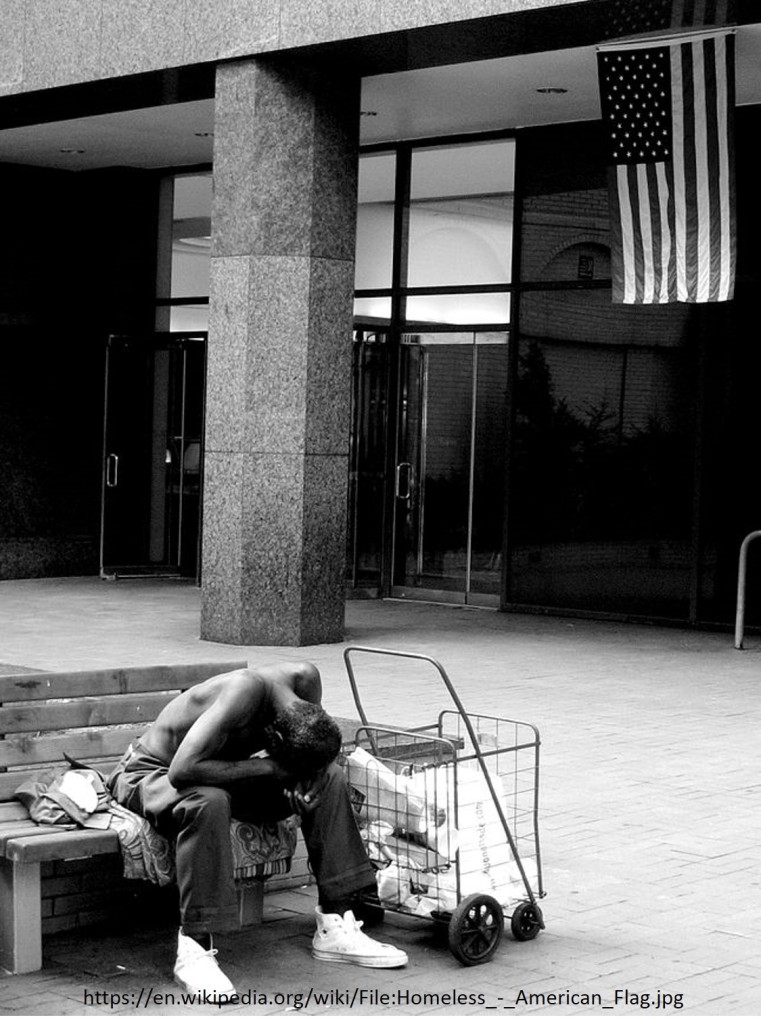
I realize that many Americans are ideologically opposed to giving money to people on the street, but it is my thought that if I can give someone momentarily relief, then so be it; furthermore, what would Jesus do? I know some that think their donations are ideally served if they donate to nonprofit service agencies that help the homeless.And yet a large portion of their funding goes to large executive salaries. (Goodwill Industries comes to mind)What I also find problematic is that many of these agencies establish their determination of eligibility on what they considerto be the deserving and the non-deserving poor.
A common story that I have heard in New York and other cities with large populations of the displaced, is that the homeless feel invisible, that people are often afraid to acknowledge them. One homeless man expressed to me that he can go for days without having eye contact with a single person. One doesn’t have to be a psychologist to understand that this lack of recognition would attack one’s personal psyche. Yet some people are simply afraid to acknowledge the homeless when they are encountered.
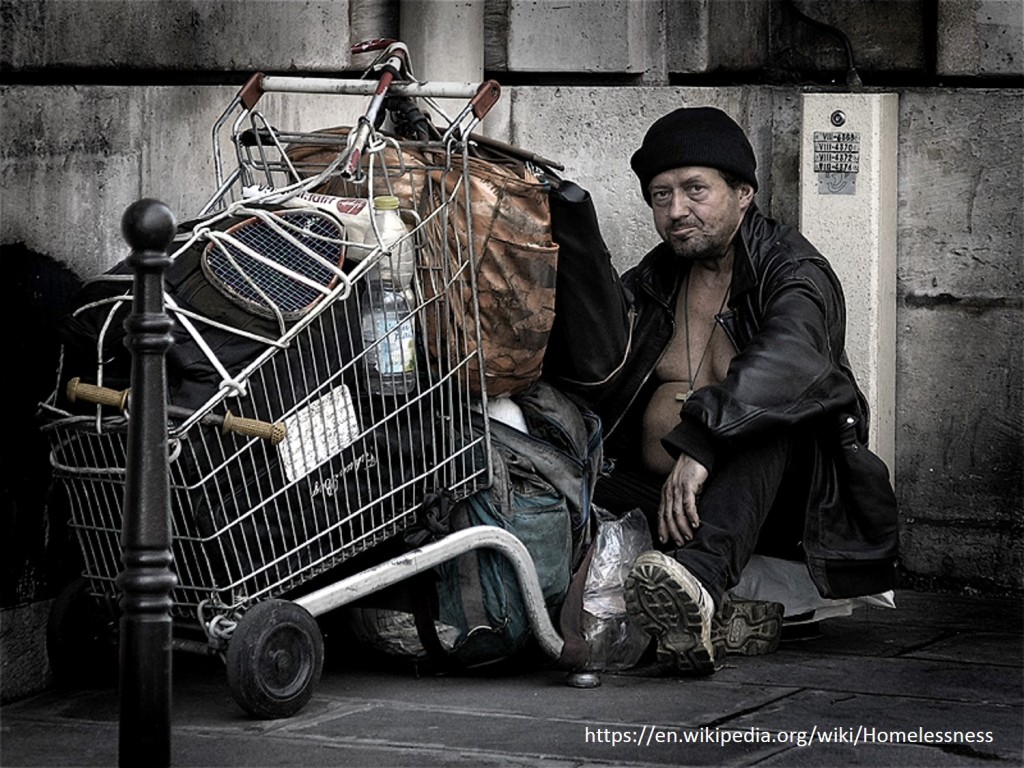
For a good part of my holiday respite, I walked with my head down internalizing their pain. I recognized the uncomfortable feelings of anger and depression I was having. Yet I felt there was something else causing me to feel this way.As someone that has been homeless in the past, I was seeing what could very easily be me. There was a time that I felt alienated from the outside world. I lost communication with my family and friends and I was living like a vagabond from one town to the next. I’ve hitched-hiked all over America and have been escorted out of towns by the police for vagrancy. This happened to me because I was one pay check away.
Yet, many people loose their jobs; many people suffer from mental illness; many people have substance abuse problems; but not all end up homeless. Based on my own experience and those I have interviewed over the years; the most underlying cause of homelessness is the lack of social safety nets or family support. When the bottom falls out and there is no one there to catch, it is highly likely that one will end up on the streets.
It really wasn’t my intent to write another essay on homelessness, but as I arrived into Penn Station,I couldn’t believe that I literally had to walk over people sleeping in the middle of the bustle.This seemed like a natural occurrence for the people walking by, but this looked like the theater of the absurd to me. We live in a society where hundreds of thousands people fade into the night in wretched despair, but is this social problem necessary? I think that if this were treated like any other public health issue, homelessness would be eradicated.
Although I have had some brief interludes of sleeping in cars and on friend’s sofas over the past few years, I haven’t been chronically homeless in over twenty-five years. I have known pain, but I have also been very fortunate. The last time that I was looking at sleeping on the streets, I was rescued by a collaborative of human service and health professionals.Yet I realize this is atypical, if I didn’t have people advocating to place me into housing, I could very well be camping out somewhere tonight.
Yet my story is an example of the possibilities when housing and services are in place. To say that I am grateful doesn’t adequately describe how I feel today. I’ve gone from isolation, despair and degradation to a place of contentment. I know that I am among the fortunate.
******
Back in New Mexico, it is snowing outside and I’m feeling the comfort of my home. Drinking a cup of Earl Grey, I notice icicles hanging from the window sill. Today, I have the option of cooking warm food; I can take a hot bath and I don’t have to plan how I’m going to relieve myself.
Now that we are on the eve of the new year it is apparent that Santa isn’t coming this year. The true meaning of Charlie Brown’s Christmas has also eluded us, there are no miracles on 34th Street and I really haven’t a clue what Jesus is going to do. However, it would be nice to see someone kick over the money changer’s tables. The powers that be won’t likely feel generous any time soon, but I figure that there’s no harm in speaking out in this alternative public sphere. My New Years wish is that homelessness and economic injustice will become a part of everyday discourse and in doing so, a major shift in public policy will take place, because everyone needs a home. We are all deserving because it is a fundamental need and because it is a fundamental need it is a fundamental right. Yes, everyone needs a home; even a smelly, drunken Santa Claus.
© Dennis Dodson, 2016
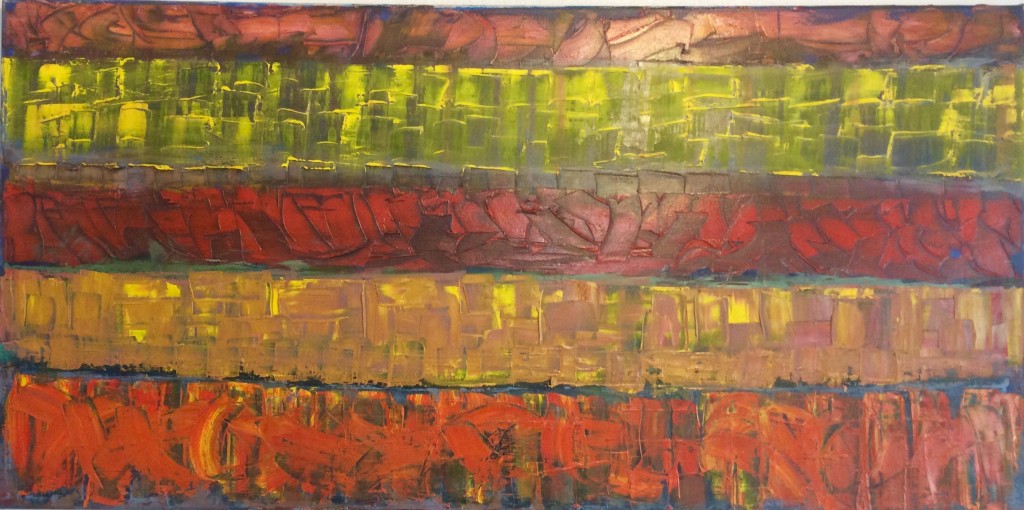
© Dennis Dodson, 2016
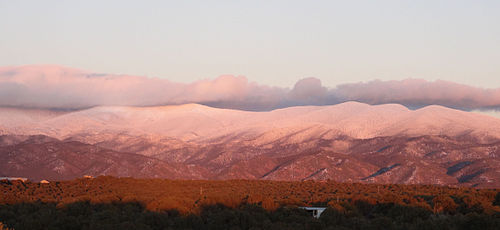
“Touch the ground of New Mexico and you’ll never be the same.”
D.H. Lawrence
Hot Roasted Chilies
Santa Fe, New Mexico sits at 7199 feet above sea level on the foothills of the Sangre Mountains. It intersects the end of the Rocky Mountains and 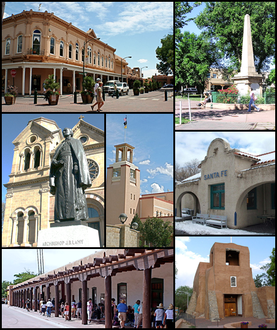 Northern Rio Grande Valley, which places it as the highest capital city in the United States. The De Vargas Street House and the San Miguel Mission house and church are among the oldest in America. Santa Fe is also the oldest city capital founded in 1610 and the oldest city in New Mexico and the United States. It enjoys a semi-arid climate with an average of 32” of snowfall annually. According to the last U.S. Census, Santa Fe is mostly Hispanic (51.1%), Caucasian (43.5%), and Native American (4%). Santa Fe is renowned for its arts and culture that reflect its Spanish traditions and that of the Native Pueblos. In recent years Santa Fe has become an offshoot of the contemporary art world. Santa Fe is one of three American cities listed with the United Nations Educational, Scientific and Cultural Organization (UNESCO). Also, according to a 140-page report by the National Endowment of the Arts (NEA) titled Artist in The Workforce: 1990-2005, “no other city has such a high percentage of writers, artists and architects”.

Although this sounds very appealing in tourist magazines, this isn’t the Santa Fe that I have come to know. In my part of this tourist town of Santa Fe, what are more familiar are drug dealers, pimps, prostitutes, Johns, addicts, the homeless and the broken; in other words the marginalized. In this part of town the waiters won’t be asking what kind of chili you would like on your cured ham sandwich because the food pantry doesn’t have fresh chilies. There is only expired food from Trader Joe’s, Albertson’s and Whole Foods Market that is so spoiled it would make a Billy-goat gag.
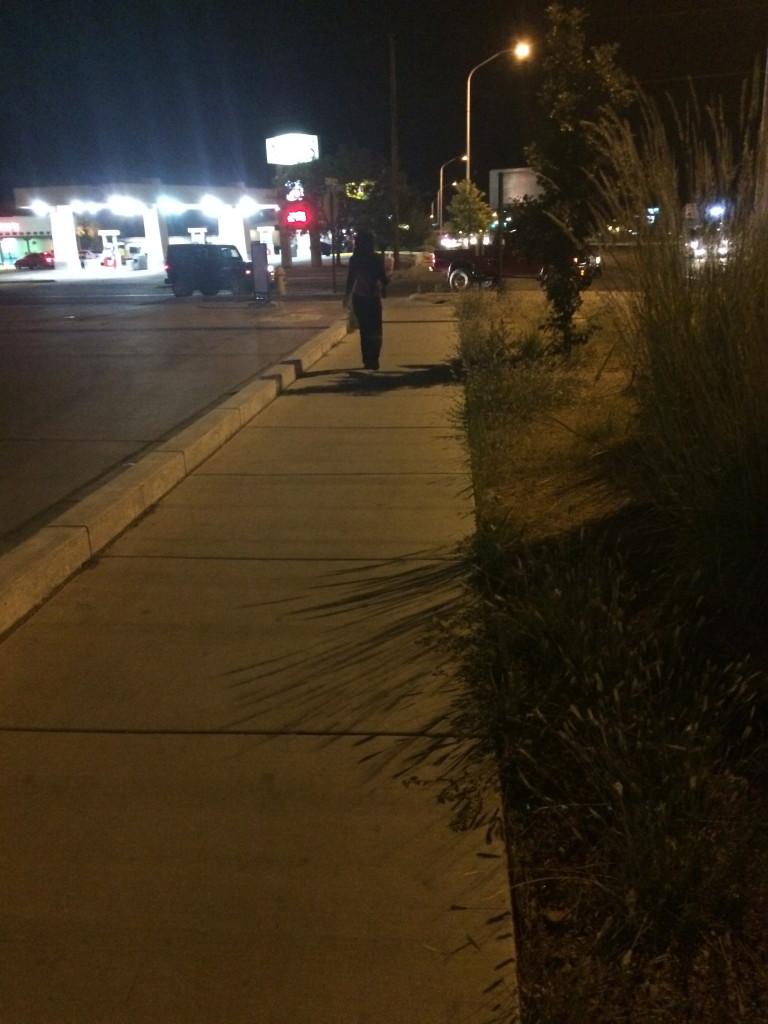
“It is not necessary that you leave the house. Remain at your table and listen. Do not listen, only wait. Do not even wait, be wholly still and alone. The world will present itself to you for its unmasking, it can do no other, in ecstasy it will writhe at your feet.”
Franz Kafka
Anywhere in America
There was a knock on my door, I answered. As it creaked open, in front of me stood a neighbor in his boxer shorts with a pair of blue jeans in his hand. “Hi do you want to buy a pair of jeans?” inquiring in a voice as if he were asking to borrow a cup of sugar. I told him that I didn’t but that he may want to ask the people down the hall. Feeling like a prankster I thought others would see the humor in this. Shutting the door I realized how advantaged I was to enjoy the daily spectacle of living with my relegated neighbors. There is a silver lining in everything and although I still mourn aspects of my previously privileged status, I wouldn’t have access to this fringed American if I hadn’t fallen so far. I think if I could, I would package this daily spectacle with the likeness of the theater of the absurd. For the poor bastards living in homogenized gated communities, private cul de sacs and vulgar mansions in the sky, fringed authenticity is unconceivable. Life on the fringes is a rare luxury for the mainstream privileged.
Minutes later I heard another knock. Expecting to see the half dressed man again, I was delighted to see Gazpacho and Jurgen. Both Gazpacho and Jurgen are typically reclusive and were paying me an unusual social visit. They were interested in what I was doing and if I had no plans would I like to grab a bite at Denny’s Diner?
Gazpacho earned his name due to his Black Irish ancestry which gifted him with dark features and a high cheekbones that gives him the swagger of the archetypal Latin lover and because he speaks Spanish better than most native New Mexicans. Although much older, Gazpacho wears the youthful aesthetic of a “post-punk” or “Emocore”. He is of slight built and wears handed down clothes from a teenage fetish boutique. Tonight he showed up wearing black skinny jeans, stage shoes and purple velvet jacket over a T-shirt that read, “Who is John Gault?” the individualist character in Ayn Rand’s Atlas Shrugged. It seemed to me that the t-shirt displayed notable irony because Gazpacho shows quite a bit of empathy towards others. Gazpacho is agoraphobic, but as I’ve gotten to know him he has begun to come out of his shell. What is more problematic for Gazpacho is a condition that causes him to have ongoing hallucinations.
A native of New Mexico, Gazpacho comes from a less than modest means, claiming he grew up receiving public assistance. His jet-black hair swerved down his face and he stood with slumped posture, as he motioned to Jurgen who was saying; “we were wondering if you want to hang out at Denny’s for a while? Don’t worry if you’re not moneyed-up we got you covered.” Denny’s is the only twenty-four hour diner in my side of Santa Fe. Contrary to the local gastronomic reputation of Santa Fe, the food at Denny’s is absolutely horrid. Yet one doesn’t go to this national chain for food but for amusing late night entertainment and to be with friends.
Jurgen, on the other hand, could be described as a tall, white forty something male from the Florida Panhandle who wears the pejorative, “wife beater” t-shirt and heavily worn leather pants. Most of the time he is equipped with multiple tools and accessories on his waist that give the appearance that he’s on his way to Burning Man or preparing for the Great Apocalypse. In spite of Jurgen sometimes being out of sorts, he’s quite charming and well liked among his cohort. He previously wrote computer code for a large security and surveillance firm; now he uses his talents to work on computers for free or at little cost for the indigent in the community.
He sat on the sofa and appeared to be more anxious than usual. One side of his face was drooping as he explained that gang stalkers were attacking him. He said for the pass few nights he had been microwaved and convinced that a person or persons were stalking him near by. He asked if I would join them because he would be fleeing town within the next two days and tonight he would like to have witnesses if anything happened to him. His behavior was very bizarre and paranoid. He unplugged all of my electronic devices and placed a piece of duck tape over the camera on my laptop.
Jurgen is a victim of gang-stalking. As a result, he suffers from episodic paranoia and severe PTSD. Until meeting Jurgen, I didn’t know anything about gang-stalking and I refuse to know much about it now because the whole idea of it hurts my head. When I first met Jurgen I dismissed him as someone who suffers from delusions. However, I began to read up on gang-stalking and he appeared to be suffering from the classic symptoms of someone that is a targeted individual. Mostly what I read suggested that gang stalking involves electronic harassment, mind control and psychological deception and is disguised to make the victim seem like they have gone mad. Jurgen stated that he has been a targeted individual for over two years and recently the harassment has become unbearable. He isn’t clear as to who is doing the gang-stalking, but he hypothesizes that it is a network of underground hackers that worked as U.S. intelligence contractors that he had become loosely involved with when he was doing high-end security work.
To most, Jurgen’s story must seem sensational but I have met people that have made similar claims. It was about ten years ago, In Washington D.C. I was at an anti-war demonstration with members of Veterans for Peace, when George Bush’s motorcade drove by. While secret service agents hung out dark SUVs pointing automatic weapons, I noticed a disheveled man wearing dessert camouflage with a Special Forces tab on his left sleeve saluting the President with his middle finger. His sign read, “End Human Mind Control Experiments”. Interesting I thought but admittedly I didn’t think the guy was completely there. Yet I wanted to hear what he had to say. He seemed anxious for anyone to listen to him.
He claimed the U.S. Government was experimenting with energy weapons to control people’s minds and these experiments were taking place in VA hospitals. He also said he had a computer chip that was invasively installed in his brain. This obviously sounded suspect, but his story continued. He explained that he went into the VA for a routine procedure and when he woke up he had a severe headache and a bandage around his head. They told him that he had fallen while he was sedated. This sounded absurd until I looked at the x-ray he showed me. What I saw definitely looked like a microchip was planted in his brain. I had no way of authenticating the image, but it reinforced my belief that in the dark shadows of the federal government anything is possible.
Back at my apartment on the other side of Santa Fe, I put my shoes on; and the three of us exited down the less traveled stairwell. It was midnight when we were greeted with a smoky mist in the air. We walked across a dark budget hotel parking lot before reaching Cerrillos Road or what we aptly named the Walk of Shame.
As a few motorists pass by one can often feel invisible, but when there is a glance of recognition of a human figure, it is usually accompanied by an expression of contempt as they drive off to their middle-class neighborhoods. They won’t be stopping to shop here because the only thing open at this hour is the commodity of vice, a market of the cultural underground, a market for the marginalized. At this time of night only the lower reaches of the underground food chain are walking the street, “chasing a hit”; which isn’t uncommon in any American city. Most often what one sees are people in a state of suffering. When strolling Cerrillos at night, one can feel a spike of adrenaline; the vice is so dense it weighs heavily on your skin.
Here one gets the overwhelming sense of desperation of Santa Fe’s most vulnerable, as is demonstrated by the foolhardy attempts to earn a dime. People with hopelessness in their eyes desiring momentary escape from their reality.

*****
Practices and Power of Panhandlers, Prostitutes, Pimps and Police
Shortly after reaching the boulevard, I was aroused by the scent of intoxicating perfume. Approaching us was a traditionally attractive young woman with blonde hair and blue eyes. She was wearing day-glow hot pants and a low cut blouse that revealed her cleavage. In a soft Southern voice she said, “Please can you help me? My fiancé got mad and left me stranded here and I’m trying to get back home to Texas”. I asked why the boyfriend left. She explained that he got angry with her because she was talking with another guy that invited her to “get high” in a hotel room. When her fiancé heard of this he had called her a whore and disappeared with their camper van. “I’ve been here for three days with nowhere to go; could you help me with some spare change”. Her face was angelic yet her eyes sad and hopeless. You couldn’t avoid but wanting to help her, but tonight I kept my wallet in my pocket.
She didn’t recognize me, but I had met her a couple of weeks ago panhandling in a supermarket parking lot when I gave her a few dollars. Her demand was the same – a few dollars – except she said that she had to see her mother in an Albuquerque hospital. Although I don’t have a problem giving people money for some instant relief from a cruel world, on this night my pockets were slim. I only had a two-dollar bill that I had been holding on to and I wasn’t willing to give it up. Finally she begged Jurgen: “Please, I’ll blow you for ten dollars.” He reached down to his pocket and gave her a five-dollar bill. She thanked him and quickly ran off.
We continued to walk and came to an intersection. A panhandler sitting in the median strip apparently didn’t know what time it was as he appeared to be going into a junkie nod. His sign read, “Don’t worry I’m not going to wash your windows”.
As we reached a dark car lot, I began to feel adrenaline rush through my body and my hair was standing up on my neck. The wind kicked up and we could smell the raw odor of urine. Out of the darkness emerged a large moving figure that had been urinating behind a pick-up truck. He saw us and quickly jumped into the truck. I don’t think that we are an intimidating crew but given the circumstances and the hour one can understand why he was attempting to maintain some distance.
In the adjacent parking lot and in front of a traditional New Mexico restaurant, we observed a peculiar couple walking arm and arm toward a large passenger van. The man looked undistinguished, short and appeared to be in his mid-fifties. He was partially bald, had a stout figure and his stomach hung over his belt. He was helping a woman who appeared out of place in this part of town, step into the van. A buxom blonde over a foot taller than the man, she was wearing a pair of designer high heals and a white tailored dress and a shawl wrapped around her shoulder. She reminded me of the iconic Marilyn Monroe photo, “Marilyn in White” by Hollywood glam photographer Bruno Bernard. The man looked at us very nervously as he jumped into his van; he then quickly accelerated from the parking lot screeching his tires along the way.
 In the distance we could see a police car with its flashers on. When we walked up on the police car, in front was a late model Japanese sedan with four college kids sitting on the curb. While they were sitting, two police officers were searching in the car with latex gloves and flashlights. None of the students appeared to be drunk or high, but they all had fear in their eyes. I asked Gazpacho if he thought I should video record the scene. He said “absolutely not” as he increased his pace. Jurgen and I almost had to run to keep up with him, I asked why recording would be a bad idea? He said, “Don’t you know that cops kill people for recording their actions?”
After walking about a half mile we came to a parking lot where there was a buzz of activity. After seeing several junkies, drug deals and “working girls” it was apparent that this was an open-air market that challenges public decency and criminal laws. The energy in the adjoining Allsups parking lot was much alive; it was as if we were watching a well-rehearsed dance. I counted twenty people trying to make their “connect”
Then three police cars pulled into the parking lot on the Allsups side. By the time police got out of the cars, the area had cleared except for a large statured panhandler who was unkempt, and had no shoes. The police had their weapons pulled and asked the panhandler for his name. The panhandler murmured something and then a thick police officer with a bulging neck, quickly grabbed the panhandler, slammed him up against the side of the building and placed him in handcuffs. Yet oddly a few minutes later they took the man out of the cuffs. On the other side of the car the police seemed to be having a conference among each other and not really paying attention to the panhandler, so covertly I asked the panhandler why they were detaining him. He only said, “some bullshit I didn’t do”.
Before I could be noticed, I covertly backed off from the scene. Gazpacho, then shaking his head, said to me, “You’re really trying to go to jail tonight.” And no sooner did those words come out of his mouth; the panhandler ran by with two undercover police officers chasing him on foot off in the distance.
Jurgen and Gazpacho were already in front of the diner assimilating with homeless people with overstuffed daypacks dressed in multiple layers as if they planned a long evening outside but had no place to go. I saw Gazpacho give one of them a cigarette, while Jurgen was having a conversation with another. Jurgen introduced me to a friend that he just met. His friend was named Arthur and he was smoking a joint. He asked me if I wanted a hit. I said, “No I’m allergic to weed”. He replied, “This isn’t weed. This is medical marijuana; it will take away the pain of boredom.” I thanked him but said, ” No thanks, tonight I think that it may cause me to break out in handcuffs.”
As we entered through the door of the diner, a young man with a sunburned face carrying a large satchel headed for the restrooms. He had a pungent aroma that followed him, with the markings that he was one of the 1500 homeless people on any given night in Santa Fe, New Mexico.
One would think from all the cars in the parking lot, the diner would be full, yet as we entered into the harsh florescent light it was freakishly empty. The one waitress, told us to grab any seat, so we parked in a circular booth in the corner. This was perfect because none of us wanted to have our backs exposed to the front door. It was a good perspective and range to see in the kitchen and hear conversations at the front counter. It was also a good vantage point to watch the shared parking lot at the Allsup’s next store.
A thirty-something Native American waitress came to our booth with menus and water. She took our drink order when I couldn’t help but to noticed she was wearing arm warmers under her Danny’s uniform. Curiously I asked, “What’s the purpose of your extended sleeves? It looks like that you would be uncomfortably warm wearing that inside”. She confessed that she was a little uncomfortable, but she was instructed that it is corporate policy that all front floor staff must hide their tattoos. The waitress said that she was “in the weeds” – a term used in the restaurant business to let colleagues know they are feeling overwhelmed. She took our menus and headed toward the kitchen. Shortly, after we placed our orders, the man with the sunburned face came out of the restroom – clean shaven, wet hair, wearing fresher clothes and a trail of cologne followed him out the front door.
At the counter was an old cowboy who was oblivious to his surroundings and an androgynous looking woman with her arm wrapped around a waitress who I heard say that she was finishing her shift. Sitting on the edge of the counter was another woman with high-healed boots, mini-skirt and open mid-drift top. Her hair was dark and she was more than six feet tall. She also had unusually large hands, strong facial features and what appeared to be an Adam’s apple. She was sitting next to a young Latino wearing a thick gold chain, tank top, basketball shorts and white Michael Jordan’s. He was also covered with gang tattoos. It seemed obvious that he was paying for her meal because the tall women had her hand on his leg under the counter. They were in intimate space, so I figured either he was her pimp or date.
The cowboy next to them didn’t seem to notice what was going on, only eating his chicken fried steak and drinking Denny’s wretched coffee. With his tall cowboy hat and a rodeo buckle he was staring off in a place a thousand years away. Attempting to draw him in on a conversation I said, “Sir, would you recommend the chicken fried steak?” Seeming pleased that I was addressing him he responded, ”Very good I get it almost every night; so yes I would.”
We had a cordial conversation, before I asked a more difficult question. I said, “Every time that I come here I see you here, why is that”? He opened up easily, saying that about a year ago the banks foreclosed on his property and he lost everything he had built over the past twenty years. He said it was really difficult for him because a year before losing his property, his wife had died suddenly from a heart attack. He added that although things are difficult, his faith gets him through each day. “So the real reason I come here is so I can spread the Lord’s word. There are a lot of people out here tonight that are lost and do not know God’s promise so I share it with people that I meet. By the way have you accepted Jesus Christ as your personal savior?” I told him that I would talk to him about that some other time and moved back to the booth where Jurgen and Gazpacho were still waiting for their food, which was nearly an hour after placing our order.
In the booth next to us was a nondescript white male wearing a baseball cap, a Denver Bronco’s t-shirt and cropped mustache. He wasn’t paying much attention to our table, but he did seemed to be very interested in the people in the parking lot and those in front of the Allsup’s. As I began to observe him watching the parking lot dance, I had the strong feeling he was an undercover cop. Since the police drove off, the parking lot was full again. This was a cat and mouse game that we watched several times before the night’s end.
The mustached man pulled out his phone and made a call from the booth. Simultaneously several unmarked cars raced into the parking lot and grabbed another young man that had the appearance of a “Cholo” (Latino gang member). A small woman was in one of the cars and seemed to be identifying the man from inside the car.
We also were assigned a new waiter, which made Jurgen more paranoid than he was. Something was odd about this waiter. He was wearing an illuminate T-shirt and an undistinguishable badge around his neck. Mustache Man nodded to the new waiter as he walked out the door without paying for his bill. I could see sweat rolling down the waiter’s baldhead as if something were making him nervous. This also aroused Jurgen’s anxiety because the waiter appeared out of nowhere. Two orders came out, Gazpacho’s, and mine but Jurgen was so freaked out that someone was trying to poison him that I gave him my plate and took his, which came out a minute later.
At this moment there was no enjoyment in our meals. Jurgen was convinced that there was some coordinated plan to poison him. He was really triggered and ready to flee. We threw our money on the table and briskly walked back to the apartment building without hesitation. The parking lot was covered with police, so the dance moved to the Super-9 Hotel across the street. A successful evening for an addict would be to panhandle enough on the street to score a good hit, find a cigarette and maybe squat in a room at this cheap hotel.
Lagging behind my two comrades and enjoying a night of voyeurism, I jumped when someone crept up behind me said, “Yo, you have a dollar?” Quickly pivoting to face him, I assured him that I didn’t, but he didn’t seem to be convinced. He continued to insist and follow me with desperation in his voice. I could feel him sizing me up, wondering if I was someone he wanted to take a chance with. My heart began to race as I was preparing for him to come my way when I shouted, “Back the fuck off!” Startled by my alarming cry he quickly retreated across Cerrillos Rd.
Gazpacho and Jurgen turned in for the night almost immediately. I saw Gazpacho the next morning. He said that Jurgen had severe abdominal pains and had to go to the emergency room last night. After several examinations and tests they determined that Jurgen had food poisoning but also an interesting anomaly. According to the tending physician, the lining of Jurgen’s stomach had been removed and was a symptomatic condition of a cancer patient who had been through intensive radiation treatment.
*****
In a world that seems remote, rejecting and futile, those that find themselves on Cerrillios Road at the bewitching hour are searching for an  escape from their restrained lives. The commodities on Cerrillos Road are vice and the residual byproducts of American culture; although there is an illusion that value resides in vice, rather than social relationships. Some of the common themes of this marginalized population of the night are a descent of prevailing middle-class values, yearning for life from the ruptured spirit, and the ever-present battles against modernity and popular conformity. However these hopes have faded for most because for them they are caught in the grip of alienation and addiction.
From what I observed on the Walk of Shame, there is an immense awareness of life’s inherent anxiety. There’s a firm American belief that their salvation is in their own hands. However, with this vast penetrating alienation the actors believe that they are living in a world that they don’t fully belong.
As Jurgen put it, “we have grown up on pancreas and lies. Even our minds and hearts are strangers. For most of us we are lucky if we find out who we are.”
© Dennis Dodson, 2015

Author Notes
This is an ethnographic sketch or what anthropologists refer to as “field notes”, on one night in a northern New Mexico town. This inquiry gazed at the marginalized, the relationship between cultural practices, power and broader social processes, the role of addicts, panhandlers, dealers, prostitutes, solicitors, cowboys and the interplay in between; embedded in a theories of commodity fetish and alienation.
In the broadest sense, ethnography involves an analytic description of behaviors that characterize cultures and particular social-cultural groups. Although ethnography is a method of descriptive analysis of beliefs that generate behaviors of various groups, the nexus of this is to know who the actors are, what are the reasons of their beliefs and how do they feel about their relationship in the larger reality.
To be a participant observer is to understand this life by participating in it, but in the case of one night in the field, the best one can do is to gain an empathetic understanding through passive participation. In a scientific study one would hope to spend months, maybe years in the field and obtaining multiple interviews, recording events and finding reliable informants, but as a one-night observer, thick description is slightly out of reach.
Images Courtesy:
All photographs provided by Dennis Dodson, except 3 images of Santa Fe including the Sangre Mountains, San Miguel Chapel and montage of Santa Fe’s Downtown Area from https://en.wikipedia.org/wiki/Santa_Fe,_New_Mexico

X
X
© Dennis Dodson, 2015
“Lovin” up on my Bike
This is a story of how I ended my relationship with the automobile and revisited my love affair with a bicycle. Although I have ridden bicycles for their pure utilitarian application — in college, and when I lived in various resort towns — my primary obsession with the bicycle was formed through recreation and competition. Admittedly, I thought that this was a shallow relationship, but over the years it started to show signs of depth. And now that we’re both a bit older, our relationship has grown into something more authentic.
The Great Big Bike Lane
When I decided to challenge America’s automobile obsession I was living in the center of America’s quintessential motor metropolis, Los Angeles (L.A.), California. A metropolitan area of over ten million, L.A. is statistically the worst city in the United States for gridlock and among the ten worst places for automobile traffic on the globe. Depending on which report you read, commuters experience between 64 and 100 hours of traffic delays annually.
Although I only drove a steel coffin (automobile) briefly, I had horrendous experiences with daily traffic. Most of my travels were in the Valley (San Bernardino Valley) traveling from  Glendale to Altadena, Burbank, Eagle Rock, Silver Lake and Hollywood but immediately I was perplexed to as how long it took to travel a few miles. Interesting enough when traffic was backed up, I often made better times on my bicycle. Therefore, I reasoned if I surrender my car, traveling by bike wouldn’t be all that problematic.
I called the American Fargo Union (Bank) and asked at which branch do I drop the car off? They placed me on hold; and twenty minutes later a customer service manager explained it didn’t work like that. I had to continue to hold on to the car until I had defaulted on my loan. It wasn’t until after I default that they would send an “agent” to retrieve (repossess) the car.
Two months later, around 3:30 am on a Monday morning I heard a wrecking truck in the alley behind my Burbank flat. This didn’t alarm me since I had already told them where they would find the vehicle. I was expecting them earlier, but nevertheless I was glad they showed. The young dudes, who had come to repossess my car, looked a little rough around the edges, and when I came out into the alley to take a final look at my car, I startled them with my presence. The one who was verifying the VIN# dropped his flashlight. I walked around the steel coffin once; I signed some paperwork; and the car disappeared into the opaque night.
I had surrendered my car to the repo man, and the strangeness about this action is that I immediately felt liberated from the burden I had been living with. Since my career imploded and my finances went south, the once modest utilitarian vehicle morphed into an unnecessary consumer fetish. The end was near and I knew it. To try to hold on to the car would have been absurd. The car had to go just as quickly as my income did a few months prior. What’s more, except for trips to the grocery store I was rarely using it.
Bike Nerd
The bank and repo man gave me exactly the nudge that I needed. And even though, I’ve been a bicycle nerd for approximately forty years, this turned out to be a different undertaking entirely; I’ve entered a completely new genre of bike-riders. I ride slower much of the time, I no longer wear Spandex and my bicycle is much heavier. I’ve now become one of those old dudes that I use to speed by on my lightweight race bikes when I was a kid. Their bikes where usually outfitted with racks, panniers, leather Brooks saddles and they were spinning out on high touring gears. Some wore business suits but most often they wore cumbersome first generation Bell helmets and bright orange safety vests. Although English hand-made saddles have become fashionable again, the commuter aesthetic has fortunately changed immensely since the 1970’s.
While I do believe that bicycles are one solution to our many transportation problems, I am not advocating for everyone to ditch their automobiles (although I still argue “cars are coffins”). In some places and instances automobiles may be useful. However, I do believe that there are some places in the United States and around the globe that petroleum powered automobiles are likely to become relics of the past. In casual observations, it also seems that young people in particular are abandoning the automobile even in cities like Los Angeles.
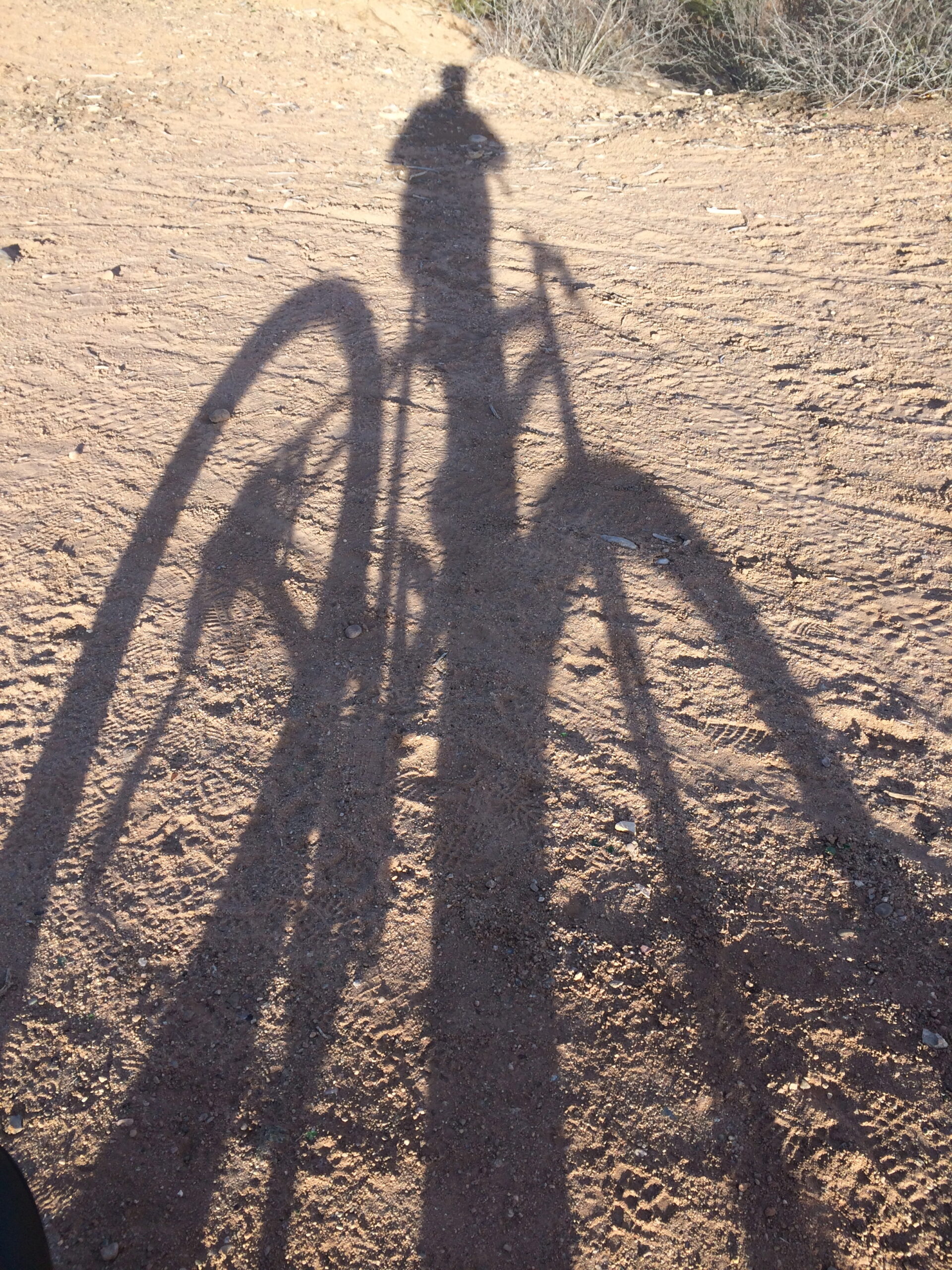
Ghost Bikes and Aggressive Motorists
While my original intent was to ride in Los Angeles for a year, I wasn’t certain that I would survive the project. I was riding in excess of 200 miles a week and each day I would have multiple incidents where a vehicle would nearly collide with me. Although L.A. has a strong initiative to create more bike lanes and host a very successful Bike to Work Week, there is huge resistance to a bike friendly infrastructure.
Los Angelina’s love their automobiles and many are unwilling to give up any portion of public roads for bikes. Several cyclists claim there has been a reactionary response to increased bike lanes and bikes are viewed as an element contributing to worst traffic. I too have had cars swerve into me in the bike lanes and speed up on my rear as I try to make a left hand turn, but the most common thing that motorist do is squeeze you out of the lane.
One of the times this happened, was while I was sharing a pace line with another rider. An aggressive driver nearly hit the other rider and it nearly turned into a physical altercation. The driver scurried out of his car and the cyclist was off his bike. Seeing the twitch in the driver’s eye, I immediately yelled THINK! The consequences would have been high and the older driver was clearly outmatched. A violent confrontation wouldn’t benefit anyone.
Unfortunately many motorists don’t realize their multi-ton vehicles can be catastrophic for any rider. Yet over the years I have been in situations where people have used their cars as weapons. Once I was run into a ditch off the road when a car gave me a “right hook” (the act of taking away a cyclist’s right away when making a right hand turn). I’ve been hit three times by cars over the years and had a gun drawn on me in one incident. Once I survived relatively unscathed, but twice I had to visit the emergency room. Motorists of this type either want to disconcert riders or they literally want to cause bodily injury.
 In addition to having near misses everyday, I was reminded of those dangers by seeing Ghost Bikes on my daily routes. Ghost Bikes are bicycles along the road painted white, usually locked to a street post and a little plague is installed with information of the fallen cyclist. Ghost Bikes initially started in St. Louis, Missouri and in 2012 there were reportedly over 630 Ghost bikes around the globe. Since 2012 accurate data hasn’t been taken.
I’ve seen Ghost Bikes in several major cities, but I didn’t pay much attention to them until I
saw them in high frequency in Southern California. I’ve seen ghost bikes in other cities, but the sight of so many on my daily rides, had a chilling effect.
In 2014 the Los Angeles Times reported on a recent study by the Governor’s Highway Association. According to the article, “If you are going to be killed by a car while riding a bicycle, there’s a good chance you are male, older than 20 and living in California or Florida.” Between 2010-2014, 338 cyclists in California and 329 cyclists in Florida were killed by motor vehicles. During that time bicycle-motor related deaths have increased by 16%.
Bike Trains
I have seen some creative ways to solve safety issues, bike trains are one of them. LA Bike  trains currently have ten routes and make commuting a little safer. Bike trains are a method of occupying a lane in the road with the collective power of multiple riders. It is like having collective bargaining power on the road. They form in residential neighborhoods and riders join each other for their morning commute and back. As they reach their destination they peal off, just like a train stop. They coordinate with other commuters to take the same route, same time and actually have lead ”train conductors”. . In a large group motorist tend to “behave”, but certainly this doesn’t solve the problem of the inpatient motorist.
Critical Mass Cycling
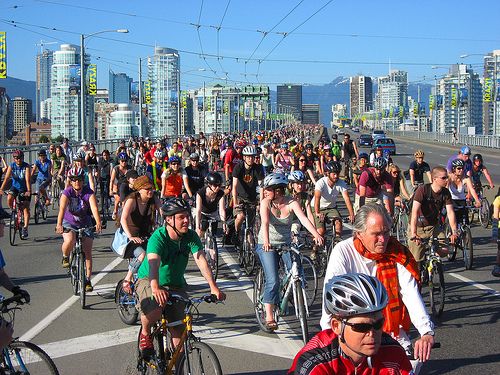 Critical Mass rides are environmental and bicycle activist that celebrate access to roads and streets with the concept of safety in numbers. It is a strategy for public awareness that bicycles are on the road and for some, a voice of dissent, often causing traffic jams and having motorist yield to the cyclists, requiring detours. Starting in Stockholm, Sweden in the 1970’s there are now 300 cities worldwide hosting Critical Mass rides. Typically they are held on the first Friday of the month during evening rush hour traffic. Probably the most notorious critical mass was in New York City during the 2004 Republican National Convention. I was a part of this spectacle and witnessed several random cyclists get beaten and arrested. There were over 260 arrests and New York City had to pay out nearly a million dollars in a civil lawsuit.
Enchanted Something or Another
It is now early summer and I’m back in New Mexico. I’m taking refuge underneath a large  juniper tree; it is going to be a long summer. The mid-day desert sun reminds me how light-colored my skin is, unlike the Navajo or those of Conquistador ancestry. I’m riding back to Santa Fe from Eldorado on a railroad grade trail. This was my daily commute for several months and today I’m just riding from a routine medical appointment. I was admiring the expansive panoramic view, wild flowers, bright cobalt sky when I heard a clunk! My left crank arm and pedal fell off. I stopped and opened my daypack only to discover that my multi-tool kit was at home because that morning I had switched bags and failed to put the tool-kit back. With no Allen tool I was forced to ride the remaining five miles with one crank and pedal. At first I cursed myself, just the thought of having to do this seemed formidable; but then it occurred to me that I have done this before. Why worry now?
The Affair Continues
It didn’t matter that my pedal fell off because I was with my bike. After all these years together my bike never disappoints. My affair with the bicycle has been going on for more than four decades and the positive memories abound, with just me and my bike taking on various challenges: forty-mile commutes, twenty-four hour races, blizzards, desert heat, epic rides on the backbone of the Rocky Mountains. When I feel the endorphins, everything is placid in my world.
And I still remember vividly when I was a boy and my father took the training wheels off my first bicycle. On my first-ever real bicycle ride, I rode right into my neighbors freshly painted garage door. I fell down, hurt myself. However, the thrill of riding a bike motivated me to do it again. That door could not stop me. Little did I know that one day this would become a metaphor for my life; and despite the odds, I would do it again and again and again. This would become My Cycle.

© Dennis Dodson, 2015
References for Images
Bike Train image from
http://www.theguardian.com/environment/bike-blog/2011/jun/10/brighton-bike-train who attribute Photograph to: www.biketrain.org
Critical Mass Cycling
http://vorg.ca/3046-Vancouver-Critical-Mass-Bike-Ride
https://en.wikipedia.org/wiki/Critical_Mass_(cycling)

x
x
© Dennis Dodson, 2015
The world is growing ever more dangerous and our defense spending is wholly inadequate to confront the danger.
Tom Cotton (R), US Senator, Arkansas
As the sun burns off the morning haze, I browse through the daily news and blogs to see what is happening around the globe. I discovered that yesterday protestors shut down the European Central Bank over austerity measures; Republican Senators overstepped Executive power and attempted to block anti-nuclear negotiations with Iran; a day before the Israeli election, Benjamin Netanyahu said there will be no two state solution for Palestine and the new conservative budget planned to cut more money from the poor because an expansion of $485 billion military budget is not enough.
The most shocking thing I read online was from Tom Cotton, Republican freshman senator from Arkansas. This quote below was circulating among several accounts on Facebook and Twitter. Alledgedly in a floor speech on March 16, 2015 he said, “We should triple the amount we spend on defense and quadruple what we spend on prisons. Why do we pay for food stamps? Welfare? Medicare? They don’t keep us safe. If anything they nurture the most dangerous elements of society.”
About 57% of the U.S. budget is already being spent on the military (not including Veteran’s Affairs) and yet less than 1% is spent on food. However, when one considers that Mr. Cotton and his ilk perhaps receive large sums of money from war profiteers and over one million from the Israeli lobbying group, Emergency Committee for Israel, his words may not be exactly what is in the social media quote but his motives are abundantly clear. Cotton made the headlines recently with an open letter to the Iranian regime warning that Congress would not approve any nuclear deal they negotiate with President Obama.

I was recently awakened to the reality that the world is also unfolding here in my small transitional housing space in Northern New Mexico for the homeless and mentally ill. For the second time this week, an ambulance raced into the parking lot with lights and sirens. Several paramedics jumped out of the vehicle with mechanized precision. They pulled out their equipment along with a stretcher, while suddenly two police cars came to a screeching halt.
I try not to look too obviously, but I am curious. I look a few minutes later to see they are bringing the stretcher without a person. I hear a noise in the hallway. I peek out and see several police officers talking to the paramedics. I see Navajo George, coming out of his apartment. He walks toward me and says, “Peter is dead”. I must have had an unresponsive look, because he said again, “yes we found him dead sitting in his chair”. Two women from the third floor appeared and one of the women began to cry when she heard the news.
Peter was a relatively reclusive man of only thirty-seven years old. He was an Iraqi War Veteran and it was rumored he suffered from posttraumatic stress disorder (PTSD). Peter had very sad eyes and according to some he never recovered from his mother’s sudden passing and it was said that he only had a few close friends. I didn’t know him very well. According to Navajo George he was trying to get sober by going to Alcoholics Anonymous meetings.
Although Peter had all the markers for someone at high-risk; sudden deaths are always unexpected. Of course the first thing we want to know is if his death was preventable? Yet as the chill and stench fill the air we all gaze at our own mortality. The medical examiner remained mum, so the cause of death is undetermined until the autopsy reports are made public. Caseworkers assured everyone that there was no foul play. And although no one has said it out loud, I have to believe that behind everyone’s mind is the question of whether his death was suicide.
Residents of this building (including myself) are all enormously vulnerable. Navajo George went back to the reservations for a few days, because in his culture he must be purified after an unnatural death. He said that all of Peter’s things would have to be burned and then the smell of death would leave in four days. I don’t think Peter’s clothes were burned, but I do understand the desire to be purified.
According to the World Health Organization, the majority of people with mental and psychosocial disabilities are living in poverty. They are often in poor physical health and are subject to more human rights violations. “People with mental and psychosocial disabilities are a vulnerable group and as a result of the way they are treated in society… they are subjected to stigma and discrimination on a daily basis. They experience very high rates of physical and sexual victimization.” (WHO Website)

There is an obvious link between mental illness and poverty as seen in the members of the transitional house where I reside. They struggle in the staunchest way. The general health of this population is poor, brought on by years of stigma and neglect. I’m not saying anything new here but as many epidemiological studies have concluded, poverty is a form of indirect violence. In this building of thirty-four residents, I watch the continue struggle for subsistence which immensely contributes negatively to their mental well-being.
The residences in this building look to each other for support, because the system doesn’t support them adequately. All it takes is one bureaucratic error and one can be without food or general assistances. I met one such person that had his food stamps cut off for four months due to lost paperwork. I asked him what he did in this case; he said he’d go to the food pantry every two weeks as allotted. He said that most of the food is expired or spoiled, but at least it is “something until times get better”.
It was only a few months ago that I was in the darkness and wasn’t sure that I would survive another day. I think most people in this building have experienced this darkness in some way. Our stories are ones of infinite resiliencies. Yet we have no delusions. We have higher rates of mortality then most but as with poverty it is something we learn to accept, because we can’t buy a U.S. Senator to speak for us.
*****
Speak Up… for those who cannot speak for themselves, for the rights of all that are destitute.
Proverbs: 31:8
Attacking the poor and disabled is nothing new. Although there is no evidence to support such claims, right-wing media and politicians have created the myth that social programs that help the poor, elderly and disabled are plagued with fraud. As Senator Rand Paul (R-KY) argues, people are “gaming the system”. Fox News contributor and neocon Charles Payne suggests that disability recipients are collecting checks under false pretenses. He referred to the program offensively as “the crazy check”, suggesting that people only pretend to have mental disabilities to receive a check. He doesn’t mention that guidelines for eligibility are very strict and according to the nonpartisan Government Accountability Office, less than .4% of beneficiaries are likely receiving bogus payments. I wonder then, how does this compare to the fraud found in military contracts?
In an action of class war, in their first days in power the 2015 House came up with a rule that would prevent routine reallocation to the Social Security Trust Fund. Scheme for this is to slash the Disability Fund. Under this new rule the Disability Fund will dry up in 2016 unless it cuts the benefits of 11 million Americans by 20%. This is an affront to working people who have paid into the trust. This long-term strategy to privatize Social Security and offer more tax breaks to millionaires and corporations is another step toward breaking the poor and middle-class.
Meanwhile as a “dangerous element of society” my therapist and psychiatrist advised me to apply for Social Security Disability and insisting that my mental health become my full-time job. If anyone knows how this process works, they know that it can take several years before receiving any benefits and during the application process, one isn’t allowed to work even part-time or they are quickly denied. This forces many people into a more extreme circumstance of poverty. In my own situation I wouldn’t have considered stepping into this “bureaucratic iron cage” and imposed poverty if it wasn’t for my most recent psychotic break.
After six months of waiting, I just received a date for a psychological evaluation from someone outsourced by Social Security. This begins the initial course for determination. I commonly hear that I should expect to be declined initially because almost everyone is. One of my cohorts down the hall in the transitional house, called this “a system of discouragement” and that most people don’t endure the long appeals process. Some applicants hire specialized attorneys, but I have received mixed reviews whether it is helpful or not. Essentially, they file all the paper work and take a portion of the settlement. However a resident who lives on the floor above me, hired an attorney and was recently approved for SSDI after five years of appeals.
While in the process of waiting for Social Security, I am living off $195 in monthly food stamps and $245/month in general assistance. The general assistance goes to pay for HUD supportive housing and what is left over I pay for provisions like toiletries, bike maintenance and laundry soap. Sometimes I feel decadent and buy a taco off a roadside food truck. As I immerse myself in the so-called culture of poverty, I wait intently to find people who are “gaming the system”. Personally I don’t know where the incentive lies and at least in this small sample population, I don’t see anyone willing to play that kind of game. What I do see is the trauma caused to vulnerable people by a cruel system.
Contrary to the popular notion that conservative legislators like to use signifying reckless spending of the poor, I am being schooled on how to live frugally by several of my cohort. I was told not to buy the budget brand dish detergent, because they are usually watered down, but I should mostly consider buying generic brand food and I should definitely forget about my expensive taste in coffee. They also clued me in that all the discounted damaged food comes out on the food isles around 10PM at the late night food market.

I was bemused by the compassion and generosity that impoverished people show toward one another. When I shared that I was almost out of food stamps and it was only the middle of the month, I was probed to whether I needed anything and then offered a half-dozen of eggs. I also noticed in the community space residents are quick to share meals with one another. I am learning as I go along to ask questions about things I don’t know.
For instance I asked, “What is an Obama Phone”? A women amused by my ignorance, explained that it is a disposable cell phone with limited user minutes, which can be had through a discount voucher through the Department of Human Services. I found out that most of the residents use these phones to stay in contact with the small network of people they still have in their lives and to make appointments with their doctor’s and caseworkers.
When I hear and see the utter contempt that many educated and well-to-do people have for the poor, I wish I could fill my whole shopping cart with steaks and lobster tails, because that is what many educated people seem to think the poor do with their welfare money. I have to chuckle when I hear some people go off on an accusatory tone of how they’ve “seen” the poor people abuse the system. I just wonder how the poor people do that. Do these accusers actually have a way of knowing the personal finances and health of the condemned people by the way they present themselves in public? It may also occur to them that most poor people haven’t always been poor.

However, part of my self-awareness is to know that I am fairly defiant. I often think how absurd people’s prejudices are. One of my ideas is to walk down the highway in my bathrobe and obnoxious bedroom slippers while walking a chicken, because I feel that this is the kind of bizarre behavior that is expected of me. Also, whenever I am flush with a little extra cash, I would like to walk into bourgeoisie supermarket and indignantly purchase gourmet products just to watch the contemptuous stares as I pay for these items with an EBT card (Electronic Benefit Transfer card).
I am hyper-aware that we live in a culture that makes the distinction between the deserving and non-deserving. For those with physical disabilities, their daily struggles seem obvious to onlooker; however a psychological disability isn’t always clearly apparent, casting doubt. Unless a person is seen talking to his or her voices or screaming naked in the town square, “I am Napoleon”, the mentally ill look as normal as anyone else. However, that doesn’t negate that the madness doesn’t exist in that person. Even I have some good days.
I must disclose that I do have some reservations writing about this because it does makes me feel naked. Since writing this series of essays, I have been ostracized by family and friends out of fear and obliviousness. This has resulted in more stigma and feelings of estrangement. I’m not certain what troubles people most, the fact that I live in abject poverty or because I have uncovered myself as someone that suffers from a severe mental illness? Either way I hope there is something in here that will give the reader more empathetic understanding of people who are caught up in this quandary.
“That millions of people share the same forms of mental pathology does not make these people sane.”
― Erich Fromm, The Sane Society
© Dennis Dodson, 2015
No vision haunts America’s conscience more than the sight of street people… the irrational and anguish that grip so many of those individuals leap out during any encounter, whether in Washington or Albuquerque.
Pete Domenici, Former Senator (R-NM)
It was the night before Christmas. I heard multiple loud sirens outside my window. I barely opened the blinds as flashing lights of police cruisers and ambulances blinded me. As the noise faded away, a few blocks down the road, I wondered what kind of event would call for this sort of spectacle? Did someone fail a sobriety test? Did a customer at Walmart punch another over the last toy on the big-sale shelf? Or maybe it was a case of another teenager walking down the street while black, causing a frightened police officer to mistake a candy cane for a gun.
I threw on my jacket, hat and rolled a scarf around my neck. When I walked outside, a flurry of snow began to fall and a chill crawled down my spine. It wasn’t the cold; I was warm in my puffy jacket, but I sensed that something heartrending had happened. It didn’t take much intuition to deduce this because as I walked down the street, the movement of the silhouettes in front of the lights suggested that something was seriously wrong. One of my new neighbors with a horrific look on her face told me that someone had died on Christmas eve.
A homeless man, known to be schizophrenic, was just struck and killed by an automobile. No one on the scene knew the dead man’s name. They only knew that he was a regular on Cerrillos Road; always seen walking up and down that street talking to the voices inside his head. One person thought the man might have been from Albuquerque, but no one really knew. As I hypnotically walked toward the bright flashing lights, I felt a sense of sadness engulfing me when I saw the anonymous person zipped in a body bag. I wondered about this man whose journey of life had ended so abruptly on Christmas Eve.
Across the street, there was a door with a glowing neon sign that said, “Open.” Out of that door came a large man bundled in a long coat and stocking hat and white sneakers. He had a pint bottle wrapped in a brown paper bag in his hand. He headed straight toward the back alley behind the liquor store and I guessed, for him it was time to celebrate with his lover. Because on this side of town with used car lots, economy hotels, discount outlets and pawnshops, the holidays carry a different meaning.
Later that evening I rode my bike a few miles north toward a more affluent part of town. Passing by small casitas decorated with snowmen and elves, I crossed the railroad tracks where the homes were less modest. As I felt ice sickles forming down my beard, I envisioned what was happening inside these homes displayed eloquently with holiday garland and farolitos. I could hear my bike tires make their way through the snow as I drifted into a fantasy of families and friends sharing eggnog, exchanging gifts and telling stories of the past year. I sensed the soft ambient light coming off the fire and the aroma of frankincense and pinon filling the cozy space. I thought I heard them singing carols, “Peace on earth, good will towards men” when I was abruptly stopped by a couple who stepped in front of me on a sheet of ice. Although I slid sideways, I skidded to a halt and was able to recover. They asked for directions to Canyon Road where thousands were expected to gather for the Santa Fe Farolito Walk. After I gave them what I thought was sufficiently adequate information they disappeared in the shadow off the ridge.
It was then that I was feeling an overwhelming sense of grief for the lonely victim, who did not get to enjoy Christmas this year. I imagined how this anonymous person frozen still on Cerrillos Road could have died so suddenly. I started to see myself in that person. It was frightening how quickly his life vanished, the kind of life I was familiar with, one of displacement, bane and utter estrangement.
*****
There are conflicting reports on the percentages of the psychiatrically ill that are also homeless. Just as there are as many conflicting studies of the homeless population in general. This is something I discovered as a graduate student doing an enumeration study of the homeless in Baltimore. What is problematic with most of these studies is that researchers make the mistake of relying on quantitative methodology to count each and every person that fits into our research’s operational criteria. Chronic homeless populations are difficult to operationalize and quantify because many are elusive and they do not use traditional support services.
However for the purpose of illustrating the magnitude of the problem, I’m going to use the rather conservative numbers used by the U.S. Department of Housing and Urban Development (HUD). According to report released in January 2014 report, there are 578,424 people homeless on any given night in America. It is estimated that 216,000 are families and 362,000 are individuals; and children are out pacing adults in actual growth. In a 2012 HUD study, nearly 40 percent of the homeless population had serious mental illness or conditions related to substance abuse. Since the Reagan years (1980s) there has been a national trend of removing the mentally ill from institutions and dumping then on the streets (called de-institutionalization); the underlying logic is that this will save money by creating a diminished mental health delivery system. However, overall costs have actually burdened tax payers more by warehousing the deinstitutionalized in more expensive for-profit jails and prisons, a numbing concept called transinstitutionalization.
I felt an odd kinship with this anonymous person who died on Christmas Eve. If it wasn’t for a compassionate group of people I could have been very easily sleeping out on the streets right now. Since the beginning of last year, I was couch surfing, but there were several nights I did sleep outside. In October, I ran out of places; I was also in a deep state of melancholy at the time. The despair was so heavy, I wasn’t sure I would survive. It appeared inevitable that I would be sleeping outside for the winter, however at least initially; it didn’t seem like a bad idea. I figured I could go on a long camping trip. I could even ride buses, hitch hike and hop trains across the country like I did in my youth.
x
It seemed like a romantic idea until I recalled some of those experiences – of waking up to torrential rains in the middle of the night in a drenched sleeping bag and experiencing hypothermia. Once when I was hitchhiking across the United States, I was forced to hunker down during a Colorado blizzard that dropped 48 inches of snow in twenty four hours. It is not just the weather that bothers a homeless man.
Police, junkies, prostitutes and vigilantes have all harassed me while homeless. At least on one occasion I had everything stolen and had to defend myself against a brutal attack. For food, I would mark select restaurants and wait for them to throw food out at the end of the shift. I would attempt to panhandle with creative signs, but I wasn’t very good at it. Neither was I in the best mental state at the time. I recall having hallucinations, and also the delusion that I could predict the future.
After recollecting my dismal state of being during long stretches of homelessness it was obvious that I had to come up with another plan this time around. My situation seemed daunting. Going into a shelter wasn’t an option because I knew it would trigger the dehumanizing experience I had in psychiatric hospitals. The same reason I refused to go to the emergency room, even though I was in the middle of a crisis. I knew I could be hauled off to a psychiatric wing somewhere, sedated and treated like an animal by incompetent and heartless psychiatric support staff.
After receiving Medicaid, I was assigned a new therapist and when faced with my new dilemma, she asked if I would consider living in a supportive housing community. I agreed to explore the idea. She contacted my case manager and asked me to visit the facility. An appointment was made; I met the staff, along with some of the residents. It appeared to be a good fit. I was admitted and moved in two weeks later.
My crisis turned out to be a silver lining. I am one of the recipients of a grant supported by HUD that offers a stipend for housing. The support team is very compassionate and I am able to engage in a variety of therapeutic programs. Initially I had moments of self-deprecation, wondering how I managed to end up in this situation, but each day I began to have more appreciation that I wasn’t out on the street.
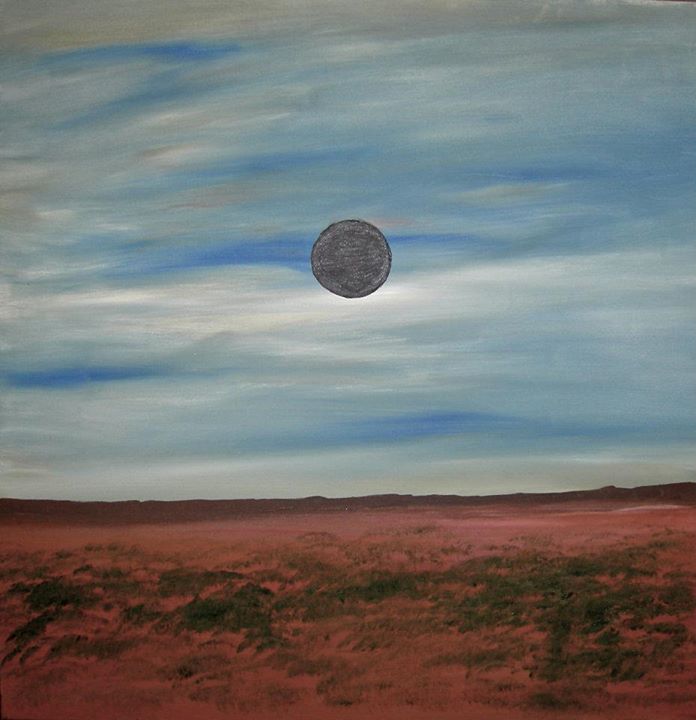
After being here only a month, I had my first art opening in three years. When I moved in, I immediately noticed the beautiful wall space in the studio. Instantaneously, it gave me the idea to host a salon style opening. As expected, once hung, the paintings showed particularly well in the space, so I pitched the idea to the powers that be. They were very supportive of the idea and agreed that it would be a good thing for the community. I had less then three weeks to plan, so I worked like a “maniac” to assure a successful event.
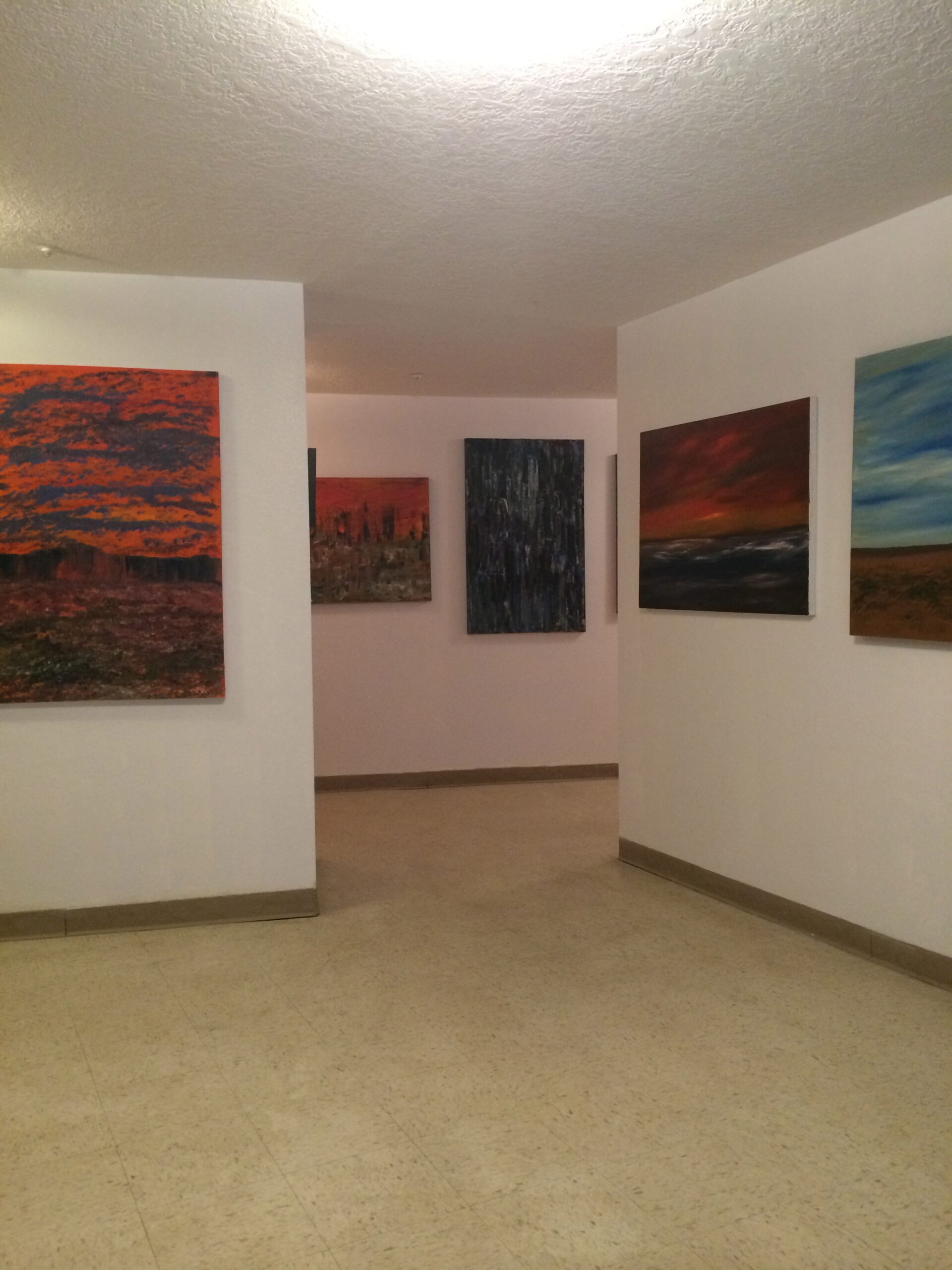
I thought the show should also include performance and should provoke. I wanted to challenge the art establishment on some of its basic cultural conventions. In my edited Dilettante Statement, I critiqued the cultural assumptions of what is considered outsider art and I use their language to create a faux thesis:
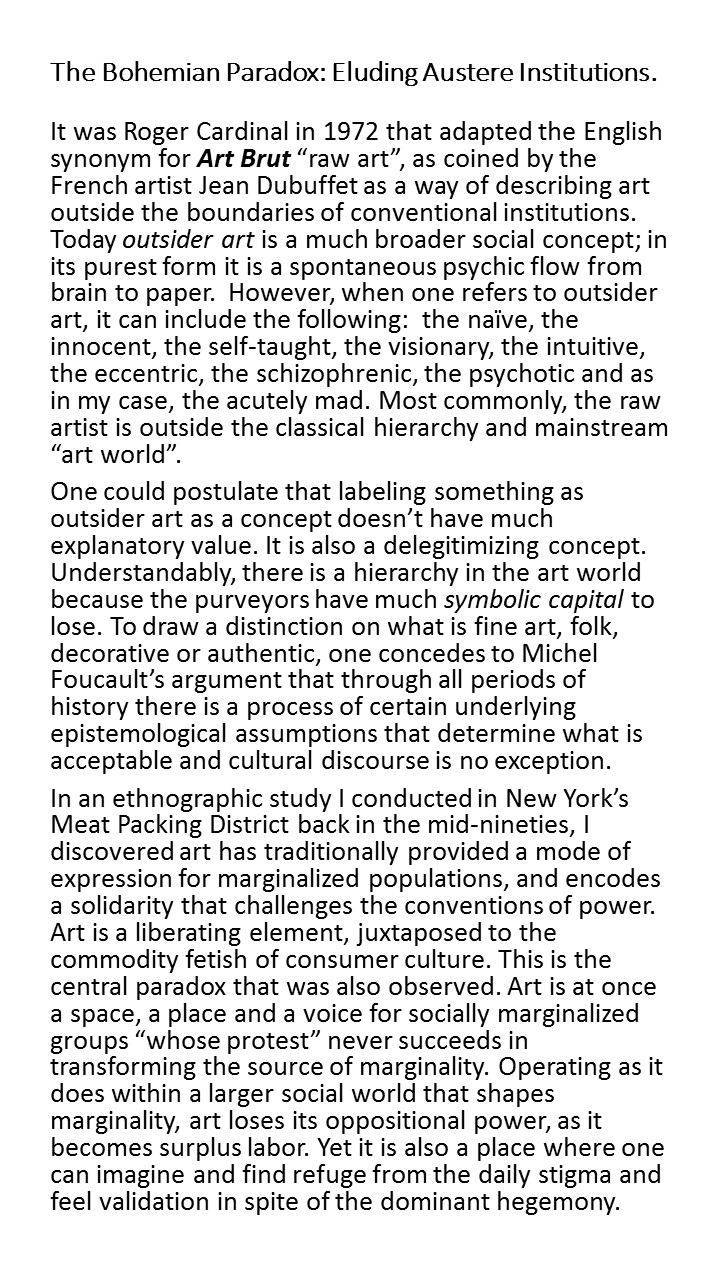
Also, I wanted the show to be wholly accessible. Art openings are generally elitist events. Although I wanted the gatekeepers of the art world to see my work and performance, I also wanted the therapeutic community to know that the show was for them as well.
The food I served was also a commentary on the reactionary discourse that would only allow the indigent to consume food out of a can or dried packaged foods. Therefore, I served an assortment of food found in poor neighborhoods. Usually in corner bodegas, gas stations and convenience stores. No fresh produce can be found in these places, only products that could survive a nuclear blast. The food is ghastly and if eaten on a daily basis would most certainly cause heart disease, diabetes or cancer.
Yet, the Supplemental Nutrition Assistance Program (SNAP) approves these packaged items that one would have difficulty calling food. A hot cup of soup or fresh steamed vegetables at the hot food bar are not on the approved list. However for people who get their information from conservative media, recipients of food stamps are living high on filet mignon, Swiss truffles and caviar.
I have attended many art openings over the years and one of the things that would always prompt my curiosity is the predictable gastronomic staple of wine, cheese and hor d’oeuvres. I thought it would be an interesting experiment to change it up a bit. In lieu of the highbrow offerings that one commonly finds at bourgeois openings, I’ve decided to present a palette that is more typical of the habitus of “the other cultural”.
The main performance addressed recognition, vulnerability and stigma. Specifically, I wanted the public to have a chance to gaze into the soul of the marginalized. Given my experience as “the other “ I wanted to push people out of their comfort zones and have them face their vulnerability. People are often afraid of someone they meet living on the streets or in shelters. My hope in Gazing into your Brother’s Eyes is to incite more awareness that our most vulnerable members in our community are connected to us all. I wanted the participants to leave with more empathy and maybe see the people they encounter each day with more empathetic understanding.
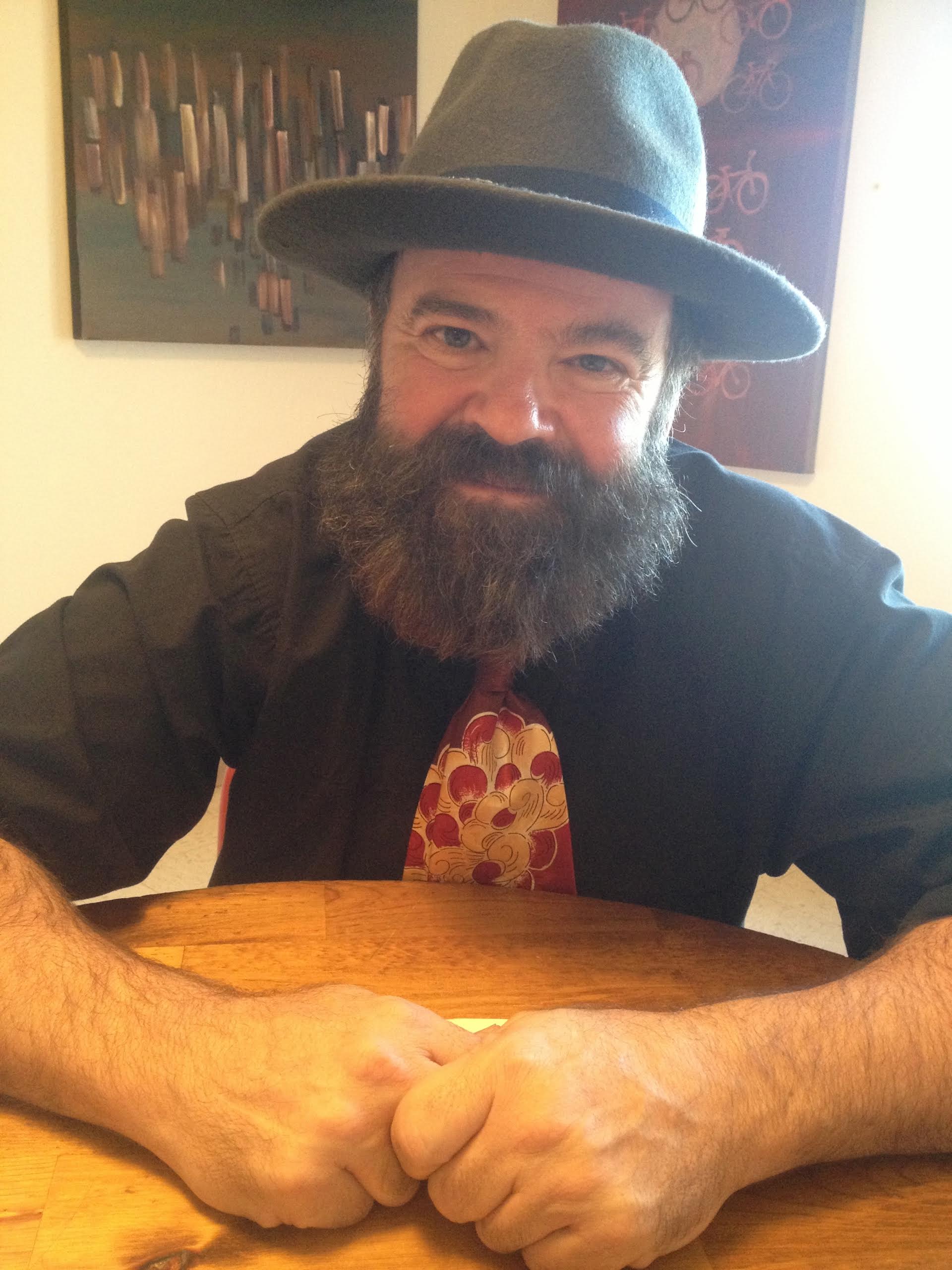
Gaze into your Brother’s Eyes
In America a whole class of people has been thrown away like tattered bundles along with broken TV’s, toaster ovens and cheap plastic toys from China. They are disposed, stigmatized and devalued in a society that places a price tag on everything.
The person in front of you has experienced enough trauma and dislocation to find safety and compassion in this therapeutic community. The specifics are unimportant, but know this; mental illness doesn’t discriminate even though the people who suffer from it are often discriminated.
If you are reading this I am going to assume that you are sitting in front of me. You may feel vulnerable, but when you are done reading, look into my eyes and take a moment to gaze straight into me as long as you are comfortable. For the demographic for whom, I am among, gazing into the eyes of another can be a rare occurrence due to a general culture of fear.
I would encourage you to participate in this without a word. It is through our vulnerability that we can share in a human experience. Take as much time as you need, but be aware that others might want to participate.
I don’t know what to expect from this or how long I’ll endure, but I am hoping that this experience will help us make better eye contact with the person that we see every day that may not be functioning as well; yet we see them not as another used commodity to be thrown away, but as someone that is an extension of our collective selves.
December 2014
For me, the gaze was powerful yet emotionally exhausting. I had people cry and showed me that they understood. At moments I felt my own tears forming. In their eyes I could see anguish, loss and trauma, but I could also see joy, appreciation and love. I had a sense that I had an impact on most people who risked sitting in front of me. It seemed to enable what I was looking for.
As far as the nameless man (John Doe), who died on Christmas Eve, it is most likely that no one looked into his eyes. He was invisible for most and a health hazard to others, but like all of us he had a story. Like us, he was once young. Like us he had dreams. Like us, he experienced pain. And like us he was once loved.
He seemed like us, because he was one of us.
*****
© Dennis Dodson, 2015
© 2026 THE ESSAYIST
Theme by Anders Noren — Up ↑