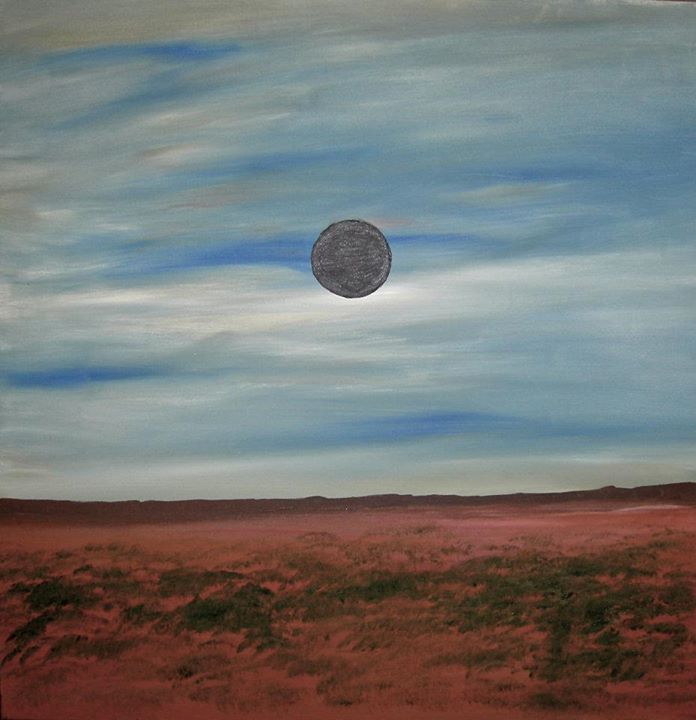
“The old American Dream . . . was the dream of the Puritans, of Benjamin Franklin’s “Poor Richard” . . . of men and women content to accumulate their modest fortunes a little at a time, year by year by year. The new dream was the dream of instant wealth, won in a twinkling by audacity and good luck. [This] golden dream . . . became a prominent part of the American psyche only after Sutter’s Mill.”
Historian H. W. Brands in The Age of Gold: The California Gold Rush and the New American Dream, 2002,
I had been wondering about the mysterious disappearance of the American Dream when I arrived to work that day. I swiped my card and the Clinical Director of the substance abuse treatment center said he wanted to speak to me immediately. I hadn’t had much interaction with him before this so I knew this was serious and that something likely was about to go down. He said, in his observations I appear to be introverted and that my role at the facility requires a personality that can “fill the room.” He went on to state that they were now being dictated to by the insurance industry and therefore shifting to a new treatment milieu and had to fulfill their accreditation commitments. In other words, they were shifting from a nonprofit fee-for-service model to a for-profit model that involves accepting insurance plans and requiring only licensed clinicians. I believe he even went as far to say my dismissal had something to do with Obama-Care. Ironic turn of events?
The Pandora’s box opened further, as I also witnessed three other colleagues get fired for vague, ambiguous reasons. I learned the person I had replaced in the room I could not fill was also fired. I learned that all staff was expendable and that there was absolutely no job security. Most of my colleagues were employed less than a year and one always got the impression that they always seemed to walk on eggshells in the office.
One colleague had a mental breakdown and another suffered a stroke. My initial reaction was physical too. After all I was a bit blindsided with the suddenness of it all. I had the sensation of being kicked in the gut, followed by fear and then anger. However I was luckier than my colleagues. My negative emotions soon turned into a sense of relief, because during my short tenure, it had become apparent to me that the company was soulless. I had realized this workplace would soon suck my soul out of me.

No one else seemed angry. In fact there was this cloud of non-anger that hung over the center that day.
As I walked away from the center, I thought of the absurdity of why I was being fired and it occurred to me that the director had already demonstrated himself as someone who could not face or tell the truth and it was likely that I’ll never know why I was being let go. I had agreed to an hourly wage when I was accepted on board; yet after I received my first pay stub I noticed that I was on a set salary. In a two-week pay period I worked twenty hours of overtime and therefore, I would not be compensated for those hours. The person that trained me and one who frequently worked seventy hours a week, stated that the company offered compensation time but very rarely was anyone able to take it. It was obvious that I would not be paid for those hours. I never received a job description or a contract. I quizzed my colleagues and discovered they didn’t have job descriptions either.
Although New Mexico isn’t a misnomer “Right to Work State” during the initial probationary period, an employer can fire a worker for any reason. Although I believe and try, in general, to keep my deep-seated convictions about equality on the down low in these times of economic downturn, it is conceivable that I was “outed” for sharing with my colleagues the lofty thoughts and forgotten practices of collective bargaining power and mentioning the illegality of the company’s labor practices.
It was an environment where people were afraid. It IS an environment where people are afraid. The company, like many others around it, had a keen understanding that jobs were in short supply and finding one that pays a livable wage is nearly impossible. The company used this knowledge of difficult times to keep people down – rub their spirit in the ground. It was painful to the soul to see how afraid my colleagues were and to watch them be exploited openly.
There seems to be this non-anger in the air in America. Has America always been like this? Or is the first time that we are facing inequality and corporate bullying on such as massive scale? And people are bucking in, giving in to the pressure? Where are the wild horses of the prairies? Has our education system and culture tamed us into manageable and mild beasts of burden? I wondered.
One can only imagine a person with a couple of young children to feed. Does he or she have the time to dream the American Dream? Can this person in today’s America muster the audacity to dream the American Dream?
********************
Unemployed now, economic hardship is a reality. The American Dream will have to wait. Assuming that I could collect unemployment insurance benefits I went in that direction. Little did I know I would be caught up in an uphill bureaucratic appeals process? The director who fired me had claimed that I quit my job. This wasn’t surprising, now knowing of his general lack of integrity. What can you expect from a corporate man who kicks a fallen worker in the teeth? However, despite my sociologically rambunctious nature, I decided that it would not be in my best interest to fight them on this. Looking at it from the perspective of a cost-benefit analysis, going through a long appeal would be time consuming and would not be incumbent upon me. A wise person told me once, that I must choose my battles and with so many challenges ahead, this hilltop is not strategically important. I realized that my defeatist attitude is perhaps common many of my ilk and that unscrupulous employers and corporate men rely on this defeat-ism frequently to win the battle of the balance sheets.
But for now this will have to be someone else’s battle. I was all out of the social-consciousness steam. I was also entering the state of non-anger. I was hungry.

Applying for food stamps is always a consideration for the hungry in America. I walked into a human service office and waited three hours and was never seen. I believe if I were willing, I could have spent the whole day and part of the next undergoing more scrutiny to determine whether I am among the deserving poor or not. The humiliation and thought of navigating through another bureaucratic system on an empty stomach was daunting, so I abandoned that idea.
It makes me wonder if the system inefficiency is deliberate. I have to chuckle over my growling stomach when I think how conservatives and some so-called moderates rant over alleged systemic welfare fraud. Although countless studies have dispelled the myth that “those poor people are cheating”, reactionary politicians continue to beat the dead horse. They continue to scream: the poor are cheats; the poor are looting America. And as attributed to Hitler and his public relations team in Nazi Germany: You say a lie a thousand times and it becomes the truth.
My position after this experience is that if anyone is clever enough to manipulate these bureaucratic welfare systems, then he or she deserves it, because they are capable of performing incredible magic feats. I have been chastised by this experience. The naked reality of America stares at me. Can I afford to dream?
I know if I lived in a just world this wouldn’t happen. I have always felt or argued for the poor in a bookish way. However, now I am feeling more compassion for people that have known poverty their entire lives. Even before this experience I have often longed for revolution; in the comfortable confines of my college classroom or my art studio I have argued fervently for change and for character and for standing up to exploitation and fighting injustice. But now I know I will most likely accept the first job that rolls down the pike. Like my international comrades from south of the border, I will become part of the mob that waits outside the day labor pool if I must.

The experts talk about the changing face of poverty in United States. According to the U.S. Census Bureau the number of Americans living in poverty in 2013 edged up to 46.5 million in 2013 even though the economy has shown signs of recovery from the 2007 “recession”.
This also marks fifty years after President Johnson’s War on Poverty State of the Union Address. Since then many of the programs that reduced the rate of poverty have been gutted and programs like Social Security, which has prevented millions of older Americans from falling in abject poverty, are under constant attack. The income gap is now wider then it has been in over a century.
Although majority of the poor are still disproportionally people of color, women and children, but increasing in the ranks of the poor are those people who have previously experienced the middle-class rites of passage – they have tasted education, career, homeownership, and savings. They have watched their quality of life erode after the mortgage meltdown.
For the millions of people who are either out of work or underemployed, the American Dream is a nightmare of stagnant wages, wage theft (by unscrupulous employers), foreclosures, joblessness, homelessness, criminalization of the poor and a pseudo-science that makes claims of a culture of poverty.
For a change my experience matched the numerical data. The Census Bureau’s findings coincided with my own observations and personal experience. I realized I had become one of the numbers. And I had been treated like one – from the time I was fired to the unsuccessful attempts at getting the government to help me through its legitimate programs. I had thought America does not treat its people well. Now I realized they do not even treat their numbers well, except of course if those numbers are the incomes and earnings of the top 1%.
Last week I volunteered at a food pantry in a very affluent community in Colorado. I was dumbfounded by the number of people lining up around the Health and Human Services Building; all of whom apparently qualified for a free bag of groceries.
The demographics were not exactly what I expected. About one- third was Latino, two thirds were White and none were Black. The gender was an equal split between male and female. I learned that most of the people had jobs, some were homeless and that many had been a part of the community for at least a decade. Only one person I spoke to was transient.
The first person I engaged with was unloading a truck from the Colorado Food Bank. He was a tall white man and likely an old ski bum with weathered skin who looked to be at least 60 years old. I recognized him as a project supervisor from a job I was on years back installing art for a large multimillion-dollar home. He told me the company he worked for went belly-up and it resulted in him losing his house, car and eventually his wife. He claimed even though he had over forty years experience, he was too old to get hired to do construction. He told me for a while he turned to a bottle for comfort but it was only temporary. He is now living in a local homeless shelter.
I also met several young Latina women who were all housekeepers for the Ritz Carlton Hotel. One of them told me they had multiple jobs and although they worked seven days a week none of them earned enough to make ends meet. I also spoke to a middle-aged white male who said he held a finance degree from Tulane University. He foreclosed on his house and now has been branded as someone with bad credit. He continued to say because his credit was poor he cannot get a job in a bank, even as a teller. He said he has been trying to get other jobs but hasn’t had any success. He’s also homeless.
The stories are endless. A friend, aware of my situation, shared that her friend had to foreclose on her home because the nonprofit where she worked at for twelve years folded. This is a person with advanced degrees from two Ivy-League Universities. Even with her high credentials, she wasn’t earning enough to pay for a house that has zero equity.
My immediate situation isn’t what I consider to be ideal, but I have become resilient. I have adapted to a lifestyle of voluntarily simplicity. Aside from books, bicycles and art supplies, I don’t own much personal property. Most of what I have I can store in a 5’x 5’ storage locker.
I lost my studio, and I’ve spent a few nights outside. Even with hard work the American Dream is something that has eluded many others and myself. However I am intent on believing that humanity will not fail us. I still hold on to the youthful idealism of: “A better world is possible”. I dream of a world where there is less suffering, less greed, and one where humanity is regarded before profit.
One cannot argue enough for why we need a global paradigm shift. The reasons stare at us in the face; they growl at us from our empty stomachs of children and families; from the lines outside food distribution centers; from crowded shelters. It is crystal clear that the current means of production is not sustainable for the economy, the nation, the planet, or the future. We ask for bread. And what do we get instead? Obama-care; which ironically was the reason given for downsizing some more people from the health care industry including myself.
“Why don’t you go on west to California? There’s work there, and it never gets cold. Why, you can reach out anywhere and pick an orange. Why, there’s always some kind of crop to work in. Why don’t you go there?”
― John Steinbeck, The Grapes of Wrath, 1939
In a few days, I plan to leave for Los Angeles, where I will be exploring a new California Dream that deviates from the 19th Century dream of gold and prosperity. However, my ambition is no less humble. I am dreaming of a new world. I will begin with myself, with one less automobile. I will be exploring the global city on my bicycle.
And then I wondered: Had the American Dream really disappeared?
The Dream Continues…
Crossing the Southwestern desert hearing the fervent moans, as battalions of tumbleweed assault my chrome bumper.
Narrow road, hypnotic gaze, This dream, have been here before.
Romanticizing the great American tale, grasping prosperous visions, bright vermillion, desert mesas, ocean ahead.
Blinded by uranium clay, clutching violently, Historical Route 66.
Salt in Red skin, white knuckles, musk odor- fixed-gear bicycle.
Dreaming of prosperous visions on the left-side horizon, on the road again, vagabond.
© Dennis Dodson, 2014
Photographs and painting , courtesy Dennis Dodson, 2013
“Do I obey economic laws if I extract money by offering my body for sale,… — Then the political economist replies to me: You do not transgress my laws; but see what Cousin Ethics and Cousin Religion have to say about it. My political economic ethics and religion have nothing to reproach you with, but — But whom am I now to believe, political economy or ethics? — The ethics of political economy is acquisition, work, thrift, sobriety — but political economy promises to satisfy my needs. … It stems from the very nature of estrangement that each sphere applies to me a different and opposite yardstick — ethics one and political economy another; for each is a specific estrangement of man and focuses attention on a particular field of estranged essential activity, and each stands in an estranged relation to the other.”
K. Marx, Human Needs & the Division of Labour (1844)
Winter arrived early in northern New Mexico in 2013.

Outside my window the barren field was adorned with a beautiful blanket of snow. Inside a thermometer read -12 degrees Fahrenheit. Although it was cold, I had not turned up the thermostat, opting instead to use a space heater for my feet and the kitchen oven on my back. My reasoning was that this should be adequate to prevent my pipes from freezing and more economical than filling a propane heater. This is what I contemplated every morning while lying paralyzed in my sleeping bag as I also tried to figure out ways to come up with this month’s rent.
In a not so distant past I had worked as an art handler. An “art-handler” is someone who packs, moves and installs fine art objects for museums, galleries and private collectors. However, the way I defined my job was simply to make rich people happier. Inversely, as I became more efficient in my work, my employer’s pay formula resulted in a significant benefit to him and substantial wage decrease for me. Coupled by this and the fact that the job was affecting my optimal well being, I decided it was time to abandon the handling of art. And yet again I found myself living like a bohemian, and somehow I still managed to find comfort in this life-style.
Admittedly, I have bourgeois sensibilities, but since the 2008 financial collapse of Wall Street, I have fallen from the ranks of the American Middle-Class.
I was awakened out of my holiday indifference by the continuous bombarding by an announcement on the radio of the upcoming Black Friday Sale: a vulgar ritual that is practiced on the Friday after Thanksgiving. Each year hoards of people fight over deals for products and stuff; fights that often lead to more than one homicide. Watching this strange spectacle it is not difficult to see where the inspiration for zombie movie sequels comes from.

I’m not certain of the date on which I heard this on the radio, but I do remember people still had hideous Halloween decorations displayed on front lawns. The “bombardment to buy more” announcement seems to have hit us earlier this year. I am convinced that with each passing year the call to buy more seems to arrive earlier. Very soon the big Christmas Sales will be announced the day after we have spent celebrating and ushering in the New Year.
Also early this year, right-wing pundits were denouncing the so-called “War on Christmas.” I heard it on the radio the same day I was bombarded with the big sale announcements.
I promptly went about searching for evidence of this war on Christmas. I could not find it on the media. I could not find it on the streets. What I found instead was a pathological capitalism that had infected our lives. I found souls diminished by their worship of unbridled consumerism. Like everything else in an advanced capitalist society, I found that the “holiday season” had been cheapened and rendered disposable like any other commodity. Christmas had become just another one of those Chinese-manufactured products sold on the shelves of Walmart.
After swearing to switch off my radio for the remainder of the year, I conducted a non-scientific survey on my social media page and asked people, “What does Thanksgiving mean to you?”
Here are some responses:
It means Christmas and Hanukkah are coming. This year it means Hanukkah is here.
Happy Chanukah!
I can’t help but think of how the generosity celebrated this day was eventually repaid with treachery, which then apparently became a survival characteristic.
Today, fighting with people at the Whole Foods for parking spots and miscellaneous items, makes me hate the holidays. People get mean! It’s supposed to be fun, not stressful.
Don’t let this influence you… http://www.popularresistance.org/genocide-and-the…/
Genocide and THE THANKSGIVING MYTH
www.popularresistance.orgLet us recognize that accounts of the first Thanksgiving are mythological, and t…
The world wasn’t a perfect place then, it’s not now, and as long as man inhabits it ,won’t be in the future.
The commercialization of our holidays may not be a pretty picture but they still bring families together and what’s not to like about that.
The spirit of Thanksgiving is one that I find the need to think about every day. Too many people only focus on their problems and that will not go far in helping us continue to have the strength needed to get through a life that isn’t always easy.
Thanksgiving to me is about being with the ones I love and being thankful for what I do have.
November 28 at 7:45 am via mobile · Unlike · 2
http://www.slate.com/…/if_it_happened_there_how_the_u_s…
How the U.S. Media Would Cover Thanksgiving if It Were in Another Country
www.slate.com This is the fourth installment of a continuing series in which American events a…
Family. Yes of course “the white man” did unspeakable things to the natives and the shopping/ consumerism has gotten out of control, travel sucks etc but I think it comes down to being with who you love and cherish, we have a limited time here and it’s nice to take a day/meal and be together. November 28 at 9:58 am · Unlike · 2
http://www.nytimes.com/…/kristof-where-is-the-love.html…&
Where Is the Love? www.nytimes.comIt’s easy to scorn the poor from a position of privilege. But, on Thanksgiving, …See More November 28 at 12:28 pm ·Like · Remove Preview
Thanks for being part of our thanksgiving this year! Thanksgiving is about gratitude and I am grateful for wonderful friends and family. Of course thanksgiving has another meaning as well, but I’ll just stick with gratitude. November 28 at 8:20 pm.
To remind us not of what we desire, but what we already have. To be grateful for an abundant universe, not just in materialism, but in all the situations that allow us to learn and grow. All of it. November 29 at 1:49 am·
On Thanksgiving what I usually hear is this message of gratitude and I hear of people showing how thankful they are by helping others, like the folks handing out free turkey to the homeless on the closing segment of the evening news. However, to me, there seems to be something about this that lacks authenticity. And why do I bemoan this? After all people are only trying to show a little appreciation and love, right?
Thanksgiving, unfortunately, also marks the official beginning of the “Christmas shopping season” which every year raises some fundamental questions for me: Who are we as a people? And what do these holidays really mean? In particular I become overtly sensitized to inequality. On one side of the continuum you have people living in abject poverty, hunger and living on the streets and on the other side rampant displays of conspicuous consumption. Living in this consumer culture I feel like I am living in a modern-day Dickens tale.
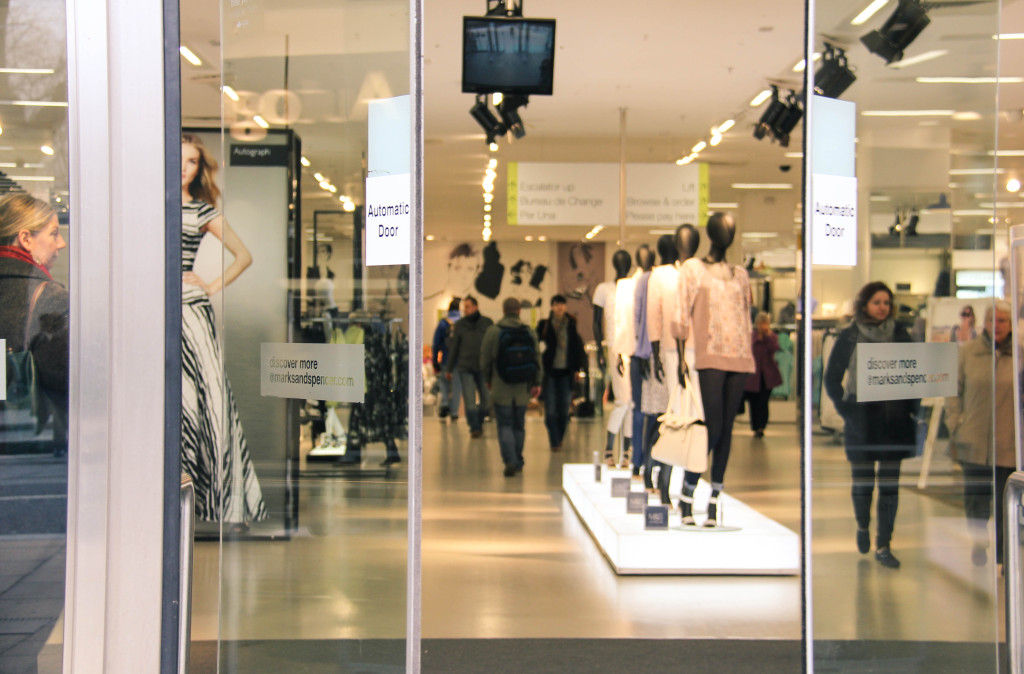
However, before I decided to get into this argument inside my head on “what would Jesus buy,” I unconsciously picked up the phone and called my ex-wife whom I hadn’t spoken to in over eight years. The idea of thanksgiving made me want to just thank her for what she taught me in life. I also wanted to owe up to the role that I played in our failed marriage. Although I attempted to make an apology years ago, I felt that my words had shallow meaning. I was feeling that it was time to take proper responsibility and make proper amends.
In looking back, it isn’t difficult to understand the divorce and I have no resentment for her wanting to flee from this most basic of economic institutions: marriage. Plus living with me also couldn’t have been very easy. While living in “the City of Brotherly Love” (also known as Philadelphia) we had achieved what some may have described as the quintessential American dream: a house filled with lots of stuff and two people who had their own careers. But that dream quickly turned into a nightmare. I became certain that this life was made of plastic and a hyper-reality that was seducing me. I was beginning to feel numb to the world around me… and that life was literally killing me.
As we continued to consume within this American dream, I felt more estranged and separate from nature. My moods began to shift from manic to melancholy and my reality had become distorted. I was beginning to think that I was going mad. My world became darker and darker to the point I felt I was falling into an abyss. Eventually we both recognized that the fairy tale was coming to an end.
She filed the divorce papers after both of us were spending less and less time at home. There was a general loss of intimacy. There was no marriage – only the photographs of a wedding.
I can only concur that I was a difficult person to live with as it is with anyone who can’t live with himself or herself. Several metaphors would be appropriate to describe my psyche at this time, but through the roles I was acting out in various modern institutions I was living in the Bureaucratic Iron Cage (borrowing from Max Weber). It became apparent to me that I was living in a rational institution that negated irrationality; hence this modern dilemma.
I did not have any expectations from the call nor was I sure what would be gained from it. I guess I wanted to make certain that my actions at the time didn’t have long residual effects. When I dialed the phone I believe I was just as startled to hear her voice as she was hearing mine, because at least subconsciously I was hoping to go directly to her voice-mail. Initially the voice on the other end sounded cold and aloof but it shortly warmed up as we exchanged pleasantries as we brought each other up to date.
I expressed my pleasure in her happiness and went on to tell her that there was an actual purpose for the phone call. She said that she figured this much. As I shared that I take full responsibility for the failed marriage, she interrupted and said that she played an equal role. She said in her assessment we were two people that did not belong together. Although I knew the love had long been lost, admittedly I felt a dull pain in my heart.
After I put down the receiver I sat for a minute, reflecting on the conversation. In short, it was nice to hear her voice but it also reminded me of that lonely and isolating feeling I had years ago. I recalled my time trapped in purgatory, in the “City of Brotherly Shove”. However there was something immensely beautiful taking place; I really didn’t recognize it at the time, but I was being taught some important life lessons. Specifically I was realizing how to escape from my own bondage. For this, I had this woman from Queens to thank.
I tell this very intimate story because I believe my marriage was a clear instance of what Marx maintained: All major social institutions, including marital institutions, are marked by alienation. Alienation permeates in all of Marx’s writings but sociologically the concept relates to estrangement as a consequence of a social structure (mode of production) that oppresses human beings and denying them their humanity. In short, the alienation concept can be defined as the estrangement from one another or from a particular process.
Reflecting back I felt detached and foreign. I could not experience the direct results of my labor and it was all to sustain some mythical reality of a dream. This illusion was conveniently masked with consumption.
What is this elusive notion of gratitude? Although gratitude is equated with the Thanksgiving holiday, I would assert that in a society where there is so much suffering, the meaning offers little emotional or intellectual complexity. Playing voyeur on a community social network page, I witness a heated discussion that was quickly unraveling and becoming uncivil. Several posters were irate over the Affordable Care Act, better known as Obama Care.
Granted this system of health care delivery is highly problematic. It is a for profit system that falls way short of a single-payer system. However, the arguments I witnessed were reactionary, heartless and lacked rational basis. Nothing I read was based in empirical inquiry and most were pushing ideological sound bites that they heard from their favorite conservative commentator; with a general assumption that the 50 million Americans that were without insurance are the entitlement class. The rant was topped with racist innuendo made at America’s black president and a general consensus that communists are taking their freedom away.
Yet the advantage of socialized institutions is clear when one considers every awarded Standard & Poor’s AAA Rating went to eighteen countries all with socialized health care systems. Also noteworthy is according to the World Health Organization’s healthcare rankings, the United States ranked 37th just above Slovenia.
I do agree that there is a cultural and class war happening; it is ideological and filled with fear and disinformation. While the middle class and the working poor have been hit particularly hard by the Great Recession, many House Republicans and Democrats want to put Social Security on the cutting block: cut food stamps, unemployment insurance benefits and other social safety net programs. There is very little capital flowing into jobs programs. The power-elite, those who acquire most of their income through capital gains and along with large corporations, continue to enjoy generous tax breaks. Hence, it was of no surprise to read in an article published by University of California Berkeley researcher Emmanuel Saez that during Barrack Obama’s first term of office, 95 percent of income gains went to the top one percent, which also happens to be the highest income inequality since the great depression.
The policy trend is for more draconian implementation and creating a climate of austerity that is crushing down on America’s middle-class and working poor. And to top it all we hear heartless arguments that we as a society don’t have a responsibility to our most vulnerable while just like in one big crap-shoot – banksters and racketeers gambled away the savings of the middle class.
As I write, trade deals are being conducted behind closed doors to bring down the cost of American labor. In this same winter of giving thanks, whilst buying goods we do not need, a guest (from The National Review) on the Diane Rheme Show claimed that the American worker is going to have to learn to accept less; and while receiving less also learn to budget and save more. This same guest also argued that extending unemployment benefits deters people from looking for work. However there was no mention of the obscene levels of income inequality, that the rich are getting richer, and the fact that so many jobs have been lost. Even NPR programming doesn’t have the editorial privilege to mention that most income reallocation has been redistributed to the top one percent.
Adam Smith said that society is a commercial enterprise. The holidays epitomize that notion. In fact they illustrate the true American religion: capitalism with a capital ”C”. As long as our society continues to worship this “golden calf” the masses will continue to experience the serious disconnect between themselves and nature. Interesting enough it is the new “postmodern” Pope Francis that articulates so eloquently:
“The worship of the golden calf of old has found a new and heartless image in the cult of money and the dictatorship of an economy which is faceless and lacking any truly human goal.”
It isn’t surprising that suicide rates jump this time of year. Emile Durkheim would have likely referred to it as anomie suicide, due to the normlessness of society, but I sense that the reason is there is interplay of the overwhelming feeling of estrangement due to rupture of community and family affiliation and a broken economic system that places unnecessary burdens on most people.
For the working poor the stockings of holiday emptiness cannot be stuffed with commodities. Someone usually has to work during the holidays to pay the heating bills; and typically it isn’t the bourgeoisie that will work on the holidays. Hedonistic celebration is not something that is accessible to all.
This begs the question of whether we live to work or work to live.
I remember hearing the quote a while back that if you love what you do, you’ll never work a day in your life, but personally I haven’t encountered many people of late with this type of privilege. Even artists with total autonomy to do all things creative have the drudgery of marketing and sales that removes them from the personal essence of their creativity.
Therefore it can be said that holidays in advanced capitalist economies are only as authentic as economic determinants. From what I can see people are stuffing themselves with holiday crack to mask the estrangement, all in an attempt to desensitize them and from the casualties of a predatory economic system. This is why I would avoid the turkey because chances are it is a mutated beast loaded with hormones and antibiotics. Plus the l- tryptohan in the turkey puts us all in an oblivious state – well beyond Thanksgiving.
Winter arrived early in northern New Mexico in 2013.

© Dennis Dodson
Images References:
Some photographs taken by Dennis Dodson, Bridget Zhang
Other Images References:
Snow covered field: http://commons.wikimedia.org/wiki/File:Panorama,_bales_of_hay_in_a_snow-covered_field_at_dawn.jpg
Please no food pic: http://eatdrinkbetter.com/2011/12/30/reduce-food-waste/
Food in atrash can: http://www.takepart.com/photos/5-easy-ways-stop-food-waste
Food trash top view: http://www.takepart.com/photos/food-waste-facts/food-waste-facts
Trash facts about food: http://blogs.stlawu.edu/chelseapriebe/chelseas-first-page/
Into the trash it goes federal study: http://www.precisionnutrition.com/all-about-food-waste
What strikes me is the fact that in our society, art has become something which is related only to objects and not to individuals, or to life. That art is something which is specialized or which is done by experts who are artists. But couldn’t everyone’s life become a work of art? Why should the lamp or the house be an art object, but not our life?
Another long road trip and the absence of the Internet in my single room domicile, I sit gazing through a hipster cafe wondering why I’m still here. The coffee is only adequate and costs twice as much as the corporate chain offerings, but I suppose this is the price for using free Wi-Fi and patronizing local business. Surrounding me are mostly young people who do seem to be trying very hard to present themselves as a “caricature of cool”. All the familiar signifiers are present, tattoos, body piercing, large horn rim glasses and second-hand clothing that portray an ironic sense of style. However I must find something attractive here, otherwise why didn’t I just go down to the local Starbucks?
It is nice having a day of my own. Since I moved to Santa Fe, most of my time has been spent traveling through the Southwestern United States, moving artwork for an art handling/ delivery company. In three of the past six weeks, I have driven nearly 9000 miles. I spend long days in the driver’s seat, picking up and delivering art for collectors, artists, galleries and museums.

Ostensibly, my position requires specialized skills for handling art, but really there isn’t much difference between a UPS driver and me, except I’m not sure their driver routes don’t extend over 3000 miles in the course of a week. I don’t consider driving a van between 70 and 80 hours a week the most ideal situation, but it beats the alternative of being indigent in “the land of opportunity”. The physical demands of this job aren’t conducive to one’s optimal well-being, but the upside is that I am enjoying a long American narrative while I am on the road.
Before I took my first trip I swore I would take elaborate ethnographic field notes, but that is before I knew that I would end up sleep deprived most of the time. Even so I was able to acquire enough context to achieve what anthropologist Clifford Geertz expressed as, “thick description”. While navigating my van between the interplay of cultural realities of the Southwest, I was thinking of some theoretical concepts and hypothesis of cultural sociology. In other words, in any given day I explore the moving boundaries of what Pierre Bourdieu referred as cultural habitus.
According to Bourdieu, habitus is composed of:
“systems of durable, transposable dispositions predisposed to function as structuring structures, that is, as principles which generate and organize practices and representations that can be objectively adapted to their outcomes without presupposing a conscious aiming at ends or an express mastery of the operations necessary in order to attain them.” [1]
Although the cultural concept is key to this formulation it is one of the most complicated words to use in our language due to historical developments and vague definitions across academic disciplines. However any definition one should assume, it should include the complex whole of morals, beliefs, knowledge, art, law and customs in the historical context.
*******************
Captain’s Log
August 11, 2013
Dallas and Fort Worth Texas
I pull to the front of a commercial gallery with a large Mercedes Benz at the front of the door. The art in the window could be described as decorative. It is the kind of art that people buy when they are trying to match their sofa. It is 8:35 AM and through the window I could see movement in back of the gallery. I rang the bell.
Walking towards the door was a highly manicured woman who appeared to be in her mid-forties. Her hair was quaffed and recently died blonde. The door made a clank noise when opened and out rolled a strong scent of perfume. She was wearing a set of bangle bracelets and was squeezed into a tight fitting dress. Immediately she bulked, “we are not open yet and move your van from the front of the gallery; there is a door in the back!” I tried to explain that I had a schedule to keep and it would be helpful if I could start loading sooner. “That’s not my problem; you’re going to have to wait for my staff to get here.” It is at this moment that I wanted to teach her a lesson on civility, but I just said it is a beautiful morning and there is no reason we can’t be polite. I also added that her rude tone was not dignified and that I would not be delivering her art if she continued to address me in this way.
After a long pause, she pulled out a cigarette, lit it, and began to smoke. A resolution had been met and her demeanor began to change. She began to speak to me in a respectful way. She told me she would have the art ready in a few minutes. I entered through the back door and she showed me the paintings that I would be delivering to a gallery in Houston. It took me about twenty minutes to load and reorganize the van. The necessary paperwork was signed and I was off to ten more stops in Dallas and then back to Fort Worth.
I just ended my final delivery in Fort Worth Texas. At my final stop, I dropped off thirteen paintings and three sculptures at a fifteen thousand square-foot house nestled on top of a high ridge in an old Fort Worth neighborhood. The former home was torn down to make way for a contemporary design with a very large in door swimming pool and spa, an eight-car garage with a collection of exotic and vintage automobiles, a large theater and lavish horticulture. As I enter the foyer a young girl and her King Charles Cavalier pup greeted me. The puppy and little girl looked like the subject of a painting of French gentry before the fall of the old regime.
The owners weren’t present for the delivery; I was directed by their interior designer on the art placement. Due to the claimed insurance value of the artwork everything had to be unwrapped and carefully inspected. I was asked to place the 100lbs sculptures on top of four-foot pedestals. A big part of what I do involves customer service or as my former colleagues liked to say, “Our job description is to make rich people happy”. Yet I have learned that it is convenient for the owners to be absent to avoid any expectations for gratuity.
Drifting down the steep driveway I considered where I was going to sleep this night. Management encourages me to sleep in the van when I can and so far I have complied with management’s wishes, but tonight I craved comfort. I have noticed after three days in the summer heat of Texas, there is a pungent aroma in the van, so on this night I thought it was best that I cut into the company profit margin and stay in a hotel. The strategy is the same whether I am sleeping in the van or searching for a room. First thing I must do is get away from high-end real estate.
Booking a hotel room in these high-end neighborhoods is not an option because it would break my traveling budget and experience has taught me if I try to sleep in my parked van in affluent residential neighborhoods someone will automatically report me to the police. Inevitably awakened in the middle of the night by flashlights and authoritative voices, I will be ordered to step out of the van and hold my hands high. On one of my trips with a different company, ten police cars surrounded me with all guns drawn and forced me to the ground because someone from a neighborhood crime watch thought I looked threatening.
This has motivated me to sleep in less desirable neighborhoods. Driving through an urban core I navigated away from the land of American Express, high rise office buildings with their brilliant lights, corporate logos and spectacle scale, I literally crossed the tracks where the “ecology” became more industrial.
The roads were lined with warehouses and tall fences. I continued to drive, because with any luck I could find a truck stop or cheap hotel. I came to a section that had historically been a place for cattle stockyards. Some of the lots seem to still be operating, but sections of it had been gentrified and obviously a place for nighttime entertainment. On the main boulevard were restaurants, cafes,leather and boutique cowboy stores. Retail spaces were selling fashionable boots, clothing and accessories to anyone who wanted to look like a cowboy.

In a quarter mile the area quickly eroded with iron bars on storefront windows, used car lots, signs for pay-day loans, check cashing services and cash for automobile titles. There were several liquor stores, independent Chinese and fried chicken restaurants and several tacquerias.
It’s around nine o’clock and contrary to the urban core, here the streets are filled with people coming out of the heat. Lethargic lines of people are walking from under the highway underpasses carrying bags of clothes, tarps and some are pushing shopping carts. Next to a police precinct is a community center with a large line forming outside. Most of the people look beaten, tired and hungry. Just passing by I couldn’t tell what kind of services they provided, but it was certain from the looks on the faces that they were offering support for basic needs.
Two blocks from the community center the center seemed more alive. I noticed a few budget hotels, but it was apparent from the frenzy of activity in front of the open doors that I would not be spending the night and that I would not be getting my rest in any of these places. While I stopped at a traffic light, a teenaged girl marked with several tattoos was smiling at me and appeared to be trying to get my attention. I must admit her presence surprised me a bit, because I thought it to be unusual for someone her age to be marked with so much ink. Her clothing was provocative and it looked as though she was beginning her evening shift as a working girl.
After the light turned green I noticed more indicators that this part of the city was riddled with vice. I drove a few more miles were I found a room for the evening. In retrospect I would have slept better in the van but at least I was able to get rid of three days of road grime.
*******************
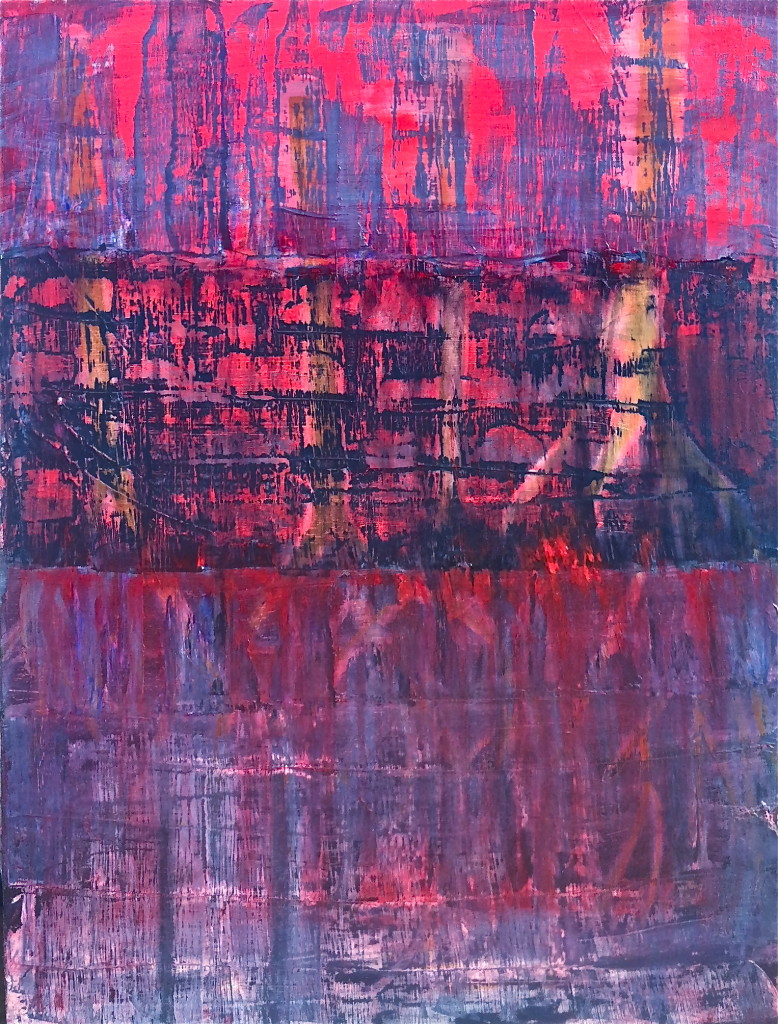
From the driver’s seat, Bourdieu’s cultural habitus offers explanation as I interact with collectors, museums, galleries, artists and support staff along with the relationship of power of these actors. Bourdieu observed the structure of culture as fields. He described a field more as a system of social positions and the power relationships between those positions. He called it an arena of struggle of the appropriation of capital in its significant forms. He rejected the Marxist notion of capital as only economically determined. He referred more to capital of status and status markers that in turn do produce economic capital. Fields are vertically and horizontally organized proportionally to the relational distinction of social agents and the boundaries of the field.

(Painting; The Fields of Capital, by Dennis Dodson)
The effects of capital in the form of social capital, cultural capital and symbolic capital demarcate fields. Cultural capital is the collective embodiment of mind and body; it is the objective state of cultural forms (that come by way of art and art delivery in this case) and in the institutional state, which includes pedagogy and presumed signifiers and expectations. Social capital is the appropriation of tangible and intangible resources linked to institutionalized relationships and networks where there is mutual recognition. “Oh what school did you go to?” For those who retain the power of and credential exclusion of “the other” into their club is imperative.
Symbolic capital is the convergence of social and economic capital. In other words, it is cloaked, re-cognized and recognized as a legitimate. Over a course of time it produces economic guarantees. Obvious examples of this would be an Ivy League education, membership in exclusionary societies or fraternities, and club memberships. It’s what Bourdieu called the “mask of moral ties of charisma or meritocratic symbolism.” (Bourdieu 1980.)
Bourdieu’s protégé David Swartz explains: “All cultural symbols and practices from artistic tastes, style in dress and eating habits to religion, science and philosophy, even language itself-embody interests and function to enhance social distinctions.” [2]
*******************
Captain’s Log
August 14th 2013
San Antonio, Texas
I have been on the road five days and the effects of sleep deprivation are starting to set in. I slept four restless nights in the van and I am beginning to think that I am hallucinating. I’m within five miles of San Antonio and I approach a traffic light. I’m convinced that the voice coming from the GPS is Isaac Hayes, “At 800 yards bare left”.
I pull up to the traffic light where I see the sign of a tall African American man that reads, “I’m not homeless but I have three daughters.” He was wearing a cross around his neck and didn’t look like he spent the night on the street. His eyes pierced into mine as I rolled down the window and said, “Sorry my brother but I too am short of funds”. He said, “that’s OK I’m just glad you spoke to me. Very rarely do people talk to me and I really appreciate it when they do” I wouldn’t do this if I didn’t have to, but there just isn’t enough good work to go around”. He said that often people just throw money at him just to watch him pick it up like a dog would pick up scraps that fell off the table. He said what is most painful when people are afraid to look at him as if he were invisible. We talk as long as the traffic light will allow for I had just made a friend. Then he starts to talk to me about being blessed by Jesus as I became relieved when the light turned green.
I pulled into the parking lot of an asymmetrical medical building remises of 70’s era architecture, made of flagstone and heavy timber. The client, a dermatologist bought a painting in Santa Fe by a renowned artist that is now deceased. I didn’t have clearance to get the van in the underground parking area so I had to carry the painting through a large maze of hallways and three flights of stairs. As I entered the office a portly middle-aged physician with wiry beard and curly salt and pepper locks looks pleased to see me. We engage in some small talk as I unwrap his painting. Proud of his procurement, he proceeds to tell me the history of the painting that involved family scandal.
After inspecting the painting and signing the insurance paperwork, the good doctor asked if I wouldn’t mind hanging the painting on the wall for twenty dollars. I considered his question carefully and it was over a hundred degrees outside and I certainly wouldn’t mind taking a little break from the heat. I chuckled as I told him that minimum that I do art installation work in $75.00 an hour, but that I had an idea for a win-win situation. I told him since he was a dermatologist and I don’t have health insurance, that I would exchange my labor for his since I could use his services as well. I hung his painting in about fifteen minutes and he diagnosed my skin concern and gave me a prescribed treatment.
Feeling pleased with the exchange I just made, I realized that I hadn’t eaten anything all day. On the other side of the road I see what appears to be a greasy spoon diner. As I get out of the van a middle-aged white dude approaches me and says, “Excuse me sir, I’m not a bum, but…” I interrupted him and asked, “Why would you preface your question like that?” He told me that that’s how he felt that most people treat him most of the time. Granted this was not the most attractive person that I’ve ever seen, his front teeth were missing, his glasses were hanging crooked on his sunburned face and his loose fitting clothes were at least two sizes too big. He appeared a bit manic and his speech was forced and repetitive. He said, “Look man I’ll be honest with you, I’m an addict but I’m in recovery. I’ve been clean seventeen days.” He lifted his shirtsleeves to show me that he didn’t have any track marks.
He went on to tell me that he needed twenty-five bucks for an overnight stay at the Salvation Army. Now I like to assume that everyone I meet is honest and not attempting to pull a con, but in this case I could read the pain of junkie’s eyes. I said, “My good man, don’t you know that you can’t fiend an old dope fiend?” I saw this as an opportunity to make a human connection. I saw in him someone that could very easily be me and I told him that twenty-three years ago I had a life that wasn’t much different from his. I lived on the streets and doing whatever I could to escape the pain. I said for a time the drugs worked, but eventually they stopped having their effect. I told him if he is to remember anything that I am about to say, that is to surrender to the fact he can’t kick alone. I was as brutally honest with as if I were talking to my own kin and told him where he could get help. I said that he would find relief of his bondage when he surrenders to the fact that drugs are not the answer. I gave him ten bucks and said, “Do with it as you will”, knowing that he would likely seek an alternative state that would remove him from reality “but before you go just know that your life doesn’t have to be this way”.
*******************
In her work, Diane Crane exclaims the major ideal in modern sociology is a study of a dominant class imposing a rational consensus on the population, either in the form of an ideology or as hegemony and disseminates it in all spheres of everyday life to the degree that it goes unquestioned and accepted as authentically true.
As the protagonist in this story my goal is not to claim an objective reality, but disclose an interpretive social construction. I play the role of antagonist to expose the mythical worldviews of those I encounter traveling from one cultural field to the next. The metaphorical cultural road is one that is embedded in social structure and I often feel like I am driving a small passenger vehicle. Like the road, culture is a structure of signs and symbols to help us find our way from one place to the next… which only suggests there is an infinite road to travel.

———————————-
© Dennis Dodson, 2013
Notes:
[1] Bourdieu, Pierre (1990). “The Logic of Practice”. Polity Press.
[2] D. Swartz, Culture & Power, 1997, p.6
1. The Society That My-Self Does Not Recognize
“Knowledge makes a man unfit to be a slave.” Fredrick Douglas
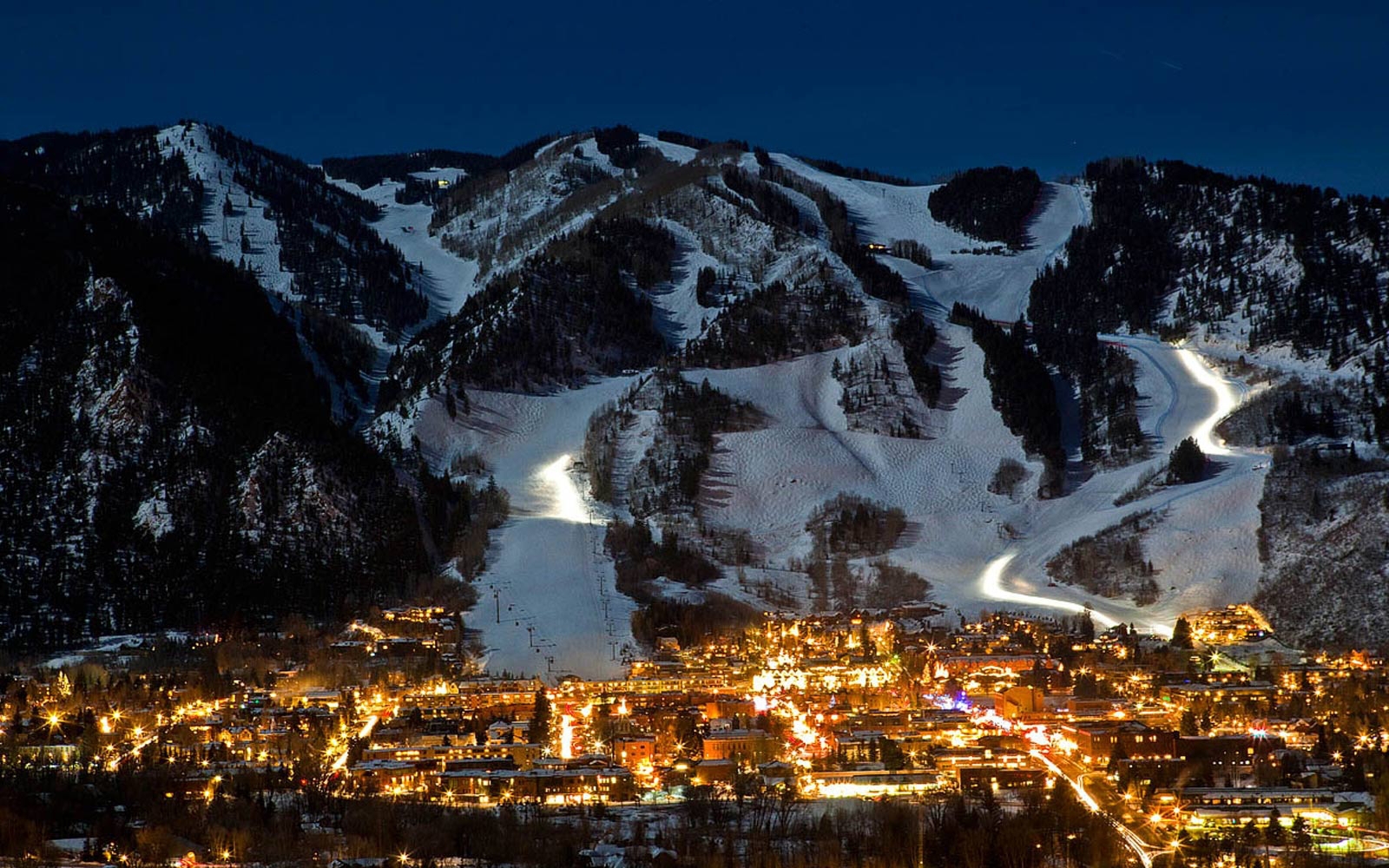
Nestled 8000 feet in the Elk Mountains of Western Colorado is one of America’s most vaunted playgrounds for Hollywood celebrities, hedge fund managers, war profiteers, fossil- fuel speculators and the international jet set.
Aspen, one of America’s most affluent ski towns, was initially founded as a mining camp during the silver boom of the late 19th century and eventually evolved into a world-class ski resort hosting the World Alpine Ski Championships in 1950 and many World Cup races since. Today Aspen sponsors the Winter X Games, The Food and Wine Classic and other displays of commodity fetish and hedonism mirroring the town itself. The core business district is distinctively high- end not unlike Beverly Hills. Aspen flaunts bourgeois boutiques like Louis Vuitton, Prada, Gucci and Burberry. Restaurants, galleries and other luxury retailers also cater to the demands of the uber-rich.

During the holiday season Aspen quickly transforms from a quaint mountain town to a spectacle of vulgar consumption, billionaires; those who have achieved financial success and those who worship excess. And at this time of the year Aspen-Pitkin County Airport looks more like the 405 Freeway in Los Angeles. Private jets fly in and out relentlessly as if it was a NATO deployment dubbed “Operation White Out.”
The Wall Street Journal noted that Aspen boasts the highest real estate values in North America. When Gonzo journalist Hunter S. Thompson ran for sheriff on the “Freak Power” platform in 1970 and proposed to rename Aspen Fat City, it was in response to the land grab deals by greedy real estate developers. An obscenely inflated real estate market has since displaced that aging counter culture. As wealth has been redistributed to fewer richer hands in the past few decades only the power-ful elite can afford to buy a home here. When a property is acquired the structure is usually destroyed for a much larger structure. As they say: In Aspen the billionaires have forced out the millionaires.
2. The Society That Does Not Recognize My-Self
“To understand the story, one has to understand the storyteller.” Anon
It’s not just Aspen. Today the entire world is nothing but a larger Aspen. This planet has become a playground for the 1 percent super-rich. They play with the planet and they play with us as if the remaining 99 percent of us were mere toys, disposable playthings.
Most of the affluent homeowners in Aspen only inhabit their properties a few weeks out of the year. As many are involved in trading commodities, they do not remain too far from major financial centers such as New York.
The same is true for the hippies of the 1970s and after; they too do not live in Aspen. They difference is that the hippies fled unaffordable Aspen; and so did most of the service staff and working class. They moved to the small bedroom communities that stretch fifty miles down the Roaring Fork Valley.
In the glossy vanity magazines that only try to make the one percent of the rich recognize how wonderful they are, there is no one writing stories or printing photos of the ninety-nine percent – the darker skinned people and lower working class whites that work on the back stage of huge estates, kitchens and hotels. In Aspen as anywhere else in this globalized world, these are the “invisible people” that are not recognized, unless of course something has to be cleaned, shovelled, mopped, pressed, carried, cut, cooked or hauled away.

Globalization became my backdrop as I became acquainted with the disposable labor of Aspen. Cursed by the curiosity of an ethnographer, I navigated my various roles ranging from dishwasher to dilettante sociologist. I worked shoulder to shoulder, I observed, I ate, I got fired, and I formulated theoretical questions on structure, habitus and recognition.
My romantic ideas sent me searching and stimulating the creative imagination. I was looking for an interpretation of this strange place I was living in where there were distinct realities that lie under the interplay of race, gender and class but more distinctively, income. I found illumination in Leo Tolstoy, Mikhail Bulgakov, Charles Dickens, Somerset Maugham and in the American writers – Ralph Ellison, John Steinbeck and James Baldwin.
However, what I also realized was that I was a living metaphor of walking a tightrope between highbrow culture and the exploited worker. I wanted to express these challenges not through a long exposition but on canvas.
I first moved to Aspen in 1987 after being discharged from the military. I was an aspiring bicycle racer and I knew some world- ranked cyclists that lived there. I initially lived there four years racing bicycles and also embracing the ski bum lifestyle. However, it occurred to me when I looked at some of my older cohort, there was a sense of estrangement. Some aspects of their lifestyle had depleted their health and years of self-indulgence made their lives vulnerable. During my happy sojourn, I observed that unless one had a trust-fund, ski-bums could no longer ski all-day and work in a kitchen at night. Some of my friends lost their lives due to substance abuse, ski accidents and suicide. Also, poverty was becoming a crime and the visible homeless would receive a one-way bus ticket out of town.
Concerned about my probable fate if I continued to live there, I decided to do some grown-up things. I moved back to the East Coast, because it was apparent that my ambition to be a cycling champion was one of delusion and the thought of becoming an elderly ski bum was troublesome. I went back to school. I travelled around and I learned to paint and became intensely interested in sociological theory and art.
I enjoyed expressing my way of seeing the world in creative ways. I never had any former art training but when I picked up a paintbrush I was transformed by the alchemist’s vision. I returned to Aspen with the intention of building a body of artwork. However, with respect to the division of labor and challenges of making one’s living through art I was faced with living the bohemian paradox.

Those who hold the keys to Aspen have a myth of natural superiority that is structurally systemic or as Noam Chomsky calls Manufacturing of Consent. Aspen holds the key to understanding our world today which is plagued with inequality and even a magazine such as The Economist argues that inequality is indeed the problem of our time. Aspen is all that is seen on the covers of glossy magazines and Aspen is all that is wrong with this world.
I don’t quite live in the lion’s den but I am walking the Serengeti.
3. Creating A Society of the Non-Recognized
“I do not have a dream.” The 99 Percent
As described in his thesis of the Politics of Recognition written in 1991, Charles Taylor postulates:
“Our identity is partly shaped by recognition or its absence, often by the misrecognition of others, and so a person or group of people can suffer real damage, real distortion, if the people or society around them mirror back to them a confining or demeaning or contemptible picture of themselves. Non-recognition or misrecognition can inflict harm; can be a form of oppression, imprisoning someone in a false, distorted, and reduced mode of being.”
Is a better world possible? Is dissent inevitable in our world? With all the recessions and greed and all the environmental damages, how long will this unstable House of Cards keep standing?
As for my-self – I do not know the answers.
Maybe our contemporary society and world does not recognize the 99 percent of us. Maybe our society negates us. Many of us, among the 99 percent, continue to negate ourselves by delusional convincing that we are not in this 99 percent. Many of us who earn US$100,000 a year continue to and choose to believe that we are closer to the rich billionaires of Aspen than to the janitor who earns US$25,000 a year.
Have we ever calculated the chasm between a billion dollars and $100,000 and the invisible crack between $100,000 and $25,000? But then how does one see the truth when one is suffering from a delusion? How does one open one’s eyes if one is convinced that one lives in a dream? This delusion that we are living (in) a dream is the greatest disaster facing human society today.
What I know for my-self is that I’ll continue to paint sociological observations into each corner of my canvas, use my voice to shout for the invisible people, and ride a bicycle… really fast!
Like the proverbial hamster, I see my-self cycling furiously inside this non-recognizable, non-real American Dream…just so that I can stay awake.
I do not have a dream.
In fact, the 99 percent of us cannot afford to have any dreams.
We stay awake…worrying about life and working to survive.
We stay awake… so the rich can continue to play…In Aspen. On this planet.

© Dennis Dodson, 2013
Painting: “Estrangement of a Young Man,” by Dennis Dodson
Images:
Aspen at night from: http://theskimonster.com/blog/posts/where-to-eat-kenichi-aspen/
Aspen Glen Club: http://www.clubcorp.com/Clubs/Aspen-Glen-Club
Waiter: http://www.guardian.co.uk/money/2012/mar/16/dear-jeremy-your-work-issues-solved
Burger King Open 24 hrs photo is from : http://stonecrazydj.wordpress.com/2011/08/07/late-night-dining/
Copyright:
All copyright belongs to the author(s). The Essayist does not claim copyright over any of the materials published in this website. If you want to use any material, please contact the author or contact Essayist.in to get author’s contact details.
The images have been placed by the design and layout team for illustrative purposes only. The sources of the images and the web-links have been cited in the Image references list above. Please click on the links provided to access those pages.
© 2026 THE ESSAYIST
Theme by Anders Noren — Up ↑
