Author: Jignesh Shah

And the world moves on …….

Thank you, she said… with her eyes expressing it so clearly that I did not even need to hear the sound of the words.


*****

x

It had been a pretty good trip to Nepal.  Living in Colorado, I am used to 14000 feet peaks, but then my apartment complex and the entire city is at 10000 feet itself when I view these.  In Nepal, I was viewing 21000 feet while my hotel was at 3000 feet.


The peaks were soaring. It was astounding to say the least.


jss nepal 9


Walking towards the foothills one day, I experienced a magical morning – school children walking to school, the aroma of morning breakfast wafting from every household, and the chanting sounds of the Buddhist mantra “Om mani padme hum” flowing towards me from a distant monastery.  It promised to be a good day.


Walking towards the trailhead, where I was expecting my guide, I came across an old woman by the side of the gravel road with a basket full of tree branches by her feet.  When she saw me, she started talking to me in Nepalese while gesturing to the basket and her head.  She was asking assistance to put the basket on her head.  I started and realized it was pretty heavy.  So I had to put my backpack by the side and lift the basket onto her head.  She started climbing uphill, and then stopped, turned around, and said, “Thank you (Dhanyavad!)” with her eyes expressing the gratitude that made the words redundant.  I was touched because the woman looked like she had weathered the hard life lived on a dollar a day that is much publicized by the World Bank. In short, she did not have much.  And in fact much less than the people I meet in Colorado on a daily basis.


Yet the hard life had not hardened her, she made that extra effort to thank me, while the Herculean task of carrying the heavy basket up a steep hill awaited her.  How is she not bitter?  How did she not have the temptation to skimp on that small politeness which is actually not so common on the Indian subcontinent?


jss nepal 5


My guide had arrived by then and I realized that we were going to climb that same trail the old woman had taken. We met up with her soon since we did not have any heavy baskets to carry.  She smiled when she saw me passing her. I offered help with carrying the basket for her.  “It is my daily routine, don’t spoil my habits…” she smiled.  I walked the first half an hour of her daily two-hour uphill journey.  When she sat down for a drink of water, I asked her about her home, her childhood, her world.  She had lived here all her life, studied till fourth grade, married at 16, borne three kids, suffered the death of her husband  when she was 24, and had managed on her own ever since.  Her opinion of the world, “It is a mirror, you see who you are”.  Her opinion of the wealthy tourist and their opulence, “Good, they must have good karma from the previous lives.  God can’t be unfair.  This is not unfair”.


How can she be so tolerant when I was indignant of my own luxuries while she was suffering?   But what about those who are criminals, those who unfairly gain in this world or are out to destroy others? “Who am I to judge, isn’t there someone higher and better than me to judge?”  When I asked her of all  the violence in the world, her reply was simple, “ There is a lot of good.  Open your eyes to good and you will see good all around you”  “Love is the answer, if it is not, you are asking the wrong question”…those 25 minutes sitting with her were probably the most magical moments of my two week vacation.  Listening to her took me to a lofty place  that trumped  any majestic views of the mountains;  she could distill all the wisdom of the world in a smile and 25 minutes of pure, unadulterated conversation.


*****

x

I returned to the US while it was in the throes of the primaries stage of the Presidential election campaign.  One of the Presidential hopefuls is a man called Donald Trump – billionaire, TV reality show host, real estate businessman, who wants to bully his way into the White House and also feels the need to overstate his wealth, his knowledge, his intuition, his schooling, his vocabulary, his extinct products, his body parts and so on.   He has perhaps not said one proper and decent thing on his campaign meetings. Every wrong thing he says he justifies under the phrase “I say it as I see it.”  Mexicans: he sees all of them as drug dealers and rapists; Women: he sees them as commodities to be categorized from 0 to 10 based on their level of external beauty; editorial board of major publishing house: “dummies”; rape victims: they should be punished if they  undergo abortion.  He has publicly mocked people with disabilities.  His hate list extends further to include Muslims, Blacks, Asians, Prisoners of War, four star military generals and anyone else who stands in the way of what he believes is his birthright – the  presidency.


“Saying as I see it” works only when one has good eyesight. Trump needs an appointment with the ophthalmologist!


“Why am I the judge, isn’t there someone higher and better than me to judge?”


dt 1


He claims to speak as he sees it but he has consistently claimed ignorance of his own statements when they did not suit him and claimed supreme understanding of the world when it suited him.  Now I see it, now I don’t.  He was in favor in Iraq war till it went bad and then he was always against it.  He was in favor of accepting Syrian refugees but later wanted to send them back and remembered nothing of his previous acceptance of them.   He wanted women who undergo abortion to be punished by law before claiming that abortion laws are set in the country.  He has seen Muslims celebrating 9/11 attack on the streets of New York and New Jersey, which no other human has seen.  He has helped circulate false statistics which incriminate blacks.   All the while he maintains that he says it as it is.  This man is a pathological liar. It is estimated that 76% of his statements are verified lies!


He has closed down several of his endeavors as failed businesses while passing on the losses to the US tax payers, but claims to know business “better than anyone”.  He already claims that he is going to be the best president of the US, then hesitatingly adds, “may be barring Abraham Lincoln”.  “Everybody loves me”, this is from a man who is on his third marriage and has protestors at every meeting. “I know words, I have the best words” from a man whose vocabulary on last count was 42 words, of which 5 are “Trump”.  It is surprise that he has not claimed himself to be the most humble person on the planet!   He has a vocabulary of a second grader and at 69, he has manners of a pre-schooler.  James Oliver rightly equates him to a gold colored sharpie, something that has the appearance of wealth but is just a cheap tool.


Trump continues to fall to the depths faster than Hitler’s antisemitism, and has found support in certain corners of the US. The problem posed by Trump is embodied in his slogan: Make America Great – Again. There is nothing wrong with making America great. It’s a great cause to work toward. This country is already great and we will continue to work to keep it that way. The problem in Trump’s sloganeering is the use of the word “Again.” It is the again that is disturbing because it provides a flavor of greatness which was in the past and has been lost.


The word “again” harks back to the good old days and the interpretation of good old days is dangerous in a time of social change. The good old days could be a time when wives were waiting on husbands, slaves being exploited for free labor on farms, and so on….. The world continued to move forward integrating one and all on equal footing but “again” some want to pull the world back, so that they can once again find their version of the good ol’ days, the one where all are not equal but one dominates over another.  That’s the constituency of Donald Trump.  Unfortunately Trump has ensured that the only support he gets is that from racists.


Supremacist groups have been emboldened by Trump’s rabble rousing. The lynching, the initiation of which has already begun in Trump’s rallies, will not be far away. His campaign manager has been arrested for battery on protesters.  Fifteen year old girl was pepper –sprayed and groped by his supporters.  Trump has further warned the Republican party that if he is not selected as their candidate, there will be riots. He and his supporters want to go back to the past even if it by violent means.  If you believe I am scaring you, let me be clear, “Be very scared of this rhetoric, for the Germany of the 1930s does not seem too far away!” The 1930s were a time when Germans wanted to go back in time before the ignominy of World War I.  They were looking to make Germany great again and did not withhold violence while trying to do so!


Once you get on this train of “lets go back to the good old days again”, there is no getting off. You hurtle into the dark tunnel of a not so distant past when dominion of one over another was the norm and hating all “other” groups was common place.  .


Instead of learning from history and opening people’s eyes, the media has struck a Faustian bargain and are flaming his policy-pruned, hate-infused, rhetoric-rich, ideology-inane candidacy to garner viewership.  When hate mongering is on the agenda, Fox news always leads the way.  The presenters instead of discussing xenophobia, misogynistic attitudes, and crassness,  have succumbed to asking Trump if they have treated him fairly while he calls every minority names on national media.  Fox news can learn many lessons from Huffington Post, but one of them for now is the succinct post-script Huffington puts after every article mentioning Donald Trump. “Editor’s Note: Donald Trump regularly incites political violence and is a serial liar, rampant xenophobe, racist, misogynist and…………………….”


“Don’t watch TV.  There is a lot of good.  Open your eyes to good and you will see good all around you”


Despite having the luxury of billions, how can this man be so intolerant of the world that gave him so much? How does billionaire Trump compare in humanity with the impoverished Nepalese woman who lives in peace and shows love towards all.  How can the Nepalese woman, who after all the suffering and toil, injustices of many life-times, continue to demonstrate tolerance and kindness to strangers, while Trump with all his billions wants to throw his own brothers out? Trump, with billions of dollars to back him, will fight with the wind. The woman, with the heavy burden on her back while climbing uphill, will embrace her enemies and change them with kindness.


It is a mirror, you see who you are


How does Trump’s greatness compare to that of an old woman in some unknown part of the world? What kind of human behavior would make America great? Would it be the Trump kind or the humanity exhibited by a poor, single mother? After all, democracy puts the choice in our hands, so what do we choose for the next four years? Humility or Arrogance? Love or Ignorance? Thank you or F*&k you?


Love is the answer,if it is not, you are asking the wrong question


jss nepal 1


© Jignesh Shah, 2016


The art of finger pointing

“Often those that criticize others reveal what he himself lacks.” 

                                                                                                                ― Shannon L. Alder


This particular evening, the political mudslinging was on overdrive.  The TV news-anchor mentioned a Donald Trump tweet: “If Hillary Clinton can’t satisfy her husband, what makes her think she can satisfy America?”  I was hoping they would move on to the next topic but the TV channel wanted to discuss all aides of this sensational story on screen for as long as they could keep people glued to their station.


“Why do they bring up personal issues? I thought Americans liked their privacy. You always complain when ask someone their age; but I would much rather give my age away than discuss such private matters on TV.”


That was my dad talking to me over the din of the debate on the TV channel. He lived in India for most of the year and visited me in Colorado over the summer months. A few visits over the past ten years had gotten my father somewhat comfortable with spoken English in the US with its unique slangs and phrases and to some extent with the culture.  He would pick a topic, ask me the background and get me to put it in perspective for him, whilst trying to draw some parallels to an Indian event or situation.  As an outsider to the US political and cultural arena, he had an interesting takeon the news and always asked questions. Watching the television news with him gave me a different perspective on events and happenings.


On the Trump tweet that was being talked to death on TV, I replied: “But he is not reflective of actual American culture and values, Papa.  He will say anything to ensure that he gets discussed on TV.”


“But, is he an expert on marriage? Some kind of a, how do you say, hmmm, marriage counselor? “

I burst out laughing.


“No, he is not a marriage counselor. Actually, he is on his third marriage himself.  He is running in the US presidential elections”


“Oh, a politician.  As they say, crows are black everywhere.  Politicians are the same, anywhere in the world!  But, that is funny.  A man on his third marriage is talking of awoman not being able to satisfy her husband. He must know a lot about that. Wonderful!!”


“Wonderful!!” with its unique tonal style was my dad’s favorite phrase for sarcasm or disapproval.  As a child, my mistakes were often summarized in three simple syllables of disapproval, “Wonderful!” with the tone indicating he meant everything other than me being wonderful.


It was getting close to 8pm and it was time for me to leave.  I told him I need to meet up with a friend and headed out.


*****


Maya had called earlier that day to say she would like to meet up to get my inputs on her situation. When we finally caught up, it was obvious that Maya had not slept well for a few days. Despite that, she looked elegant.   A light gray colored knee length, A-line skirt with a fitted blue blouse with a classy blue-and-cobalt dew drop shaped earrings to go with the long necklace with matching style and colors.   Her long blonde flowing hair added to her style.  However, the tell-tale signs of stress were unmistakable.Her eyes were downcast with black rings around them. She was fidgety with her fingers tapping constantly like she wanted to be elsewhere.


After exchanging pleasantries, she revealed “Chad told me last week that he has a three year old son from the previous relationship. And just when I thought he is the one!” her voice trailed off.   Maya had been in a previous relationship with someone who had an 8 year old daughter.  I remember her confiding that she had always felt like a third wheel and after two years realized that she would never be an integral part of that family.   Now, three months into this relationship, she was not sure if she wanted to continue down the same path again.  She was spending a lot of sleepless nights over the dilemma. She was looking for my advice.  We discussed it at length.  I was definitely bothered by her concerns but I was a little concerned about Chad keeping this secret for so long as to string her along.  “If you had told me you were thinking of going out with this guy who has a three year old, I would have encouraged you to follow your heart.  But I am concerned by this deception for the past three months.  To me, it reveals a deep character flaw with far reaching implications beyond this one situation” I observed.  As we continued to discuss, my concern about this aspect of Chad continued to spiral upwards and I shared that with Maya.  After a prolonged conversation, she thanked me for being her sounding board for the past several years that we had known each other.

x

*****


The next day I had an early dinner with dad and helped him prepare for his visit to LA.  I will definitely miss these evenings with him. I thought to myself. I had begun to look forward to getting home from work and sitting down in front of the TV with him and listening to his views and opinions.


But, I was also excited because his visit to LA would allow meto spend more time with my girlfriend, Liya. For the next few weeks, she did not have to be my “concealed girlfriend,” as Lia calledher situation during the time my dad was in Colorado.  I met Liya after I had dropped my dad at the airport.  We had not seen each other for nearly 3 weeks.  She seemed charming in that white shirt and blue denims with a short pearl necklace to go with matched earing.   I had planned for a dinner at her favorite restaurant followed by a newlyreleased rom-com that we had talked about watching together.


After the movie, we went to our favorite coffee place, discussing random things just to be in each other’s presence.  Without naming names, I brought up Maya’s situation and the deception by Chad.  She agreed with my perception that there must be deeper issues when he had not revealed such a major aspect of his life to Maya for three months.  Once again I realized we were so much in-sync, reading each other’s minds, having similar values and concerns.


When we were driving back, Liyaremarked, “You know we have been together for eight months and your dad does not know about me,” and smiled at me.


“I didn’t realize it bothers you”


“It doesn’t, I am just saying, you know, after that conversation we had about deception and not revealing oneself fully.  I am sure when the time is right you will talk to him about me” she tried to reconcile and reassure.


“Yes, and in our case it is a cultural issue, you know” I once again talked about the cross-cultural relationship, generation gap, etc.  Liya had always been a good sport about it and once again reassured me that she was fine with it.


However, I continued to ruminate on the issue for the next few days.  I recognized that I had been pointing fingers at Chad while living the same deception.  I remembered a phrase in my mother tongue, “ek angli beja ne tren potana taraf” meaning point one finger towards the other, and the other three point towards oneself.  I had definitely missed the mark on that.  It is very easy to find the minor differences between a situation one is advising on and the situation one is living.   At such times, it is very tempting to make an argument that “My situation is different” but I realized that this may just be a cop out.


*****

 Finger-pointing-icon 1

I soon found out that finger pointing and hypocrisy are ancient arts.  There have been many examples of great thinkers of the past falling prey to “do as I say, not as I do” type of behaviors.  Even a progressive thinker such as Rousseau, opposed to the strict, authoritarian education style of his day, advocated for children to be free to discover the world on their own, play, and explore.  He advised fathers to be ever-approachable and present to answer their questions about the nature of the world. So, what kind of a father was Rousseau? Tough to say, since he left all his children in an orphanage just as fast as they were born!

There are other examples of schism between creed and deed.   Al Gore, the former US Vice President and a fervent environmentalist uses private jets. Citizens from the British empire, on which the sun apparently never set, because they anchored their ships on every continent and island, and plundered every possible place on the planet, now complain of immigrants destroying their way of life. The list goes on and on.But, once again, I have to worry about the fingers pointing at me, when I look for hypocrisy in the society.


Thinking back, I realized that among my close circle of friends, I was definitely considered to be the go to friend for advice on professional and social issues.  I had built a reputation probably because I had been a good listener.  However, it seemed to me now that I was actually not that good of a listener since I had stopped listening to the advice that I had been dishing out. I needed to come around and listen to some of my own advice.


Just like meditation and being in the moment, the more one practices this art of listening to one’s own advice, the more naturally it comes. To become a good listener, I should be able to connect to my own voice.  I need to become a better finger pointer who is keenly aware of where all the fingers are pointing. If one points at the other, three point at me. I should examine the three that are pointing at me as well.


With practice, one needs to get to the Dalai Lama state of mind:“I always tell people that religious institutions and political institutions should be separate” he quoted.   Almost reflexively, as if observing the three fingers pointing to self, he continued “So while I’m telling people this, I myself continue with them combined. Hypocrisy!”


****


Two weeks later, I called Liya: “Hey, you want to come over to my place for dinner?”


“Sure, we can eat and hang out till you have to go get your dad at the airport. I will be over in 10”


She hung up the phone.   Ten minutes later, there was a knock on the door.  I made sure I opened it wide enough for her to notice my dad sitting on the couch.


Hey, Liya! Come on in.  Dad, this is Liya, my girlfriend I talked to you about.  Liya, this is my dad.


Liya had a shocked look but dad had been prepared and was unfazed.  After the initial pleasantries, we settled in front of the TV.    Another media favorite, Ted Cruz, was reacting to recent events by mentioning that Syrian Muslims fleeing persecution should be resettled in the Middle East in majority Muslim countries. When asked about Christians fleeing from Syria he said,“Christians who are being targeted for genocide, for persecution . . . we should be providing safe haven to them.”


I was keen to see if either Dad or Liya would react to it.  Dad went first.


“Well, Obama rightly criticized India for acts of intolerance by people of one faith towards people of other faith purely for their belief.  But then, doesn’t what this guy says count as religious intolerance”


Liya chimed in.  “The funny part is, earlier in the year, Ted Cruz himself had lamented that never have the threats to religious liberty been greater than right here and right now.  And now, he hasbecome a threat to religious liberty”


While those two went on feeding into each other’s arguments, I wondered about all of us pointing fingers at these politicians. Aren’t politicians a part of the same society? Are they not reflective of our society and us, the voters?  Should we not wonder about the three fingers pointing back at us when we point one finger at our politicians?


I hoped to examine the three fingers that were pointing back at us in the room. I pray I practice this art of finger pointing well.


“We are all hypocrites. We cannot see ourselves or judge ourselves

the way we see and judge others.” 
― José Emilio Pacheco, Battles in the Desert & Other Stories


© Jignesh Shah, 2016


Image

Icon: Finger pointing. https://commons.wikimedia.org/wiki/File:Finger-pointing-icon.png


Epoché: Philosophy lost

Epoché (ἐποχή epokhē, meaning “suspension”)

An ancient Greek term which, in its philosophical usage, describes the theoretical moment where all judgments about the existence of the external world, and consequently all action in the world, are suspended. (Wikipedia)


“Mexican immigrants in the US are drug dealers and rapists” – The talk shows screamed while they claimed they were merely quoting Donald Trump, a candidate for the presidential election of the United States, a possible future leader of the free world.


I was curious about this “Mexican immigrant expert” and his assertions about an entire group of people being labeled as people who commit the worst crimes: rape and drug-dealing.  Google and Wikipedia informed me that Trump was a billionaire real estate tycoon, who considered amassing money as adequate credentials for becoming the President of the US. I kept digging for his expertise on Mexican immigrants, and all that I could find was that he had been to Mexico. I have been to Mexico too and no one has given me drugs or raped me….


In recent times, it is astonishing to hear strong opinions and ongoing arguments among people with little or no expertise on the subject matter. No facts, just opinions, little evidence but strong convictions. It is pervasive everywhere you turn, newspapers, talk shows, on television, Twitter….you name it.  It appears that our 24 hour media (social and anti-social) encourages strong opinions for purely entertainment value. All they want is your eyeballs because they are all selling something – 24/7 sales for 24/7 consumers. Sensationalism sells. Hence, the immense sensationalism created by the media to grab our attention.  What could be more sensational than calling an entire group of people as rapists and drug-dealers?


The need for audience has devolved such that channels that are supposed to give us news become entertainment programs. The news reporters vying for audience argue, fight, clown, fall over each other, and do what it takes to keep our eyeballs on their shows and channels. Boring and insipid facts are ignored and sometimes crucified in favor of sensational prejudiced, polarizing opinions. As the society is constantly connected to these media outlets, the temporal distinction between facts and an opinion- rendering- entertainer is lost. This is translating and transforming us into a society where people now have a need to have an opinion as a marker of their awareness. In recent times, every time I hear a strongly worded judgment, I cringe. Is this a well thought out opinion based on deep domain expertise or is this a snap judgment generated by the presence of microphone and the media?


I recall the ancient Greek term “Epokhé” which is a moment when all judgments about the presence of the world, as well as actions within the world, are suspended.  The skeptics thought of themselves as zetetekoi or searchers of truth. They had concluded that the truth or correct way is unknowable.  So, true happiness lies in neither confirming nor denying what we cannot know. Why did they not come out and say, we cannot know anything? Well, that would be too strong an assertion and would be contradictory in its own way. So, they opted for a gentler strategy of suspending judgment and invoking Epokhé.  Socrates summed up this philosophy: “The only thing I know is that I know nothing.”

 Picture1


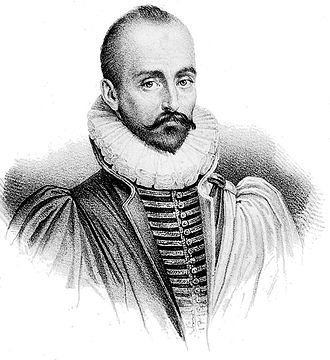
After several centuries, Montaigne, the French philosopher and master of humility, summed up this viewpoint of the “searchers” in his unique style. Montaigne added a new dimension to Socrates’ thought by proclaiming: “The only thing I know is that I know nothing and even of that I am not too sure”. Thus the notion of Epoché:  suspending judgment.


Strong opposition to Montaigne came years later, in the form of Descartes, who famously declared, “I think, therefore I am”. Two and half centuries later, we have translated this into, “I judge, therefore I am”. Gone are the days of nuanced discussion and argument, the subtlety of positives and negatives, the gray zone between the right and the wrong.  We have entered an era of black and white, right and wrong, my way or the highway. In an era of an attention deficit hyperactive population, where 140 characters of Twitter tests the limit of our attention span and a news article is our surefooted pathway to domain expertise, judgment is omnipresent. Everyone, who is anyone on the media circuit, is judging, opining, and criticizing without a moment of reflection on their real understanding of the subject matter.


Montaigne_1


Every time I hear of someone giving a strong opinion, I am reminded of the time when I had judged someone strongly. I was staying in a small town in Trinidad. I had gotten used to the roads to venture on and the ones to avoid. One day when I was on my way to the clinic, I saw a man using a cricket bat to break open the car windows. This was first time I was observing an obvious act of violence. With a mix of anger and fear, I was thinking of the right course of action. I remembered my host family’s advice  “Vandalism is rampant, you better stay away” and hence decided to stay away. I rushed away so as escape any spill overs from this horrendous act. I walked away thinking about the hooliganism in this beautiful country, the impact of poverty on human behavior. I thought about the lack of education in the society, the lack of opportunities and its impact on crime rate. I wondered if incarceration was a better option and on and on. The next morning over breakfast, my host family of two nurses was excitedly talking about a baby with heat stroke admitted to their hospital unit the day prior. “The baby was very sick but I think it he will survive. I don’t know what would have happened if that young man had not rescued the baby”, said Leona.  Martin responded, “Yes, did you see his picture in the paper this morning?!?,  A true hero! ” and he handed me the local newspaper. I was shocked to see that it was the picture of the same “hooligan” from the day before. I read the article and was shocked to read that he had come upon a baby in a locked car and had broken the windows to fetch the baby and ran with the baby to the emergency room.  The doctors reported that the young man had saved the time by his quick thinking.  I was too ashamed to admit to Martin and Leona how I had observed the man in the act and had walked away judging him harshly. Instead of helping in this Good Samaritan act, I had chosen “not to get involved” and walked away. I wondered how that “hooligan” may have judged me when he saw me walk away.


Judging a person does not define who they are, it defines who you are.


Tempering ones’ opinion and judgment seems like the wisdom of the ages and of aging.  When I was a young intern, rounding with a senior consultant, we evaluated a patient with fever and cough.  The consultant asked the medical student about the possible diagnosis. The medical student promptly replied, “Pneumonia”.  The consultant was impressed, “Absolutely! It is likely to be pneumonia and it should be the first consideration.  What are the other possibilities?”  The student was flummoxed, “It IS pneumonia!”  The consultant waited for a moment and then chuckled and said, “Oh! I remember the times when I knew so little and was so sure of everything.  Having practiced for years, I have learned never to be so sure”.  As time has gone by, I have continued to appreciate the wisdom of these words, in my professional and my personal life.


However, I cannot turn on the television, read the newspaper, or peruse a magazine without reading strong opinions and harsh judgments. Clearly, we have reached an era of know-nothing ignoramuses having the microphone to themselves rushing to judge everyone and everything in sight sucking up all the oxygen in public discourse and leaving the civil discourse of multi-faceted truth seekers, the zetetekois, with the carbon dioxide in their wake.


It appears that judging others and giving strong worded opinions is the only way to get attention.  Their absolute certainty makes me wonder if God has been communicating with them and hand down the truth. Judging others and then judging people who judge others has become the staple of the public discourse.  This has percolated into society at large where everyone feels that they have to have an opinion. The paradigm of read, learn, know, inquire and opine, has evolved into a circus of microphone, audience, judge, and opine. Least wonder we are creating know-nothing, attention- seeking, opinionated leaders who have become the media darlings. The harsher they judge, the more sensational and controversial the situation seems, the more discussion revolves around their opinion. Now follows the swarm of opinionators who give an opinion about this opinion.  And the saga continues…………


I yearn for the era when closed minds came with closed mouths. However, I suffer through era of closed minds and wide open mouths.

fish  d e clark 2014


And where are the moderates, the nuanced, the polymaths?  The moment someone describes the various aspects of the truth, she/he is condemned as an “academic” which has become synonymous with too much knowledge without the ability to execute. Gentle reminder about the ones who executed too much: Mao Tse Tung, Adolf Hitler, Pinochet….. and the “academics”:  Mahatma Gandhi, Martin Luther King Jr, Noam Chomsky ……Noam Chomsky is rarely mentioned  in the current media , and I doubt in this age the others on my list would have made it into the media’s circle. Wisdom of the ages is embodied  in soft spoken, reflective, contemplative individuals such as Dalai Lama. However, the media loves the, “He may be right or he may be wrong but he always has an opinion” personas.  There are many a Faust in our midst with little understanding but happy to give an opinion on any subject matter in order to continue in the limelight.


“A major advantage of age is learning to accept people without passing judgment.” Liz Carpenter

To say “I don’t know” takes a lot of courage. It also takes a lot of knowledge. People who know a lot also know where the lacunas in their knowledge lay.  It is the polymaths who are adept at knowing the limits of their knowledge.


I remember reading the following ruminations of a university student:  “When I graduated from college with my bachelor’s degree, I thought I knew everything about my major.  I might as well get my Masters, it definitely will not be too much work. I already know all there is to know, after all, I graduated with honors in my classes.  I spent the next two years getting my Master’s degree and at the end of it, I panicked, “Oh, God, I know nothing about this major. Let me go ahead and get my PhD so that I learn what I need to know about this subject”.  I spent the next five years getting my doctorate and at the end of it, I was relieved.  “So what if I don’t know much about my subject, nobody seems to know this subject very well anyway”.  It is the increased knowledge that made the student recognize the deficiencies in his understanding of the subject matter and highlighted the gray zones. Unfortunately, it seems that for now we are cursed with the cacophony of the opinionators with knowledge base and the expertise of a bachelor’s student. “I don’t know” and “I am not sure” is rarely heard, and usually reserved for the court deposition.


In this age of increasing fear and alarm about everything that concerns the “other”, fear of foreigners, fear of immigrants, fear of refugees, fear of people who do not look like us, fear of people who walk or ride a bicycle instead of drive a car, fear of people who hold a thought other than what we believe – the world needs to return to the skeptics notion of Epoché.  While trying to understand the right way of living, the right action, the ancients had responded with the gentle “Epoché”. They believed that one has to live to the local customs, laws and tradition and so when does not know or understand other customs and traditions, the correct attitude is “Epoché”.  What do you think of the Mexicans? “Epoché”. What do you think of Donald Trump? “Epoché”…….


 Don’t judge someone because they sin differently than you.


Picture2


© Jignesh Shah, 2015


Enlightened self-interest(s) OR Interests of the future self

 As the airplane touched down in Addis Ababa Bole International airport, I felt a surge of excitement, enthusiasm and energy. Though this was my first visit to Ethiopia, I was strongly drawn to this country. I had started fantasizing that this will be the third country and culture that I will adopt as my own, after being born and raised in India and spending my early career life in the US. Even in the US, I had been cooking or eating Ethiopian food regularly, listening to Ethiopian music and reading translated literary works.

 ethiopia airplane pic1


I had realized after my stay in the US that to become a part of any country and its culture, there is no alternative, but to submerge myself in work and life there.  Thanks to the internet, I researched Ethiopia from Boulder, Colorado, and found that this country of 90 million people had no cardiac care to speak of.  Well, that could be something I can work on, I told myself; after all I was a trained cardiologist.  I could do something in my field – help people there and help myself become a part of it. I contacted Universities, built a network, and offered training to Ethiopian physicians.  However, doing it from the US seemed like trying to steer a boat in the middle of the lake while sitting on the shore.  Finally, I had decided to take a plunge and go there.


As my flight taxied on the runway, I wondered: Why has specialty health care training not evolved here (in Ethiopia)? Of course, any investigation regarding lack of anything in Africa always leads to the one usual suspect called ‘poverty.’ In this case it was not.


Addis Ababa, the capital, was like a smaller version of Mumbai, streets congested and socially cut-off, with its wealthy living comfortably oblivious to the poverty all around them.  I spent a couple of days at the Cardiac Care center in Addis Ababa. The center had good equipment and staff, and a couple of partially trained and somewhat functional cardiologists.  Across the street, at the Black Lion Hospital, there were 3 trained CT surgeons, and 3 trained cardiologists who had no access to any of the equipment available at the Cardiac Care center.


The two clinics or hospitals did not talk to one another.  One, Black Lion, had the patients, surgeons, cardiologists but no equipment and the other, Cardia Care center, had equipment but not much else. The two centers could actually collaborate and together become one unique center of excellence around which specialty care in Ethiopia can be built.  But each one wanted to take over completely and be “the only one”.  It had been so for a while, and nobody seemed to have any interest in resolving the situation and creating a win-win solution that would actually provide good cardiac care to Ethiopians. Overall, in this 1 mile radius, Ethiopia had all its resources to provide good cardiac care, but still there was no cardiac care available since the different players did not want to collaborate.


My next destination was Jimma University, 355 km southwest of Addis.  Here I met the higher-ups within the system, and soon realized that the administrators were willing to spend the money to bring cardiac care to the community.  A surgeon had just returned from a 1-year training stint in India.  Now, she is capable of performing cardiac surgery but there was no cardiac anesthesiologist, and no operating room to support her.  The physicians did not invite her for any meetings.  The physicians wanted to build a cardiac program without a surgeon, which was like saying: We would like to build a three-storied building without the second floor.  Interestingly, the trained cardiac surgeon also wanted to be left alone by the physicians without considering where the patients would come from.  It seemed like they all wanted to excel in their field without recognizing that their success is intricately intermingled with the success of the others.  They all wanted to be the big fish in a pond – a pond too small for any big fish to survive – and no one wanted to help the pond grow.  Each big fish was smothering because they had not worked to make the pond bigger.


ethiopia emergency room 1


********

As I sat in my hotel room in Addis Ababa, I wondered about this situation. Each of the players I had met over the course of my stay was working from their self interest. And we believe, all of us who live and survive in this contemporary world of ours, that it is self-interest that makes enterprise and societies grow. We consider self-interest to be the engine that drives and propels our so-called successful system. The Randian world view has us convinced that self interest is good, selfishness is a virtue.  The society has acquiesced that such selfishness guided by the invisible hand of the markets will lead to individual prosperity which in turn will beget human progress.


But here I was staring at the failure of self-interest in allowing cardiac care to grow as an enterprise in Ethiopia?  Should they not have succeeded immensely over the years?  Was it something about the weather in Addis Ababa or the culture in Ethiopia that did not allow the seed of self-interest to blossom? Or do we need to tweak our understanding of how self interest works?


*****


While thinking about self-interest and the detrimental effects of narrow, narcissistic self-interest, the first image that came to mind was that of a very happily married friend of mine.  Chuck was not only married, he was THE great defender of the institution of marriage. And because of that I would take plenty of below-the-belt potshots at the institution.  Eventually, I asked directly about the virtues of marriage in this post-feminist era.  As if he had been waiting for this opportunity to bestow some wisdom upon me, he said, “..the advantage is that we are there for each other when we need.  Over the 20 years of marriage, there have been times when I was providing more support than receiving and I thought that this was becoming a relationship of me giving and her receiving and I thought of leaving.  If it was easy to leave, I would have.  But am I glad it wasn’t and I did not.  It was only a matter of year or two, where the roles were reversed and I was happy she was there to support me when I needed it to survive. A chill runs down my spine every time I think of what would have happened if I had acted selfishly just a year or two back.  Mind you, the roles reversed once again in sometime, and then it was my broader self interest that kept me in the relationship.  I can’t think of any better reason for marriage than that of self interest”. For the first time, I could not come up with argument against a potential benefit of marriage.  The rules applied to marriage by Chuck can also be applied to friendships and relationships.  We understand this intuitively and are there for our loved ones knowing that they will be there when we need them.  We do not even consider the selfish act of abandoning our loved ones in their times of need.   Even the most fervent Rand disciple will not argue against this social norm of enlightened self interest.


****

The same principle was subtly evoked by Pastor Martin Niemoller.  In his provocative poem against those who remained quiet and did not act socially against the victimization and purging of various social groups during the Nazi rise to power in pre-World War II Germany:

First they came for the Socialists, and I did not speak out—
Because I was not a Socialist.

Then they came for the Trade Unionists, and I did not speak out—
Because I was not a Trade Unionist.

Then they came for the Jews, and I did not speak out—
Because I was not a Jew.

Then they came for me—and there was no one left to speak for me.


Isn’t this a great example of self-interest as applied to groups?  If you help me survive, I will be there for you when you are fighting for your own survival.


There is an interesting example of how this works between humans and their pets. Bill Thomas, physician and medical director of Chase Memorial Nursing home, realized that the plagues of the human spirit were: Loneliness, Boredom and Helplessness.  He transformed this nursing home from a “total institution” to a Garden of Eden by introducing children, plants, animals and birds as integral part of this environment.  This newer environment led to increased longevity, decreased medication use, decreased infection and other statistical benefits.  At the individual level, there were examples of severely depressed patients, after having failed to respond to latest medications and cutting-edge therapy, who were now taking care of parakeets, walking the dogs and eventually improving their own mental state to start independent lives outside of the nursing home.  Letting go of narrow self-interest and becoming part of an ecosystem saved lives.  Knowing what we know from these data, can we not consider that becoming part of something larger than who we are and caring for others, whether human, animal or plant, is an act of enlightened self interest?


Carrying this notion further, American philosopher Josiah Royce argued that a person is defined by his or her pursuits but for these pursuits to have stability, they must go beyond individual desire. Stability of standards and a stable sense of personal worth come when a person loyally pursues some cohesive group activity.  Thus, according to Royce, a person is defined by things he pursues for his group and in bearing loyalty to his group.  Thus narrow self-interest was clearly vetoed by Royce in favor of team work as defining of an individual. Even the narrow definition of individualism is abandoned and others are included in it.


But it appears that we are simple beings buying into fallacious theory because they seem so simple.  A classic example in this regard seems to be Maslow’s hierarchy of needs, wherein he explains the various needs: physiological, safety, love, Esteem and Self actualization.  He specifically claimed that one cannot get to the next step before mastering the previous.  It is a theory that is understood easily and is widely accepted and taught but has not withstood the test of studies.  Studies have shown that the priority of needs changes according to age, cultural norms, and circumstances.  For example, self-actualization, where we are willing to do something beyond us and larger than us or our physiological needs, may be very important for an artist, or actors looking for jobs in Hollywood and anyone who is passionate about her work or craft. For most young adults, self-actualization may be the most important need even when their need for safety and love has not been met or mastered.  However, society imposes upon us this questionable hierarchy of needs, deems this hierarchical arrangement of needs to be the truth, and convinces us to pursue our narrow self-interest prior to self-actualization.  Unfortunately, we buy into society’s idea of the truth, despite what our hearts tell us, and pursue our narrow individualist self-interest. In a few years we find our lives vacant and unfulfilled. We have the house and the car but we feel something is lacking – and ask ourselves: what was it that I really wanted to become? Isn’t this pursuit of narrow self-interest then to our own detriment and to the detriment of our group? After all if every member of society is feeling unfulfilled, then how can they even contribute to making that society better?


*****

The bell rings. I open the door of the hotel room in Addis Ababa. My dinner has arrived. The waiter who has brought the food explains how to use the “injera” as a spoon to eat the rest of the food. The injera is a large sourdough flatbread. I indulge the waiter, and do not tell him of my Ethiopian food habits in the US, because he is genuinely interested in teaching me the intricacies of Ethiopian food. After he leaves the room, I dip my injera spoon into the bowl of “atkilt wat,” sometimes used to refer to all vegetable dishes, and enjoy a delicious Ethiopian meal cooked in Ethiopia. Food always touches my heart and my mind returns to the question of cardiac care in the country.


I wonder if a better way to understand the situation I faced with respect to an Ethiopian cardiac care program is to appeal to the enlightened self-interest of the individuals.  If the individuals can work in the self-interest of their future, more accomplished selves, they will do what may be right for themselves, for the group and for their patients.  How can a physician become a better cardiologist? By thinking of what the future chief of cardiology would want? He would want a stronger division with smart colleagues, knowledgeable ancillary staff to help them handle complex cases and accomplished cardiac surgeon who can save patients with severe complications.  So, why not start training these various groups now, so that when you are ready to become chief of cardiology, the ground work would have been laid.


What is the alternative? The alternative is what already exists: the cardiologist trains in some foreign country, comes back home with no trained support staff, no buy-in from other physicians, and no cardiac surgeon to help with complicated cases.  By helping the surroundings to evolve and grow systematically, to pursue goals for the group will define the cardiologist and in turn help the group.  The enlightened cardiologist will have a better chance of being a bigger fish in a bigger pond rather than a smothering fish in a small pond.


 ethipia health care 3


My mind raced back to an embarrassing time in my life, when I was given a lesson in enlightened self-interest. A few years ago I was working (as a physician) in a town where the healthcare was quite poor. The philosophy among physicians used to be: do the procedure first, ask about the symptoms later.  Soon, my raucous distaste for the organization became well known and I was asked, “Well, where would you go if you were really sick in this town?” My answer to this question was, “The airport.”  The answer got a lot of laughs. Even I liked my answer so much that I repeated this answer every opportunity I got. Once at a party, I mentioned this to a group of senior retirees. After I had made my standard airport comment, one of the seniors took me aside and said, “Son, I used to think similarly about the city I grew up in.  I was always bothered by the lack of civic sense, organization, public services….but at some point in time, I decided that I am going to spend the rest of my life here since everyone I knew and loved was in that town. And I asked myself, what would the 65-year old me want the 35-year old me to do?  I realized, he would ask my energetic 35-year old to strive to improve the city for the 65-year old me.  It wasn’t easy, it took years, lots of trips to the government offices, lots of public speeches, emails to other concerned citizens……………I gathered a group of enlightened citizens, we improved as many aspects of the city as we could. Slowly but surely, and together, we created a city we were proud of. I was happy to be a citizen of the city and eventually retired there.  Today, my 65-year old self is proud of what my younger 35-year old self did. I hear you are a very good doctor.  Son, it may be in your self-interest to go beyond your own skills, improve the hospitals in this town so that when you fall sick, it will be there for you.  Do it for your future self.”


I guess all of us can do something for our future self.  If I want to be a leader of a robust team, I need to evolve and grow the team.  By helping others grow, I care for my future self. It is self-interest but not narrowly confined to today – to instant gratification, immediate success or money-making. It is self-interest but enlightened enough to include others and most importantly include the future in it. What if we no longer think of self-interest as the engine that drives our society, but rather create a today that is based on the interests of the future self?


“The choice to be a leader is a lifestyle decision; it means you are willing to take care of others. The true cost of the leadership privilege comes at the expense of self-interest. Leadership is not about the next election, it’s about the next generation.”

-Simon Sinek

Author, Leaders Eat Last


© Jignesh Shah, 2015


Cuenca: What is love?

With only 24 hours left to spend in Ecuador, I arrived in Cuenca.  Landing at the airport, I was beginning to wonder if I had made a mistake in wanting to explore a city 3-4 hours away from my departure airport, Guayaquil, with no logistics of getting back to Guayaquil. The taxi made its way to my hotel near the city center hitting the cobble stoned narrow streets. I left my bag at the hotel, got a general direction to the Plaza and headed out.  Within a block of walking, I started noticing the French and Spanish colonial style buildings. These were magnificent buildings with detailed art work. I made my way to the city center and noted that a band was playing next to the church. The opera singer was excellent and played a couple of pieces. I was surprised to find few people in the audience.  Where was everyone? I kept walking towards the Central Plaza Abdon Calderon. All along, the beautiful building left me spell bound and shutter happy. It seemed for a while that I was taking pictures of every building I saw. The combination of the artistic building, the cobble stoned streets and perfect weather was making me fall in love with the city. It was like I was being drawn into exploring a lady who is revealing some with suggestions that there is more to explore. I was getting breathless but not from the 2500 meters of elevation above the sea-level but by the breath-taking charm of this city. I had been in the city for less than two hours and I was feeling this way. Was this love at first sight? I was getting hungry with the delicious aroma from the restaurants but I did not want to lose time eating and so I continued to wander towards the Plaza.


jignesh 3


While walking towards the Plaza, I started noticing the thickening crowd and a beautiful symphony playing.  Talk about a welcoming reception: the city symphony was playing in the plaza! It happened to be the 15th anniversary of the recognition of the city as the UNESCO World Heritage Trust Site.  I now stood along with a crowd of 500 people in the Plaza enjoying the city symphony giving voice to the city’s pride. Only when they stopped, did I notice the magnificent cathedral, Catedral Metropolitana de la Inmaculada Concepción. The splendidly  decorated doors were 15 feet tall and the sodium vapor city lighting made it appear golden. Even while I was not able to make out the details of the stained glass windows, they appear to be perfectly positioned to add to the beauty of the church.The next performance of the festivities started and it an Ecuadorian group Quimera with the vocalist and guitarists.While the guitarists plucked away at the strings, the sensual vocalist, her voice, her style and the lyrics plucked at the heart of the audience. How many artists can hold attention of teenagers and seniors alike? There were people in suits and expensive dresses, mixed with the street vendors all mesmerized by the beauty of the performance. Most of all, I was enjoying every moment in this city.  She was like a lover who knew how to draw you in with all your senses: the exquisite smell of food, the beautiful sights and the sensual music…..how did she know what I liked, or did I like it since she is offering it. Is that love?


jig 4


Once the hypnotist artista concluded her performance and the celebrations, I realized I cannot continue to walk the city since hunger was taking over my mind. Frustrated at my lack of caloric reserve, I conceded to eat quickly so as to continue roaming this city late into the night. After a perfect snack of papas fritas at Raymibamba, I was back on the streets. I kept turning from one corner to another, here the Moor influenced Spanish style building, there the French style balcony with house plants, there in the distance was another beautiful church, the walk to which impeded by more beautiful buildings and the desire to take a picture. The city was like a woman that I wanted to know everything about. (I see why the Spanish language considers a city feminine gender).

 jig 12


I was wandering around the city enjoying one great view after another. I realized that the  French style colonial buildings, the magnificent and numerous churches, the cobbled stone streets, the hubbub of the plaza and the sing-song Spanish of the locals all were joining forces to overwhelm me with awe for the city.  I was like a lover who wants to spend the whole night conversing and exploring the mysteries of his love.  But then again, I wanted to fall asleep so that I can wake up early and know this beauty in the day time, exploring more, knowing more…. doesn’t every lover face this dilemma?


When I went to the hotel, I wanted to know this city’s past.  The Incas had captured this Canari city and had constructed it magnificently.  Legends about this city mired in its golden temples and other such wonders. Hence the Spaniards came here looking for El Dorado, the city of gold.  They renamed it Cuenca, after the Viceroy’s hometown in Spain.

After falling asleep at midnight, I woke up at 5 am, and got ready to explore the city at sunrise. However, once awake, I wondered if yesterday was a dream or was it a delusion. I was worried that in the daylight the city would not stand up to the expectations build up from yesterday. The daylight will melt the delusion and it will be just another city.  Thankfully, it was not so. The ministrations of the city continued. I realized that last evening was not a dream but a reality only half viewed.  Now, I saw the details hidden at night.


The Cathedral with its magnificent towers, the blue cupolas reaching for the skies, the old church with its decorated walls all continuing to tell me that I had made the correct choice of coming here, even if only for a few hours.  Even the small flowers growing in the cracks between the cobble stones, the weed growing in its nooks and crannies appeared to give it character. At 7am, the church doors opened, and people of faith flocked in. I was told that the cathedral was built with the goal of befitting the big faith of the locals and so here we have the largest cathedral in South America. The city’s numerous churches, all conducting services each had large congregation at 7 am on Tuesday morning. Once again, I saw the young and old, rich and poor, gathering for the morning service. Being a part of such a ritual, enjoying the sound, sight and smell of the services in a new city was magical.  Once out of the church, I continued to wander around the city.  There was a mystery at every corner, every curve of this city left me wanting to enjoy the sight in front of me but also the yearning to explore further since I did not want to miss what else the city offered.


jig5

x

I continued to walk away from the churches and found the river. The river Tomebamba runs through the city center and divides it into the colonial half and the residential area, where modern office buildings, hospitals, museums are located. Walking along the riverside, one comes across numerous Inca artifacts, bearing witness to the historic turmoil of this old city: the Canaris, taken over by the Incas and then the Spaniards, quite befitting the many suitors of a beauty. Walking back, I saw a humming bird, working to spread the pollen of the flowers, like I spread the message of this wonderful city.

 jig 6


Next, I got on the bus to travel 30 minutes outside the El Cajas National Park.  Even while leaving the city, I was making plans of what I wanted to do when I returned.  The north part where there was another church I noted in the distance and then there was another tower, and I have not yet been to the other side of the river…. like a lover making plans of what to do when he meets his love again. At the national park, I was transported to a different world.  The beautiful mountains, surrounding the lagoons and lakes, the movement of the clouds in and around the mountains was magical. A short hike brought me to the paper tree (Polyepsis) forest, the only tree that can grow above 10000 feet.  The dense paper tree forest was like a scene out of “The Hobbit”.

 jig 7


After sometime hiking, I wanted to return to the city, see more, learn more for 1 hour before I had a take the bus to bring me to the airport.  I returned and continued to walk the city.  I was trying hard to memorize these sights, these structures since I knew that the pictures will not recreate the image of the city my eyes behold.  I yearned to store as much in my mind’s eyes as I could. Two more charming plazas, three more ancient churches and numerous beautiful buildings later it was time to leave. But, my heart kept screaming, “May be one more church, may be that other plaza, another park, right on the way to bus stop…..” I remembered parting from my girlfriend, one last kiss, another hug……


I made my way to the airport and eventually got onto the airplane. The airport seemed to be full of helpful staff and interesting people.  I was gliding through the security and onto the terminal.  The security lines, the scrutiny, the frisking…..none of it bothered me.  I had a nice window seat… perfect. Partly sad to be leaving the place but partly thrilled to have found a city to love, I was lost in this emotional turmoil. But once the plane took off, I fell asleep and was in and out of that semi-awake state where neural connections are made and creativity blossoms.  After sometime of the smooth flight, the turbulence kept waking me up.  Flashes of other beautiful places that I have visited started flashing before my eyes.Grand Canyon, Cuzco, Alps, ….did I feel the same way?  This seemed different, but was it so or was it just my distorted memory?  In Cuenca. I was so relaxed, so comfortable, …..so at peace with everything. Everything seemed great, nothing was bothersome, nothing out of place. I had reached the town with a certain uncommon and unique tranquility. Was it a surprise that Cuenca seemed so wonderful. Could any other place encountered at that time been equally enchanting?


John Paul Young sings:

“ Love is in the air

Every sight and every sound”


Every sight, every sound, every breeze seemed wonderful in that moment.  The walk past churches, the sounds of sermon, chirping of the birds, the whiff of coffee being roasted, I had encountered these in my routine life.  I had even encountered similar external charm on other occasions but had walked through them untouched and without getting entangled in their energy.  But when I landed in Cuenca, in a peaceful, copasetic state, the same routines had turned magical.  The same breeze, the trees, the cobble-stone streets… all were enchanting….


“Love is in the air
In the whisper of the trees
Love is in the air
In the thunder of the sea”


So, was it on the outside or was it the within that I was enjoying? Was I in a state of mind where everything would have been charming and just right?  And then when I am out of that frame of mind, reality will hit!  I remember going home after falling in love with places and then reviewing the pictures.The pictures were beautiful but did not create the magic back again. The pictures had served to be reminders of the city, the marker of the event, but not creator of the magic.  May be because the magic was never in the outside, it was within. The pictures capture the outside and then we keep wondering why it does not have the same impact?  “Oh, I am telling you it was much more majestic than this. Pictures just don’t capture it” I remember once telling a friend when viewing the pictures of Grand Canyon.  It is probably because the internal magic is lacking when we are viewing the pictures of these wonderful places. The pictures capture the sight not the mind.

 jig 11

x

And when we are in that serene state of mind, being charmed we superimpose the feeling within on the outside to maintain a cognitive congruity as to why one is suddenly in love with everything around. It is a sense of pleasure, a dopamine release that occurs within and this makes one prone to be in love with everything around.  In that state of mind, one can be in love with place, person, object. Anyone could walk in and that time and one would fall in love with that person. Could it be that all of love is like that?  Is that what they mean, when they say, “You will find someone, when the time is right”. The release of oxytocin in our brain will makes us fall in love with anyone at that point in time and our brain will makes us believe that it is the charm of that person that we are falling for.  Is that the reality or is our brain trying to maintain a cognitive congruity and façade of rationality about falling in love with someone. The magic is within but the object without.   If so, I want to be in that situation as much as I can.  But of course, there is a possibility of falling head over heels….making long term decisions, based on that feeling, like moving to a new city, getting married……that may be another issue altogether.


Love is in the air
Every sight and every sound
And I don’t know if I’m being foolish
Don’t know if I’m being wise.


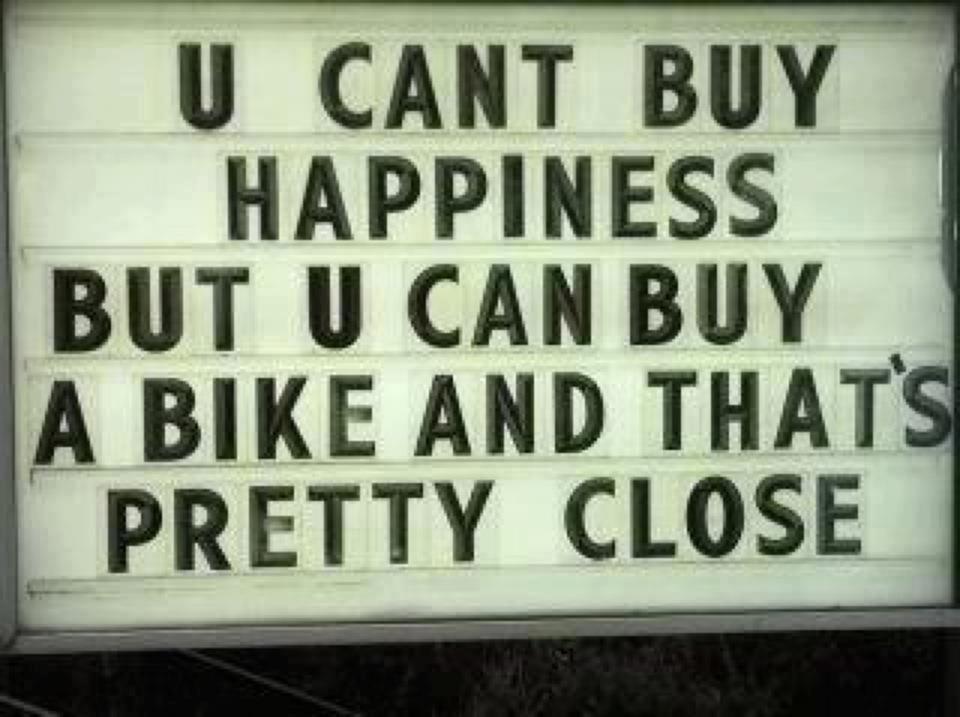
How to buy happiness: Purchasing experiences or products?

you cant buy happiness bike


“How to buy happiness?” – Laura stared at the lonely flyer on the office notice-board.

Laura was offered one workshop a year as a part of her benefits package and although there were plenty of offerings all year long, she had been too picky or neglectful and now her boss was asking her to attend any workshop soon or lose the money. She had clearly run out of time and the only one available was a happiness workshop. A couple of colleagues passing by teased her just for staring at the happiness flyer. She was squeamish about choosing this corny sounding workshop but she wanted to get away from work. Either this or forfeit the benefit and just stay in the office! She had no money to go on vacation and her relationship was not going great either. Unable to make up her mind, she stood still staring at the noticeboard. She was shaken out of her daze by the beeping sound of a text message. Her enthusiasm was further dampened when she read her colleague’s text message: “Let us know if they suggest a boy-toy or a great cocktail in this “How to buy happiness?” workshop.”  Word spreads fast around this office, Laura thought; but it also helped make up her mind.  At least I get to be away from work and my office colleagues, she thought.

********

Laura was the last to arrive at the workshop, but settled down quickly.


“How to buy happiness” – we will get there later. First I want us to introduce ourselves.  I’ll go first. I am Jay, I’ll be conducting this workshop and I have been doing for the past 6 years.  I have a Master’s degree in positive psychology from University of P____ and have conducted more than hundred workshops around the country.  I enjoy hiking and swimming”.  They went around the room introducing themselves.  Laura realized that everyone in the room were at the senior manager or higher level.  She wondered why they need to buy happiness; they are all making a lot of money – six figures or more: isn’t that keeping them happy?  Once the introductions were done, Jay asked everyone to go around talking about what has made them happy in the last 7 days.


“I went running with my wife on the lake shore on Wednesday.  This was our first outdoor run after 5 months of grueling winter.  It was fun” said John, the chief operating officer.  “I spent Friday evening with my old buddies chatting about the camping trip we had during college.  The evening turned into night and we left in the wee hours of the morning but it was fantastic” Michael, the Vice president of Technology said.  Maya, the Chief Financial officer shared: “I went hiking in the Adirondacks with my outdoors group.  We hiked 8 miles in 3 hours, it pushed my limits but it was wild.”  “Laura, what about you?,” asked Jay. Laura was lost in her thoughts listening to the others. “Yes, yes, I took my mother for dinner at her favorite restaurant on Thursday.  We actually had a great time” Laura shared.


After the group had gone through their activities, Jay asked, “Did we find anything is common in all these happiness generating activities?”  “Yes, that’s what I was wondering when I heard each one of us speak. Our happy moments were anywhere but here at the work-place” Laura joked.   “That’s good, but what else?”  Jay asked.  Eventually, it became clear that everyone had talked about experiences that they had.  No one talked about their fancy gadgets and gizmos, their big houses, their fancy cars, their possessions… when asked about what made them happy each one had spoken only about their experiences.  Jay summarized, “So, it is fair to say that what you have enjoyed are experiences.


“A jug of wine and a book of poetry, half a loaf of bread to eat, and you and I seated in a deserted spot, then I will have more wealth than a Sultan’s realm…” 

Omar Khayyam


Mall Window 1_BZ


Is that true?  Think back to all the times you have spent trying to get the best gadgets, the best car, a perfect house and none of that has come up for any of you none”.  He had Laura’s attention now, he was talking to her it seems.  All the time belaboring over the right shoes, the perfect dress and all that had amounted to nothing.  Jay then went on to describe studies that noted similar findings among even larger groups of people.  After a thirty minute discussion on this, he concluded: “So, next time you are in the market to buy something, think about the experiences you will have with it.  It will facilitate an experience you will enjoy, go for it.  If not, maybe it’s not worth a second look”.  Bingo! Laura had been trying to choose between upgrading her current TV with the latest 3D TV or a cruise with her family.  The cruise will definitely be a better experience than the TV.  A nice new mirror vs dinner with friends, an extra table lamp vs hiking trip….


Decisions and choices seemed much easier, thought Laura.


Jay explained further: Several scientific studies have explored the issue. In one study, college students were asked to describe the most recent purchase they had made for more than $100. They were then asked to rate their level of happiness with the purchase.  The researchers classified their purchase into two types: an experiential purchase and a material purchase.  They observed that compared to those who made a material purchase, the students who had mentioned an experiential purchase reported increased happiness with their purchase. This group thought that they got better value for their money and that their purchase contributed more to their happiness in life.  Also, fewer experiential buyers believed that their money could have been spent better elsewhere. 


In yet another study among students at San Francisco University, the happiness level derived from experiential purchases was greater than material possession at an average spending of about $70-76 in each category.  Smaller purchases such as dining were equally rewarding compared to bigger purchases such as travel. 


dinner jignesh shah


John, the Chief Operating Officer retorted: But these studies have been done with college students? My life is far removed from that of a college student?


Jay continued: Before we dismiss what college students think and say, it seems like we are all a little bit like these undergraduates. In a nationwide survey, 1,279 Americans were asked to recall an experiential or a material purchase they had made in the past.  When asked, which of these was making them happier years later, substantially more number of people who recalled an experiential purchase reported being happy with their purchase compared to those who recalled a material purchase.  It has been further demonstrated that even when some material possession led to lasting happiness, for eg.   a CD, it did so only when it served the purpose of providing entertaining experiences (rather than possession of “pride” or “complete collection”).  So even these material purchases worked only in these contexts of experiences.


Remember, these findings cut across age groups, gender, education level and even income levels.  Wealthy as well as poor people reported greater happiness with their experiential purchase compared to material purchase.  The results of these studies have been reproduced by other investigators in various cultures and countries.


Laura asked: It appears that the key is choosing experiences rather than material possessions. WHY does this happen?


People shopping in Mall_BZ


Jay replied: Your observation is correct. Experiences generally take place in social settings, with friends and family. It makes us feel more connected to others.  It builds stronger bonds during the experience and also the memories of the experience continue to enhance these bonds.  Such social interactions build a better story for our memories. At a later point in our life when we are narrating these stories, at times when we go down memory lane these experiences are what we recall best; we may even embellish these experiences.  


Studies have shown that people frequently regret buying things that they mistakenly assumed will make them happy.  For e.g. I buy a new TV and it is enjoyable for a week, then it becomes my norm.  Then, after some time I stop deriving happiness from it because the memory of the old TV is lost and all the comparative pleasure from the old TV is gone.  The happiness from the new TV also fades.  Soon, there is comparison to someone else’s TV.  Someone, somewhere always has a better gadget, better gizmo, better TV than I.  Such comparisons leads to unhappiness.  However, experiences are unique.  It is difficult to compare one’s hiking experience to that of someone else.  It is unique and hence rarely fades in terms of the emotions it elicits. 


Maya the Chief Financial officer asked: I am someone who works with numbers. I am having a bit of difficulty in understanding why experiences continue to stay with us? And why are we more satisfied with experiential purchases?


Jay replied: We understand ourselves and others by stories.  A complex series of 7 experiments was designed to explore the reasons behind the increased satisfaction with experiential purchases among people from all walks of life.  The results demonstrated that we tend to associate ourselves closely with our experiential purchases compared to our material possessions.  So, thinking of ourselves as the sun and our various experiences and possessions revolving around like our planets.  In this analogy, experiences are like Mercury, Venus and Earth but material possessions are like Saturn, Uranus and Neptune. Hence, experiential purchases are more likely to be mentioned in our life story than our possessions. We believe that people who understand our experiences know us better. This does make sense, since we would rate that our friends and family (who know much more about our experiences) know us better than our chartered accountant (who know much more about our possessions and worth). 


Experiences and related stories get better with time.  One reminisces about good and bad times very fondly.  Seneca once said “Things that were hard to bear are sweet to remember”.  Who doesn’t remember their college days of financial struggles with fondness? This phenomenon has been well studied.  For eg. A study was designed to understand how people think of their experiences before (in anticipation), during and after an experience.  Typically people felt very excited about the experience weeks in advance.  However, during the experience, (for eg. A cruise) they went through the ebb and  flow of individual events during the experience.  Regardless, as time went on, their memory distorted the events during the experience and brings it more in alignment with their anticipation.  Hence, experiences were mostly remembered as being positive and people were happier and more satisfied with it.  This process of mental reconstruction of memory has been well studies and the positive bias in such reconstruction  in favour of experiences has been well documented.    


John, the Chief Operating Officer, asked: But there must be some aspect of personality that underlies this? Aren’t some people more inclined to gather experiences while some are more inclined towards material goods? I have seen that with many of my colleagues and staff members? Different strokes for different folks – that’s what works in operations?


Jay said: Based on several well conducted studies, experiences do much more than just making us happy (though that by itself is no small task).  In a well conducted investigation, 3,149 adults consisting of students at two American universities and other volunteers filled out well-validated questionnaires designed to assess their experiential vs material purchasing tendency, emotional state, subjective well-being and satisfaction with life.   Based on an in-depth analysis of the data, the authors concluded that respondents with higher experiential purchasing tendency were more extravert, demonstrated openness and empathic concern for others.  They further benefited from having their psychological needs met leading to increased subjective well-being. 


Interestingly, scientists as well as marketers have been interested in the opposite phenomenon.  Materialism and materialistic tendencies have held equal intrigue.  Since 1985, this group has assessed the impact of materialistic tendencies on people’s health.  By way of various published studies over these decades, it has become clear that those who value material possession are less satisfied with life and report less well-being.  For example, in a study published in 1993, students with higher financial aspirations had less self-actualization and vitality.  Such students were noted to have more anxiety and depression. Experts explain this by positing that those with higher financial success aspiration ignore tendencies related to personality growth and well-being. 


Michael, Vice-President of Technology asked: Nowadays I have been reading about various neurological experiments that attempt to find biological basis for such behaviours, including our buying or purchasing behaviours?


Jay: Interestingly, functional MRI studies have demonstrated that extraverts have increased amygdala pleasure response to happy faces compared to introverts (and perhaps therefore likely to have increased experiential purchasing tendencies as reported in the previous studies).  Although such fMRI findings hint at differences in brain structures of materialists, no direct evidence of this exists currently.


We have come to the end of our time for this session. Maybe I can take one last question.


Laura was quick to raise her hand. She was making notes and requested Jay to summarize the session: “Can you tell us in short, HOW do experiences bring us happiness? I want to share this secret with my colleagues… They were teasing me about enrolling for this workshop…”


Jay: Oh, don’t worry about that. I have been teased for conducting this workshop but I persist because it does bring me happiness to share what I have learned.


Remember that spending money on experiences results in happiness during the event.  Creating experiences with others will create stronger bonds with them.  It will build a memory capital that will look great in the rear-view mirror.  It gives us something to talk about and that conversation usually generates more happiness and goodwill. It is little wonder that a vast majority of people tend to fondly recall their valuable experiential purchase much later after the event.


And maybe I can give you a list of experiences that have been found to generate happiness. Although this list is by no means comprehensive: Dinner, hiking, running, bicycling trips, cruises, camping trips, canoeing, kayaking, Road trip across the state/ country, watching movies – and all this with friends, family, colleagues.


And I urge you to find and create your own experiences that create happiness for you and your friends, family and colleagues.


© Jignesh Shah, 2014


domin


References:

  • Kashdan, T.B., & Breen, W.E. (2007). Materialism and diminished well-being: Experiential avoidance as a mediating mechanism. Journal of Social and Clinical Psychology, 26, 521–539.
  • Ryan T. Howell and Graham Hill. The mediators of experiential purchases: Determining the impact of psychological needs satisfaction and social comparison The Journal of Positive Psychology Vol. 4, No. 6, November 2009, 511–522
  • Ryan T. Howella, Paulina Pchelina and Ravi Iyer The preference for experiences over possessions: Measurement and construct validation of the Experiential Buying Tendency Scale The Journal of Positive Psychology Vol. 7, No. 1, January 2012, 57–71
  • Leaf Van Boven, Thomas Gilovich   To Do or to Have? That Is the Question. Journal of Personality and Social Psychology2003, Vol. 85, No. 6, 1193–1202
  • Leaf Van Boven .  Experientialism, Materialism, and the Pursuit of Happiness Review of General Psychology 2005, Vol. 9, No. 2, 132–142
  • Thomas DeLiere and Ariel Kalil.  Does Consumption buy happiness? Evidence from the Unites States.  International Review of Economics 57 (2) 163-78
  • Carter TJ, Gilovich T I am what I do, not what I have: the differential centrality of experiential and material purchases to the self. J Pers Soc Psychol. 2012 Jun;102(6):1304-17.
  • Emily Rosenzweig and Thomas Gilovich.  Buyer’s Remorse or Missed Opportunity? Differential Regrets for Material and Experiential Purchases.  Journal of Personality and Social Psychology, 2012, Vol. 102, No. 2, 215–223
  • Terence R. Mitchell, Leigh Thompson, Erika Peterson, Randy Cronk.  Temporal Adjustments in the Evaluation of Events: The ‘‘Rosy View’’ J of Experimental Social Psychology  33, 421–448 (1997)
  • Travis J. Carter and Thomas Gilovich  The Relative Relativity of Material and Experiential Purchases Journal of Personality and Social Psychology 2010, Vol. 98 (1) 146–159


Images courtesy of:

Bike and Happiness Caption – Dennis Dodson

Family Dinner and Two friends playing a board game – Jignesh Shah

Shopping Mall – Bridget Zhang


Who are you travelling with in this journey of life? (Tuning in to Thích Nhất Hạnh)

“Because you are alive, everything is possible.”

Thích Nhất Hạnh, Living Buddha, Living Christ


c

Plane-Sky-Airport-Shadow-Route-Sun-485x728

Who are you travelling with in this journey of life?
Tuning in to Thích Nhất Hạnh on a long-distance journey

A storm of meetings, interviews, conferences, con-calls, clinical audits, chart completions  peer evaluations had scorched my soul in the past few months. In my mind, however,I was looking forward to a trip to Southeast Asia in November.“It’s a very long flight from Chicago to Tokyo,” grumbled a colleague, “what are you so excited about?” The pleasure of coming up for air; of being on a flight for 13 hours without phone calls, texts, emails, and grumbling colleagues.


I was excited about being unplugged from this chaos called my life.A chance to un-chaos myself.


Letting go gives us freedom and freedom is the only condition for happiness”

Thích Nhất Hạnh


I reached the airport three hours in advance – checked in at the ticket counter, and promptly got checked out by a security guard. He made me remove my shoes and belts as if I was entering some holy shrine. Well, it was a temple – my temple of un-chaos in the air. Once aboard the plane to Tokyo, I found my window seat and got into my “un-plug routine”.  Adjust pillow between the seat and the window, put ear plugs on, keep sleeping aid in hand awaiting some water, and of course fasten seat belt tight…….in case of turbulence.


“When you love someone, the best thing you can offer is your presence. How can you love if you are not there?”

Thích Nhất Hạnh


“Seems we may get lucky,” said the man in the aisle seat.I looked at him puzzled: what do you mean. “Oh maybe the middle seat will remain empty!” he completed.  “Inshallah” I responded. He smiled.


The man was in his late 50s, grey hair, several tattoos on his arms and neck, an e-cigarette hidden from the view of the air hostess.  He had the appearance of someone who worked in the sun for a living.


My mind jumped into the comforting arms of stereotype. What is he doing on this plane? My stereotyping brain asked: Is he anxious about his first air travel? Is he merely re-visiting some place where he was stationed during his stint in the armed forces? Is he visiting some of those sleaze palaces in Asia? Does he even know where he is headed? Maybe he is on the wrong plane and doesn’t know it yet?


I realized my response was probably curt and also wanted to conceal the picture-show of stereotypes running on the screen in my brain.  “First visit to Asia?” I scrambled to ask an appropriate question so as to appear friendly while not committing to a long conversation.


“Yes” he replied. My stereotype was validated. He is definitely seeking some cheap thrills. He must have friends who are involved in immoral, unethical and illegal undertakings in Asia.


“My first visit this year,” he continued.


I was curious: “This year. Do you visit Asia often?”


“Yes, I do go to Vietnam often. I spend the winters out there with my girlfriend.” he smiled.  Now, I was really intrigued.


Still clinging to the stereotypes in my mind rather than opening up to the person in front of me, I asked, “How long has she been living in Vietnam?”  He looked puzzled for a moment and then recovered, “Oh, she is Vietnamese. She has lived there all her life.”


“It must be tough travelling back and forth across continents.  How long have you been doing this?”


“For ten years” he said matter-of-factly.  “Yes, it is very tough to have the love of my life live so far away. I think I may just get married this year” a genuine smile appeared on his face as he answered the query in my mind rather than the question I had vocalized.


I was relieved when the stewardess brought some water since I could now sleep off my embarrassment.


“For things to reveal themselves to us, we need to be ready to abandon our views about them.”

Thích Nhất Hạnh


I could not sleep. There was no turbulence but I was tossing in my seat. I turned to my tattooed neighbour to find some distraction in a conversation only to find him reading “The Present Moment” by Thich Nhat Hahn.


A fellow Thich Nhat Hahn reader!  Seeing him reading my favorite book helped overcome my embarrassment from the previous interaction.  I inquired about his experiences in Vietnam. He described the kindness and gentleness of the people, their hospitality and ability to absorb an outsider  within their community.


“Do you travel to places beyond than Vietnam during your winter break?” I enquired, now clearly wanting to learn from his life experiences.  “Well, I go and see my grand kids when I can.  There is only so much you can get out of skype”, he responded.  “Where do they live?” I asked, expecting to hear about some region within United States.


“Lagos” he responded, then saw the puzzled look on my face and continued, “… they are not my biological grand kids, but they are kids in Lagos that I help out”.  He had visited Nigeria 4 years back and had spent months out there trying to understand the culture, know the people and help where he saw fit.  He had learnt about these kids, spent time with them and had gotten to know them.  He has been taking care of their needs since then.  He communicated with them on a daily basis and “visits” on Skype once a week.


“You have to spent time and you will get the answers” he said when I asked how one person could make a difference on this troubled planet.He explained what he had learnt about connecting with people.  “Trust is the key, once you trust it is difficult to misunderstand.  If you do not trust it is difficult to understand even the good and sincere gestures of others. If you do not trust someone and he reaches into his pocket, you think he is reaching for a gun. But if you trust someone and even if he brings out a butcher’s knife you do not blink. Trust evolves with time, without the need for language.  Even us, unilingual Americans, can communicate trust, it’s a universal human language. We just have to spend time with people.” he smiled.


His name was Robin. He was a fisherman from Oregon.


“People usually consider walking on water or in thin air a miracle. But I think the real miracle is not to walk either on water or in thin air, but to walk on earth. Every day we are engaged in a miracle which we don’t even recognize: a blue sky, white clouds, green leaves, the black, curious eyes of a child — our own two eyes. All is a miracle.”

Thích Nhất Hạnh


Getting to know a tattooed sunburned man from Oregon on a 13-hour flight to Tokyo; getting plugged in to a world of patient passion while wanting to get unplugged from a life of chaos – I was in the miracle.  I went on to ask questions and soak as much wisdom as was possible on this journey. What was most remarkable was that his answers were all matter of fact as if they came naturally to him. True passion perhaps means complete and utter simplicity.


“How long have you been a Thich Nhat Hahn reader?” I enquired, hoping to find out when these teachings will become a natural part of me.  “Who?” he seemed puzzled.  I pointed to the book and repeated.  “Oh, I have never read him. I just started this book.  A friend recommended it, so I picked it up. Is he any good?”


Maybe life is enough of a teacher if one is passionate about it – about people around us. Robin has certainly been passionate and has spent time paying attention to people.  How do you do all this? How are you able to think like this?


“Well, I have a lot of time to think about things and the people in my life.  I am a fisherman, so there is enough time to ponder while waiting for them fishes” he explained.


The plane landed in Tokyo smoothly.


I rushed to catch the next flight but not before asking Robin to promise he will keep in touch and making a promise to myself that I will return to serene and minimalist Japan soon.


*************

“Our own life has to be our message.”

Thích Nhất Hạnh, The World We Have: A Buddhist Approach to Peace and Ecology


*************

I had spent about 17 hours since leaving home if one counts the taxi ride to the airport and the waiting time at the airport.  I was not in the best frame of mind as I boarded the flight to Bangkok.  I scanned the seats around me on the next flight and was relieved to notice that there were no kids. The seats next to me were empty too. Great, I told myself. I got into my unplugged routine once again and closed my eyes.


“Hi there! I am Matt from New York!” boomed a loud voice from the seat behind me. It startled me.  It was directed to a non-English speaking Swedish teenager on the seat next to his. However, everyone in the 5-seat radius around him could hear him clearly. There is no law prohibiting the carrying of loud, booming voices inside airplanes. One cannot carry a lighter or fluids, but loud, booming voice – no problem. They make you take off your belt and shoes, but loud, booming voice – carry on.


crowded-airplane-cabin-300x205


The problem was compounded by the fact that Matt’s next-seat neighbour on this flight could not understand or speak English well. Matt took this as a sign that she could not hear him, and ratcheted the volume by a few points. Loud booming voice went to louder, ‘boomier’ voice.


However, later I realized that Matt was not worried about whether she could speak English, he was just glad that he could. And boy, did he speak!


“I am going to Bangkok to meet up with my buddies for three days.


I was re-living some sort of a hangover. I slipped back into chaos.


“My actions are my only true belongings.”

Thích Nhất Hạnh, Understanding Our Mind: 50 Verses on Buddhist Psychology


“But I am just glad to be collecting the frequent flyer miles, Matt continued.  Can you believe it? I am getting 10,000 miles on this trip. By the time I get back I will have enough miles to travel first-class anywhere in the US”.  It was not just frequent flyer miles that Matt obsessed about.


“And I travel a lot in the US since I am an agent for a lot of the Yank__ players, Rodrig__, Can__, and others”  “Oh, you should hear what happened when I was in the locker room with Al__ the other day” and on and on it went.  “We, at the agency, are supposed to keep this information about the Yank__ hush hush” he yelled before each story.  The entire section of the plane heard about Matt’s interactions with each of the Yankees players, his travels in the US, his spring-break escapades, his ex-girlfriends, his expensive car, his gadgets, his Facebook friends and so on.  Matt was obsessed with himself and the only way he could describe himself was through his gadgets or his interactions with other famous people.


“To be beautiful means to be yourself. You don’t need to be accepted by others. You need to accept yourself.”

Thích Nhất Hạnh


Matt’s telling of his story was itself a story.   The more he tried to impress, the more he pushed his fellow travellers away.


The climax came during the touchdown when Matt announced, “I have not had sex since March, you know.” His name was Matt. He was a sports-agent from New York. But you know that already…


“Many people think excitement is happiness…. But when you are excited you are not peaceful. True happiness is based on peace.”

Thích Nhất Hạnh, The Art of Power


newark-airport-picture


Matt had welcomed me to Bangkok airport in his own way. 24 hours and more away from home without sleeping on a decent bed, I walked like a zombie to the immigration desk.  I fumbled and found the immigration papers and handed them over to the officer.  The officer looked at the forms, then looked up to me and with a welcoming Thai smile on his face asked, “Which of these are you, Robin or Matt?”   It seems I had scribbled the names of these fellow travellers on my immigration form accidentally. I rectified the mistake. The immigration officer asked me: Who are Robin and Matt?


I said they were fellow travellers.


He smiled and asked: Who did you like travelling with?


I smiled.


I passed customs and walked unconsciously to the baggage conveyor belt. I waited there for my suitcase.None of my bags on the belt. I was about to walk to lost bags counter when I remembered this was planned as a back-pack trip. I had all my belongings on my back already. I smiled and stepped into a balmy December night in the city of Bangkok. The question of the immigration officer circled inside my head.


If I have to travel this journey of life with a fellow-traveller, who will I pick? Robin or Matt?


On this journey of life who will you pick as a fellow traveller: Passion?Obsession?Love?


“Walk as if you are kissing the Earth with your feet.”

Thích Nhất Hạnh,Peace Is Every Step:The Path of Mindfulness in Everyday Life


© Jignesh Shah, 2013


Image References:

Image 1 Plane Taking off.jpg from

http://webcache.googleusercontent.com/search?q=cache:http://www.wallpapersis.com/wallpaper/plane-sky-airport-shadow-route-sun.html

Image 2a: Crowded inside of plane from:

http://misadventureswithandi.com/2012/06/travel-tip-thursday-airplane-health-tips.html

Image 2_2: Crowded interior of plane from:

http://murderiseverywhere.blogspot.in/2012_09_01_archive.html

Image 3 Airplanes queue in NYC airport.jpg from:

http://www.spicetrav.com/places/new-york-airports


© 2026 THE ESSAYIST

Theme by Anders Noren — Up ↑