Author: Genevie Fernandes

From Beirut to Bombay: Big cities struggle to manage their own waste

You Stink!


In July 2015, thousands of Lebanese citizens rallied on the streets of Beirut protesting against the government’s inaction over enormous heaps of garbage lying all over the city. Barely a week ago, the government had shut the Naameh landfill, that served most of Beirut, because it had outrun its capacity.  The city’s garbage collection company just stopped collecting trash two days after Naameh’s closure, saying its own dumps were full. The authorities did not have a backup plan. Trash began to pile up everywhere, rotting in the summer sun. For several months, protesters and police violently clashed in the capital city in one of the biggest shows of civil disobedience in Lebanon in 10 years. This came to be known as the “You Stink” protest movement.


These continuous protests reflect the public frustration at the incompetence of the government to make civic decisions from the time the presidency was vacated in 2014. Appointments, planning approvals and budgets remained frozen, while political camps feuded over who should take the top job.


beirut1


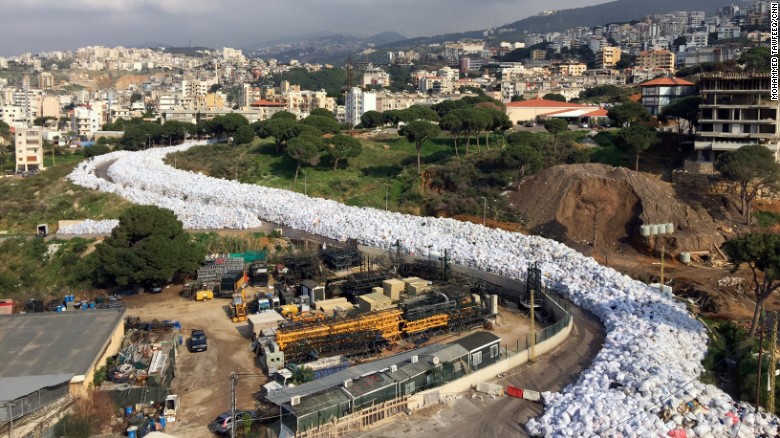
In February 2016, CNN reported an image of a river of stinking garbage bags that snaked its way through Jeddah, a suburbs of Beirut, a consequence of the still pending and an almost year-long garbage crisis – and a symbol and a byproduct of the country’s dysfunctional politics.


beirut2

x

*****


Around 4000 kilometers to the East, the city of Bombay or Mumbai (renamed to its original name as a protest against British colonial rule) has been in the news for a spate of fires and subsequent toxic fumes rising from its oldest and largest landfill at Deonar. In 2016, the landfill caught fire four times in the two months of January and February, and each time the fire raged for a couple of days to more than a week, creating a thick blanket of smoke and dangerously increasing the levels of hazardous particulate matter in the city’s air. These garbage fires were so massive that they were visible in space and recorded by NASA.


mumbai1


The World Health Organization recommends PM2.5 (ultra-fine particles that damage respiration) exposure of no more than 25 micrograms per cubic meter over 24 hours. In the days of the Deonar fire, Mumbai’s recorded PM2.5 levels of 333, more than ten times the permissible limit. Local residents that inhabit slums near the landfill complain that fires, polluted air and accompanying respiratory ailments have become a common occurrence. A major fire had broken out at the landfill in February 2015 as well. The latest blaze in March 2016 claimed its youngest victim when a seven month-old baby died after his pneumonia worsened because of the smoke from the fire.


mumbai2


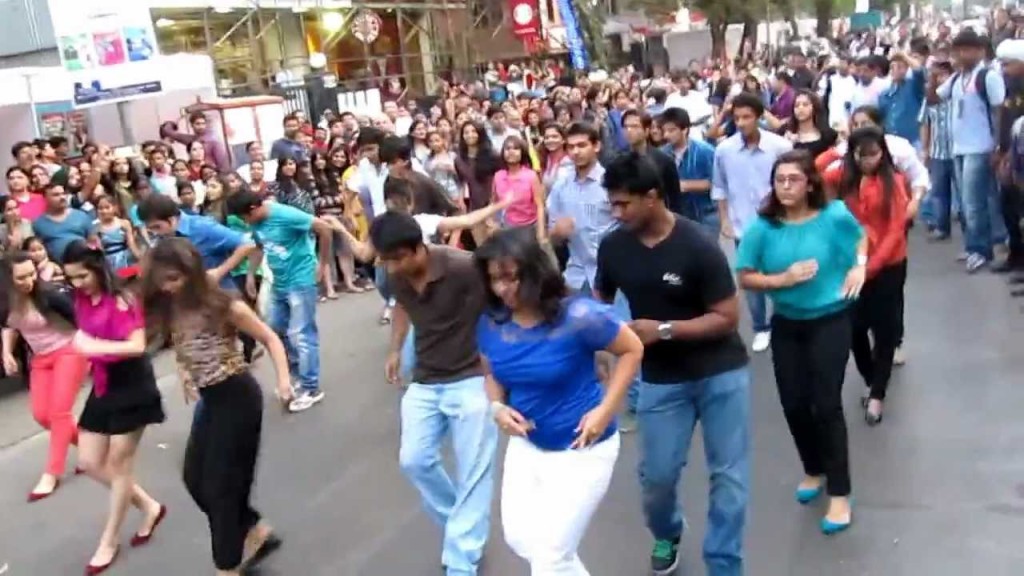
The residents of Beirut took to the streets to protest the piling garbage across their city. The residents of Mumbai also came out on the streets, but, for an entirely different reason altogether. Two days after the first major fire broke in January 2016, citizens of the municipality of Chembur, which is barely a couple of kilometres away from the Deonar landfill, inaugurated a 12 day sports and cultural festival attended by thousands. This festival had citizens of all age groups running 5 kms in a mini marathon and youth teams competing for trophies in cricket, kabaddi and basketball in outdoor grounds; citizens participating in yoga, Tai Chi and cooking workshops, and enjoying other Bollywood-themed competitions and live music concerts in open air venues; while the fires were still burning in the nearby Deonar landfill, polluting the Chembur sky. Flash mobs danced on the streets of Chembur while the trash burned two kilometers away.


mumbai3


With 12 million residents, Mumbai is more populous than countries like Cuba, Somalia, Greece and Portugal. The coastal city produces 9600 metric tonnes of waste every day, accounting for 6% of the total waste generated in India. Mumbai is a land starved city with two thirds (60%) of its population living in slums. The city uses 3 landfills, prime real estate nearly the size of New York’s Central Park, simply to dump its trash on. The first landfill at Deonar that sits on 326 acres in eastern Mumbai and takes half of the city’s daily waste, was opened up in 1927. This landfill is also Asia’s biggest and arguably the oldest dumping grounds. The Deonar landfill currently holds 12 million tonnes of waste so high it could bury the White House – twice over. In 2015, the Bombay high court had ordered for the Deonar landfill to be shut down as it had overrun its saturation point. However it continues to be in use, catching major fires frequently due to the toxic and combustible gases produced as a result of the untreated waste. One of the landfills in northern Mumbai in Gorai active since 1972 was shut down in 2007, as it contaminated the nearby water bodies and led to significant health and environmental damage. Of the remaining 2 active landfills in the city, another one is in the process of being shut down.


mumbai4


Over 1.4 million litres of water have been used so far to fight the Deonar landfill fires this year, wasting an essential resource at a time when the city is also facing water shortage. Environmentalists are horrified at the routine nature of such fires, given the toxic compounds being burnt. Worse still, nobody quite knows what exactly is being burnt, or what is being released into the atmosphere. These fires have led to the Bombay high court restraining the BrihanMumbai Municipal Corporation (BMC), the local government, from granting permission for new constructions, until it came up with an efficient way to manage the city’s waste. When the first fire broke out, the BMC, which is also the country’s richest local government, promised 10 measures to prevent a re-occurrence. The second fire revealed that the promises were not kept. After the third and most recent fire, the only changes that have been observed are the installation of 12 closed-circuit television (CCTV) cameras on the premises, and initiation of building a boundary wall around the dumping ground. Imagine 12 CCTV cameras for 326 acres – that is one camera for every 27 acres; and while work on the boundary wall is on, it is far from over.


While the fires have been a frequent occurrence each year, increasing the incidence of respiratory ailments, morbidity and mortality, the government’s (in)action appears to be more like cosmetic changes. The Deonar fires also bring to fore one of Mumbai’s biggest and looming crisis – its inability to manage its own waste.


Despite being one of the most populous urban areas in the world, Mumbai lacks a scientific waste management system. Except for a low capacity biogas plant in 1 of its 3 landfills which treats a rather small amount of waste, the city does nothing but dump its trash in landfills while its sits there untreated, polluting the air and contaminating the soil and ground water.


Barring for a few housing societies, most households in Mumbai do not segregate their trash. Around 35,000 BMC staff pick up trash from residential societies and industrial areas every day, making a total of 2000 trips from source to the landfills. It costs the BMC 1.5 million Indian rupees each day in waste collection and transportation costs. What reaches the landfills is a mix of kitchen refuse, plastic, glass, paper, metal, electronic waste and construction debris.


Like many other urban areas, Mumbai too, has an informal network of waste pickers, also called rag-pickers, who trawl through toxic landfills, separate waste for recycling and sell it to a chain of scrap dealers across the city. Waste pickers earn anywhere between Rs. 50 to Rs. 100 (75 cents to USS$1.50) per day for the recyclable trash they sell. The BMC has given 1000 waste pickers a license to segregate waste at the landfills, but this arrangement is still haphazard. Scrap dealers then, sell the trash to the informal recycling industry in the city, a large part of which is based in Dharavi, Asia’s biggest slum neighbourhood made popular by the film ‘Slumdog Millionaire’. Economists peg the output of Dharavi at an impressive £700m a year.


recycling


Stree Mukti Sanghatna (which literally translates to Womens Liberation Organization), an NGO set up in Mumbai in 1975, has since organized cooperatives of more than 5000 female waste pickers in the city and trained them in waste segregation, composting, bio-methanation, micro-saving and leadership skills. These women proudly wear uniforms, use safety equipment and earn a livelihood while also saving the BMC huge costs in segregation at source and transport, saving space at the landfills, recovering resources in the form of valuable compost, trying to educate citizens and most importantly, conserving the environment.


sms


Sadly, the BMC has failed to integrate this network of trained and efficient waste pickers, and the well-oiled recycling industry, to streamline and improve its own waste management system.


While the BMC has been implementing steps in the last few years, none of these have really worked. In 2009, the civic body awarded a Rs. 5000-crore contract to a private firm, United Phosphorus Limited for scientific closure and waste to energy project at Deonar. However the contractor failed to work within deadlines which led to the BMC terminating the contract in 2016. In February 2016, the BMC appointed Tata Consultancy Services, a leading consulting firm to test the feasibility of a waste to energy plant, bring the civic body right back to square one.


Such was the political attention and outcry over the fires, that BMC officials were called for an emergency meeting by the Union Ministry of Environment and Forests in the capital city of Delhi last week. The Union Minister has given the BMC one month’s time to come up with a short and long term plan for waste management in the city. The BMC wants to shut down 2 of 3 active landfills, one of which is the Deonar ground. The third, remaining landfill does not have enough capacity to serve the city. Experts say that even if the BMC works round the clock, entirely shutting down the Deonar landfill and installing a waste to energy plant could easily take 3 years. Where does that leave Mumbai’s 9600 metric tonnes of waste generated every day? With no active landfill space or a scientific management system or any other plan in place, rivers of garbage spewing the streets just like in Beirut, could soon become a reality for Mumbaikars.


Can Mumbai really turn its garbage crisis around?


Well, evidence from countries like Sweden and South Korea tell us that it could be possible. Sweden has made a thriving business out of the country’s waste churning out millions of dollars as profit each year. Almost 99% of Sweden’s trash gets recycled with less than a percent heading for the landfills. In Malmö, the third largest city in Sweden, food waste is converted to fuel that runs 62% of its public buses. Sweden also imports trash from neighbouring countries turning it into heat for its citizens.


South Korea has piloted a high-tech food waste management program in two of its districts where residents load their food waste into a bin and swipe a card, which gives a numerical reading of the waste’s weight and disposal cost (see image below). Residents are charged based on the amount of food waste they dispose. This new move has already reduced the volume of food waste being disposed by creating a kind of psychological pressure to waste less and hence pay less.


southkorea


Mumbai does not even have to look that far for inspiration to manage its own waste, when its closest neighbors like the cities of Surat and Pune have been lauded for their sustainable models of waste management.


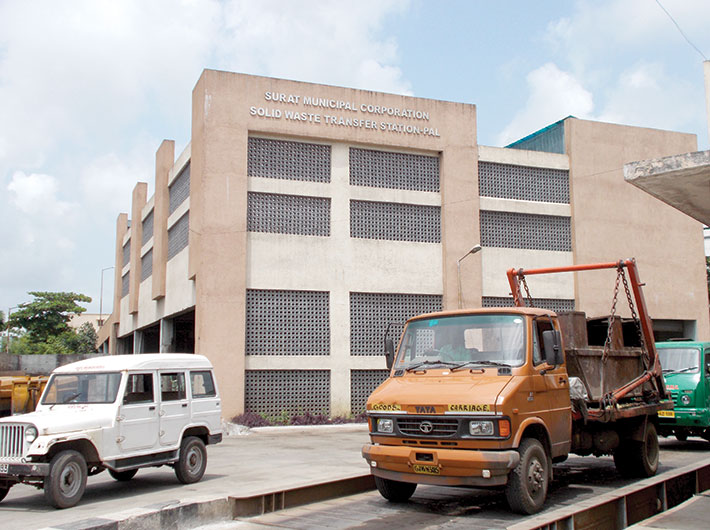
Surat a thriving economic city in the neighbouring state of Gujarat is around 283 kms from Mumbai.  In 1994, the city was struck by a virulent plague. The epidemic and subsequent deaths led to a clash between the local government and the citizens, while also igniting a collective conscience to manage their waste and keep their city clean. The Surat local government got into immediate action and decentralized the city for waste management. It appointed commissioners for each zone in the city and built in measures for accountability. Housing societies were given a monetary incentive to keep their streets clean. Failure to segregate waste was met a heavy fine. Private contractors were bought in to ensure door to door trash collection. Waste transfer plants were set up across the city, from where waste was finally set to the waste treatment plant located on the outskirts of Surat (see image below), converting it into electricity, fuel and compost. While it took Surat almost a decade to implement this massive city wide waste management system, its citizens are now proud of their clean and disease-free localities.


surat


Closer to home, the city of Pune, located around 140 kms from Mumbai, has presented its successful waste management model to several other cities and organizations in the country. The Pune Municipal Corporation (PMC), the local civic body, has set up public-private partnerships to manage its waste. As seen in the image below, the PMC boasts of biogas plants, centralized and decentralized composting and vermicomposting facilities, a waste recycling plant using refuse-derived fuel (RDF), and a waste-to-electricity plant using thermal gasification technology. While Pune population of 3.5 million generates about 1600 metric tonnes of waste every day, its current daily waste processing capacity is 2100 metric tonnes, which it hopes to expand to meet the future needs of its citizens.


pune


The city’s collective effort in garbage segregation and collection is the main reason for its successful waste management. PMC enforces people to segregate dry and solid waste at source. It has also integrated a sizeable number of waste pickers into a formalized door-to-door garbage collection network. In 2008, PMC signed an agreement with SWaCH Seva Sahakari Sanstha Maryadit, a cooperative of waste pickers. SWaCH is short for solid waste collection and handling. Every day, its 2,300 members go house to house and collect 600 tonnes of garbage, 140 tonnes of which is dry. The cooperative covers 400,000 households of the total of 800,000 households in the city, thus two-thirds of the total waste in the city is segregated at source. The PMC also offers a rebate on property tax to residential complexes that take up long term ecofriendly activities such as rain water harvesting, solar heating and vermicomposting. PMC officials conduct monitoring visit to check on defaulting societies. This incentive has been very successful, thus taking care of waste processing at the source. Pune leads the way in terms of an integrated, participatory and scientific waste management system.


Mumbai’s waste management crisis needs a systemic change and long-term commitment. This is not a problem that can be solved in a month or three. Rather, it is a deep-rooted civic issue that needs political priority and accountability as well as citizen responsibility in equal measures. Neighboring cities and far off countries offer Mumbai critical lessons in sustainable waste management including segregation at source, integration of the existing, informal and efficient networks of waste pickers and recycling industries, decentralization of waste collection and treatment, use of appropriate and latest technology to process waste and even converting waste management into a revenue generation activity.


The national government has approved US$15 billion to develop 100 smart cities and rejuvenate 500 others in the country. Mumbai is one of the cities nominated for this ambitious development plan. But the city cannot move ahead in this direction, if it is unable handle its own waste, leading to increased morbidity and mortality while decreasing productivity and quality of life.


Although the residents of Mumbai may not take to the streets to protest waste mis-management like the residents of Beirut, the BMC needs to understand what its people think about waste and how they deal with it. This will help the authorities persuade citizens to act responsibly by utilizing strategic public education, engagement and involvement measures. Rich or poor, Mumbai residents have to be ready to participate and cooperate in managing their waste effectively. The sign of real citizenship is the ability to think about what we do and how that affects our city. Mumbai needs its citizens to voluntarily reduce the waste they produce, sort waste for recycling, keep their own neighborhoods clean, and also act as watchdogs for monitoring initiatives. Mumbai also needs a public-private-citizen movement to manage its own waste and also to survive.


However, the civic body needs to first take the issue of waste very seriously by garnering interest and commitment from within the organization, while also safeguarding waste management initiatives from existing problems such as corruption.


It is important to note that Bombay, Mumbai under British rule, had created one of the best sewage management systems in the country. And it is imperative that the authorities of Mumbai realize that changing the name of the city will not reduce its stink. Mumbai, by any other name, will stink the same. Only more in the years to come.


© Genevie Fernandes, 2016


How to battle the inequality threat: Stop respecting greed (Interview with Richard Wilkinson)

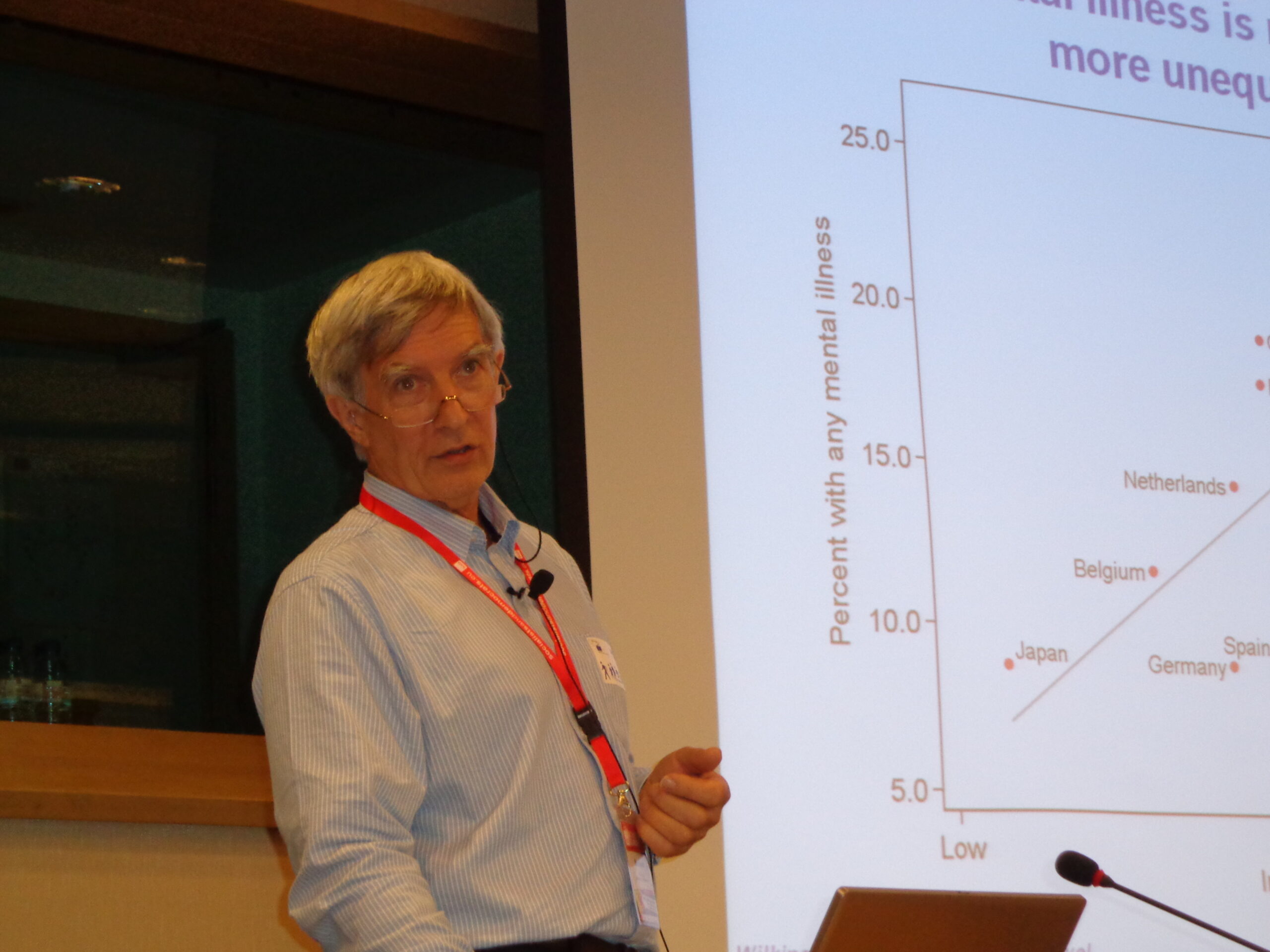
Professor Richard Wilkinson, author of The Spirit Level and one of the world’s foremost researchers on health and income inequality met with Genevie Fernandes, representing The Essayist, to discuss the nature and significance of inequality and understand the ways in which we can create a movement towards equal societies. This is Part 2 of a two-part interview; the first part is The Age of Inequality


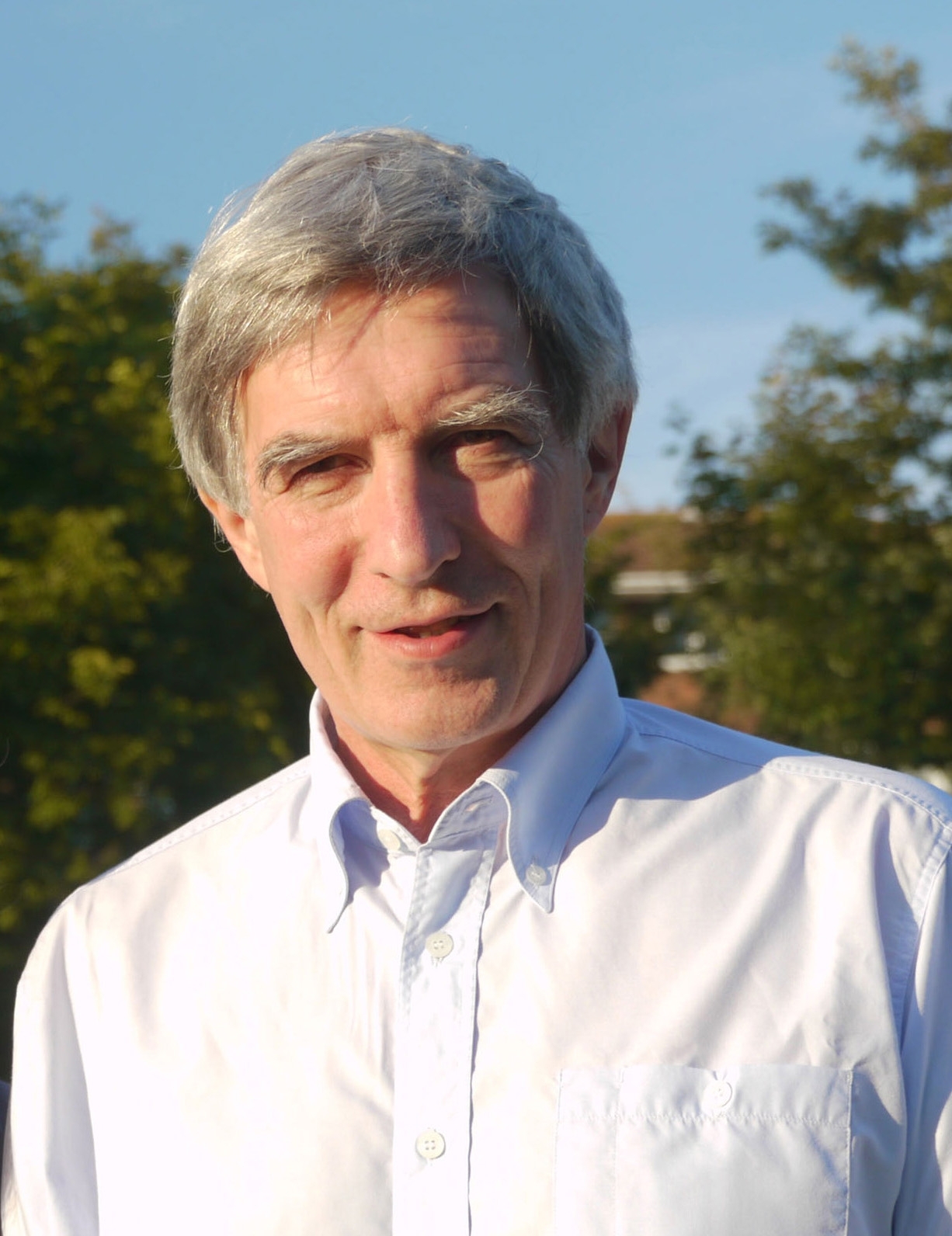
Richard_G_Wilkinson_2013


One of the world’s foremost researchers on the social determinants of health and on the societal effects of income inequality; Richard Wilkinson is the author of various books including the best-selling “The Spirit Level.”  An advocate for healthier, more equal societies, Richard Wilkinson is also a co-founder of The Equality Trust, a not for profit organization that provides resources and works with numerous affiliated local groups in the UK and across the world, carrying out awareness-raising and campaigning to reduce economic inequality.


He is also Professor Emeritus of Social Epidemiology at the University of Nottingham Medical School, Honorary Professor at UCL and a Visiting Professor at the University of York. He studied economic history at the London School of Economics (LSE) before training in epidemiology.


Read Part 1: The Age of Inequality here


RW = Richard Wilkinson; TE = The Essayist


TE: How do people from deprived communities view inequality? How do they think about it or react to it?


RW: There is definitely annoyance at the bonus culture, particularly when cuts are being made, and public sector wages are held down. But the consciousness of these issues is not there anymore; the consciousness that a generation of socialists developed from the early 20th century onwards, now that’s largely gone.


About two years ago, riots broke out simultaneously in the poorest areas in a lot of cities in England. A  black man was shot in London, but there were riots all over the country which weren’t really to do about race. The rioters were poor, it was looting, and they were stealing status goods, clothes with the right labels, electronics. What was significant in a way was that it was oppositional and it was against the system and yet it had no political consciousness at all. I think in countries like Greece, Spain and Portugal, there has been slightly more politicised opposition, and not just rioting. And that’s a sign of how political consciousness is almost evaporated.


north_texas_car_in_ground


I think we have got to rebuild it.


TE: How do we rebuild this consciousness?


RW: You know there are few bankers and major business people who have started not to take as much as they can get. And that is because they know they won’t be respected for it, and we have got to increase that. We must get to a point where people taking these huge salaries know that they will be regarded as greedy and selfish, and not respected for it.


One has to change greed from being a source of status to being a source of disrespect.


TE: How do we change? How can we create a movement towards equal societies?


RW: There is a professor of politics and philosophy who used to teach at Princeton University, called Anthony Appiah. He wrote a book called ‘The 1011-HoweHonor Code’, and in it he looks historically at the changes in the number of social practices. One of them is the ending of foot binding in Chinese women. Another is the decline in honour killings. He also examined when the English Aristocracy stopped fighting duels with each other. And in each case he says that the change happens and these practices are given up when they cease to be sources of honour and respect. So that is what people are after. And we have to change what they feel they get respect from. Today many of our successful people think that they survive and do well at the expense of others.


We don’t need inequality to thrive.


TE: If we have to create a culture where greed is not honourable anymore then don’t we have to start in the places where greed is bred and allowed to thrive – Wall Street and the modern corporations?


RW: The big corporations are where the income differences are the largest and they have widened dramatically since the 1970s. In multinational corporations in the 1970’s, the CEO’s used to get 20 or 30 times as much as the junior workers, but it is now 200, 300 or even 400 times higher.


But if you look at the army, the police, the health services, the local authorities, universities, you find that the ratio of the salary between the head and the junior employee is usually between 10 to 1 and 20 to 1.


In the Mondragon Cooperatives in Northern Spain, which is a group of companies that employs 80,000 people, the differences between the CEO and junior employees are about 1 to 5 or sometimes 1 to 9. And so, I think one has to regard large corporations as having two quite separate functions, one is producing the goods and services we all need, and the other is to concentrate wealth and power at the top, in totally undemocratic ways. And these companies have the power to run circles and rings round the political elite. They pretty much dictate terms with national governments and so that’s the problem we have got to deal with. And I do think that means democratizing.


TE: Democratizing means more power to people for making decisions that impact their lives. However, is it not one of the important aspects of modern-day economic systems that it demeans people; makes them irrelevant to decision-making? How do we get out of this trap?


RW: I think we cannot do without a large measure of the market; you need tax and benefit systems, and constraints on pre-tax income differences within companies. I think we have to campaign for the democratization of the economy. Democracy is about power and extending it into the economy is about changing who has power, and this has to be done with employee representations on company boards, with incentives to grow employee earned companies and cooperatives. I think that has to be our vision of the future.


Modern production is a cooperative effort and increasingly, the value of a company is the value of the people it brings together. No longer is it a matter of the plant and the building and the equipment and so on. What matters is the assembled skills and knowledge of a group of people. So buying and selling companies is basically buying and selling a group of people, which is really anachronistic.

 stop occupy


At one point I suggested, in a talk, that maybe companies should have to pass two percent of their shares each year into an employee earned trust, which would mean after 25 years employees would be majority shareholders. There was a time when companies’ shareholders were people who kept shares for a long time, had a genuine interest and knowledge of a particular company they invested in. But now, of course, the financial dealing is done in finance houses, employees who buy and sell shares with computer programs that trigger it. The average length of shareholding I believe is about four months. These finance houses own shares in thousands of companies and probably know very little about them. They say it is very difficult for the company to discover who its owners are and so the system of earning and controlling companies has become increasingly short term, and the vast majority of the shareowners don’t turn up to company board meeting.


There is now more evidence that more democratic models where pay differences are much smaller are more efficient, and productivity is much higher. I think, increasingly employee representation on company boards is moving up the agenda.  About half the member countries of the European Union have some legislation for employee representatives on company boards, although it is usually pretty weak. But in a few countries like Germany it is quite strong.  There are different rules about employee representation for different sizes of companies. You have to have some representatives when you have 500 employees, but when you get to 2000 employees, half of the members on the remuneration committee have to be employees. There is evidence which shows that companies with employee representatives on the management board have smaller income differences.


We have to spread this economic culture.


TE: Do you think more and more policymakers and people in general are discussing and getting concerned about inequality? Are there actions that match this concern?


I think these issues are moving up the agenda, to the extent that inequality is moving up the agenda. I mean when we were writing our book in 2007, there was no concern with inequality and no mention of it in the media. But about a month ago, OECD got the agreement of a number of major tax havens including Switzerland, that they would share information on bank accounts with tax authorities in other countries. You cannot put out top tax rates when the rich can hide their money so easily. So you have to deal with the tax havens first and that’s an important step first. I read yesterday, that in California, in the legislature, they had narrowly lost a vote to implement a sliding scale of corporation tax, which meant that if you have very big pay differences in your company you would pay more corporation tax. That vote was lost but only narrowly. Switzerland had a referendum on whether there should be a pay ratio for companies of 1:12, it was lost, but 35% of the people voted in favour of it, and that was late last year. So these things are coming up the agenda pretty fast.


At the city level, the ‘Fairness Commissions’ have been a good idea in that they raise consciousness. They were set up by local city governments and by now, fifteen or sixteen cities in the UK have instituted these commissions.  The most important thing that they have done is commit the local governments to paying the living wage rather than the minimum living wage at the bottom. They have led to substantial increases in income to tens of thousands of people. This is an idea that they should try and spread to the rest of the public sector and into the private sector as well. There are a few big private employers that have started to do that but I suppose it is a largely a public relations move. But still…it’s a start.

 rw2


Some people are even asking their suppliers about wage ratios in the companies they buy things from. These interventions are important for raising consciousness, but as it is labour controlled, it is bound to feed into changes in thinking in the labour party nationally. I think that’s important. I think I have spoken to almost all of them and quite a few say that they were stimulated by the Spirit Level, but off course they don’t have the power to change income distribution even in their own cities very dramatically. They don’t have legal power over companies.


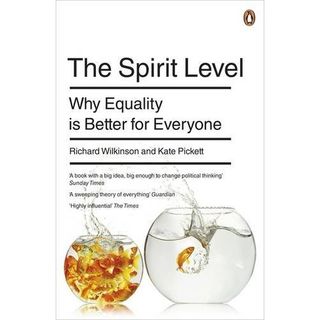
TE: In one of your best-selling books, ‘The Spirit Level: Why Equality is Better for Everyone’ (2009) which you co-authored with Kate Pickett, you present a battery of evidence to show that the countries with the biggest gap (inequality) between the rich and the poor also have the highest level of health and social problems?


RW: Inequality has dire consequences on our health and well-being. Economic growth no longer seems to be an indicator of a better quality of life. What the evidence made us emphasize is the vital importance of social relationships to human health and well-being and we found that higher levels of income inequality damage the social fabric that contributes so much to healthy societies. Our key argument is that we do better when we are equal and therefore we should work towards reducing inequality and subsequently improving the psychosocial wellbeing of the whole society. Our social status seems to be at the heart of many of our society’s health problems.


We examined available data from richer, more developed countries because we wanted to write a very simple accessible book. Because things that we were looking at are unrelated to GNP per capita that one does not need to control for it. The other reason for looking at rich countries is that we could get more comparable data. We don’t produce our own data; we just download it from OECD or WHO.

The-Spirit-Level


What we found in our analysis is that so many things are influenced by one factor: income inequality.


How can all these different problems be influenced just by income inequality? But the key is that they are all problems that are more common at the bottom of the social ladder. Although there is depression, ill health and mental illness at the top of the social ladder, they are all much more common at the bottom. And it is those multiple problems which are all related to income inequality.


We did a formal test of that in a research paper in the American Journal of Public Health. We looked at causes of deaths with steep social gradients and ones like breast cancer and prostate cancer which have little or no social gradient. What we found was that steeper the social gradient the more strongly is it related to inequality. So basically all we are saying is something extremely simple: Problems that are related to social status get worse when you increase status differences.


The surprising thing is that they don’t just get worse among the poor; they get worse amongst the whole population, because inequality changes the whole social fabric. They lead to changes in social relations, and social evaluative threat increases throughout the population. It is clear that the damaging effects of inequality are the largest at the bottom of the society but even higher up the social ladder there seems to be some benefit of greater equality.


To explain why the US has the highest obesity, the highest violence, highest prison populations, and amongst the lowest life expectancy and so on, and why the Scandinavian countries do quite well on those indicators across different populations, one is trying to explain these common patterns in quite different problems but in problems related to social status which have social gradients. So as researchers we have to seek or think of something very deep seated in society, enough to influence so many outcomes. This is what makes social status more important. And it is pretty hard to think of any other explanation.


TE: While ‘The Spirit Level’ is a bestseller and has won the support of many, it has also garnered criticisms such as picking and choosing of data. How do you respond to critics?


RW: While I was a student at LSE, I did courses in the philosophy of science with Karl Popper. And off course, he always said that the best test of a good theory is whether it can make novel predictions which can then be verified.


And this relationship with inequality has been tested just so many times, and although there are papers where people manage to control it out, there are small minority of them, and they are usually controlling for things that are I think are on the causal pathway, such as things to do with class and so on. But people don’t realise that the first research papers on income inequality and health came out 35 years ago, this story has been building up over a long period, and you probably know our research paper in 2006 reviewing 169 studies, and yet they treat it as if we were the first people to have made this daft suggestion.


Some critics accuse us of picking and choosing our data. We have an absolute rule that if our source agency such as OECD, WHO or UN has data for one of the countries we’re looking at, it goes in. We make no judgements of whether the data is comparable. We leave that to WHO, OECD or UN, or whatever the data source is. One cannot say I don’t like the position of the country, and so I can leave it out of my analyses.


We have replied to our critics and I think now we have got better perspective and we have probably done better replies. And talking about it as much as we have, you come slowly to understand it better.


If all the countries are not shown in the analysis, for instance in the case of mental health, then that is because WHO hadn’t produced comparable data for other countries, and there is data that we are suspicious about, but we include it because it is there. For instance, Singapore is the country with the lowest infant mortality according to WHO, but it also has the highest inequality in our dataset.  And I never believed that data, but it goes in because that’s the data that the WHO has.


I was invited to give some lectures in Singapore, and one of the reasons why they have low infant mortality is because they are a little city-state. They don’t want people to gain Singaporean nationality, they don’t want population expanding. About 25% of their labour forces are migrant workers. They are not allowed to get married nor have children. They get a health check every six months and if they get pregnant or married they get sent home. And off course they are the poorest 25% of your labour force, so what you are doing is removing from the figures the section of the population where you’d expect infant mortality to be the highest.


Some critics argue that the relationships we have found between income inequality and poor health are spurious because they firmly believe that if you add in a few countries or take out some select countries, then one can make the relationships disappear. That is silly because there are analyses with over 100 countries. And of course the attacks have come from the far right.


There was a lot of controversy in epidemiology but it was less about whether there was a relation; they agreed there was a relationship but they argued mainly about the causes of the relationships, it. So there was the neo-materialist hypothesis, which is basically saying that material things mattered beyond the old public health issues of food, safety, and sanitary conditions.


It was really a fight against the growing recognition of the importance of psychosocial factors in health which works through the pathway and mechanism of chronic stress. And it was also motivated by people on the far left, whose fear was that if the causal mechanisms were presented as psychosocial then governments would say that we needn’t worry about low incomes, just get the poor to be nice to each other, and the problem will be solved.


But what seemed important to me was something different. As we showed more and more factors in our lives were related to income inequality, then we were basically demonstrating that income inequality was even more important to us than we had ever imagined.


TE: So what can we expect as we go into the future?


I would say, we need to paint a picture of future society where the quality of work is transformed by democratization of the work place and income redistribution, where community life is strengthened, where leisure is increased, and you get a higher quality of life through that. You know what I call the convenient truth as opposed to Al Gore’s inconvenient truth is that in the rich countries it is no longer material life that drives the quality of life; it is the quality of social connections. So in order to create a better future we have to stop worrying about our economic needs and start dealing with our social needs. Greed will not be good in that future.


************END OF INTERVIEW*************


We thank Prof Richard Wilkinson for giving his time so freely.


If you want to take action to help address inequality then please visit The Equality Trust website at www.equalitytrust.org.uk


Watch Richard Wilkinson talk about how economic inequality harms societies in a TED Global Conference filmed in 2011.


If after reading this article you would like to learn more about social inequality and its impact on health and human development, click here for a further reading list.


Open Access Article

© Genevie Fernandes (2014). Inequality: Interview with Richard Wilkinson. The Essayist, July 2014. http://www.the-essayist.org/


This is an open-access article distributed under the terms of the Creative Commons Attribution License, which permits unrestricted use, distribution, and reproduction in any medium, provided the original author and source are properly cited. To view a copy of this license, visit http://creativecommons.org/licenses/by/3.0/


The Essayist is a strong advocate of the “no-plagiarism” policy.


Image Reference:

  • Richard Wikinson Image accessed from Wikimedia Commons: http://commons.wikimedia.org/wiki/File:Richard_G_Wilkinson_2013.jpg
  • Car and Street Images by Dennis Dodson
  • The Honor Code: http://books.google.co.uk/books/about/The_Honor_Code_How_Moral_Revolutions_Hap.html?id=P368fFhdvEwC&redir_esc=y
  • The Spirit Level: http://www.futureeconomics.org/2012/07/beyond-the-spirit-level/


The Age of Inequality – Interview with Richard Wilkinson

 One percent of our world’s population owns half of the world’s wealth. The wealth of this one percent amounts to $110 trillion which is 65 times the total wealth of the bottom half of the world’s population. Seven out of ten people in our world live in countries where economic inequality has increased, often drastically, in the last 30 years. In 2013, the World Economic Forum ranked widening income inequalities as the second greatest worldwide risk in the coming 12 to 18 months because it poses a significant threat to inclusive development and pushes us closer to a social breakdown. Should this massive concentration of economic resources in the hands of the few concern us at all?

0

British Epidemiologists’ Richard Wilkinson and Kate Pickett’s bestselling book, ‘The Spirit Level: Why Equality is Better for Everyone’ (2009) presents a battery of evidence to show that the countries with the biggest gap (inequality) between the rich and the poor also have the highest level of health and social problems. They argue that inequality has dire consequences on our health and well-being. Economic growth no longer seems to be an indicator of a better quality of life. The authors emphasize the vital importance of social relationships to human health and well-being and show that higher levels of income inequality damage the social fabric that contributes so much to healthy societies. Their key argument is that we do better when we are equal and therefore we should work towards reducing inequality and subsequently improving the psychosocial wellbeing of the whole society.


The-Spirit-Level


On behalf of The Essayist, Genevie Fernandes met with Richard Wilkinson to discuss the nature and significance of inequality and understand the ways in which we can create a movement towards equal societies. This is Part 1 of 2-part interview.


richardcolourhighresRichard Wilkinson has played a formative role in international research on the social determinants of health and on the societal effects of income inequality. He is Professor Emeritus of Social Epidemiology at the University of Nottingham Medical School, Honorary Professor at UCL and a Visiting Professor at the University of York. He studied economic history at the London School of Economics (LSE) before training in epidemiology. Richard Wilkinson is also a co-founder of The Equality Trust, a not for profit organization that provides resources and works with numerous affiliated local groups in the UK and across the world, carrying out awareness-raising and campaigning work to reduce economic inequality.


The Essayist: TE; Richard Wilkinson: RW


TE: What is Social Inequality? How would you explain this concept to someone completely unfamiliar with research in this area?


RW: People are most familiar with social inequality in terms of class or caste differences but I think that they are based on material differences, which are essentially differences in income and wealth. Social distances between people increase with bigger material differences between people, accompanied by the feelings of superiority and inferiority. There is the idea that people are born clever or born with certain traits and this helps them to climb get further up the social ladder, and this help us easily explains the social hierarchy and wide differences between people. But I think it is the other way round, I think that differences in ability are a reflection of where you were born and brought up in the class structure. All the cultural markers of class and social status are built on a material foundation or the framework for class and status, at least in the developed world, is the material difference between families and between groups. So when talking about material inequalities, I don’t think I’m talking about something different from class and social status.


If you read the sociologist Bourdieu’s work, it is quite clear the extent to which people use money to express status. The ability to send your children in private schools, to eat in expensive restaurants, to live in the smart part of town, to afford all the things from clothes to food; all of these markers of status are fundamentally built on material possession.


People often think that class is quite different from income differences. Take the case of Russia, where fall of communism has given rise to a new class structure. Huge income differences have opened up as is evident in the rise of the oligarchs. By the time the children of the new Russian oligarchs have been brought up in wonderful houses and been sent to special schools, and have travelled the world, they will have regarded themselves as superior beings, and other children will regard them as superior as well. These children would have developed the cultural features of an upper class.


Or take a different example like Britain in the nineteenth century, where people thought that class was about the blue blood, inheritance and family connections. If you gambled your money away, you could be what we call the ‘genteel poor’ for perhaps a generation, but after that your children would just be poor. But if you made your money in your lifetime, you would not be fully accepted, and would be regarded as ‘nouveau riche’. But again after a generation you would have gained all the cultural markers of an upper class and status and be accepted.


Over time material differences become overlaid by differences in education, clothes, sense of self, and all the other markers of class identity. Material differences become the key driver of social distinction, leading to social inequality.


TE: What does inequality mean in the UK, in the US and in developed countries?


RW:  Inequality essentially refers to the material differences that give rise to the status differences, the feelings of superiority and inferiority, and raises the social evaluative threat. As we become more aware, in public health, of the importance of psychosocial influences on health, working through the biology of chronic stress, the next big step was coming to realise that social relationships, at least at the population level, are the most important source of chronic stress. Losing one’s house or one’s job may be a worse threat in terms of causing acute high levels of stress, but it is not so common. We all worry about how we are seen and judged, and we worry about it every day, and often many times a day, and in many different situations, that is why inequality is so powerful.


If you want to understand the behaviour of any animal, probably the first question you should ask is, does it have a rank or a dominance hierarchy. If it does, it will tell you that the strong eat first, the dominant males try and monopolise access to the females. It tells you about the nature of relationships in the social hierarchy, that basically there are bullying relationships. It is interesting that although we don’t have internationally comparable measures of bullying amongst adults, we do for children, and you can see there are several studies now showing quite a good relationship between bullying and inequality. In more unequal societies, kids bully each other more.


Eric Uslaner has shown in his work that changes in inequality precede the changes in cohesion and trust. Robert Putman talks about how they moved together in the United States over the twentieth century, as income inequality widened measures of trust and social cohesion weakened. Though earlier on in the period where the income differences narrowed, measures of social cohesion strengthened. Putnam is very clear about that, he is less clear about which one causes which.


And you see why inequality damages social life, it is because, basically the old intuition that people have always had that inequality is divisive and socially corrosive, and that is true. Because of the social evaluative threat, which are our worries about how others see and judge us, we often find that social relationships become a bit of an ordeal (because we are constantly being evaluated by others or we are constantly evaluating others).  You can only really relax when you’re alone at home. Off course we want the social contacts, but you have to put on a good appearance, and think about how you’d come across and how you’d look.


If you look at the determinants of health or wellbeing in the rich world, what is striking is how important social relationships are in determining our health: the importance of friendship, numbers of friends, or involvement in community life. The conditions for happiness seem to be about the quality of our relationships, the number of friends we have, whether we are involved in voluntary work and such. And you know, in rich countries we don’t know our neighbours; community life is weakened with inequality. So how we can now improve the real quality of our lives is to improve the quality of the social environment, and that really is what the studies on inequality are all about. Inequality is a means of weakening the quality of community life, where people trust each other less, and there is more mental illness, more violence and more social and health problems. Addressing inequality can change that – make us healthier.


TE: What does inequality mean in the developing countries or emerging economies?


RW:  Does inequality behave in the same way in developing countries or middle income countries? I suspect it does. Certainly there are many research papers, which look at not just 20 to25 countries as my colleagues and I did in our work, but some papers look at over 100 countries including low income countries, and while you cannot compare so many outcomes, you can compare death rates and homicide rates, and the results are the same. Inequality is corrosive. Inequality has a detrimental effect on people’s health and social relationships across countries – rich or poor.


TE: One easily understands poverty and how poverty affects people at the bottom of society. They have fewer resources, more deprivation, less food, shelter and so on. However, when it comes to the topic of inequality, a common question is: How does inequality affect us all – including people who may not be directly from low income or deprived communities? Why should they care about inequalities affecting someone at the bottom of the society?


RW: In a society where some people are so important and other people seem to be worth nothing, we are all more worried about how we are seen and judged.  In our book ‘The Spirit Level’, we talk about the ‘social evaluative threat’ such as threats to self-esteem or social status, and how it is a fairly fundamental part of causation of rising anxiety and the shame of inferiority that people experience. But a problem I used to have is that when you look at the work on relative deprivation, and when people are asked about whom they compare themselves with, the answer is nearly always with people like themselves, and that seemed to be a problem for me thinking of the overall differences. And I didn’t have a solution to that until I read Sapolsky.


Robert Sapolsky, a neuroanatomist at Stanford University, has been studying baboons in the wild, in the Serengeti, for the last 30 years. He darts them and while they are unconscious, takes a blood sample and relates things like cortisol to position in the social hierarchy. His work was very important in our understanding of the importance of social status, more generally. We also learned from people working on the psychosocial effects of social status itself, such as Clyde Hertzman in Canada or Michael Marmot here in the UK.


Sapolsky writes very popular books and one of them is called ‘A Primate’s Memoir’ and in that he says, of course baboon number 7 never fights baboon numbers 1,2 and 3, because he knows that they are superior and he would lose. He never fights baboon numbers 20, 24 and 25, as they know he is superior and they would lose against him. Baboon number 7 conflicts with baboon numbers 6 and 8, because that is where his status matters more. What I have to watch is when my equals start thinking that they are better than me, and I say, ‘Who the hell do you think you are?’ It is these close comparisons that matter, and what it means is that inequality gets into quite personal things. We all become more touchy about social position and status. It is hard for us to imagine living in a society without any sort of social evaluation, where there are no class or status differences.


As a result of the social status competition, you are either overcome by social anxiety and you withdraw from social life, or you try and do a sort of ‘self enhancement’ or ‘self advertisement’, which is a kind of narcissism. You can either go under feeling overcome with social anxiety, worries about how you are seen and judged, lack of confidence, low self-esteem, depression, or you can respond the other way. You can say, ‘Well, actually I am rather very good. I went to one of the best universities, I was one of the youngest people promoted, and……last year we had our holidays in the Bahamas’. There are ways of showing you’re a significant person and that you are doing rather well, and you are rather successful.


An international team measured this concept of ‘self-enhancement’ or ‘self-aggrandisement’, by getting people in different countries to say how they compared themselves to the average. If they thought they were clever than most people in their country, more generous, or more attractive? In more unequal societies, people rated themselves as higher than the other people in their country. And you know there is an old joke that 80% to 90% of the survey respondents said that they are better drivers than the average. There is really an impressive relationship between how people rate themselves and levels of inequality existing in their society. We found some data on narcissism in the Unites States at the time, which showed that people become more narcissistic as inequality rises. One of the costs of greater inequality is that people cease to be modest about their achievements and abilities. While this argument was more of an intuitive estimate based on rather little data, now the evidence is there and we can actually see that.


The reason why violence is more common in unequal societies is not that the poor start attacking the rich; it is because people become very sensitive to being disrespected, and looked down upon. Shame and humiliation become more sensitive issues in more hierarchical societies and status becomes more important. As status competition increases, more people are deprived of access to markers of status and social success. So I take an offence at any little sign that you’re not treating me with respect.


You can see the same process in how inequality drives consumerism. Because consumerism is about expressing social status and so people in unequal societies work longer hours, save less, get into debt more, and that’s because expressing status is more important, and because they live in a social environment where people judge each other more by status.


There is now research showing more status anxiety in more unequal societies, right across the social hierarchies, not only at the bottom, but all the way across. If you read economists like Robert Frank at Cornell University, in his works ‘Luxury Fever’ or ‘Falling Behind’, he shows how these worries about status sore right to the top. I remember reading a journalist who interviewed bankers, who would get these huge bonuses, and he asked a banker, ‘you surely can’t spend all this money?’ And the banker said, ‘No, but they show me that I’m better than the next man.’


There is a really important situation that the rich countries are in today. Although economic growth transformed the quality of lives of people in the economically advanced countries, it isn’t sufficient anymore to get healthier or happier.


Simply put, it means that if you put life expectancy against GNP per capita, you get rapid rises in life expectancy in the early stages of economic growth and then it levels out. No more is there a direct relationship between economic growth and life expectancy in the developed world. The same is true of happiness or other measures of wellbeing. And what this means is now economic growth in the rich world is largely driven by status competition and consumerism, which is a zero sum game, because although I can improve my status over you, we can’t improve our status over each other.


So to understand the impact of inequality across the society, we have to seriously think about our sensitivity to issues around social status. How this notion of social status affects our health, well-being, our identity. If we continue to live in this kind of a society where there is constant social evaluation, then inequality driven status competition becomes part of our social, physical environment. This constant inequality driven status competition becomes a toxic factor in our environment.  And as we all know this has harmful effects for all of us. This does not mean that we have to always live in this kind of a society. We can change it.


TE: How does caste, race, or ethnicity interact with inequalities?


RW: Material differences get solidified into caste or racial explanations for differences. The relationship between social mobility and inequality is important. In more unequal societies there is lower social mobility. We first published this when there was rather little comparable data on social mobility in different countries and more evidence has become available. More recently Alan Kruger, the Chair of President Obama’s Economic Advisory Committee, has produced exactly the same relationships as ours using quite independent data. So there are now several datasets showing that where there is bigger income differences there is less social mobility and I can imagine that would lead over time to the whole thing becoming completely ossified more like a caste system. Research shows that health of ethnic minority groups who live in areas with more people like themselves is sometimes better than that of their more affluent counterparts who live in areas with the more dominant ethnic group.


But of course, the rich have always seen themselves as biologically superior beings and that’s part of caste isn’t it. And I think a lot of poor people think of themselves, they actually believe that the reason they are poor is because they are less intelligent or less capable than those who are well-off. There are a lot of poor people who think that they haven’t got what it takes. I remember a neighbour of mine when I used to live in Brighton, who was an unskilled building worker. He used to discuss all sorts of things but he would preface slight shyness and he would say, ‘you know Richard, I’ve only got one brain cell but I was wondering if’.…he was worried that what he wanted to talk about might sound stupid and he regarded himself as being an unskilled worker because he hadn’t been any good at school. I wasn’t any good at school either but I had opportunities later in life and he didn’t realise that I had twice as many years of education than he had.


It seems like our society has this unshakeable belief that differences in ability explain our positions in social hierarchy whereas the more important relationship is the other way around, going from our original position in the hierarchy to our differences in ability.  Those who are in a higher position in the hierarchy get more resources and opportunities, and have better social networks, and obviously do better.


TE: Has social inequality always been there? How has it developed historically?


RW: No, the evidence is increasingly strong that most hunting and gathering societies were not hierarchical, and the expert on this, is ‘Christopher Boehm’ from the University of South Carolina. He has compiled an electronically searchable database, putting together all the records of hunting and gathering societies, from early explorers, missionaries, colonial administrators, anthropologists, and I think, has evidence on 200 hunting and gathering societies. And it’s not that we have had a change in human nature, it’s that in those societies there was what he calls ‘counter dominance strategies’. So if someone starts to be bossy, selfish and so on, first the others tease that bossy person and if that person still goes on, then the others ostracise him or her. There are quite a number of records, of people from these societies who were particularly difficult, being killed not in a fit of temper, but if a man is endlessly selfish and domineering and so on, and does not take heed to any of the sort of warnings, then someone in his family would be delegated to kill him. And apparently death rates from that source put the rate of homicide as high as that in modern-day Chicago.


Equality comes in with big game hunting. There are two reasons for this: one is that individual strength is no longer enough to be dominant. Because as soon we have the weapons to kill large animals and the knowledge and intelligence and so on, it means that a stronger individual can no longer rule the roost. Secondly, big game hunting meant that when someone did kill an animal suddenly there was more food than that one person could actually eat, and so food sharing became common. Typically, the food hunter would not divide up the catch himself, it would be divided up by some others in the community, because often there was a sort of evaluation of modesty.


Inequality seems to rise with the beginning of agriculture, for reasons I am not so clear about. But it was obviously a breakdown of the counter dominance strategies, which were ways of dealing with people who are domineering. So it does not mean that people did not have a desire for dominance in hunting and gathering societies, but it’s more that these tendencies were kept in check.


If you look more recently at the income distribution in the 20th century in many of the developed countries, you find that there are inequalities in the early part of the 20th century, and then sometime in the 1930’s they start to decline. They go on declining till the 1960’s and bottoms out in the 1970’s. From 1980 onwards you get the modern rise of inequality.  The 20th century had a U shaped distribution of inequality, and the strength of the trade unions in terms of proportion of the labour force members of the trade unions, had the exactly opposite shape. Well, I don’t mean that unions necessarily do wonderful things for their members, but they were an indication of the strength of what I call the countervailing voices in society. These voices talk about issues of social justice.


But now, in many countries, we are back to where we were in the 1920’s; back to that level of inequality. This transition towards an increase in inequality has to be seen as the strengthening and the subsequent weakening of the labour movement coupled with the fear of communism. In the 1960’s we thought that the Eastern European countries and Russia had a planned economy that was probably more efficient and they seemed to be growing faster than western countries, but all of that disappeared from the late 1970’s. And so politicians like Margaret Thatcher in the UK and Ronald Reagan in USA could come along and very easily say that: There is no alternative. So I think we have to recreate a movement, not simply the same socialist movement, but a movement towards sustainability, and a higher real quality of  life which means, not only greater equality that improves the quality of social relations, but also reduces consumerism which is the biggest threat to reduce carbon emissions and save the environment.

to be continued…


****************


We thank Prof Richard Wilkinson for giving his time so freely.


equality trust


If you want to take action to help address inequality then please visit The Equality Trust website at www.equalitytrust.org.uk


Watch Richard Wilkinson talk about how economic inequality harms societies in a TED Global Conference filmed in 2011.


If after reading this article you would like to learn more about social inequality and its impact on health and human development, click here for a further reading list.


 References:

Inequality Statistics: Accessed from  Ricardo Fuentes-Nieva and Nick Galasso (2014). WORKING FOR THE FEW: Political capture and economic inequality. Oxford: Oxfam.

Cover Image of Prof. Richard Wilkinson: Accessed from http://www.yesmagazine.org/happiness/want-the-good-life-your-neighbors-need-it-too

The Spirit Level Book Image: Accessed from http://www.theguardian.com/books/2010/feb/28/spirit-level-richard-wilkinson-kate-pickett

Image of Prof. Richard Wilkinson: Accessed from The Equality Trust Website at: http://www.equalitytrust.org.uk/node/201


Open Access Article

© Genevie Fernandes (2014). The Age of Inequality: Interview with Richard Wilkinson. The Essayist, July 2014.  http://www.the-essayist.org/2014/07/age-inequality-interview-richard-wilkinson/


This is an open-access article distributed under the terms of the Creative Commons Attribution License, which permits unrestricted use, distribution, and reproduction in any medium, provided the original author and source are properly cited. To view a copy of this license, visit  http://creativecommons.org/licenses/by/3.0/


However, The Essayist is a strong advocate of the “no-plagiarism” policy.


‘… by living we learn’ – The life of Patrick Geddes and his quest to re-connect man with nature in the new urban spaces

“This is a green world, with animals comparatively few and small, and all dependent on the leaves. By leaves we live. Some people have strange ideas that they live by money. They think energy is generated by the circulation of coins. Whereas the world is mainly a vast leaf colony, growing on and forming a leafy soil, not a mere mineral mass: and we live not by the jingling of our coins, but by the fullness of our harvests.”

Patrick Geddes (1888)

0

Edinburgh, the capital city of Scotland, was at the heart of the 18th century Scottish Enlightenment that witnessed great intellectual and scientific achievements. This progressive city was home to some of the greatest thinkers – philosopher David Hume, economist Adam Smith, and the geologist James Hutton. Author Arthur Conan Doyle, creator of the legendary detective Sherlock Holmes, and actor Sean Connery, who played the dashing Cold War spy James Bond, were also born in this city. However, there was another great thinker from this city, who made his influence felt far outside his national boundaries with ideas that were far ahead of his time.


It all began on a sociological tour of the city buildings organized by the University of Edinburgh.
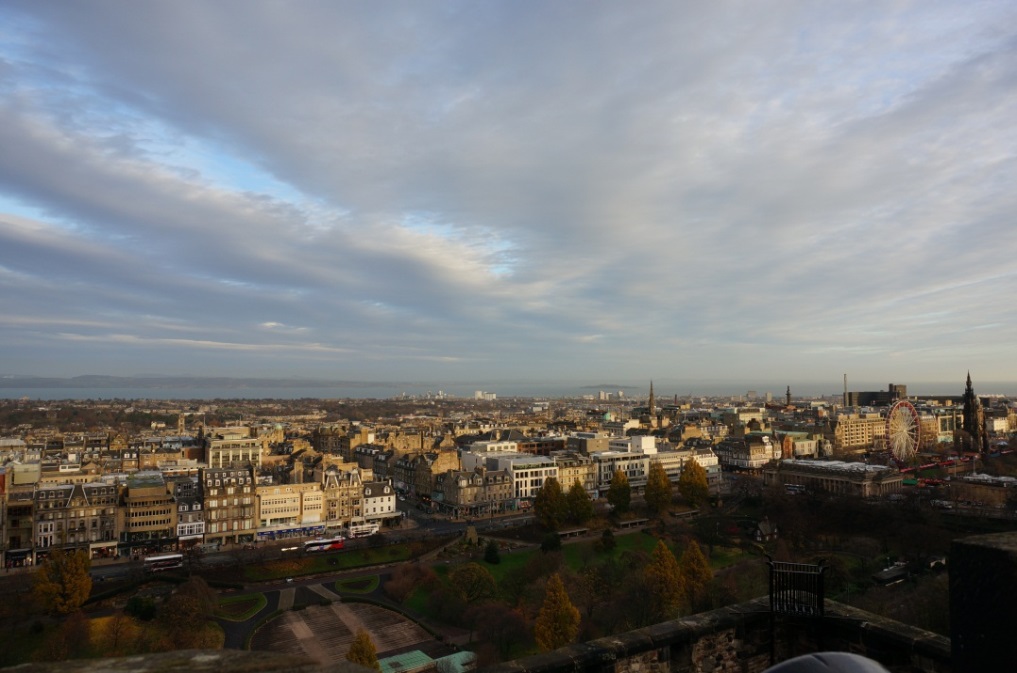
 

Outlook TowerA modest group of 15, mostly international students, followed the tour guide – a professor of Sociology at the university, as she walked from one iconic structure to another, explaining along the way the historical significance of each structure and ideologies of the time in which they were built. While most of the structures were used as spaces for residence or conventional formal occupation such as the college, hospital, theatre, and the museum, there was one structure that took us by surprise – the Outlook Tower (white building in the adjacent image). Our guide described this building as a civic museum that was developed by Patrick Geddes, a biologist and town planner, who wanted to provide the residents of Edinburgh a view of their own city. By standing atop the Outlook Tower residents could observe the good and not-so-good features of their own city; visible to the resident’s eyes as they stood next to each other. Patrick Geddes wanted these observations to increase the residents’ awareness of their place and surroundings and inspire actions to improve the city.


It is said that Geddes would conduct tours of the city in the 1800s; he would rush visitors to the top of Outlook Tower (in those days) and ask them to view the city through a camera obscura (an optical device that projects an image of its surroundings on a screen) and then make them sit in a darkened meditation room – the “Inlook room” – to internalise what they had learned, and make the observations their own. Geddes dreamed of making Edinburgh a city of cultural, educational and spiritual superstructure, where people of different classes and groups lived together in harmony, instead of cities that were arranged into functional zones.


Our tour guide moved on to the nearby buildings, but my mind was stuck on the tower. I had never come across such a structure that functioned as a live sociological laboratory and meditation room for all city residents. An idea that was much needed in today’s world – which is increasingly urbanized. Today’s congested conurbations (apparently a word coined by Geddes) such as Mexico City or Jakarta or Mumbai desperately need such living laboratories and reflection rooms.


The walking tour had left me thinking about Patrick Geddes and his idea of urbanization – involving people in observations of their own surroundings and moving from observation to action. I read that Geddes had turned down a knighthood the first time for democratic reasons stating that he was a ‘man of the people.’


I decided to explore and find out more about Geddes. I thought I would do so by using his espoused method of observation.


The next day I walked around the streets of Edinburgh (this time alone) and observed buildings in the Old Town that Geddes had helped revive and restore, through civic participation. Squalid and uninhabitable at one point in time, these buildings have now become a thriving part of the city with residents and international tourists alike, all thanks to Geddes’ vision and philanthropy. I visited the Outlook Tower and looked at the city from several vantage points. Standing on the Tower’s rooftop, I could see the city below me: bustling city streets with people walking by, green spaces that separated the buildings, the mountains and the sea beyond the urban sprawl. I could hear the sounds of the birds flying above mixed with the sounds of the bagpipe being played somewhere below along with the background hum of the city.
 

view edi outlook tower

View of the city of Edinburgh from the Outlook Tower


I had been in Edinburgh for almost two months but had never experienced it this way. Even though I had walked around the city before, never had I observed and sensed so much of this place, like I had while standing on the Tower’s rooftop. The view had heightened my senses – changed my outlook of the city.
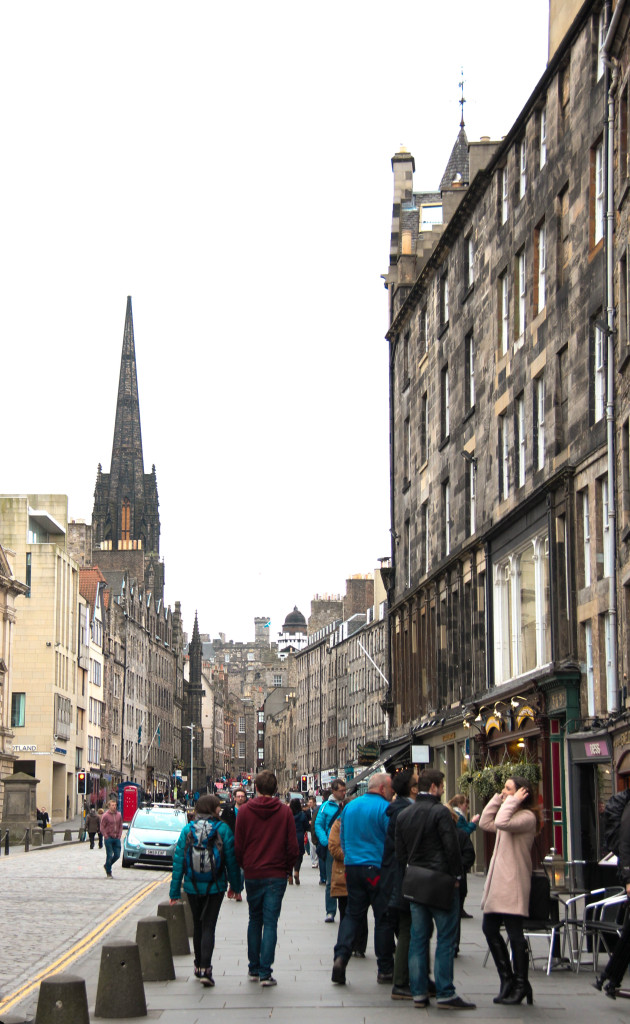
 

IMG_4698-2I came down unwillingly and strolled through a network of gardens that Geddes had designed. Every time I sat to relax in these green spaces, I sensed immense tranquillity, and right there in the middle of a modern city I felt one with nature. This is exactly how Geddes had envisioned his city to be; a flourishing and nourishing space where people could live, work, love and be connected to their environment. The idea of urban gardens and gardening was also tried by Geddes and he not only tried to bring children and adults closer to nature but also attempted to bring the different social classes together.


This man had practically shaped the city of Edinburgh in the 19th century. However, his pioneering work in urban planning and education in Edinburgh also took him across the world to India, Palestine and France. Although, his ideas were original, ground breaking and beyond his time, but never did he enjoy the recognition due to him. Even today he is little known in Scotland (his place of birth) or even in India (his place of work) where he spent a decade trying to introduce holistic principles of urban planning and education and set up the sociology department at the University of Bombay. Perhaps Geddes believed in letting his work speak rather than his publications – a man believed in the walk rather than the talk – and encouraged others to walk in their own spaces and experience life first.


As we continue to drift from financial and environmental crises, and look for solutions to overcome these, the significance of Geddes’ generalist view could not be clearer. Throughout his life and career, he made a constant effort to help people to think for themselves, and to think around the whole circle, not in scraps and bits. He knew that ‘watertight compartments are useful only to a sinking ship, and traversed all the boundaries of separate subjects’ (1).


By reflecting on his life and work, and even possibly putting to use some of his evergreen ideas, perhaps we can try to give this great thinker the rightful appreciation that he deserves.


Who was Patrick Geddes?

patrick-geddes_imagelargeSir Patrick Geddes (1854-1932) was a ‘polymath’— a man of many parts. He was a biologist by training, a pioneering town planner who influenced various generations of urban planners, a sociologist and an educator throughout his life. A powerhouse of intellect and energy, Geddes blazed his course from project to project at home in Scotland and around the world for half a century. Instead of a becoming a specialist, he was happy being a ‘generalist’, who held a holistic view that in order to live we must be able to see the intertwined link between the natural and social sciences.


Geddes had a lifelong contempt for examinations and never took a university degree. Yet, he held the position of Chair of Botany at University of Dundee (1888 to 1919), and Chair of Sociology at the University of Bombay (1919 to 1924). His teaching style was conversational and involved out of class learning through regular excursions and observational visits. He urged his students to practice this world view where life was a learning process and one could learn more by doing.


Geddes’ work was based on his fundamental principle of ‘Place, Work and People’ as he believed that geography; economics and anthropology were related, yielding a single chord of social life. He saw sociology as a quintessentially interdisciplinary subject that was essentially the science of man’s interaction with a natural environment, and improved urban planning was one of the key applications of sociology.  Geddes revived the Old Town of Edinburgh using his ground breaking concepts of ‘diagnostic surveys’ and ‘conservative surgery’, which he went on to implement in town planning projects across Scotland, India and the Middle East. In fact, Tel Aviv is a city whose core was entirely built around Geddes’ plan. He also introduced the concept of ‘region’ to architecture and planning and coined the term ‘conurbation’.


Many have been influenced by his work, including urban theorists such as Lewis Mumford. Geddes also set the foundation for future urban thinkers such as Jane Jacobs and the New Urbanism movement which focuses on walkable neighbourhoods, variety of housing and occupation types.


Yet very few people know of the name Patrick Geddes, including in the University where I obtained my master’s degree in Sociology, located in the city of Bombay (now called Mumbai) which desperately needs massive amounts of urban planning to make it hospitable for man and nature alike. At first I thought it was sad that almost no one from my own department knew of this man. Yet, on further reflection I saw this as a refreshing change from the celebrity academic culture of today where many academics brandish their publications, yet have very little substance or no effect on the world.


A true learner, Geddes believed that one learned not by sitting in ivory towers but by being in the world, by walking in the world, by observing and asking and listening to people and incorporating their ways of life and their natural environment into the design of sustainable solutions.


Early life and influences:

Born in October 1854 at Ballater in West Aberdeen, Scotland, Patrick Geddes was raised and educated in the countryside of Perth. His was a childhood spent gardening with his father, conducting science experiments in the shed, exploring the nearby woods and cliffs; and these experiences taught Geddes deep lessons in ecology, inspiring his personality and career (2,3).


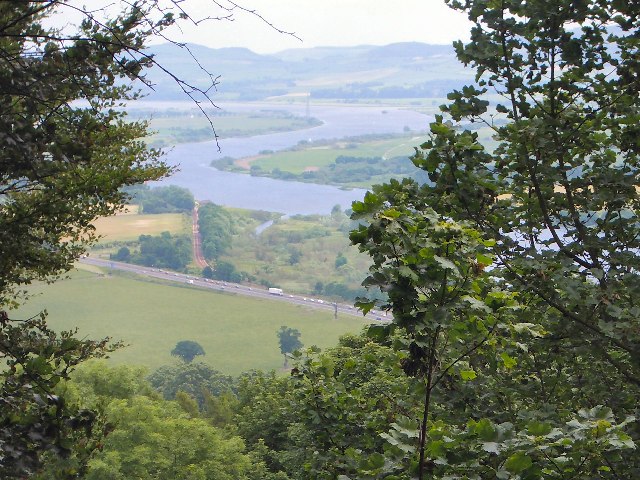
A_glimpse_of_the_Tay_valley_-_geograph.org.uk_-_23502

View from Kinnoull Hill near the Tay Valley in Perth, where Geddes spent a lot of time as a young boy.


As mentioned earlier Geddes had a lifelong contempt for examinations and never took a university degree. After a period of private study, he chose to study Botany at the University of Edinburgh (1874), but left after one week. He then went on to study Botany and Zoology with individual teachers and mentors in London and Paris (4). In London, he trained at the Royal College of Mines, under the great biologist and evolutionist of the time, Thomas Huxley, whose influence on Geddes is said to have been profound (2). Being a student of Huxley opened doors for him to study in France, and he subsequently trained at the Sorbonne University (5). From then on and for the rest of his life, he was an ardent Francophile, enjoying an empathy with France and French intellectual ideas which greatly influenced his thinking. It was during this time that Geddes came into contact with some of Europe’s progressive and radical thinkers.


“Quite a lot of Geddes’ thinking comes from Anarchists. Anarchy did not mean throwing bombs or anything. Anarchist means without government…..it means government by the people. From Geddes’ point of view, well informed individuals, with the certainty of what they are doing and fully participating….that was anarchy for him.”

Sophia Leonard

Trustee, Sir Patrick Geddes Memorial Trust (3)


‘Place, Work and People’

Geddes was impressed by August Comte’s positivist philosophy and was especially attracted to Herbert Spencer’s idea of applying the concept of evolution to society. But the biggest ideological influence for Geddes was Frederic Le Play’s method of survey. It was in Le Play’s work that Geddes found an inter-link between several sciences, and this interdisciplinary approach became his worldview for life.


Le Play’s [in image] survey method was based on the postulate that the three key units for the study of le playsociety were ‘lieu’, ‘travail’, ‘famille’ (place, work and family). ‘Place’ implied geographical locality which presents the environmental pressures (needs) and the possibilities (resources) and in turn determine the nature of the work. ‘Work’, determines the organisation of the family which is the biological unit of human society. Conversely, the needs and potentialities of the family shape the character of the work, which in turn progressively modifies the environment (6). Geddes replaced the unit of ‘famille’ (family) in Le Play’s work, by ‘people’ or ‘folk’, and believed that this approach synthesised knowledge from different disciplines and would help him develop his own evolutionary approach to social sciences. Place, work and people, in his scheme, have not to be “separately analysed as into geomorphology, the market economics and the cranial anthropology which still go on, in necessary detachment from each other…Within the single chord of social life all three combine” (7). Geddes argued that geography, economics and anthropology were so closely related that their union within sociology was sure to yield rich results (2).
 

Social Experiments in Edinburgh:

From 1880 onwards, Geddes began teaching Zoology at the University of Edinburgh. It was in this decade that he would take up some of his most celebrated social experiments – reviving the Old Town in Edinburgh, setting up student halls of residence and developing the Outlook Tower.


In 1886, Geddes along with his newly married bride, Anna Morton, moved from Edinburgh’s modern and welloldtown3 planned New Town to the decayed Old Town [image] that was plagued by poverty, overcrowding, squalor and disease (2). The Old Town, and its inhabitants, were increasingly marginalised and ignored by the affluent New Town dwellers; and these two parts of the city highlighted an unequal duality that led to an increased social separation of classes. The Chambers Improvement Act for Edinburgh, passed in 1867, further widened this divide between the two, by getting rid of ‘unhealthy houses’ and thereby clearing away the poor people (8). Geddes was a strong critic of this act and saw slums and its inhabitants as an integral living part of the city. With the view that a city is the superstructure erected on the basis of place, work, and folk, he set out to transform Edinburgh’s Old Town.
 

His strategy was to attack the problems from all directions. Geddes purchased a row of slum tenements in James Court, in the Old Town, making it into a single dwelling. In terms of ‘Place’, he advocated ‘conservative surgery’ which meant weeding out the worst of the houses that surrounded them, widening the narrow closes (lanes) into courtyards and thus improving sunlight and airflow. The best of the houses were kept and restored. Geddes believed that this approach was both more economical and more humane (9). Based on the principle of work, he galvanised the folk – the local resident community, local architects and artists to bring about the Old Town’s regeneration and preserve their locality, without waiting for government action.


“Geddes was massively culturally informed and opportunistic. If he saw a gap, there goes a garden. If there was an area that was at the risk of becoming dilapidated, then perhaps he would clear something out, do a bit of renovation, and a bit of conservation.”

Murdo MacDonald

Professor in the History of Scottish Art, University of Dundee (3)


In 1884, Geddes established the Environment Society (later the Edinburgh Social Union) to encourage local residents to survey, plan, and improve the local environment (4). In its first year, the Union grew from six to over fifty members, and these included a number of influential churchmen. Funds were collectively raised; and beginning with two properties in 1885, the Union was responsible for maintaining 23 properties housing 450 families by 1897 (8). Geddes supported the mixing of class groups and wanted them to inhabit common spaces. He saw gardens and gardening as one way of engaging people especially children and connecting them with their living space. He encouraged young students from the Castlehill School, to cultivate small plots of land in a nearby garden and learn about nature by direct experience. This garden – the ‘Johnston Terrace Garden’ exists till date, and is now a wildlife garden administered by World Wildlife Fund (14).
 

johston old new

 To the left is the image of Geddes’ young students from the Castlehill School conducting practical work in the Johnston Terrace Garden, and to the right is the same garden today.


In 1887, Geddes took over a few tenements in Lawnmarket in the Old Town and converted them into halls of residence for the students of the University of Edinburgh. Geddes’s innovation, (quite unorthodox for its time) was to separate the academic environment from the living space, and let the students govern themselves in a community of co-operative living for learning and intellectual inter-action (10). These buildings now collectively known as Milne’s Court [image below] was also the first student hall of residence in Scotland. Milne’s Court is currently managed by the University of Edinburgh, and is also one of the most famed students’ accommodation sites owing to its historical significance.

 800px-Milne's_Court,_Lawnmarket_Edinburgh_wiki commons


Geddes conducted yet another social experiment by setting up the Outlook Tower in 1892. He acquired another tenement in the Old Town and rechristened it the ‘Outlook Tower’ because he wanted to change people’s outlook of the city they lived in, and educate them to understand their region and the larger environment in all its complexity and from all possible viewpoints (11).


As described earlier, Geddes would rush the visitors to the top of the tower and show them the view of the Outlook-Towercity through the camera obscura (an optical device that projects an image of its surroundings on a screen) and a direct view from the terrace. After seeing the Camera Obscura, visitors sat in a darkened meditation room – the “Inlook room” – to internalise what they had learned, making it their own (11). Geddes wanted people to view the city without any preconceived notions by reading any literature beforehand. After building their own perceptions of the city, the theoretical exploration, cultural and ecological experiences, would follow floor-by-floor below, in rooms devoted to Edinburgh, Scotland, English-speaking nations, Europe and the world [illustrated in the adjacent image].
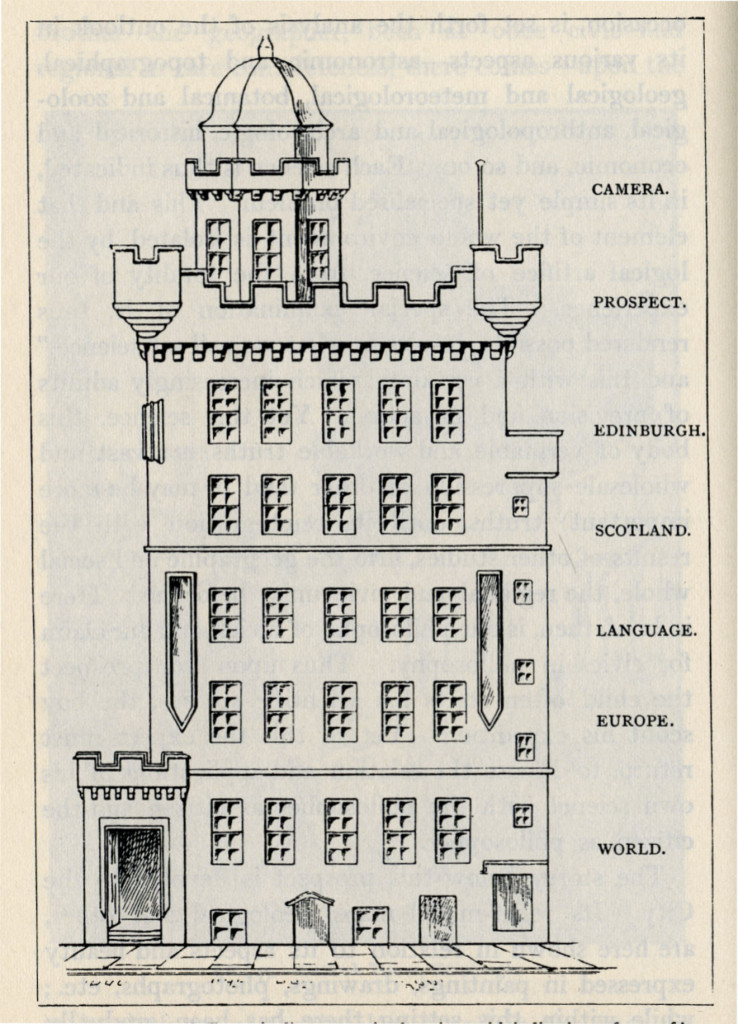
 

Geddes ensured that the starting point in the Outlook Tower was the direct perception of a real city not an idea of it, and this perception was the basis for any further exploration (12). Geddes’ emphasised that the local context (down to the level of individual perception) must be the basis for the understanding of the regional, the national and the global. He wanted to change the citizens’ attitudes towards the city and encourage informed participation in civic life. The Outlook Tower was one of the most developed examples of Geddes’ thinking, and still retains much of the spirit of its late nineteenth- and early twentieth-century usage.


Today these key structures in the Old Town, that were developed and restored by Geddes, are inhabited by Edinburgh locals, international students and visitors. Because of his efforts, this place has thrived for decades and has also been given a heritage status. These structures continue to stand strong as the living legacy of Patrick Geddes.


edinburgh

 City View from the Edinburgh Castle


His approach towards reviving the Old Town was utopian but only in a more pragmatic sense. To Geddes, Utopia really meant making the best of each place “in actual and possible fitness and beauty” (13). Throughout the 1880’s and 90’s, Geddes was responsible for projects that led to the improvement of Edinburgh’s Old Town and also involved in the development of the famed Royal Botanic Gardens, the Edinburgh Zoo, the Water of Leith and the Roseburn development (14). He basically started a movement in urban planning and civics that emphasised meditating upon the historical and cultural context of the region and involving local people as informed participants in development, maintaining and restoring their city. Edinburgh was the starting point of this movement, where he implemented pioneering concepts that would be acknowledged and adopted by urban planners and architects across the world, only much after his death.


Urban Planning and Sociological Action in India:

Geddes’ next big project brought him to India in 1915. After having heard of his successful urban experiments in Edinburgh, Lord Pentland, the then governor of the Madras Province, invited him to exhibit his work on urban planning in the country. Through Lord Pentland, Geddes also found admirers in Lords Willingdon and Carmichael, governors of the provinces of Bombay and Bengal respectively (2). He spent the next eight years preparing nearly 40 town planning reports for both the colonial government and the rulers of princely states in India, describing the nature of urban problems and solutions (15). These reports represent the first major contribution to the development of modern town planning in India on a fairly large scale (2).


‘Town-planning is not mere place-planning, nor even work-planning. If it is to be successful it must be folk-planning. This means that [the task of town-planning] is not to coerce people into new places against their associations, wishes and interest – as we find bad schemes trying to do. Instead its task is to find the right places for each sort of people; places where they will really flourish. To give people in fact the same care that we give when transplanting flowers, instead of harsh evictions and arbitrary instructions to “move on”, delivered in the manner of officious amateur policemen.’

 Patrick Geddes (9)

0

During his ten year long stay in India, Geddes travelled extensively, but his work in the city of Indore [image:pg in indore 1919 Geddes in Indore] is remembered as a classic example of his holistic approach in town planning. The Maharaja of Indore invited Geddes to Indore in 1918 to improve the malaria and plague infested conditions of the city (2). After spending eight months of thorough field investigation and consultations, he prepared a detailed report on the problem and its determinants, and suggested the establishment of a University that would train students for civic reconstruction in Indore and elsewhere. More importantly, Geddes conducted another social experiment in the city that not only helped to free the city from plague but also instilled in the residents enthusiasm to participate in cleaning and maintaining their neighbourhoods and the city.


Geddes went to the ruling prince of Indore and asked to be made the Maharaja for a day, giving him the authority to pursue his plans. He then made announcements that there would be a grand procession on Diwali Day (a religious festival that also calls for cleaning of homes and keeping living spaces tidy) and that this procession would neither follow the traditional Hindu or Muslim route through the city, but along the one on which most houses had been repaired and cleaned. This announcement motivated the people to start cleaning and repairing their homes and neighbourhoods, and inspired communal action, as everyone wanted the procession to pass along their street.


On the Diwali Day, a grand procession with cavalry and infantry marched through the city, followed by elephants, rich merchants, and figures of the Goddess Laxmi (symbol of prosperity). This was followed by an enactment of scenes of poverty, with giant models of dirt and rats, crying and wailing. After a brief break came cheerful music heading the long line of sweepers in spotless white, with new brooms and freshly painted carts.


indoreBehind the sweepers marched a civic procession of labourers, firemen and police, officials, mayor and Maharaja Geddes himself, and after them, enthroned on a stately car, a new goddess evoked for the occasion, the Indore city. Her banner bore the name of the city on the one side, and on the other, the city plan showing proposed changes to be made. Finally thousands of pots with seedlings of the Tulsi plant to be distributed among the households of Indore. This novel procession passed through almost every part of the city, finally ending at midnight in a public park where the giant of dirt and plague rats were burned in a great bonfire. After the symbolic destruction of the enemies, the festival was brought to a close with a grand display of fireworks. The effect of the exercise was immediately apparent. A new wave of confidence spread among the people to be clean and beautify their homes and the surroundings. Above all, the plague came to an end. Geddes was of the view that people are capable of improvements but it is for the government and municipalities to realise what improvements are needed and desired.


In 1914-15, Geddes was invited to deliver a series of four public lectures on the study of Bombay which are said to have been a great success (2). Subsequently, he was offered the post of professor and chair of the department of sociology at the University of Bombay (1919), which was the first institute in the country and the second in Asia to start a department in this discipline (16).


Characteristically, Geddes gave his daily lectures in the form of conversations and seminar (a style which his successors tried but with little success), and every Saturday was devoted to excursions to various parts of Bombay and neighbouring villages, and whenever possible, to more distant places (17).


Bombay Uni

Geddes with his students at the University of Bombay


Geddes emphasised practical work and through his teachings at the University encouraged social action. He sent his students to conduct field work in different parts of India. For him, the sociologist should be a sort of flaneur: ‘the productive sociologist should thus be of all investigators a wandering student par excellence; in the first place, as far as possible, a literal tourist and traveller’ (18). One of his students, Govind Sadashiv Ghurye (eminent Indian sociologist), who was given a scholarship to pursue doctoral studies at Cambridge University, also went on to succeed his teacher as the head of the department of sociology at the University of Bombay. Despite being ahead of his time in education, Geddes’ radical style of teaching sociology did not find supporters in Bombay, and by the end of his five year contract, his health had suffered greatly and so did his ability to enthuse his students with his unconventional courses (2).


Geddes’ deepest support came from the great Indian scientist – Sir Jagadish Chandra (19) [seen sitting in the image below, seated in the center of the front row, and PG sitting third from left in the top row]. JC Bose pioneered the investigation of radio and microwave optics, made very significant contributions to plant science, and laid the foundations of experimental science in the Indian subcontinent. Banerjee (20) writes that Jagadish Chandra Bose’s interest in plant physiology may have been prompted by his growing intimacy with the European neo-vitalists, like Geddes, who formulated a new kind of science that refused to submit to the mechanistic interpretation of the world and spoke for a spiritual kinship with nature. Geddes also went on to become Bose’s first biographer despite being much older than him.


PG JC Bose


Another strong friendship that has been recorded in literature (21) was the one shared with Rabindranath Tagore [image to the right], the Indian polymath, poet, novelist, educator, and Nobel Laureate.


Both these R Tagoregreat minds shared similar ideas on education and the environment and co-operated on plans for an international university in India ‘to bring East and West together for the benefit of humanity’ (22). While Tagore showed deep interest in Geddes’ triad Place-Work-Folk, Geddes, in turn, appreciated Tagore’s vision of learning and the arts, of native, national and international life and despite their erratic friendship with long periods of intermittent silences they collaborated closely over their separate dreams of an international learning center. Geddes went on to start the Scots Montpellier in France, and Tagore established Santiniketan in Bengal.
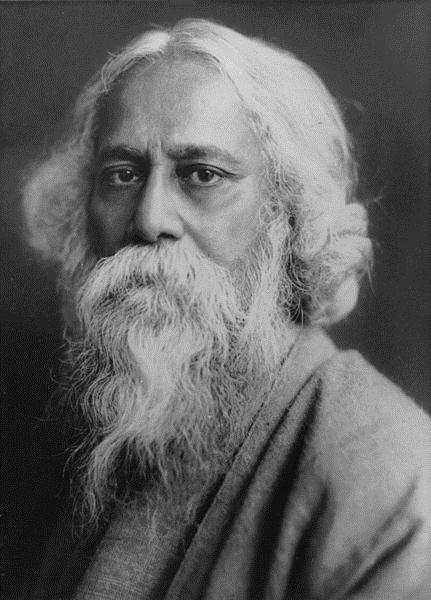
 

Geddes final contribution – Scots College in France:

Geddes suffered greatly after the death of his wife Anna and their son Alasdair in 1917. Anna fell ill with typhoid fever and died, not knowing that their son Alasdair had been killed in action in France. She was cremated in India. It was the urban planning project in Palestine (1919) that gave Geddes the much needed break and took him to design the city of Tel Aviv (23). In 1924, Geddes conducted his final experiment of setting up an unofficial student residence in Montpellier, an ancient university town in the south of France. He hoped that this institute would go on to become a Scots College (the Collège des Ecossais) for wandering students, creating unity among scholars who saw a wholeness in their studies and in where they lived with others from other lands (5). While this institute no longer runs as was initially envisaged, it has been integrated into the University of Montpellier, and a part of this structure serves as a center for professional development of teachers and administrators of the institute (24).


PG Scots

Geddes with Scots College Students


Disappointed by the Victorian models of education of his time, Geddes had actually started practicing initial forms of his teaching method right here in Edinburgh itself.


“We see millions of young people leaving school and thousands leaving college without any grip of the history of their race, without live knowledge of the world in which they are going to live, and without even an elementary realisation of the laws of health and happiness. To the biologist these appear to be radical defects in education. They were not tolerated in tribal days, nor even old rural ones – nor can they be much longer.”

Patrick Geddes (25)

0

Instead of the existing model of rote learning and the emphasis on the three R’s – Reading, Riting and Rithmetic, Geddes taught young students based on the three H’s – the vital education of Heart that would engage the students’ curiosity, Hand that would touch, feel and work directly with the subject, and Head for the conceptualisation and internalisation of ideas derived from experience and reflection. In collaboration with teachers from the Old Town and the Castlehill School, Geddes ensured that students spent their mornings in the classroom, and in the afternoons, he himself would take them out for practical work in the nearby inner city gardens that he had created.


C DarwinThroughout his life, Geddes tried hard to implement his progressive ideas of holistic and experiential learning with the appreciation of both natural and social sciences, in Edinburgh, India and finally in France. Even though he was unable to realise his dream of finalising the Scots College, he gained appreciation from other great men of his time, including Charles Darwin and Albert Einstein. In a letter to Geddes, Darwin [in image] wrote:


“I have read several of your biological papers with very great interest, and I have formed, if you will permit me to say so, a high opinion of your abilities. I can entertain no doubt that you will continue to do excellent service in advancing our knowledge in several branches of science. Therefore I believe that you are well fitted to occupy any chair of natural history, for I am convinced that example is fully important as precept to students.

Yours faithfully,

Charles Darwin (26)


Having once turned down a knighthood for democratic reasons as he was a ‘man of the people’ and also, noting less seriously, that the title would ‘increase his hotel bills along the way’ – Geddes assented to becoming a knight shortly before his death in 1932, in Montpellier (27).


Today, half of the world’s population lives in urban cities (28); and both developed and developing countries are faced with the problem of managing rapid urbanization and overcrowded cities;  and climate change along with depleting natural resources, food, water and energy crisis. These challenges are interrelated and interdependent, and cannot be addressed in isolation of each other. They are transnational in nature, interdisciplinary, and trans-institutional. Their solutions call for collaborative efforts, and therefore it is now more than ever that we should reflect upon Patrick Geddes’ ideas and approaches in order to find sustainable solutions for preserving life.


Geddes pioneered urban planning methods such as diagnostic surveys and conservative surgery, in Scotland and around the world. But his core approach of ‘Place-Work-People’ remains relevant to current debates on growing urban cities, community regeneration, sustainable development and social inclusion. Can we re-organise and re-energise cities based on Geddes’ fundamental principle of ‘Place-Work-People’?


Yes, we can.


We can inform ourselves about the spaces we live in, galvanising others around us to understand their spaces in their historical, socio-economic and environmental context, and most importantly regaining a sense of ownership of our world through the spaces we live, play and work in. Geddes emphasized the strategic role of a citizen or a ‘civic person’ in urban planning and restoring processes, and in a way, suggested a new model of participatory urban governance, by providing people with knowledge and the power to act, irrespective of their social or economic class. Urban municipalities and townships could follow this approach of ‘Place-Work-People,’ by conducting comprehensive diagnostic surveys in partnership with their citizens, and implementing participatory civic initiatives in order to address the actual needs of growing cities, and sustain urban life, as Geddes would say, ‘in its fitness and beauty’ (13). Examples of such collaborations between urban municipal governments and citizens could include conservation of residential areas, monitoring and supervision of sustainable water and sanitation interventions, setting up local food cooperatives, maintenance of public spaces, and even encouraging local industries to sustain gainful employment.


It was through his teaching experiments and initiatives in Edinburgh, the University of Bombay and the Scots College in France, that Geddes propagated a pragmatic approach of learning: observe and reflect. Geddes wanted us to learn from our past and our present, by observing and experiencing life around us, and constructing our individual perceptions after reflecting on these experiences. It is through such an organic process that we are able to see the interconnectedness of the several institutions in society and how they could work together in harmony.


How often do we encourage our students and our children to explore beyond the boundaries of their books and leap into the environment outside, to broaden their understanding and deepen their knowledge? Do we teach students to discern between the several pieces of information that they are exposed to in this current age of social media explosion, and form their own perceptions and outlook? Educationists can learn a lot from Geddes’ method of teaching and learning, and influence a generation of socially and environmentally conscious citizen-scientists.


Geddes’ life teaches us to be aware of our history and the present alternatives, listen to people, be culturally sensitive, stir public engagement and long-term involvement, and look for sustainable solutions, whether cultural or ecological, and most importantly see human life and human growth as intertwined with all human institutions and most of all with the environment.


Patrick Geddes did not merely intend to create sustainable urban spaces; he wanted us to constantly learn, improve and achieve our potential as a society. Throughout his life and work, Geddes demonstrated that our observations, experiences, and reflections help us to construct and reconstruct our ideas and behaviour.


“Vivendo discimus” (By living we learn).


© Genevie Fernandes, 2014


References:

  • MacDiarmid, H (1966). The company I’ve kept. London: Hutchinson.
  • Munshi, I (2000).  Patrick Geddes: Sociologist, Environmentalist and Town Planner. Economic and Political Weekly, 35, p. 485—91.
  • Pullman, J (2011). A Man of Our Times: The Living Legacy of Patrick Geddes. Documentary Film commissioned by the Scottish education Department. Available at: https://www.youtube.com/watch?v=hiz5xYN39Cw
  • National Library of Scotland (2014).  Patrick Geddes. Available at: http://www.nls.uk/learning-zone/politics-and-society/patrick-geddes
  • Ballater Geddes Project (2004). SIR PATRICK GEDDES: 1854 – 1932. Available at: http://metagraphies.org/Sir-Patrick-Geddes/university-militant/geddesexhib04web.pdf
  • Mairet, P (1957). Pioneer of Sociology: The Life and Letters of Patrick Geddes. London: Lund Humphries.
  • Abrams, P (1968). The Origins of British Sociology: 1834-1914. Chicago: The University of Chicago Press.
  • Urquhart, G (2003). Patrick Geddes and the Edinburgh Social Union: Planning, poverty, philanthropy. Available at: http://hodgers.com/mike/patrickgeddes/feature_six.html
  • Tyrwhitt, J (1947). Patrick Geddes in India. London: Lund Humphries, London.
  • Patrick Geddes Trust (2000). Patrick Geddes Heritage Trail, Edinburgh. Available at: http://www.patrickgeddestrust.co.uk/pghtedinburgh.htm
  • Camera Obscura (2014). History of the Outlook Tower. Available at: http://camera-obscura.co.uk/camera_obscura/camera_history_attraction.asp
  • MacDonald, M (2009). Sir Patrick Geddes and the Scottish Generalist Tradition. Sir Patrick Geddes Commemorative Lecture, Royal Town Planning Institute and Saltire Society, Scotland. Available at: http://www.kosmoid.net/planning/geddeslectures.
  • Branford, V and Geddes, P (1919). Our Social Inheritance: The Making of the Future Series. London: Williams and Norgate.
  • Leonard, S (2007). Patrick Geddes’ and the network of gardens in the Old Town of Edinburgh. Available at: http://www.patrickgeddestrust.co.uk/articlespapers.htm.
  • Khan, N (2011). Geddes in India: town planning, plant sentience, and cooperative evolution. Environmental and Planning: Society and Space, 29, p. 840—56.
  • Momin, A (1996). Sociology at the University of Bombay. International Institute for Asian Studies, 60. Available at: http://iias.asia/iiasn/10/Regional/10CBCC06.html
  • Ferreira, J.V. and Jha, S (1976). The Outlook Tower Essays on Urbanisation in Memory of Patrick Geddes. Mumbai: Popular Prakashan.
  • Geddes, P (1906). ‘Civics: as Concrete and Applied Sociology’, Sociological Papers, 2: 58-119. Reprinted in H. E. Meller, ed., The Ideal City. Leicester: Leicester University Press, 123-183.
  • Meller, Helen (1990). Patrick Geddes Social Evolutionist and City Planner. London: Routledge.
  • Banerjee, B (2010). The Scientist and the Poet: Acharya Jagadish Chandra Bose and Rabindranath Tagore. Rupkatha Journal on Interdisciplinary Studies in Humanities, 2, p. 471—480.
  • Fraser, B (2005). A meeting of two minds: Geddes-Tagore Letters. Edinburgh: Word Power Books.
  • Visvanathan, S (2013). The Dreams of Reason: Rabindranath Tagore and the Invention of Science in India. Economic and Political Weekly, 47, p. 43—49.
  • Welter VM, (2009). The 1925 Master Plan for Tel-Aviv by Patrick Geddes. Israel Studies, 14, p. 94—119.
  • Clout, H and Stephenson, I (2005). The Collège des Ecossais in Montpellier: A postscript. Scottish Geographical Journal, 121, p. 119—20.
  • Geddes, P and Thompson, J (1889). The Evolution of Sex. London: Walter Scott.
  • National Library of Scotland (2009). A Man of All Reason. Available at:  http://www.nls.uk/about-us/publications/discover-nls/2009/patrick-geddes
  • The Scotsman (2005). Sir Patrick Geddes. Available at: http://www.scotsman.com/news/sir-patrick-geddes-1-465991
  • United Nations (2011). World Urbanization Prospects, the 2011 Revision. United Nations, Department of Economic and Social Affairs. Available at: http://esa.un.org/unup/CD-ROM/Urban-Rural-Population.htm


Edinburgh City Images Courtesy:

Bridget Zhang

Angeena Barua

Genevie Fernandes


Other Images References:


© 2026 THE ESSAYIST

Theme by Anders Noren — Up ↑