Author: Brooke Becker

Soul Attraction— Destiny or Free Will?

You meet someone, a total stranger.

Immediately there is attraction on many different levels.

You discover there are plenty of commonalities and similarities.

There is ease between the two of you.

It feels like you’ve known this person for years, if not lifetimes.


Your mind races with different thoughts— Is this person a soul mate?

A twin flame perhaps?

Were you supposed to meet at this predetermined time in this life?

Were you together in another life, and therefore have an agreement to connect?

Do you have a karmic debt?

Are there unsatisfied vows, covenants, and contracts between the two souls?


All of these thoughts coursing through your mind in an effort to justify the instant attraction between the two of you, and the undeniable attachment to the concept of “The One”.
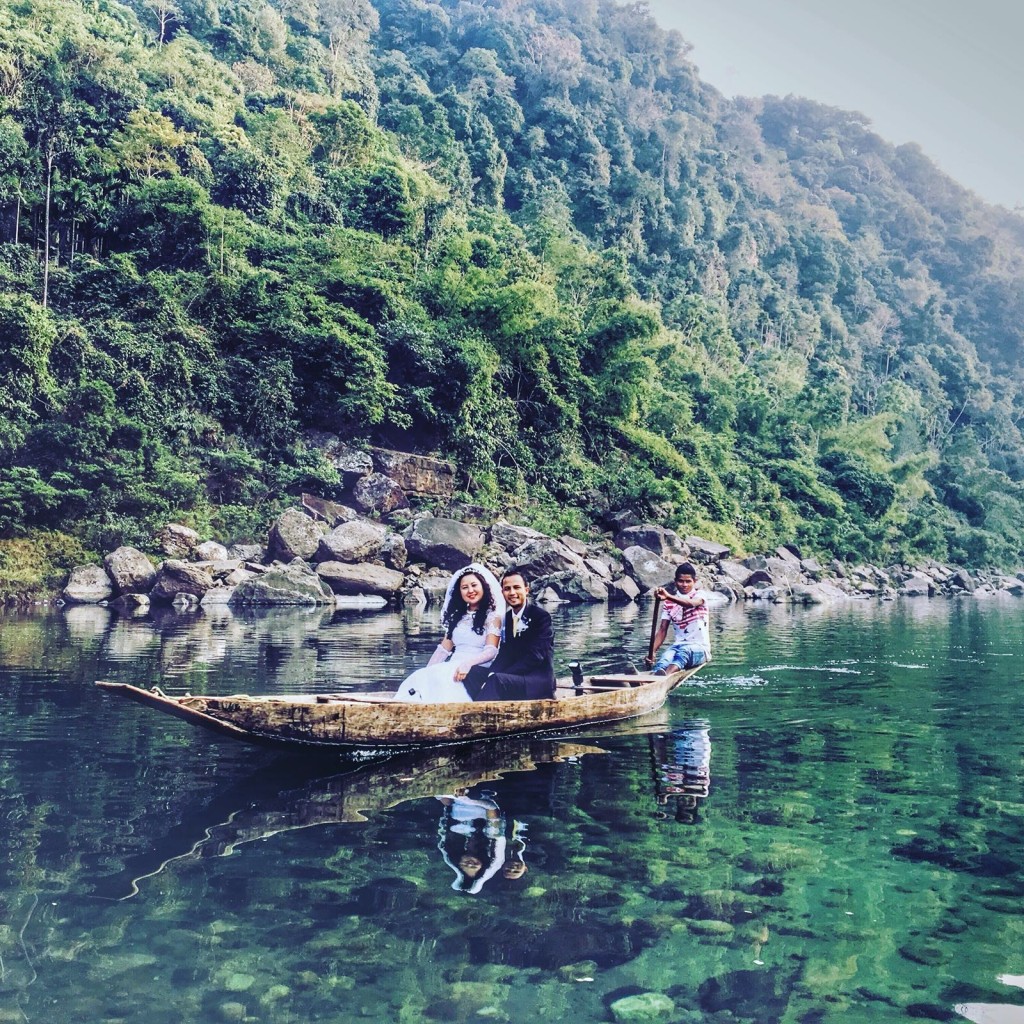
 

boat and lake 4 couple


Many of us were raised with this concept of “there’s one person out there, just for us.” Even now, though we are logically minded adults, pervading our better judgment is this fascination with the magical romanticism linked to “The One.” Hollywood supports it and exploits it. So do ads in magazines and commercials on T.V.


We are totally manipulated into believing that there is only one mate for us.

 

rs still life8


This piece is not to determine the viability or existence of soul mates and twin flames, but to argue the point that we, at any given time in our lives, have free will. We have choice. We can satisfy karmic debt and move on. Destiny does not have to be our fate.


Caveat: This piece is based on societies that support equality between the genders. With those that do not, of course, free will is limited. Within Isis and other extreme Islamic societies, women’s rights and free will is greatly reduced if not non existent.


I will repeat: we ultimately have free will which is present karma. Destiny is past karma, which influences the present.


In Traleg Kyabgon most recent book,” Karma, What it is, What it isn’t, and Why it Matters”, he defines karma and its influence through the lens of Buddhism. “Basically the Buddha defined karma as action, in the sense that we ourselves are responsible for our own condition in the world and that our thoughts and actions from here on determine our future. Buddhist karmic theory is not akin to fatalism or predetermination. We do have real choice in our affairs…In the end, this is the real Buddhist perspective of karma, which is about attain freedom—how to free ourselves from a variety of karmic hindrances and constraints.”1


Thus, even if we are “destined” to be with someone, we still have the opportunity to exercise free will. We can choose. We can assume responsibility in the present, which will ultimately create our destiny.


rs still life20


“Who you marry and when you die was written on your forehead the day you were born,” my mother told me when I was young”, writes Nane Selmani in a recent article, “I Pleaded. I Waited. I Married”, in Parabola magazine.


“I was relieved. It was lucky that God, the Infinite, the All Powerful had things under control. They were much  too important to be left up to us to get wrong. Kismet or Ish’Allah—God willing is used as a qualifier of plans, for nothing happens unless God has willed it. No one stood a chance against fate so you let go and never questioned.”


She did follow the ancient mores of her ancestors and community. She married a man who was deemed her destiny.

 BROKE


She continues with her story, “Eight years later I risked everything and left my husband and children. Had I chosen this or was it kismet? Had God selected a path that had been embedded in me? One that came to fruition without any real participation on my part? Or was I choosing every step of the way? I chose to believe it was me.”2


She married and she eventually left. She exercised her free will, which was her choice in the face of what was believed to be destiny. She rose beyond the common belief, and committed action which was correct for her health and well being.


According to Ms. Selmani’s religious perspective in her quote, I sense that there is separation between herself and God. She followed God’s will and married the man who was believed to be her fate. In the end, she questioned her path of leaving, was it God’s will or was she choosing? I believe that they are one in the same. God’s energy flows through her as it does all sentient beings. Hence, the decision was made by her…and by God. She tapped into her God Self, her Divine nature, and realized that the current situation was not supportive of her Divine expression. She and God made the decision to leave.


We don’t know if she found another. We can only hope she realized that there was not just one person in this world for her, which is an ego conceptualization, but trusted that there were many “ones”.
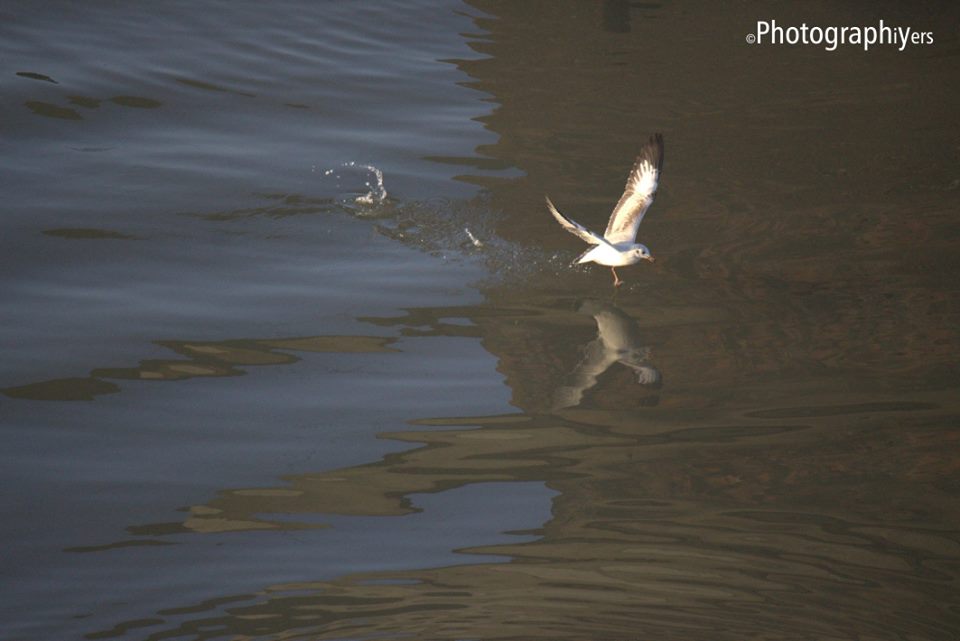
rs nature 10


Keeping with this train of thought, I will make an ambitious statement… that we are all soul mates, all on the same journey home, and each one of us could indeed be “The One” for another.


Where is home, you may ask? The Divine. To expand into the realization that we are all divine, every single being. We are here reflecting that purpose and intention to one another.


As soon as we define and categorize one as “soul mate” or “twin flame”, we are negating all he/she could possibly be in our lives, and subsequently classifying our connections to humanity which could produce bondage and limitations.


“Soul mates are brought into your life so that you can grow and expand into the best version of yourself” says author Shelly Bullard.3


My response to this statement is: Wouldn’t that be everyone who is in your life? Not just your romantic partner? How about the plumber who just fixed your toilet, your boss who just sent you a stern email, your teenager who just failed algebra, or the person who turned in your wallet you left at a restaurant—all of these people are potentially soul mates as they are allowing you to grow and expand into your Divine loveliness, if you choose. Their presence in your life is giving you a choice to either act mindfully or react unconsciously. Exercising free will, present karma, as you journey through the convoluted twists and turns of reality. It’s really that simple.


Swami Vivekananda puts it this way, “If you think that you are bound, you remain bound; you make your own bondage. If you know that you are free, you are free this moment. This is knowledge, knowledge of freedom. Freedom is the goal of all nature.” 4
 rs bird 1


Our birthright is limitless, free, and oneness with all. Why would we want to control that with the ego construct of definitions? Why would we want to put a time constraint on freedom? Does it really matter if we knew a certain soul in another lifetime? Or that we might have unfinished business? Isn’t the most important action the one we choose in the present? And we have the freedom to choose. We have the choice to exercise free will or follow destiny. Just knowing this produces freedom.


Or as Issac Bashevis Singer so poetically states, “We must believe in free will, we have no choice.”5

 rs nature12


© Brooke Becker, 2016


Photographs by Rajesh Subramanian


Bibliography

1.Traleg Kyabgon, “Karma, What it is, What it isn’t, and Why it matters”, Shambhala Publications, 2015

2. Hane Selmani, “I Pleaded. I Waited. I Married”, Parabola, October 28, 2015

3. Shelly Bullard  How to Know When You’ve Found Your Soul Mate,mindbodygreen.com

4. Swami Vivekananda The Complete Works of Swami Vivekananda,

Volume 2,  Advaita Ashrama, India, 1947

5. Isaac Bashevis Singer, author, Nobel Prize in Literature in 1978


Remembering the Beloved

“You just love until you and the beloved become one.” I recently read this quote on Facebook.


This got me thinking.


There is a Jewish mantra, Ani L’Dodi,v’Dodi Li —that translates to: “I am My Beloved’s, and My Beloved is Mine.”


This is romantic, yet at the same time demonstrates possession and attachment, more on the level of the ego/personality self.


With a simple shift in words, it has a whole new meaning: “I am the beloved and the beloved is me.”This allows for more expansion of the spirit into the omnipresent role of the Divine Beloved.


In order to attract the beloved, one must be a beloved first. However questions immediately arise: What does it mean to be a beloved and how does one do that?


beloved10


We have heard the different wisdoms of “like attracts like”, or Gandhi’s, “Be the change you want to see in the world”.


We’re just human beings, hoping to be completed by another person, job, or gadget, right?  Or as author Henri Nouwen states, “Aren’t you, like me, hoping that some person, thing, or event will come along to give you that final feeling of inner well-being you desire? Don’t you often hope: ‘May this book, idea, course, trip, job, country or relationship fulfill my deepest desire.’ But as long as you are waiting for that mysterious moment you will go on running helter-skelter, always anxious and restless, always lustful and angry, never fully satisfied. You know that this is the compulsiveness that keeps us going and busy, but at the same time makes us wonder whether we are getting anywhere in the long run. This is the way to spiritual exhaustion and burn-out. This is the way to spiritual death.” (1)


Henri Nouwen book cover beloved


I did my own research on a popular online dating site. I wanted to see how many times the word beloved was used in the bios. Many— from “are you my beloved?”, to “searching for my beloved”, to the very simple, “be my beloved.” People are looking for the answer, for the beloved-ness, outside themselves when the true answer is to dive deeply with oneself.


beloved 12 to cut


To fully embrace ourselves on all levels and dimensions is to love ourselves completely and unconditionally. How can we possibly expect that from another if we cannot give that to ourselves?  We teach others how to treat us by how we treat ourselves.


What I have come to believe is that the beloved is intrinsic, rather than extrinsic to self. That the beloved and self are one. And perhaps all we need to do on the spiritual path is to arrive at this moment of clarity, this epiphany, feel it and realize that there is no separation between self and the beloved. There is no separation, no duality, simply the process of becoming the beloved, or better yet, remembering that we are the beloved. The process of becoming is remembering.


Rumi has a poem about lovers:


When I heard my first love story,

I started looking for you

not knowing how blind I was.

Lovers don’t meet somewhere,

they’re in each other all along. (2)


He is clearly stating that the beloved is within, not without.


beloved 3


Mr. Nouwen  substantiates Rumi’s view,“I kept running around it in large or small circles, always looking for someone or something able to convince me of my Belovedness. Self-rejection is the greatest enemy of the spiritual life because it contradicts the sacred voice that calls us the “Beloved”. Being the Beloved expresses the core truth of our existence.” (3)


All sounds profoundly high and mighty spiritual, right? But how does this apply to the very human everyday life, and how does this perspective procure one a date on Saturday night?


Well, whereas I cannot guarantee a rendez-vous, it is my belief If one embraces the philosophy of I am the beloved and the beloved is me, then one will become the beloved, potentially shifting toward that which one chooses to be and to attract. It is this process of becoming and remembering that I feel is the spiritual journey.


Mr. Nouwen continues with this question,“If it is true that we not only are the Beloved, but also have to become the Beloved; if it is true that we not only are children of God, but also have to become children of God; if it is true that we not only are brothers and sisters, but also have to become brothers and sisters . . . if all that is true, how then can we get a grip on this process of becoming? If the spiritual life is not simply a way of being, but also a way of becoming, what then is the nature of this becoming?” (4)


How does one become the beloved? How does one remember that he/she is the Beloved and, as in Luke 3:15-22 clearly states, “on us favor rests.”


How does one remember who one truly is and sustain it?


beloved 5


I believe that the practice of mindfulness is one choice. It is a constant awareness of one’s emotions, mind chatter, and body feelings, being totally in the present moment. It takes an ever vigilant mindfulness to be aware of one’s stressors and triggers (those experiences that cause emotional reactions), which if left unchecked, can pull us away from our divine nature and our beloved-ness. This being present without expectations and not judging is not an easy task to accomplish.


Spiritual teacher Jenna Ward in a recent interview views it like this:“…mindfulness is staying in the present moment. If you can’t, a samsara is arising, an old stressor. Mindfulness blows my mind. The more I do it, the more I talk about it, the more I teach about it.  With mindfulness, you are able to have action, not reaction.” (5)


If one is able to stay mindful, and commit an action rather than reaction, then one has been able to remain in one’s divine nature, thus maintaining connection to the inner beloved.


Simply stated, the mindfulness mental state is achieved by focusing one’s awareness on the present moment, while calmly acknowledging and accepting one’s feelings, thoughts, and bodily sensations. Ah, there’s the difference, “calmly” acknowledging. How often when we are emotionally charged can we calmly acknowledge and accept our feelings, thoughts and bodily sensations? It takes a lot of practice to become mindful and aware more of the time. It’s a process to become the beloved.


Ms. Ward continues…“How to rest into the beloved and feel it as much as one can, even when one can’t feel it. There’s the challenge. Expect that though, let that lack of connection be here also. It’s conditioning the unconscious mind which will produce great maturation. How do we not become so attached to the temporal world. (Laughing) It’s a great cosmic game. It takes so much willingness and vigilance to really see the influences, and then allow the presence of God that rests in all things to come forth.”(6)


beloved 11


Ms. Ward brings up an interesting point: “to allow the presence of God that rests in all things to come forth.” My question, then, is who ultimately is the beloved? If we are the beloved and the beloved is us, and it is not extrinsic to self, I would wager the beloved is God… our divine nature. Hence, being one’s beloved is actually opening up to allow our divine nature to expand and lead the way rather than our ego/personality.


The kicker is that we can only experience the beloved to the level that we are free from the restrictions of ego.


“The mystic is one who comes into this world with the prime purpose of rediscovering this state of union [with God] and then living it,” writes Llewellyn Vaughan-Lee, author of many books on Sufism. “The bond that is established between us and the Beloved colors our days in a variety of ways. But first the ego must be pushed to the side. Or as Abu Yazid put it: “The way to God is but one step, taking one step out of oneself.” (7)


The answer I feel, is dive within, rest in the beloved, rest in all we find there, even if we don’t feel worthy, divine, beloved, rest there, breathe there, be in that inner space and soon, that connection to self with become divine, and we will become the beloved.


In remembering that I am the beloved and the beloved is me, part of that practice is us knowing ourselves, being aware of our wounds, and then being able to process a situation trigger while still being connected to the beloved divine state. Breathing helps as it escorts us back to our center of peace, even if just for a few moments.


As far as being the beloved in a couple, the responsibility of remembering our connection to the beloved is ours,not the other, thus there is no pressure on the other to complete the beloved-ness in the couple. The couple is completed within the respective selves. If we can allow for the other’s beloved-ness to interact on that divine level with our beloved-ness, ah, pure joy.


With a smile, Ms. Ward adds, “The more magic occurs when we can let go, let go, let go. Let go and let the universe play us.”


© Brooke Becker, 2016


Photographs by Jignesh Shah, Nilesh Chatterjee (New Mexico, Colorado and Kenya)


References

  1. Henri J.M. Nouwen, Life of the Beloved: Spiritual Living in a Secular World, Crossroad Publishing Co., NY, NY  1992
  2. Coleman Barks, The Essential Rumi, Harper Collins Publishers, Inc.,NY, NY,  1995
  3. Henri J.M. Nouwen, Life of the Beloved: Spiritual Living in a Secular World, Crossroad Publishing Co., NY, NY  1992
  4. Henri J.M. Nouwen, Life of the Beloved: Spiritual Living in a Secular World, Crossroad Publishing Co., NY, NY       1992
  5. Jenna Ward, Spiritual Guru and Mindfulness Teacher, phone interview, November 2015,
  6. Jenna Ward, Spiritual Guru and Mindfulness Teacher, phone interview, November 2015
  7. Llewellyn Vaughan-Lee,The Bond with the Beloved, Golden Sufi Center, CA., 1993


Silence of the Gaps

“It has been said that it’s the space between the bars that holds the tiger. And it’s the silence between the notes that makes the music. It is out of the silence, or “the gap,” or that space between our thoughts, that everything is created—including our own bliss.” Dr. Wayne Dyer 1


The gaps in life…those interminable periods of silence, with no interaction,  alone with one’s thoughts. Those gaps is where we can find our self, our truth, and even as Dr. Dyer said, our bliss.

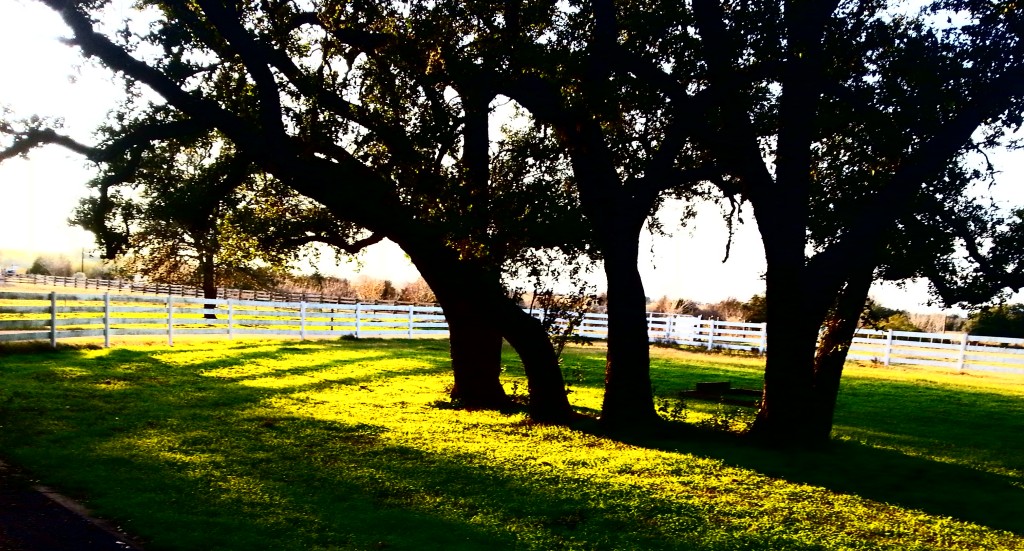
 Live Oaks by D E Clark Feb. 2015


How, you ask? By allowing the gaps to occur. Simply allowing. Instead of avoiding a gap in life, to actually settle into it. Be with the gap. Learn from the gap. Unfortunately, most human beings are uncomfortable with this suggestion. Most will wander from one relationship to the next with little or no break in between; go from job to job; Jump from a facebook interaction to twitter to phone to TV to computer …all in an effort to not be alone.


For we are communal beings. Social media is at an all time high in usage, and we believe we are socializing by using it. But are we really?

Are we really connecting with others on a personal level?

Are we really touching others deeply?

I’m not sure.

Perhaps we are mostly gliding through our days, filling each moment with doingness. We don’t want to be alone, and with the current state of  relationship between technology and humans, that trend doesn’t look like it is gong to shift anytime soon. For many people, we are more connected to our phones than we are to another carbon based life form.


Perhaps we are creating a false sense of intimacy.


And we certainly are not allowing for downtime, breathers, or what I will call gap consciousness.  Actually creating gaps in our life when we can stand back and gaze upon it with objectivity. To be able to see from a different point of view, a different perspective, and perhaps discover a deeper truth.

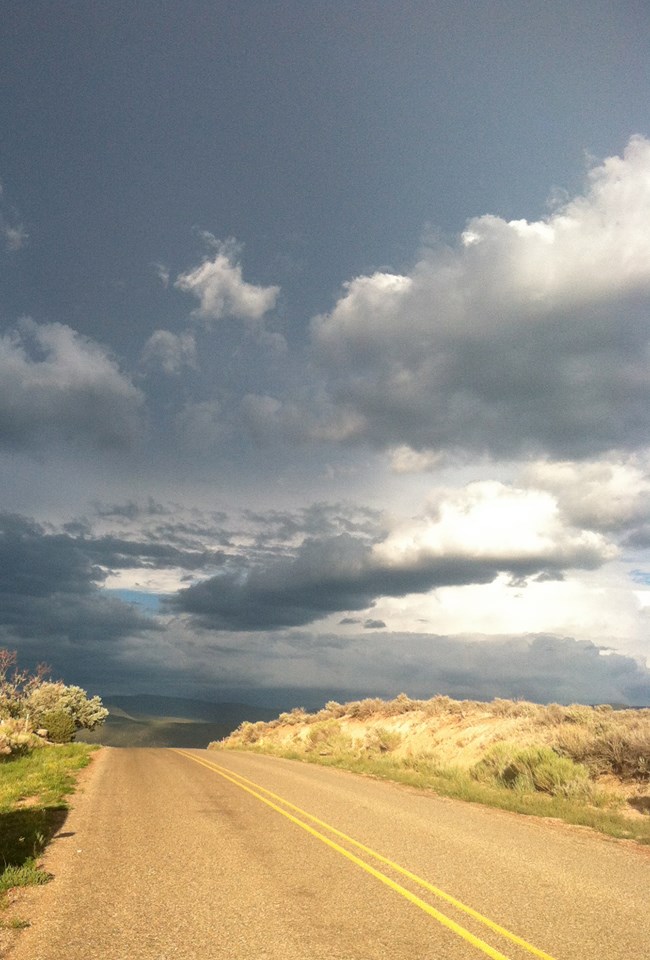
 road view


From a discussion between two world renown women, Buddhist teacher, author, and nun Pema Choron and singer/activist k.d. Lang, “…both (Pema Chodron and k.d. Lang) spoke to the importance of finding and making gaps in our lives – space in which we can find distance between ourselves and what’s occurring, or the storylines we tell ourselves about what’s occurring. Cultivating “gap-aciousness,” as they affectionately termed it, helps us to deescalate; to notice when we’ve been triggered by someone or something; to see when we’re falling into old and unhelpful patterns; to respond rather than react.”2


Another well known Buddhist teacher and author, Jack Kornfield, speaks of labeling physical sensations to create distance from them.Tara Bach, teacher of Buddhist meditation and spiritual awakening, talks of  the “sacred pause.” These spiritual teachers are preaching the same theme: embrace the gaps.


It is in the emptiness that somehow we face the reality of ourselves. We fear this, though. Are we scared of what we might discover? Or of what we may feel? And what that may trigger in us?


We are dying spiritually as human beings. Between the doingness and busyness of our lives, most of us allow little time to support our spirits, or beingness.

Are we dying to know the truth (which could create an obsessive attachment), or is there a belief that the truth will kill us, thus we avoid seeking it (an aversion).

 Stormy Night D E Clark May 2015


I feel it is the latter.The more we avoid the silence, the gaps, the breaks, eschewing aloneness, the more we avoid facing our reality and discovering our truth.


What does aloneness teach us? Perhaps before the next interaction on social media or the next foray into a relationship, if we choose to use this time for meditation, we can still our minds, calm our breath, and tap into the Divine energy source, centering ourselves in peace. Instead of reaching for our phone, opening our lap top, or going out, we actually have the opportunity to sit within the silence of the gaps. It may be incredibly uncomfortable at first. What I have found is that after spending sometime in the gap, what my mind created as a mountain of projection, actually dwindled to a molehill of reality.


Dr. Wayne Dyer in his book “Getting in the Gap”, is highly supportive of establishing a meditation practice in order to create healthy gaps in our lives. “The practice of meditation takes us on a healing and empowering journey into the gap between our thoughts, where all the advantages of a more peaceful, stress-free, healthy, and fatigue-free life are available. Wonderful as those benefits are, they are merely side-effects. The paramount reason for daily meditation is to put ourselves into the gap between thoughts where we can make conscious contact with the Divine, the creative energy of life itself. Through meditation, we can tap in to the abundance of creative energy that resides within us, and also a more meaningful experience of life, which enriches us permanently.” 3


When we rest in the gaps rather than run away, we are rewarded with a new perspective on our selves, our lives, and our interactions. This gives us a new found freedom. We are no longer bound by our once limiting thought forms and paradigms. We see, from this new perspective, that we have choice. Resting in the gaps or gap consciousness, gives us choice.


Mr. Kornfield, supports Dr. Dyer’s view, “The space between thoughts, gaps where we let go and are not identified with our thoughts, feelings, and reactions, arise all the time. “These gaps,” says the meditation master Chogyam Trungpa Rinpoche, “are extremely good news. They remind us that we can always rest in awareness, that freedom is always possible.”  4


I personally have found myself at this stage of my life wedged between different gaps: between relationships, between work projects, between living spaces. I am being my best not to fill the gaps with busyness or people.  To not default to social media when loneliness overtakes me. Or to scour the internet for job possibilities. I am being with the gaps, breathing into them, allowing them to shape me, develop me, and guide me to my next steps.


I am resting within the gaps. Sometimes, though, the gap becomes overwhelming and I need some human connection. I will call a friend to chat or meet. We need these connections as a species. We also need as spiritual beings, silence…of the gaps.


I will leave you with a a recent poem I have written about the gaps in life. Perhaps you will take the gaps to heart, and embrace them.


Silence of the Gaps


It’s in the gaps where we discover truth,

our truth, only for us.

Stumbling, falling, we trip over

those voids in life between jobs, between partners, between visits,

the long, dark, stillness of a solitary night,

the unbearable aloneness of a cold, empty bed at dawn.

The fissures in our psyche where the fears, the doubts, and the worries get twisted and tangled,

a distorted melange of jagged, raw emotions.

We want to run, to hide, from the pain of it all.

Our souls know better,

they know to look for the gaps.

It’s there that truth will be found,

our truth, only for us.

It could bring us to our knees…hearts pounding, breath shortened,

shirt drenched in sweat, clinging to our shivering skin.

Be thankful.

The gaps don’t lie.

They may, though, devastate us with an intense shot of reality,

a harsh slap across our fragile, quaking egos.

Breathe through the gaps, relax into the gaps, even crave the gaps.

Invite them in.

This is where life begins,

and where life as we know it, will end…in the silence of the gaps. 5


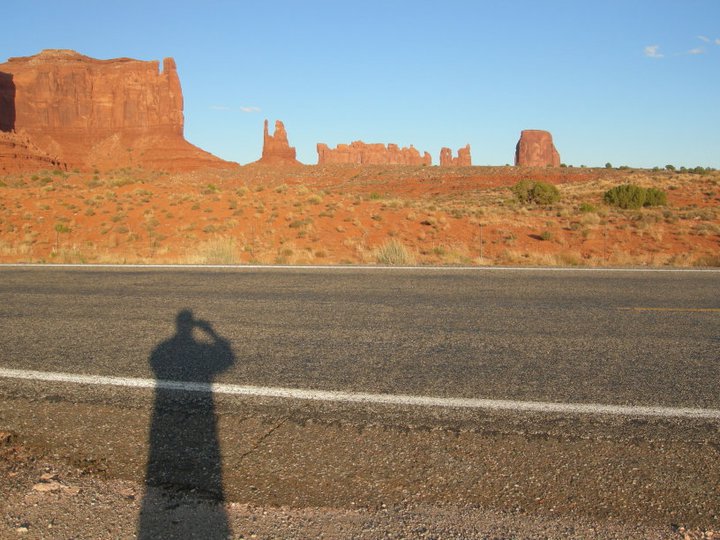
mountain shado of photographer


© Brooke Becker, 2015


References List

1.Dr. Wayne Dyer,“Getting in the Gap”, Hay house publishing , 2003

2. Everyday Art of Being, “An Evening with Pema Chodron and k.d. Lang”,

June 20, 2015, UCLA Royce Hall

3. Dr. Wayne Dyer,“Getting in the Gap”, Hay house publishing , 2003

4. Jack Kornfield, “The Wise Heart”, Bantam Books, 2009

5. Brooke Becker, “Silence of the Gaps”, 2015.


Images Courtesy

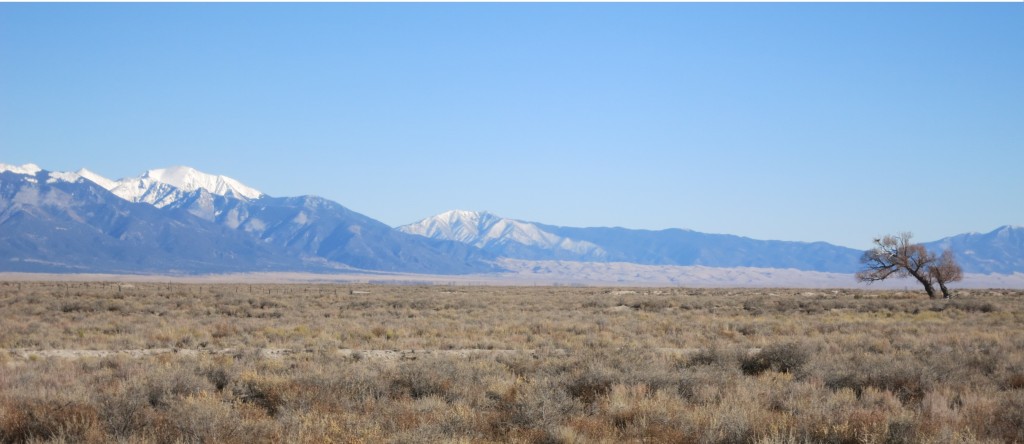
Photo 1: Live Oaks by D E Clark Feb. 2015

Photo 2: Highway, Dennis Dodson, 2014

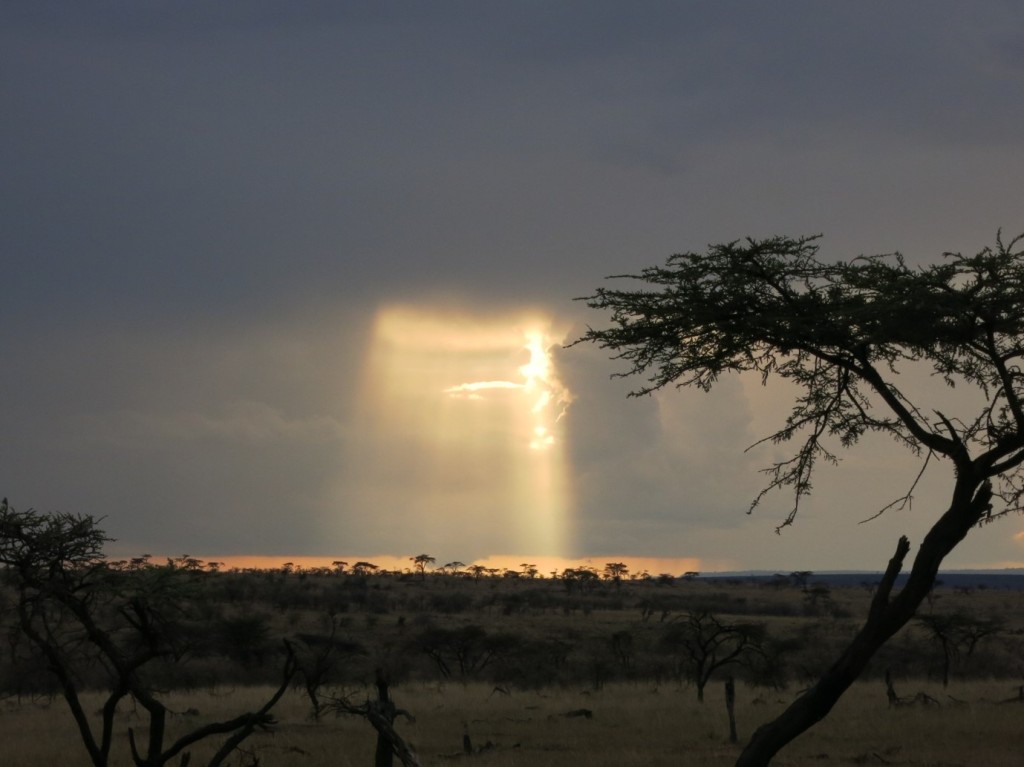
Photo 3: Stormy Night D E Clark May 2015

Photo 4: Shadow on the Mesa,  Dennis Dodson 2014


LENNON Lied

John Lennon lied.


1 love is all you need


So did Paul, George and Ringo.


Love is NOT all you need.


I should know. I’ve been there, experienced the great highs and lows of love’s giddy roller coaster and I’m here to say that love is not all you need.


You DEFINITELY need more.


Love is a great place to start. Don’t get me wrong. To have it as part of the foundation on which the relationship is built is necessary. But it’s not glue. It won’t hold on its own when the going gets tough.


Love, often, fails and falls apart.


Because love needs the additional building materials of respect, humility, friendship, deep listening, consideration, compassion and joy, and I’m sure there are other qualities I haven’t listed.


“When we believe that “all we need is love,” then like Lennon, we’re more likely to ignore the fundamental values  such as respect, humility and commitment towards the people we care about. After all, if love solves everything, then why bother with all the other stuff — all of the hard stuff?” (1)


The hard stuff, h-mmm. Hindsight is 20/20, although I’m not sure where I went wrong, where my relationship went wrong. Perhaps it didn’t go wrong, perhaps there wasn’t enough right to sustain it.


alaska Picture2


I loved. I laughed. I lived. And now I’m alone.


Maybe we didn’t have enough in common. I know one thing, though. We weren’t best friends, or even good friends, really. We were lovers, great lovers, but that doesn’t make people friends. “Okay, that felt incredible, now what?”


We didn’t share our hopes and dreams with one another. We weren’t intimate on a deep soul level and that’s needed for longevity. If we didn’t share our dreams, how could we possibly help one another to reach them? How could we respect each other’s journey if we were only vaguely aware of it?


“Love without respect is dangerous; it can crush the other person, sometimes literally.  To respect is to understand that the other person is not you, not an extension of you, not a reflection of you, not your toy, not your pet, not your product. In a relationship of respect, your task is to understand the other person as a unique individual and learn how to mesh your needs with his or hers and help that person achieve what he or she wants to achieve.  Your task is not to control the other person or try to change him or her in a direction that you desire but he or she does not.” (2)


I think we had that understanding, or at least the willingness to be open to understanding and learning about one another in the beginning of the relationship. Then over time, understanding, which according to Vietnamese Zen Master Thich Nhat Hanh “…is the very foundation of love”, slowly gave way to rote answers, presumptions and projections. We each crystallized in our own little worlds of assumed realities, when in fact, it turned out to be much different. We needed to commit to actually wanting to understand each other – to understand “why” one did what one did, and said what one said. We disintegrated into an alternate universe, called the idealistic, rather than dealing and living with right here right now, the realistic. And then reality did bite.


Mark Manson in his article entitled “Love is Not Enough” notices that “in our culture, many of us idealize love. We see it as some lofty cure-all for all of life’s problems. Our movies and our stories and our history all celebrate it as life’s ultimate goal, the final solution for all of our pain and struggle. And because we idealize love, we overestimate it. As a result, our relationships pay a price.” (3)


Mine paid a price, a big one…divorce. The tapestry he and I wove together, of our life, is unraveling as I write this. It’s sad. How could I have prevented this from happening? Could I have prevented this from happening? Maybe I did idealize love, although I didn’t see it as a solution to my pain and struggle, but perhaps as a lovely distraction which added another level of joy and happiness to my life. Was that my fault, though? Wasn’t I simply following what Western society professes—falling in love is the ultimate intention of life? Connecting with one’s soul mate, twin flame, true love?


Ahh yes, all you need is love?

hawai Picture1


Do love and marriage go together like a horse and carriage?


Pepper Swartz, in her article entitled, “What Makes Relationships Work?”  writes, “We are a love culture. Unlike some societies that think of passionate love as a nuisance that can undermine sound reasoning about whom and when to marry, we think passion is our truest guide.” (4)


I remember listening to an older woman; she is a friend of mine who is originally from India. Her marriage, many years ago, was arranged by the respective parents. She met her husband a few times before marrying, always with an escort. My first question to her was: “Did you love him?”


She smiled and replied, “I learned to love him over time.” This was incredulous to me, I mean, how could someone marry without passion, the spark, what we in the West perceive as love?


Pepper goes on to say, “We shouldn’t be misled by fleeting moments of bliss. Love is not all you need, and you will not know—across a crowded room or even on a first date—that this person absolutely is the One. While some hunches work out (and, of course, those are the Cinderella stories), most do not. There is a real danger when you think that fate has delivered the One: You may stop looking for disconfirming evidence…” (5)


As I’ve gotten older, I am beginning to understand what my friend meant. Perhaps we, who believe in love as a cure- all, are seeking the high of passion complete with the requisite heart flutters, when perhaps, we should open our hearts to the possibility of a profound life shared with another in respect, honor, and consideration. And yes, love, but a love based on acceptance of self and other as opposed to momentary hormonal excitement.


Relationship is hard at times, and our intention is lofty. To quote Claire and Charlie Bloom, “… to deeply love another adult human being with our whole being, seeing their every aspect as being divine and perfect, with complete vulnerability, open-heartedness and absolute and mutual adoration… it’s a great theory but have you noticed that it’s not all that eeeeasy.” (6)


Is love all you need?


Sorry, John, I’m not sure where your head was when you wrote this song, but love is not easy.


The poet, Rainer Maria Rilke agrees, “For one human being to love another, that is perhaps the most difficult of all our tasks; the ultimate, the last test and proof, the work for which all other work is but preparation.” (7)


Love is energy, it flows through everything and everyone. It is divine. It can be said that it is the energy of God, so indeed, a very strong and intoxicating spiritual energy.


Gray Miller cautions us about the energy of love “…love will be a powerful force, and like all powerful forces requires a great deal of practice to keep it from destroying the things in your life you hold dear. There are times when the best thing to do about love is to resist it, to weather the storms of emotion and hold fast to your principles. It’s a hard lesson to learn, and for some of us it’s a matter of unlearning the things we’ve been told all our lives. You need love, yes, in some form in your life.” (8)


We do need love…


I find his last line Interesting: that you need love in some form in your life. Perhaps we are too myopic in our perception of love? With our search for Mr. and / or Mrs. Right , maybe we have overlooked other areas where we could have love in our lives without destroying all that we hold dear. I feel love should be about balance, about giving and receiving. I know that the words compromise and sacrifice are often used in describing relationship, however, I think that if all is in balance, then there would not be a compromise or a sacrifice, there would be a flow of the love energy between the people involved and at some point, a still-point of balance would occur.


Hawai Picture3


Mr Miller continues to admonish us, “… before you go sacrificing everything for some tsunami of emotion, whether it’s a person, place or thing, try and remember: love is NOT all you need. “


I’ll keep that in mind next time…

… and hope my heart will follow…

*****

© Brooke Becker, 2015


References

1. Mark Manson, author, Love is Not Enough, July, 2014, markmanson.net

2.  Peter Gray, Ph.D., Freedom to Learn, Aug 19, 2012

3.  Mark Manson, author, Love is not enough, July 2014, markmanson.net

4. Pepper Schwartz, Psychology Today, May 1, 2003, reviewed on March 3, 2014

5. Pepper Schwartz, Psychology Today, May 1, 2003, reviewed on March 3, 2014

6. Linda Bloom LCSW and Charlie Bloom MSW,relationship therapists, psychcentral.com

7.Ranier Maria Rilke, German poet, 1875-1926

8. Gray Miller, personal development coach, “Love is Not All You Need”,April 26, 2013, lovelivepractice.com


Learning from the Pain of Love

Why is it that we humans learn from pain so much better than from love? Or better yet, why do we learn from the pain of love rather than love itself? Perhaps the pain initially pushes us into survival mode, then potentially, we begin to grow, to thrive, stimulating invention and creativity.


All was well. Or so I thought…


And then, one autumn day, I was given the gift of the perfect storm. A lover whose anguish turned to anger during conversation about our potential break up. He said to me, “You’re not allowed out.”


That simple statement sent me into an emotional spiral, down, down, and I landed in a whirlpool of intense emotions and pain. I scratched and clawed my way to freedom, but to no avail. My flailing only caused more anxiety, more panic, more fears of “no way out, I’m not safe, trapped”. I was overwhelmed, drowning in my own pain and suffering. Shaking and panicked,I managed to breathe and with help, calm myself.


When I became more centered, I shared my experience with others, and realized what had happened.


I was experiencing memories. Of a physically and verbally abusive childhood. Firmly suppressed in the dark reaches of a closeted unconscious where they thrived as a deep soul wound. Given the right circumstances, that wound, comprised of painful impressions, would awaken. An alert alarm would go off, signaling danger and I would react according to an old pattern of behavior. An adult acting out like a terrified adolescent in those stressful situations.

 DSC_2311


I didn’t know it was there, at least not consciously. It didn’t leave a gaping hole in my skin, or a scab, or any physical pain.


No, it was more insidious then that. It laid low in the cellar of my unconscious mind, activating whenever it was threatened. Whenever it felt unsafe, trapped, or terrorized.


Then it would rear its’ ugly head in defensive rebellion, an attempt to create safety. And every time it rose up, I would succumb to its bite.


I decided I needed to understand this wound better,this energy that had been propelling me through life, forcing me to exhibit certain behaviors when activated. I went there again, face to face, and realized it was a wound I’ve been carrying around for decades, since childhood. It was terrifying. I kept telling myself, wherever self was, to breathe. Deeply.


After the initial shock of introduction, I settled in and allowed the wound to show me its’ contents. The years of situations and experiences that created it. The terror, fear, pain, shame, were all there. After being with the wound for some time, I came to at least not fear it. I could be with it, in its’ presence and not run.


“How strange that we should ordinarily feel compelled to hide our wounds when we are all wounded! Community requires the ability to expose our wounds and weaknesses to our fellow creatures. It also requires the ability to be affected by the wounds of others… But even more important is the love that arises among us when we share, both ways, our woundedness.” (1-Scott Peck)


Why is it that we humans learn from pain so much better than from love? Or better yet, why do we learn from the pain of love rather than love itself? Perhaps the pain initially pushes us into survival mode, then potentially, we begin to grow, to thrive, stimulating invention and creativity.


“Pain is a pesky part of being human, I’ve learned it feels like a stab wound to the heart, something I wish we could all do without, in our lives here. Pain is a sudden hurt that can’t be escaped. But then I have also learned that because of pain, I can feel the beauty, tenderness, and freedom of healing…” (2 – JoyBell)

 DSC_2300


Author Henry Miller muses about pain and to actually trust it, “The key word is trust.  Trust everything that happens in life, even those experiences that cause pain will serve you in the end. It’s easy to lose the inner vision, the greater truths, in the face of tragedy. There really is no such thing as suffering simply for the sake of suffering. Along with developing a basic trust in the rhyme and reason of life itself, I advise you to trust your intuition. It is a far better guide in the long run than your intellect.” (3 – Henry Miller)


Ayya Khema writes in the book titled Being Nobody, Going Nowhere, that:

“Suffering is our best teacher because it hangs onto us and keeps us in its grip until we have learnt that particular lesson. Only then does suffering let go. If we haven’t learnt our lesson, we can be quite sure that the same lessons going to come again, because life is nothing but an adult education class. If we don’t pass in any of the subjects, we just have to sit the examination again. Whatever less we have missed, we will get it again. That is why we find ourselves reacting to similar situations in similar ways many times.” (4 – Khema)


Besides Henry Miller, what about other great artists: musicians, painters, dancers, the list goes on. Weren’t most of those artists in some kind of emotional and/or psychological pain?  Weren’t the creation of great works of art emerging from some unknown suffering – some wounds?


Vincent Van Gough was a great artistic talent and at times, was in extreme emotional, mental, and physical fatigue and pain. Here he communicates his state of being to his brother Theo, “Dear Theo: I had a fit after waking but then fell into yet another terrible strange delusion in which my unfortunate paintings had now been assembled in some vast marble mausoleum.  Thousands of people swarmed and shoved and jostled each other before them. I want my pictures to touch people, but I never conceived they would cause so many people to touch each other! Can you imagine? I need to rest. I hear there’s a nice place at St. Re’my…  (5 – Van Gogh/ Kimmelman)


Rod MacIver, poet, artist has this to say about his view of the human condition:

“We build our own walls around ourselves, our own prisons, out of preconceptions we have about life and about other people. The walls are designed to protect us, but they limit us. I seem to have a deep need to prove that the rules most people live their lives by are unnecessary – that I don’t need to live my life by those rules. Illusion bumping against illusion.”


*****

When the wound was activated, I spiraled into an illusion, and was bumping against illusions. I could not see clearly – trapped in a dark house of mirrors. Now, the light of awareness has touched this place in me. I am conscious of this wound inside me, and it’s become a teacher, rather than a friend.


Mr. MacIver continues, “The beauty of people is in their flaws as in their integrity and courage.  It is this – our humanness, the learning of big lessons over and over again – that gives our journey its sacredness.  And we are each on a sacred journey, the destination: Peace and Balance. Harmony between people depends upon the honoring of another’s journey – pain, learning, wisdom and fears.The world is what it is, and I may have no idea what is really going on. It is my choice what I build my life around. I want to celebrate rather than criticize or alienate.” (6 – MacIver)


On further introspection, perhaps it’s a combination of the pain of love, with the deeper, larger love of humanity and the unshakeable belief in the human condition.


I agree with Mr. MacIver. I choose to celebrate rather than alienate my pain. It most likely will take much patience, love, and time to unravel all the mysteries of my wound, and how it has shaped my behaviors and life. How it has forced me to run and hide from anger and rage, yet at the same time, to seek it out. Strange, isn’t it? We seek what we know. We will also attract into our life those people and situations who will help us to heal, and at times, force us to look at our wounds. This has happened to me. I can no longer run and hide. With the courage it took to face, process and heal this emotional wound,I have opened up to a whole new level of love, for myself and subsequently, others.


Henry Miller said once, “Next on my list is to learn what love is. Love is complete and utter surrender. That’s a big word, surrender. It doesn’t mean letting people walk all over you. It’s when we surrender control, let go of our egos, that all the love in the world is there waiting for us. Love is not a game, it’s a state of being.” (3 – Henry Miller)


Surrender to love. That’s a dilemma for the ego because it wants love yet wants to stay in control. The potential result? Conflict and Pain, for to become deeply intimate with another, to experience the love we all crave, control must be released or at least, subdued. I see the spiritual journey as the gentle surrender of control, manipulation and fears to trust, acceptance and love. This is accomplished according to one’s level of comfort. To surrender one’s ego, let go of control and simply be. Sounds easy? Maybe, however again, according to our level of comfort around surrendering, it can be a convoluted trek.


Perhaps we are all tortured souls looking for a respite in the arms of love and acceptance.


I went down into my depths and sat with what I thought was an enemy,a torturer, who turned out to be an old friend and teacher…pain. Presently, I am discovering what is reality…and real.

 DSC_2319


What is REAL?” asked the Rabbit one day…”Does it happen all at once, or bit by bit?”


“it doesn’t happen all at once,”said the Skin Horse.  “You become.  It takes a long time.  That’s why it doesn’t often happen to people who break easily or have sharp edges,  or have to be carefully kept.  Generally, by the time you are Real, most of your hair has been loved off, and your eyes drop out and you get loose in the joints and very shabby.  But these don’t matter at all, because you are Real , you can’t be ugly, except to people who don’t understand.” (7 – Williams, The Velveteen Rabbit)


By the time I am an old woman, I sincerely hope that my “hair will be loved off, my eyes dropped out (and useless) and loose in the joints and very shabby”. For then, I will have endured all that the pain of love has to offer and hopefully, will have become REAL.


*****

© Brooke Becker, 2015


References

1. M. Scott Peck, “The Road Less Traveled”, Touchstone Publishing, 1988

2. C. JoyBell C., Poet and Author, “All Things Dance Like Dragonflies”

3. Henry Miller, American author,from “Reflections”, edited by Twinka Thiebault

4. Ayya Khema, “Being Nobody, Going Nowhere”, Wisdom Publications, 1987

5.Vincent Van Gogh, from “Beauty and the Blockbuster,” by Michael Kimmelman, New York Times Art Review, 1998.

6. Roderick MacIver, artist and publisher, “The Heron Dance Book of Love and Gratitude”,Heron dance Press, 2005

7. Margery Williams, “The Velveteen Rabbit”, Ariel Books, Andrews and McMeel,  1922


Images: Glencoe, Scottish Highlands by Edel Monteiro


Relationship – A Journey through Chaos and Order

I was fine.


I had my habits, my haunts, my tastes, my decor, my food, even my tangle of exercise equipment on the living room floor.


There was order.


The boat of my life sailed on an even keel, same routines and rhythm. There was something to be said for the comfort of sameness. I felt satiated.


I enjoyed being single.


sailing-at-sunset


Life was perfect……until he came along.


You know, him!


The one who upsets the apple cart, puts a wrench into a woman’s finely tuned scheduled works, the one she falls in love with and who always brings chaos into a woman’s life of order.


Damn him, damn love, damn this woman’s neediness… for him, for Love… for both.


*****

My life turned upside down, inside out, and got tossed around all over the place like a boat torn to shreds by a storm. In very short order, I had no idea who I was or what I was doing.


Love as usual had successfully rattled my brain and turned me into a slave. My routines, my order that had been built over the years, all dissipated within moments of love finding me.


My wake up time (5:30 am) was the first to go out the window as Mr. Now was occupying my bed. And don’t we all know how difficult it is to leave a cozy warm bed shared with another for what…the early morning exercise routine? Yea, riiiight.


My discipline went south…foods that were on the “don’t even think about them” were now not only thought about, but eaten because he ate them – yikes!


Meditation was intermittent; exercise was when I could grab it, besides aren’t a lot of calories burned during sex…that’s exercise, right?  Or so I told myself.


Author Jackie Collins describes the chaotic feelings of falling in love as …”like getting hit by a truck and yet not being mortally wounded, just sick to your stomach, high one minute, low the next. Starving hungry but unable to eat. hot, cold,… full of hope and enthusiasm, with momentary depressions that wipe you out.” (1)


When beloved meets beloved, all hell breaks loose (or chaos) in both lives until the duo reaches a still point, finds their rhythms as a couple, and as individuals within the context of being a couple.


Ms. Collins goes on to say, “Love does not appear with any warning signs. You fall into it as if pushed from a high diving board. No time to think about what’s happening. It’s inevitable. An event you can’t control. A crazy, heart-stopping, roller-coaster ride that just has to take its course.” (2)


Should one expect chaos at the beginning of a relationship and not attempt to hold onto “self” and the “single” order of life? To be open and receptive to what the other brings, and also to the chaos that is created with the coming together of the two energies?  Ah, the collision…the creation of a great fire, and as most have experienced, an ultimate high at the beginning of a relationship.


June Carter Cash remarked about her falling in love with Johnny Cash, “One morning, about four o’clock, I was driving my car just about as fast as I could. I thought, ‘Why am I out on the highway this time of night?’ I was miserable, and it all came to me: ‘I’m falling in love with somebody I have no right to fall in love with. I can’t fall in love with this man, but it’s just like a ring of fire.” (3)


So, how do we not go crazy while spending time with Mr. Now and the chaos his presence creates?


How do we journey through this stage to find some balance?


Interestingly enough, Nietzsche once wrote “You need chaos in your soul to give birth to a dancing star.”(4)


For me, he is saying chaos is needed to give birth to something greater than self…which would be the relationship. I think and feel that the chaos eventually subsides to allow a natural rhythm to develop between the two, a dance if you will, and that dance has order to it.


Nur Chapmans Peak Cape Town South Africa


The routines and habits begin to take shape within the context of being a couple and eventually order rises to balance and quiet the chaos.


The chaos, however, doesn’t die. It is merely in a resting place, ready to break out at a moment’s notice. And it happens. We all have chaos and order within us. When we have a lot of chaos, we crave order. Too much sameness, and we need some spice.


Chaos is needed to bring forth change. When energy remains the same for too long, it stagnates. Chaos shakes energy up, creating space for release and attraction.


Frankly, I think chaos has a negative connotation in our society. I think it is suppressed, swept under the carpet, hidden. Guess what happens when energy is ignored for too long? It erupts, and that can look like an emotional or mental breakdown.


I wasn’t looking for Mr. Now, who then became Mr. Right as we dated. I needed to shift energy, release old concepts that were no longer serving me, bring in some new, more supportive beliefs. I wasn’t going to change without a fight, or least a major amount of complaining. So the universe was kind and brought in another human being to help me along on my journey. I kicked and screamed as the comfort of my old life slowly disintegrated. I clung steadfast to those old tenets. But I knew deep in my soul they had to shift, and leave.


I had to notice that I was happier, healthier, more peaceful and balanced than I ever was being single. A flower needs to blossom and that only happens with change. The flower has to allow change to happen to herself.


“Why do we mortals wonder if it is through ‘human chaos’ or through ‘divine perfection’ when the world guides us to some magical event? In either case, is not the result the same? Is the result not ‘divine perfection?” (5)


Well, in divine perfection, Mr. Right became Mr. Forever, or at least Mr. For This Lifetime.


And me? Oh, I still think about my single life and the perceived simplicity and order of it. However, I realize that something greater was in store for me – chaos and what emerged from it – The Dancing Star.


For me, the dancing star is the couple. Chaos is needed. It is the fuel to create the dance and as T.S. Elliot said: “There is only the dance.”(6)


THE DANCE


Is the wave aware that

It will die at the shore?

Does it know that

The end is near?

So much force, so much life

Driving toward land,

The violence of the water

The peace of the shore

Opposites meet –

Water struggles, wanting to maintain its’ identity,

Sand maintains its’ stoic calm.

They merge –

A still point is reached

Neither advancing

Nor retreating

A oneness occurs

As the elements blend

No separation, no duality

The wave realizing its’ true nature

In it’s death.

Ah, a small gift for a hero’s sacrifice

it quietly recedes in to the

Vastness of the ocean

To be reborn

Once again


Beach by Rajesh Vyas


References

1. Jackie Collins, from “Lucky”, Simon & Schuster Publishing, 1985.

2. Jackie Collins, from “Lucky”, Simon & Schuster Publishing, 1985.

3. June Carter Cash, singer, author.

4. Friedrich Nietzsche, “Thus Spoke Zarathustra”, Walter Kaufmann translation, 1887.

5. T.S. Elliot,”Burnt Norton”, The Four Quartets, Hardcourt Publishing,1943.

6. Roman Payne,“The Wanderess”, Aesthete Press,2013.


Images Courtesy:

Beach by Rajesh Vyas

Zanzibar (sailboat) and Chapmans peak, Capetown by Nuruddin Lakhani


Passion or Obsession: Find Out

RIDING THE WAVES OF PASSION IN AN OCEAN (FULL) OF OBSESSION


“Love is passion. Obsession. Someone you can’t live without. Someone you fall head over heels for. Find Brooke-1-jan-joe-blacksomeone you can love like crazy, and will love you the same way back. Listen to your heart. No sense in life without this. To make the journey without falling deeply in love, you haven’t lived a life at all. You have to try, because if you haven’t tried, then you haven’t lived.”


From the 1998 fantasy-romance Hollywood movie: Meet Joe Black


To be cherished, head over heels crazy in love with someone and have it returned in the same manner – who wouldn’t want that – right?


What is this energy called passion that Hollywood glamorizes, psychologists study, and we (the people) are in the middle – not sure what to believe – but we know it sure does feel good when we feel passionate about someone or something – we feel uplifted, high, energetic, feel like we can “climb a mountain” or “swim the seven seas.”


“Passion is the energy that can fuel a project, or a task. It has a similar role to inspiration. When we engage in something we are passionate about, we feel free from external constraints and in control. Time recedes into the background, and we feel allowed to engage in flow. Research has shown that flow correlates directly with passion” (1), cites cognitive psychologist Scott Barry Kaufman. The activity could be work, hobby or relationship.


Passion. Got to love it!


Yes and no.


Since passion is an energy, it can wax and wane according to our emotional well-being. And the energy can be clear and balanced or become distorted. There are different flavors of passion, some being more conducive to a balanced life style and others not. The energy of passion leads to involvement, obsession is quite another and I feel obsession is not the healthiest path to choose.


Robert J. Vallerand’s and his team  deduced that there are two types of passion: harmonious and obsessive  which he calls the Dualistic Model of Passion. Results from four studies involving more than 900 participants from different populations supported the proposed conceptualization.


“Harmonious passion (HP) is more balanced and refers to an autonomous internalization that leads individuals to choose to engage in the activity that they like.


Obsessive passion (OP) is more distorted and refers to a controlled internalization of an activity in one’s identity that creates an internal pressure to engage in the activity that the person likes. HP promotes healthy adaptation whereas OP thwarts it by causing negative affect and rigid persistence.” (2)


The difference between the two seems to be a matter of free will and presence of joy while engaging in the activity. With Harmonious Passion, “… individuals have freely accepted the activity as important for them without any contingencies attached to it. With this type of passion, the activity occupies a significant but not overpowering space in the person’s identity and is in harmony with other aspects of the person’s life.” This passion energy is more balanced and lends itself to a more self loving path.


With Obsessive passion (OP) – “ although individuals like the activity, they feel compelled to engage in it because of these internal contingencies that come to control them. They cannot help but to engage in the passionate activity. The passion must run its course as it controls the person. Because activity engagement is out of the person’s control, it eventually takes disproportionate space in the person’s identity and causes conflict with other activities in the person’ s life.”(3) This type of passion energy is more chaotic and is more of a self destructive path.


Is harmonious passion better than obsessive passion? Is a balanced life more correct to lead than one of chaos?


Judith Simmer-Brown expresses her thoughts on passion and obsession through yoga, “When purified of self-centeredness, passion is expressed as devotion to others, as caring skillfully and utterly about their welfare. It is also expressed as zest in living and appreciation of the unique beauty of each moment. Experiences of realization naturally carry with them the burning heart of joy and compassion, otherwise they are not genuine realization experiences.


However, this is also a dangerous path, for if passion seeks to serve the ego, the explosive result creates havoc for both partners and for others.” (4)


Passion purified of self centeredness would be a more balanced, spontaneous passion based in reality. This type of passion feeds the spirit, replenishes energy and is a pleasure to live with and be with. This energy feels expansive.


Passion that serves the ego is self centered, not entirely reality based, contractive, and is a roller coaster to be host to and to live with. And as Judith Simmer-Brown states, the self centered path of passion can be dangerous. This is the path that can lead to “aholics” or addiction.


*************


Belgian writer and editor Paul Carvel seems to think, “Passion is a positive obsession. Obsession is a negative passion”.


I say one path is not better than the other. They are simply choices made and paths followed. Perhaps we could say the harmonious passion path is more self-loving and balanced whereas the obsessive passion path is more self-destructive and chaotic. However, the choice is ours.


Vincent Van Gogh struggled his whole life with his passion energies. “I want to make drawings that touch (some) people. . . . I want to reach so far that people will say of my work: he feels deeply, he feels tenderly — notwithstanding my so-called roughness, perhaps even because of this.”

brooke 2 jan Van gogh


Perhaps the roughness he was alluding to was his obsessive passion, with which he created extraordinary works of art. However, he led a life of chaos. He rarely had his life in balance. He goes on to say, “… whosoever loves much performs much, and can accomplish much, . . . one must never let the fire go out in one’s soul, but keep it burning.”


The fire, I believe, is passion.


Van Gogh continues, “I am a man of passions, capable of and subject to doing more or less foolish things, of which I happen to repent, more or less, afterwards. . . . Must I consider myself a dangerous man, incapable of anything? I do not think so. But the question is to try by all possible means to put those selfsame passions to good use.” (5)


In Buddhism, happiness can not be without suffering, they “inter-are.” Happiness is actually made from suffering. How interesting that the word passion comes from the Greek word –  paskho_-  which means to suffer.  I believe that we cannot feel or know harmonious passion without feeling or knowing obsessive passion.


I have this thought that passion begins at Source. It bifurcates into the two paths – harmonious and obsessive. The harmonious path continues toward artistry and genius. The obsessive path continues toward addiction. Yet it does reach genius also. How many great artists, actors, writers, thinkers, you name it have been geniuses and also obsessive or addicts? Many!


brooke 3 jan DNA double helix1


Both paths lead to genius. What is genius? Could it be that genius is the ultimate merging with our divine nature, with God, with Oneness, where upon we unfold the supreme understanding of ourselves, our nature, and of Grace?


 And we do so along a chosen path that takes twists and turns along the way, which I believe is natural.  In fact, I think that the entwined kundalini energy, Ida and Pingala, which snakes up our spines when awakened, is passion, one side being harmonious and the other obsessive. I will go as far to posit that the energy signature of the double stranded helix of our DNA is one in the same – passion, the divine energy which courses through all beings, one strand harmonious and the other, obsessive.

************


So, if it is natural that we contain within us both harmonious and obsessive passion energy, how do we walk our paths being more harmonious rather than obsessive? Further, how do we be in relationship with another who might be different than ourselves?


I was in relationship with someone who chose to engage in an activity which he had a harmonious passion for. However, that passion soon turned into obsession. He felt compelled to do it, and the joy for it as well as overall inner peace seemed to diminish the more he delved into the activity.


It was challenging many times to be with my partner as his universe orbited around the activity. There was little room for us in his life. His obsession was well on its’ way to addiction. It was hard for him to disengage. He and I were on the same journey, toward self realization, however, we had chosen different paths. Ultimately it proved too difficult for us to be together and we went our separate ways.


Scott Barry Kaufman describes his self-test for obsessive passion with these questions, “Do you feel capable of disengaging when you want to? This ability is associated with self-esteem, and correlates with harmonious passion. Obsessive passion, on the other hand, correlates with negative self-esteem. You may have obsessive passion if you have a constant interior monologue of thoughts of “I must do this. I have to do this, because my whole self is dependent on this one task.” 6. This suggests an unstable ego.”


But I ask myself now – were our chosen paths really that different? Could they have been the flip sides of the same coin? Mine being the more harmonious path of passion and his being the path of obsessive passion.  Could they have been the balance of yin and yang? Could one not be without the other?


I did not have answers then and I don’t have any of these answers now. I can only call upon the spiritual teachings that we are all divine, all perfect and one way is no better than another. I think it simply comes down to what resonates and works for someone and what doesn’t, with no judgment or shame. It ultimately didn’t work for me. I needed something more than he was able to give due to his obsession which took much of his time.


No one was right or wrong, just different needs. “It seems to me that these experiences (which are always fleeting, though the commitments and consequences that flow from them can last a lifetime) are flashes of enlightenment, or, more exactly, of what is called in Buddhism bodhicitta, the oceanic impulse toward enlightenment not only for ourselves but for all beings.”7


Scott Barry Kaufman  writes: “Passion is one of our most important vehicles for performance, creativity, imagination, and ingenuity. By no means do I want to discourage passion. But we rarely realize how other important areas of life feed into our main passion. When one’s life isn’t in balance, passion can become obsessive and counterproductive. When a person feels good about their self and the work they are doing, and is capable of disengaging, passion becomes a wellspring of long-term success.” (8)


Passion is none other than the divine energy that runs through all things. We ride this wave of divine energy whether it be obsessive or harmonious; and ultimately it will land us on the shore of grace, divinity, enlightenment and perhaps, genius. Thus in the beginning, passion seems to be dualistic with its’ paths differentiating into harmony and obsession. However, in the end, oneness is reached with non-separation and non-duality into genius.


As Georg Wilhelm Hegel said, “Nothing great in the world has ever been accomplished without passion.”


© Brooke Becker, 2013


Bibliography

1. Scott Barry Kaufman, “The Paradox of Passion”, The Design Mind.

2. Robert Vallerand, Journal of Personality and Social Psychology, 2003, vol 85, no..4

3. Robert Vallerand, Journal of Personality and Social Psychology, 2003, vol 85, no.4

4. Judith Simmer-Brown, Shamballa Sun, July 1999

5. Vincent Van Gogh, article written by Jan Johnson, “Van Gogh’s War with Passion:When a journalist Learns from an Impressionist”, Inklings, Winter, 1995

6. Scott Barry Kaufman,”The Paradox of Passion”, Design MInd.

7.  Norman Fischer ,“Falling in Love”,   Shamballa Sun 1999

8. Scott Barry Kaufman,  HBR Blog Network, Sept 21, 2011.


Image references:

Meet Joe Black: http://jahanc.wordpress.com/tag/meet-joe-black/

Van Gogh: http://commons.wikimedia.org/wiki/File:Van-gogh-and-photo.jpg

Double Helix Image: http://www.ewallpapers.eu/view_wallpaper/dna-1920-1080-2877.html


“I Won’t Fall in Love Again” – Thrills and Chills of the Hero’s Journey to Relationship

The Universal Law of Attraction states that we beckon those into to our life who push our buttons, trigger us, and reflect back to us our wounds and darkness.


When a relationship goes sour, most of us vow: NOT AGAIN.


“I won’t fall in love, again,” we tell ourselves and our friends.


However, time passes, wounds heal, we forget our hurts; and soon find ourselves in the embrace of another relationship. And, perhaps even commit similar indignities which got us in trouble before in a previous relationship.


We seem to pursue “relationship” with a passion that we rarely put into other spheres of our lives.


What is it about interacting on a deep, intimate level with another that thrills us to ecstatic highs and also chills us to the very core of our existence?


love_relationship_secrets


What is the energy that drives us to for a relationship?  What is it that propels us time and again to be with another?


Of course there is the physiological answer – to perpetuate the species.


However I feel that on the spiritual level we find the deeper meaning of relationship.


Relationship is responsibility (toward oneself)

We know that the Universal Law of Attraction states that we beckon those into our lives who push our buttons, trigger us, reflect back to us our wounds and darkness.


Why, one may ask, do we need to get our buttons pushed and stir old wounds? Let sleeping dogs lie, some say.


I would say we should – in order for us to become aware and conscious of them!


And…. then what?


To heal. Heal ourselves and ultimately those around us. For as we shift and correct our energetic patterning to align more with our divine nature, others close have the opportunity to shift, too.


Many times, it is not a pretty picture, nor is it fun to have a perpetual mirror 24/7 in one’s life and to be shown our dark areas and wounds.


But this is our journey and we do have a choice – the way of the hero or the way of the victim.


We can choose to take responsibility for our life, accept that which is being shown to us, dive inside, and heal ourselves in order to uncover our true nature and peaceful center.


Or we can choose to ignore, blame, judge or run in the opposite direction, which is also another way to find peace and quiet – albeit, temporarily.


However, unhealed wounds have a way of circling back around, rearing up to bite us again.

 Pathway


Relationship is a journey

Joseph Campbell, the great American mythologist, said, “The hero’s journey has been compared to a birth; it starts out warm and snug in a safe place; then comes a signal, growing more insistent, that it’s time to leave. To stay beyond your time is to putrefy. Without the blood and tearing and pain, there is no new life.” (1)


So it’s the taking of the first steps, often without knowing there will be support that is part of the hero’s journey.


And those first steps can be falling in love and walking into a relationship, or at the opposite end of the spectrum, leaving the warmth of a relationship.


“After a life of so much wandering and looking and hoping for meaning in people, places and circumstances outside myself, I grabbed the essentials and dove inward,” shares author Anne O’Shaughnessy.


“It has been, and continues to be, a slow, often bewildering trip, consisting of many baby steps on wobbly legs. Speaking my truth or hearing another’s truth still makes my heart pound in my chest. But what I keep discovering is that truth coupled with love and grace has a magical quality – creating doors where there were only walls and providing light on a path once hidden. A light so bright I can see it even as I drift from the known-untethered and a little afraid – into the unknown.” (2)


That magical quality which Ms. O’Shaughnessy refers to is what Mr. Campbell calls bliss, and what I call following your heart. I feel it is not only our right, but an essential part of our destiny to follow our bliss, our heart’s beckoning.


Not to do so would be allowing the mind to lead the heart. And a life devoid of heart’s involvement is an expedient life of mediocrity. As a species, we need to follow our own inner calling and intuition, not someone else’s path. It is vitally important to our survival as immensely creative beings. We need to get out of our heads and into our hearts, stay there, and trust what we feel and hear and see.


Relationship opens doors 

Joseph Campbell says, “Follow your bliss. If you do follow your bliss, you put yourself on a kind of track that has been there all the while waiting for you, and the life you ought to be living is the one you are living. When you can see that, you begin to meet people who are in the field of your bliss, and they open the doors to you. I say, follow your bliss and don’t be afraid, and doors will open where you didn’t know they were going to be. If you follow your bliss, doors will open for you that wouldn’t have opened for anyone else.” (3)


As we follow our bliss, our hearts, the magic, we may find ourselves in a relationship which may at times, seem caustic to say the least.  However, and this is the big however, if we indeed followed our bliss and our hearts, then we are in the correct place with the correct person.  This person is helping us heal our wounds, lighten our baggage of “stuff” and soften our ego- the ego, which is the spokesperson of the mind.


Relationship transforms ego

The spiritual path of the hero is to shift the ego from driver to sidekick – sidekick of the heart and sidekick of divine nature; allowing the true self to come forward, out of self-imposed hiding and blossom. Mr Campbell shares this conundrum about the ego, “How to get rid of ego as dictator and turn it into messenger and servant and scout, to be in your service, is the trick.” (4)


How indeed!

transforming_butterfly


This is the journey, though, the hero’s journey. The journey of taking full responsibility for all that occurs in our life. And what follows responsibility? – Acceptance.


Acceptance of where the path has led you, all those you have met, what you have done, been and will be. This is a crucial key to a peaceful life. We can take responsibility for our life and trust our journey, yet not be at peace with it. In fact we can attempt to control and manipulate it as if we had a much better knowing of what is best for us!


Relationship fosters trust

“The key word is trust. Trust everything that happens in life; even those experiences that cause pain will somehow serve to better you in the end,” shares the author Henry Miller. “It’s easy to lose the inner vision, the greater truths, in the face of tragedy. There really is no such thing as suffering simply for the sake of suffering. Along with developing a basic trust in the rhyme and reason of life itself, I advise you to trust your intuition. It is a far better guide in the long run than your intellect.” (5)


We actually need to let go of the life we thought we wanted in order to be able to accept, trust and live fully the life that is waiting for us. And many times, it is beyond our wildest dreams.  It is our destiny to realize that we are divine, we are one, we are inseparable and there is a grace in knowing all of this as truth.


Mr. Campbell quips, “I’m not superstitious, but I do believe in spiritual magic, you might say.” (6) He continues “It’s as though our lives were the dream of a single dreamer in which all of the dream characters are dreaming too. And so everything links to everything else moved out of the will in nature…It is as though there were an intention behind it; yet it is all by chance. None of us lives the life that he (or she) had intended.” (7)


Love annihilates

Love will annihilate you

Split you wide open

Dashing to the rocks all fragments of your former self.

Brutal it may seem

Yet, the rough edges of the ego are hewn and smoothed

So the two may intertwine effortlessly.


If the personality still craves

The habits and routines of a former life,

The honing process is painful and clumsy.

It’s the letting go, time and again, that love teaches us.


We can accept the lesson going forth with peace in our hearts, with full awareness

That love is the culprit;

Or battle the changes each step of the way, somehow knowing

That the inevitable will eventually occur –

we will change,

transformation will happen.


So let love annihilate

As we blossom into our Divine Loveliness.

It’s merely a choice of a personal journey

For aren’t we all on the same Path?

With the same destination?

True Peace in the knowing that we are all inseparable.


I wrote this poem about a year ago during a particularly rough period of my life. I summoned whatever little courage I had left, and journeyed inside to those vulnerable, wounded places.

What I found was fear, lots of it, and anger. I sat with it all, breathed into those areas day and night, making those wounds my friends for they were a part of me. I had to realize that these wounds are part of what made me, me. They still beckon at times, yet the call is faint now, not so loud and incapacitating. When they call, I listen. I recommend you do, too – Listen to your heart. You may just see your new life turning around the corner.


“And where we had thought to find an abomination, we shall find a God.

And where we had thought to slay another, we shall slay ourselves.

And where we had thought to travel outward, we shall come to the center of our own existence.

And where we had thought to be alone, we shall be with the world.”(8)


———————————————————————————————————————————————————————-

© Brooke Becker. October, 2013


References

  •  Joseph Campbell, from A JOSEPH CAMPBELL COMPANION, selected and edited by Diane K. Olson.
  • Anne O’Shaughnessy, from HERON DANCE’S weekly email, A PAUSE FOR BEAUTY.
  • Joseph Campbell, from A JOSEPH CAMPBELL COMPANION, selected and edited by Diane K. Olson
  • Joseph Campbell, from THE HERO’S JOURNEY:JOSEPH CAMPBELL ON HIS LIFE AND WORK, New World Library, 1990
  • Henry Miller, from REFLECTIONS, edited by Twinka Thiebault
  • Michael Toms, from AN OPEN LIFE, INTERVIEWS WITH JOSEPH CAMPBELL, Harpers & Row Publishers, 1989.
  • Joseph Campbell, quoted from an interview with Bill Moyers.
  • Joseph Campbell, from “THE HERO WITH A THOUSAND FACES”, New World Library, 2008, Joseph Campbell Foundation.


Image References:


How to become a more loving human being

In a society obsessed with love, finding love is top of mind for most people. Most people think they can attain this by finding the right person – Mr. Right or Ms. Right.


The game shows and reality programming of everyday life are all built around these questions: How do I find true love? How do I know that the love I have is the true love of my life? How do I know this is the right person (that I should offer my love)? These seem to be the big questions in people’s minds.


Popular culture has gotten obese obsessed on love. Hollywood, one of the largest global movie producing centers – movies which are nothing but illusion – is all about finding true love. The glossy pages of the newspaper talk about break-ups and hook-ups and every other unimaginable form of syrupy, gossipy love. And then there are novels about love and loss of love. But the most interesting ones are the books about relationships. They usually become best-sellers and talk endlessly about how to “get” the love you need, how to “keep” the love you have, and go on and on about this and that of love.


Sam Keene is right when he says: “In our society, we’ve become myopic and obsessive with one particular kind of love: dyadic love, which takes the form of romance, sex and marriage. As a result, we end up asking the wrong question.


By dyadic love, I believe Mr. Keene means that we are focused on the interaction between two individuals; thus our search for love is external. We keep looking outside. What this kind of incessant search for “dyadic” love does to us is make us into rats going around on a wheel – intent on getting love at any cost.


Our world is in some sort of “LOVE-Race” – an anxiety producing race of constant pressure to seek out love with no relaxation. People are under pressure to find true love and once the love is gotten, they have to worry about keeping the love alive…and most people kill themselves doing it.


Is this notion of love actually killing the human race?  


Mr. Keene says instead of asking how do I find love – the right question to ask is: “How do I become a more loving human being?” He says that when you ask that question it changes the way you think about pursuing love.


Therefore, if we choose not to be rats, choose to leap off that wheel and shift our focus from getting and keeping love to becoming more loving, I feel that the attraction to another and to life itself will simply fall into place. Love will seek us out.


When I talk to various individuals I meet at work or play, during my travels or at a coffee shop most of them tell me that in this journey called life all they seek is peace. I usually probe further to find out what they mean by peace. Most individuals tell me that this peace they talk of comes from an understanding of their own self and a reconciliation with that self – what they seek is a deeper connection to oneself (to their own self) and some say they also seek a connect to the larger world outside – to other people they may have never met, the earth, to the stars and the sky.

beach-evening


Most of the times after such meaningful conversations I realize that we are all on the same journey, seeking the same balance, and seeking the same connection; yet, we fail to see that we are all connected to one another because we fail to connect to our own selves.


Just like Mr. Keene says – we fail to ask the right question.


A few years ago I was walking along the ocean on the eastern shores of the North American continent and this meditation just came to me from the wind and the sea and the sands. This has helped guide me through my life and through its many trials and tribulations:

I am surrounded by love,

I am supported with love,

Love flows through me,

I am love

And all is well.

All is well.

If all is well, then I just need to let go, exhale fully, trust, allow more love to flow through, then what else could I possibly need?


So why do we hold on to the same wrong questions?


Typically as humans, we seem to respond to pain. Pain is often our teacher. Pain induces change. And everyone has a different tolerance for levels of pain. Some will shift at the hint of a little pain, where others need to hit the bottom of the barrel of gut-wrenching anguish.  One is not better than the other; it simply happens to be their own personal journey based on their choices and subsequent consequences.


All said and done we need to reach a point where the pain of remaining where we currently find ourselves in our life outweighs the fear of venturing into the unknown. It takes courage to choose to take that leap (of faith) inward and look at what is obstructing the ability to being more loving, more open, more vulnerable. It is easy to look outward and leap outward into dyadic love even if it be the arms of the wrong-est person. It is simply less painful to keep asking the wrong question?


There are too many obstacles to asking the right question…


Many times these obstacles are some kind of walls, erected to protect one’s self but in the end it only separates and alienates our self.


Rod MacIver says, “We build our own walls around ourselves, our own prisons, out of preconceptions we have about life and about other people.  The walls are designed to protect us, but they (also) limit us.”


Our task in life then (if we want to ask the right question) is to gently, compassionately, dismantle these walls and preconceptions. Many have been with us since childhood.  The question to ask oneself is: “Do these patterns and habits still support my current lifestyle and views of my-self and the world? Are they in my highest good to maintain? Do they make me happy? Peaceful? Joyful? Do they separate me from others or connect me?


If we look deeply underneath these walls, we most likely will discover that they are built on the foundations of fear.  Fear of rejection, fear of abandonment, fear of betrayal, fear of being hurt, fear of …. Essentially fear of everything and fear of pain.


One way to dismantle the fear is to be with it, sit with it, delve into it, and find its genesis.

The more we understand our fears, the less power they have over us and the more we can accept and love our selves. And thus become a more loving human being.


It is helpful to remind ourselves that perhaps our only purpose on this earth is to love. That’s it. It’s not to make money or make a name. It is simply to love – once again – not to find love but to BE love.


The journey is to simply realize that we are love, we are divine, and there are no walls within – there is no separation. This is what we call self-realization. This is what I find most people looking for – when I talk to them – whether at work, at play, during my travels or in a coffee shop.


And by the way, one can never love too much. There is no well which is going to run dry from giving too much or feeling too much. Divine love courses through us in infinite waves of energy. There was no beginning, there will be no end.


And then I hear myself ask: how can I love myself? I am not worth loving because I am not divine. How can I be divine?  I have so many defects.


Once again I refer to Rod MacIver who says, “The beauty of people is in their flaws as much as in their integrity and courage.  It is this – our humanness, the learning of big lessons over and over again – that gives our journey its sacredness.


Our destination is peace and balance, which I feel is one in the same as love. For what is love but a state of balance, peace and harmony?


How does one want to feel in love? As if the person has finally found himself and the place where (s)he wants to be. Is that not how true love is sold in movies and books? That perfect place where you are at peace with yourself and the world. The place where your so-called partner accepts you as you are (with all your defects and divinities) – A place of non-separation in mind, body and spirit.

sailing-at-sunset


Again, I am speaking of the love one discovers deep inside the spirit for oneself. But how similar it is to what is peddled as “dyadic” love in romantic movies and self-help books.  Not similar, so perhaps another sentence is needed here? Or end this sentence with a  “?”

Once established and grounded, this love can then radiate outward to others, infecting them with the same quest to go inside to find their own resonance.


But why do this? Why endure the most likely painful introspection to maybe reach a modicum of peace? For it is just for ourselves, right? Most people, even the ones we would label as always working in their own self-interest would question this. Even this self-interested human would ask: Why go through all this – just for my-self?


The self-interested “self” would go through the trials and tribulations of Ulysses to make some more money but would probably stop himself short to find true love within.


Dr. David Hawkins says that when one goes through all this questioning and this inward journey one does not remain a solitary self-interested being. The self-loving being actually gets connected to other humans around himself or herself. Asking the right question removes the separation we feel from others. It connects us.

In his book – Power vs Force – “Dr. Hawkins says: “”In this interconnected universe, every improvement we make in our private world improves the world at large for everyone. We all float on the collective level of consciousness of mankind, so that any increment we add comes back to us. We all add to our common buoyancy by our efforts to benefit life. It is a scientific fact that what is good for you is good for me.”


And Dr. Hawkins has tabulated studies of the effects of meditation and peacefulness on self and others in the book “The Eye of the I“.


The results are startling:


  • One individual who lives and vibrates to the energy of optimism and a willingness to be non-judgmental of others will counterbalance the negativity of 90,000 individuals…
  • One individual who lives and vibrates to the energy of pure love and reverence for all of life will counterbalance the negativity of 750,000 individuals …
  • One individual who lives and vibrates to the energy of illumination, bliss and infinite peace will counterbalance the negativity of 10 million individuals …
  • One individual who lives and vibrates to the energy of grace, pure spirit beyond the body, in a world of complete oneness, will counterbalance the negativity of 70 million individuals ….


We have all felt this or experienced this at one time or another in our lives. We have been around such human beings who just seem to counter-balance all our negativity; people who are at peace, who are calm, and full of love.


If we have experienced it, then it exists and if it exists then we can attain it.


Maybe it’s time to ask the right question: How do I become a more loving human being?


© Brooke Becker, 2013


Refer to:

– Sam Keene, from The Sun Magazine, requoted in The Heron Dance Book of Love and Gratitude, by Rod MacIver and Ann O’Shaughnessy.

– Rod MacIver, Heron Dance Organization, “A Pause for Beauty Publication”.

– Dr. David Hawkins. Power vs. Force.

– Dr. David Hawkins. “The Eye of the I”


Photographs:

Beach by Rajesh Vyas

Zanzibar-Ocean by Nuruddin Lakhani


Copyright:

All copyright belongs to the author(s). The Essayist does not claim copyright over any of the materials published in this website. If you want to use any material, please contact the author or contact Essayist.in to get author’s contact details.


© 2026 THE ESSAYIST

Theme by Anders Noren — Up ↑