Author: Nilesh (Page 2 of 2)

Choose your parents wisely! If not, choose your world wisely! Prognosing the lives of the yet unborn

Looking back at 2014, four events told the story of our world’s public health: 1) scientists blacklisted the phrase “Nature versus Nurture;” 2) release of the English version of Capital in the 21st century; 3) booming business of cord blood banks; and 4) Sustainable Development Goals (SDGs) of the United Nations. I wondered what the yet unborn children were contemplating about their world on January 1, 2015.


 ******

We do not inherit the land from our ancestors; we borrow it from our children.

                                                                                                                                                                                                     African saying


I never met Reuel Stallones. An outstanding epidemiologist in the area of genetics and cardiovascular disease and founding dean of the University of Texas School of Public health (UTSPH) whose architectural design reflected the curricular structure, which was multidisciplinary and modular, and said to be built on the principles of learning put forth by renowned humanist psychologist, Carl Rogers.


I attended UTSPH more than a decade after Dr. Reuel Stallones (1923 – 1986) had passed away. I wish I had met him because the pithy aphorism: Choose your parents wisely is attributed to Stallones’ “Ten Rules of Perfect Health” lecture which included his precepts for a long, health and productive life (see Schull and Labarthe, 1986).


In fact I never heard Stallones talk about these rules because I never met him. However, I heard this story from a couple of professors at UTSPH who talked about how. Stallones (Stony) would advertise his lecture in the notice boards. The lecture hall would fill up with eager public health and medical students wanting to hear the guru of ischemic heart disease epidemiology expound on how to be healthy. Stallones would theatrically pick up a piece of chalk, and, with a flourish, write on the board: Rule Number 1: Choose your parents wisely.


Stony would then pause for that dramatic effect that every lecturer aspires to master.


I heard a story about a diligent student who was taking notes on how to be healthy. When Stony paused for drama, there was silence for a few seconds, and this student looked up and asked with a lot of enthusiasm and curiosity: What about Rule Number Two? They say Stallones’ calm, almost stoic, reply was: First go and fulfil Rule Number One and then ask me about the other nine rules.


What are those nine rules? Will we ever know?


****


As I sit in Mumbai in 2015, looking back at 2014, far away from the university in Houston and the time when Stony’s lectures were abuzz with debates on health, I wondered what Stallones meant when he said: Choose your parents wisely.


I looked back at the events of 2014 from a public health or health policy perspective, and four separate occurrences stood out. One was the finding from a survey with a group of scientists at the start of the year which showed agreement in the scientific community that the phrase “Nature versus Nurture” and all that it represented should be permanently deleted from our intellectual hard drive. The second was the release in April 2014 of the English edition of Thomas Piketty’s book Capital in the 21st century. The third was the general rise in the business of umbilical cord blood. And the fourth was on 19 July 2014 when the United Nations (UN) General Assembly’s Open Working Group on Sustainable Development Goals (SDGs) forwarded to the Assembly its proposal for a set of SDGs for the world.


I looked at each of these four events to understand: Choose your parents wisely.


Stallones was a genetic epidemiologist and so he must have meant the effect of genes on health. As he used to say: One of the strongest predictors of health and longevity is a family history of long lived parents and grand-parents. However, Stallones was also a social epidemiologist and he knew the data on how poor families are likely to have disproportionate burden of disease and death as compared to their wealthy counterparts. Stallones believed that a child in Mississippi should have the equal opportunity for survival, health, and education as a child in Connecticut.


The public imagination, including popular culture films and books, has always been taken by the nature versus nurture debate: genes or the environment. Expressions such as – The apple does not fall far from the tree; Cut from the same cloth; A chip from the old block; Like father like son – are used very often in everyday conversation. Or as Sophocles said: From a bad crow, a bad egg. However, from a public-policy perspective, nature has always been taken as a given. Individuals can influence the genes their children inherit by choosing the right partner, but the state is concerned only with how children are nurtured.


From Nature versus Nurture to nature AND nurture


Choose your parents wisely. The use of this phrase invariably brings to mind the Nature versus Nurture dispute. One of the oldest arguments in psychology and popular debate about human actions; it tries to answer the question: What makes a person himself or herself? And what causes the differences in physical or behavioural features of individuals? Is the person’s development determined by her genes or is it determined by the environment in which she grew up, the upbringing and attendant life experiences.


Every year “www.edge.org” asks a group of scientists and thinkers to respond to a single question. In 2014, the question was: Which scientific ideas should be retired? Most scientists agreed that the familiar distinction between nature and nurture has outlived its usefulness, and should be retired.


Credit with coining of the phrase Nature and Nurture goes to Francis Galton (1822 – 1911), a distant cousin of naturalist Charles Darwin and independent scientist in his own right.
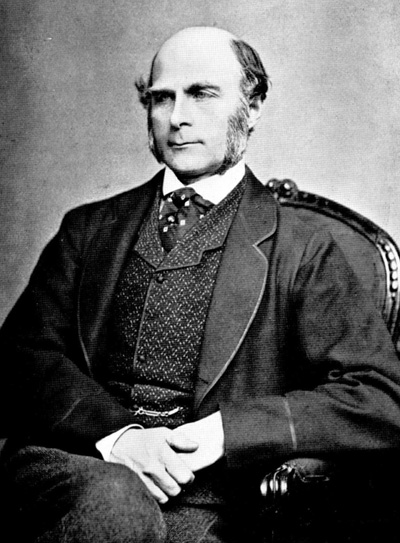
 Francis_Galton_1850s pic1


The phrase ‘nature and nurture’ is a convenient jingle of words, for it separates under two distinct heads the innumerable elements of which personality is composed. Nature is all that a man brings with himself into the world; nurture is every influence without that affects him after his birth.

— Sir Francis Galton

English Men of Science: Their Nature and Nurture (1874), 12.


It is said that Galton was one of the early scientists to try to examine and discuss the importance and causes of individual differences. Prior to Galton the phenomenon of individual differences had not been considered a subject for serious study in psychology.


I have no patience with the hypothesis occasionally expressed, and often implied, especially in tales written to teach children to be good, that babies are born pretty much alike, and that the sole agencies in creating differences between boy and boy, and man and man, are steady application and moral effort. It is in the most unqualified manner that I object to pretensions of natural equality. The experiences of the nursery, the school, the University, and of professional careers, are a chain of proofs to the contrary.

—  Francis Galton, Hereditary Genius


However, Galton was fighting against the ideas of a heavyweight in the field, who had already positioned “nurture” as the manner by which all humans acquired their behavioural traits. Regarded as one of the most influential of Enlightenment thinkers, English philosopher and physician John Locke (1632 -1704) predated Francis Galton (1832 – 1911). Locke had already proposed his theory of the tabula rasa (“blank slate”) that no child had any innate ideas at birth. Locke was also challenging the ideas of Rene Descartes before him. Locke argued that all knowledge was gained or acquired from experience and through the sense perceptions following his strong leaning towards empiricism, in the tradition of Sir Francis Bacon. Locke’s theory of mind, cited as the origin of modern conceptions of identity and the self, figured prominently in the work of later philosophers such as Hume, Rousseau, and Kant.


The publication of Darwin’s book The Origin of Species greatly influenced and galvanized Galton.
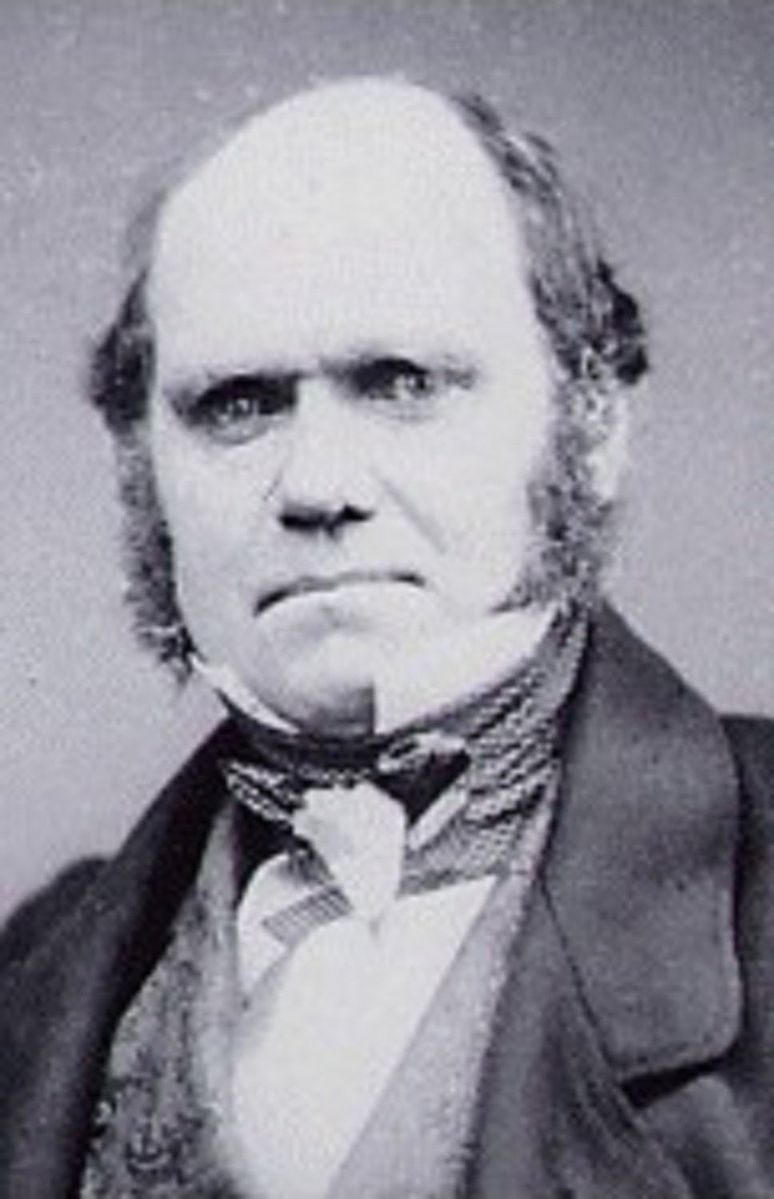
 Charles_Darwin pci1


The publication in 1859 of the Origin of Species by Charles Darwin made a marked epoch in my own mental development, as it did in that of human thought generally. Its effect was to demolish a multitude of dogmatic barriers by a single stroke, and to arouse a spirit of rebellion against all ancient authorities whose positive and unauthenticated statements were contradicted by modern science.

— Sir Francis Galton

Memories of My Life (1908), 287.


Galton became highly interested in the new theory and went about applying the evolution theories to his study of individual differences. It was not just the evolution of physical characteristics, but the evolution of mental characteristics that caught his attention. Galton developed his own theories on inherited traits. He studied identical twins, and worked on the first intelligence test in his exploration of the roles of “nature and nurture.” Galton devised some of the first tests of mental ability; it is said that he initiated the whole idea of mental tests. He used questionnaires to get a glimpse of people’s minds, devised the first tests to measure the association between ideas in a subject’s mind. Based on the assumption that intelligence could be measured in terms of one’s level of sensory capacity – the higher the intelligence, the higher the level of sensory discrimination. He devised a number of such instruments to measure the senses.


According to some sources, Galton also coined the term “eugenics,” a controversial field of study about selective breeding in humans to produce preferred traits. Galton’s ultimate interest was in encouraging the productivity of the more eminent or fit, and discouraging the birth rate of the unfit. By using the science of eugenics, the human strain, like livestock, could be improved by artificial selection. Galton believed that if men and women of considerable talents were selected and mated generation after generation, a highly gifted race of people would be the eventual result.


One of the effects of civilization is to diminish the rigour of the application of the law of natural selection. It preserves weakly lives that would have perished in barbarous lands.

“Hereditary Talent and Character” in MacMillan’s Magazine Vol. XII (May – October 1865), p. 326.


Nature and nurture seem to be two diametrically opposed realms and the use of oppositional ideas to advance debate and discussion has a long history in our way of thinking. In recent years, Ferdinand de Saussure (1966), argued that concepts have no meanings in themselves but derive their meanings from being in systems or networks of relationships. Their meanings are differential, and not defined by positive content but negatively, by their relationship with other concepts. Thus, one sees the same elements of oppositions being used in one of the foundational works in modern sociology The Elementary Forms of the Religious Life by one of the founding fathers Emile Durkheim (1967), a classic study of religious thought and its relation to the social order. Durkheim explains how religious thought divided the world into two distinct spheres – the sacred and the profane. Thus the sacred cannot exist without the profane, and vice versa (see Berger, 1995).


However, today Nature versus Nurture is reported as a meaningless debate. It is considered an obvious fact that both nature and nurture play important roles in human development as many of the scientists participating in the Edge survey pointed out. Recent scientific advances have made the very idea of these distinctions facile.


The growth of knowledge in the field of epigenetics tells us there is a long and circuitous route, with many feedback loops, from a particular set of genes to a feature of the adult organism. Epigenetics explores ways on which different environments shape this complex process of expression of a gene, including whether a gene is expressed at all. In their article titled: Beyond Nature vs. Nurture, Darlene Francis and Daniela Kaufer write that researchers studying differences in how individuals respond to stress are finding that genes are malleable and environments can be deterministic. “The “nature vs. nurture” conundrum was reinvigorated when genes were identified as the units of heredity, containing information that directs and influences development. When the human genome was sequenced in 2001, the hope was that all such questions would be answered. In the intervening decade, it has become apparent that there are many more questions than before.”


In a study conducted with pairs of identical and fraternal twins at Stanford University, a team of researchers led by Mark Davis, found that the environment may have played a larger role than genes in determining the response of the immune system. Examining blood samples, drawn from these twins at three different times, the researchers studied 200 distinct immune system components, and found that in almost 75% of these measurements, non-heritable influences such as exposure to toxic substances, vaccinations, diet, dental hygiene accounted for larger share of differences among twins as compared to heritable factors genes). Davis and his team concluded that: “While genomic variation clearly plays a role in some diseases, the immune system has to be adaptable to cope with infection and injury.” As Francis and Kaufer wrote in their article mentioned above: “We’ve reached a point where most people are savvy enough to know that the correct response isn’t “nature” or “nurture,” but some combination of the two.”


Frameworks to explain how the human mind develops have portrayed the process as some mix of genes and environment, innate structure and learning, evolution and culture. But the Nature versus nurture debate made it seem that we could actually study and assess the contribution of each of these causal factors independently.


In order to distinguish genetic and environmental contributions to the expression of adult behaviour in mice, Darlene Francis and her colleagues at Emory University investigated the effects of prenatal (embryo transfer) and postnatal (cross-fostering) environments in two strains of inbred mice with profound and reliable differences in behaviour. They published the results in an article in the journal Nature Neuroscience. Inbred mouse strains are normally used to search for genes associated with behavioural traits, including emotionality. One strain was “timid or anxious” in entering new environments or had difficulty learning during a stressful task compared to the other strain which could be called more “relaxed.” Evidence had shown that in the relaxed strain the mothers licked and groomed their babies more than in the anxious strain. This worried the people on the “Nature” side of the debate because it seemed that mothering style or nurture affected the behaviour. However, when relaxed strain mice pups were raised by the anxious strain mums, they grew up to be relaxed rather than timid. This finding, in turn, relaxed those arguing for genetics and “nature” to explain the differences between individuals.


Darlene Francis and her team then went further; using the techniques of in-vitro fertilization, they cross-fostered mice as embryos. Relaxed strain eggs that were fertilized were implanted into the anxious or timid strain females, who then carried this pregnancy to term. After birth some of these babies who were born out of the cross-fertilization were divided among mothers of both strains: some baby mice were raised by the “anxious” mothers and some by the “relaxed” mothers. The result: When the genetically “relaxed” strain baby mice underwent both their foetal stage and early stage of life with “anxious” strain mothers, they became as anxious as any other mice in that anxious strain. So were the mice’s abilities innate or learned? Was it the result of nature or nurture? Genes or environment?  It seems that environmental influences do not begin at or after birth; the environment seems to affect us even when we are in the womb – maybe the nutrition or stress levels of the mother affect the foetus. Also, relaxed strain mice are not relaxed only because of their genes but also because of their environment and nurturing practices that they are exposed to. Robert Sapolsky writes about this and other such studies that show the intertwining of genetics and environment in his book Monkeyluv: And Other Lessons in Our Lives as Animals.


Despite the retirement of “Nature versus Nurture,” both nature and nurture seem to conflate in some weird way in our parents. Choosing our parents wisely can either give us the benefit of both good genes and good environment or at least compensate for the deficiency of one. The worst is when I have parents with poor genes who also happen to be at the bottom of the socio-economic ladder. Galton would have called me the eugenic disaster. However, now that I am born, do I not deserve an opportunity to make good? This is what public health focuses on: to improve the circumstances of living for all, irrespective of their genes at birth. Perhaps Stallones was focusing our attention on the raison d’etre for public health when he said: Choose your parents wisely.


When it comes to Nature versus Nurture, an elementary error that we make in interpreting the effects of genes versus those of the environment is to assume that we can actually separate one from the other. The concept embodied in the phrase – Nature versus Nurture – has been criticized for its extreme simplification of very tightly interwoven parameters, as for example an environment of wealth, education, and social privilege are often historically passed to genetic offspring, even though wealth, education, and social privilege are not part of the human biological system, and so cannot be directly attributed to genetics.


However, most children inherit from their parents not only genes but also their environment. And it is our parents unfortunately who hold the key to both; majority of us are raised by the same parents who gave birth to us; very few are taken from their parents of birth and raised by someone else. So if I am born to poor parents, then I will obviously be raised in a poor environment too.


Parents from poor families not only have less money, less time and live in a poor stimulation environment, they also lack the necessary skills that will help them raise kids who can survive in a knowledge economy which demands very specific skill-sets of its employees. The findings of an interesting study conducted by researchers at the University of Kansas in the mid-1990s showed that children from higher income families had heard almost four times the number of words (2100) compared to children from low income families (600 words) even before they had joined the education system. Compared to children lower down the hierarchy, the ones from rich families get much more of a head-start?


My research on adoption of healthy lifestyle choices in eating and physical activity among families in Dallas found that low income parents were less likely to have changed undesirable, unhealthy behaviors. When asked why, the low-income families said they had the knowledge; they just did not have the time that is required for buying and cooking fresh food or for playing with children because all of them had two jobs. They needed two jobs because they could barely pay the rent or buy food with the income from one job. They ate fast food because with the very limited time they had for themselves, the food they ate had to be either cooked fast or made fast. Because most of their time is spent between workplaces, parents are tired when they return home, and have no time to engage with children, and are more likely to passively sit in front of a television than play with a child.


Far away from the shiny buildings in the city of Dallas with its wide open spaces to the urban slums of Mumbai with its traffic congestion and unclean clutter we found the same story repeating itself – in another language. “Eat less – Sleep less – Work more” – that is how a group of women from low income families in Mumbai described their daily lives in a study we conducted on food security among the urban poor.


Some people would then blame my poor upbringing on the poverty of my parents, the poor environment in which I grew up with minimal mental stimulation, some would blame it all on the poor genes and some would blame my continuing poverty on the poor parenting skills. Most of the times we get all this mixed up and we confuse income poverty with poor genes. Although the scientific argument against wealth  being seen as a biological attribute has been building up compared to  the days of Galton (when he may have mistaken wealth ownership as a sign of inheritable difference between people) – it seems that the tide has been turning in the past few decades. It seems we are going back to the days of Galton and eugenics. The more we have progressed in technology we have also regressed as a world. We have actually gone back to feudal times whereby wealth today has become an attribute of a very small percentage of people – the world is becoming one of widening and deepening inequality. It seems there is immense merit and wealth in store for us only if we choose our parents wisely; although these rich parents we would like to choose make up only 1% of the population.


The second event of 2014 that grabbed my attention was the English version of the book by Thomas Piketty


Inequality as a way of life – get used to it and stop protesting


Thomas Piketty, French economist and academician, published his nearly 700 page book Capital in the 21st century in 2013; however the English version hit the stands somewhere around the middle of 2014 and rapidly became a very important book. Despite the criticisms about his data and some of his conclusions, Piketty has ably re-ignited the debate about inequality in our time and also directed our collective attention to the lop-sided distribution of income and wealth. After extensively looking at data on wealth concentrations and distribution over the past 250 years, the book argues that the rate of returns to capital in developed countries is persistently greater than the rate of economic growth in those countries and this is leading to excess inequality. The benefit of returns to capital accrue to those who own that capital; higher economic growth may benefit to many other than those who started the economic or entrepreneurial initiative such as workers and smaller vendors due to rise in wages and greater distribution of wealth.
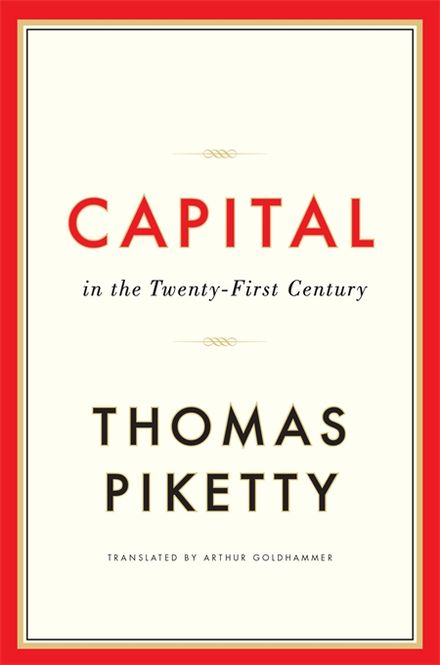
 Capital_in_the_Twenty-First_Century_(front_cover)


Europe was extremely unequal at the beginning of the industrial revolution in the 18th and 19th centuries. Few rich families had cornered most of the wealth; this often exceeded national income, and there was a rigid class structure. Despite the growth of industrialization contributing to increased wages of workers the form of inequality continued until the disruptive events of the two World Wars and the Great Depression. However, there was a brief period in which the growth of welfare states in Europe impacted wealth. There was a period of egalitarian distribution of wealth. However, in the past two to three decades of capitalism are seeing a regression; wealth is getting more concentrated in the hands of a few, according to Piketty, approaching the levels last seen before the world wars with rise in inequalities.


According to Piketty the general rule is that wealth grows faster than economic output. However, rapid economic growth can reduce the importance of wealth in a society, whereas slower growth allows wealth to dominate. Economic growth has slowed down in many European countries and stimuli for growth such as rising population or technological innovation do not seem to be around the corner. The consequence is the current wealth inequality. Piketty warns that our continuation with the status quo approach to economics and wealth will continue to see increased inequality in the future and its attendant political and economic upheavals. In order to address this problem, he proposes redistribution through a progressive global tax on wealth.


However, while being acclaimed as an economic classic, in my mind Piketty’s book may also be an example of a thought following a set of practices – rather than the other way around. People were already protesting – even before Capital was published – no one believed them. Only when Piketty published his book that experts said the protestors may be right. The book made the protestor’s valid. We seem to have drifted far away from Locke’s empirical school where experience told us everything we knew about the world. Piketty’s book and the attendant hoopla demonstrates that we, or at least our so called experts, no longer seem to believe in our people’s experiences. So much for the success of democracy, at least in the expert’s opinion.


Occupy Wall Street in New York City began on 17 September 2011 and was the first one to receive widespread attention was. By end of that year and before the release of the book Capital, Occupy protests had taken place in over 951 cities across 82 countries.


The Occupy movement protests against social and economic inequality around the world, its primary goal being to make the economic and political relations in all societies less vertically hierarchical and more flatly distributed. Local groups often have different focuses, but among the movement’s prime concerns deal with how large corporations and the global financial system control the world in a way that disproportionately benefits a minority, undermines democracy, and is unstable. It is part of what Manfred Steger has called the global justice movement.


We are the 99% is a political slogan widely used by the Occupy movement. The phrase directly refers to the concentration of income and wealth among the top earning 1%, and reflects an opinion that the “99%” are paying the price for the mistakes of a tiny minority within the upper class.


Inequality and health


That inequality is harmful for health has been known for some time. Some well-known researchers from United Kingdom such as Richard Wilkinson and Michael Marmot have been working on the social class distribution of disease and health as well as the effects of inequality on health (See Richard Wilkinson interview in The Essayist).


In 2009, Richard Wilkinson co-authored a book with Kate Pickett titled: The Spirit Level: Why More Equal Societies Almost Always Do Better. The book used data to demonstrate the toxic and unhealthy effects of inequality on societies including the erosion of trust, increased anxiety, illness, and encouraging excessive consumption. It demonstrated that those countries which had greater inequality (compared to those that had less) performed significantly poorly on each of eleven different health and social problems: physical health, mental health, drug abuse, education, imprisonment, obesity, social mobility, trust and community life, violence, teenage pregnancies, and child well-being, outcomes. Despite the criticisms, Wilkinson says that the evidence is there and we have to simply examine it dispassionately, In order to change society, one of the first things that has to happen is a change in our mind-set: We have to understand that we do not need inequality to thrive. We have to change the belief that we can grow only at the expense of others.


In an earlier book “Unhealthy Societies: The Afflictions of Inequality Wilkinson presented a body of evidence demonstrating that life expectancy is dramatically improved in countries where income differences are smaller and societies are more socially cohesive. Furthermore, the evidence, according to Wilkinson, was that social factors, rather than material ones, were the limiting component in quality of life in developed countries. The evidence suggested that what mattered within societies is not so much the direct health effects of absolute material living standards so much as the effects of social relativities. Health is powerfully affected by social position and by the scale of social and economic differences among the population. In terms of income, the relationship is with relative rather than absolute income levels. Wilkinson stated that the critical evidence for this relationship between relative income differences and health comes from strong international relationship between income distribution and national mortality rates. In the developed countries, it is not the richest countries that have the best health, but the most egalitarian.


There is a history to the study of inequalities on health in the United Kingdom. In 1977 the Research Working Group on Inequalities in Health was convened by David Ennals, Secretary of State for Social Services to study the relationship between social inequalities and health. The working group was chaired by Sir Douglas Black, president of the Royal College of Physicians; and hence the report that came from the working group’s findings was named the Black Report.


The central finding of the working group’s report (or Black report) was that there were large differences in mortality and disease between the social classes and these favoured the higher social classes; and most importantly these differences were not being redressed by health or social services. The Report showed the extent to which ill-health and death were unequally distributed among the population of Britain. It also suggested that inequalities were widening, rather than reducing, since the establishment of the National Health Service (NHS) in 1948. The Report concluded that these inequalities were not just due to problems with the health service (NHS), but due to various social differences influencing health such as inequalities in income, education, housing, diet, employment, and conditions of work.


The Black Report recommended various social policy measures to combat inequalities in health. However, these findings and recommendations were virtually disowned by the then Secretary of State for Social Services, very few copies of the Black Report were printed, and few people had the opportunity to read it.  However, the Whitehead Report published in 1987, Acheson Report in 1998, and the Marmot Review in 2010 came to the same conclusions as the Black report.


The Whitehall study findings also showed a clear link between income and health. The first Whitehall Study (Whitehall I) examined cardiovascular health outcomes in over 18,000 male civil servants, and was conducted over a period of ten years, beginning in 1967. It compared mortality of people in the highly stratified environment of the British Civil Service and found that mortality was higher among those in the lower grade when compared to the higher grade. The more senior one was in the employment hierarchy, the longer one might expect to live compared to people in lower employment grades.

 Edi 10_Richa N


Twenty years later, the Whitehall II study examined the health of 10,308 civil servants aged 35 to 55, of whom two thirds were men and one third women; and documented a similar gradient in morbidity in women as well as men. The Whitehall cohort studies consistently found a strong association between grade levels of civil servant employment and mortality rates from a range of causes. Men in the lowest grade (messengers, doorkeepers) had a mortality rate three times higher than that of men in the highest grade (administrators). While Whitehall I had focused on heart disease, the Whitehall II study revealed this social gradient for a range of different diseases: heart disease, some cancers, chronic lung disease, gastrointestinal disease, depression, suicide, sickness absence, back pain and general feelings of ill-health. A major challenge, and a reason for the importance of these studies, was to understand the causes of this kind of social distribution of so many disorders. Whitehall II also found that the way work is organised, the work climate, social influences outside work, influences from early life, and health behaviours all contribute to the social gradient in health.


So if inequality is getting institutionalized and entrenched in society, as Piketty argues, then what are the chances of a child who happens to choose poor parents? They are extremely poor because it seems that not only do people lower down in the socioeconomic hierarchy die earlier, and need help with their health, they also need help with parenting. Poor families are spiraling downward in a vicious cycle – less money, less resources – more work – less time – less understanding of what the economy demands – less skills imparted to children – children continue to stay lower down in the hierarchy – more inequality.


Can inequality and its effects on health be addressed by choosing one’s parents wisely? In a world of growing inequality, all the unborn children would want to choose the top 1% of the population. No way out.


History teaches us nothing. It simply recycles power.


“People with advantages are loath to believe that they just happen to be people with advantages.” 
― C. Wright Mills


If the only history we have are nothing but the biographies of famous people – rich people – the winners, then we have a history that erases the existence of billions. We have a history that behaves as if the so-called losers do not exist. The losers are invisible when in reality the losers make up the multitudes. Only one in a million becomes a king or a billionaire or a military general. We read about Napoleon and JP Morgan and Steve Jobs? What about the peasant who was forced to fight a war to fulfil Napoleon’s desire to be an Emperor or the accountant who lost his family life and did not get to enjoy his children’s childhood because JP Morgan willed himself into the richest man in the world.


Biographies are positioned as works of non-fiction, which means that the writer or the publishing company or the powers-that-be are trying to say that “This is the truth. This is what happened, believe me because I am rich and famous.” And we believe him? We do not ask, what made you rich and famous in the first place


Professor Hermione Lee who has written extensively on women writers and is author of a collection of essays on biography and autobiography: Body Parts: Essays on Life-Writing (2005) argues that all history is seen through a perspective that is the product of our contemporary society and as a result biographical truths are constantly shifting. So the history biographers write about will not be the way that it happened; it will be the way they remembered it.


How does a person remember something? Is his or her memory not coloured with their own subjective biases? Now that makes history and the truth a product of how a person perceived it? History, then, in reality becomes perception and not the fact it is sold to be. History becomes a vehicle to re-cycle the notion of power and advantage – to continue with the same old idea that you have to be born with great talent in order to become great. There are certain kinds of people who write their biographies.


In 1936, Carl Sandburg published a book of verses titled The People, Yes. A small piece from that artfully uncovers the assumptions underlying property and power.


“Get off my estate.”

“What for?”


“Because it’s mine.”

“Where did you get it?”


“From my father.”

“Where did he get it?”


“From his father.”

“And where did he get it?”


“He fought for it.”

“Well, I’ll fight you for it.”


Benjamin Barber cites this Carl Sandburg poem in his 2004 book “Strong Democracy: Participatory Politics for a New Age” to demonstrate the underlying similarity between claim and force. Barber argues that property and its acquisition is simply the logical culmination of power-seeking. He sees no difference between property and power; rather that property is simply the long-term avatar of power. He argues:


Property is a form of cumulative power, an authoritative variety of institutionalized aggression, by which the claims of individuals to adequate means are given a permanent and logical home. Raw power provides temporary control while property possession lends to coercion over time enhancing the effect of power by diminishing the need for its perpetual exercise.


All of us take our resources from the environment. Those who do not own property or land have to beg borrow, buy whereas those who own land only have to protect and use and at much less risk. Property provides the sense of certainty over the much needed resources that humans need for their daily life and survival. Land ownership and its use takes away the edge of daily survival and the constant battle that the poor wage against their own needs and the economy and society that controls it. Because of this it seems that those with property, the wealthy are not really fighting this daily battle for survival. They seem like the winners and they seem like the fittest in the human species because they are perceived as being above the laws of survival.


However, little do these arguments recognize that wealth is not a biological attribute of the species. Wealth is temporary when seen in terms of timeline of the human species.  And many times wealth has been claimed by brute force. The colonization of many parts of the world – Asia, Africa, Latin America is a case in point where those with guns outnumbered those with spears and claimed moral and intellectual racial superiority just because they were more willing to exercise violence than the subjugated races. The oppressor and the violent wrote the history of evolution and its theories.


Wealth is not a differentiator of inherited differences between people; beneath the so called superiority of property and wealth lies the dark history of brute force. As Carl Sandburg reminds us that even if we were to choose parents who are wealthy we may lose it all to the brute force of someone wielding greater raw power than us. It may get stolen or taken from us.


*****

Pushing the thought of choosing one’s parents wisely further and thinking of biographies as history, what would be the content of the biography of a child to be born in 2015. How many children born in 2015 would say that they chose their parents wisely? And how many would say the opposite?  I wondered what an unborn child would wonder as she looked at our world, especially events three and four of 2014: the rise in the market and business of cord blood and the UN sustainable development goals –


Cord Blood: The baby saves the parents


In November 2014, Research and Markets announced the release of the “Complete 2015-16 Global Cord Blood Banking Industry Report.” The global stem cell market is currently dominating the healthcare industry; current market for cord blood therapeutics accounts for US$ 6.5 billion, and expected to grow at 33.4% year over year from 2013-2020 (although some argue that growth rates will be lower). Research on stem cells continues to advance knowledge about how an organism develops from a single cell and how healthy cells replace damaged cells in adult organisms. Stem cell research has become both a fascinating area of research for contemporary biology, and also the new frontier for medical technology and marketing the magic of medicine (through a renewed focus on regenerative therapies). Everyone wants to live forever…and the umbilical cord seems to be the way to get there.


The baby is connected to the mother’s womb through the placenta; which allows the baby to absorb nutrients from the mother, eliminate waste products and also exchange gases. The placenta is the life support system for the foetus in the womb.  After the delivery or birth of a baby, the placenta, also known as after-birth, is expelled by the mother’s body usually within 15 to 30 minutes. However, some blood remains in the blood vessels of the placenta and the portion of the umbilical cord that remains attached to it. This blood is called placental blood, umbilical cord blood or popularly known as “cord blood.” In addition to the usual components of blood such as red blood cells, white blood cells and platelets, cord blood is rich in hematopoietic (blood-forming) stem cells, similar to those found in bone marrow. It is the presence of these stem cells that have made umbilical cord blood a business commodity and given a boost to the regenerative medicine industry as well.


When a stem cell divides, each new cell has the potential either to remain a stem cell or become another type of cell with a more specialized function, such as a muscle cell, a red blood cell, or a brain cell. Stem cells have the potential to develop into many different cell types in the body during early life and growth. In addition, in many tissues they serve as a sort of internal repair system, dividing essentially without limit to replenish other cells as long as the person or animal is alive. The presence of these stem cells makes cord blood useful. Cord blood is being used increasingly on an experimental basis as a source of stem cells, and as an alternative to bone marrow. Most cord blood transplants have been performed in patients with blood and immune system diseases; and for some patients with genetic or metabolic diseases.


According to the National Institutes of Health (NIH) perhaps the most important potential application of human stem cells is the generation of cells and tissues that could be used for cell-based therapies. Today, donated organs and tissues are often used to replace diseased or destroyed tissue, but the need for transplant (tissues and organs) is much higher than what is available today. Encouraging people to donate organs, while alive or after death, is one way of reducing this gap. However, stem cells, directed to differentiate into specific cell types, offer the possibility of a renewable source of replacement cells and tissues to treat diseases including macular degeneration, spinal cord injury, stroke, burns, heart disease, diabetes, osteoarthritis, and rheumatoid arthritis. Scientists are investigating the possibility that stem cells in cord blood may be able to replace cells of other tissues such as nerve or heart cells.

Thus, given the volume of business and expected growth of the market as mentioned above, private cord blood companies and banks have mushroomed. According to a report on the industry released in 2010, the cord blood bank market is divided into two segments, public and private: “Public banks receive donations for the benefit of all and once a donation is deposited in the bank the specimen loses its identity and is not attributed to the donor. On the other hand, in private family banks process is being paid for by the family and the cord blood unit collected belongs to the baby for its own use, or for applications in family members if needed. In terms of cord blood currently in storage, there are approximately 3 million cord blood units currently stored with over 80% in private banks.”


The sales-persons for these cord blood companies (and banks) approach the pregnant woman / couple asking them to save cord blood in their company banks for a certain period of time; and of course for a substantial fee. These companies sell the benefits of cord blood for the future health of the child (they can fight any disease) as well as for other family members, who may become sick and need stem cell therapies.


Often these commercial cord blood companies and banks offer personal storage of cord blood to families with no known genetic risk of disease. There may not even be the history of genetic conditions that can be treated with stem cell (cord blood) given our state of current knowledge. Parents who buy the cord blood promise buy it because they are now given an option or imagine possibility – what if there is an event that a child of such a family spontaneously develops a medical condition that might be treated using cord blood? What will you do then? Why not save it now for a small fee than undergo the guilt and shame later? Be a wise parent they are told. Choose the option of buying a refrigerator space for your cord blood (even though none of your family members have a history of genetic disease).

thank you mom for securing my life


They are even sold the idea that the saved cord blood and the stem cells within can help other family members if they develop a disease.


In July 2006, the Royal College of Obstetricians and Gynecologists (RCOG) released a report on the uses and the potential perils of umbilical cord blood collection. The findings of the RCOG report led them to conclude that directed cord blood donation in low‐risk families is at present likely to be of little use, and that the probability of using a directed donation is sufficiently low to fail to justify the procedure’s expense. Although they support public funding for non‐directed donation as a community health resource and for directed donation where indicated by genetic risk factors, their view is that directed donation in the case of families who are not at risk is of dubious utility and should not be funded. The practice of commercial cord blood banking for directed storage is therefore not recommended, although (as opposed to policy in some countries) they advise that it should be permitted as a matter of choice.


Since the 1990s, many countries have established national bioethics committees or commissions. The opinions from the different Committees are fundamentally unanimous in their evaluations: Private, single family based cord blood storage is of low or no value.

 protect your family cord blood cordlife


The French Comité Consultatif National d’Éthique pour les Sciences de la Vie et de la Santé finds that such banks disguise a mercantile project using assistance to children as a screen. However, they say the gravest danger is for society in so far as setting up such banks is likely to contradict the principle of solidarity, without which no society can survive. These banks jeopardize justice and equity. If any reasonable indications existed, then the offer should be systematic, organised, managed, and supervised by public authorities; cost and broadness of scale then enter the picture. The disproportionate, and for the time being useless, cost of generalised autologous storage is in total contradiction with the obligation to provide public health based on solidarity and awareness of priorities. Management by the private sector may be seen as discrimination based on wealth. However, this would hardly be exceptional in the healthcare sector, and those who use these programmes cannot be blamed for their ingenuousness.


Parents hang on to the idea that they should do everything they can for the benefit of their children. They do not want to miss any tree in the forest of ‘what can be done’ when it comes to giving their children a better life. However, in looking at each tree that will bring happiness in their child’s life, many parents miss out on the forest. While each parent is focused on individual things that can be done, the environment in which their children will live in the future is being decimated. Parents are not looking at the world while trying to ensure their child has the best that this world has to offer. They are busy looking at the offerings on display without realizing that the ground they stand on is becoming inhospitable for human life each day. When someone says: The world may not have a clean air and water to offer soon. The parents reply: But we have saved cord blood instead?


Maybe we cannot choose our parents wisely or choose them at all; however, we can choose the world we choose to live in, wisely!


The state of our world and planet demands that we make a choice about what kind of world we inhabit. We have to change our habits in order to make this world a habitable place again.


UN Sustainable Development Goals (SDGs)


The UN Open Working Group on Sustainable Development Goals submitted their proposal for SGD goals to the UN Assembly sometime in the mid of 2014. The proposal contains 17 goals with 169 targets covering a broad range of sustainable development issues, including making cities more sustainable, combating climate change, and protecting oceans and forests


This was one of the outcomes of the Rio+20 Conference in 2012 (hosted in Rio de Janeiro, Brazil) which saw participation from 192 UN member states — including 57 Heads of State and 31 Heads of Government, private sector companies, NGOs and other groups.


Member States agreed to launch a process to develop a set of Sustainable Development Goals (SDGs), through the Rio+20 outcome document, “The Future We Want”, which also called for the goals to be integrated into the UN’s post-2015 Development Agenda.


In 1992, the first United Nations Conference on Environment and Development (UNCED), referred to as the Rio Conference or Earth Summit, succeeded in raising public awareness of the need to integrate environment and development. Ten years later, Earth Summit 2002, informally termed Rio+10 was held in Johannesburg, South Africa with the goal of bringing the world together to create a green economy. At Rio+10, sustainable development was recognized as an overarching goal for institutions at the national, regional and international levels. Rio+20 was a 20-year follow-up to the 1992 Earth Summit. Green economy roadmap discussions were pushed aside for sustainable development goals with focus on the economy more than the environment. The word sustainable is used politically to mask the lack of an all-out effort to go completely green.


The current development agenda, until 2015, is centred on the Millennium Development Goals (MDGs) that were officially established following the Millennium Summit of the United Nations (UN) in 2000. The MDGs encapsulate eight globally agreed goals in the areas of poverty alleviation, education, gender equality and empowerment of women, child and maternal health, reducing HIV/AIDS and communicable diseases. Environmental sustainability was one among eight. The difference in the SDG is that almost all the 17 goals talk about sustainable practices, mentioned income inequality eradication as a goal and almost 13 of the 17 (working) goals have use the word sustainable, climate change, quality of environment have all found mentions. Although removal of poverty remains the central preoccupation, the word environment is not mentioned, however some environmental concerns are addressed with greater mention using the term – sustainability or under the catch-all notion of – health. The UN still shies away from directly tacking air pollution – one of the biggest problems facing human kind and a major contributor to disease and mortality. It subsumes air quality under heath goals rather than making air quality the goal.

 

air pollution


On June 13, 2014, the Global Alliance on Health and Pollution (GAHP) released a report, whose analysis was based on new data from the World Health Organization (WHO) and others. It clearly blamed pollution as the cause of more than 8.4 million deaths (annually) in the developing world – of which 7.4 million deaths were due to pollution sources from air, water, sanitation and hygiene.  WHO figures released in May 2014 counted deaths from outdoor and indoor air pollution at 6.58 million; water contamination, lack of sanitation and hygiene at 842,000. An additional 1 million deaths were attributed to toxic chemical and industrial wastes from large and small producers in formal and informal sectors of developing economies.


Despite pollution being the largest contributor to diseases and deaths, it still remains low priority in the current draft of the Sustainable Development Goals (SDG), In fact, pollution was said to cause causes almost three times more deaths than malaria, HIV/AIDS and tuberculosis combined (1.5 million deaths from HIV; 600,000 from malaria; and 900,000 from tuberculosis).


If we do not have air to breathe, how will we have the life to see growth and prosperity in our nations? It seems that the UN is so desperately trying to fight poverty, that it has become impoverished in its own thinking. The truth is that the UN does not want to displease anyone – neither the poor nations nor the rich and especially the masters who pay for having conferences in exotic places and hotels – the corporations. The economy of our society is just a euphemistic word for our slothfulness of thinking and inability to conceive of change (see article in this isssue: Is There No Alternative?). If a United Nations declaration reflects the state of our world and our collective thought process, then it shows an absolute inability to think. It seems all this poor quality air and water has also affected the brains of our global experts. Or is this the affliction of our time – the inability to think of an alternative way of life?


What would the unborn children think as they looked at our world? Here are our future parents, who are happily paying money to store cord blood in banks so that we can fight disease, degeneration,  live long lives while being mute spectators to the complete devastation of the very air we will breathe when we cry for the first time?  Perhaps, our unborn children will stop crying…what is they point, they ask?


Now…Choose your world wisely – Resolve our relational issues


Choose your parents wisely – the statement by Reuel Stallones then become a lens to look at our world and to analyse and frame the problem of health and highlights how it is disproportionately distributed in society. However it does not provide an easily approachable springboard for action. The levers of change in choosing parents seem to either be huge government actions in terms of supporting the dispossessed, or it puts a disproportionate share of the responsibility on parents and parenting, especially those in the lower rungs who are already ill-equipped.


How do we create a better world – an enlightened world – better still, a wise world?


Choose your parents wisely – definitely helps to highlight the issue of injustice wrought on (wo)man – whether by Nature or by her own Society. Rule number 1: Choose your parents wisely brings us to a certain point in our understanding of the world and perhaps then pushes us to look for avenues of action. It forces me to think of Rule number 2, perhaps something that Stallones had in mind: Choose your world wisely.


Looking forward (from 2015) into the evolution of our world, there seems to be two major relational issues that need resolution. Not only is there a rot in the way we relate to each other, diseases or problems seem to be distributed disproportionately among those lower down in the social hierarchy and inequalities are becoming entrenched; but also a rupture in the way we relate to our environment, as seen in the rapid deterioration of air quality.


How do we resolve this? How do we get better health for all as a sign that our society is indeed civilized? There are two aspects: one is a better appreciation of social justice and action on injustice, and re-frame the notion of choice.


There is injustice all around us.


Although everyone understands injustice, especially when it is perceived as happening to themselves, and popular culture and film thrives on the whole idea of redress of injustice; very few actually know how to ensure justice in society.


Justice is an abstract concept. Every group distributes or imposes its share of benefits and burdens on the members. Justice, in shorthand, is the correct and proper allocation of the fair share of collective burdens and benefits to all members of a group or society. The benefits to be distributed usually include income, education, opportunities, social status, or even happiness. The burdens usually mean taxation, social reservations or even certain restrictions on certain individual actions. Fairness in the distribution of benefits and burdens is justice. On the other hand, injustices are reported when some individuals are denied a particular benefit or when some individuals feel that they a burden is being imposed unduly on their shoulders. If access to health services or even being healthy or living long is considered to be a benefit (or if poor health is considered to be a burden), then the linkage between the concept of justice and the practice of public health become clear.


It is clear that poor genes may affect a person poorly and we think that we cannot do anything about Nature. So we decide to fight against this perceived injustice of Nature – which gave us bad genes – by storing cord blood and ensuring that this cord blood, thanks to expected advances in medical technology, can be used in the future to rectify this individual injustice. However, health policy, which often considers Nature to be a given, should be more concerned in doing something at a larger population or social level. Therefore, it turns to Nurture. Can we somehow eliminate those factors that create inequalities and are social or cultural in origin?


This is in contrast to the eugenics of the time of Francis Galton, which tried to propose practices to improve the genetic quality of the human population, and became a social philosophy that strongly advocated promotion of higher reproduction of people with desired traits (positive eugenics) and reduced reproduction of people with undesired traits (negative eugenics) for overall improvement in the pool of human genetic traits. Post-World war 2, eugenics became obviously unpopular.


Joshua Lederberg, winner of the 1958 Nobel prize in Physiology or Medicine when he was just 33 years old, coined the term eu-phenics, to differentiate the practice from eugenics, and to highlight that genetic manipulations could work on the phenotype rather than the genotype. Ledeeberg argued that one could more positively change an individual’s genetics rather than attempt to change the course of evolution as eugenics proposed. A positive form of genetic engineering that is used extensively by the medical and health policy community to refer to methods of affecting a genetic condition in a positive manner through diet, lifestyle or environment, such as the use of insulin to control diabetes or installation of a pacemaker to offset a heart defect. The 1970s saw one of publicized application of the notion of euphenics when folic acid was given to pregnant women to combat neural-tube deficiencies such as spina bifida in the babies.


Thus, saving cord blood for future use may be one hopeful method for a parent to demonstrate to their child that her or his parents were thoughtful; to reassure the child that you chose your parents wisely. However, like any individual method at rectifying greater problems that we face as a society, it falls terribly short. If the air quality continues to deteriorate at this pace, then no amount of cord blood will be able to save our children.  We are ultimately part of our environment and it is our environment that determines our health. By acting on our individual bodies we can only advance to a limited extent and help a limited number of people. However, acting on the environment greatly improves the chances and opportunities to be healthy for a much greater number of people.


Social justice is said to be a foundation of public health and also the underpinning of the rights-based approach to health, food, clean air and many other essential aspects of human survival. What does it mean then to argue on the basis of social justice?


Social justice proponents argue that significant factors within a society impede the fair distribution of benefits and burdens. Examples of impediments include poverty, lack of educational opportunities, gender, age, social class distinctions, racism, caste, and ethnic differences.


The social justice argument sees public health as a public matter. The results of public actions such as death rates, disease occurrences, health, and well-being are said to reflect the decisions and actions that a society makes. For instance, high rates of maternal deaths in some countries, which are death rates among women in their fertile years, can be seen as a gender issue. On the other hand, that maternal mortality rates may be higher among low income groups that middle- or high-income groups becomes a social class issue. The goal of extending the benefits of the fruits of medical and behavioral sciences to all groups in the society, especially when the burden of disease and ill health within that society is unequally distributed, is largely based on the principles of social justice.


It is clear that many modern public health (and other public policy) problems disproportionately affect some groups, usually a minority of the population, more than others. As a result, their resolution requires collective actions in which those less affected take on greater burdens, while not commensurately benefiting from those actions. When the necessary collective actions are not taken, even the most important public policy problems remain unsolved, despite periodically becoming highly visible.


A critical challenge for public health as a social enterprise lies in overcoming the social and ethical barriers that prevent us from doing more with tools already available to us (see Beauchamp, 1976). Extending the frontiers of science and knowledge may not be as useful for improving public health as shifting the collective values of our society to act on what we already know. Recent public health successes, such as reduced smoking in both public and private locations and in episodes of drunk-driving provide supportive evidence for this school of thought. It was not a newer, bigger invention or technology that changed practice and reduced mortality rates drastically; rather it was mere change in our social norms. And how we collectively saw it as a problem worthy of our attention, our time and our desire for action?


Perhaps what will help the UN reach the desired sustainable development goals are simple changes in ideation – the way we think, our social norms, our consumer and daily habits, how we relate to the environment and what we do every day that will make the biggest difference in the improved environmental quality.


Choosing the right choice – Choosing a world wisely

We live in a box of limitless possibilities… all of which are greatly limiting our ability to continue to live on the planet.


“Freedom is not merely the opportunity to do as one pleases; neither is it merely the opportunity to choose between set alternatives. Freedom is, first of all, the chance to formulate the available choices, to argue over them — and then, the opportunity to choose.”

― C. Wright Mills


Many of us may not completely agree with the statement: Greed is good. This seems especially true today given the recent recession and that more of us are aware and somewhat angry that the super-rich 1% controls the lives of the rest of us in the 99%.


But despite all the protesting, at the end of the day, almost all of us agree that: Choice is good.


We live in a world where the word ‘choice’ has become synonymous with our time. It is our way of life. Everyone needs choices. It is now considered a basic human need like air, water, shelter. No choice is considered restrictive and a sign that either the individual does not have enough freedom or the society is not developed (or civilized) enough. On the other hand, what we also experience at a personal level is the availability of too many choices. How many times have we stood paralyzed in front a fast food counter – unable to make a choice as to what we want to order to eat or drink? What kind of coffee, what do we want on the side and so on? How many accessories to buy with our clothes?


Choice is defined in the dictionary as a noun which means simply the act of choosing between two possibilities. Choice implies action. However choice essentially means first arriving at a decision. When one makes a choice, one judges the merits of multiple options and selects one of them (sometimes more than one).


Bill Simon, eminent sociologist, intellectual, friend and mentor who co-authored (with John Gagnon) the book, Sexual Conduct: The Social Sources of Human Conduct which pioneered the theory of sexual scripting, used to comment: At no other time in human history did a human being wake up in the morning, open his closet, look at his wardrobe which consists of thousands of apparel, and ask himself or herself the question: What do I choose to be today? The choice of objects and consumer goods had extended itself into the consciousness. We are making so many choices that we even choose our personality for the day or sometime for a particular time of the day. I will be conscientious co-worker who looks like a librarian and in the evening I will morph into sexy siren. All in a day’s work. What am I? I am not sure so I will keep choosing and I am sure I will find out soon.


Many choices may seem simple. On a day to day basis city dwellers constantly make choices: what do I eat for lunch today? There are many choices in the food court? Or which route do I take to work today – the bus, subway, taxi or walk? Complex choices such as choosing a partner or a career path can lead to making choices between imagined options (what would happen if …?) followed by the corresponding action. In these complex situations, making a choice may mean the mixing up of cognition, instinct and emotion.


Complex choices are also often associated with regret, of the alternatives not taken, the road not taken, the partner not chosen. The blame of making a choice that did not work out in our favour often leads to self-blame. Making a choice of an object or of a course of action can also lead to an illusion that we can control that object or course of action. The best example we have right now are two paths chosen by our world and us collectively because we participate in it every day: one is the capitalist path towards development and progress where money and the making of more money has become the supreme choice; and the path of using environmental resources for human comfort and convenience.


Capitalism is one among many historical methods of running a planet. It was one choice among many; considered the better among many options to create and distribute wealth. However, the presence of 99% of young and old protestors in almost all parts of the world from New York to Hong Kong shouting against the tyranny of a world where youth continue to be unemployed so that !% of the owners of corporations can remain rich and powerful.


On the other hand the recognition by United Nations that improving air and water quality is the most important goal for the planet is also a recognition of the magnitude of what we have done to our planet. We made some choices as a society. We chose to give our personal and planetary destiny into the hands of few corporations and now it seems our choices have spiralled out of our control and now perhaps seek to destroy us, yet we continue to behave as if it is business as usual.


The realization that choice does not necessarily mean control can cause mental distress. And so we do not want to accept this realization; we continue to build stories of how our choice will ultimately lead to control and a better world. We continue to live in denial. And our experts in the popular media help maintain it. We are exhorted to continue to party.


Our choices are restricted to choosing attire at a mall or a partner from a dating site. We forget that we are given a box, limited in size, and then the illusion of unending choices within that box. They tell us: You live in a box of limitless possibilities. We are so happy searching for choices within that box that we never look up or outside. We forget that we are in a box that is part of a set of increasingly larger sized boxes, one outside the other. In terms of choice we are happy to make choices within our box or at best happy to reach out into the box that is at the next level. However we rarely look at the world from the outside in and see that in terms of our lifestyle we really do not have any choice except to be part of this system that worships money and desecrates the planet. In that sense, we are boxed in.  So we have to keep choosing. We do not have the choice to NOT make any choices.


“O con noi o contro di noi”

(You’re either with us or against us.)

attributed to Benito Mussolini in speeches across fascist Italy


Zygmunt Bauman in his book Liquid Times: Living in an Age of Uncertainty (2007) argues that in our age (which he calls the age of liquid modernity) all the burdens of benefits of one’s own life, its successes and failures, its victories and misfortunes, now falls back upon the individual who has no one else to blame than himself or herself. Society no longer takes any responsibility – it is now all up to you. He laments the dissolution of ‘society’ and ‘the social’, which is now increasingly deregulated, privatized and individualized. Bauman comments that living in a liquid-modern society is like being on board a flight where all the passengers are painfully aware that the pilot – those in control – has long since evacuated the cockpit and that the plane is set on a crash course.  (also see article titled ‘ Is there No Alternative? by Michael Jacobsen in The Essayist). So, in such a society, if you cannot choose your parents wisely, then it’s all your fault. In a culture where impossible has become “i’m possible,” it will be no wonder if soon we see billboards screaming from rooftops: Go ahead, choose your parents. Just do it.


“Our society has stopped questioning itself – where it comes from, how it got to where it is now, how it may become different from what it currently is and where it is headed? One of the paradoxical consequences of all the progress and rapid changes of the past is that today society seems more and more resistant to change or self-critique. This situation has made Zygmunt Bauman proclaim the prevalence of the so-called ‘TINA Syndrome’. TINA is the acronym for: ‘There Is No Alternative’ (originally attributed to British Prime Minister Margaret Thatcher). Bauman finds that the world today has altogether forgotten that it can be made and re-made in another way by men and women and therefore people live their lives as if this is the only world possible. Such a world thinks of itself as the best of all possible worlds:


‘Our form of life’ has once and for all proved both its viability and its superiority over any other real or imaginable form, our mixture of individual freedom and consumer market has emerged as the necessary and sufficient, truly universal principle of social organization, there will be no more traumatic turns in history, indeed no history to speak of. For ‘our way of life’ the world has become a safe place.”

–          Zygmunt Bauman


No one wants to change a ‘safe place.’ Now this assumption becomes especially dangerous given that our environmental quality is rapidly deteriorating. The United Nations has acknowledged this but we have not because society seems to be hurtling down the same old path. The quality of air is so poor in some places that the babies of tomorrow will refuse to cry when they are born.


But a world whose thinking is ruled by the “TINA” Syndrome refuses to talk about an alternative future. It refuses to acknowledge that we may need to choose a different way of living. In a world of limitless choices we seem to be unable to make that one important choice that will determine our future and the future of all our babies. A choice that will make these babies proud that they indeed chose their parents wisely because the parents decided to – Choose their world wisely.


Aren’t we creatures with agency? We can act. We can choose. We can act in different ways – some make the world a better place for our children and some do not. Today we stand at that intersection. We have to make that choice, howsoever heard that choice may be. A choice that may tear us apart, take away some of our comforts and most of our conveniences. However, we do have to go back to Galton and Darwin and think about the future of the species. Parents are the ones who give birth to the next generation of the species. So it is for all those who are parents or want to be parents to think, act, and make that choice: Do I want my child to say: I chose my parents wisely? And not because I was clever and put away some cord blood in a freezer or money in a bank. But, because I made the choices which demonstrate that I chose my world wisely. I made it safer to breathe, drink, eat and walk in; I ensured that every child had opportunity.


However, imagine that yet unborn child, wherever she is right now, and see the world from her perspective. For her, the chances of  choosing parents wisely seems more realistic than the chance of choosing a world that is wise.


In that sense the events of 2014 and the teaching technique of Reuel Stallones should make us all into the best public health practitioners. We do not need a degree to practice it. We do so by virtue of being a person of this planet, who makes informed choices. We choose to think.


“Let every man be his own methodologist, let every man be his own theorist.”

― C. Wright Mills, The Sociological Imagination


*****

© Nilesh Chatterjee, 2015


Bibliography:


Reuel Stallones

  • William J. Schull and Darwin R. Labarthe (1986). Reuel A. Stallones: In Memoriam. Genetic Epidemiology 3:381-384 (1986).


Francis Galton and Nature vs Nurture

  • http://galton.org/start.html
  • http://www.todayinsci.com/G/Galton_Francis/GaltonFrancis-Quotations.htm
  • http://www.brainsturbator.com/posts/197/the-wit-and-wisdom-of-sir-francis-galton
  • http://en.wikiquote.org/wiki/Francis_Galton
  • Image of Sir Francis galton: http://en.wikiquote.org/wiki/File:Francis_Galton_1850s.jpg
  • Image of Charles Darwin: http://en.wikiquote.org/wiki/File:Charles_Darwin.jpg


Beyond Nature and Nurture

  • Darlene D. Francis, Kathleen Szegda, Gregory Campbell, W. David Martin & Thomas R. Insel. Epigenetic sources of behavioral differences in mice. Nature Neuroscience 6, 445 – 446 (2003). Published online: 31 March 2003 | doi:10.1038/nn1038
  • Darlene Francis and Daniela Kaufer. Beyond Nature vs. Nurture. The Scientist. October 1, 2011. http://www.the-scientist.com/?articles.view/articleNo/31233/title/Beyond-Nature-vs–Nurture/
  • Robert M Sapolsky. Monkeyluv: And Other Lessons in Our Lives as Animals.  Vintage Books, 2006.


Edge.org

  • John Brockman (editor) (2015). This Idea Must Die: Scientific Theories that Are Blocking Progress. Harper Perennial (February 17, 2015)
  • http://edge.org/annual-question/what-scientific-idea-is-ready-for-retirement
  • http://edge.org/response-detail/25365
  • Luci Gutiérrez. Time to Retire The Simplicity of Nature vs. Nurture. http://www.wsj.com/articles/SB10001424052702304302704579334954138196792


Using oppositions

  • Berger AA. Cultural Criticism: A Primer of Key Concepts. London:Sage, 1995.
  • Durkheim E. The elementary forms of religious life. New York:Free Press, 1967.
  • Saussure F de. A course in general linguistics (W. Baskin, Trans).


Inequality and Health

  • Kate Pickett and Richard Wilkinson. The Spirit Level: Why Equality is Better for Everyone. Penguin (November 4, 2010).
  • Richard Wilkinson. Unhealthy Societies: The Afflictions of Inequality. Routledge; 1 edition (November 21, 1996).


Cord blood and Stem cells

  • Amnon Pelz. Stem Cell Preservation and Insurance Coverage: Combining Business Leverage for the Stem Cell Industry and New Opportunities in Biobanking. World Stem Cell Report 2009. Genetics Policy Institute  2010 World Stem Cell Summit, Detroit, MI, Oct 4-6, 2010, www.worldstemcellsummit.com  • www.genpol.org
  • http://stemcells.nih.gov/info/basics/pages/basics1.aspx
  • http://stemcells.nih.gov/info/basics/pages/basics6.aspx
  • Global Stem Cell Umbilical Cord Blood (UCB) Market (Storage Service, Therapeutics, Application, Geography) – Size, Share, Global Trends, Analysis, Opportunities, Growth, Intelligence and Forecast, 2012 – 2020
  • http://www.marketwatch.com/story/global-stem-cell-umbilical-cord-blood-ucb-market-storage-service-therapeutics-application-geography-size-share-global-trends-analysis-opportunities-growth-intelligence-and-forecast-2012-2020-2014-04-23
  •  MarketResearch.com: Cord Blood Industry 2015-16 Report Reveals Changing Industry Dynamics http://www.cnbc.com/id/102312691#.
  •  National Cord Blood Program – http://www.nationalcordbloodprogram.org/qa/
  •  Royal College of Obstetricians and Gynaecologists (RCOG) Umbilical cord blood banking: Scientific Advisory Committee opinion, Paper 2. London: Royal College of Obstetricians and Gynaecologists, 2006
  •  S Chan. Cord blood banking: what are the real issues? J Med Ethics. Nov 2006; 32(11): 621–622.
  •  Comité Consultatif National d’Éthique pour les Sciences de la Vie et de la Santé (CCNE): Avis 74 – Les banques de sang de cordon ombilical en vue d’une utilisation autologue ou en recherche. 12 December 2002. www.ccne-ethique.fr/docs/fr/avis074.pdf (Accessed: 15 November 2009).
  •  Cameron L Stewart, Lorena C Aparicio and Ian H Kerridge. Ethical and legal issues raised by cord blood banking — the challenges of the new bioeconomy. Medical Journal of Australia 2013; 199 (4): 290-292.
  • Research and Markets.”Complete 2015-16 Global Cord Blood Banking Industry Report.”  http://www.researchandmarkets.com/research/qw8d5p/complete_20151


Sustainable Development

  • Open Working group on Sustainable Development Goals https://sustainabledevelopment.un.org/?menu=1300
  • Open Working Group proposal for Sustainable development Goals https://drive.google.com/viewerng/viewer?url=http://sustainabledevelopment.un.org/content/documents/1579SDGs+Proposal.pdf&embedded=true
  •  Global Alliance on health and Pollution – http://www.gahp.net/new/press-release-sdgs/


Social Justice

  • Afifi, AA and L Breslow. The maturing paradigm of public health. Annual Review of Public Health, 1994, 15, 223-235.
  • Beachamp, DE. Public health as social justice. Inquiry, 1976, 13, 1, 3-14.
  • Bunker, JP, HS Frazier, and F. Mosteller. Improving health: Measuring effects of medical care. Milbank Quarterly, 1994, 72, 225-258.
  • Harris polls. Public Opinion about Public Health, United States. 1999.
  • Susser, M. Health as a human right: An epidemiologist’s perspective on public health. American Journal of Public Health, 1993, 83, 418-426.
  • Turnock, BJ. Public Health: What It Is and How It Works. Second edition. Gaithersburg, Maryland:Aspen, 2001.
  •  Bauman, Zygmunt (2007): Liquid Times: Living in an Age of Uncertainty. Cambridge: Polity Press.


Image Credits

Old Playhouse Close, Edinburgh by Richa Narvekar



What I say and what you see? A tragedy of errors (mis-reading) in public communication from Mauritius to Monrovia

And in the naked light I saw

Ten thousand people, maybe more.

People talking without speaking,

People hearing without listening,

People writing songs that voices never share

And no one dared disturb…


“The Sound of Silence” – a song by Simon & Garfunkel from the debut studio album: Wednesday Morning, 3 AM (1964).


le morne 2


This iconic and stunning rocky crag, located at the south-western tip of the island of Mauritius, juts out into the Indian Ocean and gives the scenic peninsula its name – Le Morne. It has some of the best beaches and is a popular tourist destination. However, Le Morne is a place of immense historical importance. It was  an important node on the slave route in the Indian Ocean. It was witness to a tragic, yet heroic, story of how a group of people chose the glory of freedom and death over an enslaved life. It also provides an important lesson in communication.


Le Morne, as it is popularly known, or Le Morne Brabant or in UNESCO’s book as Le Morne Cultural Landscape, is a hill or crag that is perhaps only 556 meters or roughly 1,800 feet above sea level with many caves and overhangs on the steep slopes. The summit area is about 12 hectares or 30 acres. However, Le Morne holds a special place in the hisrory of the island on which it is located.


Mauritius has a unique multicultural history. It is said that the Arabs discovered the island in the 9th century and then the island has been taken advantage of by various colonizers from the Portuguese who made brief stopovers but never stayed; the Dutch who were responsible for the extinction of the Dodo bird; the French who amassed wealth from plantations by using slaves from Africa; and then the British who brought indentured labor from India to run the sugarcane plantations in the interior of the island after slavery was abolished in 1835, and most of the African slaves (after abolition) abandoned agriculture and moved to the coastal areas.


However, even before the official abolition of slavery in 1835, history (including the UNESCO website) has it that Le Morne was commonly used as a shelter by runaway slaves in the 18th and early part of the 19th century. These runaway slaves were known as maroons. The UNESCO website states that Mauritius was an important stopover in the eastern slave trade and it came to be known as the “Maroon republic” because of the large number of escaped slaves who lived on Le Morne.


Le Morne was isolated, wooded and had almost inaccessible steep cliffs. The runaway, escaped slaves felt protected by Le Morne and formed small settlements in the caves and on the summit. The oral traditions associated with the maroons, have made Le Morne a symbol of the slaves’ fight for freedom, their suffering, and their sacrifice, all of which have relevance to the countries from which the slaves came – the African mainland, Madagascar, India, and South-east Asia (UNESCO).

 le morne


However, the tragedy of slavery is matched by a greater tragedy that struck Le Morne and its inhabitants AFTER the abolition of slavery in Mauritius on 1 February 1835. It is said that a battalion of policemen started climbing the hill. Their intent: Merely inform the runaway slaves that they had actually been freed. They did not have to live in fear or as runaways anymore.


However, the runaway families misunderstood or mis-read the expedition. They did not trust the authorities – their previous captors. They thought that the police battalion had come to re-capture them.


They chose death over recapture. Person after person leapt to their deaths from the steep cliffs. Men jumped to their death, women jumped because the police team was not far behind. Even mothers leapt with their babies.


The locals told us that even today the bones of those who jumped from the cliff-top are discovered periodically. Why did they jump? Why did the men jump, why did the women jump? Why did mothers jump with their babies? Because they had tasted freedom and did not want their children to be enslaved. The so-called slaves showed their humanity to their captors because they chose to die rather than lose their freedom. Since then the date is celebrated as the Annual Commemoration of the Abolition of Slavery. The Slave Route Monument, at the foot of Le Morne mountain and right across the public beach, has been created as a symbol of peace through cultural dialogue and as a reminder of the importance of freedom in our lives. The Slave Route Monument was inaugurated on the 1st of February 2009, which happened to be the 174th anniversary of the Abolition of Slavery in Mauritius. A central sculpture (shown below) and the surrounding art (shown alongside) symbolizes and represents the various countries from where slaves were taken to either work in Mauritius or kept during the transit because Mauritius was part of the slave route of the Indian Ocean. Existing sculptures and art represent the countries of Mozambique, Madagascar, India, China, Malaysia, Haïti & Réunion island.


le morne 3


However, despite the power of this tragic event to rally all those working against enslavement in any form; what happened at Le Morne was completely avoidable. Or as we tend to call it in public health – the deaths at Le Morne were completely preventable deaths. Le Morne is not just a tragedy in the history of slavery; it is also a public health tragedy. A tragedy caused by poor communication!


Many things could have been done differently. The police could have sent just one person to convey the news; the administration could have sent other people that the runaways knew. They could have made announcements in other ways; celebrated the abolition in the plains and then let the news filter slowly to the hilltops. There are thousand different things that could have been done to save all those lives – avert a tragedy. In the end the Le Morne incident remains a blunder in public communication – an example of how well thought out communication saves lives and poorly thought out communication can take lives.


le morne 4


***********


 What lesson does Le Morne hold for communication?


Of course it tells us that even those we dehumanize can bring us to face our own humanity or lack of it. It can tell us that human beings often choose freedom over life itself. However, from a communication perspective this is about ‘reading‘. Almost all communication experts have propagated this concept, talked about this term; but very few of us actually practice it.


What do we mean by ‘reading.‘ It is a very simple concept-


Communication works best if it is said in a manner in which the audience wants to hear/see/feel. Not in the manner that I as a communicator wish to tell them (however noble or good my intentions may be) but rather in the manner in which the audience will perceive it. Therefore, the true test of good communication is whether it has put itself in the shoes of the audience or the reader. Good communication is all about empathy. And communication that is built on empathy also pays attention to the context in which something is being said, the history, the past relationship between communicator and the audience.


Essentially “reading” is basically understanding how different audiences will perceive, read the messages we put out as communicators and ensuring that they read it in a manner that does not push them to jump off a cliff.  Sounds simple, but as we will see, we have still not mastered the art and science of communicating something to someone in a way that it is interpreted in the correct manner. The handling of the recent Ebola outbreak in West Africa (discussed later) demonstrates the lessons not learned.


**********


In the book “The Tipping Point: How little things can make a big difference,” the author Malcolm Gladwell finds three things that help a particular trend or idea to “tip” into popular acceptance and success. Essentially Gladwell’s book discusses what factors cause consonance between what the person who owns or is pushing the idea wants to tell or sell and how the audience reads that sales pitch. Gladwell calls these three factors: the Law of the Few, the Stickiness Factor, and the Power of Context.


The Law of the Few talks about the critical role of a champion or a messenger in pushing an idea or product into the general stream. There are different types of messengers: those who are well networked, those who can persuade others to buy into an idea, and those who can sell an idea. Having these kinds of messengers helps the new idea connect with people and make it popular.


What Gladwell means by the Stickiness Factor is the quality of the message or idea which moves people to pay close attention to the new concept. Thus, the quality of the message or how the message is put across to the people is critically important.


Finally, Gladwell mentions that the most powerful of the three factors is the Power of Context which implies that even minor changes in the environment of a community or the composition of social groups can cause a new idea to tip into acceptance by the majority.


Thus, if Gladwell’s three laws are now examined in the light of “reading” of communication by audiences, then communicators have three tools to play with: the message, the messenger and the context. If Gladwell’s factors are applied to Le Morne, then the idea of Abolition of Slavery was a powerful and positive one for the runaway residents of that hill. The message was sticky; however the administrators chose to ignore the law of sending the right messenger and the power of context, which included their history and past experience as slaves as well as Mauritius being an important node on the slave route on the Indian Ocean.


Since we all see meaning in what we read differently based on our own life experiences and current circumstances, it is only natural that we will have different and sometimes perhaps quite contradictory interpretations to the same message or text and to the intentions of the person sending the message – the author of the message.


Sometimes the same person may have different interpretations of the same text or message at different times in his or her life. For instance, a ten year old was seen re-reading the Percy Jackson book series that he had read about two years ago. When asked why he was re-reading the books the child said that he understands some things better, is able to relate to things differently, and it is “making more sense now.” If he ever chooses to revisit the books again at another time his sense-making of the text may be different.  Similarly one of the authors recently re-read the book “Tuesdays with Morrie” – a book the author had already read more than 15 years ago when life circumstances were very different. Now with a lot of elderly, ailing members in the family the author’s engagement with the book was quite different.


Is it not valid then for all readers and viewers to have a very different interpretation of the material and aren’t all interpretations valid?


Sometimes when we read a text or watch a movie we realize that the writer or story-teller is trying to influence us to think in a particular way, feel a particular emotion for the theme of the film or the main character. While the reader is completely engaged with the text and suddenly apprehends this reality that the writer is consciously trying to influence or brainwash the reader then the reaction could be one of contempt and distrust in everything that the writer or producer creates. For instance, the propaganda films and books. However, does any artist ever create anything without a sub-text? Without layering the text or art form with their own meanings, however subconscious those layers of meaning may be? So who controls the reading: the author or the audience?


****************


In the field of literary theory, many schools of thought traditionally focused their attention mainly on the author, the content and the form of the literary work. Theories of formalism and New Criticism emphasized that which was within a text was part of the meaning of a text and the reader’s role or psychology in re-creating literary works was almost negated or denied.


However, in the 1960s and 70s, there was a growth in the popularity of the “reader-response criticism,” a school of literary theory that focused on the reader (or the audience) and the reader’s experience of a literary work. Reader-response theory recognized the reader as an active agent who completed a text or work’s meaning through his or her interpretation. Literature was seen as a performance art in which each reader created their own, possibly unique, text-related performance. This was quite contrary to previous thought in the field.


Roland Barthes, French theorist and literary critic, in a 1967 essay titled: “The Death of the Author” (French: La mort de l’auteur) argued against traditional literary criticism’s practice of incorporating the intention and biographical context of an author in the interpretation of a text.  Instead he argued that writing and creator are unrelated. Barthes reasoned that “to give a text an author” and assign a single, corresponding interpretation to it “is to impose a limit on that text.” This method of reading that flows from an authorial perspective may be apparently tidy and convenient but it is actually sloppy and flawed.


Barthes urged readers to separate a literary work from its creator in order to liberate the text from interpretive tyranny. Each piece of writing contains multiple layers and meanings. The essential meaning of a work then depends on the impressions of the reader, rather than the “passions” of the writer. According to Barthes the unity of any text does not lie in its origins or its creator, but in its destination – which is its audience.


Barthes expressed that the author is just a “scriptor”. The scriptor exists to produce but not to explain the work.  He used the word scriptor intentionally in order to disrupt the traditional continuity of power between the terms “author” and “authority”. For Barthes, every work is “eternally written here and now,” with each re-reading, because the “origin” of meaning lies exclusively in “language itself” and its impressions on the reader.


However, many in public communication still continue to connect the author and authority. Thus, there exists a tendency in public communication to simply state what the authority wants us to tell the audience without thinking of the audience or the context. So we sell hygiene, hand-washing, toilets for the poor without thinking of how the poor, who have no access to drinking water, will interpret a message about practices such as washing hands with soap and water or flushing a toilet that requires many liters of water. And this attempt to focus on the author and authority rather than the audience or reader provides us many examples of mis-reading in public service communication.


Just like the Le Morne episode the audience does not know the intentions (of the author -communicator), they simply read it in the context. This reading is guided by past experiences and knowledge, and their current circumstances. Past experience in Le Morne had warned people about the police; the families were deemed runaways by the people in power and the police were seen as the captor’s instruments. There was no way out for the slaves in their own minds when they saw the police battalion climbing up that hill except to confront the armed police and get captured or to choose freedom and jump to death from the cliff.


The concept of ‘reading‘ is also demonstrated in case of a surrender – raised hands, white flag. There are some signs and communication messaging that are almost universal. A battle is fought between two sides. It is the fiercest of battles and one side (considered the enemy by the other side) comes out with a white flag or their hands raised in the air. The immediate reaction of the winning side is to accept the surrender and not use the opportunity to kill the enemy troops. If some of the soldiers on the winning side fired at the surrendering soldiers it would be construed as betrayal of the very code of a warrior.


Perhaps this can be called universal ‘visual literacy.’ Most international travelers, who do not “read” or understand the language written in foreign airports, can still locate the washrooms, the coffee shops, the automatic money machines and the meeting place. They can locate their boarding gates thanks to the numbers. Numbers are also a universal communication that has little ambiguity.


This ‘reading‘ also underlies the phenomenon called ‘positioning’ in management or marketing terms.


Reading and positioning: Cheap cars or cars that seem cheap


India suffers from the highest number of deaths – around 1,05,000 in absolute terms annually- due to road accidents in the world owing to poor infrastructure and dangerous driving habits, a World Health Organization report claimed. Poor road infrastructure, failure to comply with speed limits, growing drinking and driving habits, and refusal to use proper motorcycle helmets and child car seats, are among the main factors contributing to deaths from road crashes. Around 13 per cent of the victims from road-related deaths are pedestrians in India as compared to 15 per cent of accidents from passenger cars and taxis and 27 per cent of riders of motorized two-or-three wheelers.


Just a couple of years before the WHO report came out, on March 23, 2009, Tata, a well known company in India had launched the Nano car. Ratan Tata, the director of the company said this at the launch: “Ladies and Gentleman, thank you for being with us on this memorable occasion. There are no celebrities at this function nor any dance routines. The center of attraction for this morning’s event is the new Tata car (Nano) which we are unveiling… Today’s story started some years ago when I observed families riding on two wheelers, the father driving a scooter, his young kid standing in front of him, his wife sitting behind him holding a baby and I asked myself whether one could conceive of a safe, affordable, all weather form of transport for such a family. A vehicle that could be affordable and low cost enough to be within everyone’s reach, a people’s car, built to meet all safety standards, designed to meet or exceed emission norms and be low in pollution and high in fuel efficiency. This then was the dream we set ourselves to achieve.”


tata


Thus, the Nano car priced at three thousand dollars or less was perfectly placed to save India from many preventable deaths – deaths that can be averted. It was indeed a dream come true for transportation of millions of families in small towns and rural India.


However, on October 14, 2013, Wall Street Journal headlined an article titled: Why the World’s Cheapest Car Flopped?


It turned out that those climbing into India’s aspirational middle class did want cheap cars, but they did not want cars that seem cheap. The people were willing to travel on their dangerous motorbikes until they had enough money to pay (more than Tata reckoned) for a vehicle that has a more upmarket image. Now, Nano is trying remake the “people’s car,” into the “cool people’s car.” It has given the car itself a face-lift, adding a stereo, hubcaps and chrome trim, raised the price and started a new marketing campaign to give it more cachet.


The car Nano was intended to be positioned as the cheapest car. It bombed as the audience read it as ‘a poor man’s car’.


*********


Reading from experience: Government services


Public health messages that talk of health services offered by government centers and staff are most often read as ‘dubious’ by the public owing to horrendous experiences in the past or horror stories of bad public service from neighbors or newspapers. Rather than a public communication that government centers offer great services, a message such as ‘we are a public center and we may not be as prompt or good as the private sector, but we are trying our best’ will perhaps elicit a better response from the public because it will be read as ‘honest’.


If we consider examples of other public health communication (messages), they can be either informative or instructive. Those that are informative are ‘read’ based on the felt need of the person. If there is a felt need in the person reading it, then it encourages positive thinking in the reader; if there is no need, it is mostly ignored. For instance the message smoking causes cancer may be ignored by a non-smoker. However the instructive sign: No smoking in this restaurant may be acted upon by the non-smoker if she / he finds someone to be smoking in that place.


The messages or communication that are instructive are mostly read as part of somebody’s responsibility to make that message public. So, ‘Don’t drink and drive’ is an instruction on the road that is read as ‘Traffic police is supposed to ensure___’. The same goes with the “No smoking” in the restaurant sign. The non-smoker may not confront the smoker directly but complain to the manager of the restaurant or do nothing if the manager does nothing.


There is a great difference (in how it is read) between instructional messages such as: ‘Say No to Accidents’ (Instruction) versus ‘Sharp turn ahead’ (Information). Signs that inform: ‘Accident prone area’ may often have a better effect on the reader than signs such as: ‘Drive slow’. Because if the reader reads a sign that says: Drive slowly – and then sees the car next to it speed up, the automatic reaction is to speed up rather than drive slow. However, if the same driver / reader had seen the sign: Accident prone turn ahead” – the driver or reader would have labeled the driver in the next car as irresponsible.


The signs such as drive slow – now only do not elicit the required behavior, they also evoke anger at the authorities for not being able to control irresponsible behaviors.


And the poorly thought out communication show goes on…


le morne 5


The Ebola virus disease (EVD) epidemic is still on-going in some of the poorest countries in West Africa. The WHO website says: “This week (of September 22, 2014) marks 6 months since WHO was notified of an outbreak of Ebola virus disease in Guinea. This outbreak has since evolved into the largest, most severe and most complex outbreak in the history of the disease. The 3 most-affected countries – Guinea, Liberia and Sierra Leone – face enormous challenges in stopping transmission and providing care for all patients.”


As of 20 September 2014, the World Health Organization (WHO), the United States Centers for Disease Control and Prevention (CDC) and local governments reported a total of 6,185 suspected cases and 2,909 deaths (3,424 cases and 1,705 deaths having been laboratory confirmed).


The Director-General of the WHO, Margaret Chan, called the outbreak “the largest, most complex and most severe we’ve ever seen” and said that it “is racing ahead of control efforts. In the three hardest hit countries, Guinea, Liberia and Sierra Leone, the number of new cases is moving far faster than the capacity to manage them in the Ebola-specific treatment centers. Today, (Sept 12) there is not one single bed available for the treatment of an Ebola patient in the entire country of Liberia.”


Experts believe the current official numbers of dead substantially understate the size of the outbreak, due in part to community resistance to reporting cases, a lack of personnel and equipment to investigate reports of the disease, and the lack of beds in treatment centers to treat the high numbers of people needing hospital care.


Ebola has always been known as a fatal disease; that is why most health experts are worried about Ebola outbreaks. While previous outbreaks have seen death in almost 90% of those infected, early WHO reports suggested a considerably lower overall case fatality rate (CFR) of 53% in the 2014 West African outbreak. But on 23 September, WHO released a revised overall CFR estimate of 70% derived using data from patients with definitive clinical outcomes.


Affected countries, which are among the poorest in the world, have encountered many difficulties in their control efforts. In some areas, people have become suspicious of both the government and hospitals. Some hospitals lack basic supplies and are understaffed. This has increased the chance of the health staff getting infected. In August, the WHO reported that ten percent of the dead have been health care workers.


Some hospitals and treatment centers have been attacked by angry protestors who believe that the disease is a hoax or that the hospitals are responsible for the disease. Many of the affected areas have extreme poverty, without even running water or soap to help control the spread of disease.


Reading from context


Liberia is one of the affected countries in West Africa. Bordered by Sierra Leone to its west, Guinea to its north and Ivory Coast to its east, Liberia is home to about 4 million people. English is the official language, with over thirty indigenous languages also spoken in the country.


Liberia is the only country in Africa founded by United States colonization while occupied by native Africans. In 1820, this region was colonized by African Americans (who later become known as Americo-Liberians) most of whom were freed slaves. With the help of the American Colonization Society, the Americo-Liberians established a new country.


In 1847 a new government modeled on that of the United States was established in the republic of Liberia. The capital city was named Monrovia after James Monroe, fifth president of the United States who had supported the colonization. The Americo-Liberians led the political, social, cultural and economic sectors of the country and governed the nation for over 130 years as a dominant minority. However a military coup in 1980 overthrew the Americo-Liberian rule, marking a downslide in Liberia that led to great economic instability and two successive civil wars. Between 250,000 and 520,000 people are said to have died and the country’s economy lay in ruins. Peace agreements were signed in 2003 after international pressure and a domestic protest movement called Women of Liberia Mass Action for Peace. Democratic elections were held in 2005. As of date, Liberia is still recovering from the effects of the civil wars and subsequent economic upheaval; and 85% of the population continue to live below the international poverty line.


On 27 July, 2014, after Ebola outbreak had been announced, democratically elected President Ellen Johnson Sirleaf announced that Liberia would close its borders and the worst-affected areas would be placed under quarantine. Football events were banned because large gatherings and the contact nature of football could increase transmission risks. Three days after the closure of borders, the president announced that all schools across the nation and the University of Liberia were to be closed, and that a few communities would be quarantined. President Sirleaf declared a state of emergency on 6 August, partly because the disease’s weakening of the health care system has the potential to reduce the system’s ability to treat routine diseases such as malaria; she noted that the state of emergency might require the suspension of certain rights and privileges.


In the absence of a proper health system to address the issue and breakdown of the structure quarantine was used as the method of controlling spread of the disease. Quarantine is a state of enforced isolation or separation and restriction of movement of people.


The word “quarantine” comes from the Venetian dialect form of the Italian quaranta giorni, meaning ‘forty days’. This was the number of days ships entering the city of Dubrovnik in Dalmatia (Croatia) were required to be isolated before passengers and crew could enter the land during the Black Death plague epidemic. In ten years, between 1348 and 1359, this epidemic killed an estimated 30% of Europe’s population, and a significant percentage of Asia’s population. According to the original document from 1377 kept in the Archives of Dubrovnik, before entering the city, newcomers had to spend 30 days (a trentine) in a restricted place (originally nearby islands) waiting to see whether the symptoms of Black Death would develop. Subsequently, the isolation period was prolonged to 40 days and was called quarantine.


Quarantine as a preventive measure was practiced for other diseases such as leprosy; those afflicted with leprosy were historically isolated from society. Similar measures were attempted to check the invasion of syphilis in northern Europe in about 1490, the advent of yellow fever in Spain at the beginning of the 19th century, and the arrival of Asiatic cholera in 1831.

Quarantine has always been seen as an infringement of civil rights and when entire communities are forced to stay inside their own neighborhoods, especially places that have no running water or electricity, it can be inhuman and force people to make violent decisions. West Point, one of the poorest slums in Monrovia, the capital of Liberia is where it all boiled over on 18 August.


Angry residents rushed into an Ebola holding center that night and assaulted 17 patients housed there. These patients were suspected of Ebola and they were not from that community. Residents complained that they were already poor, their neighborhood was a mess and that they had not received any information about the facility and to add insult to their perceived injury people from outside their neighborhood were being brought in. They screamed at the patients, telling them to leave, threatened the caretakers, and looted the clinic of its supplies, including bloodstained bed sheets and mattresses.


This created a whole chain of actions and reactions – each subsequent one poorly thought out than the prior. The government read this angry reaction as a sign that many residents of West Point who had forcefully entered the treatment location may have caught the virus themselves when they had physically touched the patients. Even police and aid workers expressed fear that this act would lead to mass infections of Ebola in the Monrovian slum.


Fearing that this might start a fresh wave of transmission of Ebola, on 19 August the government quarantined the entire densely populated West Point neighborhood in the next two days. Around 70,000 residents woke up in the morning to find themselves blocked in by checkpoints and a buffer zone. The quarantine is intended to stay in place for 21 days — the maximum time it takes for new infections to become apparent.


And then the police did another thing that was “read” by the residents as another major transgression. The police escorted a government minister into the neighborhood because her children live in West Point and she wanted to bring them out. And the reading of that action – what it communicated became a trigger for a large scale riot, with a final breakout of violence on 22 August after the military fired on protesting crowds.


The Ebola outbreak and the social crisis that it sparked is a clear case of communication that did not take into consideration the context of people’s lives.


How to read the reader


When residents of Liberia, Guinea, and Sierra Leone see their own friends and relatives go to the health centers and hospitals, get admitted, and never return (not even their body returns), there is a perception or “reading” that going to the hospital means a death sentence.  In addition, news of the rising death toll due to Ebola also causes people to think and “read” the situation as one where if someone has the infection then they are certain to die.  And so after this “reading” of the situation many make the decision that rather than die alone in a hospital far from home, it is better to stay quietly at home and die in the company of their loved ones. They do not realize that 1) their chances of survival can be increased if they recognize the symptoms early and seek care early, 2) hydration and proper care at a medical facility improves prospects of survival and 3) if they are sick and in contact with their loved ones at home they are spreading the infection to ones they love the most.


Instead misunderstanding and mistrust that arises from their “reading” of the situation could be actively contributing to the rapid spread of the Ebola virus.


The shutting down of certain parts of town such as what happened in Monrovia and the forced isolation of whole communities speaks louder than words, louder than any communication. These actions make it look like we are just locking them up and leaving them to die. It is no surprise then that the reaction will be anger, mistrust and hostility. Honest communication requires mutual understanding and respect. If not then no matter what is being said it will be construed as being evasive, dishonest, self-preserving and not credible. There is a rule in communication that most people pay attention to body language, movements, actions and very little attention is given to the actual words.


Open and honest communication conveyed through credible community members who have had similar experiences as members of their community, is likely to be trusted. We’ve also seen in West Africa that certain funeral customs and traditions such as washing and touching of the dead body has contributed to the rapid spread of the virus. All the more important why the situation calls for local, trustworthy community voices to actively engage in the communication.


Just as Ebola is testing our communication skills now, there will be other emergencies and crisis in the future as well that present a unique situation and demand a rethink on how we communicate with people.  Just “telling” or “showing” people what to do and what not to do is going to be  grossly inadequate and could be counter-productive to what communicators are trying to convey. We have to understand how the audience will “read” whatever we put out there. We have to truly place ourselves in our audience’s shoes and walk with them.


The problem of poorly thought out communication escalated Ebola into a scary phenomenon. Ebola outbreaks have occurred in the past and it is a disease (despite having no cure) which has been controlled in the past with strict medical and public health measures. However, the 2014 outbreak of Ebola converted it from a severe medical disease into a social calamity and chaos. The people of West Africa still continue to suffer while the apathy of the world sends a strong signal to them. What do our West African brothers and sisters “read” in our inaction and alibis for inaction that we are sending out regularly? How do all of us “read” a situation where an alliance of developed nations and mid-eastern countries, despite a promise not to engage in unnecessary warfare, instantly sends troops to fight terror in the Middle-East while ignoring the call for military style logistical support to fight Ebola in West Africa?


The problem for our world is: How do we align our communication and our actions?

Communi-Action – understanding that our actions speak louder than our words and that when we communicate the audience or the reader sees our words and actions in its complete context – geographical and historical. Perhaps thinking of communication as communi-action will help us eliminate the gap between what we say and what we do. Once we eliminate the say-do hypocrisy we believe that we will live in a world where our word does mean something and we do what our word intends – what I say will be what you see.


****** Not The End ******

© The Essayist, 2014


About the authors:

Nilesh Chatterjee, Dharmendra Singh and Sanjanthi Velu work in the area of health communication. Sanjanthi Velu is with Johns Hopkins University Center for Communication Programs (JHUCCP), Baltimore, USA. Dharmendra Singh is with the Improving Healthy Behaviours Project (IHBP) of Family Health International 360 (FHI 360), India office. Nilesh Chatterjee, worked with JHUCCP previously, is now an independent public health consultant who works on public health projects.


All photographs of Le Morne are taken by Sanjanthi Velu (except aerial shot of peninsula).

We thank Mr. R Venkatesh for comments on an earlier draft of this article.


References:


Making Disease History (Part of series: Disease as Reflection)


In one of the many incongruities of human society, the field of public health, which strives to give people longer, healthier lives, periodically declares war… and often ends up shooting itself in the foot.


Wars against various diseases: leprosy, tuberculosis, heart disease, AIDS, and the biggest of them all – Cancer. Stepping into the spotlight, the vainglorious leaders of the health profession announce the end of all suffering that a particular disease has wrought on human society, while sheepishly begging for more funds from government or appealing to the philanthropic side of the rich and mighty who have often made money by selling the very things that propagate these diseases.


The public health scientists promise that a particular scourge of humanity will be eliminated, or even eradicated, depending on how vain they feel on that particular day. They often say that very soon they will be “making disease history.”


“Making disease history” can be interpreted in two ways depending on where one places the invisible punctuation while articulating the phrase. One could read it as, and this would be the common interpretation: Making Disease — (into) History. This means that soon this particular disease will become history, a thing of the past, and no one will ever suffer from it. Although a very valuable and honorable goal, it is rarely questioned by the audience: Is it even possible to make “disease” history?


Nothing is more illustrative of the complexity of living on this planet than the phenomenon of disease, which is inextricably intertwined with life. The connection between the two is illuminated articulately by the opening lines of Susan Sontag’s (1978) essay Illness and Metaphor: “Illness is the night side of life, a more onerous citizenship. Everyone who is born holds a dual citizenship, in the kingdom of the well and in the kingdom of the sick. Although we all prefer to use only the good passport, sooner or later each of us is obliged, at least for a spell, to identify ourselves as citizens of that other place.” [1]


“Making Disease History.” The phrase makes the endeavor sound simple. It has to be because all calls for war necessarily render the most complex of human phenomena simplistic. What other reason, except a very simple-minded one, can make people go to war anyway, even if it is against a disease?


At present, the medical care system, predominantly clinical and curative in approach, is the dominant arsenal in the war against diseases. Using the medical care system to wage a war against diseases seems paradoxical because the medical/hospital system depends on diseases for its survival and also to justify its existence. The proliferation of disease only means more patients, more prescriptions, and more diagnostic tests. A medical care system that sees billions of dollars in revenues, is responsible for the jobs of an increasing number of health professionals, and makes huge profits for the medical technology and pharmaceutical industries can scarcely be expected to wipe out diseases, for that would make it a victim of its own success.


Perhaps what the health leaders really mean to say is that they while they make one disease history, on the other hand they will allow another ten diseases to emerge; and if (new) diseases refuse to emerge then the health system will try and kill you. “Iatrogenic diseases” are among the top 5 killers (at least in the United States of America). The dictionary says the meaning of “iatrogenic” is that which is caused by the diagnosis, manner, or treatment of a physician. Iatrogenic diseases are those diseases or conditions caused by medical treatment or health professionals. These are diseases acquired in hospitals or during the seeking of treatment.


Researcher Barbara Starfield in a paper published more than 10 years ago in the Journal of American Medicine (JAMA, 2000) cited the Institute of Medicine (IOM) report titled “To Err is Human” which found that nearly 44,000 to 98,000 Americans died due to medical errors by hospitals or health professionals. Starfield writes that iatrogenic causes amount to the third leading cause of death — 225 000 deaths annually — in the United States, after heart disease deaths and cancer deaths. [2] [3]


If the truth is that the hospital system itself is one of the largest killers of human beings, then making Disease History would also include making hospitals history. The war against diseases would become a war against hospitals and health systems.


The question that we have to ask is: Would professionals with such high stakes, vested interest, and power willingly want to lose their position of advantage and become history themselves in trying to make disease – (into) history?

***    ***


The use of the existing medical care system in the war against diseases leads us to the second interpretation, which is probably more realistic – “Making — (it into the pages of) Disease History.” Disease-history like European, Japanese, or Roman History necessitates the writing of books about kings and courtiers, the villainous and the vanquished. Thus, by navigating the medical system successfully, discovering a gene for a disease, or making a profit of a billion dollars in a merger or massive retrenchment, one could very easily go into the history books. Thus “Making it into the pages of Disease-History.”


This history is similar to that of nations and kingdoms, where people keep fighting wars, never learning anything from their own past; and condemned to repeat history forever. It seems that most of the vainglorious leaders, who proclaim wars on diseases, are repeating the mistakes of our history, for very few of them have actually committed themselves to changing the present state of the health care system. They are perpetuating the inequities of the current health system and making unrealistic amounts of money while hypocritically making speeches about fighting diseases and saving the poor with public health.


If we were to truly attempt to make disease history, what kinds of processes and changes would be necessitated? Would we treat disease like an enemy and destroy it? Is disease merely an enemy agent that infiltrates our bodies or is it part of our bodies? What causes cancer? Is it the chemicals in the environment, the smoking, the stressors, the bad genes, or is it the interaction of all of the above? Is it even possible to selectively detect and destroy diseases without harming ourselves?


Rudolf Virchow who lived between 1821 and 1902, and was one of the early proponents of social medicine, expressed almost a century and a half ago that human culture is a decisive determinant of epidemic diseases:

“Epidemics of a character unknown so far appear, and often disappear without traces when a new culture period has started… The history of artificial epidemics is therefore the history of disturbances of human culture. Their changes announce to us in gigantic signs the turning points of culture in new directions.” [4]


William McNeill (1977) in Plagues and Peoples brings the history of infectious diseases into the realm of historical explanation by showing how varying patterns of disease circulation have affected human affairs in ancient as well as in modern times. [5] His book establishes the tremendous influence that diseases, especially epidemics, have had upon human history. Every time the precarious balance between microbes and the human host becomes imbalanced, serious demographic, economic and military crises occur in populations. He makes the connection between history of human populations and the history of diseases – thus, making disease the major factor shaping the history of human populations.


If diseases are as much part of society, the culture, and the times we live in as they are of individual bodies, then can a particular disease or an individual with a disease be taken apart of or separated from the social fabric? The making of diseases into history will call for treatment of the entire social fabric; the social, political, and economic arrangements that shape our present, including the individuals and diseases that are part of it.


Creating a future free of disease entails changing the present, and only then will we be able to talk of diseases as something of the past. Any attempt to change the present forces us to confront our own power and financial advantage. In a time in human society where self-preservation rises above all else, what cultural factors would permit that self-effacing step, even if it meant that one could “make disease — (into) history.”


If diseases are here with us to stay, then the singular factor that could distinguish us from previous eras is not the elimination of diseases, but our reactions and responses to their occurrence. Do we stigmatize and isolate patients, throw them out of society, label them deviant, and dangerous, and discriminate against them in many ways including not giving them the required medical treatment because they cannot pay or cannot afford?


Let us take the case of hunger. If hunger is labelled as a disease, then the basic treatment for hunger is food – simple, basic food items such as rice, wheat, potatoes, or fruits and berries that grow wildly on trees. Do we allow people in our society to go hungry without the very basic of food necessities because they cannot pay for the food that is sold in shops? If yes, then we need to ask ourselves: Why? Why has food that can be the treatment for the hungry become a high-priced commodity that is out of reach of many in the world? The earth allows trees, plants, food to grow everywhere, yet people are hungry everywhere. What are our values and beliefs that allow us to perpetuate this very basic injustice on a daily basis?


In order to truly make disease (into) history, we have to fight the enemy that has never been confronted – our values, our sense of oppression and our systems that perpetuate injustice. These only serve to entrench diseases in sub-groups of our population – sub-groups that are vulnerable, historically poor or discriminated. The manner in which we talk about disease today only fortify our narrow-minded ideas of the diseased in human populations. Do we possess the strength within our culturally-defined selfish and greedy selves to declare war on ourselves? Do we have the courage to fight a war against our own society and culture in order to realize the highly humane end of making all diseases history?


Dis-ease is simply defined as the absence of ease. We have become creatures of comfort – of ease. The simple question for each of us: Am I willing to put my-self at un-ease in order to eradicate disease for the other?


© Nilesh Chatterjee, 2014


References

1. From Sontag S. Illness and Metaphor. New York: Farrar, Straus and Giroux, 1978.

2. Barbara Starfield, MD, MPH. Commentary: Is US Health Really the Best in the World? Journal of American Medical Association (JAMA). 284(4):483-485.July 26, 2000. doi:10.1001/jama.284.4.483.

3. Institute of Medicine. TO ERR IS HUMAN: BUILDING A SAFER HEALTH SYSTEM. November 1999.

http://www.iom.edu/~/media/Files/Report%20Files/1999/To-Err-is-Human/To%20Err%20is%20Human%201999%20%20report%20brief.pdf

4. From Stamler J. Established major coronary risk factors. In Marmot M and Elliott P (eds). Coronary Heart Disease Epidemiology: From Aetiology to Public Health. Oxford: Oxford University Press, 1992: 35.

5.  From McNeill W. Plagues and Peoples. New York: Doubleday, 1977.


The Age of Organized Irresponsibility: (And) The Importance of Being C. Wright Mills

“Organized irresponsibility, in this impersonal sense, is this leading characteristic of modern industrial societies everywhere. On every hand the individual is confronted with seemingly remote organizations; he feels dwarfed and helpless before the managerial cadres and their manipulated and manipulative minions.” 

C. Wright Mills, White Collar: The American Middle Classes, (1951)


ORGANIZED IRRESPONSIBILITY is no longer the American phenomenon that C. Wright Mills described in the 1950s. The global financial crisis, both the cause and consequence of the housing crisis, the banking crisis, the stock market crisis, financial meltdowns of countries and high unemployment rates in the developed countries, to the existing political turmoil in the Middle East; the crisis of extreme and rampant corruption in India, genocide in Africa to environmental disasters in powerful nations such as China which most recently appeared in the most dramatic form in 2013, when a thick layer of poisonous pollutants smothered much of northern China and made air in Beijing toxic to breathe – these crises have spared no one, no region and no nation. There is a deep rooted crisis in our world today.


Who is responsible for these disasters, rather in the words of C. Wright Mills, to whose irresponsibility do we attribute these events?


C._Wright_Mills_-Image-1-wiki“The men of the higher circles are not representative; their high position is not a result of moral virtue; their fabulous success is not firmly connected with meritorious ability. Those who sit in the seats of the high and the mighty are selected and formed by the means of power, the sources of wealth, the mechanisms of celebrity, which prevail in “their” society.
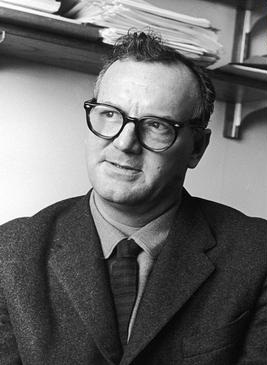
 

They are not men selected (because) of knowledge and sensibility. They are not men shaped by nationally responsible parties that debate openly (and clearly the issues this nation now so unintelligently confronts). They are not men held in responsible check by a plurality of voluntary associations which connect debating publics with the pinnacles of decision. Commanders of power, unequalled in human history; they have succeeded within the (American) system of ORGANIZED IRRESPONSIBILITY.”

C. Wright Mills The Power Elite, 1956: pg 277


Is it some rogue leader or corporate manager that is causing the crisis? Is it some bad man or woman behind these serious, life-threatening problems – just like a mean villain in some Hollywood movie? We do not even have to look closely to see that irresponsible behavior is the norm rather than the aberration – among governments, corporations and within every system.


The manner in which our leaders, including hallowed ones like Barack Obama, are choosing to deal with the issues is as if nothing has happened. It is business as usual. Most of our newspapers are happy to headline the fact that orderly and smooth elections were conducted in a particular region of the world and celebrate the growth and rise of democracy in our time and age. However, not many seem to want to discuss what happens after an election? Yes, the electorate behaved responsibly to usher in or sustain democracy? But what did the leaders do? Did they behave equally responsibly? Do they even understand the oaths and pledges they take when sworn into office? Or have they become so callous and hypocritical that they could care less about what they say and do the exact opposite. They give speeches about the values of democracy but in practice are the most undemocratic people who behave like feudal lords. Managers of corporations and financial companies often laugh about playing with OPM (other people’s money). The behavior of our leaders in governments and corporations only highlights and underlines the fact that we are living in an age of organized irresponsibility. This epidemic of organized irresponsibility runs rife in the corridors of power.


Everyone in power seems to be infected with it today. Or maybe it is just fashionable to be irresponsible when you are part of an organized system.


At the start of 2014 we turn back the clock to the 1950s, especially to one sociologist – C Wright Mills who wrote about ORGANIZED IRRESPONSIBILITY. We explore the idea and notion of organized irresponsibility in the works of C Wright Mills; as we try to understand his seminal construct of organized irresponsibility, the reasons for its existence, and why it still continue to thrive.This exploration of ORGANIZED IRRESPONSIBILITY in the writings of Mills will hopefully help us understand our age and time better:


Like many intellectuals who came of age during the (Great) Depression, Mills hoped that America would advance beyond the competitive capitalism implicated in the crash of 1929. But to his disappointment, the new politics appeared more tepid than transformative. Despite its social welfare advances, Keynesian economics substantially sustained the free-market system while liberalism’s do-or-die pledge to contain Soviet power contributed to the militarization of American society. In response, Mills posited what he called the “politics of truth,” shorthand for a searching and critical re-examination of the nation’s values, commitments, and goals. Notwithstanding the suggestive optimism in the phrase, it translated into a frankly dystopian vision of the Modern Age. In a series of important books on contemporary America — The New Men of Power (1948), White Collar (1951), and the aforementioned The Power Elite — Mills maintained that the imperatives of the U.S. consumer-based economy combined with imperial ambitions to constrict freedom of thought and action.

David Brown in Free Radical, 2009


Mills’ theory of power was used not merely as a sociological tool in pointing to the actual distribution of power but equally as a political instrument in order to make it clear to the reader, that this differential access to influence and decision-making was unfair and had to be rectified. Mills’ power studies were similar to what could be termed bottom-up investigations. He was a kind of whistle-blower on those who thought themselves immune to public criticism and sociological scrutiny – who thought they were “above the law.” He was also a spokesman for the masses against the mass society and he therefore started to appear as an advocate for those struck by adversity and misfortune with his image of life as a trap and a reality going on behind people’s backs. Mills was clearly on the side of the downtrodden and the underdogs in society, the ordinary citizen so to speak.

C._Wright_Mills_motorcycle Image 2

Who was C. (Charles) Wright Mills?


C. Wright Mills evoked mixed emotions in people. His supporters called him a straight-shooter. And his critics thought he was unnecessarily vitriolic and dramatic – reacting more to opinion than facts. They said he was more political than an academic. C. Wright Mills never came to occupy the position as a key figure within mainstream sociology and therefore always led a rather sequestrated existence at the outskirts of academia and therefore of sociological theory. An obscure hybrid of politics and social science who continuously antagonised established positions – the perpetual bee in the bonnet.


Mills decided quite early in his life to debunk the same society that he himself was part of (de-familiarize the familiar); to question the validity of the claims made by those in power positions and to try and to scream aloud the fact that the emperor simply has no clothes on:


“He hated sham and illusion. He did not fear the naked truth and realized that power needs to be clothed, lest if appear naked, and the Emperor has no clothes on like in Andersen’s fairy tale… He was tough-minded and loved tough-minded writers, men of tall talk and no bones about it” (Hans Gerth 1980:72).


Mills is often depicted as something of a mix of the secluded and snobbish intellectual and the uncompromising and cheeky cowboy with a tendency to shoot before asking.Due to Mills’ oppositional approach, he found both aversion and admiration. Thus there are supposedly two positions on Mills within the sociological tradition after his demise – either to valorise Mills or to debunk his influence and reduce his wisdom to trivial insights. Exponents of the admiring school write:


“When Charles Wright Mills died in 1962 at the age of forty-five, he was reputed to be the most widely read sociologist in the world. His work was marked by vigour and energy.He challenged much that passed for conventional wisdom in the spheres of politics and sociology”

(J. E. T. Eldridge 1983)


The second group of critics, though, claim that Mills…


“… has little importance for contemporary American sociology, although his books are bestsellers outside the field and are widely hailed within certain political circles.” 

(Lipset & Smelser 1961:50)


Although Mills was almost always unapologetic about always taking an opposite or oppositional view on a topic, it is only those who did not have the patience to understand his dissent and label him as a Marxist. He was perhaps influenced by a stream of thought that was quite resonant in the USA of his formative years – a farmer and labor organized resistance or movement such as that reflected in the literary writings of Sandburg (Carl) and Steinbeck (John). Mills had socialistic sympathies but he was not a classical Marxist writer. His work opened the doors to a world of power, mostly the abuse of power, and how people came into power not because of merit but due to their family of birth; and their standing in society. Those who were born in a higher class would remain in the higher circles. Mills wanted to expose and attack the very basis and foundation of American culture and thought – which believed in the ‘American Dream’: that America is a classless society and that anyone from any family or class could become whatever they wanted to be in this new country. It was not that Mills did not believe in that. In fact he was a firm believer of that America. It pained him to see that this America of his dreams was just a dream – it could never become reality because of the power elite.


Mills was a sociological prodigy as well as a provoking personage. His writings show a rather fascinating and ingenious radical sociological position of provoking and thought-provoking. His position is an unavoidable perspective within the field not as an obscure variant of Marxist sociology but at the centre-stage of American sociological thinking particularly in the period ranging from the early 1940’s until the late 1960’s:


“What does this solitary horseman – who is in part a prophet, in part a teacher, in part a scholar, and in part a rough-tongued brawler – a sort of Joe McCarthy of sociology, full of wild accusations and gross inaccuracies, bullying manners, harsh words, and shifting grounds – want of sociology?” 

(Shils 1960:78)


Leaving these very harsh words and gross inaccuracies of the above quotation, which J. E. T. Eldridge (1983:109) termed nothing but “an ugly insult” – this quotation probably is a somewhat accurate description of the way Mills was viewed by many of his peers and is viewed by many sociologists even today.


Mills’ contribution to sociology has been questioned, especially by his contemporary sociologists. Is that a good thing or a bad thing? Maybe for someone who is interested in following a safe career path – to be questioned and criticized by one’s colleagues and peers is not a good thing. But never judge a book by its cover and never uncritically accept so-called official accounts of how people are to be viewed and categorized especially of those whose ambition is to attack those in power.


People who attack the positions of power often have more enemies than the people in power themselves. And this is exactly the argument put forth by Mills in his book White Collar. He described the growth of the middle management group in corporations and bureaucracies and the middle class and argues that this group which really does not have much money or much power in reality is actually more invested in maintaining the status quo than anyone else.


As an analyst of his time, a critic of power in general, a castigator of the Cold War realism in international and military affairs and in constant opposition to the academic stalemate of American sociology, Mills always found himself in a never-ending battle with his contemporaries, a battle that in the long run gave him more agony than victories and eventually appeared to be instrumental in crushing him.


In a cultural climate where saying yes to whatever peers are saying or doing is considered clever and smart, the naysayers and objectors to “business as usual”  are the wet-blankets – the party poopers. They are kicked out of the system before they can say C. Wright Mills.


They are not simply kicked out; there is a systematic attempt to first find faults with their personal lives. Oh, now you say that the economic system is rotten – didn’t you buy your wife expensive jewellery for your anniversary then what right do you have to criticize our way of doing things and then simply shouting: You are a liar on 24/7 TV news channels. And then comes the ignoring. Once you have established the criticism of the current system comes from a person of dubious moral standing, you ignore them. And then the argument is turned around on its head – this person is being ignored because they have nothing worthwhile to say.


Although Mills never craved an academic career, never sought sociological salvation through titles, chairs and honors (Horowitz 1972:7), he was a person who liked to stage himself – particularly against the so-called orthodox consensus of the times (Giddens 1982) comprised by a mixture of positivist research techniques, structural-functionalist theories, pragmatic philosophy and modernization theories. Mills was therefore at odds with the mainstream of the sociological tradition of his time which relied heavily on the ideas of this orthodox consensus. And although an award for best book in sociology was eventually named after him, the orthodox consensus nevertheless completely dominated the picture of the sociology between 1940 and 1965. Mills never became a salonfähig scholar – not that he ever wanted to be. C. Wright Mills encountered this orthodox consensus, especially the positivist approach, many times in his lifetime and painstakingly attacked it; it was in diametrical opposition to his own more humanistic vision of the sociological imagination. Throughout his own life time he dedicated his effort to distance himself from this positivist and in his view also reactionary and arch-conservative epistemology.


Mills arrived at Morningside Heights in 1945 as a research associate at Columbia University’s Bureau for Applied Social Research (BASR), which was led by Paul F. Lazarsfeld. The bureau was a leader in the emerging field of survey research and Mills quite rightly regarded his appointment as “a hell of a big break for a kid 28 years old”. Eventually he moved to the sociology department, where he became a full professor in 1956. Among the cluster of public intellectuals who distinguished Columbia during this era — including Richard Hofstadter, Lionel Trilling, and Jacques Barzun — Mills remains a compelling figure whose scholarship continues to challenge our notions of what it means to live in a democracy that comfortably houses a power elite.


In the field of sociology, to be unfashionable, and indeed downright unpopular, some would claim, is the predicament of most C Wright Mills Image 7academics some of the time and something almost everybody will suffer from to certain moderate degrees at particular periods of one’s career; but continuously and intensively to be so is something of a rare honour only conferred on the very few chosen ones within this field. Charles Wright Mills, at one and the same time an intellectual prodigy and an enfant terrible of his discipline, appears to belong to this latter exquisite group of sociologists labelled as outcasts and unfashionable thinker, but as it has been rightly noted, that
 

“a doctrine [or a person for that matter] that is unfashionable today is, among sociologists, almost guaranteed to be fashionable tomorrow.

(Cohen 1980:141)


But before we get entangled in more quibbling about the perceptions of Mills in society and sociology, let us start from the beginning or close to it.


From Texas to New York


The straight-shooting style of C Wright Mills seems to have been imbibed from his birth-place of Texas where he spent his formative years. Born on August 28th 1916 in Waco, Texas to parents of Irish and English origin with a touch of French ancestry, he was a hybrid of the countryside and cosmopolitanism. His parents were both religiously practising Catholics living in a Protestant area (Tilman 1984:5), but he, as Weber had also described himself some decades earlier, was religiously unmusical and despite being placed in the middle of the Bible Belt did not take an interest in religious matters.


In his adolescent years he went to a rural military school and according to many biographers had a miserable time there – an experience which together with his poor physical shape made him a conscientious objector during World War II. His academic career took off when he enrolled at the University of Texas in Austin where he studied philosophy and became acquainted with the writings of Thorstein Veblen and G. H. Mead. During this period he lived a rather insulated life of anonymity.


In early 1939, as an undergraduate student, he was transferred to Wisconsin, the birthplace of his great idol Thorstein Veblen, and it was here, at Mills’ second destination, that he took keen interest in sociology, guided by two equally liberal and muckraking sociologists – Howard Becker and Edward Ross. Mills subsequently received his PhD in sociology and anthropology from the same university. It was also here that Mills’ tendency to create academic havoc was born, as he ceaselessly started to confront his colleagues with his own ideas and vision of sociology and by many he was already now regarded as much as a provocateur as well as the prodigal son. His professors both praised him as a unique and unusually strong student and looked with concern about his eagerly critical nature.


C Wright Mills Image 5 ApplicationA few years later, Mills moved to the University of Maryland. It was here, when in the backdrop of the World War II and contrary to many other notable radical sociologists such as Herbert Marcuse and Barrington Moore Jr., he did not want to take up work in the State Department as he was a pacifist and believed that any involvement in the war would be an acceptance of war as a means to achieve a given end. He was also suspicious of the Roosevelt administration which, to him, represented a gigantic Leviathan with the ability as well as the ambition to control and regulate society.
 

After the war Mills received a Guggenheim fellowship to the University of Columbia in New York and it was from this base that the world would come to hear of C. Wright Mills through the next 15 years or so. At Columbia Mills quickly earned the position of associate professor and came to work as director of the Bureau of Applied Social Research (BASR) under the direct supervision of Paul Lazarsfeld. After Mills’ arrival the BASR turned out to be a battlefield for conflicts and antagonism as well as a forum for alliances and new friendships. Throughout his years here,in one of the main two academic sociological strongholds in the U.S.A. at the time (Harvard University being the one and Columbia University the other – the return to sociological prominence of the University of Chicago had to wait until the 1960’s), he was connected to many fascinating empirical projects, most notably those dealing with the distribution of power in American society. He wrote several theoretical as well as downright polemical pieces of work which ranged from anywhere between superb to dubious in quality. It was here that his critique of how prosperity was a facade of misery in American society began to take its form and it was here that his own sociological imagination saw the light of day. Eventually it was also here that this light was finally extinguished.


C. Wright Mills’ Analysis of Power and Organized Irresponsibility


Mills lived in a time obsessed with power; an obsession that stemmed directly from the fact of having lived through a period of world history in which power manifestations were the order of the day, either on the international scene as World War II and de-colonisation struggles flamboyantly symbolised, or on the national level, as the struggle between men and women, capitalists and proletariat, the have and the have-nots were all special cases of. Mills’ writings were clearly contaminated by this obsession with power structures, domination and strong men but he did not so much focus on power as an end product but more on the power processes that took place.


Mills explained the transition of power from being a known force to the current complex force that produces an organized irresponsibility:


“In pre-capitalist societies, power was known and personal. The individual could see who was powerful, and he could understand the means of his power. His responses, of obedience and fear, were explicit and concrete; and if he was in revolt, the targets of that revolt were also explicit and concrete … In an impersonalized and more anonymous system of control, explicit responses are not so possible: anxiety is likely to replace fear; insecurity to replace worry. The problem is who really has power, for often the tangled and hidden system seems a complex yet organized irresponsibility. When power is delegated from a distant center, the one immediately over the individual is not so different from the individual himself; he does not decide either, he too is part of the network by means of which individuals are controlled. Targets for revolt, given the will to revolt, are not readily available. Symbols in terms of which to challenge power are not available – in fact, there are no explicit symbols of authority to challenge”

(White Collar: The American Middle Classes 1951:349).


Mills further explained how large bureaucratic organizations also affect the relations between the rulers and the ruled. Such organizations insulate the managers from those in lower offices, cutting them off from identifying with them (Mills 1951:110-111). In a bureaucratic setting the decision-maker is often far removed from his victims. Opposition in such a situation is difficult to organize. Because of manipulation, targets for revolt are not readily recognizable, because of bureaucratization they are not readily available (Mills 1951:349). Such a situation promotes not only schemers whose explicit ideology is to manipulate the ruled, but a system of social control that fosters irresponsibility on the part of the rulers.


Mills believed that the bureaucratization of the social structure was both partial and unevenly spread. Yet he saw it as an on-going C Wright Mills Image 4b Power Eliite Coverprocess, a process that threatened to replace our once loosely integrated democracy with a more managed “corporate-like society” (Mills 1951:78). The power of decision-makers, Mills points out, has always been limited by the technology of violence and the degree of organization that prevails in a society. But historically in the West, the means of violence has greatly increased, and the degree of organization has enlarged, centralized, and become ever more efficient, as Mills stated in The Power Elite (1956:23). Those at the top of the bureaucratic hierarchies that dominate modern industrial society are far more powerful than Caesar, Napoleon Bonaparte, Vladimir Lenin, or even Adolf Hitler:
 

“That the facilities of power are enormously enlarged and decisively centralized means that the decisions of small groups are now more consequential” (Mills 1956:23).


Thus, C Wright Mills brought the spotlight directly on the powerful elite.


While there are many different approaches to the study and comprehension of the origin of power, Mills’ work appeared to be unique in its perspective. His approach could also be termed a positional approach since it basically is the institutionalised position that a person holds which grants him or her power and not, although he was aware of the importance and relevance of these aspects, the background, status or privileges to which one can fall back upon. He noted that:


“If we took the one hundred most powerful men in America, the one hundred wealthiest, and the one hundred most celebrated away from the institutional positions they now occupy, away from their resources of men and women and money, away from the media of mass communication that are now focused upon them – then they would be powerless, and poor and uncelebrated…To be celebrated, to be wealthy, to have power requires access to major institutions, for the institutional positions men occupy determine in large part their chances to have and to hold these valued experiences”(Mills in Putnam 1976:15).


Power according Mills, was thus situated in institutions and therefore in the men that occupy positions within these.Mills also clarified about his alleged obsession with power in the following fashion:


“It’s been said in criticism that I am too much fascinated by power. This is not really true. It is the intellect I have been most fascinated by, and power primarily in connection with that. It is the power IN the intellect and the power OF the intellect that most fascinates me, as a social analyst and cultural critic” (Mills 1968:5).


What does Organized Irresponsibility thrive on?


It is their similar social backgrounds that provide one of the major sources of unity among the elite. The majority of the elite, Mills wrote, come from the upper third of the income and occupational pyramids. They are born of the same upper class. Probably their parents were also elites. They attend the same preparatory schools and Ivy League universities. They join the same exclusive gentleman’s clubs, belong to the same organizations. They are closely linked through intermarriage. It is these common experiences and role expectations that produce men of similar character and values (Mills 1956:19).


Non-upper class members of the elite consist of hired corporate managers, experts, and corporate lawyers – men who are competent technocrats, who have risen through the ranks, and are subsequently sponsored by the elite and the organizations that they control. The unity of the power elite, however, does not rest solely on psychological similarity and social intermingling, nor entirely on the structural coincidences of commanding positions and interests; at times it is the unity of a more explicit co-ordination (Mills 1956:19).


Schools, Mills asserts, have become appendages of corporations and government, sorting and training young people for their corporate careers, and in so doing inculcating patriotism, respect for authority, and the glories of capitalism along the way. Families are still major socialization agents of the young, but they now share this function with schools and the mass media (Mills 1956:6).  Through the socialization process, each of us has come to embrace and internalize the system as it is. A general consensus of what is right and natural, good and just, valued and reviled is forged. The interests of the elites become our interests, they become internalized and legitimized.


Organized irresponsibility thrives on both hegemony and apathy of intellectuals.


Intellectual hegemony coupled with the apathy and moral insensibility of the masses and by the political inactivity of intellectuals in both communist and capitalist countries, has led to the domination of manufactured militarism. Most intellectual, scientific, and religious leaders are echoing the elaborate confusions of the elite. They are refusing to question elite policies; they are refusing to offer alternatives. They have abdicated their role, they allow the elite to rule unhindered (Mills 1958:88-89).


If as intellectuals we fail to confront these issues, Mills asserts, we are in default of our intellectual heritage and have abdicated our duty to our society (Mills 1951:158). Unfortunately, Mills concludes, very many in the intellectual community are in default:

“What scientist,” Mills asks, can claim to be part of the legacy of the great western scientific tradition and yet work for the Military Industrial Complex?  What social scientist can claim to be part of the legacy of western humanism and, despite a world in which “reason and freedom” are under attack, retreat into methodologically sophisticated studies of trivia?  What minister can know God and still approve of the immortality and irresponsibility of our leaders?  (Mills 1958:130).


Exertion of Power at a Global Level


Already in his books The New Men of Power (1948) and The Power Elite (1956)Mills began to contemplate the international aspects of power and how power is exercised on a trans-national basis. He clearly saw the connection of the distribution of power on the national scene and the politics of war on the international arena and his analyses were clearly coloured by his own pacifist conscience. This was the backdrop against which Mills unfolded his understanding of history in which the military had played a crucial role in the formation of states and the internal as well as external stability of these states.


International affairs are therefore, in his rather realist view, run by warlords and warmongers who take no interest in the consequences of their staged conflicts and pantomime of power. Furthermore, they were not capable – or interested for that matter – in the personal consequences of their decisions on ordinary people who had to live with fear, anxiety and distrust. In Mills’ view the U.S.A. were just as responsible for the maintenance of this climate of anxiety and threat of mutual destruction as the Eastern (Soviet) Bloc countries. With his focus on the imperialist tendencies of American foreign policy, as we shall return to below in our discussion of his polemical tour de force in The Causes of World War III (1958), Mills was seen as the traitor in American society by many of the so-called sophisticated conservatives as well as many of the more right-wing oriented people because America following World War II had begun to regard itself as the policeman or umpire of international conflicts.


Mills’ overtly questioned this role of international policeman in his writings, not only the role performed by the U.S.A. but by any super power, in which arbitrary and naked power was seen, not merely as illegitimate, but equally as an encroachment on and an injustice to humanity.


Can we then, do something about this organized irresponsibility? Can we hold the powerful elite responsible and address impending disasters?


The positions of the elite allow them to transcend the ordinary environments of men and women. The elite have access to levers of power that make their decisions (as well as their failure to act) consequential. In a society in which structural institutions have become enlarged, centralized, and all encompassing, who controls those institutions becomes the central issue of our time. One important consequence of this fact, Mills asserts, is that leaders of the modern nation state can exert much more coordination and control over the actions of that state.To date, Mills fears, these leaders are acting (or failing to act) with irresponsibility, thus leading us to disaster. But this does not mean that it always must be so.


“What ‘practical men of affairs’ do not face up to is the fact that ‘politics’ today has to do with the wilful making of history. The enlargement and the centralization of the means of history-making signify that, for better or for worse, power elites are no longer in a situation in which their will and reason need be overwhelmed by ‘impersonal forces beyond their control’ … A politics of responsibility is now much more possible than in a society with less far-reaching and less centralized means of power. The present fact is otherwise: A politics of semi-organized irresponsibility prevails. But that fact ought not to blind us to the political possibilities opened up by this great structural change: It is now sociologically realistic, morally fair, and politically imperative to make demands upon men of power and to hold them responsible for specific courses of events.”

(Mills, The Causes of World War III, 1958: 100)


Is there an answer to the problems of the present? Troubles and Issues


C. Wright Mills’thinking was based on the assumption that “human nature” is formed by the intricate interaction of historical and social structure (Mills 1959, p. 13). Socio-cultural systems, in particular the modern nation-state, determine the type of men and women who inhabit that system. Human beings, Mills asserts, cannot be understood apart from the social and historical structures in which they are formed and in which they interact (Mills 1959, p. 162). Through the socialization process, aspects of human character are liberated or repressed. As the history-making unit, the nation-state selects and forms the character of human beings; it opens up possibilities and imposes limits on the variety of men and women who make up the society.


The struggle between countries or blocs of countries – such as the struggles between fascism and democracy, or between capitalism and communism – is more than a struggle between which political or economic system will prevail, it is a struggle over which types of human beings will prevail (Mills 1959:158).


Historical transformations within societies, say the decline of agriculture and the rise of small business, also affect the predominant character of human beings, their values and ideologies, their beliefs and expectations, their very character. Again, men and women can only be understood in the context of the historical socio-cultural system in which they live and interact.


While human beings are motivated by the norms, values, and belief systems that prevail in their society, structural change often throw these “vocabularies of motivation” into some confusion (Mills, 1959, p. 162). The number and variety of structural changes within a society increase as institutions become larger, more embracing, and more interconnected (Mills 1959, pp. 20-21).  As structural institutions become enlarged and centralized the circle of those who control these organizations also becomes narrowed—the “iron law of oligarchy” prevails (Mills 1956, p. 21). Consequently, the tempo of change has sped up appreciably in the modern era, and the changes have become far more consequential for all—for those who are in control of these enlarged organizations, and for those who are subject to them.


Mills presents the “sociological imagination”as an approach to understand the present society as well as comprehend the future. Such an approach warrants sensitivity to the fact that the life of individuals and the history of societies are inextricably linked to each other, and that this link is not always immediately visible. But if we are armed with the sociological imagination, this link will become crystal clear and we will be able to understand connections previously hidden or impenetrable and be capable of explaining to people their lives and their problems more fully and adequately. Mills tries to capture the essence of his seminal contribution of ‘sociological imagination’ in the possibly most famous phrase from his masterpiece, by saying that:


“…the sociological imagination enables its possessor to understand the larger historical scene in terms of its meaning for the inner life and the external career of a variety of individuals. It enables him to take into account how individuals, in the welter of their daily experience, often become falsely conscious of their social positions. Within that welter, the framework of modern society is sought, and within that framework the psychologies of a variety of men and women are formulated. By such means the personal uneasiness of individuals is focused upon explicit troubles and the indifference of publics is transformed into involvement with public issues”

(Mills, The Sociological Imagination 1959:5)


One of the most central aspects of the sociological imagination has to do with the separation of troubles from issues (Mills 1959a: 8-C._Wright_Mills_Book Imagination Image 69), the public versus the private, and not just a separation but perhaps more importantly the ability to see the connection between the two. The former has to do with “the character of the individual and within the range of his immediate relations with others…a trouble is a private matter” (Mills 1959a: 15). Troubles are concerned with how the inner lives of individuals are shaped by outer social structures and how this has an impact on this individual’s behaviour. Issues, on the other hand, are concerned with the structural level and how this is constructed and maintained: “Issues have to do with matters that transcend these local environments of the individual and the range of his inner life. They have to do with the organization of many such milieux into the institutions of a historical society as a whole, with the ways in which various milieux overlap and interpenetrate to form the larger structure of social and historical life. An issue is a public matter” (Mills 1959:15).


The sociological imagination – a title supposedly inspired by Lionel Trilling’s The Liberal Imagination from 1950 – and the idea of craftsmanship also has a close resemblance to Weber’s notion of sociology as a vocation without which, sociology would be an endless drought: “Without this strange intoxication, ridiculed by every outsider; without this passion…you have no calling for science and you should do something else. For nothing is worthy of man as man unless he can pursue it with passionate devotion” (Weber 1948:135).


The ways of Weber and Mills, however, parted with Mills’ insistence that not only ought sociology be regarded as a humanistic vocation but it should also be a political past-time with political connotations in a fashion that would seem inappropriate to Weber’s idea of a value neutral sociological enterprise. The plea for a political sociology is evident when Mills says: “It is the political task of the sociologist – as of any liberal educator – continually to translate personal troubles into public issues, and public issues into the terms of their human meaning for a variety of individuals” (Mills 1959:187).


The problem with much social science today, as Mills sees it, is that it is both devoid of theory and any sense of history.  Being atheoretical, the social scientist often overlooks the relationships among various technologies, structures, and ideas.  Being ahistorical, many social scientists lack the ability to recognize new trends as well as to discriminate between trends of major and minor significance.  Classical social analysis, Mills repeatedly insists, is a set of usable traditions and insights that are strongly rooted in history and theory (Mills 1959, p. 21).


Classical social science focuses on substantive social problems.  It neither builds up from empirical observation nor does it begin with a grand theory of socio-cultural systems and deduce down to human behaviour.  Rather, classic social science places empirical research and theory building in a continuous interaction.  Practitioners of the craft attempt to develop comprehensive frameworks for understanding social order, social change, and social problems.  They then continually test and reformulate these explanatory frameworks in light of empirical study (Mills 1959, pg. 128). However, there are trends within the social sciences as well as trends in the broader society that are endangering the classical tradition and stand in the way of greater social understanding (Mills 1959, p.21). Within the social sciences, Mills maintains, three trends – abstracted empiricism, grand theory, and the use of social science to improve bureaucratic efficiency – have arisen that serve to obscure rather than increase people’s understanding of human social behavior.


Hence, he recommends sociological imagination as an alternative point of view. Mills’ own example of how the sociological imagination can be utilizzed is the case of unemployment. He shows how what appears to be an individual problem and the cause of much private distress actually is linked to the broader structures of society, and equally how a structural economic problem like unemployment is simultaneously the reason behind depressing daily struggle for many people, how the individual’s life is intimately connected to processes beyond his own reach. When contemplating this we must be aware, something which Weber also recognised, that many troubles as well as issues have an economic cause and Mills stated that “both the correct statement of the problem and the range of possible solutions require us to consider the economic and political institutions of the society, and not merely the personal situation and character of a scatter of individuals” (Mills 1959 a: 15).


Issues are, in short, politicised troubles and troubles are the intimately felt repercussions of structural and economic changes in wider society. In this way, the sociological imagination appears as an early attempt at integrating the individual level with the structural level and creates some kind of hybrid in the form of an undefined Giddensian structuration theory or Mertonian theory of the middle range. His attempt at integrating the individual and the collective level by focusing on their point of intersection in particular decisions of social importance, however, was criticized by William Spinrad, who stated that “his interest was in the ‘life’ and ‘death’ decisions, not the vast majority of political-economic-social acts that daily affect people’s lives” (Spinrad 1966). Mills’ megalomania made him focus on world events as the dynamic of social transformation and this meant that his focus on daily decisions was skewed in the direction of the big picture.


Mills wanted to instil in sociologists the desire to ask even the most trivial questions, to make them wonder about social reality and its constitution. Sociologists have to be inquisitive and questioning, to whom nothing seems too obvious and nothing appears too obscure. Only by asking questions can problems – either understood as troubles or issues – be illuminated and eventually solved. Make their troubles your issues and vice versa could almost be the manifesto of the sociological imagination. It ought, however, to be an imperative for the sociologist to ask certain questions: “Whatever else sociology may be, it is the result of consistently asking: (1) What is the meaning of this – whatever we are examining – for our society as a whole, and what is this social world like ? (2) What is the meaning of this for the types of men and women that prevail in this society? And (3) how does this fit into the historical trend of our times, and in what direction does this main drift seem to be carrying us? No matter how small-scale what he is examining, the sociologist must ask such questions about it or he has abdicated the classic sociological endeavor” (Mills 1972:572). In C. Wright Mills own words:


“What I am suggesting is that by addressing ourselves to issues and to troubles, and formulating them as problems of social science, we stand the best chance, I believe the only chance, to make reason democratically relevant to human affairs in a free society, and so to realize the classic values that underlie the promise of our studies” (Mills, 1959, p. 194).


Only the good die young?


“He [Mills] worked hard, often twenty-four hours at a stretch, and he relaxed hard. Since he knew nothing of tennis, swimming, skiing, even walking, he took his relaxation in the form of sleeping…eating…gadgetry, and building” (Life-long friend Harvey Swados (1963:38), reflecting on Mills’ life)


Due to excessive work burdens and the constant trench wars with colleagues at the University of Columbia Mills’ position in the end became increasingly uncomfortable, particularly after the publicised attacks on his superior Paul Lazarsfeld. His physical health began to deteriorate and ultimately his heart failed him, and Mills died in New York on March 20th 1962 at the age of forty-five.


C._Wright_Mills_Diner Image 3


Mills was never particularly popular amongst fellow colleagues, regarded by many as an outcast prophet or opportunist; yet,his work does remain alive among some sociology students and scholars. This essay at the start of 2014 is an attempt to rekindle the fire of “imagination” in societal thinking and action – a torch that has hopefully not been extinguished with Mills’ death.It is perhaps a torch that is passed on from one generation to another as the flame of Mills life and work seemed to be from the same torch lit by John Steinbeck (which he inherited from thinkers before him) and articulated in the voice of the character of Tom Joad in the 1939 novel The Grapes of Wrath:


“Whenever they’s a fight so hungry people can eat, I’ll be there. Whenever they’s a cop beatin’ up a guy, I’ll be there… I’ll be in the way guys yell when they’re mad an’-I’ll be in the way kids laugh when they’re hungry an’ they know supper’s ready. An’ when our folks eat the stuff they raise an’ live in the houses they build-why, I’ll be there.”


The show must go on…


Can we take on the epidemic of organized irresponsibility that plagues our planet today?  Will you be there– participating, watching or changing the channel?


 ©  Michael Jacobsen and Nilesh Chatterjee


Some References:


Brown, David (2009). Free Radical. In Columbia: The magazine of Columbia University. (Review of the book Radical Ambition: C. Wright Mills, the Left, and American Social Thought – by Daniel Geary, University of California Press) Access:

http://www.columbia.edu/cu/alumni/Magazine/Summer2009/reviews.html


Cohen, Percy (1980): “Is Positivism Dead ?”. Sociological Review, 28 (1):141-176.


Eldridge, J. E. T. (1983): C. Wright Mills. Chichester: Ellis Horwood Publishers.


Gerth, Hans H. (1980): “On C. Wright Mills (1962)”. Society, 17 (2):71-73.


Giddens, Anthony (1982): “Hermeneutics and Social Theory”, in Profiles and Critiques in Social Theory. University of California Press.


Horowitz, Irving L. (ed.)(1972): Power, Politics and People – The Collected Essays of C. Wright Mills. New York: Oxford University Press.


Lipset, Seymour M. & Neil Smelser (1961): “Change and Controversy in Recent American Sociol-ogy”. British Journal of Sociology, 12 (1).


Mills, Charles Wright (1951): White Collar: The American Middle Classes. New York: Oxford University Press.


Mills, Charles Wright (1954): “The Conservative Mood”. Dissent, 1:22-31.


Mills, Charles Wright (1956): The Power Elite. New York: Oxford University Press.


Mills, Charles Wright (1958a): The Causes of World War III. New York: Simon and Schuster.


Mills, Charles Wright (1958b): “The Structure of Power in American Society”. British Journal of Sociology, 9 (1):29-41.


Mills, Charles Wright (1959a): The Sociological Imagination. New York: Oxford University Press.


Mills, Charles Wright (1959b): “Culture and Politics: The Forth Epoch”. The Listener, March.


Mills, Charles Wright (1959c): “The Decline of the Left”. Contact, 3:5-18.


Mills, Charles Wright (1959d): “Crackpot Realism”. Fellowship, 25 (1):3-8.


Mills, Charles Wright (ed.)(1960a): Images of Man: The Classic Tradition in Sociological Thinking. New York: George Braziller.


Mills, Charles Wright (1960b): Listen Yankee: The Revolution in Cuba. New York: McGraw-Hill.


Mills, Charles Wright (1968): On Social Men and Social Movements: The Collected Addresses of C. Wright Mills (Only published in Spanish with the title De hombressociales y movimientossociales). Mexico City: SigloVeintiuonEditores.


Putnam, Robert (1976): The Comparative Study of Political Elites. New Jersey: Prentice-Hall.


Shils, Edward (1960): “Imaginary Sociology”. Encounter, 14.


Spinrad, William (1966): “The Socio-Political Orientations of C. Wright Mills: An Evaluation”. British Journal of Sociology, 17 (1):46-59.


Weber, Max (1948): “Science as a Vocation”, in Gerth, Hans H. & C. Wright Mills (eds.): From Max Weber – Essays in Sociology. London: Routledge.


Image references:


Image 1: Wikimedia Commons. Accessed from: http://en.wikipedia.org/wiki/File:C._Wright_Mills_Image.jpg

Image 2: Mills commuted to Columbia College on his motorcycle (Photo by Yaroslava Mills). Accessed at: http://www.cwrightmills.org/

Image 3: Roadside Diner: http://www.columbia.edu/cu/alumni/Magazine/Summer2009/reviews.html

Image 4: Power Elite: http://www.amazon.com/The-Power-Elite-Wright-Mills/dp/0195133544

Image 5: (Image 3 C). Wright Mills at age twenty-eight in a photo he submitted with his application for a Guggenheim Foundation grant in late 1944 (Photo by Brooke Studio, Maryland). Accessed at: http://www.cwrightmills.org/

Image 6: C. Wright Mills’ Book – The Sociological Imagination. Accessed from: http://www.sociologicalthoughts.com/tag/sociological-imagination/

Image 7: C. Wright Mills – Accessed from: https://criticalsociology.wikispaces.com/

Image  8. The New men of Power (Book cover). Accessed from: http://www.press.uillinois.edu/books/catalog/75cnb8yg9780252069482.html


Playing Hot Potato (Pass the Parcel) with Mother Nature

‘Turn Down the Heat: Climate extremes, regional impacts and the case for resilience,’ a World Bank report released in June 2013, states that South Asia, with India at its centre, will experience a temperature rise of two degree Celsius. This will happen in next two to three decades; much before the expected date of 2050. This will lead to major climate crisis causing widespread food shortages, prolonged droughts, unprecedented heat-waves, more intense rainfall and flooding, threat to energy production, and most importantly water scarcity.

******************


Do we need more evidence to argue that the Earth’s environment is getting polluted and degraded?

Probably not.

Do we need more education for people on the causes of this pollution and degradation?

Probably not.


We all seem to be aware and knowledgeable that our contemporary lifestyles, rising global population, use and disposal of various (modern) everyday things, excessive consumption, unregulated industries, and means of travel have led to a faster rate of environmental pollution and degradation than ever before. In fact, almost everyone is aware that our everyday living in endangering the environment.


We are also using up Earth’s resources at breakneck speed in order to supply people with plastic lamps, pens, mobiles and artificial ducks for our backyards. Countries like India and China, exemplified as successful case studies of the neo-liberal economy, have actually become environmental basket-cases.


The data are there. Information is available through the internet, newspapers, television, films, and school text-books. However, most of these informed people seem to be engaging in those very behaviours that are damaging to the Earth. We do not see any visible evidence of behaviour change – in a pro-environmental direction. Information is not enough because we do not want to think about that information. Who wants to think about dangers? Who wants to reflect? And none of our friends want to talk about it. Who wants a dialogue on difficult things that may require coming out of one’s comfort zone? Or the pain of changing habits?


So, can we expect anyone to do something (or anything) about it?


We sought to find out whether people are moved – persuaded – to act for the environment – in pro-environmental ways by engaging in pro-environmental behaviours. By pro-environmental behaviours we mean any and every behaviour – small or major – that is positive for reducing pollution or for protection and conservation of the environment and the planet.

We visited small towns and big cities on the banks of a major river in northern India, and listened to different groups of people: college students and corporate employees, husbands and wives, priests and pastors, farmers and fishermen, boatmen and biologists. We asked them to tell us their views on pro-environmental behaviours. We wanted to find what moved them or would move people towards positive actions – what would resonate with them, connect with them and compel them to change their existing unhealthy environmental behaviours?


What did we find? What are people doing?


Almost all the people (adults) we talked to knew that the environment was in danger; they invariably mentioned the consequences of a deteriorating environment on their own health and safety, and the future of this planet. Everyone said actions were necessary to conserve, protect, save the environment. And NONE of the adults said, “I do not want to do it. I do not want to do anything to save the environment.”


Great! We thought.

We probed further: So you must be doing things to save the environment? Tell us more.


The answer was: Hot Potato (Pass the Parcel).

When it came to action – actual change of personal behaviours in their everyday lives –to save the environment, most adults regressed to being a child. They seemed to be playing the children’s game of Hot Potato (Pass the Parcel). Almost all of them said that it is not my responsibility – alone. It is the government’s responsibility or industries are spreading toxicity and they should be controlled, or retorted that everyone else is doing it – polluting, throwing trash, so ask them to change first. They conveniently passed the blame and responsibility for changing behaviours to another.


Hot Potato – or – Pass the Parcel – is a child’s party game where an object is passed around and whoever is left holding the potato is punished – that child has to do something that is inconvenient. And most adults did not want physical inconvenience in their everyday lives despite knowing the inconvenient truth about the environment.  So they simply passed the hot potato – psychically.


Asking an adult to take actions to save the planet is like asking a child to clean his/her room. 


The child knows the room is messy, but does not take the necessary steps until it is pointed out by the parent. Most people know that pro-environmental behaviour change is absolutely essential, but feel that the required changes to their behaviour are difficult and do not fit into their everyday circumstances. The adoption of pro-environmental behaviours in everyday life requires people to go against the grain of their contemporary everyday circumstances and current behaviours. People use the examples of being habituated to electricity and electrical gadgets, even operating electrical gadgets with gasoline (diesel) generators during power outages, continuous water supply and showers, traveling by cars, taxis or buses and of buying plastic and electronic gadgets that are freely available.


Using the analogy of a child’s reactions to cleaning his/her room, even the responses of adults to taking actions to save the environment or changing personal behaviours can be further classified into five main categories:


Response One: “I will do it later.”

Not today, Mom. Most children will first try to postpone the action of cleaning a room because it is an inconvenience; it will take up time that can be spent on more interesting pursuits such as texting a friend, watching TV, or playing a video-game. This was a common response among the adults to pro-environmental actions. Most people felt they could continue with their behaviour for one more day and nothing much would change. Thus, they could conveniently postpone action for tomorrow.


Response Two: “Others are also dirtying their surroundings. Why don’t you tell them to change first?”

This is almost like a child pointing to a sibling’s dirty room when asked to clean his own room. Pointing to another or shifting the blame is another way to deflect from the required behaviour change or pro-environmental action.


Response Three: “I can’t do it. It’s too big for me. I am too small to be able to do this.”

A child uses this response because the magnitude and size of the problem of a messy room just seems too big. Most adults see the big picture of deforestation, carbon emission and ozone layer depletion and they feel these problems are too big. This is a planetary problem and I am just a small creature. However, they do not visualize the small steps that they can take to solve the problem. They are presented the large picture; they stay with the large picture and are unable to break it into smaller pieces or steps. Therefore, they feel incapable of tackling the issue.


Response Four: “I don’t know what to do or how to do it.”

The child is essentially saying that I do not have the necessary know-how and skills to get the job done. So the mother or father assumes that if take the child into the dirty room and start the process, show the child the way forward, it will move to its logical conclusion of a room being cleaned by the child. This response follows from not knowing exactly how to go about pro-environmental actions. We assume that such people, if given the correct knowledge, will automatically change their behaviours. However, it is possible that “I don’t know what to do” is another way of postponing the inconvenient.  And more importantly, can we wait for everyone to have the knowledge and skills about pro-environmental actions?


*****************


Now that we had these four responses, our next question was: Do you think it is even possible to save the environment? Who will save the environment?

Adults were openly pessimistic about the ability and motivation of other adults to change their behaviours. One interesting response from adults was that there is no point in educating and communicating change to adults. It will not work. Therefore, most adults felt that all resources and energies should be directed towards educating children about pro-environmental behaviours. Children were the only hope of saving the environment.


Now this is a convenient solution put forth by many speakers in many such meetings: Children will save the future. But isn’t this another convenient way of not taking responsibility and passing the “hot potato” (or parcel) to children?


To expect children to suddenly become responsible and take care of the planet is almost like saying the child will rear the parents. Adults had not thought through the question: how can children ever become change agents? Children learn by imitating their parents and other adults around them. Obviously, the children will see adults behaving in environmentally-irresponsible ways. Children are instructed by adult teachers who like other adults are incapable of being exemplars or role models of positive environmental behaviours. Most importantly, children learn a lot from watching television and what do television’s commercial breaks teach our children?


When we raised these barriers that may hinder children from becoming saviours of the planet’s future, the adults nodded their heads in agreement. This led to a discussion on the kind of society we live in.


Interestingly, many people are highly aware of the kind of society they live in. Just because they buy things blindly does not mean that they are not aware of the manipulation through advertising and the real meaning of discounts given by marketing. Some adults said that we live in a society and culture where instant gratification is glorified and sold 24/7 on television, radio, hoardings, and newspapers. Every item is branded. Every sign and symbol around us exhorts us to give in to our impulse – to go out and purchase a slice of heaven and experience it here and now. We are constantly asked to go out and just do it – now; which simply means – buy it.


On the other hand, pro-environmental actions or behaviours tell us not to do those things – they require us to withhold our impulses for instant gratification. Saving the environment inconveniences us. And environmental behaviours are dissonant with our everyday practices. We are used to buying things wrapped in plastic, we use various electronic gadgets in a day; we consume gasoline for travel, and various chemicals in our houses and on our bodies. We do not walk, ride cycles, use cloth bags or go out of our way to that one shop in our city that stocks ecology-friendly soaps and shampoos.


They were almost unanimous in agreement that communication alone is not sufficient. Communicating to people about the threat to the environment and about the required pro-environmental behaviours is necessary but not enough, not sufficient.


So our next question was: What can we really do to change people’s behaviours?


This brought us to the 5th category of responses mentioned above.


Response Five: “If you do not discipline me, then I am less likely to do it.”

Going back to the analogy of the cleaning of the room, adults once again regressed to being children. The fifth response clearly showed that they wanted some enforcement or punitive mechanisms. If you want me to clean my room there cannot be just communication or even a carrot; there has to be a stick as well. Most importantly, if I am the child asked to clean the room, I should also perceive the parent as being strong enough to wield the stick if I do not comply, otherwise the stick is meaningless.


Society-level actions are required, better policy and strong, strict enforcement of that policy. One person gave us a graphic demonstration of how the plastic sachet he threw on the road would end up in the open gutters and then in the rivers or oceans and kill the fish or other organisms. And he said he would probably keep doing it until he was fined heavily (at least once) or even sent to jail. Strict enforcement of a policy makes people perceive that government is serious about the issue and that the issue itself is a serious one.


For the success stories of strict enforcement people cited the examples of seat-belts, speeding laws, pollution control enforcement for cars, and payment of income taxes. Many of them said that a car is pulled up for not paying registration fees, or if the driver does not have a license or if seatbelts are not worn. The driver or owner of the car pays heavy fines and then complies with the required behaviour (at least for a few months afterwards).  They also cited the case of income taxes – and how it is the fear of being punished that often makes people pay taxes.


Most people said that if plastics are indeed bad for the environment then there should be a ban on their production in the first place. Companies that produce electronic gadgets should find a way to either reduce toxic metals or chemicals in the product or factor in the cost of disposal. People seem to know that the environment is suffering collateral damage for two reasons: one is the over-consumption of environment-unfriendly goods and products; and second is that the price of damage to the environment is not factored into the prices of these good or items. They alluded to the fact that these extra costs of saving the environment could be added to the price of simple goods such as soaps, shampoos, electronic gadgets, mobile phones and so on. Some even said there could be a gradient of environmental add-on costs starting from low add-on costs for those that cause less damage to high add-on costs for those goods that cause severe damage to the environment.


However, they also agreed that it would increase prices and most of them did not want to pay a higher price for any product or gadget. This brought out the collusion that exists in today’s society between the producer and the consumer. And the environment continues to suffer the collateral damage. And we are postponing the payment of that environmental cost into the future – in time – when our children become adults.


Then, aren’t we as adults only playing hot-potato with Mother Nature and passing the parcel of a damaged Earth to our children?


*******************

We finally asked:

How can we make these adult-children become adults again and take responsibility for the planet, for Mother Earth?


The answer that emerged from people’s response is what we would like to term as “Communi-Action.”

Not communication – but communi-action.

What do we mean by communi-action?

The responses to the question on the future of pro-environmental behaviours, especially cognizant that adults respond like children when it comes to saving the environment, was a combination of two things.


First, they said that to encourage people to act pro-environmentally more high quality interactions are required between the different players – the families, communities, local government, civil society agencies, industry and national government. People complained that there is no such democratic platform where people can air their views on environmental problems freely; and most importantly a platform that was directed towards positive actions and behaviours that could help create a better environment for that town or city.


All that people got were slanging matches on news channels and empty promises and full bottles of alcohol during elections. A platform for communication that is action-directed was needed at local levels. When asked who would do this, almost everyone responded that it was the governments’ job. If a non-governmental agency did it, they might even be successful, but because of the success it would soon be discredited by government and the paid media. People had a lot of hopes from their democratic governments despite their general cynicism about it. They also cited the fact that the government regularly takes taxes for waste disposal but the work is not done. They were openly asking for open, accountable government with a local platform to ensure that this system worked. People were willing to give up their own privileges if such a system was created. However, the condition was that it must work and work consistently, not just be a flash-in-the-pan movement. People were not asking for bigger government or a nanny-state, they were asking for effective governance and local participation. Isn’t that an ideal of democracy? However, it seemed ironic to us that India proudly calls itself the largest democracy in the world by displaying its elections. But, the people of the largest democracy, which means power of, by, for, and to the people, were strangely powerless. And like children were asking for someone, some superhero, to clean up their government and restore their people’s democracy.


Or was the child (adult) daring the father (government) to clean up the house before asking him to clean his room?  


Second, they said that any communication on pro-environmental behaviours had to be backed-up with actions by the government.  For instance if the communication material (Television advertisement) told people not to use plastics, then the communication had to be backed by actions such as a strict enforcement of the ban on plastic, strict ban on production of plastics or imposing heavy fines on such producers and polluters. Government actions had to be clear, had to be enforced strictly and consistently. Government could not be lax towards industries and sellers while telling people that using plastics was bad on their part. After all, an individual citizen did not sign the licence for a polluting factory; it was the government official under the protection and banner of the government that allowed these polluters to set up shop. Wasn’t it the responsibility of those that allowed polluters to start their business to also ensure that they stopped polluting?


A few adults clearly told us that they were asked to separate waste in their kitchens and put it in separate bins. They did it; diligently separating the organic waste and recyclable waste. However, they would see the garbage collector (assigned by the government) openly mixing those bags and dumping their contents in the back of the same truck. So, what was the point of the communication about separating household waste?


According to people, saving the environment requires both the ‘communication’ and the necessary demonstration of enforced ‘actions’ by the government. “Communi-Action” would, thus, serve two purposes: it would make the communication messaging more potent and the government or policy-maker more believable and credible. This combination was more likely to cause actual pro-environmental behaviour change.


Were these adult-children of Mother Earth telling us was that they wanted consistent parenting (with the government seen as a parent)?


Or were these adult-children once again passing the hot potato? 


One elderly man said: When we go to war against a perceived enemy country, we do not hold back, do we? If the government is serious about it, many citizens voluntarily give up privileges so that the country can fight the war; many industries are asked to give up privileges – airlines stop flying to certain parts, media does not cover certain issues, howsoever sensational, and so on. If our government takes up the environment issue on a war-footing then things will fall into place. Many adults will willingly start engaging in pro-environmental behaviours. The idea of a war makes us believe that the government is serious and so everyone takes it seriously and then changes are forced upon people and they comply. If the environment is truly as seriously damaged as we think then isn’t it time to go to war for Mother Earth?


However, the people in the house were divided; some were making money out of creating the mess in the room; a lot more were having fun with the mess, and therefore no child wanted to clean up the room. And the house suffered, but who cared as long as the (consumption) party went on…


As we walked away we thought the only problem here is that we have to go to war with ourselves? And does a child have the stomach to go to war with himself?


******************


© Nilesh Chatterjee & Dharmendra Singh, 2013.


Copyright:

All copyright belongs to the author(s). The Essayist does not claim copyright over any of the materials published in this website. If you want to use any material, please contact the author or contact Essayist.in to get author’s contact details.

In this case, the authors have given permission for the material to be used for free or as open access materials provided they are cited accurately; and the following will appear at the end of the article that cites this piece.


This is an Open Access Article and is to be cited as follows:


© Nilesh Chatterjee & Dharmendra Singh. Playing Hot Potato (Pass the Parcel) with Mother Nature: Who will save the environment and How? The Essayist July 2013.  http://www.essayist.in/2013/07/PasstheParcel-Environment


This is an open-access article distributed under the terms of the Creative Commons Attribution License, which permits unrestricted use, distribution, and reproduction in any medium, provided the original author and source are properly cited. To view a copy of this license, visit http://creativecommons.org/licenses/by/3.0/


References:

Climate Crisis in South Asia

http://www.worldbank.org/en/news/feature/2013/06/19/what-climate-change-means-africa-asia-coastal-poor

http://www.thehindubusinessline.com/economy/climate-change-can-hit-india-hard-says-world-bank-study/article4830883.ece

http://www.hindustantimes.com/India-news/NewDelhi/World-Bank-India-heading-for-major-climate-crisis/Article1-1079208.aspx

Hot Potato (Pass the Parcel) Game

http://en.wikipedia.org/wiki/Hot_potato_(game)


Newer posts »

© 2026 THE ESSAYIST

Theme by Anders Noren — Up ↑