Page 2 of 13

The Hermetic Path of Meditation

The season of Winter must be the most under-appreciated season of the year, yet its harsh conditions and general starkness contains unexpected beauty and lessons of the profundity of “letting go and letting be” and of the value of emptying, of the natural retreat of color, of silence and inwardness.  Like the natural seasonal references and myths of the abduction of Persephone into the underworld in the Classical Eleusinian Mystery cult, Winter, through its natural reversal of the outward focus of growth and manifestation, becomes a natural metaphor for what has come to be known as the “via negative” in Western mysticism, a concept that is even more culturally “disowned” now than Winter is as a season.  The “via negative” reminds us uncomfortably of the ultimate limitations of language and of thought itself to describe or even to grasp the big questions of life or of spirituality, yet it is not the totalizing pessimistic stance of nihilism.

x

ski against the sun


Winter is also the season, aside from summer, of intensive meditation practice in Zen monasteries.  As the trees lose their foliage and as the garden’s land is left fallow, the “via negative” has a powerful analogous metaphor in the initial “lesser work” of alchemy, the nigredo.  This stage of “blackening” replete with dark and Saturnine imagery of mortality and putrefaction, ravens, skulls and skeletons, tombs and melancholy; in the anti-intuitive inversions of alchemy, it is not the dour and scorned end of all, it is seen as a key beginning purifying preparatory stage in the alchemical “work” of transformation as alchemy professes to see nature as its teacher and to “perfect” and accelerate its processes.  Many orders of Freemasonry likewise begin with initiations that reflect much of the funereal imagery of the nigredo stage of alchemy and also many Catholic monastic ordinations require the newly ordained to cut off their hair and to assume radical face-to the-floor full prostration to symbolize the new monastic’s death to their previous life, not to mention the often malicious rumors that nuns slept in their own coffins, which may have inspired the most famous and infamous actress of the late 19th century, Sarah Bernhardt (who had actually performed here at the Galveston, Texas opera house), whose well publicized photograph of her asleep in her own dramatically festooned coffin, had incited the press by actually traveling with it while on tour.


Aside from Winter, the Catholic period of Lent and in particular the customs and public ceremonies of Holy Week in Spain are a perfect excuse to reflect on the “via negative” and the nigredo especially with the Mass of Maundy Thursday when all of the church images are draped and covered over with black or deep purple drapery.  Much like many pre-Christian mystery cults, the abduction of Persephone in the Eleusinian Mysteries or of Orpheus’ descent into the underworld or even the ancient Egyptian mysteries of Osiris and Isis which go even further into similar imagery and metaphors of the nigredo and is also thought of as the birthplace of Western alchemy (the word itself retaining its Arabic article and Greek term for the ancient Egyptian term for their own land, the “black land”).  No the myth of Christ’s torture, death and resurrection is not particularly original, yet the myth of Osiris has probably the most alchemical reference, with outright imagery from the nigredo of being tricked into getting into a leaden box by his brother Set (lead is associated with Saturn and the nigredo) being killed and dismembered by Set who scatters his pieces and his sister and wife Isis who re-collects his pieces and binds them together in mummy wrappings and resurrects his body through her love and through magic and who gives birth to his child.


osiris 1


Scholars have seen many of these death and resurrection myth themes as connected to agriculture, and while Osiris was seen as the god of the dead and of resurrection, his myths influencing much Egyptian funerary practices, his body is depicted as green in color and while visiting the Cairo museum, I noticed strange objects commonly placed in tombs that I had never read about in books before.  They were silhouettes of the stylized shape of Osiris, much like a cookie-cutter that was filled with black soil and seeds and watered where sprouting seedlings would emerge out of the shape of Osiris’ body once the tomb was sealed much like and ancient Egyptian “Chia Pet”.  I have even read a more esoteric Egyptologist’s interpretation of the mummy itself as an elaborate symbolic seed from which the spirit would emerge, which also reflects the essential resurrection or transformational theme of the nigredo stage in alchemy.


While the season of winter itself affects a natural introversion and the Catholic liturgical period of Lent is also a good excuse to look within and to reassess our lives and goals and also to learn to let go of the things that we no longer need or that no longer serve our best interests.  Since 2016 numerologically adds up to the Hermit card of the Tarot, I would like to examine a practice that is a common activity of most monastic traditions regardless of religion, meditation.  The inwards focused attention of meditation also has an alchemical comparison to going within and staying within the alchemical vessel of awareness.  It is the turning of attention onto attention itself.


meditate 001


The practice of meditation has played a significant role in my own development, spiritually and creatively.  I prefer to shape the way I write and the way I create and perform dances or “performances” to maximize the meditational experience and to allow it to become part of the creative and performative process in the hope and with a view that it will affect the reader or audience in a similar meditative capacity.


Mediation seems to be reemerging on the cultural radar again with key media figures like Anderson Cooper and another young anchor on Nightline who both recently hosted separate news segments about their respective introduction to meditation and of the role that it plays in their lives with daily practice.  There are now numerous apps related to meditation and “mindfulness” and there are more organizations currently offering regular opportunities to practice serious meditation practice with a group that are open to the public, with a majority at no cost, than there ever has been.  Yoga has become a multi-billion dollar market in the U.S. and while on the one hand, the desire for penetrating and accurate scholarship clarifying the historical context and detailed spiritual practices of various schools and movements within the development of yoga is now probably at the most sophisticated than it ever was both in India and in the West, it is equally true that it seems now that the primary draw to yoga is a reductionist desire for physical culture, the perfect body, weight and stress reduction.  Yet as the alchemist’s once knew, there is no guarantee that the exact desired results will be produced from any one particular cherished technique, operation or experiment, and that patient empirical observation is needed as much if not more than the actual technique.


It is also true that in general it is highly ironic that there is no longer a real interest, curiosity or even knowledge of mysticism which is at the heart of the theory and practice of meditation and yoga.  I would also say that the 21st century has also shown a somewhat entropic and conspicuous decline in interest in psychology as well as the “human potential” or new age thought.  While certainly continuing as an established academic discipline and as an applied science, the influence that it exerted in the late 19th century, with its almost utopian promise and also even its early occult and even metaphysical associations, the 20th century saw the development of its fullest influence as the vanguard scientifically, culturally and even artistically.  Psychology as a subject existed as a key aspect of most of the world’s earliest philosophical traditions both East and West, which included Buddhism to a large degree.  In fact, out of all major world religions, Buddhism has to be the most psychologically themed one, yet ironically its central tenet denies the existence of any underlying permanent self and attributes the major cause of suffering to the frustrated search, belief in or attempts to establish one.


Meditation has also played a central aspect in Buddhist thought and practice since its founding some five hundred years before the common era, and one of its earliest sutras is a literal practice manual in a very simple yet non-religious practice in moment to moment concentrated focus on the breath’s natural pattern and sensation.  Meditation became an “easy asceticism” that was an integral part of the Buddha’s Middle Way spiritual prescriptive recommendations between the harsh physical asceticism practiced during his time by radical Hindu yogic mendicants and of his former life of self absorbed hedonistic distracted sheltered life.  While it may be debated that the Buddha never intended that meditation be practiced outside of a mendicant monastic context and training, there is a sutra of Buddha’s request by a king to teach him how he could practice and still fulfill his duties.  More than likely that was from a later Buddhist text either of the more philosophical speculative expansionist reinterpretation of Mahayana or of the radical tantric texts.  What is sure is that two of the prescriptive Eightfold Paths of the Buddha relate and refer directly to meditation, Right Mindfulness and Right Concentration.  While Burma and Thailand have led modern movements to preserve and to promote early Buddhist meditation practices even to lay practitioners, much of early Buddhist practice or Theravada, had devolved into little opportunities for lay involvement in the religion except for patronage or sponsorship of the monastic community and the practice of generosity in order to gain merit in the promise that their next lives would be better suited to spiritual growth.


Before the turn of the last millenium there was a Time or Newsweek front page article on “America’s Fascination With Buddhism”.  While the latest survey results of the Pew Research Center on Religion and Public Life in the U.S. shows that while still the majority, Americans who identify as Christian have declined by nearly 8% since 2007 and that those who do not affiliate themselves with any religion has increased by nearly 7% and those who identify themselves with non-Christian traditions has increased at 1% with Buddhism as part of that figure lately remaining stagnant at .7%.  While Buddhism may be waning in popular interest and influence in the U.S., its historical associations range from the U.S. Army colonel from New Jersey who fought in the Civil War and later helped in Lincoln’s assassination investigation, Henry Steel Olcott, who as the co-founder and first President of the Theosophical Society became obsessed with early Buddhism and travelled to Sri Lanka in the 1880’s and became one of the first Westerners to formally and ceremonially convert to Buddhism, which while nearly disappearing from the land of its founding, Col. Olcott actually made significant contributions to its revival in Sri Lanka and founded several Buddhist colleges there and actually drafted a Buddhist catechism that is still in use today, to the popularity of the first public exposure to most Americans of both Hindu and Buddhist leaders and speakers at the World Parliament of Religion at the Chicago World’s Fair in 1893, to the growing popularity of Zen Buddhism in America in the 20th century with many teachers migrating to the U.S. and establishing practice centers to the immense popularity and cultural influence of D.T. Suzuki with the groups of American writers and poets who came to be known as the “Beats” as well as with emerging avant-garde artists and musicians such as John Cage.


There remains for me a certain romanticism to the Buddha’s story, maybe in part because I learned to meditate as a Shambala center along with a course in the basic tenets of Buddhism, or the notion that Buddha never claimed to be Divine, nor did he rely on or even accept the religious doctrines or dogma of his time nor did he insist that others follow his own teachings on his word alone, but become “lamps unto themselves”, or the simple repetitive imagery that abound in early Buddhist sutras such as stripping off the layers of a banana tree stalk and finding nothing left inside illustrating the futile search for the self, or that of the rhinoceros admiring his independence and single minded purpose as illustrated by his single horn or of the metaphor of existence as being in a burning building, or even of the historical personal conversion of the emperor Ashoka.  There is also a deep underlying sense of sanity to Buddhism that may even be seen as an ancient form of existentialism, that has never waged war against the followers of another religion nor has it ever attempted to eradicate the indigenous religious practices of the cultures where it became established


Today more than any other period in human history, meditation is a particularly transgressive act. .  Our collective addiction to multi-tasking and asynchronous communication and fractured attention pulled apart by clusters of infotainment and digital consumerism.  The act of focusing on just one thing for an extended period of time and withdrawing oneself to do so is tantamount to 21st century heresy.  Yet the way meditation is being “marketed” and practiced in the U.S, is stripped from any religious context, particularly with Buddhist Vipassana or “insight” meditation.  While I essentially agree with the radical position of Thomas Moore in his latest book A Religion of One’s Own, to take the spiritually courageous stance to reinvent the concept of religion, spirituality and spiritual practice to a highly personal and meaningful concept and practice, it is counterintuitive that he also equally stresses that it be based on a deep knowledge, understanding and respect for tradition.  While this may be considered a recipe for “cafeteria” spirituality, I would answer quoting the line of the fictional character Auntie Mame, “Life is a banquet and most poor son’s of bitches are starving to death”, and also why not?  I think that there is a danger to attempt to remove meditation from the religious and spiritual contexts, aims and intentions from which it arose.  While this seems in direct contradiction of the previous stance, it is equally Moore’s contribution to the subject of establishing a personal meaningful spirituality.  It is not a modernist “tabula rasa” approach, nor is it a recommendation to allow gurus or spiritual teachers to do your thinking for you or simply be content with their “answers”, but to be equally committed to self-study of the various traditions surrounding the spiritual practices that appeal to you, to deeply investigate the history and historical contexts and the philosophy and theory that are connected to them.


Yet I disagree with Moore in his fundamental displacement of meditation in his recommendations to establish a personal spiritual practice.  While he begrudgingly admits the students “could take a course in meditation”, he doesn’t include it in his primary recommendations.  While I feel that intensive seated meditation may not be for everyone, and especially those with psychological problems including P.T.S.D. who in particular should not attempt it without professional treatment, having said that, I also believe everyone already has developed their own forms of meditation especially those enjoyable activities where they notice the sense of time has disappeared or where they are alert but the mind relaxes. The early experimental modernist writer Gertrude Stein is still an inspiring model to me of someone who had intimately crafted a meaningful religion of her own, whose spirituality was closely shaped around her regular creative practice.  She had also developed her own unique approach to writing that broke with any expected expository linearity of language to utilize a radical moment to moment reflexivity that is normally found in the practice of meditation, that sought for a more authentically subjective translation of the relation between the linguistic signifier with the signified, pushing language to its limits.  While her writings admittedly suffer from a lack of comprehensibility and even from aesthetic richness, because of its intensely focused hermeticism, the act of reading any of her works becomes a true practice of meditation as the reader is forced to relearn how to read without being given any of the expected cues of any ordinary discursive text.  Aside from her disciplined practice of composition that sought to replicate actual processes of consciousness, she developed her own personal practice of meditation particularly when she moved to the South of France looking out over the rolling landscape from her house much like her artistic idol Cezanne, which she defined as a “continuous aiming of a thought”.  She even recommended later in her career that writers “write meditations since she felt that no one could any longer believe in fictional characters in the 20th century”.


Whether leisurely cooking and enjoying the entire process as much as the finished product where you notice your mind relaxing and your problems or obsessions melt away like the trailing steam from the bubbling pot, or the experience of getting in the “zone” when running, or in dance where the rigorous discipline of practice turns to “play” and it begins to seem effortless or like Stein, simply sitting and watching the subtle changes of a beautiful panoramic landscape.  But I do whole heartedly agree with Moore’s primary recommendations of the importance of including some form of honest and open reflexive awareness and assessment; while he recommends dream imagery awareness and even informal supportive psychological self therapy among friends, I have found that open “free writing” journaling practice an indispensable practice to compliment any spiritual practice to “ground” oneself and to practice active listening, to give yourself a safe space to notice your own feelings and thoughts.  All too often students of meditation are taught that they should repeatedly ignore, let go or even deny their own thoughts and feelings to do the “serious” work of meditation correctly.  One is able to find the results of recent studies on the Internet that are beginning to show some negative factors connected to meditation concerning dissociative disorders, dissociation and especially negative recommendations for patients with any type of P.T.S.D.


I have been a practitioner of meditation in its various forms and traditions for roughly thirty-six years and in hindsight, I will admit that I have personally experienced a full spectrum of its effects ranging from ecstatic bliss, at times as if my whole body had caught on fire with an intense rapture (which had never happened before I began to meditate), to helping me effectively deal with withdrawal symptoms of quitting smoking, to a distinct “flattening” out of emotion (which may have actually benefitted me in dealing with high school bullying  and my decision to stay and finish school), and also to the development of a mild panic disorder (which was thankfully short-lived and may have actually been caused by ignoring and not effectively dealing with anxious and stressful situations at home). Also I have rarely been able to establish a regular daily set practice time and I have never engaged in an extended or intensive meditation retreat or workshop nor have I stayed with one exclusive school or teacher of meditation, yet I have gravitated towards establishing a personal devotional approach to meditation based on my studies of Trika Saivism since around 1993, all of which I whole heartedly believe should never disqualify anyone from being considered a “serious” meditator, spiritual seeker or from being able to receive the full benefits of meditation.


stteresa 001 (2)


I prefer the advice of the obscure but influential early 16th century Spanish Franciscan friar, meditation teacher and author of the widely popular Third Spiritual Alphabet that changed the spiritual life of St Teresa of Avila, to “make all things your teacher”.  This statement is reminiscent to me of the alchemists who sought to “follow Nature as their guide”: indeed there are important Neo-Platonic influences in the rich development of the practice and of the importance of meditation in the West that is connected directly to mysticism, as well as of the practice and theory of alchemy.  Buddhism is unique in its establishment of an essentially mystical praxis and of the primacy of meditation while being non-theological and while denying the existence of a permanent unchanging self or soul; it became even more mystically oriented in the Mahayanist development of Zen which very much like the Trika Saivist Spanda school seeks to uncover the yogi’s underlying Buddha Nature or Original Self or svasvabhava as in the Spanda Karikas, one’s underlying “true nature”.  I read my first Trika text as part of Paul Reps short pithy paperback, Zen Flesh Zen Bones of the wild and crazy Zen historical anecdotes and koans or the illogical exchanges between student and teacher that sought to demonstrate their own understanding: it was an equally pithy and illogical translation by Swami Laksman Joo of the early Trika text Vijnana Bhairav which is in a classic tantric form of a dialogue between Shiva, in his radical antinomian criminal form of Bhairav and Devi that lists a mala of short delightful yet highly unconventional meditation instructions and techniques, most of which that cannot be performed in the traditional withdrawn seated posture of meditation and some of which that must be practiced in the midst and in the moment of daily life.

 

alhambra 001


While today mysticism as a trans-cultural phenomenon is widely dismissed scholastically as well as religiously from all the major religions of the West an Near East, it was not always so.  There is strong historical evidence to show that Neo-Platonic thought inspired significant mystical developments in Christianity Judaism and in Islam. Spain was a very fertile site for this exchange following the Muslim conquest and the establishment of the Caliphate of Cordoba in particular the second Caliph Al Hakam II amassed a library from translations of Greek and Roman works from the entire Muslim world which may have contained the works of the philosopher Al Farabi who had done much to preserve the works of Aristotle and Plato with an emphasis on Neo-Platonic thought and who in turn influenced the philosophers of multi-cultural Muslim Spain such as the Jewish Maimonides and the Cordoban Islamic philosopher Averroes.  Al Farabi sought to synthesize the philosophy of the Greeks with the mysticism of Sufism and he also wrote an early treatise on alchemy.  Spain remained a major center of exposure and translation of Greek thought, through the early medieval period, that was preserved by the Arab scholars of the Muslim Golden Age which they encountered when they conquered territories of the Hellenic World. Their translations also preserved much of the Alexandrian context of philosophy that mixed magic, mysticism and alchemy with Neo-Platonism along with Greek philosophy.  Ibn Masarra  was a very influential Sufi philosopher of Muslim Spain who based his system of thought on the works of Pseudo-Empedocles which were Neo-Platonic elaborations of the thought of Empedocles that also emphasized the unknowability of the Divine as well as the importance of love in the ascent to perfection, he also had leading Jewish followers. Spain was also the home of Moses de Leon, the attributed author of the Kabalistic work the Zohar (which scholars see parallels in its importance of love with that of Ibn Masarra’s thought) in Guadalajara which was also the later sight of the birth of the Franciscan reforming mystical practice of recogimiento or “recollection” which was heavily influenced by Neo-Platonism and even had literal “spiritual” alchemical reference in its meditative practices which emphasized collecting all the faculties within a radical interiorization as a path to mystical transformation, an affective and apophatic mystical practice of moment to moment coaxing of consciousness to enter and stay within the alembic or vessel of transformation of the heart center. There is also the Sufi practice of meditation known as Muraqaba which emphasizes “guarding or watching over the heart” which has a strong resonance with the practice of recogimiento. Southern Spain had a well developed movements of Sufism, many influenced by Ibn Masarra including the famous Gnostic and Hermetic philosopher Ibn al Arabi who was born in Murcia in Southern Spain.  Alchemy as a metaphor for spiritual practice was also widely adopted in Sufism and was considered the most noble of all the occult sciences because of its mystical implications as even evidenced by the title of Al Ghazali’s work The Alchemy of Happiness that sought to achieve an ideological truce between the factions of the role of philosophy and Sufi mysticism and the religious orthodoxy of his time while highlighting the role of personal ascetic and spiritual discipline.


I feel that there is much more gained in life in the recognition of the mystical than by its rejection or denial.  As Matthew Fox writes, “we are all naturally born mystics”, it is a deep and fundamental urge and response.  One of the most beautiful things for me about the Trika philosopher, Abhinavagupta’s thought is his privileging of a deep experiential aesthetic sense along with his profound non-dual mysticism, so much so that he believed that a deeply experienced and authentic aesthetic emotion or experience is one of the highest possible sacrifices or offering to gift back to the Divine.  While Plato denied the artist a place in his ideal Republic as he considered them as artificers and essentially dishonest deluders who traffic in fantasy and dreams, yet the essential virtuality of the aesthetic experience was itself prized by Abhinavagupta as being an easier and safer tantric synthesis of the goals of enjoyment and liberation that were free of the dangers of attachment to actual material pleasures.


Yet meditation remains an odd, unusual, unnatural (in that it is counter intuitive and against the grain of ordinary perception) practice that exists as a luminal pursuit outside of ordinary exoteric religion or even of philosophy or psychology.  This very “counter-ordinary” quality made it an essential part of yogic culture and pursuits and was considered one of Siva’s favorite pastimes, sometimes much to the consternation of Devi as almost comically depicted in several Puranas.  As such its bindings and reversals of the ordinary scattered outwards dispersed flow of consciousness and of the abilities to arrest it, suspend thought and to enter a trancelike absorption, like other physically extra-ordinary manipulations and bindings of yoga, as part of its essentially magical paradigm; these strange practices were thought to create a psychic or spiritual “heat” or tapas which could affect miraculous powers or phenomenon which were sometimes seen as proof of spiritual attainment or siddhis.  While the practices themselves may be ancient, they were codified relatively late, nearly a millennium after the historical Buddha lived, in Patanjali’s Yoga Sutras which distinguished the seated posture of meditation or dhyana from the state of psychic absorption or samadhi.  There is evidence that would strongly suggest the likelihood that Plotinous and his followers practiced an abstract and interiorized form of meditation.  Neo-Platonism has a deeply mystical theology with a positive non-dual message much like that of Trika Saivism or Zen, that man’s “original nature” is actually divine and all he need do is to “remember” it to realize it for which the practice of meditation is key to dissolve the blocks and obstacles of thought and attachments.  Neo-Platonism played a significant role in the shaping of early Christianity, certainly with the growth of Christian Gnosticism, but also significantly shaping much of the thought of many important early Church leaders to the point that it is virtually impossible to eradicate Neo-Platonism from both Roman Catholic and Orthodox history and doctrine with figures such as Origen and St. Augustine.  Meditation developed in early Christian life with the development of monasticism which grew out of the lives and habits of the Dessert Fathers, those hermits who withdrew into the deserts of Egypt to escape the religious persecution of the Roman government and of the chaos of the urban centers to live in solitude.  These hermits formed loose associations while still living independently and some even resided within the then abandoned ancient Egyptian temples, carving and painting their own icons and images over the ancient frescoes, and remnants of the soot from their cooking fires are still blackening the ceilings of many temples.


egyptceiling 001


Yet the recent discovery in the 1940’s of the cache of Gnostic and Hermetic texts hidden in large clay jars on a cave in Upper Egypt known as the Nag Hammadi library revealed that the lines of distinction between orthodoxy and heresy may not have been so distinct in early Christian monasticism.  Alexandria became an unlimited all you could think of spiritual buffet with its cosmopolitan mix of Hellenistic Greek culture, philosophy and science with Christian, Jewish and ancient Egyptian culture and religion which produced the esoteric and culturally syncretistic mythic figure of Hermes Trimegistus a figure and attributed texts that would have tremendous effects on Western esotericism, the history of alchemy and even on the Italian Renaissance.  Zosimos of Panopolis was one of the first recorded alchemists who was also Greek and a Gnostic mystic who believed that spiritual realization and mystic attainment were the real transmutations and meditation was one of the ways to achieve this.  Whereas especially after the decriminalization of Christianity in 313 A.D. aside from actively persecuting the Gnostic sects and attempting to destroy its writings, meditation became increasingly problematized and conscribed to strict definitions of active reading and thinking about scripture with active discouragement among the laity in favor of vocal prayer.


In many ways deep meditative experience in the West began to be seen to deconstruct religion and its potential for unmediated religious experience began to be seen as a threat to religious structure and orthodoxy.  Yet the strange apophatic mystical teachings of the mysterious Pseudo Dionysius the Areopagite were still accepted as authoritative in the Catholic Church at least until the 17 century.  Scholars have analyzed the text of his writings and have conjectured that he may have even been a student of the Neo-Platonist Proclus, and the emanationist implications of some of his theological writings even suggest Gnostic influence, yet St. Augustine considered him as “king of the mystics”.  Dionysius’ text on Mystical Theology contains strikingly radical terms of negative theology and imagery of the need to transcend all imagery and sense experience in order to approach the Divine, “What the Divine Gloom is” and of “being led upwards to the Super Essential Ray of Divine Darkness”.  His approach to mystic union termed apophatic or hesychastic emphasizes the radical transcendence of the Divine and was to be highly influential in the growth of various mystical practices as well as mystical reform movements within the Church from the first millennium of Meister Eckhart to St. John of the Cross in the 16th century, to the point that it may be doubtful if such mystical interpretations, writings and deep contemplative and meditative practices that advocated leaving aside conceptual and cognitive thought and imagery much like meditation came to be practiced in the East would have ever occurred without mysterious texts of the “Pseudo Dionysius” with whom Plotinus would likely have been in agreement. Such mystical movements came to be consistent with millennial prophetic, monastic and lay monastic movements that were ultimately futile attempts at Church reform in the highly political chaos and corruption of the Church throughout the medieval period which even saw up to as many as three separate warring Popes.  Yet the mystical movements in the West only ended in fuelling the growth of the Inquisition. Even today after the Catholic Church has virtually overnight lost its moral authority in the minds of much of the modern world, at the exposure of its endemic corruption of the recent extensive history of child sex abuse and cover up, it is a sad point that Pope John Paul II thought it more important to condemn meditation and Eastern meditative practices in a letter to cardinals than to condemn the sex abuse phenomenon which evidence has shown he was aware of.


As NASA’s Scott Kelly has returned to Houston after spending an entire year in space, I remember the story of one of the first U.S, astronauts, Edgar Mitchell who was very vocal about his life-changing spiritual experience of seeing the Earth from space.  He went on to found The Institute of Noetic sciences that researched the effects of meditation and consciousness studies because of his experience that he had in space.  The first space race also coincided with the unexpected forcible shove of the Catholic Church in the 20th century, Vatican II.  As with the first era of space exploration, it was also a period of great change and optimism for the Church, involvement with social justice and radical ecumenical dialogue with other religions, especially a renewed open dialogue and exchange with contemplative practices of other religious traditions, whether this was also partly the result of the popularity of Thomas Merton’s writings or the general interest in Asian religions and their various contemplative traditions. There was even the book Zen Catholicism published in 1963 by Dom Aelred Graham, a Benedictine monk: his essay “On Meditation” published in Studies in Comparative Religion Vol. 1 #1, 1965 is available online and is particularly worth reading.  Thomas Merton was a best-selling author while living in a Trappist monastery as a monk whose writing began emphasizing the similarities of contemplative experience particularly in Buddhism and Zen and in contemplative Catholic experience and was even rumored to have been contemplating converting towards the end of his life dying in a freak electrocution from a fan in his room while in Thailand lecturing and had even remarked, “he wanted to become as good a Buddhist as I can”.  It is also ironic that Merton was deeply affected in his decision to enter the monastery by the advice of a visiting Hindu sannyasi who told him that he should “explore his own culture’s religious traditions”.


hermitage 001


While I am glad to learn that the monastery that Merton joined as a young man which he wrote about his conversion and spiritual journey in his best-selling memoir, The Seven Story Mountain is still in operation in rural Kentucky and is the oldest Catholic monastery in the U.S. and is a self-sufficient institution and farm, I am overjoyed to discover it has recently hosted several week long monastic interreligious dialogues, much in the spirit of Merton, between monastic and contemplative religious leaders of various faiths including the Dalai Lama.  Yet while Pope Francis praised Merton on his recent visit to the U.S., there are no more Thomas Merton’s on the cultural radar of today within the Church who are vocal about exploring mystic common ground.  Instead the voices within the Church are more about reinforcing difference and distinction while the rates of people entering the clergy are steadily declining both in the U.S. and abroad.  Merton believed “Christianity had abandoned its own mystical traditions in favor of a Cartesian focus on the reification of concepts, idolization of the reflexive consciousness, flight from being into verbalism, mathematics and rationalization”.  While the first period of exploration of outer space also saw a profusion of popular films and media, post Vatican II, about the Church and monastic vocation from The Sound of Music, Hayley Mills in The Trouble With Angels to Sally Field’s Flying Nun, this second more internationally cooperative mission in space has seen more divisiveness and entrenchment in archaic doctrine over sexuality and has seemed to silence the path of inner exploration of mysticism which meditation is part of.


While I now have little patience with orthodoxy of any type, it is interesting that the former monk and current best-selling author, Thomas Moore, is now recommending spiritual seekers to reinvent the whole project of religion for themselves, yet paradoxically he also emphasizes the importance of studying the world’s spiritual developments and practices in their own historical contexts and traditions.  Yet meditation and contemplative practices seems to function on a totally different sphere or plane than the hard conceptual reification of doctrine or dogma.  Since the first exploration it seems the Catholic Church has succeeded in quelling and almost erasing the memory and original hopeful and exploratory spirit of Vatican II, especially its ecumenical vision of respecting and relating to non-Christian religions as it has effectively erased almost all vestiges of the very sophisticated non-discursive forms of meditation, sometimes termed “mental prayer” or recollection (which term even evokes its Neo-Platonic influence) that developed for nearly a millennium.  While their texts are still preserved such as The Cloud of Unknowing or Francisco de Osuna’s Third Spiritual Alphabet as historical works, their actual practice is discouraged and dismissed as antiquated with very much of a “Don’t try this at home” implication with the inevitable assurance that “traditional” mediated religious experience is safer.  While these practices which are very simple yet very sophisticated offer a very unmediated and direct potential for religious experience that really rivals Zen, yoga and most other Eastern non-conceptual form of meditation.  While I do believe that structured or guided meditations have a tremendous amount of value and potential therapeutic application, the unstructured and apophatic type that simply empties the contents of the consciousness of the practitioner can be very profound and offers a sense of spacious awareness as if the meditator had stepped out into space itself.


As in alchemy, this type of meditation can have a deep sense of dissolution, or of the dissolving of structure, boundaries and blocks that can be very disorienting for some people, but as in the initial stages of alchemy, it can also be a very fertile and creative process that allows for much more freedom and adds a sense of “space” to one’s awareness that can have a seemingly ironic boost to one’s sense of creativity by loosening the grip that language and time has on your psyche.  Thomas Merton also wrote the he felt “’Christianity was content-heavy yet practice attenuated”.  In strategically feigned ignorance, or more tragically actual which would indicate the triumph of historical amnesia in service of orthodoxy and of officially sanctioned self image of the Church, the near millennium of history of its development of highly sophisticated techniques of meditation have been expunged, censored and whitewashed by its self-created fictions of coherence and unity and orthodoxy; and the mouths and writings of its mystic Saints are taped shut as it reassures its flocks that their writings were not meant for the laity.  John Paul II’s letter to his cardinals and every single one of its empty slavish aped and mindlessly repeated derivative “official position” communication by the Church minions now indirectly couch the subject of meditation in the “H” word (heresy) and another one of its favorite fear-mongering strategies, demonic possession.  In blatant lies, it denies the existence of sophisticated non –conceptual meditation techniques and practices and powerful apophatic mystical thought within the Church, while now actively discouraging their practice by implied threats of it attracting possession by demons.  I feel that these are masks for a deeper fear the Church has, that its deeply personal and experiential potential would obviate the need for the Church itself, the mediation of its clergy, its rituals and of course the obligation of financial patronage. The Church’s condemnation of New Age spirituality for fear of job security is historically ironic given the fascinating figure of Joachim of Fiore, a mystic, writer and visionary connected to the Cistercian order around the first millennium whose visionary interpretations of the Book of Revelation believed and predicted that there would be soon the dawning of a new age where the Church would be unnecessary and Christians, non-Christian and non-believers would unite.  Fiore was revered as a prophet by the radical “Spiritual” Franciscans who dared to interpret St. Francis literally concerning his rule of not owning property.


joachim di fiore


Around the first great period of exploration in Spain a series of historical and cultural factors emerged during the period of Columbus’ first voyage within the Franciscan retreat houses of the Strict Observance that was to initiate an unprecedented period of inner exploration that seemed to bring to life Fiore’s millennialist vision of a new spiritual age by intensely practicing, preaching and proliferating and popularizing through public publication using the current information revolution of the printing press, of various spiritual tracts that encouraged laity to practice a variety of essentially esoteric techniques of mental prayer termed “recollection” which advocated that all are able to follow the mystical path regardless of station in life and popularized the path and techniques of recollection as a “shortcut to perfection” and much like the tantric esoteric tradition of the Spanda school, it promised that through the regular practice of its techniques and methods which essentially were a combined apophatic and devotional mysticism that advocated a radical introversion or paravittri of sensual, mental and psychic energies within the heart or crown chakras, which promised union with the Divine and that through its practice “even an unlearned woman could gain intimate knowledge of the most profound mysteries of faith and life”.  Influenced initially by the 15th century ascetic reforms of Pedro of Villacreces of the Franciscan monasteries in Spain of the Strict Observance and of the mystical writings and ideas of Jan of Ruysbroek and the radical reforming movements of the medieval Low Countries that led to the formation of devotional lay monastic communities outside the Church in reaction to its corruption and disorganization that relied heavily on the mystical theology of the Pseudo Dionysius stripped of imagery in a devotional approach that was preserved in the writings of the Flemish Franciscan mystic Hendrik Herp and of the mystic writings of Hugh of Balma through the Spanish translation, Sol de Contemplativos another highly influential text of mistaken authorship and attribution that had been attributed to Bonaventure which some have felt even inspired the author of The Cloud of Unknowing. These meditative techniques were perfected by the Franciscan retreat houses and sponsored by the powerful cardinal Cisneros, and their practices fuelled and inspired the thought, writings and practices of St. Teresa of Avila and St. John of the Cross, the last flowering of this type of “recollection” mysticism and meditation, yet it also fuelled the Spanish Inquisition and the condemnation and the placing on the Index of forbidden texts of many of the earlier authors who contributed to the recollection movement (along with its later manifestation of “Quietism” and Miguel de Molinos).  The recollection movement sought to reform the Church, a very extremely orthodox and exoteric institution through instituting and practicing an essentially esoteric system and practice within the structure just as Kabbalah and as Abhinavagupta had recommended not overturning the orthodox structure of Hindu society by “being orthodox in public and Saiva and Kaula in private”.


After seeing the Academy Award winning film Spotlight, I seriously wonder if the Catholic Church will be able to survive this scandal and elaborate cover up to ever seriously be considered in any positive ethical light, or if it is even worth reforming; and it also calls to mind the prophesy of Joachim of Fiore. While Protestantism except for the Unitarians, Quakers and Shakers, has denied any place for mystical thought or meditation, our current alternative to religion or spirituality, secularist and consumerism equally offers no validation or place for meditation in a world view dominated by identity, ego, self-absorption, money, greed, time, speed, competition and popularity; while meditation can be very disorienting as it can cause a very profound sense of dissolution of these qualities, it also thrives on qualities that are the antithesis of those that our secularist and consumerist societies thrive on.


Yet meditation of any type also seems to require a certain practical groundedness which has been a hallmark of the Zen tradition.  Likewise St. Teresa of Avila was a mystic known for her earthy forthrightness who preferred ultimately as a litmus test for any meditative or mystical practice or experience the Biblical verse “Ye shall know them by their fruits”.  While meditation does require patience and a certain amount of time to reveal its benefits, it still is a valid approach to assessment.  No matter if a person is able to sit in the full lotus posture for an entire weeklong intensive while eating, sleeping and taking walking meditation breaks following perfectly choreographed gestures of a Zen sesshin or become fully absorbed in consciousness in samadhi or achieve the highest illumination and union with the Divine, what are the fruits of these experiences in word, thought, deed, presence and interaction with others and society?  I think it is even more appropriate to extend this verse to religion itself.


The Spanda Karikas takes a radical universalist stance that even insists that “the object of meditation of all theistic schools [religions] is nothing but the Spanda principle as well as it is the underlying subjective doubt of the non-theistic schools or of atheists, and that the diversity of forms of meditation is only a reflection of the absolute freedom of the Divine”.  It reminds me of the remark of the Bengali mystic Ramakrishna on religious intollerance, “everyone keeps insisting that only their watch tells the right time”.


Matthew Fox may be the current incarnation of Joachim of Fiore’s prophesy in his 95 Theses or Articles of Faith for a Christianity for the Third Millennium, as he write in Article 11, “religion is not necessary but spirituality is”.  While I may not always be able to meditate everyday and I do not feel obligated to have to submit to grueling endurance tests of group meditation to be able to reap the benefits or even to consider myself a “meditator”, I know that it will always be at the core of my life, creativity, work, spirituality and enjoyments whatever these may be.  I still enjoy rereading Francisco de Osuna’s popular and controversial guide to the practice of “recogimiento”, written in the early part of the modern age during the first Age of Exploration that initiated a movement of inner exploration, as a guide not only of developing a deep meditative non-conceptual meditation practice with a strong devotional “prayer” aspect (that I substitute a Saiva aspect for), but also for cues on developing a life that is conducive to meditation and how to integrate it throughout the moments of my daily life as I seek to practice its admonition, “Make all things your teacher.”


© Paul Smith, 2016


Photographs by Paul Smith


And the world moves on …….

Thank you, she said… with her eyes expressing it so clearly that I did not even need to hear the sound of the words.


*****

x

It had been a pretty good trip to Nepal.  Living in Colorado, I am used to 14000 feet peaks, but then my apartment complex and the entire city is at 10000 feet itself when I view these.  In Nepal, I was viewing 21000 feet while my hotel was at 3000 feet.


The peaks were soaring. It was astounding to say the least.


jss nepal 9


Walking towards the foothills one day, I experienced a magical morning – school children walking to school, the aroma of morning breakfast wafting from every household, and the chanting sounds of the Buddhist mantra “Om mani padme hum” flowing towards me from a distant monastery.  It promised to be a good day.


Walking towards the trailhead, where I was expecting my guide, I came across an old woman by the side of the gravel road with a basket full of tree branches by her feet.  When she saw me, she started talking to me in Nepalese while gesturing to the basket and her head.  She was asking assistance to put the basket on her head.  I started and realized it was pretty heavy.  So I had to put my backpack by the side and lift the basket onto her head.  She started climbing uphill, and then stopped, turned around, and said, “Thank you (Dhanyavad!)” with her eyes expressing the gratitude that made the words redundant.  I was touched because the woman looked like she had weathered the hard life lived on a dollar a day that is much publicized by the World Bank. In short, she did not have much.  And in fact much less than the people I meet in Colorado on a daily basis.


Yet the hard life had not hardened her, she made that extra effort to thank me, while the Herculean task of carrying the heavy basket up a steep hill awaited her.  How is she not bitter?  How did she not have the temptation to skimp on that small politeness which is actually not so common on the Indian subcontinent?


jss nepal 5


My guide had arrived by then and I realized that we were going to climb that same trail the old woman had taken. We met up with her soon since we did not have any heavy baskets to carry.  She smiled when she saw me passing her. I offered help with carrying the basket for her.  “It is my daily routine, don’t spoil my habits…” she smiled.  I walked the first half an hour of her daily two-hour uphill journey.  When she sat down for a drink of water, I asked her about her home, her childhood, her world.  She had lived here all her life, studied till fourth grade, married at 16, borne three kids, suffered the death of her husband  when she was 24, and had managed on her own ever since.  Her opinion of the world, “It is a mirror, you see who you are”.  Her opinion of the wealthy tourist and their opulence, “Good, they must have good karma from the previous lives.  God can’t be unfair.  This is not unfair”.


How can she be so tolerant when I was indignant of my own luxuries while she was suffering?   But what about those who are criminals, those who unfairly gain in this world or are out to destroy others? “Who am I to judge, isn’t there someone higher and better than me to judge?”  When I asked her of all  the violence in the world, her reply was simple, “ There is a lot of good.  Open your eyes to good and you will see good all around you”  “Love is the answer, if it is not, you are asking the wrong question”…those 25 minutes sitting with her were probably the most magical moments of my two week vacation.  Listening to her took me to a lofty place  that trumped  any majestic views of the mountains;  she could distill all the wisdom of the world in a smile and 25 minutes of pure, unadulterated conversation.


*****

x

I returned to the US while it was in the throes of the primaries stage of the Presidential election campaign.  One of the Presidential hopefuls is a man called Donald Trump – billionaire, TV reality show host, real estate businessman, who wants to bully his way into the White House and also feels the need to overstate his wealth, his knowledge, his intuition, his schooling, his vocabulary, his extinct products, his body parts and so on.   He has perhaps not said one proper and decent thing on his campaign meetings. Every wrong thing he says he justifies under the phrase “I say it as I see it.”  Mexicans: he sees all of them as drug dealers and rapists; Women: he sees them as commodities to be categorized from 0 to 10 based on their level of external beauty; editorial board of major publishing house: “dummies”; rape victims: they should be punished if they  undergo abortion.  He has publicly mocked people with disabilities.  His hate list extends further to include Muslims, Blacks, Asians, Prisoners of War, four star military generals and anyone else who stands in the way of what he believes is his birthright – the  presidency.


“Saying as I see it” works only when one has good eyesight. Trump needs an appointment with the ophthalmologist!


“Why am I the judge, isn’t there someone higher and better than me to judge?”


dt 1


He claims to speak as he sees it but he has consistently claimed ignorance of his own statements when they did not suit him and claimed supreme understanding of the world when it suited him.  Now I see it, now I don’t.  He was in favor in Iraq war till it went bad and then he was always against it.  He was in favor of accepting Syrian refugees but later wanted to send them back and remembered nothing of his previous acceptance of them.   He wanted women who undergo abortion to be punished by law before claiming that abortion laws are set in the country.  He has seen Muslims celebrating 9/11 attack on the streets of New York and New Jersey, which no other human has seen.  He has helped circulate false statistics which incriminate blacks.   All the while he maintains that he says it as it is.  This man is a pathological liar. It is estimated that 76% of his statements are verified lies!


He has closed down several of his endeavors as failed businesses while passing on the losses to the US tax payers, but claims to know business “better than anyone”.  He already claims that he is going to be the best president of the US, then hesitatingly adds, “may be barring Abraham Lincoln”.  “Everybody loves me”, this is from a man who is on his third marriage and has protestors at every meeting. “I know words, I have the best words” from a man whose vocabulary on last count was 42 words, of which 5 are “Trump”.  It is surprise that he has not claimed himself to be the most humble person on the planet!   He has a vocabulary of a second grader and at 69, he has manners of a pre-schooler.  James Oliver rightly equates him to a gold colored sharpie, something that has the appearance of wealth but is just a cheap tool.


Trump continues to fall to the depths faster than Hitler’s antisemitism, and has found support in certain corners of the US. The problem posed by Trump is embodied in his slogan: Make America Great – Again. There is nothing wrong with making America great. It’s a great cause to work toward. This country is already great and we will continue to work to keep it that way. The problem in Trump’s sloganeering is the use of the word “Again.” It is the again that is disturbing because it provides a flavor of greatness which was in the past and has been lost.


The word “again” harks back to the good old days and the interpretation of good old days is dangerous in a time of social change. The good old days could be a time when wives were waiting on husbands, slaves being exploited for free labor on farms, and so on….. The world continued to move forward integrating one and all on equal footing but “again” some want to pull the world back, so that they can once again find their version of the good ol’ days, the one where all are not equal but one dominates over another.  That’s the constituency of Donald Trump.  Unfortunately Trump has ensured that the only support he gets is that from racists.


Supremacist groups have been emboldened by Trump’s rabble rousing. The lynching, the initiation of which has already begun in Trump’s rallies, will not be far away. His campaign manager has been arrested for battery on protesters.  Fifteen year old girl was pepper –sprayed and groped by his supporters.  Trump has further warned the Republican party that if he is not selected as their candidate, there will be riots. He and his supporters want to go back to the past even if it by violent means.  If you believe I am scaring you, let me be clear, “Be very scared of this rhetoric, for the Germany of the 1930s does not seem too far away!” The 1930s were a time when Germans wanted to go back in time before the ignominy of World War I.  They were looking to make Germany great again and did not withhold violence while trying to do so!


Once you get on this train of “lets go back to the good old days again”, there is no getting off. You hurtle into the dark tunnel of a not so distant past when dominion of one over another was the norm and hating all “other” groups was common place.  .


Instead of learning from history and opening people’s eyes, the media has struck a Faustian bargain and are flaming his policy-pruned, hate-infused, rhetoric-rich, ideology-inane candidacy to garner viewership.  When hate mongering is on the agenda, Fox news always leads the way.  The presenters instead of discussing xenophobia, misogynistic attitudes, and crassness,  have succumbed to asking Trump if they have treated him fairly while he calls every minority names on national media.  Fox news can learn many lessons from Huffington Post, but one of them for now is the succinct post-script Huffington puts after every article mentioning Donald Trump. “Editor’s Note: Donald Trump regularly incites political violence and is a serial liar, rampant xenophobe, racist, misogynist and…………………….”


“Don’t watch TV.  There is a lot of good.  Open your eyes to good and you will see good all around you”


Despite having the luxury of billions, how can this man be so intolerant of the world that gave him so much? How does billionaire Trump compare in humanity with the impoverished Nepalese woman who lives in peace and shows love towards all.  How can the Nepalese woman, who after all the suffering and toil, injustices of many life-times, continue to demonstrate tolerance and kindness to strangers, while Trump with all his billions wants to throw his own brothers out? Trump, with billions of dollars to back him, will fight with the wind. The woman, with the heavy burden on her back while climbing uphill, will embrace her enemies and change them with kindness.


It is a mirror, you see who you are


How does Trump’s greatness compare to that of an old woman in some unknown part of the world? What kind of human behavior would make America great? Would it be the Trump kind or the humanity exhibited by a poor, single mother? After all, democracy puts the choice in our hands, so what do we choose for the next four years? Humility or Arrogance? Love or Ignorance? Thank you or F*&k you?


Love is the answer,if it is not, you are asking the wrong question


jss nepal 1


© Jignesh Shah, 2016


Homeless on 34th Street, What Would Jesus Do? (The Essay)

I think there must be something wrong with me Linus. Christmas is coming but I’m not happy, I don’t feel the way I’m suppose to feel. I just don’t understand Christmas I guess… I always wind up feeling depressed. Instead of feeling happy I feel let down.

                                                                                    Charlie Brown, 1965.


“Daddy, is Santa Claus homeless?” asked the little girl looking at the man wearing a cheap looking Kris Cringle outfit. The man, disheveled with an odor of stale alcohol, had a sign that read,“Evicted from the North Pole, please help!”  Watching the Charles Shultz characters in the Macy’s display window,the little girl’s father attempted to evade her question by saying, “That’s not Santa, it’s a man in the likeness of Santa who also appears to be impoverished.” The little girl frowned at her father and asked, “What is impoverished?” Unsuccessful at distracting his daughter with the spectacle of Charlie Brown Christmas in the Macy’s display window, he was forced to explain to his daughter the contrast between the manicured shoppers and the unkempt people in makeshift shelters of cardboard and blankets camped on the side walks outside “America’s largest department store” in New York. I was a bit dumbfounded to see this myself, because under the Giuliani and Bloomberg administrations, the down-and-out were forcibly relocated into the outer boroughs.


Responding to his daughter’s assertive questioning, the father awkwardly explained to her that there are a large number of poor people living in America. He also added as he looked at the pedestrians walking by,“Some people have too much in this world and others don’t have enough.”In a language he knew his daughter would understand, he explained that society had failed them. He continued to explain to her the function of social safety nets and how they aren’t large enough to satisfactorily assist everyone that needs help. He mentioned that there are compassionate people that attempt to help the growing numbers of the poor, but without more government intervention, there just aren’t sufficient resources.

 Homeless_person and well off in NY


The father, who is a close friend of mine, works for a large NGO and has worked on several humanitarian projects in Eastern Europe. However, when he attempted to answer his daughter’s questions he felt empty and inept. It was very difficult for him to explain to a child how in a country such as USA, with so much wealth, there even exists the problem of the homeless. What could he really tell her? Should he say, “There are so many homeless and indigent people in New York because,as a demographic,they have no political capital?”

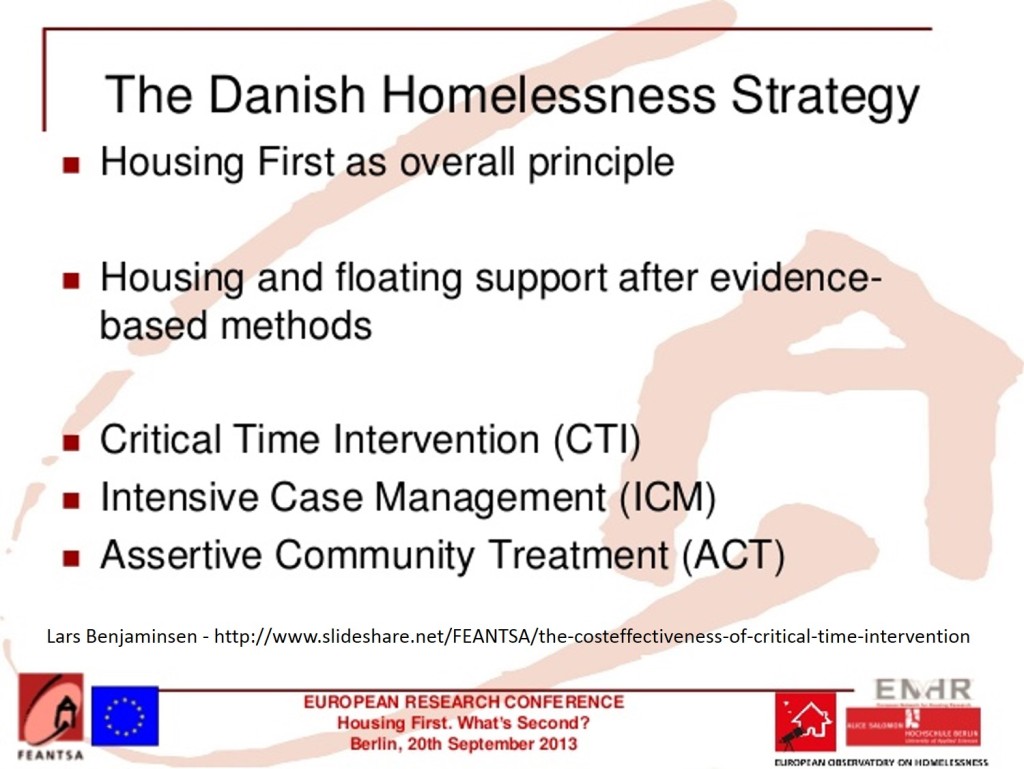
 danish homelessness strategy


He thought to himself that our government could learn much from the Danish Housing First Strategy that essentially provides marginalized people with housing before the need for other human services are provided. Once housing is secured, social workers and therapists are assigned to address the more common problems of unemployment, substance abuse, mental illness, lack of family or social networks and prolonged poverty. By satisfying the basic need of housing, the individual has a much greater chance to address the complicated problems that caused them to loose their domicile. After an individual has adequate shelter,that individual is referred to the appropriate human service agencies. Yet the father realized in the current political climate such a progressive initiative is unlikely in America.


******

newyork christmas 1a rockefeller center wiki


Manhattan is beautiful during the holidays, a place of bright and shiny things. People from around the world make an annual pilgrimage to consume. Nostalgic holiday music is amplified on billboards, in stores, on street corners, and on IPhones. Watching people riding in horse-drawn carriages through Central Park or walking down Fifth Avenue one can witness the epitome of brazen consumption. Eyes reflect the illuminating displays at Tiffany’s, Bergdorf Goodman and Cartier. A gregarious man stops shoppers and hands out advertising postcards for a store that sells furs on 57th Street. To highlight the New York holiday occurrence, one can share the experience of being awestruck by a very tall Christmas tree with the half million shoppers who squeeze into Rockefeller Center.


Walking down town, I smelled the pleasurable aromas from around the world but most noticeable was the familiar smell of roasting chestnuts and Douglas Fir.It looked like most of the robust trees had been picked over, but there were plenty of Charlie Brown Christmas trees available. As tourists stroll easily towards famous landmarks, New Yorkers break into holiday crowds with speed and agility like a choreographed Bob Fosse dance. At the annual Union Square Holiday Market, large mobs of people bottle-necked with cash and credit cards in their hands trying to buy that perfect holiday gift.But, like Charlie Brown, I was feeling depressed.

******


New York is a place of contradictions. As much as the city can be euphoric, it can also be grossly alienating, depending on one’s place on the socio-economic ladder. For the homeless it is a time of feeling estranged, lonely and depressed; the homeless are pariahs in America and are blamed for their misfortune.They don’t vote and they don’t have a very forceful lobby on Capital Hill, nor do they have the luxury of buying politicians. In the war on poverty, the homeless are collateral damage like mistargeted drone strikes in Yemen.


Homeless 2 new york


From what I observed, the homeless population has grown since I left the city over a decade ago. Through my eyes, the people living on the street seemed more lucid and some appeared to have residual traits of middle class lifestyles. I also noticed that there were more women living on the streets than before. A few steps removed from the homeless Santa Claus was a young woman who wrote an eloquent narrative on her cardboard sign describing her adventure fleeing an abuser. She was wrapped in high-tech outdoor apparel that looked highly used but expensive. She looked like she once shopped at REI or expensive mountaineering boutiques. I placed five dollars in her cup, which gave me a sense of futility. The woman was wearing Italian hiking boots, breathable rain pants and a down vest; the same kind of vest that bourgeois bohemians (bobos) are seen wearing as they adventure to Whole Foods. To the woman’s side was an internal-framed backpack with a Gortex shell snugged in an external pouch. If I didn’t know better, I would say that she took a few wrong turns off the Appalachian Trail and ended up in Manhattan. She glanced up at me after adjusting her sign. When I saw her face it was shallow and there was an emptiness in her eyes.


Every few steps I took there was another homeless person. In the East Village, I met a young man that had been hopping trains through the West.One night he hopped a freight car from Tulsa, Oklahoma, believing it was going to Albuquerque. After passing out on the train, two days later he discovered he was in Norfolk, Virginia. Before his adventure began, he was living in Phoenix where his girlfriend ostensibly kicked him out of their apartment after losing his job. He told me he was a telemarketer selling financial services to retirees, and he said that after he was on the job for a while he began to feel that the service was exploitive, so he lost the interest to sell. His numbers declined and he was asked to clean out his desk.


A few days before,he was squatting with a friend in Baltimore. They met at the day labor service, but after a night of hard drinking his friend disappeared. After sleeping on the streets for a few days he hopped a train to Newark and the next morning he lucked out on a ride through the Lincoln Tunnel on a box truck. He explained to me that he thought his condition was one of temporary inconvenience and that if he can work things out with his estranged family he will eventually go back to Phoenix for another job, but for now this was the only way that he could raise enough money to embark on his journey out West. I pulled a few bills out of my wallet and placed them in his hat. I quickly realized that if I dropped money in every hat, I would become broke very quickly, so I stuffed my hand in my pockets all the way to Chinatown where I would get my favorite dumplings.


homeless americam flag


I realize that many Americans are ideologically opposed to giving money to people on the street, but it is my thought that if I can give someone momentarily relief, then so be it; furthermore, what would Jesus do? I know some that think their donations are ideally served if they donate to nonprofit service agencies that help the homeless.And yet a large portion of their funding goes to large executive salaries. (Goodwill Industries comes to mind)What I also find problematic is that many of these agencies establish their determination of eligibility on what they considerto be the deserving and the non-deserving poor.


A common story that I have heard in New York and other cities with large populations of the displaced, is that the homeless feel invisible, that people are often afraid to acknowledge them. One homeless man expressed to me that he can go for days without having eye contact with a single person. One doesn’t have to be a psychologist to understand that this lack of recognition would attack one’s personal psyche. Yet some people are simply afraid to acknowledge the homeless when they are encountered.

 homeless staring at camera


For a good part of my holiday respite, I walked with my head down internalizing their pain. I recognized the uncomfortable feelings of anger and depression I was having. Yet I felt there was something else causing me to feel this way.As someone that has been homeless in the past, I was seeing what could very easily be me. There was a time that I felt alienated from the outside world. I lost communication with my family and friends and I was living like a vagabond from one town to the next. I’ve hitched-hiked all over America and have been escorted out of towns by the police for vagrancy. This happened to me because I was one pay check away.


Yet, many people loose their jobs; many people suffer from mental illness; many people have substance abuse problems; but not all end up homeless. Based on my own experience and those I have interviewed over the years; the most underlying cause of homelessness is the lack of social safety nets or family support. When the bottom falls out and there is no one there to catch, it is highly likely that one will end up on the streets.


It really wasn’t my intent to write another essay on homelessness, but as I arrived into Penn Station,I couldn’t believe that I literally had to walk over people sleeping in the middle of the bustle.This seemed like a natural occurrence for the people walking by, but this looked like the theater of the absurd to me. We live in a society where hundreds of thousands people fade into the night in wretched despair, but is this social problem necessary? I think that if this were treated like any other public health issue, homelessness would be eradicated.


Although I have had some brief interludes of sleeping in cars and on friend’s sofas over the past few years, I haven’t been chronically homeless in over twenty-five years. I have known pain, but I have also been very fortunate. The last time that I was looking at sleeping on the streets, I was rescued by a collaborative of human service and health professionals.Yet I realize this is atypical, if I didn’t have people advocating to place me into housing, I could very well be camping out somewhere tonight.


Yet my story is an example of the possibilities when housing and services are in place. To say that I am grateful doesn’t adequately describe how I feel today. I’ve gone from isolation, despair and degradation to a place of contentment. I know that I am among the fortunate.


******

Back in New Mexico, it is snowing outside and I’m feeling the comfort of my home. Drinking a cup of Earl Grey, I notice icicles hanging from the window sill. Today, I have the option of cooking warm food; I can take a hot bath and I don’t have to plan how I’m going to relieve myself.


Now that we are on the eve of the new year it is apparent that Santa isn’t coming this year. The true meaning of Charlie Brown’s Christmas has also eluded us, there are no miracles on 34th Street and I really haven’t a clue what Jesus is going to do. However, it would be nice to see someone kick over the money changer’s tables. The powers that be won’t likely feel generous any time soon, but I figure that there’s no harm in speaking out in this alternative public sphere. My New Years wish is that homelessness and economic injustice will become a part of everyday discourse and in doing so, a major shift in public policy will take place, because everyone needs a home. We are all deserving because it is a fundamental need and because it is a fundamental need it is a fundamental right. Yes, everyone needs a home; even a smelly, drunken Santa Claus.


Homeless Christmas DDodson


© Dennis Dodson, 2016


The art of finger pointing

“Often those that criticize others reveal what he himself lacks.” 

                                                                                                                ― Shannon L. Alder


This particular evening, the political mudslinging was on overdrive.  The TV news-anchor mentioned a Donald Trump tweet: “If Hillary Clinton can’t satisfy her husband, what makes her think she can satisfy America?”  I was hoping they would move on to the next topic but the TV channel wanted to discuss all aides of this sensational story on screen for as long as they could keep people glued to their station.


“Why do they bring up personal issues? I thought Americans liked their privacy. You always complain when ask someone their age; but I would much rather give my age away than discuss such private matters on TV.”


That was my dad talking to me over the din of the debate on the TV channel. He lived in India for most of the year and visited me in Colorado over the summer months. A few visits over the past ten years had gotten my father somewhat comfortable with spoken English in the US with its unique slangs and phrases and to some extent with the culture.  He would pick a topic, ask me the background and get me to put it in perspective for him, whilst trying to draw some parallels to an Indian event or situation.  As an outsider to the US political and cultural arena, he had an interesting takeon the news and always asked questions. Watching the television news with him gave me a different perspective on events and happenings.


On the Trump tweet that was being talked to death on TV, I replied: “But he is not reflective of actual American culture and values, Papa.  He will say anything to ensure that he gets discussed on TV.”


“But, is he an expert on marriage? Some kind of a, how do you say, hmmm, marriage counselor? “

I burst out laughing.


“No, he is not a marriage counselor. Actually, he is on his third marriage himself.  He is running in the US presidential elections”


“Oh, a politician.  As they say, crows are black everywhere.  Politicians are the same, anywhere in the world!  But, that is funny.  A man on his third marriage is talking of awoman not being able to satisfy her husband. He must know a lot about that. Wonderful!!”


“Wonderful!!” with its unique tonal style was my dad’s favorite phrase for sarcasm or disapproval.  As a child, my mistakes were often summarized in three simple syllables of disapproval, “Wonderful!” with the tone indicating he meant everything other than me being wonderful.


It was getting close to 8pm and it was time for me to leave.  I told him I need to meet up with a friend and headed out.


*****


Maya had called earlier that day to say she would like to meet up to get my inputs on her situation. When we finally caught up, it was obvious that Maya had not slept well for a few days. Despite that, she looked elegant.   A light gray colored knee length, A-line skirt with a fitted blue blouse with a classy blue-and-cobalt dew drop shaped earrings to go with the long necklace with matching style and colors.   Her long blonde flowing hair added to her style.  However, the tell-tale signs of stress were unmistakable.Her eyes were downcast with black rings around them. She was fidgety with her fingers tapping constantly like she wanted to be elsewhere.


After exchanging pleasantries, she revealed “Chad told me last week that he has a three year old son from the previous relationship. And just when I thought he is the one!” her voice trailed off.   Maya had been in a previous relationship with someone who had an 8 year old daughter.  I remember her confiding that she had always felt like a third wheel and after two years realized that she would never be an integral part of that family.   Now, three months into this relationship, she was not sure if she wanted to continue down the same path again.  She was spending a lot of sleepless nights over the dilemma. She was looking for my advice.  We discussed it at length.  I was definitely bothered by her concerns but I was a little concerned about Chad keeping this secret for so long as to string her along.  “If you had told me you were thinking of going out with this guy who has a three year old, I would have encouraged you to follow your heart.  But I am concerned by this deception for the past three months.  To me, it reveals a deep character flaw with far reaching implications beyond this one situation” I observed.  As we continued to discuss, my concern about this aspect of Chad continued to spiral upwards and I shared that with Maya.  After a prolonged conversation, she thanked me for being her sounding board for the past several years that we had known each other.

x

*****


The next day I had an early dinner with dad and helped him prepare for his visit to LA.  I will definitely miss these evenings with him. I thought to myself. I had begun to look forward to getting home from work and sitting down in front of the TV with him and listening to his views and opinions.


But, I was also excited because his visit to LA would allow meto spend more time with my girlfriend, Liya. For the next few weeks, she did not have to be my “concealed girlfriend,” as Lia calledher situation during the time my dad was in Colorado.  I met Liya after I had dropped my dad at the airport.  We had not seen each other for nearly 3 weeks.  She seemed charming in that white shirt and blue denims with a short pearl necklace to go with matched earing.   I had planned for a dinner at her favorite restaurant followed by a newlyreleased rom-com that we had talked about watching together.


After the movie, we went to our favorite coffee place, discussing random things just to be in each other’s presence.  Without naming names, I brought up Maya’s situation and the deception by Chad.  She agreed with my perception that there must be deeper issues when he had not revealed such a major aspect of his life to Maya for three months.  Once again I realized we were so much in-sync, reading each other’s minds, having similar values and concerns.


When we were driving back, Liyaremarked, “You know we have been together for eight months and your dad does not know about me,” and smiled at me.


“I didn’t realize it bothers you”


“It doesn’t, I am just saying, you know, after that conversation we had about deception and not revealing oneself fully.  I am sure when the time is right you will talk to him about me” she tried to reconcile and reassure.


“Yes, and in our case it is a cultural issue, you know” I once again talked about the cross-cultural relationship, generation gap, etc.  Liya had always been a good sport about it and once again reassured me that she was fine with it.


However, I continued to ruminate on the issue for the next few days.  I recognized that I had been pointing fingers at Chad while living the same deception.  I remembered a phrase in my mother tongue, “ek angli beja ne tren potana taraf” meaning point one finger towards the other, and the other three point towards oneself.  I had definitely missed the mark on that.  It is very easy to find the minor differences between a situation one is advising on and the situation one is living.   At such times, it is very tempting to make an argument that “My situation is different” but I realized that this may just be a cop out.


*****

 Finger-pointing-icon 1

I soon found out that finger pointing and hypocrisy are ancient arts.  There have been many examples of great thinkers of the past falling prey to “do as I say, not as I do” type of behaviors.  Even a progressive thinker such as Rousseau, opposed to the strict, authoritarian education style of his day, advocated for children to be free to discover the world on their own, play, and explore.  He advised fathers to be ever-approachable and present to answer their questions about the nature of the world. So, what kind of a father was Rousseau? Tough to say, since he left all his children in an orphanage just as fast as they were born!

There are other examples of schism between creed and deed.   Al Gore, the former US Vice President and a fervent environmentalist uses private jets. Citizens from the British empire, on which the sun apparently never set, because they anchored their ships on every continent and island, and plundered every possible place on the planet, now complain of immigrants destroying their way of life. The list goes on and on.But, once again, I have to worry about the fingers pointing at me, when I look for hypocrisy in the society.


Thinking back, I realized that among my close circle of friends, I was definitely considered to be the go to friend for advice on professional and social issues.  I had built a reputation probably because I had been a good listener.  However, it seemed to me now that I was actually not that good of a listener since I had stopped listening to the advice that I had been dishing out. I needed to come around and listen to some of my own advice.


Just like meditation and being in the moment, the more one practices this art of listening to one’s own advice, the more naturally it comes. To become a good listener, I should be able to connect to my own voice.  I need to become a better finger pointer who is keenly aware of where all the fingers are pointing. If one points at the other, three point at me. I should examine the three that are pointing at me as well.


With practice, one needs to get to the Dalai Lama state of mind:“I always tell people that religious institutions and political institutions should be separate” he quoted.   Almost reflexively, as if observing the three fingers pointing to self, he continued “So while I’m telling people this, I myself continue with them combined. Hypocrisy!”


****


Two weeks later, I called Liya: “Hey, you want to come over to my place for dinner?”


“Sure, we can eat and hang out till you have to go get your dad at the airport. I will be over in 10”


She hung up the phone.   Ten minutes later, there was a knock on the door.  I made sure I opened it wide enough for her to notice my dad sitting on the couch.


Hey, Liya! Come on in.  Dad, this is Liya, my girlfriend I talked to you about.  Liya, this is my dad.


Liya had a shocked look but dad had been prepared and was unfazed.  After the initial pleasantries, we settled in front of the TV.    Another media favorite, Ted Cruz, was reacting to recent events by mentioning that Syrian Muslims fleeing persecution should be resettled in the Middle East in majority Muslim countries. When asked about Christians fleeing from Syria he said,“Christians who are being targeted for genocide, for persecution . . . we should be providing safe haven to them.”


I was keen to see if either Dad or Liya would react to it.  Dad went first.


“Well, Obama rightly criticized India for acts of intolerance by people of one faith towards people of other faith purely for their belief.  But then, doesn’t what this guy says count as religious intolerance”


Liya chimed in.  “The funny part is, earlier in the year, Ted Cruz himself had lamented that never have the threats to religious liberty been greater than right here and right now.  And now, he hasbecome a threat to religious liberty”


While those two went on feeding into each other’s arguments, I wondered about all of us pointing fingers at these politicians. Aren’t politicians a part of the same society? Are they not reflective of our society and us, the voters?  Should we not wonder about the three fingers pointing back at us when we point one finger at our politicians?


I hoped to examine the three fingers that were pointing back at us in the room. I pray I practice this art of finger pointing well.


“We are all hypocrites. We cannot see ourselves or judge ourselves

the way we see and judge others.” 
― José Emilio Pacheco, Battles in the Desert & Other Stories


© Jignesh Shah, 2016


Image

Icon: Finger pointing. https://commons.wikimedia.org/wiki/File:Finger-pointing-icon.png


Prince Charming

TEENAGER
SOMEBODY TO HAVE FUN WITH.

20`s
SOMEBODY TO HAVE FUN WITH, MAY BE GET MARRIED TO AND HAVE KIDS

30`s
SOMEBODY TO HAVE FUN WITH, GET MARRIED TO AND HAVE KIDS

40’s
SOMEBODY TO HAVE FUN WITH, MARRY AND MAY BE HAVE KIDS

50’S AND BEYOND
SOMEBODY TO HAVE FUN WITH.

New Year Resolutions

Ah! the New Year and all the hope, energy, and resolutions it brings. I woke up on the first day of the year and browsed a bit through the news pages to find one too many articles on how to keep New Year’s resolutions. Curious, I read a few articles that offered some tips on how to keep the resolutions and one that caught my eye had advice on how to make resolutions more realistic.


Shouldn’t we all aim for realistic objectives? Transforming any life takes time, a long time, how can we deceive ourselves thinking that one year is enough time to, say, change a body that has indulged for too many years into a triathlete ‘s body over a meager 365 days. The article I read summed up that philosophy; it took the usual resolutions and scaled them down to doable objectives: Want to run a marathon? How about resolving to walk 30 minutes 3 times a week for a start? I had a ball reading the scaled down objectives and imagining all the people reading this or other articles, downloading apps and purchasing all sorts of gear to prepare for their “new life of 2016”.


Why do the media push the idea that with the New Year we need a new us, a new life, a new job, a new anything? What is so wrong with who we are? Truly, what is so wrong with our lives that we have to transform them completely? And how the hell are we supposed to become a “new me” especially when we like who we are already. I am not saying there’s no room for improvement, I am the queen of “there’s always room for improvement”, just ask my husband, but I do not understand the idea pushed onto us that with a new year we need to change it all. Why can’t we be happy with what we have and still improve our lives? If that is the message media is aiming for, then they are failing miserably. All the material I read spoke of changing it all, making it happen through realistic goals if you will, but the underlying message of the articles I read was clear: New, new, new, change, change, change. Not a single one spoke of building from what we had, of realizing how much we already have, of being grateful.


I am not a cynic, I do understand the renovation feeling we get when closing one chapter in our lives and starting a new one. I have been a “resolutionist” myself, with many failed attempts and a few victories.  I know and have seen what sheer will power can do and have seen people transform their lives, only it does not happen in the first couple of weeks in January.


True transformation is not subject to a date, place or hour, much less to the ringing in of a New Year. In all honesty how many of us can actually wake up and run 5 kilometers on January 1st after being out all night partying to celebrate the commencement of their “new life”? Not many, at least not me. And while jumping on the wagon of starting new projects, changing habits, following the whole realistic resolutions path does sound a very attractive way to beat the holidays blues (which, by the way I believe is the real reason behind the resolutions frenzy), one thing came popping into my mind as I read and saw all those tips, articles and slide shows on resolutions for the New year: “How damn lucky I am to only want to improve certain aspects of my life, I have a life, a very good life, I do not want this “new life” they propose, how many people can say that? Most likely all of us, but all this media frenzy of thenew life is distracting us from realizing how much we already have in the old.”


After a tumultuous 2015 around the world, with so many economic woes, mounting humanitarian crises, clashes between countries and unforgivable losses in so many aspects, I realized I am grateful to see a new year. I wonder if the state of the world would improve if all those resolutions that aim to get what we do not have were changed for gratefulness for all the things we do have. Would we all change a lot more and a lot faster if, instead of starting the year looking forward to achieving our new set goals and attain what we think is missing in our lives, we looked back and be grateful for all the things we had during the past year? Perhaps our new year would be better if we shifted our focus from what we are missing to all that we already have. Perhaps gratefulness could power our will to reach our goals better than apps, tips and new gear; perhaps I am just too happy and relaxed after my vacation and writing a bunch of nonsense or, perhaps, I am onto something.


We may debate for hours if my hypothesis is valid, in the mean time I have created a list of things that I am grateful for that require new efforts to keep them in my life. Humor me, and let me call them “gratefulness powered resolutions”, I know it sounds oddand whoever is reading this is more than welcome to criticize, laugh, disregard or join them. As for me, well I do believe that when I take a look at the list below it will be easier to stick to these resolutions and enjoy same old life, than have a new app remind me to get up and move my butt in order to achieve my “new life”.


Paola’s gratefulness powered resolutions:

  • I am grateful to have to make more time for my husband and I; it means he’s still with me and we still want to spend time with each other having fun and that our daughters are healthy and thriving and demanding love and time from their parents.


  • I am grateful to have to be a better daughter/family member; it means I have my parents, brother and sisters, in-laws, cousins, etc., in my life.


  • I am grateful to have to wake up earlier this year; it simply means that I can still wake up and that my daughters have grown and wake up earlier to go to school, which in turn means they can learn and live in a peaceful country where school is their priority, not surviving to see the next uncertain day.


  • I am grateful to have to work harder this year; it means I still have the job that I love and opportunities to grow as a professional.


  • I am grateful to have a few pounds to shed during this year and work harder at eating better; it means I had more than enough during the holidays, that I have access to healthy food and that each pound was gained in a table surrounded by family and friends who were happy and sharing.


  • I am grateful to have to exercise more this year, it means I can move and work out, that my body can get healthier and that I have the time, will and possibility to exercise, many people cannot.


  • I am grateful to have to save more this year; it means I have enough and will not consume mindlessly and that I am working to have a stable future.


  • I am grateful to make an effort to see my friends more, it means I still have friends who want to see me and share their lives with me.


  • I am grateful for having to find the time to write more; it means someone still wants to read what I write.


  • Finally, I am grateful to have my old life in the New Year; it means I am alive.


© Paola Sanchez, 2016


Hunger Games: Living and falling out of trains in Mumbai

“Here’s some advice. Stay alive.”

― S. Collins, The Hunger Games


Imagine an upright coffin.


A standard-sized metal casket 7 feet in height, 2 feet across, and less than 2 feet in depth. At exactly 8 am in the morning, try to get inside this coffin. You are not alone. There is a crowd, pushing and shoving, all trying to get inside that coffin along with you. Finally you are in, standing inside this upright coffin, packed with about 14 to 16 strangers. Now imagine four hundred such coffins stacked inside a large box-car or freight-car which can hold only 100 coffins; and the train starts moving at 60 to 80 kilometers per hour. There are ten stops before you reach your destination. The box-car is already overflowing; however, at each stop, hundreds of new coffins try to push and shove their way in, some hanging on by their last nail to the boxcar’s edge.  After 60 to 90 minutes, you arrive at the final destination. Coffins push and shove to get out. Once outside, you shrug the coffin away; deliberately do not say good-bye to the strangers who got real close in the last 60 minutes. You rush to make a presentation to that new client or serve coffee with a smile to your boss. You work all day. At 6 pm, you get inside a similar coffin again; this time with 14 to 16 completely different strangers; and hundreds of such coffins push and shove and get inside a boxcar to return home. After 60 to 90 minutes you get out, shrug the coffin and strangers off, stop at the local bazaar to haggle over the high prices of vegetables with the vendor; then go home and listen to your teenage kid complain about not having a smart-phone. You switch on the idiot-box to tune off from your own life as the drama on television reminds you of what it is to be human. Box-car to idiot-box – you do this every day, six days a week (because your country and company does not believe in 5-day work weeks), for the rest of your working life.


It’s not over. You also have a very high risk of meeting with an accident, including choking and suffocation, falling out of the train, getting pushed, shoved, elbowed by others, or getting run over by a train. And when you survive all this you do not get any points. You do not win. You are supposed to feel lucky that you survived. You take your measly pay-check and go back to living your life which means getting into a coffin every day.


This is neither a video game nor a vampire movie.


This is the daily life of a person in Mumbai, who commutes to work in the city using the urban transportation system – the Mumbai suburban railway system also known as Mumbai locals.

 cover image


The BBC did a series on this aspect of Mumbai and aptly called it Crush Hour (see you-tube link at bottom of this piece). But there is more to Mumbai’s transportation system than pushing and shoving or being packed in a crowded compartment. There are real accidents and deaths:  25,722 passengers fell from suburban trains in Mumbai in the last ten years, of which 6,989 commuters died. Another 22,289 passengers died while crossing the railway tracks. This was revealed by the Government Railway Police (GRP), Mumbai after an inquiry was filed under the Government’s Right to Information (RTI) Act.


In 2015 alone, there were 3200 deaths, of which 697 commuters died after falling from the local trains. That is nearly 9 deaths a day on the Mumbai local system and nearly 2 deaths a day from falling. Many more have serious injuries, lose arms and legs, concussions and get into comatose states.  Additionally, sheer suffocation inside the overcrowded compartment caused deaths by triggering heart attacks and other complications in over 400 commuters.


The Mumbai suburban rail system has nearly 190 to 200 trains (train sets or rakes as they are called by the rail authorities) with 9 to 12 coaches or compartments as they are called in Mumbai. Compartments are classified into 1st class and 2nd class and then into male (gents) and female (ladies). In order to alleviate the problem of over-crowding more 12- and 15-coach trains are being added to the fleet.


However, with Mumbai’s high population, which is growing every day and nearly 4 minute gap between two trains at every station, congestion and over-crowding is inevitable. During peak hours 5000 passengers are packed into a 9-car rake with a rated carrying capacity of 1,700. This has resulted in what is known as Super-Dense Crush Load of 14 to 16 standing passengers per square meter of floor space.

Crus load


*****


The Mumbai Suburban Railway, one of the oldest railway systems in Asia, is an offshoot of the first railway to be built by the British in India. The firstMumbai_suburban_Rail_Network_Indian_railways train is said to have operated on 16 April 1853, between Chhatrapati Shivaji Terminus in south Mumbai and Thane in the north, a distance of 34 kilometers.


Mumbai’s rail system is divided into two main lines – along its western and eastern or central corridor. Over 5 million commuters use Mumbai’s Central line and 4 million use Western line every day. These suburban rail system trains, or Mumbai locals, are a critical component of the urban transportation system in Mumbai and are known as Mumbai’s lifeline. The city is a commercial capital of India and all commerce and business activity would come to a standstill if these trains stopped. Mumbai is an island city — bounded by the Arabian Sea on the west and south and the bay on the east (it’s name comes from the Portuguese Bom- baía

or good bay). From its historical commercial roots in the south of the island, the city has grown northward where it was easier to build bridges across the creeks and connect with the mainland. Most of the offices and residential house of business owners are in the southern part of the city and most workers live in the north stretching out of the island city into the mainland of India in the state of Maharashtra.

 Mumbai,_aerial_view,_satellite_image,_wikimedia


With a population of 20.7 million, according to the Census of 2011, (compared to somewhat over 4 million in 1960), Mumbai Metropolitan Region is one of the most populous urban regions in the world and the second-most populous metropolitan area in India. The Mumbai Metropolitan Region spreads across Mumbai’s adjoining districts of Thane and Raigad and incorporates areas of Thane, Navi Mumbai (New Bombay), Vasai-Virar, Bhiwandi and Panvel where a lot of the office workers live, who travel every day to the city. The average population density surpasses 27,000 people per square kilometer. The city lacks open spaces with less than one acre of open space for every thousand people, while the norm is 4 acres.


Mumbai lives up to its image as a city of extremes. Within India, Mumbai has the highest number of billionaires and millionaires among all cities in India; and has the highest GDP of any city in South, West, or Central Asia. Next to the swanky high-rises are the slums. No city in India has as large a proportion of its residents living in slums, officially put at 54%. The slums have become synonymous with the city and represented with much box-office success in movies such as Slum Dog Millionaire.


It is the lack of affordable housing that is a major problem in Mumbai. It is not that flats are not available; just that housing prices are unrealistically high. A news item in July 2015 on NDTV , an English language News channel in India was titled: ‘Nearly 1 Lakh Flats Unsold in Mumbai. Prices Still Not Falling. Why?’


India’s Property Market Paradox: Unsold Apartments, Crisis for Common Man.’ was the apt title of an article in Huffington Post in March 2015 explained the crisis: “… in cities like Delhi and Mumbai, where residential property prices more than doubled from 2009 to 2012, instead of cheaper housing, most developers built apartments that cost over Indian Rupees 10,000,000 (US$150,000) on average, as these include a hefty margin and are targeted at richer buyers. But the average Indian cannot afford them. Their demand is in a far lower range of INR 5,00,000 (US7500) to INR 20,00,000 (US$30,000). So while apartments remain empty, India’s middle class is faced with a housing crisis or a lack of affordable housing.”


The middle-class and low-income workers prefer to buy cheaper flats in the larger Mumbai Metropolitan region and travel for hours in these over-crowded trains. Inflation, at least for food commodities and in housing and transport, has been growing exponentially in recent times. Mumbai was found to be the most expensive city in India according to the recent Cost of Living Survey 2015 conducted by Global HR firm Mercer. Mumbai was ranked at 74th place and was more expensive than Dallas (77), Munich (87), Luxembourg (94), Frankfurt (98) and Vancouver (119). The survey stated that higher cost of fuel, transportation, increased prices of food items, home services and rentals increased the cost of living.


According to a report in the English daily DNA: “Psychiatrists say inflation is leading to depression, loneliness and helplessness among those who are finding it difficult to cope up with their financial condition, making them vulnerable to suicidal tendencies. They say the number of such patients has gone up considerably over the past few years.”


While the cost of mobile phones may be decreasing the cost of meat and onions is at an all-time high. People need money to survive and endure hardship. Thus, despite inhuman conditions, the urban transportation system, especially the Mumbai railway system is the lifeline for people and business in this commercial city.


rail_collage_5

x

*****


“Winning means fame and fortune. Losing means certain death. The Hunger Games have begun…”

-From The Hunger Games


However, with the rising number of accidental deaths in the last ten years, people question whether Mumbai’s urban commute has become a death-trap? Some activists call it Mumbai’s silent-killer. Although accidents or deaths by railway accident are not silent; they are loud, painful and filled with amputations and screams. It was one such accident on November 27, 2015, that was accidentally filmed by a fellow commuter. It captured how a 21 year old male, standing at the edge of the compartment due to overcrowding fell out after losing his grip on the pole-handle. The video went viral and sparked outrage and anger among commuters. Some f the anger was directed at the rail system for not paying attention to overcrowding. And some of the anger was directed at the in-humanness demonstrated by commuters towards each other. What is it that makes a fellow traveler the enemy of another – what is it that makes a human so insensitive to the plight of another and only think of getting his? When did human beings, the so-called social animals, get completely caught up in this “me-myself-mine” mindset?


However. outrage died down soon as people got busy trying to push and shove their way back to work. That’s the Mumbai spirit. It forgets. Perhaps it cannot afford to remember.


Bhavesh Nakate videos


Man falls from Mumbai local train (this is another one)


“Male commuters risk life for ego.’


On December 28, 2015, a month after the falling death mentioned above, the Mumbai edition of a widely circulated Indian English daily carried an article with this headline ‘Male commuters risk life for ego.’ It stated that, in 2015, of 7.5 million (75,00,000) commuters, women comprised only 30% and yet suffered only 11% of all deaths; that is of the 3200 deaths in 2015, women accounted for only 325(11%) of the total. Therefore, the article concluded that ‘male commuters risk life for the sake of their ego’ and ‘males are more prone to taking risks while traveling while women opt for safety first.’


Would any sane statistician or social scientist jump to the conclusion that the cause of the larger number of male deaths was the male ego, by just looking at one number. Any student at the 5th grade level would tell us that there could be umpteen other causes and reasons that need to be examined before we jump to causal conclusions. Human problems often have multiple and multi-level causes that have complex inter-relationships. The reasons are simply high demand and not enough trains, greater time gap between two trains leading to overcrowding at stations, environmental, structural, specific problems of the male compartments, group dynamics. In fact these kind of data open up more questions than they answer. These basic frequency comparisons are a starting point for more detailed investigation. To blame the male ego is naïve, immature, and an obvious attempt at shifting the blame to the victim.


The reporter of the article had gone to a psychiatrist to get a quote, not an urban transport planner but a psychiatrist, who explained away the findings by saying: “Men suffer more casualties because they sacrifice safety measures for the sake of their ego.” All the other sources contacted by the journalist seemed to be of one type — eager to blame the male ego. The message was that if the male ego was brought under control then all accidental deaths on Mumbai trains would stop.

 railway_crowds10_rs


Most people always thought that the transport authorities, policy makers, politicians or the nexus between politicians and various developers, and lobby groups were responsible for the mess that is Mumbai. What used to be a beautiful city along the sea with hills and the largest natural forest reserve of all urban areas globally has now been reduced to an ugly, congested, dying, smelly sprawl with dust, poor quality air, poor visibility, and noise that assault the human senses. Mercer’s Quality of Living Rankings which cover 230 prevalent destinations for globally mobile talent and to determine expatriate worker’s remuneration places Mumbai at 152nd rank. They cite the extensive increase in population due to migration from other parts of India, lack of access to clean water, air pollution and traffic congestion as reasons for Mumbai’s low ranking.


The headline was indeed confusing. Who is the victim of all the deaths and accidents in the Mumbai rail system? Is it the male traveler with the huge ego, who regularly falls off from trains or the city, the government agency that operates this overcrowded, hellish transport system?


Do we laugh or cry at such headlines? Is this simple insensitivity or sheer stupidity?


*****


“Hope. Hope is the only thing stronger than fear.”

President Snow in The Hunger Games


“Why so angry?” quipped an acquaintance who is trying to make money through an e-commerce start-up? “Look at the bright side. Traffic congestion and overcrowded trains are a business opportunity, not a crisis. The more people push and shove and fall out of trains, and the more such newspaper articles are published about accidents and deaths on public transportation and roads, the more people get afraid and the more likely they are to stay at home. And the more they stay at home the more they shop online. E-commerce will boom in India,” he said, “mark my words.” That’s the same belief held by venture capitalists, who have been blindly bank-rolling loss making e-commerce sites all this while.  However, someone’s death or discomfort was not an opportunity to make money. He expressed surprise at these antiquated thoughts. However, despite the obvious discomfort experienced during the entire conversation, it was informative to talk to him because he did point out an event which gave a different angle to this whole problem. He reminded us of a riot in a railway station on the Mumbai suburban railway system that took place in 2015. And he mentioned that it was not a one-off incident; these kinds of disturbances and riots at railway stations and bus stops were frequent, especially with any disruption of services. This was a complex issue and we were reminded to look at all sides of the phenomenon.


Diva_protest1

x

Examination of newspaper reports found that from 8 am to 12 noon on Friday, January 2, 2015, a technical glitch, caused by a broken pantograph, disrupted Mumbai’s local train service on its central line. At a station called Diva, irate passengers protested by blocking the train line. The commuters at Diva station started assembling on the tracks in huge numbers and some threw stones at any passing trains. The passengers said they were angry at frequent breakdowns of service in the Mumbai rail system. However, the protest soon turned violent, escalating into a full-blown riot. Ten trains were damaged, more than 100 services were suspended and four police vehicles were destroyed. The government railway police (GRP) registered cases against 12,000 people for rioting and damaging government and railway property, after railway agency sustained losses of India Rupees 1.8 million because of protests by commuters.


Interestingly, a report on this incident in one of the major newspapers ended the article with this sentence: ‘Passengers cheered loudly when the first train from CST rolled into Thane station, at 1.45 pm.’


This changed the question. At first we asked why are there so many deaths on the urban transport system in Mumbai? And how can one callously blame the male ego for the deaths instead of examining structural factors? What is wrong with the authorities and the media that shifts the blame on to the victim?


However, now, the question was different: Why do the very people who are at risk of dying every time they get into a crowded train engage in rioting when they cannot get into these overcrowded box-cars? If the daily commute is difficult and deadly, then why do people riot when the train service breaks down? Wouldn’t a normal person be happy that they did not have to go to work; but these people were dying to get inside that coffin?


The issue can be re-worded as: I know I am going to have an experience that is torturous, painful and may expose me to potential death. However, if I am denied that experience then I will on a rampage and riot demanding that I be given that painful experience immediately.


How do we understand this phenomenon better? What are the cultural and psychological factors underlying this because it is not an individual engaging in this behavior, it is an entire group of people in the city of Mumbai?


So we thought: Why not take the newspaper stories and our dilemma to the very people who are at risk of falling off the trains? Get responses and feedback from the people themselves. This would complete the journalistic cycle. So we put all the newspaper clippings in a file, placed our question on a printed sheet at the end and took it to the people who use trains.


*****

Diva is a junction Railway Station. It is not on the island of Mumbai. Diva is across the creek about 17 kilometers east of Thane, situated on the mainland of the state of Maharashtra. Another 14 kilometers east of Diva, further inland, is the station of Kalyan. As mentioned before many of the office workers of Mumbai have affordable flats on the mainland and travel every day into the city. Diva is an important junction because it has a line that connects to the western railway system and therefore commuters from the east and central lines can change over at Diva to travel to the western line. Diva station has a long history. It was opened in 1877 and is a major junction in the central railway system of Mumbai. The Parsik tunnel, built in 1916 during the British Rule, ends at Diva Railway Station.

Diva_Junction_railway_station_Stationboard

x

*****

 “Happy Hunger Games! And may the odds be ever in your favor.”

― S. Collins, The Hunger Games


Newspaper clippings in hand we reached Diva station at 9 am. We purchased tickets so that we could get on the platform where people board the trains. We approached a few people, but they were in a hurry to reach their place of work and did not even look at us. However, after getting pushed and shoved around, we met one person, who perhaps took pity on us. We showed him the clippings and explained why we had come to that station. This person zoomed in to the male ego headline. Tell that psychiatrist to travel with us for a day and he will know how the male ego prompts us to fall or jump out of trains. It is not the ego, it is our desperation that makes us ignore our own safety and take risks. We go to work every day so we can put food on our tables, keep our families alive, pay the doctor’s bills, the children’s school tuition, then it is good to have a male ego. What do these rich spoilt people understand of our lives anyway? Ask the psychiatrist to stop taking his fees from patients and we will keep our egos aside and pay more attention to our own safety. His voice had reached a higher pitch.


rail_collage_3


By this time a couple more men who overheard us had become interested and they gathered around our file with the clippings. One of them was in a generous mood, and even let his train go without trying to push and shove his way in.


Both seemed to have honed in on the ‘male ego’ headline. One of them gave a dramatic performance as he responded by asking a series of questions: Is climate change caused by male ego? Of course, mostly the ego of industrialists and businessmen who are unwilling to acknowledge the truth. Is ISIS and terrorism caused by the male ego? Of course, the ego of the ISIS leaders, the American military, owners of the oil companies, the Saudis, the Syrians, the Iraqis. All of those male egos. Any problem in the world can be blamed on the male ego.


Another said: What about the ego of our company owners? Is it their ego that they have maintained offices in South Mumbai when 90 percent of the staff are from North Mumbai? Why can’t they move their office here so we do not have to travel as much? And if they want us to be safe, then why don’t they do something about the prices of flats in Mumbai? The other one said: Well, then it must be the ego of these real estate developers that they have kept process of housing so high even though 100,000 flats remain unsold?


They were being sarcastic and started laughing loudly. Hearing this a young man piped in: I would also like to travel in a helicopter from my rooftop like one Indian billionaire does, but then it was my father’s ego that prevented him from engaging in corruption and cozying up with politicians to launder their bribe money to create a business empire.


One man, who was reading a novel, pointed to the male ego article and said: This has to be a paid article. Haven’t you heard about paid articles? All this nonsense about the male ego being the cause of falls from trains – this is definitely paid for by the railway authorities or other vested interests that do not want to change the overcrowded transport system.


This provided a slight shift in their thought process and gave us a small window to show them the clippings of the riot in Diva and ask: Why?


The answer was unanimous. Almost all of them repeated the same story. They talked about their daily struggle for survival. If they miss out even one day of work, their boss or owner cuts their pay or takes the work back in some form or other. They constantly worry about losing their job to one of the many young people graduating from college or a student with a management degree from a college in some remote part of India, who is willing to work at lower pay. If they do not go to work, they are afraid they will not bring home a salary, default on their home loan payments, not afford the over-priced food and vegetables, family will go hungry, not afford to pay for children’s education in a good school, or be unable to take care of any medical expenses. All of them said they were under extreme stress. They know they cannot miss a day. They need the money. Therefore, they push their way into the train, and try to push every other person out of the way. They are single mindedly focused on their paychecks.


Sensing that the mood had become serious, the two young men joked: Oh! So now they are blaming the male ego. In the past, any problem in Mumbai used to be blamed on migrant workers by the local political parties. Another said that blaming migrants for taking away jobs is very easy. If there is a job to be done, and even a small amount of money is given, someone somewhere is desperate to take it. Why blame the person who takes the job? Why not blame the employer who does not want to give a living wage and raise the salaries. I am sure if the wage is decent, even the locals will work.


Another agreed and said: It is just that the rich want to take all the money and don’t want to pay for anything that will benefit their workers. And now even the government does not want to spend on giving some facilities to the people. We all pay taxes, everything we buy, we pay taxes. Where does all that tax money disappear? What is it used for?


A person who had been quiet till now said: They want our labor and then they want our money when we buy food and things, but they have no respect for us. The problem is that money can flow in out of any country but man cannot. Look at all those bankers. They have created a recession but no one went to jail. No one blamed their ego for destroying the economy. But if one person falls from a train or if we express our anger at the transportation system, you are quick to blame us.


The final word came from someone who we met on our way back. We were having tea at a stall outside another railway station. We were discussing the conversations we had earlier that day when this man overheard us. He used to travel every day in Mumbai locals, and then one day decided that enough was enough. Not because of the super-crush load or the crowd, but specifically because of the inhumanness it generated in himself. He told us that he became a monster when it was time to board or alight from a train. He did not like what he felt inside every morning and evening. He became this other person who would easily push someone else out of the way just to get a foothold on the train. “This is not what I wanted for myself,” he said, “I live in a city. We are supposed to be civilized. Savages have better manners than me in a Mumbai local.”


railway_crowds9_rs

x

He continued, “People advised me to relocate to a smaller town. I did not want to leave Mumbai. This is my city. I was born here; I like it here. I am a big city boy. Fortunately, I was able to shift to a place of work that is near my residence.”


Now he walks to work every day and does what he can at a personal level to keep Mumbai human; however, he also feels powerless that he is unable to do anything on a large scale that can improve his city. He feels he will psychologically die the day he abandons Mumbai and escapes to a place with better air and better quality of life; and feels that day is near. When we show him the headlines and the data, some of which was already familiar to him, he took us back into history, specifically World War 2: “I think it has been mentioned by some historians that without the mass transportation of the railways, the freight cars and cattle cars in which millions victims were transported to the ghastly concentration camps, it would not have been possible for the Nazis to reach the unfortunately large scale of the Holocaust and kill more than 5 million.”


But how does that historical tragedy relate to what is going on in Mumbai today? We asked.


Similarly Mumbai’s commercial success within India would not have been possible without this local rail system that transports workers on a massive scale in the millions on a daily basis. And who has massively benefited from Mumbai’s so called commercial success? The workers may have had a few benefits; they are happy with a small matchbox like flat or a smart-phone and by comparing themselves to their poor cousins in the village. In reality, Mumbai’s money has largely gone to the coffers of the business owners, the politicians, real-estate moguls and so on. They have a nexus with their own self-interest at heart. They could care less if twenty thousand people fell of the trains tomorrow.”

 holocaust_train_1


Seeing the quizzical look on our faces, he answered the question on our minds as he continued.


“How can I compare the experience of Holocaust victims to Mumbai? Well, it’s my opinion and you may choose not to publish it. Because you think that these people in Mumbai are free, aren’t they, and those in concentration camps weren’t? The real tragedy for those living in Mumbai is that at least the victim in the concentration camp knew that his aggressor was external. The victim of the Holocaust could see the aggressor. If the victim tried to run, there was a uniformed soldier or SS agent who would have shot him dead. The victims of the Holocaust were pushed and shoved into freight cars with the barrels of the guns of German soldiers. Ask yourself, what is it that makes the people of Mumbai push and shove each other to get into one of those box-cars which have super-crush loads and then watch their own brother fall of the trains and do nothing?”


“But the man in Mumbai is free, right? Who or what forces this life on them? Yet, why do they choose to be inhuman every day when they travel, or live inhuman lives in pigeon-coop flats and cubicle offices? No one is putting a gun to his head. There is no soldier or SS agent who will shoot him if he walks away and chooses an alternative. But the beaten-down inhuman living in degraded cities like Mumbai will never run. He feels he has no exit. He thinks he has no choice when it comes to his lifestyle. There is no alternative. This is the only life. The man from Mumbai will breathe the polluted air, drink unclean water, walk through congested streets and get pushed around in local trains, but he will make no such choice in his own life. He will accept whatever is given to them. He just wants to pay those EMIs and buy that new smartphone.  He will put those headphones and tune everything else out. What is it that makes him want to do this every day for his entire life?”


Is it complete lack of ego? Perhaps the man in Mumbai should develop and nurture an ego – some sense of self-respect so that they stop accepting such living conditions. It is not the male ego that is making them fall off trains. It is the complete lack of ego that is making them get into that super-congested compartment in the first place. If these males had any ego they would be attacking the powers that have allowed this to happen — a world where money has more respect than a human being.


Ask the psychiatrist to ANALYZE THIS.

 diva_riot1


© The Essayist, 2015


Photographs of Mumbai trains by Rajesh Subramanian.

For some of the other pictures and diagrams, the URL from where it has been procured is pasted at the bottom.


VIDEOS

  • Crush hour – The World’s Busiest Railway 2015: Episode 1 Preview: https://www.youtube.com/watch?v=pvcCjBAl_xo
  •  Mumbai Local Trains: https://www.youtube.com/watch?v=1eAP-BoxVkg
  •  The video below shows people inside the train: https://www.youtube.com/watch?v=mW_sjKWQCD8
  •  Women Boarding Crowded Mumbai Local Train Compilation India 2014: https://www.youtube.com/watch?v=U49AnSz_Jb4


REFERENCES


Riots in Diva


Videos of riots in Diva

Mumbai train services hit: Violent protests by angry commuters (Headlines Today): https://www.youtube.com/watch?v=3ACcTM0F8B8

Diva Station Riot Jan 2015: https://www.youtube.com/watch?v=E5m5gPmwYbs


Remembering the Beloved

“You just love until you and the beloved become one.” I recently read this quote on Facebook.


This got me thinking.


There is a Jewish mantra, Ani L’Dodi,v’Dodi Li —that translates to: “I am My Beloved’s, and My Beloved is Mine.”


This is romantic, yet at the same time demonstrates possession and attachment, more on the level of the ego/personality self.


With a simple shift in words, it has a whole new meaning: “I am the beloved and the beloved is me.”This allows for more expansion of the spirit into the omnipresent role of the Divine Beloved.


In order to attract the beloved, one must be a beloved first. However questions immediately arise: What does it mean to be a beloved and how does one do that?


beloved10


We have heard the different wisdoms of “like attracts like”, or Gandhi’s, “Be the change you want to see in the world”.


We’re just human beings, hoping to be completed by another person, job, or gadget, right?  Or as author Henri Nouwen states, “Aren’t you, like me, hoping that some person, thing, or event will come along to give you that final feeling of inner well-being you desire? Don’t you often hope: ‘May this book, idea, course, trip, job, country or relationship fulfill my deepest desire.’ But as long as you are waiting for that mysterious moment you will go on running helter-skelter, always anxious and restless, always lustful and angry, never fully satisfied. You know that this is the compulsiveness that keeps us going and busy, but at the same time makes us wonder whether we are getting anywhere in the long run. This is the way to spiritual exhaustion and burn-out. This is the way to spiritual death.” (1)


Henri Nouwen book cover beloved


I did my own research on a popular online dating site. I wanted to see how many times the word beloved was used in the bios. Many— from “are you my beloved?”, to “searching for my beloved”, to the very simple, “be my beloved.” People are looking for the answer, for the beloved-ness, outside themselves when the true answer is to dive deeply with oneself.


beloved 12 to cut


To fully embrace ourselves on all levels and dimensions is to love ourselves completely and unconditionally. How can we possibly expect that from another if we cannot give that to ourselves?  We teach others how to treat us by how we treat ourselves.


What I have come to believe is that the beloved is intrinsic, rather than extrinsic to self. That the beloved and self are one. And perhaps all we need to do on the spiritual path is to arrive at this moment of clarity, this epiphany, feel it and realize that there is no separation between self and the beloved. There is no separation, no duality, simply the process of becoming the beloved, or better yet, remembering that we are the beloved. The process of becoming is remembering.


Rumi has a poem about lovers:


When I heard my first love story,

I started looking for you

not knowing how blind I was.

Lovers don’t meet somewhere,

they’re in each other all along. (2)


He is clearly stating that the beloved is within, not without.


beloved 3


Mr. Nouwen  substantiates Rumi’s view,“I kept running around it in large or small circles, always looking for someone or something able to convince me of my Belovedness. Self-rejection is the greatest enemy of the spiritual life because it contradicts the sacred voice that calls us the “Beloved”. Being the Beloved expresses the core truth of our existence.” (3)


All sounds profoundly high and mighty spiritual, right? But how does this apply to the very human everyday life, and how does this perspective procure one a date on Saturday night?


Well, whereas I cannot guarantee a rendez-vous, it is my belief If one embraces the philosophy of I am the beloved and the beloved is me, then one will become the beloved, potentially shifting toward that which one chooses to be and to attract. It is this process of becoming and remembering that I feel is the spiritual journey.


Mr. Nouwen continues with this question,“If it is true that we not only are the Beloved, but also have to become the Beloved; if it is true that we not only are children of God, but also have to become children of God; if it is true that we not only are brothers and sisters, but also have to become brothers and sisters . . . if all that is true, how then can we get a grip on this process of becoming? If the spiritual life is not simply a way of being, but also a way of becoming, what then is the nature of this becoming?” (4)


How does one become the beloved? How does one remember that he/she is the Beloved and, as in Luke 3:15-22 clearly states, “on us favor rests.”


How does one remember who one truly is and sustain it?


beloved 5


I believe that the practice of mindfulness is one choice. It is a constant awareness of one’s emotions, mind chatter, and body feelings, being totally in the present moment. It takes an ever vigilant mindfulness to be aware of one’s stressors and triggers (those experiences that cause emotional reactions), which if left unchecked, can pull us away from our divine nature and our beloved-ness. This being present without expectations and not judging is not an easy task to accomplish.


Spiritual teacher Jenna Ward in a recent interview views it like this:“…mindfulness is staying in the present moment. If you can’t, a samsara is arising, an old stressor. Mindfulness blows my mind. The more I do it, the more I talk about it, the more I teach about it.  With mindfulness, you are able to have action, not reaction.” (5)


If one is able to stay mindful, and commit an action rather than reaction, then one has been able to remain in one’s divine nature, thus maintaining connection to the inner beloved.


Simply stated, the mindfulness mental state is achieved by focusing one’s awareness on the present moment, while calmly acknowledging and accepting one’s feelings, thoughts, and bodily sensations. Ah, there’s the difference, “calmly” acknowledging. How often when we are emotionally charged can we calmly acknowledge and accept our feelings, thoughts and bodily sensations? It takes a lot of practice to become mindful and aware more of the time. It’s a process to become the beloved.


Ms. Ward continues…“How to rest into the beloved and feel it as much as one can, even when one can’t feel it. There’s the challenge. Expect that though, let that lack of connection be here also. It’s conditioning the unconscious mind which will produce great maturation. How do we not become so attached to the temporal world. (Laughing) It’s a great cosmic game. It takes so much willingness and vigilance to really see the influences, and then allow the presence of God that rests in all things to come forth.”(6)


beloved 11


Ms. Ward brings up an interesting point: “to allow the presence of God that rests in all things to come forth.” My question, then, is who ultimately is the beloved? If we are the beloved and the beloved is us, and it is not extrinsic to self, I would wager the beloved is God… our divine nature. Hence, being one’s beloved is actually opening up to allow our divine nature to expand and lead the way rather than our ego/personality.


The kicker is that we can only experience the beloved to the level that we are free from the restrictions of ego.


“The mystic is one who comes into this world with the prime purpose of rediscovering this state of union [with God] and then living it,” writes Llewellyn Vaughan-Lee, author of many books on Sufism. “The bond that is established between us and the Beloved colors our days in a variety of ways. But first the ego must be pushed to the side. Or as Abu Yazid put it: “The way to God is but one step, taking one step out of oneself.” (7)


The answer I feel, is dive within, rest in the beloved, rest in all we find there, even if we don’t feel worthy, divine, beloved, rest there, breathe there, be in that inner space and soon, that connection to self with become divine, and we will become the beloved.


In remembering that I am the beloved and the beloved is me, part of that practice is us knowing ourselves, being aware of our wounds, and then being able to process a situation trigger while still being connected to the beloved divine state. Breathing helps as it escorts us back to our center of peace, even if just for a few moments.


As far as being the beloved in a couple, the responsibility of remembering our connection to the beloved is ours,not the other, thus there is no pressure on the other to complete the beloved-ness in the couple. The couple is completed within the respective selves. If we can allow for the other’s beloved-ness to interact on that divine level with our beloved-ness, ah, pure joy.


With a smile, Ms. Ward adds, “The more magic occurs when we can let go, let go, let go. Let go and let the universe play us.”


© Brooke Becker, 2016


Photographs by Jignesh Shah, Nilesh Chatterjee (New Mexico, Colorado and Kenya)


References

  1. Henri J.M. Nouwen, Life of the Beloved: Spiritual Living in a Secular World, Crossroad Publishing Co., NY, NY  1992
  2. Coleman Barks, The Essential Rumi, Harper Collins Publishers, Inc.,NY, NY,  1995
  3. Henri J.M. Nouwen, Life of the Beloved: Spiritual Living in a Secular World, Crossroad Publishing Co., NY, NY  1992
  4. Henri J.M. Nouwen, Life of the Beloved: Spiritual Living in a Secular World, Crossroad Publishing Co., NY, NY       1992
  5. Jenna Ward, Spiritual Guru and Mindfulness Teacher, phone interview, November 2015,
  6. Jenna Ward, Spiritual Guru and Mindfulness Teacher, phone interview, November 2015
  7. Llewellyn Vaughan-Lee,The Bond with the Beloved, Golden Sufi Center, CA., 1993


New Year Resolutions: I will marry my smart-phone

shutterstock_275346362


Pharriage: humans exchanging “rings” with phones and finally getting officially married to their (smart) phones; choosing smart phones as spouses over painful partners.


Well most of us are already “phnuggling” (snuggling with our phones instead of our partners), so can “pharriage” be far away?


Do you, Jill, take this phone, Jack, to have and to hold from this day forward, for better and for worse, in sickness and in health, to love and to cherish, ’till the battery dies or a new i-phone do you part?


Why not?


We are more connected to our phones than partners anyway. And it also happens to be the perfect recipe for peace at home. Partners feel bad about being phubbed (phone snubbed) and bicker and quarrel with us. Marrying our phones will stop this nonsense. Furthermore, proposing becomes less costly. Just ask a friend to give your phone a ring. And after the “pharriage,” if the phone insists on argument, you can always switch it off or just let the battery die. Kill two, three, four birds with one stone. Work smart, don’t work hard. Peace in the home. Peace in the world.  A practitioner of “Think globally, Act locally.” True global citizen, and all that. Those are the benefits of a “pharriage.”


However, Pharriages, we predict, could also be the cause of the next big headache for the justices in the US Supreme Court. Conservatives will have one more thing to worry about. Same-sex marriages will become so yesterday, like child’s play for a judge. However, judges will have a hard time resolving questions such as who is the dominant partner in the relationship;and how to separate property in case a pharriage breaks down. Just because I pay all the bills for my phone in a pharriage – does it mean that I can treat my partner-phone like cattle or property? What about abuse of the phone-partner? What about abuse by the phone partner? How easy is it to leave someone like a phone-partner who knows all our secrets, including passwords for various bank accounts and credit cards? How do you cheat on a smartphone-spouse; or send a text message of an affair without this smartphone-partner knowing?How much does the smart-partner (obviously the smartphone) get in a divorce; can smartphones own property (they buy and sell them anyway); and who gets custody of the child (an adopted i-pod)?


****

x

Pharriages and more resolutions as we decide to make the world a peaceful place this New Year. We make resolutions at the start of every year because it’s that time when we want to wipe the slate clean, start afresh. Discard the bad habits of the last year and make a better world. However, with each New Year we find ourselves in a worse place than we were the year before. However, we believe the resolution to “pharry” may change all that.


Resolution:

I will marry my smart-phone (or participate in a pharriage)

 smart phone and woman edited jan 11


This is also the toughest of all resolutions to keep because it does not allow us to pass on the blame of this big, bad world onto others.  Trump may stop talking; ISIS may stop terrorizing; the climate may stop changing; but we, the people, will keep our fingers glued to those touch-screens.


Our ancients, in remote villages, star-gazed and told stories of the universal human, then the modern Europeans sea-gazed and crossed over to colonize, today, when everyone in the planet is connected we are selfishly smartphone-gazing.


To the extent that 31% of women said they would much rather spend a day without their romantic partner, than without their mobile phones; and those between 18 to 44 years were most likely to choose (mobile) phones over partners. However, among those aged 65 years or older, nearly 4 in 5 (79%) of respondents preferred to lose their phone rather than their loved one. These were reportedly found in a survey conducted by The Best You, UK’s leading personal development magazine.


“Sound the alarm: The good old-fashioned relationship is under attack from technology?” said The New York Times in December 2014.


The Time Mobility Poll, a survey 5,000 people in eight countries – the U.S., the U.K., China, India, South Korea, South Africa, Indonesia and Brazil – found that:  84 percent of respondents said that they could not go a single day without their cellphones; 50 percent of Americans sleep with their phone next to them like a teddy bear or a spouse; 20 percent of respondents check their phone every 10 minutes.


A report in The Daily Mail (UK) stated that: “We now spend more time on our smartphones than with our partner, according to a new study.The average smartphone user tends to spend two hours (119 minutes) a day using their gadget.Yet, the amount of time we spend with our other halves (partners) per day is just 97 minutes – a third less – on average.”


Come December 2015, that war is over.


Smartphones won. Partners and spouses- out.


So why not give in and get married to our phones anyway?

Rogers Communications found in a recent research study that majority of Canadians have a strong attachment to their mobile gadgets.The survey of more than 1,000 smartphone or tablet users found that 65 per cent said they felt naked without their smartphone and Internet access. More than half of those polled said they check their mobile device before brushing their teeth in the morning. In the US 40 percent checked their smartphone while sitting on the toilet


Neither phubber nor phubee be.


Recent research seems to suggest that relationships – between two humans, couples specifically, is under attack – mainly from technology and that too of the smartphone variety. Phubbing (phone-snubbing) has become the single most worry for people. This means that someone rejects a person in front of him or her in order to answer a call or text message or email on their smart-phone.


In one particular study of married or cohabitating women, 70 percent, reported cell phones as the main reason for interrupting interactions between partners sometimes, often, very often or all the time. The authors called this interference by technology as “technoference.” Women who reported technoference also fought more with their partners, felt badly about their relationship, more depressed and less satisfied with life. phones f&$#ing up relationships.


So why bother? Be with your chosen-one all the time – you already are. Just formalize the relationship.


Get pharried. (married to your phone). Get hitched to our smart phones. We already are. Just get someone to officiate it.


Phone partners are the best…


You push its buttons and it does your bidding like a real human spouse never will.

And you do not have to worry about diamonds and stones because in future smartphone screens will be made of sapphire. Screens that won’t chip or crack when drooped, can’t be scratched with keys, or even by a concrete side walk.


After all isn’t that the kind of partner you want – who is pliant and resistant to all the insults we heap on them.


Today our smartphones are with us all the time, they know our deepest secrets. True to popular Hollywood folklore, you finally get to marry your best friend and keep them as your best friend even after the wedding.


Don’t get phubbed anymore! Can we ever get phubbed by a phone?

Your phone is smart enough not to phub you?  Actually it can’t.


But you can easily phub them – just buy another phone and start using the new one.

And your old phone cannot even leave you.

It’s all in your hands.


Now there are critics of “pharriage” who will try to dissuade. Tell you that this is not the way forward. They will put impediments on your path as you try to fulfill this resolution. They will tell you not to marry your best friend. And when you ask them why? The only reason they can give is that we need human contact, to talk to and listen to another human being; to touch wrinkled human skin, to grow old together.


That is dumb. Who wants that?


Stay smart forever. Get “pharried” today.


A life in which we have complete liberty to engage in the pursuit of happiness.

Isn’t that the end-goal we aimed for? The raison d’être for human evolution over centuries?


A “pharriage” can give us all that. And Peace.


(Because you can always switch your phone off to stop the constant ringing and beeping or just as easily buy a new phone and have an affair in the next room. Ask yourself: Can I do that with a human partner? Doesn’t “pharriage” sound exciting and completely in your control?)


couple hugging woman looks at phone today com jpg


————

© The Essayist, 2016


References:

To have and to hold: We now spend more time looking at our PHONE than with our partner

http://www.dailymail.co.uk/sciencetech/article-2333261/We-spend-MORE-time-phones-partner.html

http://edition.cnn.com/2013/01/10/health/kerner-social-relationship/


MOBILE TECH SPECIAL. Your Life Is Fully Mobile: We walk, talk and sleep with our phones. But are we more—or less—connected?

http://techland.time.com/2012/08/16/your-life-is-fully-mobile/


People Who Love Their Phone More Than Their Partners by The Best You

http://thebestyoumagazine.co/press-release-do-you-love-your-mobile-or-your-mate-more-the-best-you-reveals-we-are-more-focused-on-our-smartphone-than-our-loved-one-this-valentines-day/


Smartphone Addiction: Staggering Percentage Of Humans Couldn’t Go One Day Without Their Phone

http://www.huffingtonpost.com/2012/08/16/smartphone-addiction-time-survey_n_1791790.html?ir=India&adsSiteOverride=in


Are Gadget-Free Bedrooms the Secret to a Happy Relationship?

http://www.nytimes.com/2014/12/04/style/are-gadget-free-bedrooms-the-secret-to-a-happy-relationship.html

http://www.today.com/health/put-down-smartphone-technoference-can-hurt-your-relationship-1D80339938

http://www.huffingtonpost.ca/2013/02/19/smartphone-free_n_2717042.html

http://www.technologyreview.com/news/512411/your-next-smartphone-screen-may-be-made-of-sapphire/

http://mashable.com/2014/11/17/human-smartphone-relationship/#KhP827_mGkqB


Empty Palaces of Desire

In reference to the idea of doing most things, I still unashamedly answer, that frankly, “I’d rather be reading”.


As Benjamin Disraeli remarked to questions regarding his origins “I was born in a library”, I would say that my curiosity and more specifically my desire for knowledge of the world and the history of human culture was born in our family set of encyclopedias.  I remember spending hours poring over numerous entries and enjoying following the related cross-references almost as much as the initial entries themselves.  Now that those encyclopedias are gone and my desires are currently assuaged by Wikipedia, even though I have spent much of my professional instructional work with college students illustrating the differences between Wikipedia and published print sources or other online reference tools with higher levels of authority, I still like following my actual patterns of curiosity casually with Wikipedia and following the consecutive branching hyper-text entries instead of print cross-references.


Tracing and retracing the infinite branching of the web of associations of curiosity of inquiry in being encouraged to “Look it up” when posing the difficult questions of a precocious child to my mother, of following the seemingly illimitable inner promptings of sometimes fascination sometimes idle curiosity and other times an often blinding desire to know how other cultures lived in every period in history that emerged in almost cyclic and serial progression; wanting to know the culture of ancient Babylonia, learning ancient Egyptian hieroglyphics and going so far as to write to the Smithsonian when I was eleven to learn to play the favorite ancient Egyptian game of Senet. From ancient Greek daily life, Roman, ancient Persian, ancient China, Japan, India, the culture of medieval Europe, the Italy of the Renaissance, the Mayans, Phoenicians, ancient Crete, the Baroque world of Louis XIV, and the culture of court life of Versailles and of the Enlightenment and the 19th century world of the Decadents and Symbolists.  I had developed an escalating desire to know more and more and to immerse myself as much as possible into my emerging interests of the moment.  My encyclopedic historical and cultural interests led me from our encyclopedias and historical surveys, anthologies and illustrated monographs inevitably to our neighborhood public library where I was allowed to browse its card catalogues and its then labyrinths of massive and well stocked shelves unimpeded.


It was a hushed, well ordered labyrinth whose space was dominated by its mazes of tall shelving completely packed with books.  It was a sacred space of desire for me which led me to seek out the most obscure topics and cultural historical miscellanea sequestered in every nook and cranny of its tightly packed and silent contents which I sought out to devour and to listen to the often cacophonous voices of the past that like Borges haunting preface to his volume of poetry Dream Tigers or The Maker, that deserves to be quoted in full:

The sounds of the plaza fall behind [or, Leaving the babel of the plaza behind], I enter the Library.  Almost physically, I can feel the gravitational [pull] of the books, the serene atmosphere of orderliness, time magically mounted [desiccated] and preserved.  To left and right, absorbed in their waking dream, rows of reader’s momentary profiles in the light of the “scholarly lamps” as a Miltonian displacement of adjectives would have it….


That same public library now reflects the changes of many US public libraries that have cleared the majority of space of stacks of books and have utilized more of their space for computer terminals and instructional spaces and class rooms which are mainly used for computer skills training.  Whether guided by well-intentioned specific narrow analysis and appeal to the demographics of its primary user population’s anticipated needs, competing for the customers of the now only surviving major bookstore chain, results of diminishing budgets or because of the unquestioned decline in interest or desire for books, in general the public, and now some university libraries are less labyrinths of exploration and miscellanea capable of answering the endlessly branching associations of the patterns of thought and the ability to satisfy the spontaneous urges of desire for free and often random inquiry which the invisible and opaque non-structure of the Internet is now primarily relied on for.  Libraries have now sacrificed the conspicuous presence of the book for the merely mundane aspects of utility.  Libraries now are less what Alberto Manguel refers to in his paean to the now sadly culturally neglected act of reading, A Reader on Reading, the “numinous memory palaces we call libraries” and are becoming more and more like the “babel of the plaza” that Borges sought to escape.  Manguel in his youth in Argentina became an actual reader for the then nearly totally blind Borges, and his book A History of Reading is an historical masterwork yet poetic tribute to this strange habit that is the hallmark of civilization which now seems to be made to appear antiquated through the illusions of the marketing of technology.


ruin3 001 (1)


Yet nothing could better illustrate the peripatetic random pattern of inquiry than Poe’s memorable byzantine, exquisitely written passage in the opening of “The Murders in the Rue Morgue” where the protagonist, the eccentric romantic decadent with almost hermetic mythic qualities, Auguste Dupin, whose powers of “rationation” take on impossible almost preternatural aspects as he proceeds to list the exact succession of free branching unrelated thoughts of his unnamed companion, the narrator of the story, simply through careful observation of his actions and reactions to surrounding phenomenon almost like trying to remember one’s dreams after a deep sleep, as they walk silently through the streets of Paris together “enamored of the night”.  The Internet especially via hand-held devices can keep up more effectively with the random evanescent often serendipitous meanderings of the fickle desires of the imagination and the intellect than the stolid and fixed multiple indices of the library can.  The invisible spiders instantaneously retrieving the exact mention of any word desired in any recorded text seems like the dangerous consorting and manipulation of arcane spirits, the powers promised by the correct interpretation and practice of dark sorcery or of the siddhis accrued like anima from the yogic recognition of Siva’s grace.  While the end-user revolution allows anyone with access to the internet to have instant free access to free text search engines that don’t require arcane taxonomies of controlled vocabularies such as Google whose “Google Books Project” allows its key word searchers to instant access to every word on every page in an ever escalating number of books that include the entire contents of vast research libraries across the US that have been scanned into its full text databases as well as the nebulous unregulated, unedited and frequently unsubstantiated contents of the void of cyberspace.


Yet it is still true that not everything is on the Internet and even with Google’s escalating Book Project, which is now not allowing as much access to the passages cited as it did over a year ago, and only at the time of my writing this, I can now no longer access any of the cited text from my I-Phone where it only displays my option to buy the available e-book version of the text while it still pulls the citations, but I still can access the entire cited passages from any general keyword search from my computer. It is doubtful how long or even the feasibility of the complete and unimaginably total scanning of everything ever accumulated in print, or now of the future of its free accessibility due to publishing and the growing field of intellectual property rulings, and even though Google won the recent appeal of the Author’s Guild v.Google that their massive scanning project did not violate the “fair use” clause of copyright law and that Google’s project “had much cultural value in the way of preservation and access and even in promotion of sales of books”.  It is still unclear exactly what Google will do or plans to do with all of this scanned print material, and that their ultimate intentions may not all be culturally philanthropic in scope.  This also emphasizes the still essential instability and ephemerality of text in any electronic format. Digital archiving and preservation still poses hosts of problems, not the least of which is escalating obsolescence of platform formats, which leads to the still very unfashionable and unprofitable truth, that print is still the most stable format for “information” (that is excluding carved stone). While including the preservation problems of print, it is still true that if you don’t shred, submerge in water or set them on fire, they can conceivable still effectively deliver their “information” without obstacle for nearly 500 years.  While it is equally underemphasized that anything you find on the Internet may not be there tomorrow.  Aside from the many contingencies, not the least financial, in maintaining a web page, most subscription databases also have clearly defined clauses that allow them to edit, change or delete any information in their contents without having to alert their subscribers.


While Poe’s Auguste Dupin meets the narrator in what is considered the West’s first true detective story in a library in search together of the same obscure book, it is arguable if now most users of US public libraries instead go in search of free Internet access as public libraries are the only institutions in the US that not only offer free Wi-Fi, but also free terminal access as well as free classes in computer skills development.  The hand-held electronic device today is most suited for Dupin’s peripatetic rationating meditations and hypertext’s ease of access to branching textual associations and its powers to assuage spontaneous and emerging and idle curiosities and desires, does and can it compare with a well stocked library?


While the I-phone gives instant access to labyrinths of unedited and indiscriminant text rather glibly referred to as “information”, it is not suited for extended or deep reading.  E-readers and I-Pads are more suited for extended reading and have the ability to store vast amounts of e-books; it is now interesting to note the stagnancy of sales of e-books through Barnes& Noble and Amazon.  Libraries are responding and adapting to how the public likes to receive its textual materials and have settled with now seeing themselves as “hybrid” environments, part print and part electronic databases and e-books and many are actively competing with the inviting customer-service heavy environments of the remaining large book stores by offering Wi-Fi and coffee bars.


I have noticed that many new library renovations, both public and academic alike, have put more emphasis on the buildings and on empty open space which first greets and envelops the entrant usually with open seating and lounge areas and open tables meant for laptops and or banks of computer monitors, completely free of any sight, trace of familiar scent of books, of which large organized quantities of, I have come to feel are particularly intimidating for the young post-millennial public, even in academia. While I still, when visiting someone’s home or apartment for the first time, tend to feel instinctually distrustful of someone if I discover that they have no physical books, almost as if they have no identity, no matter how many electronic devices they have.


After several years of collecting data from college students, I found that they felt the least confident in their abilities to navigate a real physical library and they had little to no idea on how the books were organized and frequently assumed that they were alphabetized by the author’s last names as in a bookstore.  They in general felt much more confident in their abilities to navigate the virtual labyrinth of an electronic database but frequently had no idea that they were any different and were often surprised and confused to hear that they were different from the Internet.  While many of these traits arguably led to the development of the “information literacy” movement at the turn of the millennium, there are indications that there has been a key educational and cultural disconnect after the development of the Internet. Many academic librarians began noticing and communicating with faculty about key problems in incoming student’s abilities to use and cite published information along with the rampant temptations to simply cut and paste whole selections of text due to electronic format as well as their inabilities to locate information in libraries.   It is my opinion that post-Internet students have fallen into a key skill sets gap where they are obviously not familiar with navigating a physical library, nor are they familiar with traditional bibliographic location tools  of indexes or even online card catalogues and on the other hand their electronic database navigating skills are also lacking on the tech side, so they have become caught in between in a gap where they are losing the older bibliographic skills and also not functioning well enough in newer electronic search skills able to retrieve relevant information from databases mainly because of their overconfidence in their generally uncritical habits of Google searching.Many of us who grew up pre-Internet remember that we had little choice and had to develop library skills as there were really limited avenues to be able to access information or to satisfy our curiosity.  While many high schools across the country no longer require students to complete any substantial research projects partly because of pressures to focus on testing, the phenomenon of students unable to navigate a library is more culturally troubling to me.


There are several factors in my opinion that are contributing to this besides the Internet, such as consumerism.  I was amazed even before becoming a librarian, how many students would prefer to come to me as a bookstore clerk to ask for help with sources for their schoolwork even though the art museum had a large art research library that was open to the public.  While as an academic librarian, I was even more amazed at how many students when asked where they would go if our library did not have the sources they needed, that they would prefer to simply ask a clerk at a bookstore. I can’t help from feeling that this generation feels more comfortable and prefers to identify themselves with the privileged role of the customer rather than as a student accountable for their own independent learning, willing to cooperate with librarians and library staff whom they don’t seem to perceive to be able to relate to as customer, even though they are trained to be able to offer professional reference services.  I remember also almost getting escorted out of a large bookstore chain as the results of a library school project, where I had posed as a customer while interviewed staff on their abilities to offer research and reader’s advisory assistance to customers, which needless to say was purely subjective at best or otherwise non-existent.


Aside from this there is the issue of public spaces and retail spaces which seem to carry more status than the public spaces such as public libraries which many now identify with the homeless or indigent.  While I did hear the poet Gary Snyder talk about how great libraries were to stay warm in while you were homeless, there might also be a status or class issue in the assumption that public library spaces or services are free and therefore must be for people who can’t otherwise afford the materials and “services” of a retail bookstore or who can’t afford to buy them online.  On the other hand a recent American public library survey revealed that the top priority for young library users is now security.  This is quite understandable in the fact that aside from the recent terrorist shooting in California, you are still more likely to die of gun violence in America today as recent statistics show, than all of the domestic or European terrorism combined. And the public shootings in America do not discriminate between public and retail spaces with plenty of mall and movie theatre shootings that are not terrorist related.  While most public libraries are doing great jobs of providing great services to their users and communities and remaining relevant in the current landscape of “information”, many of these factors still serve to erode their place as places of pride and cultural and community identity, which I see eroding into the “library” as hand held device.  And aside from the issues leading to the development of the information literacy movement, there is an even more important literacy that is being eroded as print itself is becoming seen as antiquated, LeVar Burton of the once public television’s Reading Rainbow has said in a recent Forbes magazine article about the program’s new app that “one in four children in America are growing functionally illiterate”.


Yet for me, libraries of any shape, size or scope are still sacred spaces. I have always felt the words of Borges’ haunting, oneiric preface quoted earlier, almost more poetic than the works of that slim collection, “…I enter the Library.  Almost physically, I can feel the gravitational [pull] of the books….”


I think that my initiation into bibliophilia began with a precocious request for a collegiate dictionary for Christmas when I was still in grammar school.  I poured over every word even in its front matter as if it was the most engrossing story.  My bibliographic passions arose out of my love of words and language which shortly after led me to teach myself Egyptian hieroglyphics, its letter combinations and its grammar leading me to decipher a passage on a carved inscription of an Egyptian antiquity on a visit to a museum with my father when I was twelve.  This fascination with language is now amplified with my interest with Trika Saivism that uses language and grammar as one of its many metaphors for its complex multi-layered monistic theology and ontology as well as a model for Divine creativity called the “Theory of speech” or Para Vak.Yet I still feel that gravitational pull of books and no matter where I am they seem to almost fly to me by themselves and to spontaneously accumulate in piles.


Aside from being a frequent user of my local public library, loving to linger among its tall labyrinths of shelving, preferring to browse its well stocked and tightly packed contents, I preferred to discover the areas and zones of its arcane subject classifications on my own and the serendipity of finding a volume of particularly fascinating miscellanea in the neighboring crannies near my initial search.  One of my first favorite libraries aside from the local public one that became my refuge, my hermitage of wonder and cabinet of curiosities was the windowless locked room, more like a large closet that had no librarian and never in my memory had anyone else even remotely curious or bothering to use its contents except for the stray faculty who would unlock it to let me in.  Whether it was a purely random collection of books on free standing metal shelving or if it actually had some form of order without labeling, it never mattered to me.  This hermetically sealed closet of a room reminds me of one of my favorite quote about libraries or collections of books from The Arabian Nights, “The most beautiful garden is a closet full of books”.


The monotheistic religions all mention mankind’s origins as the first couple who live in a beautiful sequestered garden where they know no hardship or privation and live free of care, but their idyllic life is made conditional only that they not dare to attempt to eat the fruit of the tree of knowledge or else they will be expelled from that garden and henceforth must earn their food from the “sweat of their brow”.  Loss of innocence, bodily shame and nascent sexuality are also involved in this myth of humanity’s origins as a consequence of their transgressive curiosity and of their forced eviction from that original beautiful garden.I cannot help but sense resonances of metaphor of expulsion from “the most beautiful garden” through reading an opinion piece in the July 18th issue of Forbes magazine titled, “Close the Libraries And Buy Everyone An Amazon Kindle Unlimited Subscription”.


While the title alone is too depressing for me to bother reading the author’s attempts at argument, there is another more prurient theme that is resonant to this beautiful garden metaphor and the transgressive desire for forbidden knowledge.  While libraries used to be used by furtive adolescents to find snippets of information about sex in old medical reference volumes, the Internet now is a superhighway for freely accessible porn of every type imaginable and libraries have their computers loaded with screening software that frequently censors innocent searches in its net. Yet libraries themselves and their ironically stolid and almost sterile controlled and sensory deprived environments have the reputation of seeming to attract libidinous desire and even illicit sex.


Celsus2 001


Academic libraries apparently have the most notorious reputation for this type of clandestine activity that forces administration to hire security to patrol restrooms and study areas.  It is almost as if prolonged study and contact with the hushed asceticism of bibliographic environments can have the ironic effects of inciting concupiscence.  On a trip to Turkey in the archeological reconstruction of the ancient city of Ephesus while visiting the still impressive reconstructed elaborately designed façade with almost Baroque columned multi-tiered porches and niches holding full size sculptures of mythic and historical figures, the ancient Roman designed Celsus Library, I was surprised to see the remains of a threshold carved with the outlines of two dainty footprints which the guide said was a Roman advertisement for a large brothel that not only bordered the library, but also was reached through secret passages from the library.


brothel 001 (1)


Matthew Battles’ quiet masterpiece on the history of mankind’s habit of building and maintaining libraries, in the book’s tumble through history and all of its labyrinths of obscure miscellanea related to libraries worthy of its frequent mention of Borges, its exposition is yet written with a timelessly unhurried quality worthy of its title, Library: An Unquiet History. Battles writes about the ironic duality and contradictory phenomenon of library’s striving to provide open access to materials yet also equally restricting it through censorship or through sequestering some more controversial or salacious materials into restricted access archives or basements.  He also mentions the hidden agendas of the influential 19th century father of modern American librarianship and founder of the world’s first school for librarianship, Melvin Dewey, who felt that in particular, the immigrant populations needed to be more actively molded into cultural assimilation by the suggestions and services of librarians that emphasized certain “more practical subjects” over others such as literature or the humanities which Dewey felt to be more frivolous and less relevant to the goal of assimilation.


library an unquiet history


Yet the restrictions of free access to books and diverse thought is an unexpected outcome of libraries, not only because of librarians and administrators, sometimes censorship happens as a result of library’s staff or user’s.  On a recent visit to the San Francisco Public Library, I was struck by the unusual sculptures and wall decorations that I could see were constructed out of books.  These artworks were made out of thousands of books that had been defaced or destroyed, it turned out, by a guard working for the library who felt it was his personal mission to destroy texts that had anything to do with homosexuality or feminist issues.


Nevertheless, one of the most important points taken from my readings of Battles’ beautiful book, which I would raise to the level of literature as I enjoyed my reading experience of it even more than the “information”  I gleaned from it, are the now underemphasized points that the great libraries of the Medici sponsored Italian Renaissance and even those of the great House of Wisdom of the first millennium Bagdad, were not built because of the technology of the printing press, but primarily because of desire, an overwhelming desire for knowledge reminiscent of the title of the Middle East scholar, Robert Irwin’s, For Lust of Knowing, a defense of scholarly inquiry into the culture and literature of the Middle East against the totalizing dismissals of “orientalism” by Edward Said .  Whereas now it seems that desire is primarily directed towards the technological devices of access and delivery of what has now become “info-tainment” that are capable of taking selfies, the imagery of its essential characteristic stance of solipsism.  A desire mainly directed towards the technological medium that has eclipsed the desire for the message or of its content, which has become increasingly unstable and ephemeral that has no organization and that increasingly proliferates in the black hole of the vortex of cyberspace.


While digital access is still ruled by keyword search screens, admittedly I still find them even as a professional librarian, maddeningly frustrating, unreliable and seemingly more ruled by chaos theory than by any ultimately predictable logic.  I have settled on the best illustration for a search screen, whether for a database or for the Internet is like going shopping at the world’s largest store and being told that you are not allowed to browse or even look at what they have and being met by a single clerk who is annoyingly taciturn, laconic and literal who offers no help but who sphinx-like asks, “What is your question”? then given an endless printout of possible replies that have no seeming logical relevance to your question.  I find that search engines would more effectively qualify for Borges’ views of libraries as either heavens or hells of endless labyrinths of bureaucratic misdirection and blind alleys.


For me, libraries even today, of any size, once you can actually find the books, still embody the almost magically hushed qualities of “frozen time” that is evoked in Borges’ passage; and for me, the almost simultaneous whisperings of voices of the past as in one of my favorite scenes of a film, aside from the truly magical Gesamtkunstwerk of Peter Greenaway’s version of The Tempest, as Prospero’s Books, that gives one of the greatest tributes to libraries, Wim Wenders’ Wings of Desire, where an angel willingly suspends like a bodhisattva, his eternal state of beatitude to become embodied in the mortal state of man and to walk in his shoes for a time again and to observe them.  The scene of his obvious joy in lingering in a library and hearing the audible simultaneous whisperings of texts reciting themselves as he walks past rows of volumes or as he observes tables of silent readers still lingers in my mind when I enter any library now.


While I love the instant gratification of searching the Internet for snippets of information, to me it remains mute, there are no whisperings of “time magically preserved and ordered”, no “gravitational pull” to be felt only feverish and distractible desire, and instead it more evokes and accelerates the “babel of the plaza”.   I hear no voices through its medium, or if so, only indirectly and am always reminded of the contingencies of time.If as the Decadent poet of suggestion, Stephane Mallarme wrote that “everything in the world exists in order to end as a book”, it virtually has little to no meaning or value to say the same thing as,“…to end up on the Internet”. And I find it fascinating how we still preserve the mythic and ultimately illusory, almost Gnostic dualism inherent in the pejorative expression, “brick and mortar” with its implied contempt for materiality with its naïve digital soteriology as if we really have the option of existing without it as if the concept of architecture is also antiquated.


Does it also contain with it the implication of the removal or the antiquation of place, and of place as identity?  As shopping malls also seem to become a thing of the past, physical retail spaces and stores and bookstores seem less and less prevalent, common or even necessary.  As the US falls deeper in debt, its treasury depleted by nearly continuous war efforts and deployments overseas emphasizing its “spread of democracy” with emphasis on protecting its trade resources not unlike the late Roman Empire; internally its government, state and city public resources continue to dwindle along with its failing infrastructure.


a bonnycastle astronomy title page


Many economists predict that higher education will be the next economic bubble in the US. From Benjamin Franklin who formed one of the nation’s first lending libraries which in many ways embodied the values and ideals of the Enlightenment, that of the free and independent autodidact.  I am related through my mother to John Bonnycastle, the self-taught scholar in Georgian England who published very popular mathematics text books for the public, full of uncharacteristic romantic illustrations of personified goddesses by his close friend the artist Henry Fuseli and poetry, that were not long before were the exclusive property of universities most of which were the exclusive property of the Church or of the monarchy.  I was asked in 2010 to create a site-specific performance in Zurich as part of a very generous informal but very congenial artist fellowship organized by fellow Essayist contributor, Brett Davidson, and was encouraged to base it on Bonnycastle.  What was appropriate for Zurich was his inseparable companionship with Fuseli who was Swiss, and through Bonnycastle’s many close associations through his radical publisher, Joseph Johnson, he even became the math tutor of the young Mary Shelley and was a cherished frequent dinner guest of Byron who was also published by Johnson.  This was performed in a small intimate library in the basement of the Department of City Planning for Zurich and for me was a dream worthy of Borges.  It was dedicated to historical research and to that mysterious stage when the subject seemed to appear all at once in the mind of the researcher as a living person.  Bonnycastle was particularly interesting for an oblique view at a fascinating period in English and world history and its cultural and political foment.  It was also interesting to study an individual and cultural context where autodidacticism was so valued as part of the Enlightenment and of the burgeoning Romantic idealism.


While higher education is now almost exclusively viewed as a means to gainful employment with little to no attempt at justification for a liberal arts degree primarily because of its accelerating prohibitive costs. As colleges and university libraries across the country (including Ivy League colleges whose libraries make up a large part of their institutional identity) are laying off staff and streamlining their book holdings, many of which are some of the largest libraries in the country and the world, in desperate attempts to conserve costs in attempts to lower rising tuition costs.  Many are also resorting to online reference services in order to conserve staffing costs.  Frankly, I believe access to free higher education should be everyone’s right, regardless of even citizenship status.  Many countries are already doing this now and the Internet is making great strides in this direction with efforts such as Khan Academy or multiple training videos on YouTube.  Given US libraries’ long standing goals of “fostering life-long learning” it seems that they could also be taking more strides in realizing this goal through reclaiming their Enlightenment status as the “free university” or by reclaiming its Alexandrian status and hiring or sponsoring scholars, all of which would certainly bring more attention and patronage to them.


In such an atmosphere of today, libraries struggle to meet the needs of their users, that ever diminishing population, much less maintain a sense of primacy of the “face” or cultural identity of a people or a nation.I love reading the story in Reynaldo Arenas’ autobiography of the head librarian of the Cuban national library hiring him and allowing him to write on the job in order to support his writing.  Literature deserves such a home and fostering environment rather than remaining in the hidden warehouses of Amazon.  While the contemporary visual arts are more easily commodified into elite hyper-inflated markets of their own, the written arts are relegated to rely on an increasingly threatened market of publishing in order to manifest and survive.  A market that is increasingly democratic in its worst manifestations, that is less discriminate, less literate that demands continuous entertainment and satiation, and that is more amnesiac, where Shakespeare is forced to compete with Kim Kardashian.


I was amazed the last time I entered a phone store whose design and marketing on the interior reminded me of a high end gallery or boutique, whose hushed hermetically modern minimalism is designed to signify a hyper market of cultural significance that has transcended the utilitarian.  This was partly the case of the whole nearly empty area featuring new model I-phones displayed almost like museum pieces.


As people now continue to die in car accidents because of mindless addiction to texting or web surfing or news videos of teens screaming in agony because police have grabbed their phones that were not allowed in school and had to tackle them to do so, are these devices really being seen to antiquate libraries?  They already are changing the way we read, and not necessarily for the better, while his book is on my reading list, the title of Nicholas Carr’s The Shallows: What the Internet Is Doing To Our Brain is clear enough to me.  Just a look at the top Google searches for 2015 is flatly depressing and it also demonstrates the value and indeed obligation for a civilized society to not simply settle with giving people just what they want or only what they ask for, like children, they would more than likely never choose balanced meals if left to their own devices and only eat potato chips, but to make more proactive efforts to recognize the value, the role and obligation of curation and availability to all of the widest variety of the best of all cultures regardless of its popularity or if it is even asked for.


Given the failures of book retailers as of late, libraries may just become the only public “brick and mortar” book spaces left, which would be just fine by me, and maybe the public would begin to take more advantage of the professional services of libraries that were already available to them.


Yet there are institutions today that still inspire me with hope that fulfill the cultural potential of the mythic mission of the library and that take a culturally heroic stance like Arenas’ library boss who actively encouraged him to write on the job.  I remain amazed at the unique mission and skillful realization of a multi-media installation and exhibition at the Literaturhaus in Zurich of Tolstoy that managed to display not only biographic information and his personal artifacts, but to actually bring to life many of his memorable characters and scenes from his novels through a variety of multi-media strategies which was my first time seeing a writer and literature as the subject of a modern museum exhibition.  Another institution that fills me with hope is the Poetry House in New York that actually provides fellowships for budding writers and poets to use their library as a creative home that fulfills and honors that mythic mission of the library as the face and embodiment of the inspiration of the muse of poetry, knowledge and wisdom. While it may be true that in Latin America, poetry and literature may play a greater role in their various countries’ self definition and politics, and it may be more of cinema for the US, but I also am reluctant to inquire too closely what would be its current manifestation of identity and self definition.


In many ways my interests and curiosities that led me to seek out libraries are indicative of the astrological sign I was born under, Gemini, which the astrologer and researcher on the history of astrology, Solange de Mailly Nesle, believed was personified in literature by Dante who apparently sought out to devour all known areas of knowledge of his day, only to abandon them all for an overwhelming search for transcendence.  For me the library is a living symbol of gnosis, not merely a utilitarian space in service of its communities of users, but a living manifestation of the erotics of knowledge, that space of meeting and juncture between the human and the Divine, of temporality with the infinite, which in Trika Saivism is personified by the Shakti.   The face and force by which the Divine becomes aware and seeks to know itself that is mirrored in man’s quest to know himself and the manifest universe.  As Shakti, in Trika knowledge is one of the triune powers of the Divine, it is a force that is also essentially ambivalent and it becomes binding, along with language, when viewed as separate from the yogi only to be gained or lost, or when viewed as arrogantly owned by him or her.  It also becomes liberating when re-cognized and “set on its own path” as an essential manifestation of that Shakti.It is not just the building or its shelves of books that is most symbolic for me, but its classification systems that organize its holdings and theoretically offer a system to potentially order the entirety of human knowledge.  As the Celsus library in the populous city of Ephesus on the outskirts of the Roman Empire held huge statues personifying Wisdom as a goddess, for all of our digital convenience and arrogance, it becomes more and more painfully clear that wisdom is in short supply these days.


I offer up the dust of the four corners of the real and symbolic space of the library of today and that still lives in my memory, of that space of Barthes’ Rustle of Language and of William Gass’ Temple of Texts as offering to that Shakti of Sophia and recite Jaideva Singh’s translation of Kshemaraja’s opening propitiatory verse to the Spanda Karikas:

She, who is ever conscious of the vitality of mantra, who is the endless flash of the perfect and complete I-consciousness, whose essence consists of a multitude of letters, who is the goddess embodying jnana, even knows the totality of categories from the earth up to Siva, which is one in substance with Her own Self and is portrayed out of Her own nature on the canvas of Her own free, clear Self, just as a city is reflected in a mirror.  Hail to the Energy of the creative pulsation of Siva that exults in glory all over the world.


ruin1 001


© Paul Smith, 2016


Photographs by Paul Smith


« Older posts Newer posts »

© 2026 THE ESSAYIST

Theme by Anders Noren — Up ↑