“In a philosophical sense, the future does not exist. It is always the present. Future is something we create in our minds just to plan things. The future is not (really) the problem. It is just how we develop, how we move forward; each step we take today determines our tomorrow.” The Radboud-12 (2014)
k
Facilitated by Vanessa Armendariz; all the ideas emerged from interactions of the Radboud-12 consisting of (in alphabetical order): Andres Julian, Carlo, Fernando, Hugo, Lavinia, Martin, Mathew, Merla, Nestor, Olga, Raul, and Tim.
Prediction is very difficult, especially about the future.
Niels Bohr
Nijmejen is considered to be the oldest city in the Netherlands.It celebrated its 2000th year of existence in 2005. Located in the east of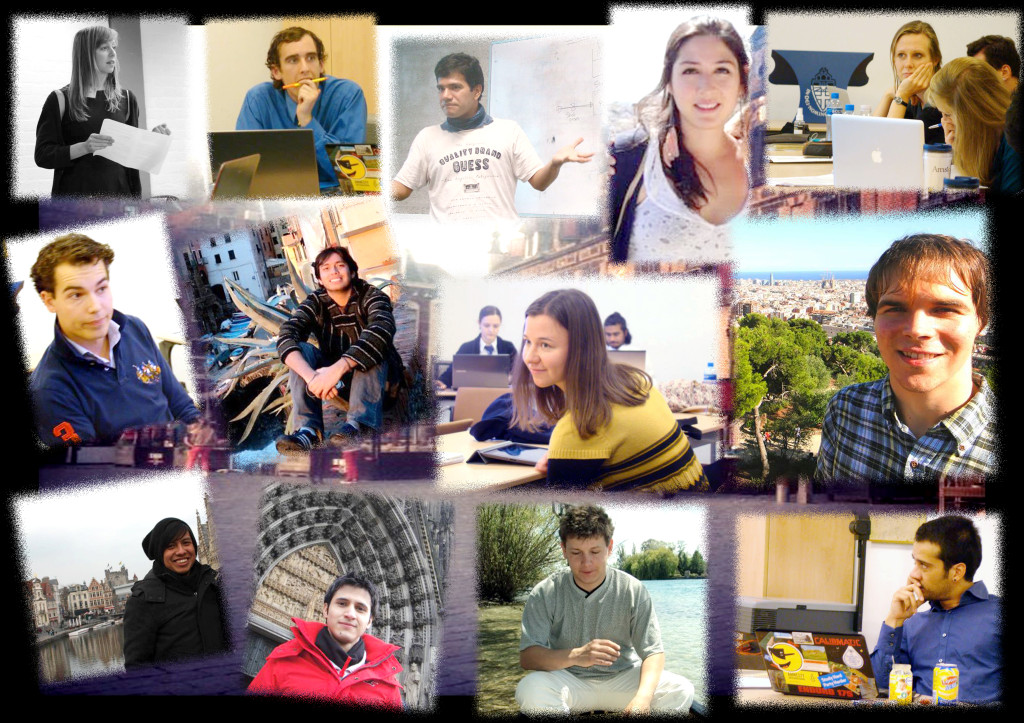 the Netherlands, near the German border, it houses the Radboud University where twelve post-graduate students from different disciplinary orientations and backgrounds, different interests and countries came together on a cold December night in 2013 to think about the future.
We call them the Radboud-12. Why 12?
Why not? There are twelve people on a jury, twelve apostles, some say there were at least twelve knights at the Round Table, and of course there are twelve in the Dirty Dozen.
The words you will read below reflect the voices of the Radboud-12 to the closest extent possible. They talked to each other about how they visualized the “future.” They debated and discussed the most important aspects of human life in the future. Their discussion, which was definitely more spontaneous and lively, is organized into thematic questions and topics. We thank them because they did this as a special feature for the January 2014 issue of The Essayist.
We have tried to edit this interaction minimally. The themes were found after a content analysis of the recording of their spontaneous interaction. There were no restrictions or confining criteria placed on the participants; no time, history or chronological criteria or issues were articulated. Our facilitator Vanessa Armendariz simply posed the question: “What is the future?”
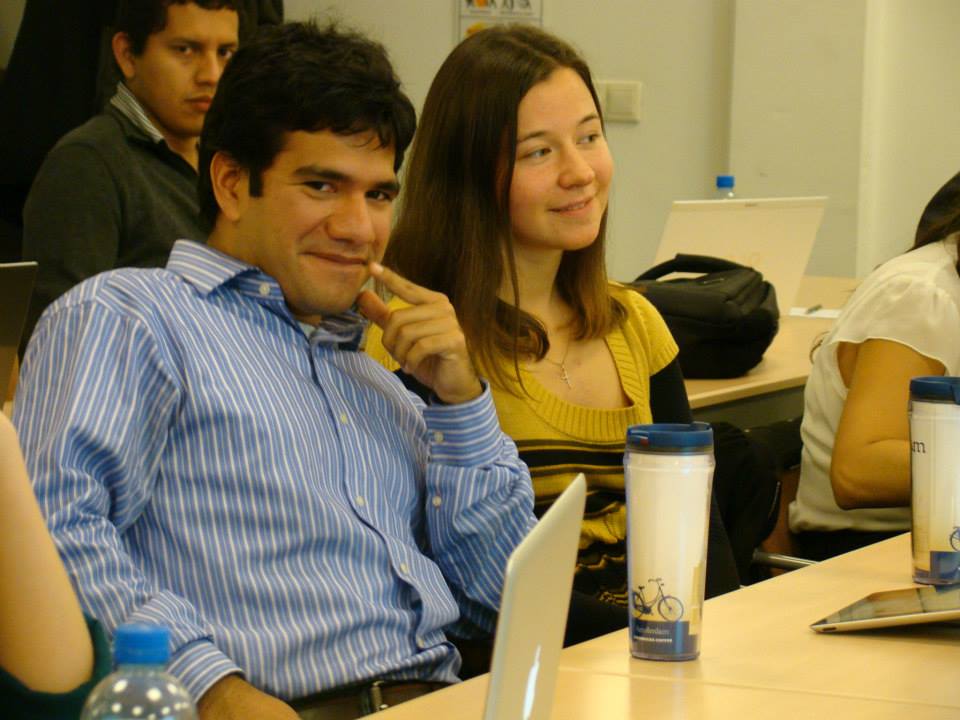
The Radboud-12 spontaneously leaned towards one essential question for the future: How can we live together (in the future) in this society and on this planet?
Social integration and humane social interactions were one of the big concerns for the future. They were concerned that the world was getting more and more diverse, fractious and compartmentalized in some ways. Extreme individualism and a pathological version of tribalism were running loose in human society. Each group and country saw itself as different from the other. The lines on the borders were getting deeper.
The Radboud-12 thought that some measure of integration was required. But how can we integrate people who think they are not alike each other?
How can we live together?
There was some hope for solutions embedded in technology or globalization. However, science, technology and globalization were also causes of problems in themselves. The Radboud-12 also saw some essential aspects of human life that cut across groups and borders. Could these “essentials” such as hunger and challenges of adversity bring people together?
Moving towards the future seemed difficult to the Radboud-12 without first understanding and addressing some of the current problems.
To move to the future we have to answer the question: Why can’t we live together?
The trouble with our times is that the future is not what it used to be.
Paul Valery
Facilitator: What is the future?
s
Borders- the biggest problem of the future?
“Borders” was perceived as one of the main problemsin the future.More and more individual immigrants are jumping fences, swimming rivers, and crossing borders (illegally) in search of a better life.
Human trafficking (legal or illegal) is one of the largest businesses of contemporary society; whether it be the movement of computer-coders across continents or construction workers and janitors from poorer countries to richer countries; or women and children trafficked for sexual enslavement. The numbers are mind-boggling. Yet, customs and immigration type enforcement still persists on borders. These immigration officers ask the silliest of questions. Globalization has made it possible for goods to be transmitted across borders and rich people still get the cheap labor they want. Yet, the people, who travel legally, have to answer silly questions at border crossings; questions such as: Do you have a criminal record?
There is also a difference in the notion of the border between the Americas and Europe. For someone from the Americas the notion of “border” is very compartmentalized. There are rules. There are guards with guns and there are visas and papers. One can get shot at the border. But in Europe, the concept of border is totally different after the formation of the European Union.
If one tried to explain the European notion of the “border” to someone that has never really been out of the Americas, that person will not understand. Thus the “border’ really still defines the Americas while the so-called notion of “borderlessness” defines today’s Europe. However, this “borderlessness” is not for all. It is only for some. Some people, especially the poor, still cannot move across borders so easily. This makes it a business opportunity for traffickers.
In some ways both the Americas and Europe are still grappling with the notion of the “border.”
However, even ordinary people seem to be invested in the idea of borders. Everyone defines themselves according to some nationality (which is geography marked by a distinct border). And each person wants to differentiate one-self and one’s group from others. Self-definition, identify, individualism are all issues we will have to grapple with in the future.
There is also the problem of forced displacement of people from their lands (between countries and within a country) – commonly known as the “refugee” problem. UN High Commissioner for Refugees (UNHCR) noted in its mid-year trends report or 2013 that 5.9 million people were forced to flee their homes in the first six months of the year (2013) compared with the 7.6 million for ALL of 2012. Globally forced displacement has already been at its highest level of 45.2 million by 2012; and this has been increasing since early 1990s mostly due to an escalation of new conflicts.
Power and Social Relations: The State
What will be the role of state in the future? What will be idea of nationhood in a global society? Will the state (as we know it now) remain in the future? Will we all (countries in and around Europe) be part of the EU (European Union) or will we get decentralised into smaller portions?
There has been this big debate in political philosophy whether the state has been losing power (as a construct) in the larger context of globalization. We think the state is still powerful in terms of social relationships, the “idea” of the State is strong in people’s behavior but there is a break of this notion with the reality, as if there were two historical times being lived out in a single space: one historical time where the State is fading, replaced by structures such as multinational businesses and corporations that are financially extremely influential; and another historical time where the State is alive and is powerful in determining again our identities, human-relationships through the enforcement of borders.
Even though this concept of “state” was not really existent 200 to 300 years ago, it is almost impossible today to live outside a state or a nation. Everyone has a place of origin and if they are stateless then it’s considered weird – wrong. It is seen as a problem and something to be corrected. And I think that more than being a structure of power, the notion of the state has invaded people’s ideas of how they define themselves; how relate to one another; who has power; and these notions are becoming quite similar around the world.
Almost everyone has some conception of a government, of what a state is, of what a corporation is, and people relate to one another and communicate with one another with a lot of these structures in mind. They communicate with each other on the basis of which State they are from and so on. There have been so many movements towards secession – groups of people who want to have a separate state or want independence because it is a way of giving their identity a sense of legitimacy.
What will people consider power and who or what will have power in a global sense? The idea of State is related to different kind of power, the way it is evolving and the outcome of this development it’s intriguing. Power is the engine of all human interaction and society. It is the constitutor and also the base. Therefore one has to understand and link it to social relations, and go through the exercise of placing power within the context of social power relations.
Happiness and Adversity
What is it that makes us happy? Well, once again the diversity in definitions of happiness is mind-boggling. Different nations, groups have different definitions and within those groups different persons have different definitions of happiness. It is society’s definition of happiness that is imposed on the individual. Most often, society tells us what’s going to make us happy. Bhutan says it has the highest Gross Domestic Happiness but has it been able to influence its neighbors India or China to change their course of economic development?
This will be a challenge at two levels: How do we come to a consensus definition of happiness globally such that the definition ensures sustainability and ecological balance? At the same time, how do we allow individuals to express and live life the way they feel makes them happy?
To a certain degree, adversity leads to happiness because as a species we seem to quite enjoy overcoming challenges. If something is designed perfectly then one wouldn’t have been able to work on it anymore because it is perfect by definition. And if something is perfect then, well, then there anything left for us to do? So in a way we actually create our happiness through adversity to a certain degree. How do we translate this at a global level?
Identities
In terms of how our future will look like in each of our individual identities, it was discussed how important it is to strive for happiness and how much of that is offered in society. It is an individual process and everyone has to do it for him or herself. However, people are getting tired of individualism, so even though we all want our personal freedom and have a very strong intention of personal identity, there is an increasingly negative perception of too much individuality because we are worried where this hyper-individuality will lead to …

a
Science and Technology: Solution or problem?
Technology and science have historically solved a lot of problems; created more efficient ways, faster, better solutions, but at the same time they have also many times created new problems. The fission of the atom (and the subsequent atom bomb) is one of the most glaring examples. However, even in recent times, mobile phones are glorified globally as the most democratic technology, but various health agencies have research that demonstrates the various ill-effects of mobile phone use on the body and mind. It is not always easy to predict when a solution is going to be nothing else but a simple solution, or when a so-called solution will actually create new problems (either similar or dissimilar to the original thing). This will be a problem in the future because more and more people seem to be developing a blind faith that technology will get us out of the many holes humans find themselves in today.
Resources and Environment
 Resources are becoming scarce because there are not only a lot more people on the planet (7 billion and counting) but also because today we use more resources per person; and a lot of the things we use are non-renewable. The combination of these factors makes resources scarce with each passing day. Finding food for everyone will become really hard. And also there will be less land for agriculture due to land degradation. We foresee a crisis in feeding the population living in the cities and not working on the land (but on computers and service industries). Not only food water will also be a problem in the future; especially water for agriculture.
Another big problem is the energy transition. It will be a huge challenge to transform from our current conventional energy production which is largely from non-renewable sources to shift to renewable resources. This depletion of non-renewable resources creates a huge pressure on society because the less resources that are available, it becomes harder for society to operate at the same level as it did in the past. Comparisons to the past or to each other are inevitable. These comparisons (in our mind) to the convenience we had in the past (with fossil fuel) compared to the difficult behavior changes we have to adopt in order to turn non-renewable will make it especially difficult.
Not much longer shall we have time for reading lessons of the past. An inexorable present calls us to the defense of a great future.
Henry Luce
Facilitator: Is there really a future or is it just in our minds?
“Ideas about the future are not necessarily the same for every society. Look at this room, everyone one of us here has a western education, is that correct? So that alone changes our views (as compared to other people in our countries who do not have privileges). My definition of the future is ‘what is going to happen for my grandkids?’ Someone else’s definition of future may be ‘where am I going to find my next meal from?’
“Yes, but it’s also just then your PERCEPTION of the future, (it is a perception – may not be a reality). It is something which (you think) is going to happen in some sort of extra (future) dimension of time.”
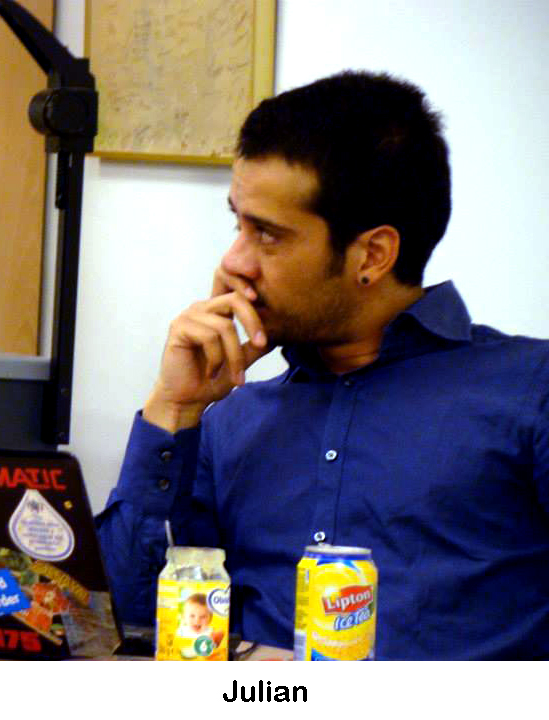
“In a philosophical sense, the future does not exist. It is always the present. Future is something we create in our minds just to plan things. The future is not (really) the problem. It is just how we develop, how we move forward (each step we take today that determines our tomorrow).”
Facilitator: Is the concept of “future”merely a planning tool?
Basically the future has a certain degree of uncertainty. Therefore the notion of “future” is just about planning. It helps people to get together and make a plan.
If the future is a perception and perceptions can be different for different people; then how can we be certain about what is coming next and what is not? There are too many variables and things can change.The problem lies in taking too many different perspectives into account. How would you approach the future from different perspectives? And how do we know who is right?
“For example, in my perspective, it is very clear to me that I can guess the correct answer but I would like to hear more from people with other perspectives, other disciplines perhaps who deal with greater levels of uncertainty.”
So the long and short of it is that there are these problems that we have got today. So we face up to these problems (today); we take certain steps to address them. And then we see what happens ten years later. These steps we took (or did not take) – these were our solutions right? Did those solutions work out? Only time can tell. Hindsight is 20/20. But how do we know today which steps will work out and which ones will not. That is the problem.
In the future, instead of striving to be right at a high cost, it will be more appropriate to be flexible and plural at a lower cost. If you cannot accurately predict the future then you must flexibly be prepared to deal with various possible futures.
Edward de Bono
Facilitator: What cannot be cured has to be endured?
The way future is perceived, or even the present and this moment, is how to overcome problems and I would say that more and more of our societal interactions and politics centers on how to address problems. Problem-solving has becoming our way of life. There is a growing awareness and unease that things are not right and they have to be “right-ed” or corrected. This is an issue because we are constantly grappling with the negatives?
“Didn’t people in the past also talk about problems they had. But most people seem to be nostalgic about the past? It always seems like they also had problems but somehow they were better off than us.”
“Probably they were better off than us, but the perception of what is a problem has changed. Today everything is a problem. Perhaps in the past some things were considered a part of life, to be endured and considered as a problem to be solved.”
“…the system of systems analysis performs the way it does because of the deep paradigmatic assumptions society make about that system. The system can only be changed if the assumptions are changed.”
Donella Meadows
Facilitator: To summarize: we have discussed some of these aspects of human society and human life as potential hot-spots or trouble-spots of the future?
Social issues: Social Interactions in society; Happiness; Self-definition and Identity
Political aspects of human life: Political Power and its distribution; and Risk Society and risk-management (The use of any object or solution in today’s society is riddled with risk. There is a risk to using, consuming anything and so risk perception and management.)
Human Development: Health for all and Education for all
Resources: Energy and Resources
“I think the themes we are bringing up are very much products of how we are taught to view the future.”
I think this is also probably another fact of what we study, most of us study problems and study misery, we are taught to be critical of everything and to look at how everyone else is suffering and look at all the major problems. If we were perhaps taught in a different mind-set that wouldn’t have been the case but that’s the reason why in this discussion we gravitate towards problems because that is what we look at, every day in readings and lectures in universities.
Facilitator: Would you say that just for students or is that a general thing for society?
Universities teach their graduates to“navel-gaze at problems. Students are taught to simply identify and analyse problems.
“Where are the alternatives in this story? In my experience these alternatives are often missing from academic readings. But at the same time… many people on the street also have this sense of crisis…because of the ways it is presented – the climate crisis or the financial crisis or some social one…and these big crises are considered beyond the territory of the university.”
“I think it is a societal thing today. Everyone sees problems first. We have to also question how the public gets these perceptions of crisis.(Do the media blow it out of proportion?) Is it because the media wants to sell more newspapers or get more viewers for TV channels?”
Facilitator: What about solutions?
“When do we keep creating more problems? It’s when we don’t talk about the solutions.”
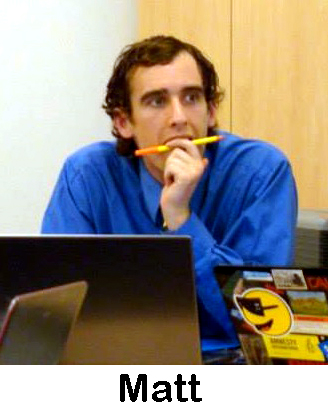 “There have been multiple times when people have said that there’s no way. We can do nothing about this. Yet, humans have found a way to deal with problems time and again. We will find new ways to deal with energy issues; we will find new ways to deal with climate-heating issues. We continuously evolve.”
However, while we strive to find solutions, sometimes the solutions are not timely enough; for instance, with climate change. It is possible that our solutions are a few days late and few dollars short.
Also, our solutions may alleviate human suffering; but only for some humans – those of a certain social group or class; while some are just left behind.
What is needed to create solutions are critical amounts of motivation, talent and resources and these three have to come together in the right amount at the right time. Whenever we find the right combination of motivation, talent and resources, we usually find solutions to most problems.It’s just that the three don’t get together – all at the time.
“When the three come together it is magical.”
The best way to predict the future is to create it.
Peter Drucker
Facilitator: Is science and technology the solution?
“Personally I think it is transitional period until we hit a technological singularity. The basic idea is that given enough processing power we can eventually create a computer structure that is capable of improving itself faster than the rate at which humans can. A thinking 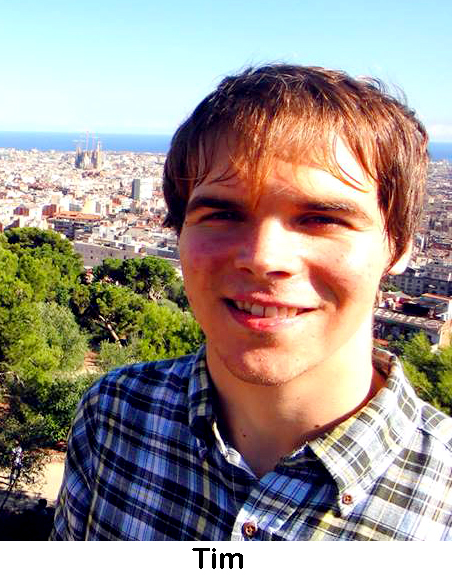 machine with AI [Artificial Intelligence] that is capable of making itself stronger and stronger with each cycle. It works on a reinforcing feedback mechanism and we cannot actually predict what’s going to happen after a certain point. Although we would have given birth to this intelligence, it is going to grow at such a fast pace; faster than anything we ever experienced and we can never be exactly sure of what it can actually achieve – what it can become.”
“Can humans ever construct such a machine? I think not.”
“Are we talking of a Frankenstein-ian scenario?”
“I have a question. You were talking about technology and singularity. Did you say that as a positive thing?”
“With respect to technological singularity, you can’t exactly know what’s going to happen. It’s like an ant interacting with a human; an ant has a limited number of instincts and ideas as to what can happen but at the end of the day the human controls the game as to what happens in the end.”
“But let us say that we kill all ants with insecticides. Aren’t those insecticides affecting human health too?”
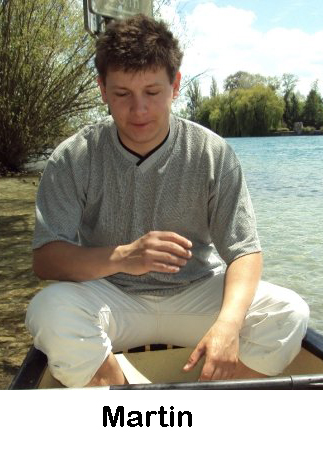 “The idea behind technological singularity is to have enough power and processing and the right combination of computing code. To speak in a simplified manner we essentially create an entity that is capable of improving itself in a way, not just mentally like humans do, and basically be able to evolve its memory and able to draw more power to itself to convert the surrounding matter to what it needs for processing and this has a number of possibilities. We don’t know if this entity will help us reverse climate change or help us reach out to and connect with people. We don’t know if it would potentially hold in on itself because of the density of energy. There are numerous possibilities but the fact of the matter is that it is an entity beyond human comprehension yet created by our own hands and we can’t exactly predict what it would do.”
“I think we are talking of Frankenstein and his monster?”
“You are talking of mimicking the brain and converting it in a technological product.”
“It is beyond the brain. The computer can run complex calculations with numbers in the billions, when my brain can’t.”
“But this computer sits on a stand. And I sit here at this table. My brain can make a distinction between the stand and the table but the computer cannot.”
“Perhaps we are using an example from technology to argue about what science can do and the dangers of allowing science to do what it can do. I think the role of science has been merely a progressive way of achieving some things.”
“Science, I think is a method more than anything. It is a method to approach problems that we are all taught in school and college 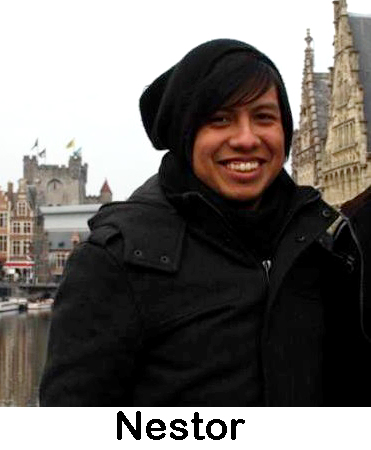 and we apply in different ways in different contexts.”
“I think it is a very useful method and it is systematic ….obviously coming up with a hypothesis, testing it, relying on empirical data, debating the interpretation of data, and stating the limitations of our methods. I think these kinds of things have proven to be useful throughout human history and I think they will continue to.”
“I guess I also prefer to think of science as a general method (to approach life’s problems and questions) because I don’t like to think of science and scientists as people working with chemicals and doing (crazy) stuff in laboratories, which is how I think a lot of people picture science. Rather, I see science as something that everyone is engages in. It is how they think about the world, how they think about procedures and methods and empirical data and how they answer questions.”
“All of these system problems, and more, are persistent. They go on in spite of the most sophisticated scientific establishments, communications systems, satellites, models, and databases the world has ever known… “
Donella Meadows, 2002, on hunger, war, environment depletion
Facilitator: So we achieve progress by doing science. Do we all agree?
“I think it’s a very important way.”
 “No, we can say, that the body of science is increasing, at the same time, it brings new questions, so it keeps increasing. This fact of “growth” in Science does not represent an automatic advancement for society. Science is not the same as progress, and it does not bring human well-being as a direct consequence. We can say that Science increases knowledge (within the discipline) through a cumulative process but that increase in knowledge is not necessarily human progress.”
“Science is a more rational manner of decision-making.”
“It is almost a form of mental evolution – an adaptation. The body adapts to specialized environments and mind has to adapt to specialized environments.”
We cannot solve our problems with the same thinking we used when we created them.
Albert Einstein
Facilitator: So are you saying that solving the problems of the future requires us to almost change our minds?
As the population on this planet increases to more than 7 billion for the first time ever, we are going to have to start creating new ways of approaching the issues facing us. We have to think of new structures of governing and administration. To govern a couple of thousand people in the past versus governing millions to billions in various regions of the world in the future are vastly different tasks that require different skill-sets and different structures. It may be time to find ways to adapt technologies to this new need of governance.
Facilitator: You said something about structures (referring to another participant); and you talked about governance…I am trying to reconcile this group’s observation that there are multiple perspectives on an issue. Maybe you can help me understand how you would then approach a problem such as war? How could you address them because obviously each group going to war has a different perspective on the issue? Who is wrong and who is right?
Even the various guerrillas and rebel groups – the oil companies in Africa or mining companies in India label them as left-wing terrorists whereas these rebel groups say they are fighting to preserve the integrity of their land or that many of them worship the forest and consider the forest as the abode of their gods.
There is an on-going war between this globalized corporate way of looking at the world and the various tribal and ethnic groups that want to preserve their way of life.There is a joke about an obese young guy visiting a doctor and the doctor telling him that you are not mal-nourished; you are MALL-nourished. More young people visit malls rather than public parks.
“Young people like us who go to universities have adapted to this corporate, globalized way of living and we think that is the way for the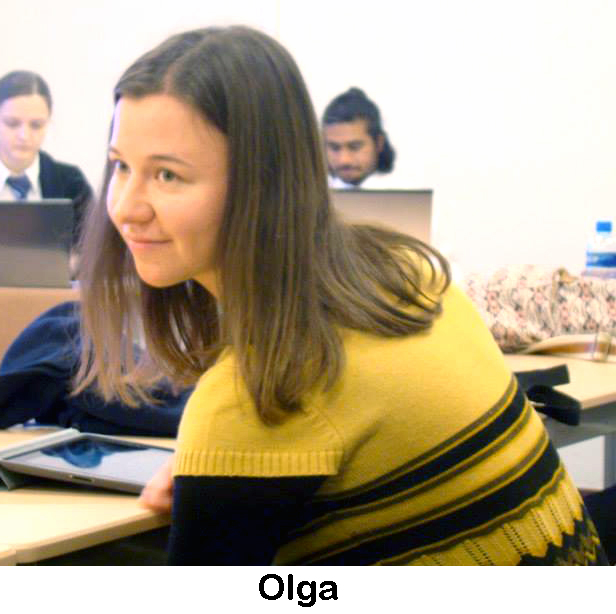 future. But many tribes living in forests that are being plundered for profit may not think that way. Their house is being destroyed as we speak. The war is also on public spaces. There are fewer and fewer public spaces.”
“You cannot have a debate like this in a private mall or a private bookstore. They will throw you out for disturbing the other customers.”
“I think that’s the big debate. It is not just about how are we going to solve a current problem; but I think it is also about how those answers and solutions we create will cause more problems in the future. Yes, we have short-term problem-solving and problem-management models, theories, concepts whatever, but then maybe those answers will create more problems. This is exactly what has happened. The solutions that humans think they have cleverly invented have gone on to create more problems.”
Facilitator: I would like to go back to another fundamental question: How can we create such (global) governance structures (for a population of more than 7 billion) if everyone has their own view and their own perspective.
“If we respect individuals and groups then we have to take their views into account. That is only fair in a democracy.”
“It calls for participatory democracy.”
“But with more than 7 billion people how can you have the desired participation?”
“That is where information technology becomes useful for us.”
“But then you create a Tower of Babel like we have done on Facebook and social media. Nothing coherent is coming out of it. Is it?”
“Everyone is constructing their own social group and their idea of reality (howsoever virtual it may be). It is their perception and it is very real for them.”
Facilitator: So do you see the future as “chaos?”
“Because we construct everything as we go along.”
“The same holds true in my opinion about the future. Because the future of the world will consist of all these little futures that everybody has, so that looks like chaos. If you try to picture it, it will translate to what all the people in the world see. So that’s how chaos would be socially constructed.”
Facilitator: Compared to positivism where you have one reality that you can grasp and there is the truth; the problem with constructivism is that there are so many truths, right? How do we reconcile and manage all those truths?
Constructivism is very important as a general idea. Living life with the idea that my perception of the world is this concrete thing and to push and force that idea on people, obviously has enough problems. On the other hand, to kind of throw our hands up and say that well it’s all constructed (and it’s all shifting and chaotic) and who knows what is the truth seems to be more like an avoidance trick. It helps one to avoid answering really big questions.
 “How do we address big problems that are there and are real, whether they are constructed or not? These problems matter to people and we cannot just say it’s all constructed.”
“I’ve also never quite been satisfied with the idea that everything is socially constructed. It may be okay at times, but in some ways it seems to me like an avoidance of a real explanation or a real analysis. Most certainly there are many things out there, and in some ways, almost everything is open to individual interpretation, individual beliefs and experiences. However there are certainly common structures, common sensory experiences that are relatively universal and these are also, you know, to some degree, subject to convergence. I think a lot of people’s beliefs are also subject to convergence. I mean, we are living in a world now where there really is a sense of something global. That is quite incredible.People now have a sense of the world as a unit – as a thing that is common. This was probably unthinkable just about hundred years ago. I mean these thoughts about the world could be in a constant process of change. They may be not all of a sudden becoming all the same but they people are also probably getting quite a bit of exposure to this idea of one world. There are some common frameworks emerging that one can look at to try and understand where the world is going, why people think the way that they do, and what’s most important and what’s not important.”
“I have a problem with framing that as globalization.Even before globalization, there were differences all over the world, but there were many shared cultural elements.”
“Does that mean that the world is too big and even though each individual has their own perception of future and acts according to it, but there are just so many of us that you could find commonalities in what everybody does? These then are aggregated into the archetypes of our culture: this is how most people would think like or that there is a majority that would think in such a manner or there are a certain proportion of people who think like that. If you then try to assess the way people think (along these archetypes), then you can draw conclusions of what direction the world and future will go toward.”
“I don’t want to give that impression. I do not think it is a good idea to put people inside hard boxes. But I think there are clear trends within history. And with an infusion of science and scientific method, I think, one can make predictions and draw conclusions and assess how different people and how different cultural or linguistic or national groups may approach certain issues.”
“Obviously with the understanding that no analysis is ever going to be 100% perfect. One can turn to solipsism if one wants (and may be nothing else exists outside one’s own mind) but at a certain point I think it’s just not very helpful. I think there can be a way of explaining the real processes and the real trends that lead the problems without becoming too shaky or too cynical or too unsure and saying that everyone has their own interpretation and my interpretation is wrong.
Facilitator: We are to some extent talking about recognizing and respecting plurality? How do we manage plurality?
Constructivism is also a way to see the future differently because it has more possibilities. It can go in many ways and we then see ourselves as having some ability to control the direction of its flow. At the same time is it possible to achieve some consensus. How do we achieve a state where we look at the same problem and then have the same conception of it? Or maybe achieve this through consensus? How do we develop such mechanisms and platforms? Will we arrive at that common view through the pathway of compromise or negotiation? Who will do that for us – are there political mechanisms or structures and organizations that are acceptable to all? For example, the United Nations (UN) is not acceptable to all countries and peoples?
“That is really not happening anywhere, at least I do not know if that kind of consensus building is happening even within small groups. I doubt if it has ever happened. If it has I would like to know.”
“But isn’t there the factor called “critical mass” and also an aggregation element. A small group of people adopt an idea and then the 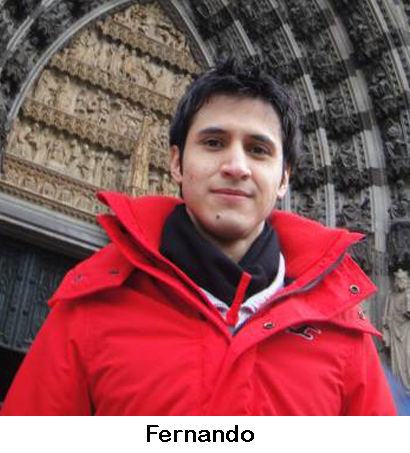 idea spreads like wildfire. There are certain collective ideas and memories which build up over time. There’s this thing that we are now building up: it is called climate change. It is building up inside everybody and everybody is creating their own idea of climate change in their minds. Most people have now accepted this notion of climate change and most people are aware of the ways in which we pollute the environment and that certain aspects of our way of life (such as excessive use of plastics or fossil fuel) is a threat to the planet. This builds up over time. We construct this threat and problem of climate change. We pass it on to our kids in the next generation. We keep saying that we should address it and we should do something about it. And, I believe, therefore something will happen because there is a certain degree of consensus about climate change and its causes and consequences.”
“I hold on to my position that this will lead to nothing because despite all the knowledge what are people really doing about it? More cars are being sold in China and India than ever before. A few people in one part of the planet stop using cars and a million others on the other side buy new ones.”
“Let me argue about the consensus part. Let us say that we agree on something and then other people also start agreeing with us. So we then create this group, society, whatever you want to name it. In order to achieve this single-minded consensus, and therefore, in order to get more people to accept the idea what we end up doing is continuously narrow the concept down until the richness and complexity of the concept wears down to some easy slogan.”
“That has also led to fascism and the Holocaust. Getting everyone to agree on one thing seems to be a dangerous thing. It seems that a democracy and freedom in general thrives on keeping differences alive.”
Facilitator: How do we live together despite our differences? That is the challenge for the future?
“We have to find the real commonalities between how people think and how people experience the world, if only in a purely physical sense, I mean, I think most people would agree with the law of physics which are pretty solid in so far as we can perceive them, you can argue that human perceptions are limited. Sure, but it starts somewhere right.”
“You cannot argue against gravity if you live on this planet, right?”
“To come back to the question of how we can live together, I think, indeed, there are certain practices which are shared across all human societies. These practices are important for existence. For example, we all want food, we all want accommodation. We can dream of and dream up technological solutions and global governance….. But I don’t think that hunger or the desire for food will be gone in 500 or 5000 years.”
The future ain’t what it used to be.
Yogi Berra
The Essayist (The Future Series)
All credits go to the participants or The Radboud-12 (see names below) and to Vanessa Armendariz for organizing, coordinating and facilitating the discussion in Nijmegen.
Thanks to The Essayist team for transcribing the tapes and writing the piece.
| Participants |
Education and Interests |
| Andres Julian |
Petroleum Engineering and System Dynamics, formerly researcher in energy and mining. Interests:Carbon capture and storage. |
| Carlo |
Business Administration& System Dynamics. Interests: Sustainability applications and Energy transition. |
| Fernando |
Political Science, International Relations. Interests: Vulnerable groups |
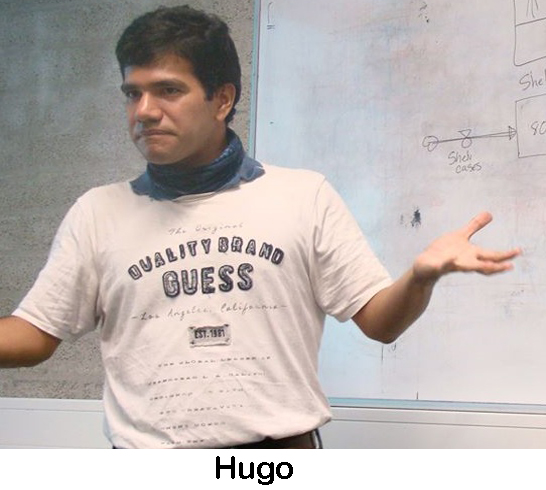
| Hugo |
Industrial Engineering,Systems Dynamics and Strategic Planning. Interests: Risk Management. |
| Lavinia |
Anthropology, Sociology, Human Geography and Conflict studies.Interests: Human Rights, Social movements and cooperative sustainability. |
| Martin |
Geography, Organization and development. Interests: Mining Issues and development. |
| Matthew |
System Dynamics (Bachelors and Masters). Interests: Sustainability appliances and Energy Industry |
| Merla |
Economics ,Business Administration and System Dynamics. Interests: Urban development and Energy transition in Switzerland |
| Nestor |
Cognitive sciences, memory plasticity, chemistry. Interests:Brain, plasticity and cognitivity |
| Olga |
System Dynamics. Interests:Sustainable development,Organizations, Industrial sector |
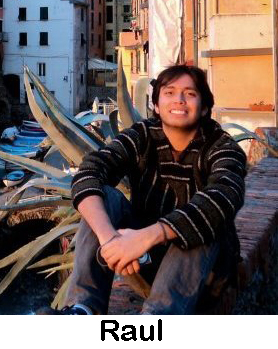
| Raul |
Computer sciences and Applied Mathematics.Interests:Big-data analysis, Artificial intelligence |
| Tim |
Geography, Anthropology and Spatial Planning.Interests:Formation of State, Urban crime and Corporations. |
|
|
|
|
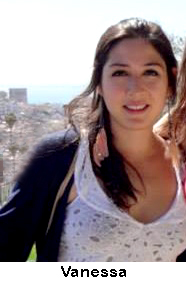 Vanessa Armendariz is currently studying System Dynamics. Her previous education includes a Bachelors degree in International Studies from the Universidad de Monterrey and Bachelors degree in Political Science and Public Administration from Universidad de Monterrey.
She has worked in the Human Rights Program for Mexico City (2011-2012) and in 2010 -2011 for the Public Policy implementation. In 2010 – 2011 she coordinated 5 multi-sector negotiation tables to build agreements on the city public policy implementation. Also served as Institutional communication manager: social networks, radio producer and agenda construction from 2011-2012. Her interests include: Security issues and its relation with social metabolism; ecological economics and North-South epistemology of development.